

解説 / Description
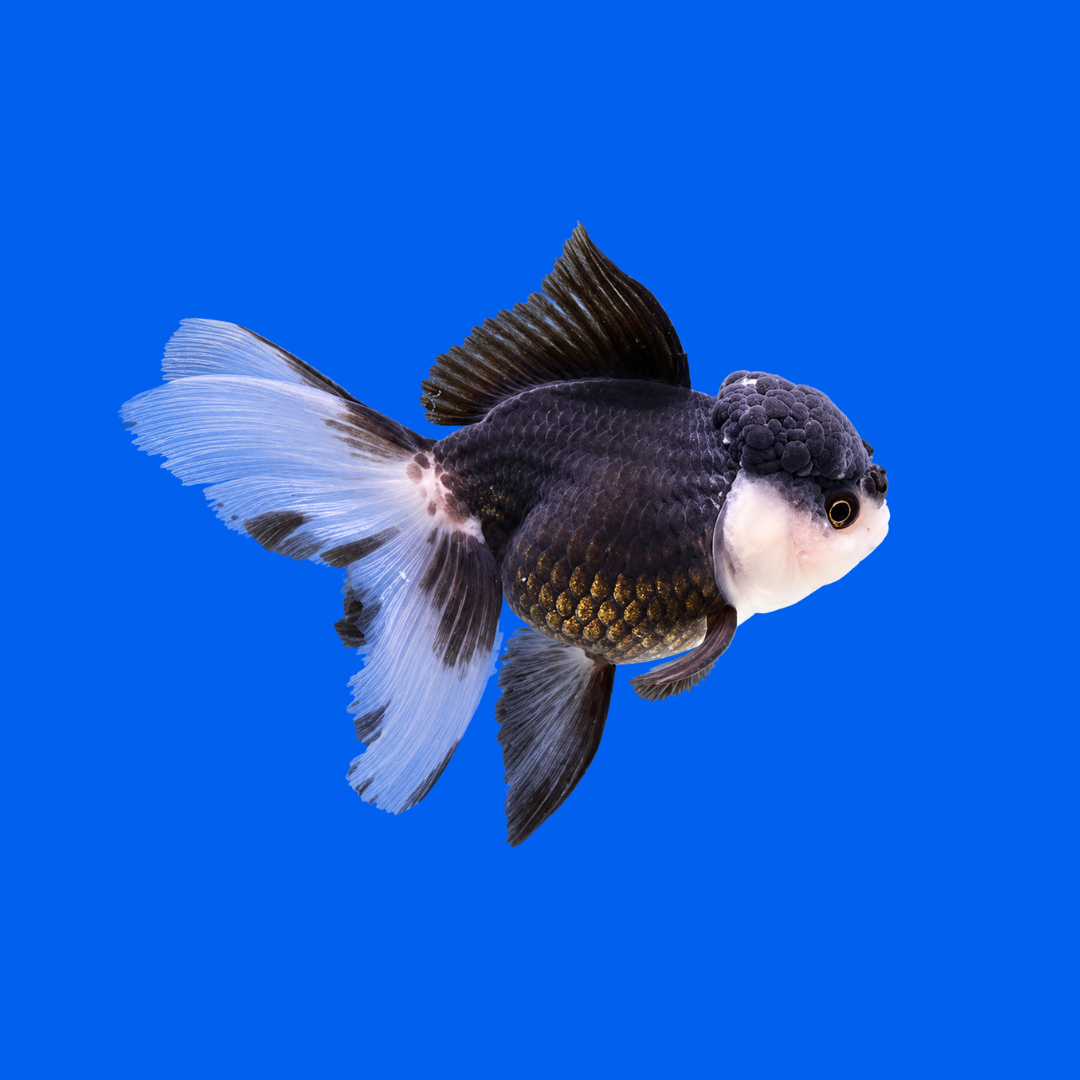
羽衣オランダは、青文魚系統のうち、青黒い体色が部分的に褪色して白と黒が入り混じった姿を見せるオランダ型の金魚です。頭部に発達する肉瘤、背ビレ、ゆったりと広がる複尾を備え、白地に墨を流したようなモノトーンの模様が大きな魅力です。流通上は「パンダオランダ」と呼ばれることもあります。褪色するかどうか、どの程度まで進むかには個体差があり、白黒の配置が長期間同じままとは限りません。時間とともに変化し得る体色も含めて観察を楽しめる金魚です。 Hagoromo Oranda is an Oranda-type fancy goldfish from Seibungyo lines in which the blue-black coloration has partially faded, producing a black-and-white appearance. It combines a prominent headgrowth, a dorsal fin, and a flowing divided tail with a monochrome pattern reminiscent of ink wash painting. It is also traded under names such as “Panda Oranda.” Whether fading occurs and how far it progresses vary among individuals, so the pattern may not remain unchanged throughout life. Its potentially changing coloration is part of the appeal of observing this fish over time.
基本情報 / Basic Information
| 学名 / Scientific Name | Carassius auratus |
|---|---|
| 通称 / Common Name | 羽衣オランダ、羽衣、パンダオランダ(流通名)Hagoromo Oranda, Panda Oranda (trade name) |
| 分類 / Family | コイ目コイ科フナ属。金魚(Carassius auratus)の改良系統で、羽衣オランダという呼称は、青文魚系統のうち白黒に褪色したオランダ型の個体に用いられます。Order Cypriniformes, family Cyprinidae, genus Carassius. Hagoromo Oranda is a domesticated goldfish form; the name is used for Oranda-type fish from Seibungyo lines showing a partially faded black-and-white pattern. |
| 英名 / English Name | Hagoromo Oranda / Panda Oranda (trade names) |
| 分布 / Distribution | 観賞魚として作出・維持される改良系統のため、羽衣オランダとしての固有の野生分布域はありません。日本国内では養殖された個体が観賞魚として流通しています。As a selectively bred ornamental form, Hagoromo Oranda has no unique natural distribution. Captive-bred individuals are distributed in Japan through the ornamental fish trade. |
| 最大体長 / Max Size | 飼育下では全長20〜30cm前後に達することがあり、系統、体型、飼育環境によって差があります。長手の大型系統ではさらに大きく育つ場合があります。Often reaches around 20–30 cm in total length in captivity, although size varies with lineage, body form, and husbandry. Some long-bodied lines may grow larger. |
| 寿命 / Lifespan | 適切な環境では10〜15年以上が目安です。金魚自体は長寿な魚で、水質、給餌、体型による負担、病気の予防によって寿命は大きく左右されます。A lifespan of 10–15 years or more is a reasonable expectation under good care. Goldfish can be long-lived, and longevity is strongly influenced by water quality, diet, body conformation, and disease prevention. |
飼育環境 / Aquarium Environment
| 水槽サイズ / Tank Size | 1尾でも60cmワイド水槽(実水量100L前後を確保しやすいサイズ)以上を目安にすると管理しやすく、成魚の長期飼育や複数飼育では90cm規格水槽(実水量150L前後が目安)以上が安心です。金魚は排泄量が多いため、単純な体長だけでなく、水量とろ過能力に余裕を持たせます。For a single fish, a 60 cm wide aquarium that can provide roughly 100 L of usable water is easier to manage. For long-term adult care or multiple fish, a standard 90 cm aquarium with around 150 L of usable water or more is preferable. Because goldfish produce substantial waste, generous water volume and filtration are important. |
|---|---|
| 水温 / Temperature | 18〜24℃前後を安定して保つと飼育しやすい金魚です。重要なのは特定の高水温を目指すことより、急激な変化を避けることです。水温が下がると摂餌や消化の状態も変わるため、魚の様子に合わせて給餌量を調整します。 A stable range of about 18–24°C is suitable for routine care. Avoiding sudden temperature changes is more important than aiming for an unusually warm temperature. As the water cools, feeding should be adjusted to the fish’s appetite and digestive condition. |
| 水質 / Water Quality | 弱酸性〜弱アルカリ性の安定した淡水に適応します。目安はpH6.5〜8.0程度で、アンモニアと亜硝酸は検出されない状態を維持します。硝酸塩も低く抑え、定期的な換水と十分な生物ろ過、適切なエアレーションを組み合わせます。It adapts well to stable freshwater from mildly acidic to mildly alkaline conditions. A practical target is around pH 6.5–8.0, with ammonia and nitrite kept at undetectable levels. Nitrate should also be kept low through regular water changes, adequate biological filtration, and appropriate aeration. |
| レイアウト / Layout | 中央に広い遊泳スペースを確保し、尖った石や流木など肉瘤や長い尾を傷つける物は避けます。底床はベアタンク、細かな砂、誤飲しにくい大きさの砂利などが扱いやすく、水草を入れる場合は金魚に抜かれにくい丈夫な種類をしっかり固定します。丸手個体は強い水流が苦手なため、ろ過能力は確保しつつ直接強い流れを当てない配置が向きます。Provide a broad open swimming area and avoid sharp rocks or wood that could damage the headgrowth or long fins. Bare-bottom tanks, fine sand, or gravel too large to swallow are practical choices. If plants are used, choose hardy species and anchor them securely. Short-bodied fish may struggle with strong currents, so maintain effective filtration without directing excessive flow at the fish. |
| 注意点 / Precautions | 丸手の個体では浮力バランスを崩す症状が目立つことがあるため、食べ過ぎや急な温度変化、水質悪化を避けます。肉瘤が大きく発達した個体では、擦れ、赤み、白い付着物、ただれなどの異常を見逃さないよう日常的に観察します。また、羽衣の黒色は生涯固定されるとは限らず、白い部分が増えるなど模様が変化する可能性があります。Buoyancy problems can be especially noticeable in short-bodied individuals, so avoid overfeeding, sudden temperature changes, and deteriorating water quality. In fish with a heavily developed headgrowth, check regularly for abrasions, redness, white growths, or sores. The black pattern of Hagoromo is not always permanent, and the amount of white may increase over time. |
餌と給餌 / Feeding
| 餌の種類 / Diet | 主食には金魚用の総合飼料を用います。沈下性ペレットは水面で空気を飲み込みにくく、丸手個体にも扱いやすい選択肢です。必要に応じて冷凍赤虫、ブラインシュリンプ、植物質を含む餌などを補助的に組み合わせ、特定の餌だけに偏らないようにします。Use a complete diet formulated for goldfish as the staple food. Sinking pellets are a practical option because they reduce surface feeding and excessive air intake. Frozen bloodworms, brine shrimp, and foods containing plant matter can be used as supplements so the diet does not rely on a single food type. |
|---|---|
| 給餌のポイント / Feeding Tips | 回数を固定するより、1回量を少なくして短時間で食べ切れる総量に抑えることが重要です。成長期には少量を複数回に分ける方法もありますが、丸手個体では便、腹部の張り、泳ぎ方を見ながら過剰給餌を避けます。低水温時は摂餌や消化の状態に合わせて量を減らします。沈下性飼料は、水面で餌を取る際の空気の飲み込みを抑えやすい点でも扱いやすい餌です。Rather than fixing the number of meals, keep each portion small and limit the total amount to what is eaten quickly. During active growth, food may be divided into several small meals, but short-bodied fish should not be overfed; observe feces, abdominal distension, and swimming posture. Reduce feeding as appetite and digestion slow in cooler water. Sinking foods are also useful for reducing excessive surface gulping while feeding. |
性格と混泳 / Temperament and Tank Mates
| 性格 / Temperament | 基本的に温和で、人に慣れやすい金魚です。餌の時間には活発になりますが、オランダ系、とくに丸手個体は泳ぎがゆったりしており、素早い魚との餌競争では不利になりやすい傾向があります。Generally peaceful and often becomes accustomed to its keeper. It becomes active at feeding time, but Oranda-type fish—especially short-bodied individuals—are relatively slow swimmers and may be outcompeted for food by faster fish. |
|---|---|
| 混泳の相性 / Compatibility | 体格と泳力が近いオランダ、琉金、東錦などの丸物金魚との混泳が向きます。和金やコメットのように非常に泳ぎの速い金魚とは給餌競争が起こりやすく、極端に小さな魚は誤食される可能性があります。ヒレをつつく魚や高水温を必要とする熱帯魚との混泳は避けるのが無難です。Best kept with similarly sized fancy goldfish of comparable swimming ability, such as Orandas, Ryukins, and Azumanishiki. Very fast goldfish such as common or comet types may dominate feeding, while very small fish can potentially be swallowed. Avoid fin-nipping species and tropical fish that require consistently high temperatures. |
病気と対策 / Diseases and Prevention
| かかりやすい病気 / Common Diseases | 丸手個体では浮上したまま、あるいは沈んだまま姿勢を保ちにくくなる浮力異常が見られることがあります。ほかに白点病、尾ぐされ病、水カビ症、細菌性感染症など一般的な金魚の疾病にも注意が必要です。肉瘤が発達した個体では、肉瘤表面の傷や汚れをきっかけに局所的な炎症が起こることがあります。Short-bodied individuals may develop buoyancy disorders in which they float, sink, or struggle to maintain normal posture. They are also susceptible to common goldfish diseases such as ich, fin rot, fungal infections, and bacterial infections. In heavily developed headgrowth, minor wounds or trapped debris can contribute to localized inflammation. |
|---|---|
| 対策と予防 / Prevention | 最も重要なのは、水温と水質を急変させず、過密と過剰給餌を避けることです。新しい個体は可能であれば隔離観察してから合流させ、アンモニア・亜硝酸、食欲、便、泳ぎ、肉瘤の状態を定期的に確認します。異常時はまず隔離と水質改善を行い、塩水浴や薬浴を行う場合は症状、魚の状態、使用製品の用法を確認して適切に選択します。The most important preventive measures are stable temperature and water quality, along with avoiding overcrowding and overfeeding. Quarantine new fish when possible, and regularly observe ammonia, nitrite, appetite, feces, swimming posture, and the condition of the headgrowth. If problems arise, prioritize isolation and water-quality correction; salt or medication treatments should be selected according to the symptoms, the fish’s condition, and product directions. |
増やし方(繁殖) / Breeding
| 雌雄の判別 / Sexing | 成熟したオスは繁殖期になるとエラ蓋や胸ビレ前縁に「追星」と呼ばれる白い小突起が現れやすく、メスを追尾します。メスは抱卵すると腹部がふっくらし、総排泄口がやや突出して見えることがあります。ただし若魚や非繁殖期は判別が難しい場合があります。Mature males often develop small white breeding tubercles on the gill covers and leading rays of the pectoral fins during the breeding season and actively chase females. Gravid females become fuller in the abdomen and may show a slightly protruding vent. Sexing juveniles or fish outside the breeding season can be difficult. |
|---|---|
| 繁殖形態 / Reproduction | 卵生で、メスが水草や産卵床などに粘着性の卵を産み、オスが体外受精させます。親魚は卵や稚魚を保護せず、むしろ食べることがあるため、産卵後は親魚か産卵床を分けて管理します。Egg-laying with external fertilization. Females scatter adhesive eggs among plants or spawning media, where males fertilize them. The parents provide no brood care and may eat eggs or fry, so adults or spawning media should be separated after spawning. |
| 繁殖のポイント / Breeding Tips | 春、水温が上昇する時期に繁殖行動が起こりやすくなります。状態のよい親魚を十分にコンディショニングし、産卵用の人工水草や産卵モップを用意します。孵化後、稚魚が遊泳を始めたらブラインシュリンプ幼生などの小さな餌を与えます。羽衣の白黒模様、肉瘤、尾型などは親魚とまったく同じ姿でそろって現れるとは限りません。繁殖後は成長を見ながら個体差を確認し、目的に応じて選別していきます。Breeding activity is most common in spring as water temperatures rise. Condition healthy adults well and provide artificial plants or spawning mops. Once the fry become free-swimming, offer suitably small foods such as newly hatched brine shrimp. The black-and-white pattern, headgrowth, and tail form will not necessarily appear in offspring exactly as they do in the parents. As the young fish grow, individual differences become clearer and breeders select according to their goals. |
雑学と豆知識 / Trivia and Fun Facts
| 1. 「羽衣」は変化の途中に現れる美しさ / 1. Hagoromo captures beauty in transition | 羽衣オランダの面白さは、白黒の模様を固定した完成形として眺めるだけではありません。青文魚では、成長の途中で青黒い体色が部分的に褪色し、白と黒が混じった個体を「羽衣」と呼びます。さらに褪色が進んで白くなったものは「白鳳」と呼ばれます。一方で、青黒い色を保つ個体や、羽衣の状態で長く推移する個体もあり、変化の程度には大きな個体差があります。購入時の模様が将来も同じとは限らないことを理解しておくと、色の移ろいもこの魚の個性として楽しめます。The appeal of Hagoromo Oranda is not limited to a fixed black-and-white pattern. In Seibungyo, individuals that partially fade from blue-black to a mixture of black and white are called “Hagoromo,” while fish that fade further to white are called “Hakuhou” or “Pai-Fong” in Japan. Some individuals retain their darker coloration, while others remain in the Hagoromo stage for a long time, so the degree of change varies greatly. Understanding that the pattern may not remain unchanged makes the gradual color shift easier to appreciate as part of the fish’s individuality. |
|---|---|
| 2. 青文魚の「青」は青い色素そのものではない / 2. Seibungyo “blue” is not simply a blue pigment | 青文魚の青灰色は、鮮やかな青色の色素が単独で存在して生まれる色ではありません。金魚の体色は、メラニンを含む色素細胞や光を反射する細胞など、複数の要素の組み合わせによって見え方が決まります。青系の金魚で起こる体色変化については、メラニンの分布や細胞間での移動などが関わることも研究されています。つまり、羽衣へ変化する過程を単純に「黒い色素が減っただけ」と考えるより、皮膚の色素細胞の状態が変化した結果として見た目が変わる、と捉える方が実態に近いといえます。The blue-gray appearance of Seibungyo does not come from a single vivid blue pigment. Goldfish coloration is produced by the combined effects of pigment cells containing melanin and cells that reflect light, among other components. Research on cyan goldfish has also shown that changes in the distribution and transfer of melanin can be involved in visible color transformation. In other words, the shift toward a Hagoromo pattern is better understood as a change in the state and distribution of skin pigment cells rather than simply as “black pigment disappearing.” |
| 3. 「オランダ」は原産国を示す名前ではない / 3. “Oranda” does not mean Dutch origin | オランダシシガシラは、中国から琉球を経て長崎へ伝わった系統とされますが、名前の「オランダ」は原産地を示すものではありません。一般には、江戸時代に珍しい舶来品を「オランダ物」と呼んだことにちなみ、この金魚にも異国的で珍しいものを示す名として「オランダ」が付いたと説明されています。「獅子頭」は頭部の肉瘤を獅子の頭になぞらえた呼び名です。現在の名称には、魚そのものの形態だけでなく、日本へ伝わった当時の舶来文化も残されています。The Oranda lineage is generally described as having reached Japan from China via the Ryukyu Islands and Nagasaki, but “Oranda” does not indicate Dutch biological origin. The usual explanation is that unusual imported goods in Edo-period Japan were sometimes called “Oranda-mono,” and the name became associated with this exotic goldfish. “Shishigashira” refers to the lion-like headgrowth. The modern Japanese name therefore preserves not only the fish’s appearance but also the culture surrounding imported rarities at the time. |
| 4. 長手と丸手では同じ羽衣オランダでも飼い方が変わる / 4. Long-bodied and short-bodied fish behave differently | 市場では、胴が比較的長い「長手」と、体高があり丸みの強い「丸手」が見られます。一般に丸手は泳ぎがゆったりしやすく、浮力バランスの異常が目立つ個体もいるため、強い水流や過剰給餌を避けて状態を観察することが大切です。長手は比較的泳ぎやすい個体が多く、同じ「羽衣オランダ」という名前でも、体型によって適した水流や給餌量は変わります。品種名だけでなく、目の前の個体の泳ぎ方と体型に合わせて管理することが重要です。The trade includes relatively elongated “nagate” fish and compact, deep-bodied “marute” fish. Short-bodied individuals often swim more slowly, and buoyancy problems can be more noticeable in some fish, so strong currents and overfeeding should be avoided. Longer-bodied individuals are often more capable swimmers. Even under the same name “Hagoromo Oranda,” suitable flow and feeding can therefore vary with body form. Management should be based on the individual fish’s shape and swimming condition rather than the variety name alone. |
| 5. 肉瘤は成長とともに発達する / 5. Headgrowth develops as the fish grows | オランダの象徴である肉瘤は、皮膚組織が発達して形成される特徴で、成長に伴って目立つようになります。ただし、大きさや形には個体差があり、どの個体も同じように発達するわけではありません。肉瘤を大きくする目的で給餌量だけを増やすと、水質悪化や過剰給餌のリスクが高まります。特定の餌や温度だけで発達を決められるものではないため、無理に成長を促すより、安定した水質と適切な給餌で健康な成長を支えることが基本です。The Oranda’s signature headgrowth is formed by proliferating skin tissue and becomes more conspicuous as the fish grows. Its size and shape vary among individuals, and not every fish develops it to the same degree. Increasing food simply to enlarge the headgrowth can instead increase the risks of overfeeding and deteriorating water quality. Because its development cannot be determined by one food or temperature alone, the practical priority is to support healthy growth with stable water quality and appropriate feeding. |
まとめ / Conclusion
羽衣オランダは、オランダらしい肉瘤と優雅な複尾に、青文魚系統ならではの白黒の体色が重なった金魚です。黒と白の模様は固定されるとは限らず、成長の過程で変化する個体もいます。現在の配色だけを完成形として見るのではなく、その後の変化も含めて一尾ごとの個性を観察できることが、この魚ならではの魅力です。 Hagoromo Oranda combines the Oranda’s characteristic headgrowth and graceful divided tail with the black-and-white coloration seen in Seibungyo lines. The pattern is not always fixed, and some individuals continue to change as they mature. Rather than treating the current coloration as a permanent final form, keepers can appreciate the individual character revealed by changes over time.
飼育では、丸手個体にみられることがある浮力異常や、発達した肉瘤の傷・炎症、金魚の多い排泄量に注意します。十分な水量、安定した水温、余裕のあるろ過、食べ過ぎを避けた給餌を続けることで、健康を保ちながら肉瘤や白黒模様の変化を長く見守れます。体型や色の個体差を受け入れ、その魚に合った管理を積み重ねることが、羽衣オランダと長く付き合ううえで大切です。 Care should account for buoyancy problems that can occur in short-bodied individuals, injuries or inflammation of a developed headgrowth, and the heavy waste load typical of goldfish. With generous water volume, stable temperature, effective filtration, and controlled feeding, keepers can support good health while observing changes in the headgrowth and black-and-white pattern over time. Long-term success comes from accepting individual differences in body form and coloration and adjusting care to the fish in front of you.

気になる道具や飼い方を見つけてみませんか?
 アイのアクアグッズ案内そのごはん、泳いでる! 卵から始めるブラインシュリンプの孵化と道具選び道具の特徴や使い方、選ぶときのポイントをアイが紹介します。記事はコチラ →
 アイのアクアグッズ案内水槽用ヒーターの選び方|固定式・温度調節式と、水量に合うW数の考え方水槽の魚は冬に寒くない? アイとコタロウが水温計から固定式・温度調節式・分離式ヒーターまで比較。水量と室温に合うW数、設置場所、水換えや交換の注意点を、国内メーカーの商品とともに紹介します。記事はコチラ →
さまざまな飼育テーマをご紹介。リンク先の記事には広告・商品紹介が含まれます。
案内・紹介記事一覧へ →分布マップ
羽衣オランダは観賞魚として作出・維持される改良系統で、固有の野生分布域はありません。日本国内では養殖個体が観賞魚として流通しているため、地図では日本全体を概略範囲として表示しています。
※この地図は記事内の分布情報をもとにした概略表示です。羽衣オランダには固有の野生分布域がないため、マーカーは日本国内を示すための代表地点として設定しており、実際の採集地点・産地・養殖場の位置を示すものではありません。
参考文献
- 弥富市「金魚図鑑」弥富市公式ホームページ。青文魚の特徴、および青文魚が退色して白と黒になった個体を「羽衣」と呼ぶことの確認に参照。 https://www.city.yatomi.lg.jp/shisei/kanko/1001203/1001204.html
- Integrated Taxonomic Information System (ITIS). Carassius auratus (Linnaeus, 1758), TSN 163350. 学名およびコイ目・コイ科・フナ属としての分類確認に参照。 https://www.itis.gov/servlet/SingleRpt/SingleRpt?search_topic=TSN&search_value=163350
- Takada M, Tachihara K, Kon T, Yamamoto G, Iguchi K, Miya M, Nishida M. “Biogeography and evolution of the Carassius auratus-complex in East Asia.” BMC Evolutionary Biology. 2010;10:7. doi:10.1186/1471-2148-10-7. Carassius auratus群の東アジアにおける分布、淡水魚としての位置づけ、金魚が人為選択によって成立した観賞魚であることの確認に参照。 https://pmc.ncbi.nlm.nih.gov/articles/PMC2820001/
- Watson CA, Hill JE, Pouder DB. “Species Profile: Koi and Goldfish.” SRAC Publication No. 7201. Southern Regional Aquaculture Center / University of Florida Institute of Food and Agricultural Sciences, 2004. 金魚の生息環境、水温、水質、給餌、繁殖時期、粘着卵、産卵床、稚魚の初期給餌、感染性・非感染性疾病に関する基礎資料として参照。 https://shellfish.ifas.ufl.edu/wp-content/uploads/Handout-2_SRAC_koi-and-goldfish.pdf
- RSPCA Australia Knowledgebase. “How should I care for my goldfish?” Updated May 1, 2024. 金魚の寿命、水槽容量の考え方、水温・pH・アンモニア・亜硝酸・硝酸塩の管理、ろ過・エアレーション、レイアウト上の安全性に関する飼育条件の確認に参照。 https://kb.rspca.org.au/categories/companion-animals/fish/how-should-i-care-for-my-goldfish
- Petty BD, Francis-Floyd R, Yanong RPE. “Fish Taxonomy.” Merck Veterinary Manual. Full review May 2022; updated June 2026. コイ科魚類の消化器・浮袋の特徴、オランダや琉金などの改良金魚でみられる給餌に関連した浮力異常、および沈下性飼料の利用に関する注意点の確認に参照。 https://www.merckvetmanual.com/exotic-and-laboratory-animals/aquarium-fish/fish-taxonomy
- Francis-Floyd R, Petty BD. “Disorders and Diseases of Fish.” Merck Veterinary Manual. Full review February 2020; updated April 2026. 水質悪化、過密、ストレス、隔離不足と疾病リスクの関係、白点病を含む寄生虫性疾患、細菌・真菌性疾患、アンモニア管理、検疫・隔離の重要性の確認に参照。 https://www.merckvetmanual.com/all-other-pets/fish/disorders-and-diseases-of-fish




コメント