
解説 / Description
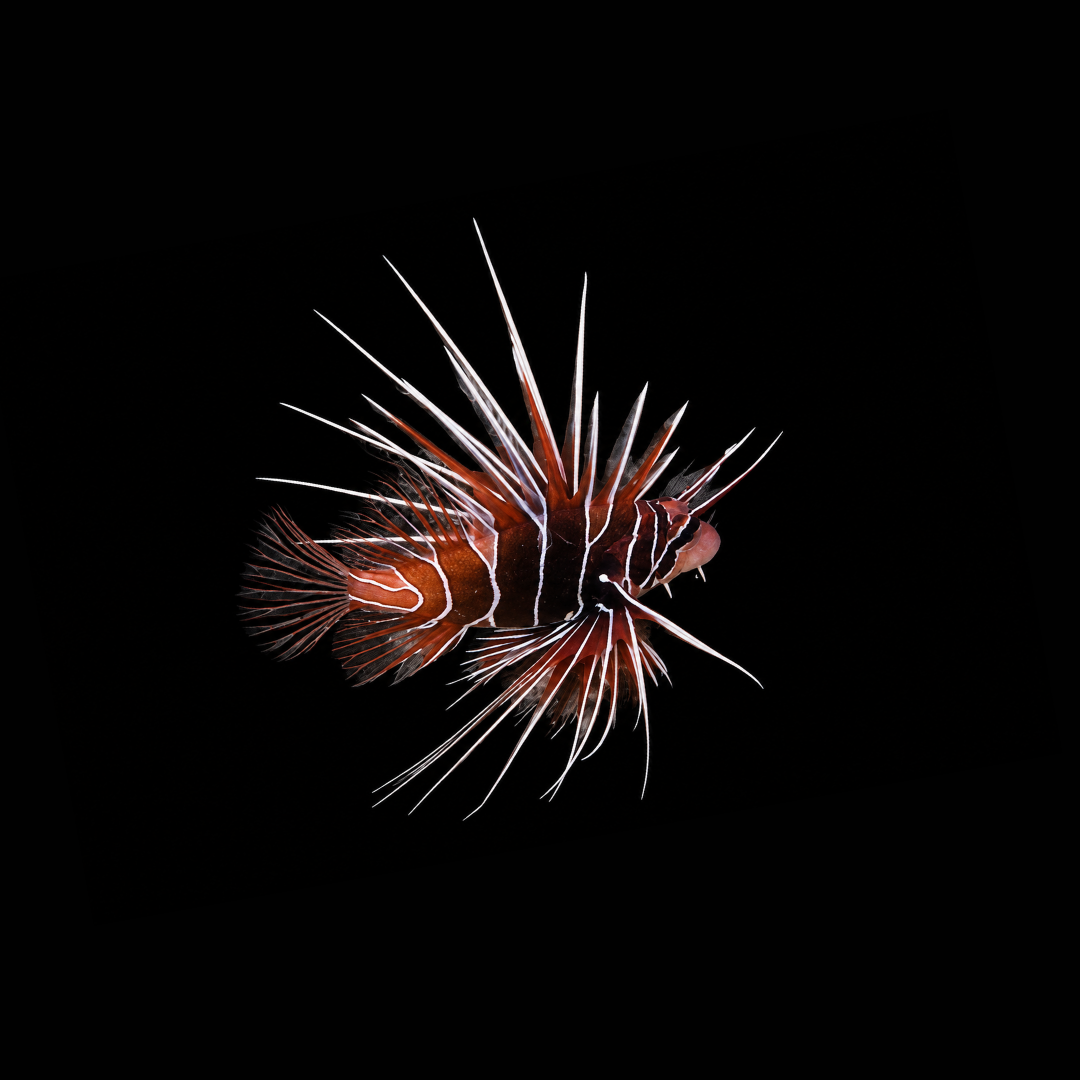
キミオコゼは、赤褐色から暗褐色の体に細い白線が走り、長い胸びれを放射状に広げる海水魚です。ミノカサゴの仲間で、胸びれに目立つ斑点がなく、尾の付け根に前後方向へ伸びる2本の白線があることが特徴です。主に夜間に活動し、日中は岩陰で休み、暗くなるとエビやカニなどの獲物を探します。ゆったりとした動きには独特の美しさがありますが、背びれなどには毒棘があるため、清掃や移動の際には注意が必要です。落ち着ける隠れ家と安定した海水環境を整え、餌付けや給餌を丁寧に行える飼育者に向いています。 The clearfin lionfish has a reddish-brown to dark-brown body marked with fine white lines and long pectoral rays that spread outward like a fan. Its unspotted pectoral fins and two lengthwise white lines on the caudal peduncle help distinguish it from similar lionfishes. Mainly nocturnal, it rests among rocks during the day and searches for prey such as shrimp and crabs after dark. Its unhurried movements are striking, but venomous fin spines require care during cleaning and transfers. This species suits aquarists able to provide secure shelters, stable marine conditions, and patient attention to feeding.
基本情報 / Basic Information
| 学名 / Scientific Name | Pteropterus radiatus (Cuvier, 1829) 旧属名による表記:Pterois radiata。属の変更後の文献には、Pteropterus radiataという表記も見られます。Former combination: Pterois radiata. The spelling Pteropterus radiata also appears in literature following the generic reassignment. |
|---|---|
| 通称 / Common Name | キミオコゼClearfin lionfish; Radiata lionfish |
| 分類 / Family | フサカサゴ科・ミノカサゴ亜科・キミオコゼ属。上位分類の扱いは、採用する分類体系によって異なる場合があります。Family Scorpaenidae; subfamily Pteroinae; genus Pteropterus. Higher-level classification may differ among taxonomic systems. |
| 英名 / English Name | Clearfin lionfish, Radial firefish, Tailbar lionfish |
| 分布 / Distribution | 東アフリカからインド洋、西・中部太平洋にかけて分布し、日本では琉球列島を含む南日本で見られます。浅いサンゴ礁や岩礁に生息し、岩の隙間や洞穴、張り出した岩の下などを利用します。紅海周辺のよく似た魚は、別種のPteropterus cinctusとして区別されています。Distributed from East Africa across the Indian Ocean into the western and central Pacific, reaching southern Japan, including the Ryukyu Islands. It inhabits shallow coral and rocky reefs, using crevices, caves, and overhangs. The similar lionfish from the Red Sea region is distinguished as Pteropterus cinctus. |
| 最大体長 / Max Size | 全長約24cm。水槽を選ぶ際には、体の長さだけでなく、胸びれを広げたときの幅も考慮します。Approximately 24 cm in total length. Aquarium dimensions must accommodate the spread of the pectoral fins as well as body length. |
| 寿命 / Lifespan | 本種の寿命について、確かな目安を示せる情報は十分ではありません。成魚になってからも継続して飼育できる設備と管理体制を整えて迎えます。Available information does not provide a reliable species-specific lifespan estimate. Prepare facilities and a care routine suitable for continued maintenance into adulthood. |
飼育環境 / Aquarium Environment
| 水槽サイズ / Tank Size | 成魚1匹を迎える場合でも、120cm規格水槽(120×45×45cm、寸法から計算した容量約243L)以上を目安に、余裕のある設備を用意します。胸びれを広げる空間や岩組みの占有面積を考えると、奥行き60cmの120cmワイド水槽(120×60×45cm、同約324L)はさらに配置の余裕があります。実際の水量は水位や岩、底砂によって少なくなります。水量だけで判断せず、成長後もひれを傷めずに出入りできる隠れ家と、無理なく方向転換できる空間を確保してください。Even for one adult, plan a spacious setup, using a Japanese standard 120 × 45 × 45 cm aquarium or larger as a practical guideline. Its calculated geometric capacity is approximately 243 L. A 120 cm wide-format aquarium measuring 120 × 60 × 45 cm, approximately 324 L geometrically, offers more room for extended fins and rockwork. Actual water volume is lower because of the operating water level, rocks, and substrate. Volume alone is insufficient: provide shelters accessible to the adult fish without fin damage and enough room for comfortable turns. |
|---|---|
| 水温 / Temperature | 22〜26℃程度を飼育時の目安とし、急な変化を避けます。夏季は高水温と酸素不足に注意し、必要に応じて水槽用クーラーを使用します。 Approximately 22–26°C is a practical maintenance range. Avoid sudden changes, prevent overheating and oxygen depletion in summer, and use an aquarium chiller when needed. |
| 水質 / Water Quality | 生物ろ過が十分に機能している海水水槽で飼育します。塩分濃度33〜35‰程度、比重は25℃でおおむね1.025〜1.026、pH8.1〜8.4を管理の目安とし、安定を優先します。アンモニアと亜硝酸が検出されない状態を維持し、硝酸塩の推移を見ながら換水の頻度と量を調整してください。蒸発分は真水で補います。比重の読み方や温度補正は測定器によって異なるため、説明書に従って使用・校正します。Use a marine aquarium with established biological filtration. Practical maintenance targets are salinity around 33–35 ppt, specific gravity approximately 1.025–1.026 at 25°C, and pH 8.1–8.4, with stability taking priority. Maintain undetectable ammonia and nitrite and adjust water-change frequency and volume according to nitrate trends. Replace evaporation with fresh water. Specific-gravity readings and temperature compensation depend on the instrument, so follow its operating and calibration instructions. |
| レイアウト / Layout | ライブロックなどを崩れないように固定し、成魚がひれを傷めずに出入りできる洞穴や岩の張り出しを設けます。照明の明るい水槽でも、十分に暗い隠れ家を確保してください。その前には採餌と移動のための空間を残します。水流は水槽全体に行き渡らせつつ、休息場所へ強く当たり続けないように調整します。ポンプの吸水口には、ひれの接触や吸い込みを防ぐ保護を施します。Secure live rock or other structures firmly and provide caves or overhangs that an adult can enter without damaging its fins. Ensure deeply shaded shelters even in brightly lit aquariums, leaving open space in front for feeding and movement. Maintain circulation throughout the tank without directing a continuous powerful jet into resting areas. Guard pump intakes against fin contact and entrapment. |
| 注意点 / Precautions | 背びれ・腹びれ・尻びれの棘には毒があります。素手で触れず、清掃前には必ず魚の位置を確認してください。移動時はひれが絡まりやすい網を避け、十分に大きな硬質容器へ水中で誘導します。死後も棘による刺傷に注意が必要です。刺された場合は作業を中止し、速やかに医療機関へ相談・受診してください。受診までの応急処置として、患部を40〜45℃程度の湯に浸すと痛みが和らぐことがあります。温度計で確認して45℃を超えないようにし、やけどを防いでください。傷を切る、口で吸う、強く絞る処置は行いません。呼吸困難や意識の異常があれば119番へ連絡します。飼育設備には十分なろ過能力と酸素供給を確保し、有機物の除去にはプロテインスキマーの併用も役立ちます。The dorsal, pelvic, and anal spines are venomous. Never handle the fish with bare hands, and locate it before cleaning. For transfers, guide it underwater into a sufficiently large rigid container rather than using a net that may entangle the fins. Spines remain hazardous after death. If stung, stop work and seek prompt medical advice and assessment. While arranging care, immersion in water around 40–45°C may relieve pain. Check with a thermometer, never exceed 45°C, and prevent burns. Do not cut, suck, or forcefully squeeze the wound. Call emergency services—119 in Japan—for breathing difficulty or altered consciousness. Provide adequate filtration and oxygenation; a protein skimmer can also assist organic waste removal. |
餌と給餌 / Feeding
| 餌の種類 / Diet | 肉食性で、自然下では主にエビやカニなどの甲殻類を食べ、小魚も捕食します。飼育下では、解凍した海産エビや小魚などを、無理なく飲み込める大きさで与えます。配合飼料への餌付きには個体差があり、必ず食べるとは限りません。導入直後に冷凍餌を受け付けない場合は、状態のよい活エビを餌付けに利用します。淡水魚の活餌や、むきエビなど一種類の餌だけに長期間頼らず、食べられる餌を組み合わせて栄養の偏りを防ぎます。A carnivore that feeds mainly on crustaceans such as shrimp and crabs and also takes small fish. In aquariums, offer thawed marine shrimp, small fish, and other suitable foods in manageable portions. Acceptance of formulated food varies and is not guaranteed. Healthy live shrimp can help establish feeding when a newly introduced fish refuses frozen food. Avoid long-term reliance on freshwater feeder fish or a single food such as peeled shrimp, and vary accepted foods to reduce nutritional imbalance. |
|---|---|
| 給餌のポイント / Feeding Tips | 購入前に、餌の種類と実際に食べている様子を確認しておくと、導入後の給餌が進めやすくなります。最初は照明を落とした時間帯に、長い給餌器具で餌を軽く動かして誘います。器具の先端をくわえさせないよう注意し、食べ残しは回収してください。成魚は週2〜3回程度を一つの目安に、体形、腹部の張り、食欲を見ながら量と間隔を調整します。幼魚には成魚より少量ずつ、こまめに与えます。一度に大量の餌を与えたり、人工飼料を食べさせるために長く絶食させたりしないでください。Before purchase, confirm the food being offered and observe the fish eating. Initially feed under dim lighting, gently moving food with a long feeding tool. Avoid letting the fish bite the tool tip and remove leftovers. For adults, two or three feeding sessions per week can serve as a starting point, adjusted to body condition, abdominal fullness, and appetite. Juveniles require smaller, more frequent meals. Avoid large meals or prolonged starvation intended to force acceptance of formulated food. |
性格と混泳 / Temperament and Tank Mates
| 性格 / Temperament | 普段は落ち着いており、岩陰で長時間休むことがあります。ただし、おとなしい性格でも、飲み込める大きさの生き物は捕食します。導入直後は警戒しやすいため、隠れ家から追い出したり、岩組みを頻繁に動かしたりせず、環境に慣れる時間を確保します。Usually quiet, it may rest in shelter for extended periods. A calm disposition does not prevent it from eating animals small enough to swallow. Newly introduced fish can be wary, so allow time to settle without forcing them out of hiding or repeatedly rearranging the rockwork. |
|---|---|
| 混泳の相性 / Compatibility | 小型のハゼやスズメダイ、小さなクマノミ、観賞用のエビや小型のカニは捕食されるおそれがあるため、混泳を避けます。相手の全長だけでなく、体高や体の太さも判断材料になります。混泳相手には、飲み込まれない大きさがあり、ひれをかじらず、餌を独占しない穏やかな魚を選びます。大型ヤッコ、フグ、モンガラカワハギなどにはひれを傷められる場合があり、大型のハタ類にはキミオコゼが捕食される危険もあります。同種同士の相性も保証できないため、まずは単独飼育が管理しやすいでしょう。サンゴを主に食べる魚ではありませんが、サンゴ水槽へ入れる際は、小型甲殻類の捕食と給餌に伴う水質への負担を考慮します。Avoid small gobies, damselfishes, small clownfishes, ornamental shrimp, and small crabs because they may be eaten. Body depth and thickness matter as well as total length. Choose peaceful companions too large to swallow that neither nip fins nor monopolize food. Large angelfishes, puffers, and triggerfishes may damage the fins, while large groupers may prey on the lionfish itself. Compatibility between conspecifics is also uncertain, making solitary housing easier to manage. Although it does not primarily feed on corals, its predation on small crustaceans and the nutrient load from feeding must be considered in reef aquariums. |
病気と対策 / Diseases and Prevention
| かかりやすい病気 / Common Diseases | ほかの海水魚と同様に、海水性白点病、ハダムシなどの外部寄生虫、傷口からの細菌感染に注意が必要です。輸送や導入の前後には、食欲低下、眼の白濁、ひれの損傷などにも気を配ります。これらの症状だけで原因を断定することはできません。呼吸が速い、体を繰り返しこする、痩せてくるといった変化も、体調を確認する手がかりになります。As with other marine fish, watch for marine white spot disease, external parasites such as monogenean flukes, and bacterial infections associated with wounds. Around transport and introduction, also monitor appetite, eye clarity, and fin condition. These signs alone do not establish a diagnosis. Rapid breathing, repeated rubbing, and weight loss provide additional clues to health problems. |
|---|---|
| 対策と予防 / Prevention | 呼吸が落ち着き、体表や眼に目立つ異常がなく、餌を食べている個体を選びます。導入時は本水槽と分けた検疫水槽で観察し、器具も使い分けます。不調が見られたら、水温、塩分、アンモニア、亜硝酸、酸素供給を確認してください。淡水浴はすべての病気に有効な処置ではなく、弱った個体には負担となります。一律に行わず、対象となる寄生虫や魚の状態に応じて判断します。薬剤は原因と製品の適用条件を確認して使用し、必要に応じて魚病に詳しい獣医師などに相談してください。体表の薄い膜がはがれる現象は、感染や傷による皮膚の異常と区別して観察します。Select a fish with steady breathing, no obvious skin or eye abnormalities, and confirmed feeding. Observe new arrivals in a separate quarantine aquarium and use dedicated equipment. If problems appear, check temperature, salinity, ammonia, nitrite, and oxygenation. Freshwater dips do not treat every disease and may stress weakened fish; their use should depend on the target parasite and the fish’s condition. Choose medication according to the cause and product instructions, consulting an aquatic veterinarian when needed. Distinguish superficial film shedding from skin damage caused by infection or injury. |
増やし方(繁殖) / Breeding
| 雌雄の判別 / Sexing | 外見だけで雌雄を確実に判別するための、一般的な飼育に利用しやすい指標は十分に知られていません。体の大きさやひれの長さだけで雌雄を決めつけることは避けます。Reliable external sexing criteria suitable for routine aquarium use are not well established. Body size and fin length alone should not be treated as definitive indicators of sex. |
|---|---|
| 繁殖形態 / Reproduction | 卵生です。ミノカサゴ類では、雌がゼリー状の物質に包まれた浮遊性の卵塊を放出し、体外受精する繁殖が知られています。親が卵や仔魚を守り育てるタイプではありません。ただし、本種の産卵数、産卵間隔、孵化時間については、確かな飼育目安を示せる情報が限られています。Oviparous. Lionfishes are known to release buoyant egg masses enclosed in gelatinous material, with external fertilization and no parental care of eggs or larvae. However, information specific to this species is insufficient to provide dependable aquarium estimates for egg counts, spawning intervals, or hatching times. |
| 繁殖のポイント / Breeding Tips | 家庭水槽で安定して繁殖させ、稚魚まで育てる方法は十分に確立されていません。繁殖を試みる場合は、成熟個体の相性に加え、産卵のための空間、卵を回収する設備、仔魚用の別水槽や微小な餌の準備が課題になります。産卵が見られても、そのまま稚魚が育つとは限りません。繁殖を目的に無理な複数飼育を行わず、それぞれの個体の健康を優先します。A dependable method for breeding this species and raising juveniles in home aquariums is not well established. Attempts require attention to adult compatibility, spawning space, egg collection, separate larval facilities, and suitably small food. Observing spawning does not guarantee successful rearing. Avoid forcing incompatible fish together and prioritize each animal’s health. |
雑学と豆知識 / Trivia and Fun Facts
| 1. 航海のスケッチから始まった名前 / 1. A name rooted in an expedition drawing | キミオコゼの学名の歴史は、18世紀の太平洋探検につながっています。1829年の記載は、クックの第1回航海に同行した画家シドニー・パーキンソンが描いた、タヒチの魚の図に基づくものでした。写真のない時代には、こうした図が遠く離れた研究者へ魚の姿を伝える重要な手段だったのです。後にはタヒチ産の個体が新模式標本として指定されました。これは、その学名がどの魚を指すのかを判断する基準となる標本です。水槽で目を引く白い線や長いひれの姿には、航海の記録から実物の標本へと受け継がれてきた研究の歴史があります。The scientific history of the clearfin lionfish reaches back to eighteenth-century Pacific exploration. Its 1829 description was based on a drawing of a Tahitian fish by Sydney Parkinson, an artist on Cook’s first voyage. Before photography, such drawings were an important way to communicate a fish’s appearance to distant researchers. A specimen from Tahiti was later designated as a neotype: a physical reference for deciding which fish the scientific name identifies. Behind the white lines and elongated fins familiar to aquarists lies a history connecting expedition drawings with preserved specimens. |
|---|---|
| 2. 学名が変わっても、魚が変わるわけではない / 2. A new classification for the same fish | 長く使われてきた学名はPterois radiataでしたが、2023年の研究では、DNAと体の特徴を合わせてミノカサゴ類の近縁関係が調べ直され、Pteropterus属が再び用いられるようになりました。これは、よく似た姿だけでは分からなかった関係を、分類に反映したものです。現在の学名Pteropterus radiatusで種小名の語尾が変わるのは、属名に合わせて形容詞の語尾を整える命名上の規則によります。古い飼育書や販売名にPterois radiataと書かれていても、それだけで別の魚を意味するわけではありません。Long known as Pterois radiata, this fish was reassigned following a 2023 study that examined lionfish relationships using both DNA and anatomical features and revalidated the genus Pteropterus. The revision reflects relationships that appearance alone had not fully revealed. In the current name, Pteropterus radiatus, the changed species-name ending follows the nomenclatural rule requiring an adjectival name to agree grammatically with its genus. An older book or shop label using Pterois radiata does not therefore indicate a different fish. |
| 3. 見分ける鍵は、ひれの斑点と尾の白線 / 3. Identification clues in the fins and tail | 長い胸びれを持つネッタイミノカサゴとは、一見よく似ています。胸びれの膜を比べると、ネッタイミノカサゴには青黒い斑点が目立つのに対し、キミオコゼにはそのような斑点がありません。尾びれの手前にある細い部分に、体の前後方向へ伸びる2本の白線があることも手がかりになります。ひれを広げた全体の姿だけでなく、こうした模様の違いを見ると、両種を見分けやすくなります。ただし、紅海周辺の近縁種にも似た模様があるため、詳しい同定では産地やほかの体の特徴も合わせて確かめます。The long-finned spotfin lionfish looks similar at first glance. Its pectoral membranes, however, bear conspicuous dark bluish spots that are absent in the clearfin lionfish. Two lengthwise white lines on the narrow base of the tail provide another clue. Comparing these markings rather than relying only on the overall fin display helps distinguish the two. Some close relatives from the Red Sea region have similar markings, so detailed identification also considers locality and other anatomical features. |
| 4. 岩陰では逆さまの姿勢も / 4. Resting upside down beneath a ledge | 岩の張り出しの下で腹を上に向けている姿は、初めて見ると心配になるかもしれません。キミオコゼは、岩陰で斜めや逆さまの姿勢をとって休むことがあります。姿勢を安定して保ち、呼吸が落ち着き、自力で移動できているなら、逆さまというだけで異常とはいえません。一方で、姿勢を保てずに漂う、呼吸が荒い、餌を食べない状態が続く場合は、体調や飼育環境を確認する必要があります。姿勢だけで判断せず、普段の過ごし方と合わせて観察することが大切です。A fish resting belly-up beneath a ledge can be worrying at first. Clearfin lionfish may nevertheless rest at an angle or upside down in sheltered spaces. If the fish holds its position steadily, breathes normally, and moves under its own control, an inverted posture alone does not indicate illness. Uncontrolled drifting, labored breathing, or persistent food refusal call for checks of health and aquarium conditions. Interpret posture alongside the fish’s usual behavior. |
| 5. 静かに見える魚が出す低い音 / 5. Low sounds from a seemingly silent fish | キミオコゼでは、刺激を受けたときに、低く持続する音を出すことが確認されています。発音には浮き袋に関連した筋肉が関わります。また、音を出す際にひれの棘を刺激の方向へ向ける動作が見られることから、この音には相手を遠ざける警告の役割がある可能性が示されています。つまり、身を守る際に、棘の動きだけでなく音も使っているかもしれないということです。ただし、自然下でいつ、どのような相手に音を使うのかは、十分に分かっていません。普段の仲間同士の会話が確認されたという意味ではなく、観察のために魚を刺激することも避けます。Clearfin lionfish have been recorded producing sustained low-frequency sounds when disturbed. Muscles associated with the swim bladder are involved in sound production. Because the fish also direct their fin spines toward the stimulus, the sound may function as a warning that helps deter an approaching animal. In other words, defense may involve sound as well as spine movements. When and toward whom these sounds are used in the wild remains incompletely understood. The findings do not establish everyday conversation between companions, and fish should not be provoked to elicit sounds. |
| 6. 「脱皮」と呼ばれる薄膜の更新 / 6. Renewal of a superficial film | ミノカサゴ類では、体表の薄い膜がはがれる様子が見られ、飼育では「脱皮」と呼ばれることがあります。エビやカニが硬い外骨格を脱ぐ現象とは異なり、体表を覆う薄い層が更新されるものです。付着物を取り除く働きがあると考えられていますが、膜がはがれたからといって、寄生虫がすべていなくなったとは判断できません。水中に残った膜は残餌と同様に回収し、ろ過と換水で水質を維持します。プロテインスキマーも有機物の除去に役立ちますが、それだけに頼らず、日々の観察と清掃を続けることが大切です。Lionfishes may shed a thin superficial film, a process sometimes called molting in aquarium discussions. Unlike a shrimp or crab shedding a rigid exoskeleton, this renews a thin surface covering. It is thought to help remove attached material, but shedding does not demonstrate that all parasites have been eliminated. Remove loose film as you would uneaten food and maintain water quality through filtration and water changes. A protein skimmer assists organic waste removal but does not replace regular observation and cleaning. |
| 7. 美しい胸びれと毒棘の役割 / 7. The roles of pectoral fins and venomous spines | 大きく広がる胸びれが危険に見えるかもしれませんが、毒棘があるのは背びれ・腹びれ・尻びれです。胸びれの長いすじそのものに、毒を注入する働きはありません。広げた胸びれは獲物を追い込む動作に使われ、毒棘は主に身を守るために役立ちます。毒は遠くへ飛ばされるのではなく、棘が刺さった傷口から入ります。胸びれに毒棘がないと分かっていても、魚が向きを変えればほかの棘に触れる危険があります。触れずに管理できる道具と作業空間を整えることが、魚を驚かせずに世話をする助けになります。The expansive pectoral fins may look threatening, but the venomous spines are in the dorsal, pelvic, and anal fins. The elongated pectoral rays do not inject venom. Spread pectoral fins help herd prey, while venomous spines primarily serve defense. Venom enters through a puncture rather than being projected at a distance. Even knowing that the pectoral fins lack venomous spines does not make touching safe: a turn of the body can bring other spines into contact. Suitable tools and working space allow care without direct handling or unnecessary disturbance. |
まとめ / Conclusion
キミオコゼは、細い白線と長い胸びれ、岩陰からゆっくり姿を現す動きが魅力の海水魚です。飼育では、成長後も余裕のある水槽と暗い隠れ家を用意し、食べる餌を確かめながら、安定した水質を保つことが大切です。小さな生き物を捕食する性質と毒棘を理解したうえで、混泳や日々の管理を考える必要があります。 The clearfin lionfish is distinguished by fine white markings, elongated pectoral fins, and its unhurried emergence from shelter. Successful care depends on space suitable for the adult fish, shaded retreats, an accepted diet, and stable water quality. Its predatory habits and venomous spines must guide both tank-mate choices and everyday maintenance.
日中に隠れていても無理に誘い出さず、呼吸や食欲、普段の行動を静かに見守ります。夜行性の暮らしを尊重し、触れずに世話を続けることで、胸びれを広げて過ごす姿を落ち着いて楽しめるでしょう。 Allow it to remain sheltered during the day, observing its breathing, appetite, and usual behavior without forcing it into view. Respecting its nocturnal habits and caring for it without direct contact creates the conditions for calmly enjoying its graceful fin displays.
気になる道具や飼い方を見つけてみませんか?
 アイのアクアグッズ案内コリドラスのもふもふ時間を楽しむ|餌・底砂・お掃除用品の選び方コリドラスのもふもふする食事風景を楽しむために。沈む餌2種類の違い、口元に配慮した底砂、食べ残しを回収する道具を、アクアグッズナビゲーターのアイが紹介します。記事はコチラ →
 アイのアクアグッズ案内ショップで見かけるカラフルなバケツ。いったい何が入ってる?道具の特徴や使い方、選ぶときのポイントをアイが紹介します。記事はコチラ →
さまざまな飼育テーマをご紹介。リンク先の記事には広告・商品紹介が含まれます。
案内・紹介記事一覧へ →分布マップ
キミオコゼ(Pteropterus radiatus)は、東アフリカからインド洋、西・中部太平洋にかけて分布します。日本では琉球列島を含む南日本で見られ、浅いサンゴ礁や岩礁に生息します。
地図は分布地域全体を見渡すための概略表示であり、表示範囲のすべてに生息することや、正確な分布境界を示すものではありません。マーカーは表示用に設定した代表地点(北緯0度・東経140度)で、実際の採集地点や生息確認地点ではありません。Google Earthも同じ代表地点を中心に開きます。紅海周辺のよく似た魚は、別種のPteropterus cinctusとして区別されています。
参考文献
分類・分布・生息環境
-
California Academy of Sciences.
Eschmeyer’s Catalog of Fishes:Pteropterus radiatus.
有効学名、異名、命名者、模式標本および分布。 -
Chou, T.-K., Liu, M.-Y. & Liao, T.-Y.(2023).
Systematics of lionfishes (Scorpaenidae: Pteroini) using molecular and morphological data.
Frontiers in Marine Science, 10, 1109655.
分子系統と形態に基づく属の再検討、Pteropterus属の再有効化。 -
Matsunuma, M. & Motomura, H.(2016;オンライン先行公開2015).
Redescriptions of Pterois radiata and Pterois cincta (Scorpaenidae: Pteroinae) with notes on geographic morphological variations in P. radiata.
Ichthyological Research, 63, 145–172.
キミオコゼの再記載、近縁種との識別、地理的変異および分布。 -
Hayes, F. E.(2020).
First record of the Radial Lionfish, Pterois radiata Cuvier, 1829 (Scorpaeniformes, Scorpaenidae), for Kosrae, Micronesia.
Check List, 16(5), 1125–1128.
ミクロネシアでの生息記録と観察環境。
飼育環境・健康管理
-
Merck Veterinary Manual.
Environmental Diseases of Aquatic Animals in Aquatic Systems.
魚類飼育に共通する水温、塩分、pH、溶存酸素、アンモニア・亜硝酸の管理。 -
Merck Veterinary Manual.
Management of Aquarium Fish.
観賞魚の一般的な検疫、生物ろ過、診断に基づく治療、淡水浴・薬浴の取り扱い。 -
University of Florida, IFAS Extension.
Cryptocaryon irritans Infections (Marine White Spot Disease) in Fish.
FA164.
海水性白点病の原因、生活環、症状、予防および治療の基本。
繁殖・発音
-
Morris, J. A., Jr., Sullivan, C. V. & Govoni, J. J.(2011).
Oogenesis and spawn formation in the invasive lionfish, Pterois miles and Pterois volitans.
Scientia Marina, 75(1), 147–154.
近縁種であるP. milesとP. volitansの卵形成と卵塊形成を扱った、ミノカサゴ類の繁殖様式に関する比較資料。 -
Parmentier, E., Herrel, A., Banse, M., Hornstra, H., Bertucci, F. & Lecchini, D.(2024;オンライン先行公開2023).
Diving into dual functionality: Swim bladder muscles in lionfish for buoyancy and sonic capabilities.
Journal of Anatomy, 244(2), 249–259.
キミオコゼを含むミノカサゴ類の発音、浮き袋に関連する筋肉、警告機能の可能性。
毒棘・刺傷時の対応
-
公益財団法人 日本中毒情報センター(2016;最終更新2019).
魚刺傷・腔腸動物(クラゲなど)刺傷について.
有毒魚による刺傷と、やけどを避けた45℃以下の温水による応急処置。 -
Divers Alert Network.
Hazardous Marine Life — Chapter 1: Envenomations(Lionfishの項).
ミノカサゴ類の毒棘、刺傷の症状、応急処置および医療機関での評価。
コメント