
解説 / Description
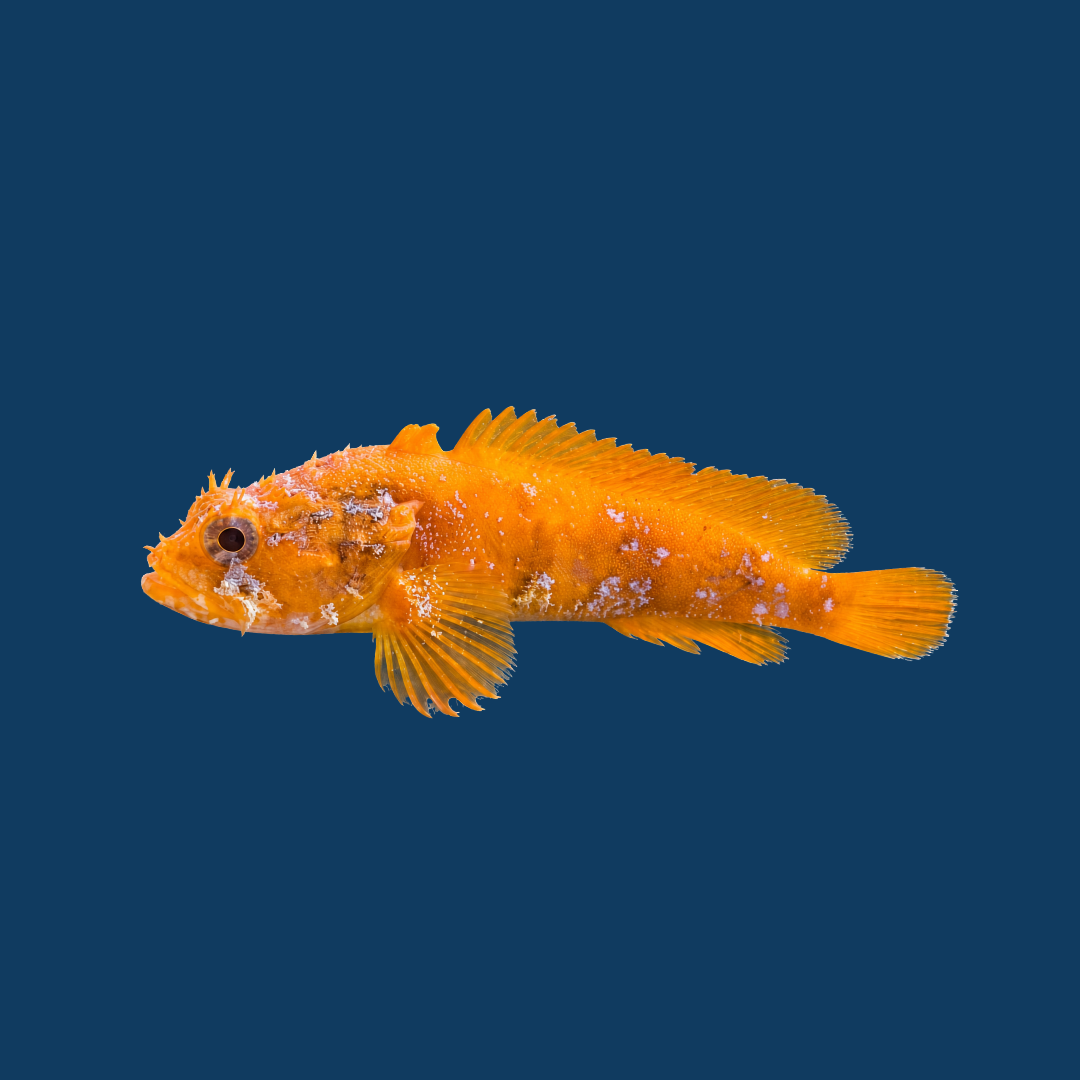
オレンジトードフィッシュは、岩陰や海草の間に身を潜め、近づいた獲物を大きな口で捕らえるガマアンコウ科の魚です。観賞魚としては鮮やかな橙色の個体が目を引きますが、Opsanus betaという種の典型的な体色は褐色から灰褐色のまだら模様で、「オレンジ」は独立した種や亜種を示す名前ではありません。活発に泳ぎ回るよりも、隠れ家から頭をのぞかせて静かに待つ姿を楽しむ魚です。ただし、その落ち着いた動きとは裏腹に、小魚や甲殻類を捕食し、成長すると30cmを超えることもあります。成魚に見合う水槽と落ち着ける隠れ場所を整え、食事と水質を丁寧に管理しながら付き合いたい個性派です。 The orange toadfish is a member of the family Batrachoididae that shelters among rocks or seagrass and captures passing prey with its large mouth. Vivid orange individuals are particularly striking in aquariums, but the typical coloration of Opsanus beta is mottled brown to gray-brown. “Orange” does not identify a separate species or subspecies. Rather than swimming constantly, this fish is best appreciated while resting with its head emerging from a shelter. Its quiet behavior should not be mistaken for harmlessness: it eats small fish and crustaceans and may exceed 30 cm as an adult. A suitably large aquarium, secure hiding places, and careful feeding and water management are essential for a lasting relationship with this distinctive fish.
基本情報 / Basic Information
| 学名 / Scientific Name | Opsanus beta (Goode & Bean, 1880) |
|---|---|
| 通称 / Common Name | オレンジトードフィッシュ、ガルフトードフィッシュ。「オレンジトードフィッシュ」という流通名だけでは種を特定できないため、購入時には学名も確認します。Orange toadfish; gulf toadfish. The trade name “orange toadfish” does not identify the species reliably on its own, so the scientific name should also be checked before purchase. |
| 分類 / Family | ガマアンコウ目(Batrachoidiformes)・ガマアンコウ科(Batrachoididae)・Opsanus属。Order Batrachoidiformes; family Batrachoididae; genus Opsanus. |
| 英名 / English Name | Gulf toadfish / Orange toadfish |
| 分布 / Distribution | 西部大西洋のフロリダ南部からメキシコ湾周辺を中心とし、バハマ周辺を含む分布も知られます。浅い沿岸の海草藻場、岩の隙間、湾、ラグーンなどに生息し、汽水域にも入ります。ブラジル沿岸には、原産域外に定着した個体群があります。Native to the western Atlantic, principally southern Florida and the Gulf of Mexico region, with the Bahamas also included in distribution accounts. It inhabits shallow coastal seagrass beds, rocky crevices, bays, and lagoons, including brackish environments. Established populations along the Brazilian coast occur outside its native range. |
| 最大体長 / Max Size | 最大約38cmとされます。30~33cm程度とされることもありますが、飼育設備は購入時の小さな姿ではなく、30~38cm級の成魚を想定して準備します。Reported maximum approximately 38 cm, although figures of around 30–33 cm are also given. Plan the aquarium around an adult of roughly 30–38 cm rather than the size of a small specimen at purchase. |
| 寿命 / Lifespan | 飼育下の平均寿命や最長寿命について、確かな目安は不明です。ブラジルの野生個体群では9歳までの年齢が報告されています。これを飼育下寿命の上限と考えず、10年規模の長期飼育を見据えて設備や将来の管理体制を整えるとよいでしょう。Reliable average and maximum lifespans in captivity are unknown. Ages of up to nine years have been reported in a wild population in Brazil. This should not be treated as a maximum captive lifespan; planning equipment and future care on a roughly decade-long timescale is a prudent approach. |
飼育環境 / Aquarium Environment
| 水槽サイズ / Tank Size | 成魚1匹でも幅120cm以上、水量はおおむね200~300L以上を設備設計の目安にします。120cm規格水槽(幅120×奥行45×高さ45cm、概算容積243L)を出発点とし、成長後の方向転換や隠れ家の大きさを考えると、120cmワイド水槽(幅120×奥行60×高さ60cm、概算容積432L)など、奥行きのある水槽を推奨します。容積は寸法から求めた計算値で、実水量は水位や底砂、岩によって少なくなります。これらは成魚サイズを踏まえた飼育上の推奨であり、本種に必要な最低水量が実験で確定しているわけではありません。For a single adult, use a tank at least 120 cm long and roughly 200–300 L or more as an initial planning guideline. A Japanese standard 120 cm aquarium measuring 120 × 45 × 45 cm has a calculated gross volume of 243 L. Allowing for an adult’s turning space and shelter size, a wider aquarium such as a Japanese 120 cm wide-format tank measuring 120 × 60 × 60 cm, with a calculated gross volume of 432 L, is preferable. These volumes are calculated from dimensions; actual water volume is lower because of the water level, substrate, and rockwork. These are practical recommendations based on adult size, not experimentally established minimum requirements for the species. |
|---|---|
| 水温 / Temperature | 23~26℃程度を目安に、安定した水温で管理します。自然界で幅広い水温を経験する魚ですが、その耐性を理由に急な温度変化を与えたり、高温や低温の限界を試したりしないことが大切です。 Maintain a stable temperature of approximately 23–26°C. Although the species experiences a wider temperature range in nature, this tolerance should not be used as a reason to expose it to abrupt changes or test its upper and lower limits. |
| 水質 / Water Quality | 通常は海水での安定管理を基本とし、塩分30~35‰(3.0~3.5%)、pH8.1~8.4程度を目安にします。アンモニアと亜硝酸は検出されない状態を維持し、硝酸塩は20mg/L未満をひとつの管理目標にします。汽水域にも暮らす魚ですが、家庭で塩分変動を再現する必要はありません。急な低塩分化を避け、導入元の水質も確認して環境を合わせます。Stable marine conditions are the normal starting point, with salinity around 30–35‰ (3.0–3.5%) and pH approximately 8.1–8.4. Keep ammonia and nitrite undetectable, with nitrate below 20 mg/L as a practical management target. Although this fish also inhabits brackish water, there is no need to reproduce salinity fluctuations in a home aquarium. Avoid abrupt reductions in salinity and check the conditions in which the fish was previously maintained. |
| レイアウト / Layout | 体を収められる岩穴や、十分な太さの塩ビ管などを用意し、落ち着いて隠れられる場所を作ります。岩組みは倒れないように安定させ、隠れ家の前には向きを変えたり餌をとったりできる底面を残します。水流は弱~中程度を基本に、隠れ家へ強い流れを直接当てないようにします。一方で酸素供給は十分に確保し、底付近に残餌がたまり続けない配置にしましょう。Provide a rock cave or a suitably large PVC shelter that accommodates the fish’s body. Secure all rockwork and leave open bottom space in front of the shelter for turning and feeding. Use gentle to moderate circulation without directing a strong jet into the resting place. At the same time, maintain adequate oxygenation and arrange the aquarium so that uneaten food does not continually accumulate near the bottom. |
| 注意点 / Precautions | 大型の肉食魚として、残餌や排泄による水質悪化を見越したろ過と清掃が必要です。動きが少なくても、小型水槽で終生飼育できる魚とは考えないようにします。魚体を不用意に素手でつかまず、給餌や清掃の際も口元に手を近づけないよう注意してください。ガマアンコウの仲間だからという理由だけで、本種を毒棘魚と断定する根拠は乏しいものの、取り扱いは慎重に行います。飼いきれなくなった個体を放流せず、輸送水や飼育水も自然水域へ直接流さない管理を心掛けます。As with other large carnivorous fish, filtration and cleaning must account for waste from food and excretion. Low activity does not make this species suitable for lifelong housing in a small aquarium. Avoid grasping it unnecessarily with bare hands, and keep fingers away from its mouth during feeding and maintenance. Membership in the toadfish family alone is not sufficient grounds to describe this species as a venomous-spined fish, but careful handling remains important. Never release an unwanted specimen, and do not discharge transport or aquarium water directly into natural waters. |
餌と給餌 / Feeding
| 餌の種類 / Diet | 甲殻類、軟体動物、魚類を食べる肉食性です。飼育下では、解凍した海産エビ、イカ、貝類、適切な大きさの海産魚肉などを組み合わせます。クリルを食べる個体もいますが、それだけを長期間の完全食として扱わず、複数の食材を取り入れましょう。口に合う大きさの餌では、殻や骨、内臓を含む丸ごとの餌も組み合わせ、切り身だけに偏らせない工夫が考えられます。A carnivore feeding on crustaceans, mollusks, and fish. Suitable aquarium foods include thawed marine shrimp, squid, mollusks, and appropriately sized pieces of marine fish. Some individuals accept krill, but it should not be treated as a complete long-term diet on its own. Offer a variety of foods. Where appropriately sized, incorporating whole prey containing shell, bones, and organs is a practical way to avoid relying exclusively on pieces of muscle meat. |
|---|---|
| 給餌のポイント / Feeding Tips | 成魚では週2~3回を出発点とし、体の大きさや体形、食べ方を見ながら量と回数を調整します。食べ残しを放置せず、餌を追加する前に前回の残りがないか確認しましょう。購入時には、解凍餌やクリルなどを実際に食べているか確かめると、その後の管理がしやすくなります。解凍餌に慣れた個体であれば、生きた小魚やエビを常用する必要はありません。単一の餌への偏りと、食べるだけ与え続ける管理を避けることが大切です。For adults, begin with two or three feedings per week and adjust the amount and frequency according to size, body condition, and feeding response. Remove uneaten food and check for leftovers before adding more. Before purchase, confirm that the fish actually accepts thawed foods or other manageable foods such as krill. An individual that readily eats thawed food does not require a continuous supply of live fish or shrimp. Avoid both a monotonous diet and feeding simply because the fish continues to accept food. |
性格と混泳 / Temperament and Tank Mates
| 性格 / Temperament | 岩陰などで静かに待つ底生の待ち伏せ型捕食魚です。日中は隠れ家から頭だけをのぞかせて過ごす姿も見られます。泳ぎ回らないため穏やかに見えますが、小魚を飲み込む能力があり、他魚への攻撃にも注意が必要です。「おとなしく見えること」と「混泳相手に安全であること」は分けて考えましょう。A bottom-dwelling ambush predator that spends much of its time waiting quietly in cover. During the day, it may rest with only its head visible at the entrance to a shelter. Its limited swimming activity can make it appear peaceful, but it can swallow smaller fish and may also behave aggressively. A quiet appearance should not be confused with safety for tank mates. |
|---|---|
| 混泳の相性 / Compatibility | 単独飼育を基本に考えるのが無難です。小型魚や観賞用の小型エビは捕食されるおそれがあり、同居には向きません。混泳を検討する場合も、口に収まらない十分な大きさの魚に限り、互いの攻撃や餌の競合を観察できる環境が必要です。同種では幼い個体を捕食した記録があるため、体格差のある複数飼育は特に避けたい組み合わせです。大きな相手や同程度の大きさの同種であっても、相性が保証されるわけではありません。Keeping a single specimen is the most cautious starting point. Small fish and ornamental shrimp may be eaten and are unsuitable companions. Any proposed fish companion should be far too large to fit into its mouth, and the keeper must be able to monitor aggression and competition for food. Predation on juvenile members of its own species has been recorded, making groups with substantial size differences especially unsuitable. Large companions or similarly sized conspecifics are not automatically compatible. |
病気と対策 / Diseases and Prevention
| かかりやすい病気 / Common Diseases | 本種に特有の病気の発生傾向や、ほかの魚よりかかりやすい病気については、十分に分かっていません。海水魚一般の注意点として、白点病の原因となるCryptocaryon irritansなどの寄生虫感染に気を配ります。体表や鰭の白点だけでなく、呼吸が速い、粘液が増える、体をこすり付けるといった変化も見逃さないようにしましょう。目立つ白点がないだけで感染を否定することはできません。Species-specific disease patterns and unusually high susceptibility to particular diseases are not well established. As a general marine-fish precaution, watch for parasitic infections such as marine white spot disease caused by Cryptocaryon irritans. In addition to visible spots on the skin or fins, pay attention to rapid breathing, increased mucus, and rubbing against surfaces. The absence of obvious white spots does not rule out infection. |
|---|---|
| 対策と予防 / Prevention | 新しく迎える個体は独立した隔離水槽で状態を観察し、呼吸、摂餌、皮膚、鰭、眼の変化を確認します。日常管理では残餌を回収し、アンモニアや亜硝酸の蓄積を防ぎながら、安定した水温・塩分と十分な酸素を保ちます。本種に対する薬剤の安全な濃度には不明な点があるため、銅剤などを「ほかの海水魚で使えたから」という理由だけで使用しないでください。異常が続く場合は、海水魚を診療できる獣医師などに相談し、可能であれば病原体を確認してから治療方針を決めます。Observe newly acquired fish in a separate quarantine aquarium, checking respiration, feeding, skin, fins, and eyes. In routine care, remove uneaten food, prevent ammonia and nitrite accumulation, and maintain stable temperature and salinity with adequate oxygenation. Species-specific safe treatment concentrations remain uncertain, so do not assume that copper or another medication is suitable simply because it was used successfully with a different marine fish. If abnormalities persist, consult a veterinarian experienced with marine fish and, where possible, identify the cause before deciding on treatment. |
増やし方(繁殖) / Breeding
| 雌雄の判別 / Sexing | 外見から確実に雌雄を見分けるための、一般的な飼育向けの目安は明確ではありません。繁殖に関わる雄の発音や、産卵床で卵を守る行動は手掛かりになりますが、鳴かない個体をそれだけで雌と判断することはできません。橙色の濃さを雌雄判別の基準にする根拠も不明です。A reliable, generally applicable method for sexing aquarium specimens by external appearance is not clearly established. Male reproductive calling and egg-guarding behavior can provide clues, but a fish that does not call cannot therefore be assumed to be female. The intensity of orange coloration is not an established basis for sexing. |
|---|---|
| 繁殖形態 / Reproduction | 水中の物体に付着する底生卵を産む卵生魚です。雄は産卵床を利用し、卵を保護します。繁殖に関わる季節性は地域によって異なり、メキシコ・ベラクルスの野生個体群では、おおむね11~3月に成熟の指標が高まることが報告されています。野外での季節を、そのまま家庭水槽の産卵時期に当てはめることはできません。An egg-laying species that produces demersal eggs attached to submerged objects. Males occupy nesting sites and guard the eggs. Reproductive seasonality differs geographically; in a wild population from Veracruz, Mexico, indicators of reproductive maturity increased broadly between November and March. This field pattern should not be treated as a fixed spawning calendar for a home aquarium. |
| 繁殖のポイント / Breeding Tips | 家庭で安定して繁殖させるための方法には不明な点が多く、ペア形成、孵化条件、仔魚の初期餌料について確かな手順は示されていません。繁殖に取り組む場合は、自然下での巣守りを踏まえ、十分な底面積と複数の洞窟状の産卵場所、成熟した雌雄、偏りのない食事を整える方針が考えられます。ただし、複数飼育そのものに攻撃や捕食のリスクがあります。産卵が見られた場合も、雄の巣守りを不用意に妨げない配慮が必要です。Many aspects of reliable home-aquarium breeding remain uncertain, including pair formation, hatching conditions, and suitable first foods for the young. An approach consistent with the species’ natural nesting behavior would provide ample bottom space, several cave-like nesting sites, mature adults, and a varied diet. However, maintaining multiple fish itself introduces risks of aggression and predation. If spawning occurs, avoid unnecessarily disturbing the male’s nest-guarding behavior. |
雑学と豆知識 / Trivia and Fun Facts
| 1. 「オレンジ」という名前の向こうにある素顔 / 1. The Fish Behind the “Orange” Name | 鮮やかな橙色の個体を見ると、この魚は自然界でも目立つ姿で暮らしているように思えるかもしれません。ところが、Opsanus betaの典型的な野生の姿は、褐色から灰褐色の地に白っぽい斑紋が重なる、まだら模様の魚です。岩や海草の間で待ち伏せする暮らしを思い浮かべると、観賞魚として目にする姿とは違った一面が見えてきます。 橙色の個体がどのような遺伝的仕組みで生じるのか、繁殖によって固定された系統があるのかは、十分に明らかではありません。そのため、「オレンジ」という名前から独立した品種や亜種だと判断することはできません。さらに国内では、同じ流通名でBatrachoides属の魚として販売された例もあります。迎えるときは色や販売名だけで決めず、学名、由来、個体の写真を合わせて確かめることが、その魚に合った暮らしを用意する第一歩になります。A vivid orange specimen may suggest a fish that is equally conspicuous in the wild. Yet the typical wild appearance of Opsanus beta is mottled brown to gray-brown with pale markings. Imagining it waiting among rocks and seagrass reveals a different side of the species from the brightly colored individuals seen in the aquarium trade. The genetic basis of orange coloration and the existence of a reliably fixed breeding line remain unclear. The word “orange” therefore does not establish a separate breed or subspecies. In Japan, fish identified as belonging to the genus Batrachoides have also been sold under the same trade name. Checking the scientific name, origin, and photographs together, rather than relying on color or a sales label, is an important first step toward providing appropriate care. |
|---|---|
| 2. 1880年から続く学名の歩み / 2. A Scientific Name with Roots in 1880 | 本種の命名は1880年にさかのぼります。ジョージ・ブラウン・グードとタールトン・ホフマン・ビーンが、メキシコ湾で得られた魚類のコレクションを扱う中で記載した当時の名前は、現在とは異なるBatrachus tau betaでした。その後の分類上の整理を経て、現在はOpsanus betaという学名で扱われています。 学名は一度付けられたら変わらない名札ではなく、生物同士の違いや関係を調べてきた歴史も映しています。本種にはOpsanus vandeuseniのように、別の名前で記載された後、同じ種の異名として扱われるようになった名前もあります。一方、種小名のbetaを命名者が選んだ詳しい意図は明確ではありません。元の名前に含まれるtauとの関係を想像することはできますが、それだけで命名の由来を断定しないことが大切です。The naming of this species dates to 1880. George Brown Goode and Tarleton Hoffman Bean described it while working on a collection of fishes from the Gulf of Mexico. Its original name was Batrachus tau beta, rather than the name used today. Subsequent taxonomic treatment led to its current placement as Opsanus beta. A scientific name is not simply a permanent label; it can also reflect the history of research into how organisms differ and how they are related. Names such as Opsanus vandeuseni were once used for separately described fish but later treated as synonyms of this species. The authors’ precise reason for choosing the epithet beta, however, is not clearly established. Its relationship to tau in the original name may invite speculation, but that alone does not demonstrate the intended etymology. |
| 3. 岩穴から響く、汽笛に似た求愛の声 / 3. A Courtship Call Like a Boat Whistle | 岩陰でじっとしている姿からは想像しにくいものの、本種は音によるやり取りが研究されている魚です。繁殖に関わる雄の鳴き声は、船の汽笛に似た響きとして知られ、雌を引き寄せたり、ほかの雄に存在を伝えたりする役割があります。魚の暮らしは見える動きだけで進んでいるのではなく、水の中の音にも支えられているのです。 英名の「トードフィッシュ」は、カエルを思わせるうなり声や笛のような音とも結び付けられています。家庭でも、条件が合えば成熟した雄の低い音に気付く可能性がありますが、すべての個体が常に鳴くわけではありません。静かに隠れている一匹にも、目では分からない繁殖のやり取りがあるかもしれないと考えると、普段の観察が少し違って感じられます。A fish sitting motionless in a rocky shelter may seem an unlikely subject for studies of acoustic communication, yet sound is an important part of this species’ biology. The male’s reproductive call is known as a boatwhistle. It helps attract females and advertise the caller’s presence to other males. A fish’s life therefore involves not only movements that we can see, but also sounds traveling through the water. The common name “toadfish” has also been linked to its frog-like grunts and whistle-like sounds. Under suitable circumstances, an aquarist may notice the low call of a mature male, although not every individual calls and calling is not continuous. The possibility that a quietly hidden fish is participating in an unseen reproductive exchange adds another dimension to observing it. |
| 4. 体の老廃物の処理にも個性がある / 4. An Unusual Way of Handling Nitrogen Waste | オレンジトードフィッシュの興味深さは、体色や鳴き声だけにとどまりません。多くの魚が窒素を含む老廃物を主にアンモニアとして排出するのに対し、本種には条件に応じて尿素の合成と排出へ比重を移す能力があり、生理学の研究対象として知られてきました。水槽の底で動かずにいるように見える間にも、体の中では周囲の条件に対応する仕組みが働いています。 ただし、尿素を利用できることは「水を汚さない魚」という意味ではありません。餌の残りや排泄物を含め、水槽全体の汚れは引き続き管理する必要があります。体内の調節能力に頼って飼育環境を緩めるのではなく、その独特な仕組みを知りながら、ろ過と清掃を丁寧に続けることが大切です。The orange toadfish is interesting for more than its coloration and calls. While many fishes eliminate nitrogenous waste mainly as ammonia, this species can shift toward synthesizing and excreting urea under certain conditions. This ability has made it an important subject in physiological research. Even while it appears inactive on the aquarium bottom, internal mechanisms are responding to surrounding conditions. Urea production does not, however, make it a fish that leaves the water clean. Uneaten food, excretory products, and other waste still require management. Its physiological flexibility is something to appreciate, not a reason to reduce filtration or neglect cleaning. |
| 5. 汽水で暮らせることと、飼育で無理をさせないこと / 5. Environmental Tolerance Is Not a Care Target | 本種は海だけでなく、河川の影響を受ける汽水環境でも暮らします。メキシコのラグーンでは低塩分の環境を利用することが知られ、ブラジルの定着水域では、季節によって水温が約18~30℃、塩分が約12~34となる環境も報告されています。こうした暮らしぶりからは、環境の変化に対応できる魚であることがうかがえます。 けれども、生息地で観測された数値は、飼育に最適な範囲や、生存できる上下限をそのまま示すものではありません。低酸素への耐性についても同様です。「耐えられる」ことと、長く健康に暮らせる条件が整っていることは別に考える必要があります。家庭では自然の変動をあえて再現するより、安定した海水と十分な酸素、安心して隠れられる場所を用意するほうが、管理の基本として適しています。This species lives not only in marine water but also in brackish environments influenced by rivers. It is known to use low-salinity habitats in a Mexican lagoon, while an established Brazilian population has been studied in waters experiencing seasonal temperatures of approximately 18–30°C and salinities of about 12–34. Such observations reveal considerable environmental flexibility. However, measurements from occupied habitats do not directly establish an optimal aquarium range or experimentally determined survival limits. The same caution applies to its tolerance of low oxygen. Being able to endure a condition is not the same as having suitable conditions for long-term health. In a home aquarium, stable marine water, adequate oxygen, and secure shelter are a more appropriate starting point than deliberately recreating environmental extremes. |
| 6. 新種と思われた魚が伝える、海を越えた移動の歴史 / 6. A Supposed New Species and a Journey Beyond Its Native Range | ブラジルで見つかったガマアンコウの仲間は、2005年にOpsanus brasiliensisという新種として記載されました。ところが2007年、分類を検討し直した研究によって、この名前はOpsanus betaの異名、つまり同じ種に付けられた別の学名として扱われることになりました。新しい種の発見と思われた出来事は、原産域から離れた場所に本種が存在することを考える手掛かりにもなったのです。 その後、ブラジルでは1~9歳の個体を含む年齢構成が調べられ、定着した個体群の姿が明らかになってきました。港湾周辺での記録などから、人の活動に伴う移動との関係も検討されています。この経緯は、海水魚であっても、原産域外へ移動した後に暮らし続けられる場合があることを教えてくれます。日本のどこで定着できるかを一律に断定することはできませんが、飼育個体を自然へ放さないという判断に、その確定を待つ必要はありません。A toadfish discovered in Brazil was described in 2005 as a new species, Opsanus brasiliensis. In 2007, a taxonomic reassessment treated that name as a synonym of Opsanus beta—a different scientific name applied to the same species. What initially appeared to be a new-species discovery also became a clue to the presence of this fish far beyond its native range. Subsequent work in Brazil examined a population containing individuals aged from one to nine years, revealing the structure of an established population. Records around ports have also prompted investigation of links with human-mediated movement. This history shows that marine fish can sometimes persist after reaching areas outside their native distribution. Exactly where the species could establish in Japan cannot be stated with certainty, but there is no need to resolve that question before deciding never to release aquarium specimens into the wild. |
| 7. 隠れ家は、獲物を待つ場所であり子育ての場所 / 7. Shelter as Both a Hunting Position and a Nursery | 普段の本種にとって、岩陰は近づく獲物を待つための場所です。しかし繁殖に関わる雄にとっては、産卵床を確保し、付着した卵を守る場所にもなります。隠れ家は単なる飾りではなく、この魚の暮らしの異なる場面を支える大切な空間なのです。 メキシコ・ベラクルスの野生個体群では、雌1尾あたり96~428卵という卵数が報告されています。一方で、成熟の時期は地域によって異なるため、こうした野外の数字をそのまま家庭での産卵数や繁殖日程の目安にすることはできません。それでも、卵が水中の物体に付着し、雄による保護を受けるという暮らしを知ると、落ち着いた洞窟状の場所を用意する意味がよりはっきりします。飼育下で繁殖を目指さない場合でも、安心して身を置ける場所を確保することが、この魚らしい行動を支えます。For this fish in everyday life, a rocky retreat is a place from which to wait for approaching prey. For a reproductive male, it also becomes a nesting site where attached eggs are guarded. A shelter is therefore more than decoration: it supports different parts of the fish’s life. In a wild population from Veracruz, Mexico, reported egg numbers ranged from 96 to 428 per female. Reproductive timing varies geographically, so these field observations should not be converted directly into expected aquarium egg counts or a breeding schedule. Nevertheless, knowing that eggs attach to submerged surfaces and receive male protection helps explain the value of a quiet, cave-like space. Even when breeding is not the goal, providing a secure retreat supports the species’ characteristic behavior. |
まとめ / Conclusion
オレンジトードフィッシュは、橙色の体と、岩陰からじっと外を見ているような姿が印象的な魚です。その静かな佇まいの奥には、30cmを超える体格と、小魚や甲殻類を捕らえる捕食者としての性質があります。成魚を見据えた幅120cm以上の水槽、落ち着ける隠れ家、偏りのない食事と安定した水質を整えることが、長く付き合うための土台になります。 The orange toadfish is memorable for its orange coloration and its habit of appearing to watch the world from a rocky retreat. Behind that quiet presence is a predator capable of exceeding 30 cm and capturing fish and crustaceans. An aquarium at least 120 cm long planned around adult size, a secure shelter, a varied diet, and stable water quality form the foundation of long-term care.
よく泳ぐ魚とは違い、隠れ家での過ごし方や食事への反応を、ゆっくり見守る楽しみがあります。鮮やかさだけを求めるのではなく、呼吸や体形、食欲の小さな変化にも目を向けてみてください。安心して待ち伏せできる場所を守りながら世話を重ねることで、水槽の岩陰にいる一匹が、少しずつ身近な存在になっていくでしょう。 Unlike an active open-water swimmer, this fish offers the quieter pleasure of watching how it occupies its shelter and responds to food. Look beyond its color and pay attention to small changes in breathing, body condition, and appetite. By preserving a secure place for its patient way of life and maintaining attentive care, the fish waiting among the rocks can gradually become a familiar presence.
気になる道具や飼い方を見つけてみませんか?
 アイのアクアグッズ案内水草用ソイルの選び方|土・砂の違いとおすすめ商品道具の特徴や使い方、選ぶときのポイントをアイが紹介します。記事はコチラ →
 アイのアクアグッズ案内水草水槽のCO₂添加|3つの方式の選び方とおすすめ用品道具の特徴や使い方、選ぶときのポイントをアイが紹介します。記事はコチラ →
さまざまな飼育テーマをご紹介。リンク先の記事には広告・商品紹介が含まれます。
案内・紹介記事一覧へ →分布マップ
オレンジトードフィッシュ(Opsanus beta)は、西部大西洋のフロリダ南部からメキシコ湾周辺を中心に、バハマ周辺にも分布します。浅い沿岸や汽水域に生息し、ブラジル沿岸には原産域外に定着した個体群があります。
地図は分布地域の位置関係を示す概略表示です。表示範囲全体に生息することや、正確な分布境界を示すものではありません。ピンはフロリダ南部付近に便宜上設定した代表地点(北緯25.0度・西経81.0度)で、実際の採集地点ではありません。Google Earthのリンクも同じ代表地点を開きます。
参考文献
-
Integrated Taxonomic Information System(ITIS). Opsanus beta (Goode and Bean, 1880). Taxonomic Serial Number: 164424.
有効な学名と命名者、ガマアンコウ目・ガマアンコウ科・Opsanus属への分類。
-
Goode, G. B. & Bean, T. H. (1880). Catalogue of a collection of fishes obtained in the Gulf of Mexico, by Dr. J. W. Velie, with descriptions of seven new species. Proceedings of the United States National Museum, 2(98), 333–345. DOI: 10.5479/si.00963801.2-98.333.
本種の原記載と命名史。
-
Caires, R. A., Pichler, H. A., Spach, H. L. & Ignácio, J. M. (2007). Opsanus brasiliensis Rotundo, Spinelli & Zavalla-Camin, 2005 (Teleostei: Batrachoidiformes: Batrachoididae), sinônimo-júnior de Opsanus beta (Goode & Bean, 1880), com notas sobre a ocorrência da espécie na costa brasileira. Biota Neotropica, 7(2), 135–139. DOI: 10.1590/S1676-06032007000200015.
Opsanus brasiliensisの異名処理と、ブラジル沿岸での出現記録。
-
Robertson, D. R. & Van Tassell, J. (2023). Opsanus beta, Gulf Toadfish. Shorefishes of the Greater Caribbean: online information system, Version 3.0. Smithsonian Tropical Research Institute.
原産域、海水・汽水の生息環境、典型的な体色、最大体長。
-
Florida Museum of Natural History, University of Florida. Gulf Toadfish. Discover Fishes.
バハマを含む分布、待ち伏せ行動、発音、雄による卵の保護。
-
Franco López, J., et al. (2017). Ecología y reproducción de Opsanus beta (Actinopterygii: Batrachoididae) en la Laguna de Alvarado, Veracruz, México. Revista de Biología Tropical, 65(4), 1381–1396. DOI: 10.15517/rbt.v65i4.27239.
メキシコ・アルバラード潟の生息環境、食性と共食い、成熟の季節性、卵巣内の卵数。
-
Carvalho, B. M., et al. (2022). Age, growth, and ontogenetic variation in the sagitta otolith of Opsanus beta (Goode & Bean, 1880), a non-native species in a wetland of international importance. Latin American Journal of Aquatic Research, 50(1), 124–134. DOI: 10.3856/vol50-issue1-fulltext-2743.
ブラジルの定着個体群における年齢・成長と、1~9歳の年齢構成。
-
Taylor, J. R. & Grosell, M. (2009). The intestinal response to feeding in seawater gulf toadfish, Opsanus beta, includes elevated base secretion and increased epithelial oxygen consumption. Journal of Experimental Biology, 212(23), 3873–3881. DOI: 10.1242/jeb.034579.
本種の研究飼育における水温・塩分、塩ビ管の隠れ家、イカの給餌と残餌の除去。
-
Walsh, P. J., Tucker, B. C. & Hopkins, T. E. (1994). Effects of confinement/crowding on ureogenesis in the gulf toadfish Opsanus beta. Journal of Experimental Biology, 191(1), 195–206. DOI: 10.1242/jeb.191.1.195.
飼育空間の制限や過密条件に伴う、尿素合成・排泄への移行を扱う生理学的研究。
-
Yanong, R. P. E. (2003/2025年改訂). Fish Health Management Considerations in Recirculating Aquaculture Systems—Part 3: General Recommendations and Problem-Solving Approaches. UF/IFAS Extension, University of Florida. Cir 122 / FA101.
循環ろ過飼育に共通する水質の安定、アンモニア・亜硝酸の管理、観察と隔離の基本。
-
Yanong, R. P. E. (2009/2012年改訂). Cryptocaryon irritans Infections (Marine White Spot Disease) in Fish. UF/IFAS Extension, University of Florida. FA164.
海水魚一般の白点病の症状、診断、生活環、隔離と感染予防。
-
Yanong, R. P. E. (2010/2024年改訂). Use of Copper in Marine Aquaculture and Aquarium Systems. UF/IFAS Extension, University of Florida. FA165.
海水飼育での銅剤の作用、魚種による感受性の違い、水質と毒性の関係。
オンライン資料閲覧日:
コメント