

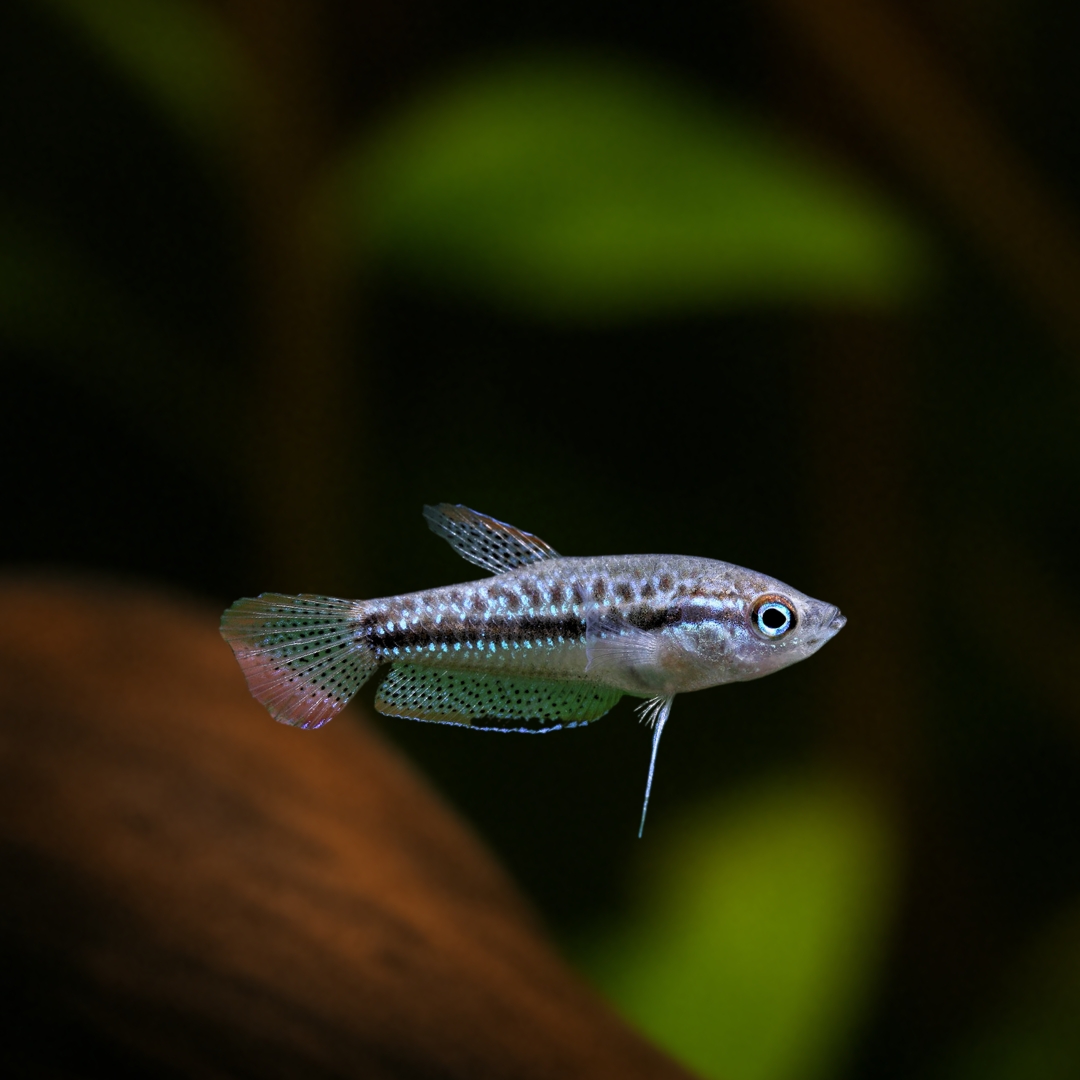
解説 / Description
ピグミーグラミーは、東南アジアの流れが緩やかな水域に暮らす、とても小さなグラミーの仲間です。体長は最大でもおよそ4cmほどで、体側には暗色のラインが入り、光を受けると赤、青、緑を帯びた繊細な輝きを見せます。水草の茂みや浮き草の下をゆっくり泳ぐ姿がよく似合い、小型水草水槽の主役にも脇役にもなれる魚です。 The Pygmy Gourami is a very small gourami from slow-moving waters in Southeast Asia. It reaches roughly 4 cm at most, has a dark lateral stripe, and can show delicate red, blue, and green iridescence under suitable light. It looks especially natural among dense plants and under floating vegetation, making it suitable as either a centerpiece or a quiet accent fish in small planted aquariums.
本種は、ラビリンス器官によって水面の空気を利用できるラビリンスフィッシュであり、さらにトリコプシス属らしい発音行動も知られています。静かな環境では、縄張り争いや繁殖に関わる場面で「コココ」と表現される小さな音を聞けることがあります。派手に泳ぎ回るタイプではありませんが、落ち着いた水槽でじっくり観察するほど魅力が増す、奥行きのある小型熱帯魚です。 This species is a labyrinth fish that can use atmospheric air at the water surface, and it is also known for the sound-producing behavior characteristic of the genus Trichopsis. In a quiet room, soft croaking sounds may be heard during territorial or breeding-related interactions. It is not a flashy, fast-swimming fish, but its charm deepens when observed carefully in a calm aquarium.
基本情報 / Basic Information
| 学名 / Scientific Name | Trichopsis pumila |
|---|---|
| 通称 / Common Name | ピグミーグラミー、スパークリンググラミーPygmy Gourami, Sparkling Gourami |
| 分類 / Family | オスフロネムス科トリコプシス属。現行の分類ではキノボリウオ目に置かれることが多く、資料や体系によっては古い分類表記が併記される場合があります。Genus Trichopsis in the family Osphronemidae. In current classifications it is often placed in Anabantiformes, while older or alternative references may use different higher-level placements. |
| 英名 / English Name | Sparkling Gourami, Pygmy Gourami |
| 分布 / Distribution | タイ、ラオス、カンボジア、ベトナムなどを含む東南アジアの低地水域に分布するとされ、文献によってはインドネシア方面までの記録も示されます。生息場所は、水草や浮き草が多い流れの緩やかな川、湿地、水田、池、溝などです。It is reported from lowland waters of Southeast Asia, including Thailand, Laos, Cambodia, and Vietnam, and some references also list records extending toward Indonesia. It inhabits slow rivers, wetlands, rice paddies, ponds, and ditches with abundant aquatic or floating vegetation. |
| 最大体長 / Max Size | 約4cm。流通個体や飼育下では3cm前後で見かけることも多いです。About 4 cm. Aquarium specimens are often seen around 3 cm. |
| 寿命 / Lifespan | 一般的には2〜4年ほどを目安にします。良好な環境では5年程度の飼育例が語られることもありますが、水質、給餌、導入時の状態に大きく左右されます。A typical aquarium lifespan is around 2 to 4 years. Some sources and keepers mention up to about 5 years under excellent conditions, but longevity depends strongly on water stability, diet, and the condition of the fish when acquired. |
飼育環境 / Aquarium Environment
| 水槽サイズ / Tank Size | 単独またはペアなら10L前後から飼育は可能ですが、水質の安定とレイアウトの作りやすさを考えると30cmキューブ水槽以上が安心です。複数飼育や混泳をする場合は、45cm規格水槽から60cm規格水槽を目安にすると、隠れ家と縄張りの余裕を確保しやすくなります。A single fish or pair can be kept from around 10 L, but a 30 cm cube tank or larger is safer for water stability and layout flexibility. For groups or community setups, a standard 45 to 60 cm aquarium makes it easier to provide hiding places and territorial space. |
|---|---|
| 水温 / Temperature | 22〜28℃を目安にします。特に25〜28℃付近を安定して保つと調子を維持しやすいです。冬はヒーター、夏は冷却ファンなどを使い、急激な温度変化や30℃を大きく超える高水温を避けます。 Aim for 22 to 28°C, with stable temperatures around 25 to 28°C being especially suitable. Use a heater in winter and cooling measures in summer to avoid sudden changes and prolonged high temperatures well above 30°C. |
| 水質 / Water Quality | 弱酸性から中性の軟水を基本にします。飼育上はpH6.0〜7.0前後を安定させると扱いやすく、状態のよい水槽ではやや弱酸性寄りでもよくなじみます。飼育許容範囲としてはpH5.0〜7.5程度まで語られることがありますが、数値を追い込みすぎるより、急変を避けることが重要です。底床には水草用ソイルを使いやすく、サンゴ砂や貝殻など水を硬くアルカリ性へ傾ける素材は基本的に避けます。Soft water from slightly acidic to neutral is ideal. In aquariums, keeping the water stable around pH 6.0 to 7.0 is practical, and healthy planted setups may run slightly acidic. A broader aquarium range of about pH 5.0 to 7.5 is often mentioned, but avoiding sudden changes is more important than chasing exact numbers. Planted-aquarium soil is useful, while coral sand, shells, and other materials that harden and alkalize the water are best avoided. |
| レイアウト / Layout | 水草、流木、落ち葉、浮き草を組み合わせ、薄暗く落ち着いた環境を作ります。ミクロソリウム、ウィローモス、クリプトコリネ類、サルビニア、アマゾンフロッグビットなどが使いやすい候補です。水流は弱めが基本で、エアリフト式スポンジフィルターや吐出口の向きを調整した小型フィルターが向いています。Combine aquatic plants, driftwood, leaf litter, and floating plants to create a dim, calm environment. Useful plants include Microsorum, Java moss, Cryptocoryne, Salvinia, and Amazon frogbit. Gentle flow is preferred, so air-driven sponge filters or small filters with carefully directed outlets are suitable. |
| 注意点 / Precautions | 飛び出し防止のため、フタは必須です。また、ラビリンス器官で水面上の空気を取り込むため、水面とフタの間に暖かく湿った空気層を残すことも大切です。満水にせず数cmの空間を残し、冷たい外気が直接入り続けないようにすると、成魚にも稚魚にもやさしい環境になります。A lid is essential to prevent jumping. Because the fish uses the air above the water surface with its labyrinth organ, a warm, humid air layer between the surface and the lid is also important. Leaving a few centimeters of space rather than filling the tank to the brim helps create a safer environment for both adults and fry. |
餌と給餌 / Feeding
| 餌の種類 / Diet | 小型魚用の人工飼料、細かい顆粒、細かく砕いたフレーク、冷凍ベビーブラインシュリンプ、冷凍赤虫、ミジンコなどを与えます。自然下では小さな水生昆虫、甲殻類、動物プランクトンなどを食べる小型捕食者としての性質があるため、人工飼料だけでなく動物質の餌も組み合わせると発色と体調を整えやすくなります。Offer fine granules, crushed flakes, small tropical-fish foods, frozen baby brine shrimp, frozen bloodworms, and daphnia. In nature it behaves as a small predator of aquatic insects, crustaceans, and zooplankton, so combining prepared foods with animal-based foods helps maintain color and condition. |
|---|---|
| 給餌のポイント / Feeding Tips | 口が小さいため、餌は細かくして与えます。食べる速度はそれほど速くないので、泳ぎの速い魚と混泳させる場合は餌が行き渡っているか確認します。1日1〜2回、数分で食べ切れる量を基本とし、食べ残しが底にたまらないようにします。Because its mouth is small, foods should be finely sized. It is not an especially fast feeder, so check that it receives food when kept with quicker fish. Feed once or twice a day, only as much as can be eaten within a few minutes, and avoid allowing leftovers to accumulate. |
性格と混泳 / Temperament and Tank Mates
| 性格 / Temperament | 基本的には温和で、物陰を好む控えめな小型魚です。ただし同種間では小さな縄張り意識を見せ、ヒレを広げて向き合ったり、発音を伴うディスプレイを行ったりすることがあります。複数で飼う場合は、水草や流木で視線を切れるようにして、追われた個体が隠れられる場所を用意します。It is generally peaceful and somewhat shy, preferring cover. However, individuals may show small-scale territorial behavior toward their own kind, including fin-spreading displays and croaking. In groups, use plants and driftwood to break lines of sight and provide hiding places for fish that are being chased. |
|---|---|
| 混泳の相性 / Compatibility | ボララス、ミクロラスボラ、小型ラスボラ、クーリーローチなど、穏やかで小型の魚と相性がよいです。スマトラのようにヒレをかじる魚、ゼブラダニオのように動きが速く餌を奪いやすい魚、ベタのオスなど強く主張するラビリンスフィッシュは避けた方が無難です。ミナミヌマエビやチェリーシュリンプなどの小型エビは、稚エビだけでなく小さな個体が捕食対象になることがあるため、エビを殖やしたい水槽では混泳を避けます。Good companions include calm small fish such as Boraras, microrasboras, small rasboras, and kuhli loaches. Fin-nippers such as tiger barbs, very fast feeders such as zebra danios, and assertive labyrinth fish such as male Betta splendens are best avoided. Small shrimp such as Neocaridina and cherry shrimp may be preyed upon, especially juveniles and smaller individuals, so they are not recommended if shrimp breeding is a goal. |
病気と対策 / Diseases and Prevention
| かかりやすい病気 / Common Diseases | 特定の病気だけに極端に弱い魚ではありませんが、水質悪化、急な水温変化、強い水流、過密、輸送直後のストレスが重なると、白点病、尾ぐされ、カラムナリス症、エロモナス症などの一般的な淡水魚の病気が出やすくなります。小型魚のため、痩せや食欲低下の進行も早く見えることがあります。It is not unusually fragile against one specific disease, but poor water quality, sudden temperature changes, strong current, overcrowding, and transport stress can lead to common freshwater problems such as ich, fin rot, columnaris, and Aeromonas infections. Because it is small, weight loss and reduced appetite can become noticeable quickly. |
|---|---|
| 対策と予防 / Prevention | 安定した水質、弱い水流、過密を避けた飼育密度、少量の定期換水を心がけます。導入時は水合わせを丁寧に行い、可能であればトリートメント水槽で数日から数週間ほど状態を確認してから本水槽へ移します。フタをして水面上の空気を冷やしすぎないことも、ラビリンスフィッシュの管理では大切です。Maintain stable water quality, gentle flow, moderate stocking density, and regular small water changes. Acclimate new fish carefully, and if possible observe them in a quarantine tank for several days to a few weeks before moving them to the main aquarium. A lid that prevents the surface air from becoming too cold is also important for labyrinth fish. |
増やし方(繁殖) / Breeding
| 雌雄の判別 / Sexing | 若魚では判別が難しいです。成熟したオスは発色が強く、ヒレや体側の赤みが目立つ傾向があります。メスは抱卵すると腹部がふくらみ、明るい光の下では卵巣が透けて見えることがあります。ただし外見差は大きくないため、繁殖行動や同種間ディスプレイも合わせて判断します。Sexing juveniles is difficult. Mature males often show stronger coloration and more noticeable red tones on the fins and body. Females may become rounder when carrying eggs, and the ovary may be visible under strong light. Because external differences are subtle, breeding behavior and displays should also be considered. |
|---|---|
| 繁殖形態 / Reproduction | 泡巣を作るバブルネストビルダーです。オスが浮き草の下、水草の陰、筒状の隠れ家などに泡巣を作り、メスを誘います。産卵はオスがメスを抱えるように巻きつくアナバンティッド・エンブレイスで行われ、落ちた卵はオスが口で拾って泡巣へ運びます。It is a bubble-nest builder. The male constructs a nest under floating plants, among vegetation, or inside sheltered spaces, then courts the female. Spawning occurs in the typical anabantoid embrace, and the male collects fallen eggs in his mouth and places them in the nest. |
| 繁殖のポイント / Breeding Tips | 繁殖を狙う場合は、弱酸性から中性の軟水、低水流、浮き草、静かな環境を整えます。産卵後はメスが追われることがあるため隔離し、稚魚が自由遊泳を始めたらオスも隔離すると安全です。稚魚は非常に小さく、最初からブラインシュリンプ幼生を食べられないことがあるため、インフゾリア、ゾウリムシ、PSBなどの微細な初期飼料を事前に用意し、成長に合わせてベビーブラインシュリンプへ切り替えます。For breeding, provide soft water from slightly acidic to neutral, very gentle flow, floating plants, and a quiet environment. The female may be chased after spawning, so removing her is often safer. Once the fry are free-swimming, removing the male is also recommended. The fry are extremely small and may not take baby brine shrimp immediately, so prepare tiny first foods such as infusoria, paramecia, or photosynthetic bacteria before switching to baby brine shrimp as they grow. |
雑学と豆知識 / Trivia and Fun Facts
| 1. 「空気を吸える魚」という進化の工夫 / 1. An evolutionary solution for breathing air | ピグミーグラミーは、鰓だけでなくラビリンス器官を使って水面上の空気も利用します。この仕組みは、酸素が少なくなりやすい暖かい止水域で暮らすラビリンスフィッシュに共通する大きな特徴です。水槽では「空気を吸えるからエアレーション不要」と単純に考えるのではなく、水質を保ちつつ、水面上に冷たく乾いた空気が入り込みすぎないようにすることが大切です。The Pygmy Gourami uses not only its gills but also its labyrinth organ to take in air at the water surface. This is a major feature of labyrinth fishes living in warm, oxygen-poor still waters. In aquariums, this does not mean that water quality can be neglected; instead, keep the water clean while also preventing the air above the surface from becoming too cold and dry. |
|---|---|
| 2. 胸びれで音を生み出すトリコプシス属 / 2. A Trichopsis fish that makes sound with its pectoral fins | トリコプシス属の魚は、胸びれ周辺の発達した筋肉や腱を使って小さなパルス音を出すことで知られています。ピグミーグラミーでも、オスだけでなくメスも発音できることが研究で示されており、音の性質には雌雄差が見られます。水槽で聞こえる音は大きな鳴き声というより、静かな部屋でふと気づく小さな「クリック音」や「コココ」という響きに近いものです。Fishes of the genus Trichopsis are known for producing small pulsed sounds using specialized muscles and tendons around the pectoral fins. In the Pygmy Gourami, studies have shown that not only males but also females can produce sounds, and sound characteristics differ between the sexes. In an aquarium, the sound is less like a loud voice and more like a soft clicking or croaking noticed in a quiet room. |
| 3. 学名に残る「小ささ」 / 3. Smallness preserved in the scientific name | 種小名のpumilaは、小さいものを連想させるラテン語に由来します。ピグミーグラミーという通称も、この魚の小さな体をよく表しています。一方で、その小さな体には、空気呼吸、発音、泡巣繁殖といった複数の興味深い性質が詰まっており、サイズ以上の観察価値があります。The specific name pumila comes from Latin associated with smallness, and the common name Pygmy Gourami also reflects its tiny body. Yet within that small body are several fascinating traits, including air breathing, sound production, and bubble-nest breeding, giving it far more observational value than its size suggests. |
| 4. エビ水槽では「かわいい小型魚」でも油断しない / 4. A cute nano fish can still be risky for shrimp | ピグミーグラミーは温和な小型魚として紹介されることが多い一方、口に入るサイズの小動物には強い関心を示します。特に稚エビは狙われやすく、親エビでも小さな個体や脱皮直後の個体は安全とは言い切れません。水草水槽の雰囲気にはよく合いますが、エビの繁殖を楽しむ水槽では魚を入れない、または別水槽で管理する方が安心です。The Pygmy Gourami is often described as a peaceful nano fish, but it still shows strong interest in tiny animals that fit in its mouth. Baby shrimp are especially vulnerable, and even small adults or freshly molted shrimp cannot be considered completely safe. It suits the appearance of a planted aquarium very well, but a shrimp-breeding setup is safer without it or with the fish kept separately. |
| 5. 繁殖成功の分かれ目は「産卵後の数日」 / 5. The first few days after spawning decide breeding success | ピグミーグラミーは条件が整うと泡巣を作って産卵しますが、難所は産卵そのものよりも稚魚の初期給餌です。自由遊泳を始めたばかりの稚魚は非常に小さく、一般的なブラインシュリンプ幼生でも大きすぎる場合があります。インフゾリアやPSBのような微細な餌を先に準備しておくと、最初の数日を乗り越えやすくなります。The Pygmy Gourami may build a bubble nest and spawn when conditions are right, but the hardest part is often not spawning itself; it is feeding the fry at the very beginning. Newly free-swimming fry are extremely small, and even baby brine shrimp may be too large at first. Preparing microscopic foods such as infusoria or photosynthetic bacteria in advance makes the first few days much easier to manage. |
まとめ / Conclusion
ピグミーグラミーは、小さな体に美しい輝き、空気呼吸、発音行動、泡巣繁殖という魅力を備えた小型熱帯魚です。水草を多く使った落ち着いた水槽、弱酸性から中性の安定した軟水、穏やかな水流、しっかりしたフタを用意すれば、本来の姿を観察しやすくなります。 The Pygmy Gourami is a small tropical fish with beautiful iridescence, air breathing, sound-producing behavior, and bubble-nest breeding. A calm planted aquarium with stable soft water from slightly acidic to neutral, gentle flow, and a secure lid will help bring out its natural behavior.
一方で、強い水流、明るすぎる環境、餌を奪う混泳魚、小型エビとの同居には注意が必要です。派手さよりも、静かな水槽の中で見せる細かな行動を楽しむ魚なので、じっくり観察できる環境を整えてあげると、図鑑の写真だけでは分からない奥深い魅力に出会えます。 At the same time, care is needed with strong current, overly bright setups, fast-feeding tank mates, and small shrimp. This is a fish best appreciated through quiet observation rather than flashiness, and a well-planned aquarium will reveal subtle behaviors that photographs alone cannot show.

気になる道具や飼い方を見つけてみませんか?
 アイのアクアグッズ案内水草の肥料の選び方|底床用・液肥・メネデールの使い分け道具の特徴や使い方、選ぶときのポイントをアイが紹介します。記事はコチラ →
 アイのアクアグッズ案内ラスボラ・ボララスの群泳を楽しむ飼育用品|水槽・ろ過・ヒーター・餌・水草道具の特徴や使い方、選ぶときのポイントをアイが紹介します。記事はコチラ →
さまざまな飼育テーマをご紹介。リンク先の記事には広告・商品紹介が含まれます。
案内・紹介記事一覧へ →分布マップ
ピグミーグラミーは、タイ、ラオス、カンボジア、ベトナムなどを含む東南アジアの低地水域に分布するとされ、水草や浮き草が多い流れの緩やかな川、湿地、水田、池、溝などに見られます。この地図では、分布イメージを示すため、メコン下流域周辺を概略代表地点として表示しています。
※このプロットは、記事中の分布情報をもとにした概略の代表地点です。実際の採集地点や厳密な生息範囲を示すものではありません。
この記事では、分類、分布、生息環境、飼育条件、繁殖、発音行動、病気や管理上の注意点を確認するため、店舗・通販・個人ブログ・まとめサイトを除外し、魚類データベース、学術資料、獣医系資料を中心に参照しています。
-
Fricke, R., Eschmeyer, W. N. & Van der Laan, R. (eds.). Eschmeyer’s Catalog of Fishes, California Academy of Sciences. “Trichopsis pumila”.
Eschmeyer’s Catalog of Fishes の該当ページ
主な確認範囲:学名の有効性、原記載、分類上の位置づけ、タイプ産地、東南アジアにおける分布記述。 -
Froese, R. & Pauly, D. (eds.). FishBase. “Trichopsis pumila, Pygmy gourami”.
FishBase の種情報ページ
主な確認範囲:最大体長、淡水性、底中層性、分布、水温、pH、硬度、生息環境、低酸素環境への適応、食性、泡巣繁殖と産卵数。 -
Kottelat, M. (2013). The fishes of the inland waters of Southeast Asia: a catalogue and core bibliography of the fishes known to occur in freshwaters, mangroves and estuaries. The Raffles Bulletin of Zoology, Supplement 27: 1–663.
Raffles Bulletin of Zoology Supplement 27 PDF
主な確認範囲:東南アジア内陸水域の魚類相、地域分布、淡水魚カタログとしての分類・分布確認。 -
Rainboth, W. J. (1996). Fishes of the Cambodian Mekong. FAO Species Identification Field Guide for Fishery Purposes. FAO, Rome.
主な確認範囲:メコン流域の魚類相、生息環境、繁殖情報。FishBaseが本種の泡巣繁殖・産卵数などの根拠文献として挙げている資料です。 -
Liesch, N. & Ladich, F. (2020). Both sexes produce sounds in vocal fish species: testing the hypothesis in the pygmy gourami (labyrinth fishes). Journal of Experimental Biology, 223(10): jeb223750.
Journal of Experimental Biology の論文ページ
主な確認範囲:ピグミーグラミーの発音行動、雌雄ともに発音できること、発音器官の性的二型、闘争時の音響コミュニケーション。 -
Fine, M. L. & Parmentier, E. (2015). Mechanisms of Fish Sound Production. In: Sound Communication in Fishes.
章本文PDF
主な確認範囲:トリコプシス属を含む魚類の発音機構、胸びれ周辺の腱を使った発音メカニズムの背景説明。 -
Merck Veterinary Manual. “Disorders and Diseases of Fish”.
Merck Veterinary Manual の解説ページ
主な確認範囲:観賞魚の病気とストレス、 poor water quality、過密、検疫不足などが病気の誘因になる点。 -
MSD Veterinary Manual. “Bacterial Diseases of Fish” and “Management of Aquarium Fish”.
Bacterial Diseases of Fish
Management of Aquarium Fish
主な確認範囲:細菌性疾患と水質悪化、輸送・取り扱いストレス、急な水温変化、低酸素、アンモニア・pH変動への注意。





コメント