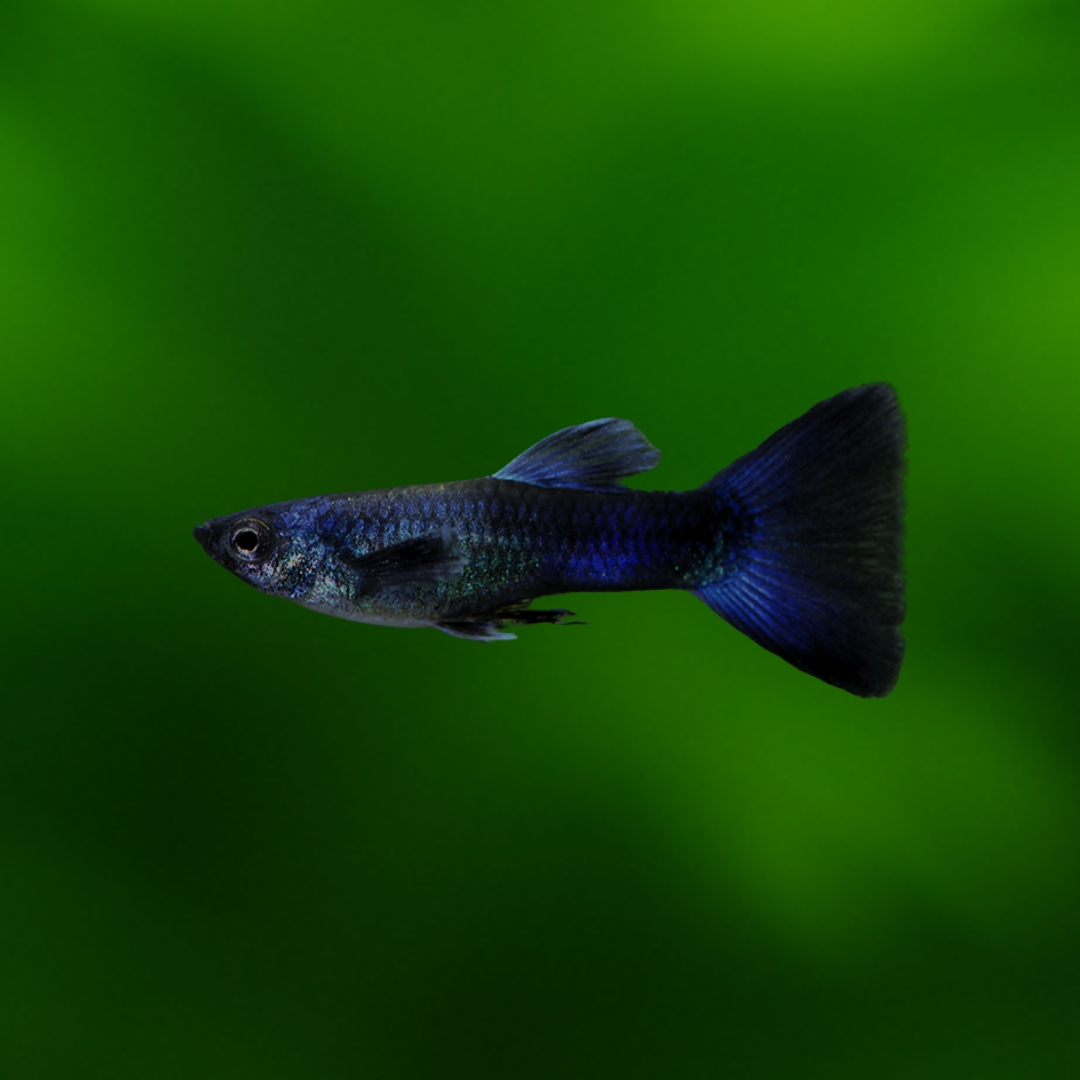
モスコーブルーグッピーは、深い濃紺から青紫、光の角度によっては緑がかった金属光沢まで見せる、青色系グッピーを代表する改良品種です。がっちりとした体格と大きく広がる尾ビレを持つ個体が多く、落ち着いた暗色の底床や背景、水草の緑と合わせると、体表の青がより印象的に映えます。一般的なグッピーと同じく飼育しやすい面はありますが、美しい発色と健康を維持するには、水質の安定、十分な栄養、入荷元の異なる個体を安易に混ぜない衛生管理が大切です。The Moscow Blue Guppy is a representative blue guppy strain known for its deep navy coloration, sometimes shifting toward violet or metallic green depending on the lighting angle. Many individuals have a sturdy body and broad tail, and their blue sheen stands out beautifully against dark substrates, dark backgrounds, and green aquatic plants. Like other guppies, it is relatively easy to keep, but stable water quality, good nutrition, and careful hygiene management when mixing fish from different sources are important for maintaining health and vivid coloration.
基本情報 / Basic Information
学名 / Scientific Name
Poecilia reticulata
通称 / Common Name
モスコーブルーグッピー、モスコー・ブルー、モスコーブルーMoscow Blue Guppy, Moscow Blue
分類 / Family
カダヤシ目 カダヤシ科 グッピー属Order Cyprinodontiformes, Family Poeciliidae, Genus Poecilia
英名 / English Name
Moscow Blue Guppy
分布 / Distribution
原種グッピーは南米北部からカリブ海周辺に自然分布し、現在では人為的な移入によって各地に定着した地域もあります。モスコーブルーは野生種ではなく、愛好家の間ではロシア、特にモスクワ周辺で発展した系統に由来すると語られる改良品種です。Wild guppies are native to northern South America and parts of the Caribbean region, and introduced populations are now established in many other areas. Moscow Blue is not a wild form, but a cultivated strain often said among hobbyists to trace its background to lines developed in Russia, especially around Moscow.
最大体長 / Max Size
オス約3〜4cm、メス約4〜6cm。系統や育成環境によって差があります。Males reach about 3–4 cm, while females reach about 4–6 cm. Size varies depending on line and rearing conditions.
寿命 / Lifespan
おおよそ1.5〜2.5年が目安です。高水温で成長を早めると寿命は短くなりやすく、安定した水温と過密を避けた飼育が長期維持のポイントです。Usually about 1.5–2.5 years. Warmer conditions may accelerate growth and shorten lifespan, so stable temperature and avoiding overcrowding are important for long-term care.
飼育環境 / Aquarium Environment
水槽サイズ / Tank Size
ペアや少数飼育なら30cmキューブ水槽程度から可能ですが、水質の安定や繁殖を考えるなら45cm規格水槽以上が扱いやすいです。複数ペアや稚魚の育成まで見込む場合は、60cm規格水槽を用意すると管理しやすくなります。A pair or a small group can be kept from around a 30 cm cube tank, but a 45 cm standard tank or larger is easier for stable water quality and breeding. A 60 cm standard tank is recommended when keeping multiple pairs or raising fry.
水温 / Temperature
22〜28℃。発色、成長、繁殖を安定させるなら24〜26℃前後が扱いやすいです。急な温度変化は体調を崩す原因になるため、ヒーターで安定させておくと安心です。22–28°C. Around 24–26°C is easy to manage for stable coloration, growth, and breeding. Sudden temperature changes can cause stress, so using a heater for stability is recommended.
水質 / Water Quality
中性〜弱アルカリ性を好み、pH7.0〜8.0前後が扱いやすい目安です。グッピーはある程度の適応力がありますが、酸性に傾きすぎた古い水では調子を崩しやすいため、定期的な換水とろ過の安定が重要です。Neutral to slightly alkaline water is preferred, with around pH 7.0–8.0 being easy to manage. Guppies are adaptable, but old water that becomes too acidic can weaken them, so regular water changes and stable filtration are important.
レイアウト / Layout
暗色の底床や黒系のバックスクリーンを使うと、モスコーブルー特有の濃い青と金属光沢が引き立ちます。水草を多めに入れると稚魚の隠れ家にもなり、ウィローモスやマツモ、浮き草類などは繁殖水槽でも役立ちます。Dark substrate and a black background enhance the deep blue and metallic sheen of Moscow Blue Guppies. Dense aquatic plants also provide shelter for fry, and plants such as Java moss, hornwort, and floating plants are useful in breeding tanks.
注意点 / Precautions
国産グッピーと外国産グッピーは、病原体への耐性や持ち込みリスクが異なる場合があります。特に既存水槽へ追加する際は、入荷元の違う個体を安易に混ぜず、別水槽での観察期間を設けることが大切です。水合わせは時間をかけ、導入直後は餌を控えめにして状態を確認します。Domestic and imported guppies may differ in disease resistance and pathogen risk. Avoid mixing fish from different sources too casually, and observe new fish in a separate tank before introduction. Acclimate them slowly and feed lightly at first while checking their condition.
餌と給餌 / Feeding
餌の種類 / Diet
人工飼料、フレークフード、顆粒フード、冷凍アカムシ、冷凍ブラインシュリンプ、イトメ、ミジンコなどをよく食べます。稚魚には孵化直後のブラインシュリンプや細かく砕いた人工飼料が向いています。They accept flake food, small pellets, frozen bloodworms, frozen brine shrimp, tubifex worms, daphnia, and other foods. Newly hatched brine shrimp and finely crushed prepared foods are suitable for fry.
給餌のポイント / Feeding Tips
体格と発色を引き出すには、単一の餌だけに頼らず、人工飼料と動物質の餌を組み合わせると効果的です。ただし、食べ残しは水質悪化につながるため、1回量は少なめにし、1〜2分で食べ切る量を目安にします。繁殖や育成を重視する場合は、少量を複数回に分ける給餌が有効です。To bring out good body size and coloration, combine prepared foods with animal-based foods rather than relying on a single diet. Uneaten food quickly worsens water quality, so feed only what they can finish in about 1–2 minutes. For breeding and raising young fish, small frequent feedings are effective.
性格と混泳 / Temperament and Tank Mates
性格 / Temperament
基本的には温和で、遊泳も活発です。オス同士で軽い追いかけ合いをすることはありますが、激しい争いに発展することは多くありません。メスを含める場合は繁殖が進みやすいため、増えすぎに注意が必要です。They are generally peaceful and active swimmers. Males may chase each other lightly, but serious aggression is uncommon. If females are kept with males, breeding is likely, so population control should be considered.
混泳の相性 / Compatibility
温和な小型魚やコリドラス、オトシンクルスなどとは比較的相性がよいです。一方で、スマトラやサーペのようにヒレをかじりやすい魚、大型魚、稚魚を食べやすい魚との混泳は避けた方が無難です。尾ビレの美しさを楽しむ品種なので、ヒレを傷めない相手選びが重要です。They are generally compatible with peaceful small fish, Corydoras, and Otocinclus. Avoid fin-nipping species such as tiger barbs and serpae tetras, as well as larger fish that may prey on them or their fry. Because this strain is valued for its fins, choosing gentle tank mates is important.
病気と対策 / Diseases and Prevention
かかりやすい病気 / Common Diseases
白点病、尾ぐされ病、カラムナリス症、水カビ病、ハリ病、テトラヒメナ症などに注意が必要です。特にグッピーでは、輸送ストレスや入荷元の異なる個体の混泳をきっかけに病気が広がることがあるため、新規導入時の観察が重要です。Common concerns include ich, fin rot, columnaris disease, fungal infections, pin-tail symptoms in fry, and tetrahymena infections. In guppies, disease may spread after shipping stress or mixing fish from different sources, so close observation of new arrivals is important.
対策と予防 / Prevention
予防の基本は、急な水質変化を避けること、過密飼育をしないこと、入荷元の異なる個体をいきなり混ぜないことです。軽い不調では0.3〜0.5%程度の塩水浴が補助的に使われることがありますが、これは万能な治療法ではありません。症状が明確な場合は原因を見極め、観賞魚用薬品を適切に使用します。薬浴時は水草やエビ、貝への影響も考慮し、隔離水槽を使うと管理しやすいです。Prevention starts with avoiding sudden water changes, preventing overcrowding, and not immediately mixing fish from different sources. A 0.3–0.5% salt bath may be used as supportive care for mild stress, but it is not a universal treatment. Clear symptoms require identifying the cause and using appropriate aquarium medications. A separate treatment tank is easier to manage, especially when plants, shrimp, or snails are present in the main aquarium.
増やし方(繁殖) / Breeding
雌雄の判別 / Sexing
オスは体が小さめで色が濃く、尾ビレや背ビレが発達しやすいです。尻ビレは交接器であるゴノポディウムに変化します。メスは体が大きく、腹部がふっくらしやすく、臀ビレ付近に妊娠マークが見られることがあります。Males are smaller, more colorful, and usually have more developed dorsal and caudal fins. Their anal fin is modified into a gonopodium. Females are larger, have a fuller abdomen, and may show a gravid spot near the anal fin.
繁殖形態 / Reproduction
卵胎生です。メスの体内で受精卵が発生し、卵ではなく稚魚の状態で産み落とされます。妊娠期間は水温にもよりますが、おおよそ3〜4週間前後です。They are livebearers. Fertilized eggs develop inside the female, and she gives birth to free-swimming fry rather than laying eggs. The gestation period is roughly 3–4 weeks, depending on temperature.
繁殖のポイント / Breeding Tips
モスコーブルーらしい深い青を維持するには、発色、体格、尾ビレの形がよい親を選び、系統を混ぜすぎないことが大切です。メスは一度の交尾後に精子を体内に保持し、複数回出産することがあるため、純系維持を狙う場合は若い段階から雌雄を分けて管理します。リボン系統ではリボンのオスが繁殖に使いにくいため、ノーマルのオスとリボンのメスを組み合わせるなど、系統に応じた管理が必要です。To maintain the deep blue appearance, select parent fish with strong coloration, good body shape, and desirable tail form, and avoid mixing unrelated lines too freely. Females can store sperm after mating and give birth multiple times, so separate sexes early if maintaining a pure line. In ribbon strains, ribbon males may be difficult to use for breeding, so pairings such as normal males with ribbon females are often used.
雑学と豆知識 / Trivia and Fun Facts
1. 「モスコー」の名に残る育種の歴史 / 1. A Breeding History Preserved in the Name “Moscow”
モスコーブルーという名前は、単に青いグッピーに雰囲気のある名前を付けたものではなく、ロシア、とくにモスクワ周辺の愛好家によって発展した系統に由来すると語られています。ただし、初期の作出過程には愛好家史として伝えられている部分も多く、すべてを学術的に確定した事実として扱うよりも、品種の背景を知るための重要な物語として受け取るのが自然です。その背景を知ると、モスコーブルーのがっしりした体つきや独特の重厚感は、単なる色彩だけでなく、長く選び抜かれてきた系統の個性として見ることができます。The name Moscow Blue is not just a stylish label for a blue guppy. It is often associated with lines developed by hobbyists in Russia, especially around Moscow. However, parts of the early breeding history are based on hobbyist accounts rather than fully documented academic records, so it is best understood as an important background story of the strain. With that in mind, the strong body and dignified look of Moscow Blue can be seen as more than color alone; they are part of the character of a long-selected strain.
2. 青が変化して見える「カメレオン効果」 / 2. The “Chameleon Effect” of Blue Coloration
モスコーブルーの魅力は、ただ青いだけではありません。体表の虹色素胞などの反射に関わる細胞が光を返し、その下にある黒色色素が光を吸収することで、深い紺色や青紫、時には緑がかった金属光沢まで感じさせます。照明の角度、背景の色、魚のコンディションによって見え方が変わるため、同じ個体でも水槽の前に立つたびに少し違う表情を見せてくれます。暗色の背景や白色LEDと相性がよいのは、この構造色の魅力を引き出しやすいためです。The appeal of Moscow Blue is not simply that it is blue. Reflective pigment cells on the body return light, while dark pigment beneath them absorbs light, creating deep navy, blue-violet, and sometimes greenish metallic impressions. The appearance changes depending on lighting angle, background color, and the fish’s condition, so the same individual can look slightly different each time it is viewed. This is why dark backgrounds and white LED lighting work so well with this strain.
3. グッピーの遺伝は、見た目以上に奥深い / 3. Guppy Genetics Are Deeper Than They Look
グッピーは古くから色彩遺伝の研究対象として知られ、オスの体色や模様が性染色体と関係して伝わる例がよく観察されてきました。モスコーブルーでも、オスからオスへ受け継がれやすい特徴が語られる一方で、メス側の隠れた遺伝要素が尾ビレの模様や体色に影響することがあります。そのため、見た目のきれいなオスだけを選べば同じ子が出る、という単純なものではありません。親魚の組み合わせ、過去の交配履歴、系統の安定度を見ながら選別するところに、グッピー育種の面白さがあります。Guppies have long been known as important fish in the study of color genetics, and male coloration and patterns often show links with sex chromosomes. In Moscow Blue, some traits are discussed as being easily passed from male to male, while hidden genetic factors from the female side can still influence tail pattern and body color. Therefore, simply choosing a beautiful male does not guarantee identical offspring. The appeal of guppy breeding lies in selecting with an eye toward parent combinations, previous breeding history, and line stability.
4. 国産と外国産を分けて考える理由 / 4. Why Domestic and Imported Guppies Should Be Considered Separately
日本のアクアリウムでは、国産グッピーと外国産グッピーを分けて扱う考え方が根付いています。これは品質や価格だけの話ではなく、育ってきた水質、輸送ストレス、病原体への耐性や持ち込みリスクが異なるためです。特に大切な系統を維持している場合、入荷元の違う個体を同じ水槽に入れる前に、別水槽で観察する慎重さが必要です。美しい品種ほど、見た目だけでなく、見えない衛生管理が価値を守ります。In the Japanese aquarium hobby, domestic and imported guppies are often treated separately. This is not only about quality or price; differences in rearing water, shipping stress, disease resistance, and pathogen risk also matter. When maintaining an important line, it is wise to observe fish from different sources in a separate tank before mixing them. The more valuable the strain, the more invisible hygiene management protects its value.
5. リボンやスワローは美しいが、繁殖管理が特殊 / 5. Ribbon and Swallow Forms Are Beautiful but Require Special Breeding Management
モスコーブルーには、ヒレが長く伸びるリボンタイプや、軟条が枝分かれするように伸びるスワロータイプも見られます。観賞価値は高い一方で、リボンのオスは交接器まで伸長してしまうことがあり、繁殖に使いにくくなる場合があります。そのため、リボンのメスとノーマルのオスを組み合わせて次世代を得るなど、通常のペア繁殖とは違った考え方が必要です。華やかな見た目の裏側に、ブリーダーの計画的な系統管理があります。Moscow Blue may also appear in ribbon forms with elongated fins or swallow forms with irregularly extended fin rays. These forms are highly ornamental, but ribbon males may have an elongated gonopodium, which can make them difficult to use for breeding. For this reason, breeders may pair ribbon females with normal males to produce the next generation. Behind their elegant appearance lies careful line management by breeders.
まとめ / Conclusion
モスコーブルーグッピーは、深い青と重厚な体格が魅力の人気品種です。飼育自体は比較的始めやすいものの、美しい発色を保つには安定した水質、栄養バランスのよい餌、ヒレを傷めない混泳相手の選定が重要です。The Moscow Blue Guppy is a popular strain admired for its deep blue coloration and solid body shape. It is relatively easy to keep, but stable water quality, balanced nutrition, and careful tank mate selection are important for maintaining its beauty.
繁殖を楽しむ場合は、親魚の発色や体型だけでなく、国産・外国産の由来や系統の安定性にも目を向ける必要があります。丁寧に管理すれば、モスコーブルーは初心者にも愛好家にも長く楽しめる、奥行きのあるグッピーだと考えると扱いやすい魚です。When breeding them, it is important to consider not only the parents’ coloration and body shape, but also their source and line stability. With careful management, Moscow Blue can be enjoyed by beginners and advanced hobbyists alike as a guppy with both beauty and depth.
Khoo, G., Lim, T. M., Chan, W. K., and Phang, V. P. E. 1999. Genetic Basis of the Variegated Tail Pattern in the Guppy, Poecilia reticulata. Zoological Science, 16(3), 431-437. https://doi.org/10.2108/zsj.16.431
グッピーの尾ビレ模様や色彩形質の遺伝、性染色体との関係を理解するための基礎資料として参照。
Tripathi, N., Hoffmann, M., Weigel, D., and Dreyer, C. 2009. Linkage Analysis Reveals the Independent Origin of Poeciliid Sex Chromosomes and a Case of Atypical Sex Inheritance in the Guppy. Genetics, 182(1), 365-374. https://pmc.ncbi.nlm.nih.gov/articles/PMC2674833/
グッピーにおける性染色体、オスの装飾形質、遺伝的背景に関する理解を補うために参照。
Fraser, B. A., et al. 2020. Improved Reference Genome Uncovers Novel Sex-Linked Regions in the Guppy Poecilia reticulata. Genome Biology and Evolution, 12(10), 1789-1805. https://academic.oup.com/gbe/article/12/10/1789/5898193
グッピーの性染色体領域や色彩形質の遺伝的背景について、近年の研究動向を確認するために参照。
Thilakaratne, I. D. S. I. P., Rajapaksha, G., Hewakopara, A., Rajapakse, R. P. V. J., and Faizal, A. C. M. 2003. Parasitic infections in freshwater ornamental fish in Sri Lanka. Diseases of Aquatic Organisms, 54, 157-162. https://www.int-res.com/abstracts/dao/v54/n2/p157-162/
観賞魚流通における寄生虫感染リスクや導入時の衛生管理を考える補助資料として参照。


 アイのアクアグッズ案内ラスボラ・ボララスの群泳を楽しむ飼育用品|水槽・ろ過・ヒーター・餌・水草道具の特徴や使い方、選ぶときのポイントをアイが紹介します。記事はコチラ →
 アイのアクアグッズ案内コードもホースもないのに酸素が出る? アイとコタロウのオキシデーター探訪道具の特徴や使い方、選ぶときのポイントをアイが紹介します。記事はコチラ →



コメント