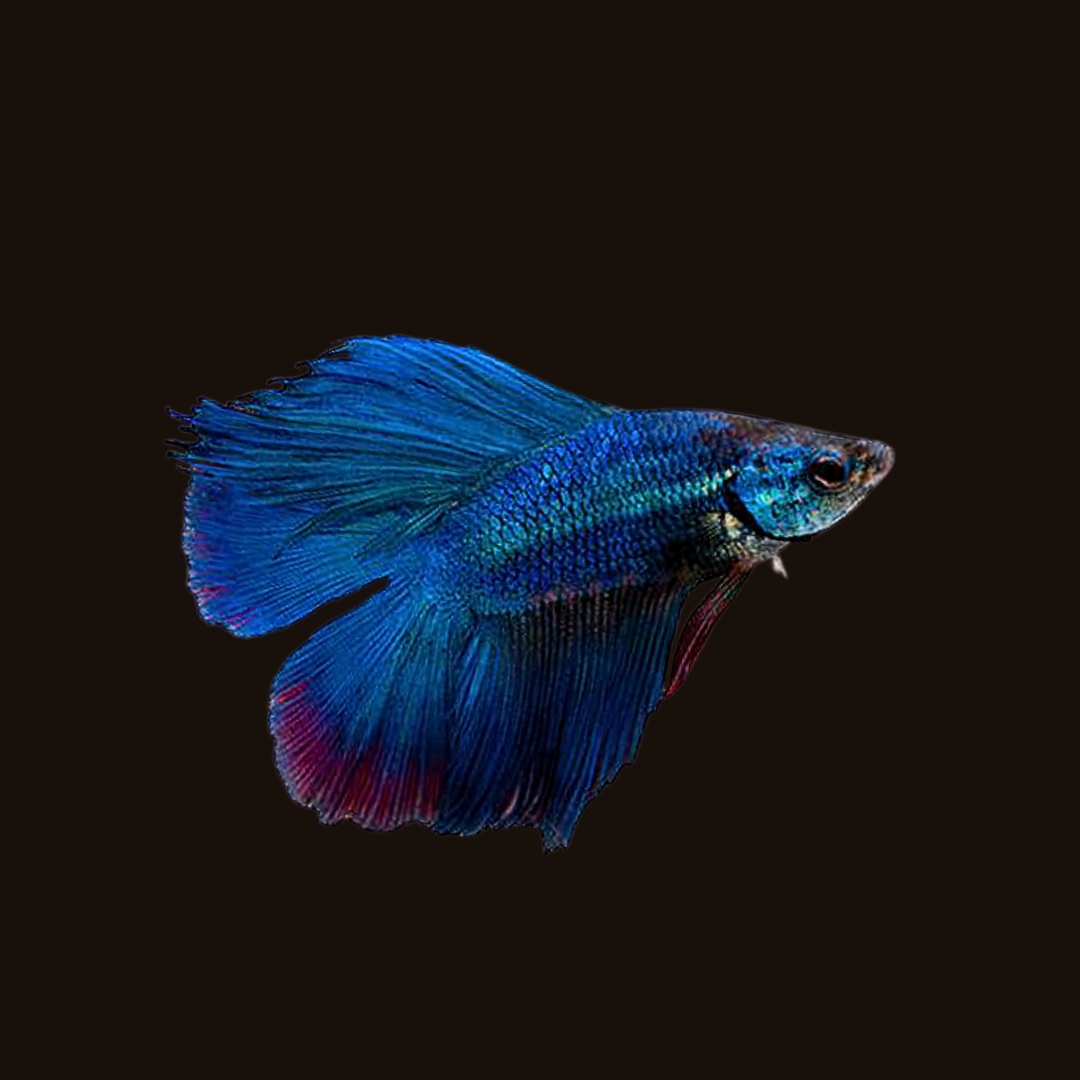
ダブルテール・ベタは、尾びれが上下の二つのローブに分かれ、背びれも大きく発達する改良ベタです。よく仕上がった個体では、背びれ、二つの尾びれ、尻びれが連続して見え、通常のシングルテールとは異なる上下対称のシルエットを楽しめます。原種は東南アジアに分布するベタ・スプレンデンスですが、ダブルテールそのものは自然分布する地域型ではなく、飼育下の突然変異をもとに固定された観賞魚品種です。The Doubletail Betta is a selectively bred form of Betta splendens with a caudal fin divided into two upper and lower lobes and a notably enlarged dorsal fin. In a well-developed specimen, the dorsal fin, two caudal lobes, and anal fin create a continuous, vertically balanced silhouette that differs strongly from ordinary single-tail bettas. The wild ancestor is Betta splendens from Southeast Asia, but the doubletail form itself is not a natural local population; it is an ornamental variety fixed from captive mutations.
基本情報 / Basic Information
学名 / Scientific Name
Betta splendens
通称 / Common Name
ダブルテール・ベタ、DTベタ、ショーベタDoubletail Betta, DT Betta, Show Betta
分類 / Family
キノボリウオ目オスフロネムス科ベタ属。分類体系によっては、旧来のスズキ目キノボリウオ亜目として扱われることもあります。Order Anabantiformes, family Osphronemidae, genus Betta. Some older classifications treat the group within Perciformes, suborder Anabantoidei.
英名 / English Name
Doubletail Betta, Siamese Fighting Fish
分布 / Distribution
原種のベタ・スプレンデンスはタイを中心とする東南アジアの低地湿地、水田、水路などに分布します。改良品種のダブルテールは、主にタイ、インドネシアなどの養殖場や愛好家の繁殖ラインで流通しています。Wild Betta splendens is associated with lowland wetlands, rice fields, and slow waters in Southeast Asia, especially Thailand. The doubletail variety is distributed through cultivated breeding lines, mainly from farms and hobbyist strains in countries such as Thailand and Indonesia.
最大体長 / Max Size
約5〜7cm。ヒレを含めた見た目の大きさは体長以上に大きく感じられます。About 5–7 cm in body length. With its expanded fins, it often appears larger than its actual body size.
寿命 / Lifespan
一般的には2〜3年ほど。体型が極端に詰まった個体では、消化不良や浮き袋障害への配慮が寿命に大きく関わります。Usually around 2–3 years. In very short-bodied individuals, careful management of digestion and swim bladder issues can strongly affect lifespan.
飼育環境 / Aquarium Environment
水槽サイズ / Tank Size
単独飼育で5〜10L以上が目安です。より安定させるなら20cmキューブ水槽、30cm規格水槽ほどの水量が扱いやすくなります。小型容器でも飼育できますが、水温と水質が急変しやすいため、初心者ほど少し余裕のある水量がおすすめです。For single keeping, at least 5–10 L is a practical minimum. For better stability, a 20 cm cube or standard 30 cm aquarium is easier to manage. Small containers can be used, but temperature and water quality change quickly, so beginners benefit from a little extra water volume.
水温 / Temperature
25〜28℃前後。低温では消化機能や免疫が落ちやすいため、冬季はオートヒーターで安定させます。Around 25–28°C. Low temperatures can reduce digestion and immunity, so a heater is recommended during cooler seasons.
水質 / Water Quality
弱酸性〜中性付近を基本に、急変を避けることが最重要です。日本の水道水を使う場合は必ずカルキ抜きを行い、マジックリーフや市販のブラックウォーター用品を使う場合も、色やpHを急に変えすぎないよう少量から調整します。Slightly acidic to neutral water is suitable, but stability is more important than chasing a precise number. When using tap water, always dechlorinate it. If using Indian almond leaves or commercial blackwater products, adjust gradually rather than changing color or pH abruptly.
レイアウト / Layout
長いヒレを傷つけにくい、角の少ないレイアウトが向いています。アヌビアス、ミクロソリウム、浮草、やわらかい人工水草などを使い、水面近くで休める場所を作ると落ち着きます。強い水流はヒレの負担になるため、フィルターは弱めに調整します。Use a layout with smooth surfaces that will not tear the long fins. Anubias, Java fern, floating plants, or soft artificial plants are suitable, and resting places near the surface help the fish feel secure. Strong current can stress the fins, so filtration should be kept gentle.
注意点 / Precautions
ダブルテールはヒレが大きく、体がやや短く詰まりやすい傾向があります。過密飼育、強い水流、急な水温低下、餌の与えすぎは、ヒレ裂けや消化不良、浮き袋障害の引き金になります。フレアリングは体調確認や運動として短時間にとどめ、長時間の鏡見せは避けます。Doubletail bettas often have large fins and may have a shorter, more compact body. Overstocking, strong current, sudden cooling, and overfeeding can trigger torn fins, digestive trouble, or swim bladder problems. Flaring can be useful for brief exercise and condition checks, but prolonged mirror exposure should be avoided.
餌と給餌 / Feeding
餌の種類 / Diet
ベタ専用の小粒人工飼料を主食にし、冷凍アカムシ、イトミミズ、ブラインシュリンプ、ミジンコなどを補助的に与えます。乾燥餌は水を吸って膨らむため、体型が詰まった個体では少量ずつ与えると安全です。Use a small-pellet betta food as the staple, supplemented with frozen bloodworms, tubifex, brine shrimp, or daphnia. Dry foods expand after absorbing water, so compact-bodied fish are safer when fed in small portions.
給餌のポイント / Feeding Tips
1日1〜2回、数分で食べ切る量が目安です。お腹が張りやすい個体では、週に1回程度の軽い絶食日を設けると消化管への負担を下げやすくなります。浮き気味、沈み気味、横たわるなどの異常が見えたら、まず給餌量と便通を見直します。Feed once or twice daily, only as much as the fish can finish within a few minutes. For individuals that bloat easily, a light fasting day about once a week may help reduce digestive stress. If the fish floats, sinks, or lies sideways, review feeding amount and bowel movement first.
性格と混泳 / Temperament and Tank Mates
性格 / Temperament
オスは縄張り意識が強く、同種のオス同士は基本的に混泳できません。メスも個体差が大きく、ヒレの形や体格によっては攻撃やストレスが起きます。人に慣れやすく、単独飼育でも観察の楽しみが大きい魚です。Males are territorial and generally cannot be kept with other male bettas. Females also vary greatly, and aggression or stress may occur depending on fin type and body size. They often become responsive to their keeper and are enjoyable even as a single display fish.
混泳の相性 / Compatibility
基本は単独飼育が最も安全です。混泳させる場合は、ヒレをかじらない温和な小型魚や、低刺激の貝類などに限り、相手側の水温・水質要求も合わせます。ただし、ダブルテールは泳ぎが得意とは限らないため、素早い魚や餌取りの強い魚との組み合わせは避けます。Single keeping is the safest choice. If tank mates are attempted, choose only calm small fish that do not nip fins, or low-impact snails, while matching their temperature and water requirements. Because doubletail bettas are not always strong swimmers, avoid fast fish or tank mates that outcompete them for food.
病気と対策 / Diseases and Prevention
かかりやすい病気 / Common Diseases
ヒレ裂け、尾ぐされ病、白点病、コショウ病、便秘、浮き袋障害などに注意します。ダブルテールでは体型の詰まりや内臓スペースの少なさが疑われる個体もおり、食べすぎや低水温による消化不良から浮力異常につながることがあります。Watch for torn fins, fin rot, ich, velvet disease, constipation, and swim bladder problems. In some doubletail individuals, compact body shape and reduced internal space may contribute to buoyancy issues when overfeeding or low temperature causes digestive trouble.
対策と予防 / Prevention
予防の基本は、安定した水温、清潔な水、控えめな給餌です。浮き袋障害が疑われる場合、すぐに強い薬を使う前に、低水温、過食、便秘、水質悪化を確認します。軽症なら2〜3日の絶食、少量のミジンコ、必要に応じた隔離と水深を浅くした管理が役立つことがあります。塩水浴や薬浴を行う場合は、症状の原因を見極め、濃度と期間を守ります。Prevention begins with stable temperature, clean water, and moderate feeding. When swim bladder problems are suspected, check low temperature, overfeeding, constipation, and water quality before using strong medication. In mild cases, 2–3 days of fasting, small amounts of daphnia, and shallow-water isolation may help. If salt baths or medication are used, identify the likely cause and follow proper concentration and duration.
増やし方(繁殖) / Breeding
雌雄の判別 / Sexing
一般にオスはヒレが大きく、発色も強く、泡巣を作ることが多いです。メスは体型がやや丸く、成熟すると腹部に卵を抱え、産卵管が見えることがあります。ただしショーベタではメスも華やかな個体が多く、体型と行動を合わせて判断します。Males generally have larger fins, stronger coloration, and often build bubble nests. Females are usually rounder, may carry eggs when mature, and may show an ovipositor. However, show-betta females can also be ornate, so sexing should combine body shape and behavior.
繁殖形態 / Reproduction
泡巣を作るバブルネスターです。オスが水面に泡巣を作り、産卵後は受精卵を泡巣へ運んで保護します。メスは産卵後に追われやすいため、タイミングを見て隔離します。It is a bubble-nesting fish. The male builds a bubble nest at the surface and carries fertilized eggs into it after spawning. The female is often chased after spawning, so she should be removed at the right time.
繁殖のポイント / Breeding Tips
ダブルテール形質は劣性として扱われ、両親の遺伝的組み合わせによって表現型が大きく変わります。ダブルテール同士の交配では形質が出やすい一方、体型の詰まりや脊椎の曲がりなどのリスクにも注意が必要です。健全性を優先するなら、極端なショートボディや泳ぎにくい個体を親に使わず、背びれの広いシングルテール系統との計画的な交配も検討します。The doubletail trait is generally treated as recessive, so the parents’ genetic combination strongly affects the offspring. Doubletail-to-doubletail breeding can produce the trait readily, but it may also increase the risk of compact bodies or spinal deformities. For healthier lines, avoid using extremely short-bodied or poorly swimming fish as breeders, and consider planned outcrossing to single-tail lines with broad dorsal fins.
雑学と豆知識 / Trivia and Fun Facts
1. ダブルテールを生む遺伝的背景 / 1. Genetic background of the doubletail form
ダブルテールの特徴は、単に尾びれが二つに割れただけではありません。研究では、zic1およびzic4の共エンハンサー領域の欠失が、ダブルテール変異と関連すると示されています。この変化によって背側の組織の作られ方が変わり、背びれの軟条数や尾びれの形に影響すると考えられています。ただし、図鑑記事としては「この領域の変化が直接すべてを説明する」と断定しすぎず、体型やヒレの仕上がりには系統選抜や複数の遺伝的背景も関わるものとして理解すると安全です。The doubletail form is not merely a tail that has split in two. Studies have associated the mutation with a deletion in a co-enhancer region of zic1 and zic4. This change appears to alter dorsal tissue development and affects dorsal-fin ray number and caudal-fin form. For an aquarium guide, however, it is best not to overstate this as the only factor behind every visible detail; line selection and broader genetic background also influence body shape and fin quality.
2. 美しさと健康管理はセットで考える / 2. Beauty and health management belong together
大きな背びれと二つに分かれた尾びれは、ダブルテール最大の魅力です。一方で、体が短く詰まった個体では内臓や浮き袋の余裕が少なく、食べすぎや低水温が不調に直結しやすいことがあります。華やかなヒレを楽しむ品種ほど、強い水流を避け、餌を控えめにし、泳ぎ方を毎日観察することが大切です。The large dorsal fin and split caudal fin are the greatest charms of the doubletail. At the same time, compact-bodied individuals may have less internal room around the digestive tract and swim bladder, making overfeeding and low temperature more likely to cause problems. The more ornate the fish, the more important it is to avoid strong current, feed moderately, and observe swimming posture every day.
3. ベタはタイの文化にも深く根づく魚 / 3. A fish deeply rooted in Thai culture
ベタ・スプレンデンスは、タイ語でプラカットと呼ばれる闘魚文化と結びつき、長い飼育・選抜の歴史を持つ魚です。2019年2月5日には、シャム闘魚がタイの国家水生動物として承認されたと報じられています。現在の華やかなショーベタは、闘争性を選抜してきた歴史と、色彩やヒレの美しさを追求する観賞魚文化が重なって生まれた存在といえます。Betta splendens, known in Thai as pla kat, is tied to a long tradition of fighting-fish culture and selective keeping. On February 5, 2019, the Siamese fighting fish was reported as approved as Thailand’s national aquatic animal. Modern show bettas can be understood as the meeting point of an older history of selecting for fighting behavior and a newer ornamental culture focused on color and finnage.
4. 日本への輸入規制についての注意 / 4. A note on import rules into Japan
観賞魚の輸入では、水産資源保護法、外来生物法、ワシントン条約、航空会社や税関の取扱いなど、複数の確認事項が関係します。ただし、ベタ単独が常に水産資源保護法上の輸入許可対象であるかのような書き方は正確性に欠けます。制度上の対象種や対象疾病は更新される可能性があるため、個人輸入や商業輸入を検討する場合は、動物検疫所、税関、環境省、利用する航空会社へ事前確認するのが安全です。Importing ornamental fish into Japan can involve several checks, including the Act on the Protection of Fishery Resources, the Invasive Alien Species Act, CITES, customs handling, and airline rules. However, it is not accurate to imply that bettas alone are always subject to import permission under the fishery-resource system. Because covered species and diseases may be updated, anyone considering personal or commercial import should confirm in advance with the Animal Quarantine Service, customs, the Ministry of the Environment, and the airline.
まとめ / Conclusion
ダブルテール・ベタは、二つに分かれた尾びれと大きな背びれが生み出す、独特の上下対称シルエットが魅力の改良ベタです。遺伝的にはzic1/zic4周辺の調節領域との関連が研究されており、ショーベタの形態進化を考えるうえでも興味深い品種です。The Doubletail Betta is an ornamental betta valued for its vertically balanced silhouette created by a split caudal fin and enlarged dorsal fin. Genetically, research links the form to regulatory regions around zic1 and zic4, making it an especially interesting variety for understanding the evolution of show-betta shapes.
一方で、体型が詰まりやすく、ヒレも大きいため、飼育では「美しさを引き出す管理」と「健康を守る管理」を同時に行う必要があります。安定した水温、やさしい水流、控えめな給餌、毎日の泳ぎ方の観察を心がければ、ダブルテールならではの華やかさを長く楽しめます。At the same time, its compact body tendency and large fins mean that care must combine beauty-focused husbandry with health protection. Stable temperature, gentle current, moderate feeding, and daily observation of swimming posture will help you enjoy the distinctive elegance of the doubletail for as long as possible.
Lichak, M. R. et al. 2022. Care and Use of Siamese Fighting Fish (Betta splendens) for Research. Comparative Medicine. 研究施設での飼育管理、適温管理、泡巣繁殖、産卵行動、飼育環境の基本設計、疾病予防の考え方の確認に使用。 https://pmc.ncbi.nlm.nih.gov/articles/PMC9334006/
Jaroensutasinee, M. and Jaroensutasinee, K. 2001. Bubble nest habitat characteristics of wild Siamese fighting fish. Journal of Fish Biology, 58(5), 1311–1319. 野生個体の泡巣環境、浅い水域、密生植物、低溶存酸素、低pH、高温傾向など、自然下の生息環境と繁殖環境の確認に使用。 https://doi.org/10.1111/j.1095-8649.2001.tb02288.x
Wang, L. et al. 2021. Genomic Basis of Striking Fin Shapes and Colors in the Fighting Fish. Molecular Biology and Evolution. ダブルテール表現型とzic1/zic4近傍の共エンハンサー欠失、背鰭・尾鰭の軟条数増加、改良品種の形態差に関する遺伝的背景の確認に使用。 https://pmc.ncbi.nlm.nih.gov/articles/PMC8321530/
Pleeging, C. C. F. and Moons, C. P. H. 2017. Potential welfare issues of the Siamese fighting fish (Betta splendens) at the retailer and in the hobbyist aquarium. Vlaams Diergeneeskundig Tijdschrift, 86(4), 213–223. 小型容器での飼育、環境エンリッチメント、同種間攻撃、感染症リスクなど、飼育上の注意点と福祉面の補強に使用。 https://openjournals.ugent.be/vdt/article/id/75785/
Wang, X. et al. 2024. Recent advances of Terminalia catappa and its application in fish culture: A review. Reviews in Aquaculture. マジックリーフ、すなわちTerminalia catappaのタンニン・フラボノイドなどの成分、抗菌・抗炎症・魚類養殖への応用可能性を確認する補助資料として使用。ただし、家庭水槽での治療効果を直接保証する資料ではないため、記事では予防的・補助的な表現に留める。 https://doi.org/10.1111/raq.12920






コメント