

解説 / Description
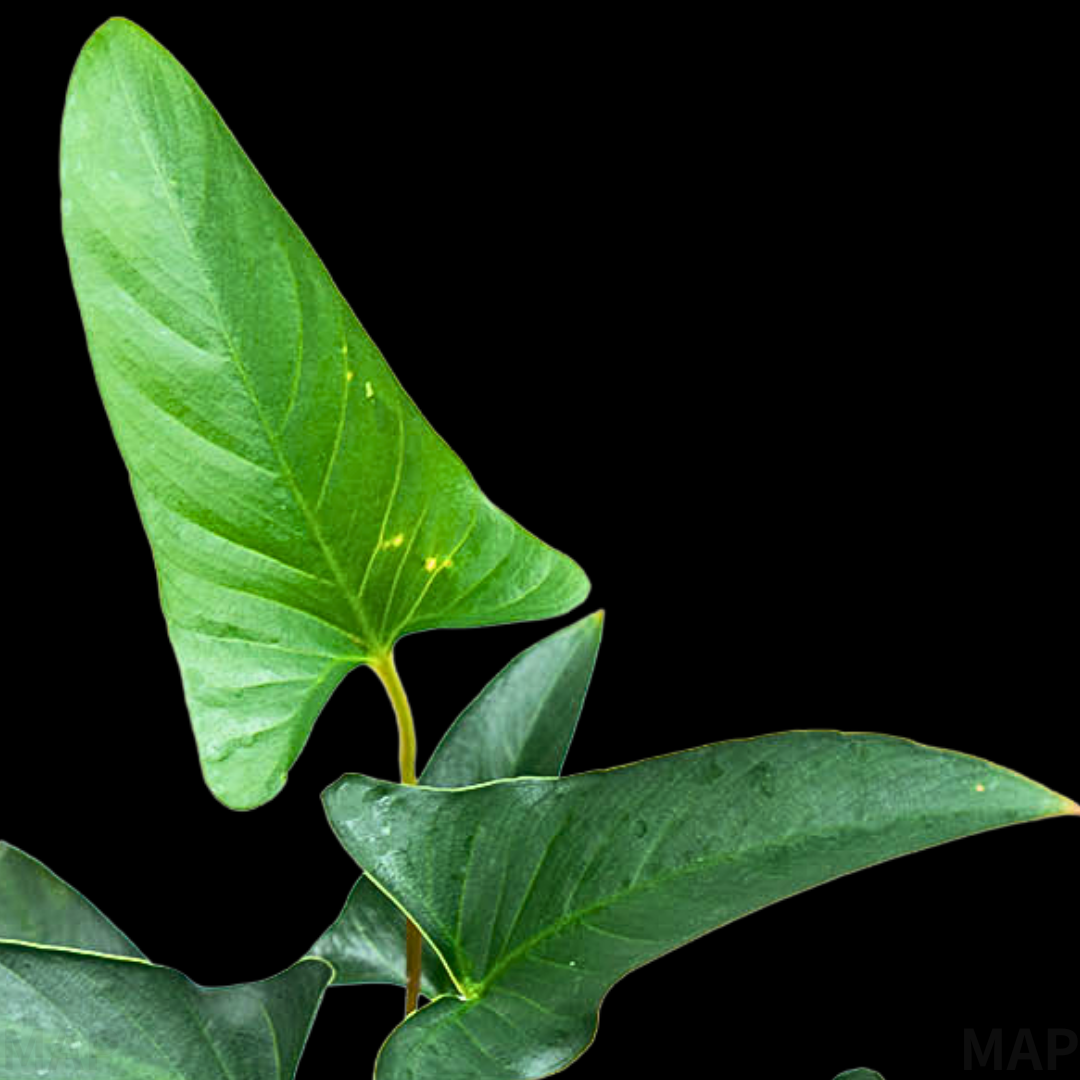
アヌビアス・グラキリスは、長い葉柄の先に、三角形を基調とした葉を広げる水草です。葉の付け根が左右に張り出し、ハート形や矢尻形に見えることもあります。厚みのある深緑の葉と、葉の間に生まれる空間が印象的で、流木のそばに添えると、水辺の森を思わせる落ち着いた景色になります。丸みのある葉が親しまれているアヌビアス・ナナとはひと味違い、輪郭のシャープさと伸びやかな姿を楽しめる種類です。 Anubias gracilis carries broadly triangular leaves on long stalks. Lobes at the leaf base may give them a heart-shaped or arrowhead-like outline. Its thick, deep green foliage and the open spaces between leaves create a distinctive presence beside driftwood, suggesting a quiet forest stream. Compared with the familiar rounded foliage of Anubias nana, it offers a sharper outline and a more graceful, airy silhouette.
比較的弱い光でも育ち、CO2を添加しない水槽にも取り入れやすい一方、成長はゆっくりです。水中では葉身、つまり葉柄を除いた葉の部分が5〜10cmほどになり、草丈は10〜20cm程度から、それ以上に育つこともあります。大きさは株の状態や環境によって変わるため、この範囲に収まるとは限りません。高湿度の水上環境ではさらに大きく育ちやすく、パルダリウムでも魅力を発揮します。水中と水上で異なる姿を見比べるのも、楽しみのひとつでしょう。 It grows under relatively low light and is suitable for aquariums without added CO2, although growth is slow. Underwater, the leaf blade—the leaf excluding its stalk—commonly measures around 5–10 cm. Plants may reach roughly 10–20 cm in height or grow taller, depending on their condition and surroundings. In humid emersed conditions they tend to become considerably larger, making this species appealing for paludariums too.
基本情報 / Basic Information
| 学名 / Scientific Name | Anubias gracilis 命名者を含む表記は Anubias gracilis A.Chev. ex Hutch.。アヌビアス属の独立した種として扱われています。The full botanical name is Anubias gracilis A.Chev. ex Hutch. It is accepted as a distinct species within the genus Anubias. |
|---|---|
| 通称 / Common Name | アヌビアス・グラキリス。販売名では「アヌビアス グラキリス」と表記されることもあります。Anubias gracilis; generally sold under its scientific name. |
| 分類 / Family | サトイモ科・アヌビアス属。太い根茎から葉と根を伸ばす多年草です。Family Araceae, genus Anubias. A perennial plant with leaves and roots arising from a thick rhizome. |
| 分布 / Distribution | 西アフリカのギニア、シエラレオネ、リベリア。湿潤な熱帯林の水辺に生育し、木々に遮られた光が届く、湿り気の多い環境に適応しています。Native to Guinea, Sierra Leone and Liberia in West Africa. It inhabits waterside environments in humid tropical forests, where moisture is plentiful and trees filter the sunlight. |
| 育成難易度 / Difficulty | 比較的やさしい種類です。根茎を埋めず、強すぎる照明を避けると管理しやすくなります。傷んだ株の回復には時間がかかるため、購入時には根茎が硬く、葉の付け根に傷みのない株を選びましょう。Relatively easy. Keep the rhizome exposed and avoid excessive lighting. Recovery from damage is slow, so choose a plant with a firm rhizome and healthy leaf bases. |
育成環境 / Cultivation Environment
| 光量 / Light | 弱め〜中程度の光が目安です。明るい水槽では、流木の陰や背の高い水草のそばに置くと管理しやすくなります。ただし、ほとんど光が届かない場所では生育が鈍るため、葉にほどよく光が当たる位置を選んでください。照明時間はまず1日6〜8時間程度を目安にし、生育の様子やコケの出方に応じて調整します。Low to moderate light is a useful starting point. In brightly lit aquariums, place it in partial shade beside driftwood or taller plants. Avoid deeply shaded spots that receive almost no light. Begin with around 6–8 hours of lighting per day and adjust according to growth and algae development. |
|---|---|
| CO2添加 / CO2 Injection | 必須ではありません。添加によって生育が促される場合はありますが、もともと成長の遅い種類です。早く育てようとして添加量を増やすより、光量や養分とのバランスを保ちましょう。添加する場合は魚やエビの様子にも気を配り、照明中の供給を安定させます。Additional CO2 is not essential. It may promote growth, but this is naturally a slow-growing species. Keep CO2 balanced with lighting and nutrients rather than increasing the dose simply to accelerate growth. If CO2 is used, maintain steady delivery during the lighting period and monitor fish and shrimp. |
| 水質 / Water Quality | 淡水で育成します。管理の目安は水温22〜26℃、弱酸性〜中性の水質です。pHは6.0〜7.0程度から始めるとよいでしょう。硬度への適応範囲は比較的広く、軟水〜中程度の硬度で育てられます。これらは生存限界を示す数値ではありません。数値を細かく追うより、急な水質変化や高温の長期化を避け、株の周囲に穏やかな水の動きをつくることが大切です。Grow it in freshwater. Useful maintenance targets are 22–26°C and slightly acidic to neutral water, with a starting pH of approximately 6.0–7.0. It tolerates a relatively broad range of hardness and can be maintained in soft to moderately hard water. These are practical targets rather than survival limits. Stable conditions, protection from prolonged overheating and gentle circulation matter more than chasing exact values. |
| 底床 / Substrate | 流木や石に固定するなら、底床は不要です。砂やソイルに植える場合も、埋めるのは根だけにし、葉と根が出る太い根茎は底床の上に出しておきます。根は底床にも伸び、そこから養分を吸収できます。施肥は水槽内の養分量に応じて判断し、新葉の色が薄い、成長が停滞するなどの様子が続く場合は、ほかの育成条件も確認したうえで、水草用液肥を少量から試すとよいでしょう。No substrate is needed when the plant is attached to wood or stone. If planted in sand or aquasoil, bury only the roots and leave the thick rhizome above the surface. Roots can grow into the substrate and absorb nutrients there. Fertilize according to the aquarium’s nutrient supply. If pale new leaves or stalled growth persist, review other growing conditions before trying a small dose of aquarium plant fertilizer. |
レイアウト / Layout
| 配置 / Positioning | 中景〜後景で、流木の根元や岩の脇に添える使い方が向いています。長い葉柄がつくる隙間を生かし、葉が重なりすぎない位置に置くと、軽やかな姿が引き立ちます。細葉の水草や丸葉のアヌビアスと組み合わせれば、葉形の違いが水景のアクセントになります。パルダリウムでは、根元の湿り気を保ちながら、葉を水上に展開させる配置も楽しめます。Use it in the midground or background, beside rocks or at the base of driftwood. Allow space between its long leaf stalks so the foliage retains its airy appearance. Pairing it with narrow-leaved plants or rounded Anubias varieties creates a pleasing contrast. In a paludarium, keep the root area moist while allowing the leaves to grow above water. |
|---|---|
| 注意点 / Precautions | 活着には時間がかかるため、糸などで軽く固定します。根茎や葉柄を締めつけず、新芽が伸びる部分をふさがないようにしてください。水草用接着剤を使う場合は、製品の説明に従って少量で固定します。葉は丈夫ですが、折れた葉柄や傷ついた葉は元どおりにはなりません。水上育成では高湿度を保ちつつ適度に換気し、葉の乾燥や、過度な高温と蒸れを避けましょう。Attachment takes time, so secure the plant gently with thread or a similar material. Do not constrict the rhizome or leaf stalks, and keep growing tips clear. Use aquarium plant adhesive sparingly and follow its instructions. Although the foliage is tough, broken stalks and damaged leaves will not return to their original condition. Emersed cultivation requires high humidity with suitable ventilation to prevent drying, overheating and stagnant conditions. |
増やし方(トリミング) / Propagation & Trimming
| 増やし方 / Propagation | 十分に育った根茎を切り分けて増やします。清潔でよく切れる刃物を使い、それぞれの株に芽と数枚の葉、できれば根も残してください。小さく分けすぎると回復に時間がかかるため、脇芽が育ってから分けると管理しやすくなります。切り分けた株は根茎を露出させて固定し、環境を頻繁に変えずに新葉の展開を待ちます。Propagate by dividing a well-established rhizome with a clean, sharp blade. Each division should retain a bud, several leaves and, preferably, roots. Very small divisions recover slowly, so allowing side shoots to develop before separating them makes maintenance easier. Secure each division with its rhizome exposed and keep conditions stable while new leaves develop. |
|---|---|
| トリミング / Trimming | 頻繁なトリミングは必要ありません。黄変した古葉、傷んだ葉、周囲を覆いすぎる葉を、葉柄の付け根近くで取り除きます。その際、根茎や新芽を傷つけないようにしましょう。葉の先だけを切って形を整えると切り口が目立つため、葉単位で整理するほうが自然な姿を保てます。一度に多くの葉を落とさず、少しずつ整えるのがコツです。Frequent trimming is unnecessary. Remove yellowing, damaged or overly shading leaves by cutting their stalks close to the base without injuring the rhizome or new shoots. Removing whole leaves preserves a more natural appearance than cutting their tips. Thin the foliage gradually rather than removing many leaves at once. |
病気と対策(コケなど) / Pests & Algae
| かかりやすい病気 / Common Issues | 長く残る葉には、緑色の点状のコケや黒ひげ状のコケが付着することがあります。また、導入後に古葉が黄変したり、根茎や葉柄の付け根が軟らかく崩れたりする場合もあります。古葉の黄変だけで根茎の腐敗と判断せず、根茎が硬さを保っているかも確認してください。根茎の埋没は腐敗につながりますが、露出させていても傷むことがあります。こうした根茎腐敗の原因は十分に解明されておらず、外見だけで感染症や環境変化の影響と断定することはできません。Long-lived leaves may develop green spot algae or black beard algae. After introduction, older leaves may yellow, while the rhizome or leaf bases can sometimes soften and decay. Yellowing leaves alone do not establish that the rhizome is rotting; check whether it remains firm. Burial can lead to decay, but rot may also occur in exposed rhizomes. Its causes are not fully understood, and appearance alone cannot establish whether infection or environmental changes are responsible. |
|---|---|
| 対策と予防 / Prevention | 導入時はポットやロックウールを丁寧に外し、根茎を傷つけないように洗って、傷みや付着物を確認します。コケが増えたら照明の強さと時間、給餌量、換水や清掃の状況を見直し、葉に積もった汚れはやさしく落としてください。根茎が軟化している株は取り出し、清潔な刃物で傷んだ部分を除きます。硬い健全部が残れば、別容器で経過を見ながら回復を待つ方法がありますが、必ず助かるわけではありません。広範囲に崩れた株は除去します。エビと同居させる場合は、販売元に農薬の使用履歴やエビ水槽への導入可否を確認しましょう。一定期間の浸け置きだけで、残留農薬がなくなるとは限りません。前処理剤を使う場合も、対象植物や使用条件を守り、根茎腐敗を確実に防ぐ処置とは考えないようにしてください。Carefully remove pots and rock wool, rinse without damaging the rhizome, and inspect for decay or unwanted organisms. If algae increases, review lighting, feeding, water changes and cleaning, and gently remove debris from the leaves. Take out plants with soft rhizomes and remove decayed tissue with a clean blade. Any remaining firm section can be observed in a separate container, although recovery is not assured. Discard extensively decayed plants. For shrimp aquariums, ask the supplier about pesticide use and suitability for introduction. A fixed soaking period does not guarantee that residues have disappeared. Use pretreatment products only as directed; they should not be regarded as a reliable way to prevent rhizome rot. |
雑学と豆知識 / Trivia and Fun Facts
| 1. 「グラキリス」が表す、ほっそりした姿 / 1. A Name Suggesting Slender Elegance | 種小名の gracilis は、ラテン語で「細い」「ほっそりした」といった意味を持ちます。厚く丈夫な葉だけを見ると意外ですが、長い葉柄に支えられた株全体を眺めると、その名前がよく似合います。葉は三角形からハート形に近いものまで変化し、付け根の張り出し方によっては矢尻やスペードを思わせる輪郭になります。葉そのものだけでなく、葉と葉の間にできる余白にも目を向けると、この種類の美しさが見えてきます。The Latin epithet gracilis means slender or slim. That may seem surprising when looking only at its thick, sturdy leaves, but the long stalks and spacious arrangement make the name feel fitting. Leaves vary from triangular to heart-shaped, sometimes forming an arrowhead-like or spade-like outline depending on the basal lobes. Its beauty lies as much in the spaces between leaves as in the foliage itself. |
|---|---|
| 2. 根茎は「根」ではなく、葉を生む茎 / 2. The Rhizome Is a Stem, Not a Root | 株の中心にある太い部分は、根に似て見えても、植物学的には横に伸びる茎です。ここから葉と根が生まれ、株の生育を支える養分も蓄えられます。アヌビアスの株分けで根茎を切り分けるのは、この茎に新しい芽をつくる部分があるためです。葉や根だけを切り離しても、通常の株分けと同じようには増やせません。底床に植えるときは「根は底床へ、根茎は底床の上へ」と覚えておくと、両者の違いと植え方を理解しやすくなります。The thick central structure may resemble a root, but botanically it is a horizontally growing stem. It produces leaves and roots and stores reserves that support growth. Rhizome divisions can develop into new plants because this stem carries buds. Detached leaves or roots alone do not function like normal divisions. When planting in substrate, remembering “roots below, rhizome above” helps distinguish the two structures and explains how to position the plant. |
| 3. 水草であり、水辺の植物でもある / 3. An Aquarium Plant with a Life Above Water | アヌビアス・グラキリスは、水中だけで一生を過ごす植物ではありません。水辺の湿った環境に暮らし、水上でも葉を広げられることが、アクアリウムとパルダリウムの両方で楽しめる理由です。水上では水中より大きな姿になりやすく、同じ種類でも印象が変わります。ただし、水上葉だから乾いた室内でもそのまま育つという意味ではなく、根元の水分と、葉の乾燥を防ぐ湿度が必要です。育成条件が整えば、サトイモ科らしい花序を観察できることもあります。棒状に小さな花が集まった部分を肉穂花序と呼び、その周囲を仏炎苞という包みが囲みます。葉とはまた違った造形も、この植物の見どころです。Anubias gracilis is not confined to a fully submerged life. Its ability to grow above water in moist waterside environments makes it suitable for both aquariums and paludariums. Emersed growth often becomes larger and changes the plant’s overall appearance. This does not mean it can simply be placed in a dry room: the roots need moisture, and the foliage needs adequate humidity. Under suitable conditions it may also produce the characteristic aroid inflorescence—a spike of tiny flowers called a spadix, surrounded by a spathe. This offers another distinctive feature to observe alongside the leaves. |
まとめ / Conclusion
アヌビアス・グラキリスは、三角形を基調とした深緑の葉と長い葉柄で、水景に伸びやかな表情を添える水草です。流木や岩に寄り添う姿には落ち着きがあり、丸葉や細葉の水草と組み合わせると、その輪郭がいっそう引き立ちます。水上で育てたときに見せる大きな姿にも、水中とは違った魅力があります。 With deep green, broadly triangular leaves on long stalks, Anubias gracilis brings graceful structure to an aquascape. Its calm presence beside wood or stone is enhanced by the contrasting foliage of rounded or narrow-leaved plants. Its larger emersed form offers a different expression of the same distinctive character.
育成の要点は、根茎を埋めず、ほどよい光と安定した環境を保つことです。ゆっくり開く新葉を見守りながら、一枚ずつ変わっていく株の姿を楽しめる、長く付き合いたい水草といえるでしょう。 Keep the rhizome exposed, provide suitable light and maintain stable conditions. Watching each new leaf unfold is part of the pleasure of growing this plant, whose form develops gradually over time.
気になる道具や飼い方を見つけてみませんか?
 アイのアクアグッズ案内テトラミンって、こんなにあるの? アイとコタロウのごはん探究旅道具の特徴や使い方、選ぶときのポイントをアイが紹介します。記事はコチラ →
 アイのアクアグッズ案内ダニオの仲間に合わせる飼育用品|ゼブラダニオから超小型種まで水槽・ろ過・餌を選ぶ道具の特徴や使い方、選ぶときのポイントをアイが紹介します。記事はコチラ →
さまざまな飼育テーマをご紹介。リンク先の記事には広告・商品紹介が含まれます。
案内・紹介記事一覧へ →分布マップ
アヌビアス・グラキリス(Anubias gracilis)は、西アフリカのギニア、シエラレオネ、リベリアに分布し、湿潤な熱帯林の水辺に生育します。地図では、この3か国を含む地域を表示しています。
※地図は分布地域の位置関係を示す概略表示です。表示範囲全体に自生することを示すものではありません。マーカーは地域の目安として設定した代表地点(北緯9度・西経11度)で、実際の採集地点や自生確認地点ではありません。
参考文献
-
Royal Botanic Gardens, Kew. Anubias gracilis A.Chev. ex Hutch. Plants of the World Online.
学名の受容状況、科・属の分類、ギニア・シエラレオネ・リベリアの自然分布。 -
Crusio, W. E.(1979). A revision of Anubias Schott (Araceae) (Primitiae Africanae XII). Mededelingen Landbouwhogeschool Wageningen, 79(14), 1–48.
アヌビアス属の分類と種の識別を扱う植物分類学の研究資料。 -
Tropica Aquarium Plants. Anubias gracilis.
水草生産者の公式植物情報。葉の形と大きさ、成長速度、光・CO2要求度、根茎の扱い、水上での生育。 -
Tropica Aquarium Plants. Planting.
根茎を埋めない植栽方法、石や流木への固定、ポットとロックウールの取り扱い。 -
Tropica Aquarium Plants. Trimming.
根茎を持つ水草の切り分けと、新芽による生育の継続。 -
Tropica Aquarium Plants. Care.
水草水槽全般の換水、枯れ葉の除去、少量からの施肥、コケと給餌量の管理。 -
Wang, J. et al.(2016). First Report of Bacterial Soft Rot on Anubias barteri var. nana Caused by Dickeya dadantii in China. Plant Disease, 100(2), 518. DOI: 10.1094/PDIS-03-15-0291-PDN.
近縁のアヌビアス・ナナを対象に、細菌性軟腐病の症状と病原性を確認した研究。 -
Hatakeyama, S. & Sugaya, Y.(1989). A freshwater shrimp (Paratya compressa improvisa) as a sensitive test organism to pesticides. Environmental Pollution, 59(4), 325–336. DOI: 10.1016/0269-7491(89)90159-0.
淡水エビの農薬感受性を調べた実験研究。エビ水槽へ水草を導入する際の農薬への配慮に関する基礎資料。
コメント