
解説 / Description
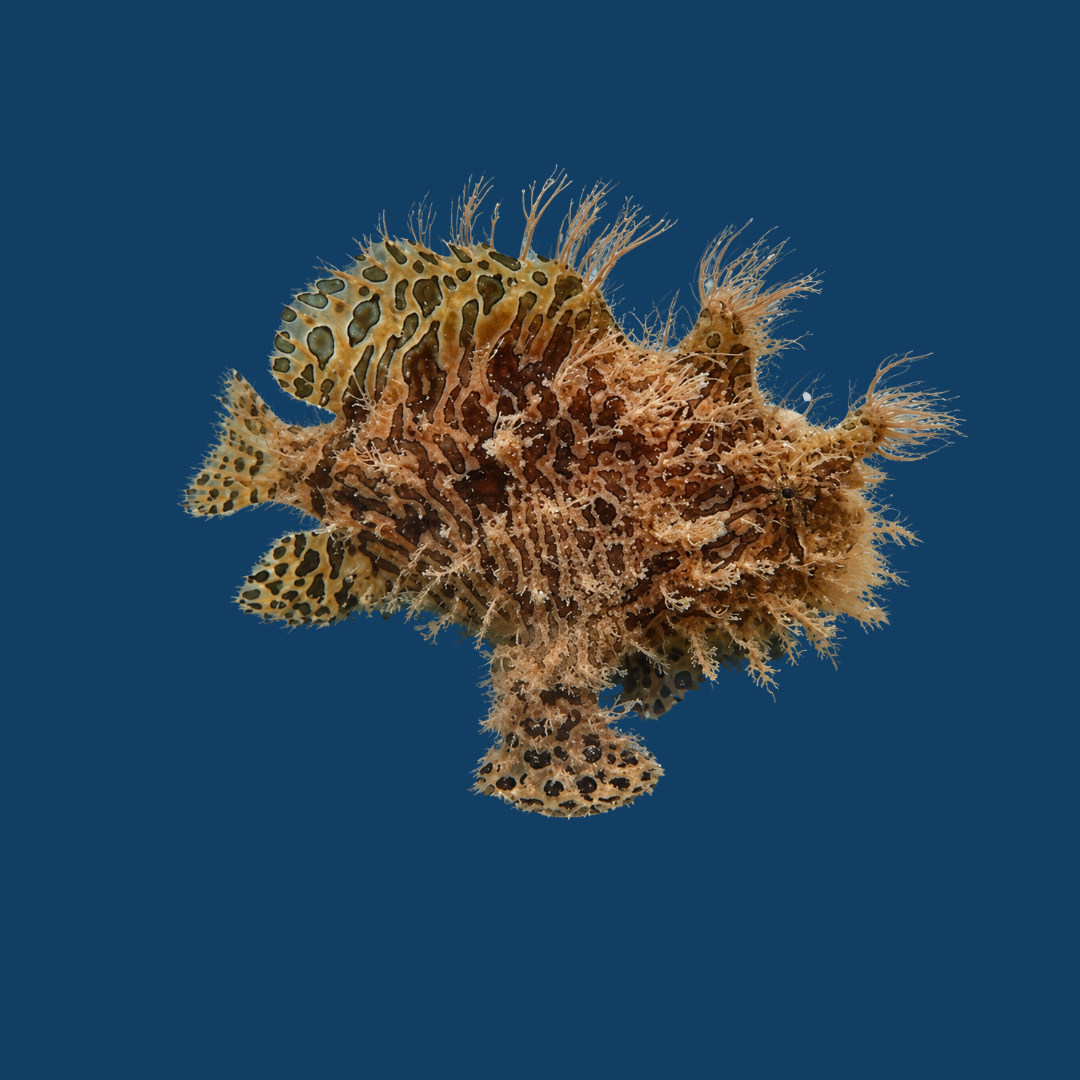
カエルアンコウは、丸みのある体と、脚のように動かす胸びれや腹びれが印象的な海水魚です。体には不規則な縞模様が見られ、個体によっては毛のような皮膚の突起がよく発達します。海藻や海綿、岩の陰に姿を溶け込ませ、頭の上にある釣り竿状の器官と、その先の疑似餌を動かして小魚などを誘います。獲物が近づいた瞬間に大きな口で水ごと吸い込む姿は、普段のゆっくりとした動きからは想像しにくいものです。日本の沿岸にも生息し、観賞魚として流通する本種は、小さなしぐさをじっくり楽しめる観察向きの魚です。飼育では単独飼育を基本に、食べられる餌の確保と給餌量の調整、安定した水質の維持を大切にします。 The striated frogfish is a marine fish with a rounded body and pectoral and pelvic fins that it uses rather like legs. Irregular stripes mark its body, and some individuals develop conspicuous hairlike skin appendages. Blending into algae, sponges, and rocky surroundings, it moves a rodlike structure on its head and the lure at its tip to attract small fishes and other prey. When a victim approaches, the frogfish suddenly expands its mouth and draws it in with the surrounding water—a striking change from its usual slow movements. Found along Japanese coasts and available in the aquarium trade, this species rewards patient observation of subtle behavior. Successful care centers on keeping it individually, securing suitable food, adjusting meal size and frequency, and maintaining stable water quality.
基本情報 / Basic Information
| 学名 / Scientific Name | Antennarius striatus (Shaw, 1794) |
|---|---|
| 通称 / Common Name | カエルアンコウ。旧標準和名はイザリウオです。「カエルアンコウ」という呼び名は仲間全体を指して使われることもあるため、購入時は学名も確認すると確実です。Striated frogfish, also known as hairy frogfish. Its standard Japanese name is kaeru-ankou, formerly izariuo. In Japanese, kaeru-ankou may also be used broadly for frogfishes as a group, so checking the scientific name helps confirm the species when purchasing one. |
| 分類 / Family | 条鰭綱・アンコウ目・カエルアンコウ科・カエルアンコウ属。Class Actinopterygii; order Lophiiformes; family Antennariidae; genus Antennarius. |
| 英名 / English Name | Striated frogfish, Hairy frogfish, Striped anglerfish |
| 分布 / Distribution | インド洋から西・中部太平洋に広く分布し、東大西洋にも記録があります。日本では瀬戸内海を含む各地の沿岸で見られ、砂泥底、岩礁、海綿の多い場所などに生息します。かつて同種とされていた西大西洋の個体群は、現在は近縁種のAntennarius scaberとして区別されます。Widely distributed through the Indian Ocean and the western and central Pacific, with records also from the eastern Atlantic. In Japan, it occurs along various coastal areas, including the Seto Inland Sea, inhabiting sandy or muddy bottoms, rocky habitats, and areas rich in sponges. Western Atlantic populations formerly included in this species are now distinguished as the closely related Antennarius scaber. |
| 最大体長 / Max Size | 全長約25cm。尾びれを含む長さです。小さな個体を迎える場合も、成長後の体格を見込んで飼育設備を整えます。Approximately 25 cm in total length, including the caudal fin. Even when purchasing a small individual, plan the aquarium around its potential adult size. |
| 寿命 / Lifespan | 野生・飼育下とも、寿命の確かな年数は十分に明らかになっていません。飼育できる期間は購入時の年齢や健康状態にも左右されるため、一律の年数を前提にせず、継続して世話ができる環境を用意します。A dependable lifespan estimate has not been firmly established for either wild or captive individuals. The time an individual survives in captivity also depends on its age and health when acquired, so prepare for ongoing care rather than relying on a fixed number of years. |
飼育環境 / Aquarium Environment
| 水槽サイズ / Tank Size | 単独で90cm規格水槽(幅90×奥行45×高さ45cm、容積の目安約180L)以上を飼育の目安にします。大型個体には120cm規格水槽(120×45×45cm、容積の目安約240L)など、底面に余裕のある水槽が適しています。砂や岩を入れると実際の水量は少なくなるため、水量だけでなく、体を無理なく向き直せる空間も確保してください。For one individual, a Japanese-standard 90 cm aquarium measuring 90 × 45 × 45 cm, with an approximate nominal volume of 180 L, is a practical starting guideline. Large specimens benefit from more floor space, such as a Japanese-standard 120 cm aquarium measuring 120 × 45 × 45 cm, approximately 240 L. Sand and rock reduce the actual water volume, so provide both adequate water capacity and enough unobstructed space for the fish to turn comfortably. |
|---|---|
| 水温 / Temperature | 22〜25℃を目安に、短時間の温度変化を避けて管理します。産地やそれまでの管理水温を確認し、その個体に合った範囲で安定させることが大切です。夏季は高水温を防げるよう、水槽用クーラーなどの冷却設備も検討してください。 Use 22–25°C as a general husbandry guideline and avoid rapid temperature changes. Check the specimen’s origin and previous holding temperature, then maintain a stable range appropriate for that individual. Consider an aquarium chiller or other suitable cooling equipment to prevent excessive summer temperatures. |
| 水質 / Water Quality | 海水で飼育し、比重1.024〜1.026(25℃での目安)、pH8.1〜8.4を目安にします。生物ろ過が十分に働く水槽を用い、アンモニアと亜硝酸が検出されない状態を維持してください。餌の残りや排泄物をこまめに回収し、定期的な測定と換水で汚れの蓄積を抑えます。プロテインスキマーの併用も水質管理に役立ちます。Maintain marine conditions, with a specific gravity of approximately 1.024–1.026 at 25°C and a pH of 8.1–8.4. Use an aquarium with established biological filtration and keep ammonia and nitrite undetectable. Remove uneaten food and waste promptly, and limit accumulation through regular testing and water changes. A protein skimmer can also support water quality management. |
| レイアウト / Layout | 薄く砂を敷き、安定した岩組みやライブロックで、体を預けられる止まり場と日陰をつくります。底を歩くように移動できる空間も残してください。水流は分散させ、体が揺さぶられるような強い流れが直接当たらないようにします。一方で、水をよどませず、ろ過や水面の動きによって十分な酸素を確保することも必要です。Provide a shallow sand bed and stable rockwork or live rock with resting ledges and shaded areas. Leave open routes for the fish to move along the bottom. Distribute circulation so that strong currents do not strike the fish directly or rock its body. At the same time, avoid stagnant areas and maintain adequate oxygenation through filtration and surface movement. |
| 注意点 / Precautions | 導入前に食べている餌を確認し、必要な活き餌を継続して用意できるようにします。移動時は皮弁や疑似餌を傷めないよう、水中で容器に誘導して水ごとすくい、できるだけ空気にさらさずに扱ってください。給餌も水中で行い、空気を飲み込む機会を減らします。ポンプの吸い込み口には保護を施し、岩の隙間に挟まれたり、崩れた岩の下敷きになったりしない配置にします。Before purchase, confirm what the specimen is eating and arrange a dependable supply of any live food it requires. When moving it, guide it into a container underwater and transfer it with water, minimizing air exposure and protecting the skin appendages and lure. Present food underwater to reduce opportunities for swallowing air. Guard pump intakes and arrange rockwork to prevent entrapment or injuries from falling rocks. |
餌と給餌 / Feeding
| 餌の種類 / Diet | 魚類や甲殻類を食べる肉食性です。導入直後の餌付けには、海水で管理できるモエビ類などの小エビが利用できます。小さな幼魚には、口の大きさに合う小エビやイサザアミなどを選びます。慣れた個体では、解凍した海産魚やエビを給餌用の棒から食べることもあります。金魚やメダカなど特定の活き餌だけに偏らず、海産魚と甲殻類などを組み合わせてください。人工飼料に慣れるとは限らないため、活き餌を必要とする可能性を見込んで迎えます。This is a carnivore that eats fishes and crustaceans. Small live shrimp suitable for marine holding conditions are useful for encouraging newly acquired specimens to feed. For small juveniles, choose appropriately sized shrimp or mysids. Acclimated individuals may accept thawed marine fish or shrimp offered on a feeding stick. Avoid relying exclusively on one type of live feeder, such as goldfish or ricefish, and provide variety through marine fishes and crustaceans. Acceptance of manufactured feeds is not assured, so be prepared to supply live food if necessary. |
|---|---|
| 給餌のポイント / Feeding Tips | 成魚は週1〜2回を出発点に、1回の量、腹部の張り、体型、水温に応じて調整します。幼魚には小さな餌を少量ずつ、成魚より頻繁に与え、痩せを防ぎます。大きな獲物を一度に詰め込ませる与え方や、食後の腹部が強く張っている間の追加給餌は避けてください。解凍餌を与えるときは、給餌用の棒で水中をそっと動かすと反応することがあります。餌を口へ押し込まず、食べ残しや吐き戻しはすぐに回収します。腹部の異常な膨らみが続く場合は、給餌量だけでなく体調も確認しましょう。For adults, begin with one or two feeding sessions per week and adjust according to meal size, abdominal fullness, body condition, and temperature. Offer juveniles smaller portions more frequently to prevent weight loss. Avoid oversized meals and additional feeding while the abdomen remains markedly distended after eating. Gentle underwater movement of thawed food on a feeding stick may encourage a response. Do not force food into the mouth, and remove leftovers or regurgitated material immediately. Persistent abnormal swelling warrants a health assessment rather than being attributed solely to feeding quantity. |
性格と混泳 / Temperament and Tank Mates
| 性格 / Temperament | 単独で過ごすことが多い、待ち伏せ型の捕食者です。長い時間じっとしていても、目で周囲を追ったり、疑似餌を揺らしたりしています。頻繁に触れる、追い立てる、餌を何度も顔へ近づけるといった刺激は控え、落ち着いて過ごせる環境を整えます。動きがゆっくりでも捕食能力は高く、同程度の大きさの魚にも襲いかかることがあります。A largely solitary ambush predator, it may remain still for long periods while tracking its surroundings with its eyes or moving its lure. Avoid repeated handling, chasing, or persistently presenting food directly against its face, and provide a calm environment. Despite its slow everyday movements, it is an effective predator and may attack fishes of a similar size. |
|---|---|
| 混泳の相性 / Compatibility | 単独飼育を基本とします。小型魚や観賞用のエビは捕食対象になり、同種同士でも共食いの危険があります。「口に入りそうにない」と見える体格差だけで、安全とは判断できません。フグやモンガラカワハギ類など、体表や疑似餌をつつく魚も不向きです。サンゴを主食にする魚ではありませんが、サンゴの上に長時間乗ることがあり、強い水流を必要とするサンゴ中心の環境とは調整が必要です。Keeping it alone is the safest approach. Small fishes and ornamental shrimp are potential prey, and cannibalism can occur between frogfishes. An apparent size difference is not a reliable guarantee of safety. Fishes that nip skin appendages or the lure, including puffers and triggerfishes, are also unsuitable companions. Although it does not feed primarily on corals, it may rest on them for extended periods, and coral-focused systems with strong circulation require careful adjustment. |
病気と対策 / Diseases and Prevention
| かかりやすい病気 / Common Diseases | 海水魚で問題になる白点病やウーディニウム病などの寄生虫病、体表の傷からの感染症に注意します。また、餌の偏りや過不足、水質悪化による拒食、痩せ、吐き戻しも見逃せません。浮いたまま潜れなくなる症状は、空気の飲み込みのほか、体内の異常などでも起こり得るため、外見だけで原因を決めつけないことが大切です。Watch for parasitic diseases affecting marine fishes, including marine white spot disease and marine velvet, as well as infections associated with skin injuries. Food refusal, weight loss, and regurgitation may also accompany an unbalanced diet, inappropriate feeding, or poor water quality. An inability to submerge can result from swallowed air or internal abnormalities, so its cause should not be assumed from appearance alone. |
|---|---|
| 対策と予防 / Prevention | 新しい個体は隔離した環境で健康状態を観察し、活き餌の管理にも気を配ります。毎日の呼吸、食欲、体型、体表の変化を見守り、異常があれば水温、比重、アンモニア、亜硝酸などを確認して、十分な酸素を確保してください。浮いたまま潜れない、呼吸が速い、衰弱している場合は、速やかに魚を診療できる獣医師へ相談します。必要に応じて水温と比重を合わせた静かな環境へ隔離し、薬浴は診断と助言に基づいて行います。腹部を強く押したり、針で空気を抜いたりする自己流の処置は避けてください。Observe new specimens in quarantine and manage live foods carefully. Monitor breathing, appetite, body condition, and skin appearance each day. If abnormalities develop, check temperature, specific gravity, ammonia, and nitrite, and ensure adequate oxygenation. Seek prompt advice from a veterinarian experienced with fishes if the animal cannot submerge, breathes rapidly, or appears weak. When necessary, isolate it in a quiet environment with matching temperature and specific gravity, and use medicinal treatments according to diagnosis and professional guidance. Avoid attempting to release air by squeezing the abdomen or puncturing the fish. |
増やし方(繁殖) / Breeding
| 雌雄の判別 / Sexing | 外見だけで確実に見分けるのは困難です。一般にメスの方が大きくなり、オスは皮弁が長く、体色が濃い傾向がありますが、個体差が大きいため補助的な手掛かりにとどまります。産卵が近いメスでは腹部が大きく膨らみますが、腹部の膨らみだけで抱卵と判断しないようにします。Reliable sexing from appearance alone is difficult. Females are generally larger, while males tend to have longer skin appendages and more intense coloration, but individual variation makes these only supporting clues. Females become noticeably swollen before spawning, although abdominal enlargement alone does not confirm reproductive condition. |
|---|---|
| 繁殖形態 / Reproduction | 卵生で、体外受精を行います。産卵時には雌雄が水面に向かって浮上し、メスが透明なゼラチン質の帯状の卵塊を放出します。卵は水中を漂う卵塊に包まれたまま発生し、孵化します。仔魚は浮遊生活を経て、成長とともに海底で暮らすようになります。親が卵や仔魚を守り育てる習性はありません。An egg-laying species with external fertilization. During spawning, the pair ascends toward the surface, where the female releases a ribbonlike mass of eggs enclosed in transparent gelatinous material. The eggs develop and hatch while embedded in this drifting mass. Larvae pass through a planktonic stage before settling into life on the bottom. Parents do not guard or rear the eggs or larvae. |
| 繁殖のポイント / Breeding Tips | 家庭の水槽で安定して繁殖させ、仔魚を育てることは難度の高い取り組みです。繁殖を狙った雌雄の同居にも捕食の危険があるため、通常の飼育では単独管理を優先します。繁殖に取り組む場合は、すぐに親魚を分けられる設備と、卵・仔魚用の育成環境をあらかじめ用意してください。仔魚には口の大きさに合った微小な生き餌が必要になり、餌のサイズや栄養条件、水流、吸い込み事故の防止など、細かな調整が課題になります。Consistent breeding and larval rearing in a home aquarium are demanding. Bringing a male and female together still carries a predation risk, so individual housing should remain the priority in routine care. A breeding attempt requires facilities for promptly separating the adults and a prepared system for eggs and larvae. Larvae need suitably sized microscopic live prey, making prey size and nutrition, circulation, and protection from pump or filter intakes important challenges. |
雑学と豆知識 / Trivia and Fun Facts
| 1. 学名に残る縞模様と、分類の歩み / 1. Stripes and History Preserved in a Scientific Name | 種小名のstriatusは、線や縞を表すラテン語に由来します。黄色や茶色の体に走る暗い筋を眺めると、その名前が外見をよく捉えていることに気づきます。本種は1794年にジョージ・ショーによってLophius striatusとして記載され、タイプ産地は南太平洋のタヒチです。その後、カエルアンコウ属のAntennariusに位置づけられました。現在の学名に添えられる「(Shaw, 1794)」の丸括弧は、記載された当初とは属が変わったことを表しています。短い学名の中にも、遠い海で知られるようになった魚の姿と、分類が整理されてきた時間が刻まれています。The species name striatus comes from Latin referring to lines or stripes. Looking at the dark streaks across a yellow or brown individual makes the connection easy to appreciate. George Shaw described the species in 1794 as Lophius striatus, with Tahiti in the South Pacific as its type locality. It was subsequently placed in the frogfish genus Antennarius. The parentheses in “(Shaw, 1794)” indicate that its genus has changed since the original description. A short scientific name thus preserves both an observation of the fish’s appearance and part of the history of its classification. |
|---|---|
| 2. 「カエルアンコウ」という和名に込められたもの / 2. The Story Behind the Japanese Name | 本種は、かつてイザリウオという標準和名で呼ばれていました。2007年、日本魚類学会による差別的な語を含む標準和名の見直しに伴い、カエルアンコウへ改められました。新しい名前には、カエルを思わせる体つきや動き、英名のfrogfishとのつながり、そしてアンコウの仲間であることが表れています。胸びれをついて体を支え、腹びれを使いながら少しずつ進む姿を見ると、この名前が親しみやすいだけでなく、魚の特徴を伝えるものでもあると感じられます。This species was formerly known in Japan by the standard name izariuo. In 2007, it was renamed kaeru-ankou as part of the Ichthyological Society of Japan’s revision of standard names containing discriminatory terminology. The new name reflects its frog-like appearance and movements, its connection with the English word “frogfish,” and its relationship to other anglerfishes. Watching it brace itself on its pectoral fins and move forward with the help of its pelvic fins shows how naturally the name conveys its distinctive form and behavior. |
| 3. 毛のような皮弁と、ゆっくり変わる体色 / 3. Hairlike Skin Appendages and Gradual Color Changes | 英名のHairy frogfishは、毛のように見える長い皮弁に由来します。これは哺乳類の毛ではなく、皮膚から伸びた構造です。体表には細かな棘状の突起もあり、長い皮弁とは別に、表面のざらついた質感をつくっています。こうした凹凸や縞模様が体の輪郭を目立ちにくくし、海藻や海綿のある場所で姿を隠す助けになります。皮弁の長さや密度には個体差があり、体色も黒、褐色、黄色、橙色などさまざまです。黒い個体が数週間かけて黄色い縞模様の姿へ変わることもありますが、好みの背景を置けば狙った色になるとは限りません。迎えたときの色だけでなく、暮らしの中で少しずつ変わる姿も、この魚の魅力の一つです。The name “hairy frogfish” refers to its elongated skin appendages. These are extensions of skin rather than mammalian hair. Separate, much smaller spinules also contribute to the rough texture of the body surface. Together with the stripes, these structures break up the fish’s outline and help conceal it among algae and sponges. The length and density of the appendages vary between individuals, as does coloration, which may be black, brown, yellow, or orange. A black individual may develop a yellow, striped appearance over several weeks, but providing a particular background does not guarantee a desired color. Gradual changes in appearance can be as interesting to observe as the coloration it had when first acquired. |
| 4. 釣り竿になった背びれと、疑似餌の形 / 4. A Dorsal Spine Transformed into a Fishing Rod | 頭から伸びる釣り竿状の器官は、背びれの最前部の棘が変化したイリシウムです。その先に付く肉質の疑似餌をエスカと呼びます。カエルアンコウのエスカは、ゴカイのような細長い突起が複数に分かれた形をしており、小さく揺らされると生きた虫を思わせます。獲物が餌だと思って近づく性質を利用するこの方法は、攻撃擬態と呼ばれます。疑似餌の形は種を見分ける手掛かりにもなり、よく似たボンボリカエルアンコウでは房状になります。体色だけでは判別しにくい仲間だからこそ、小さな釣り道具の形に、その魚らしさが表れているのです。The rodlike structure on the head is the illicium, a modified foremost dorsal-fin spine. Its fleshy terminal lure is called the esca. In the striated frogfish, the esca consists of several elongated, wormlike appendages that resemble a living marine worm when moved. Exploiting a prey animal’s attraction to what appears to be food is known as aggressive mimicry. The lure’s shape also helps identify the species: the similar Antennarius hispidus, called bonbori-kaeru-ankou in Japanese, has a tufted lure. Among fishes whose colors can be misleading, the form of this tiny fishing apparatus provides a valuable clue to identity. |
| 5. 釣りの動きを支える、特別な神経の配置 / 5. Specialized Nerve-Cell Positions Behind Fishing Movements | 疑似餌を揺らす動きには、体の形だけでなく、それを操る神経の仕組みにも特徴があります。2024年には、カエルアンコウの釣り竿を動かす筋肉を支配する「釣り運動ニューロン」が調べられ、他の背びれを動かす神経細胞とは異なる位置に集まっていることが明らかになりました。この結果は、背びれが獲物を誘う器官へ特殊化するのに伴い、動きを支える神経の配置も変化した可能性を示しています。水槽の中で疑似餌が小さく揺れるとき、その目立たない動きの裏側では、この魚ならではの体と神経の仕組みが働いています。Moving the lure involves specialization not only in body form but also in the nervous system controlling it. Research published in 2024 examined the “fishing motoneurons” supplying the muscles that move the striated frogfish’s illicium. These cells were clustered in a different position from the motoneurons controlling its other dorsal fins. The findings suggest that the arrangement of the motor system may have changed alongside the transformation of a dorsal fin into a prey-attracting apparatus. Each subtle movement of the lure is therefore supported by a distinctive combination of anatomy and neural organization. |
| 6. 光とにおいが広げる、疑似餌の役割 / 6. Light and Scent Add New Dimensions to the Lure | カエルアンコウの疑似餌には、形や動き以外にも興味深い特徴があります。フィリピンで観察された個体では、青い光を当てると、虫のような疑似餌が橙色の蛍光を示しました。蛍光は、外から受けた光のエネルギーを別の波長の光として放つ現象です。近くを泳ぐ小さな虫にも似た大きさと蛍光色が見られたことから、光の見え方まで獲物を誘う手掛かりになっている可能性があります。ただし、蛍光によって捕食の成功率が高まるかどうかは、まだ十分に確かめられていません。さらに、疑似餌の分泌細胞に由来するにおいも、魚を引き寄せる働きに関わると考えられています。小さな疑似餌の中には、目に見える形だけでは捉えきれない誘いの仕組みが隠されているようです。The lure has intriguing properties beyond its shape and movement. In individuals observed in the Philippines, blue illumination caused the wormlike esca to fluoresce orange. Fluorescence occurs when absorbed light energy is emitted at a different wavelength. Nearby swimming worms had a similar size and fluorescent color, suggesting that the lure’s optical appearance may contribute to attracting prey. However, whether fluorescence improves capture success remains insufficiently tested. Scent associated with secretory cells in the esca is also thought to contribute to attracting fishes. This small structure may therefore operate through several sensory channels, some much less apparent to an observer than its visible movements. |
| 7. 水を使って食べ、水を使って動く / 7. Using Water to Capture Prey and to Move | カエルアンコウの捕食では、獲物が近づいた瞬間に口の内部が急に広がり、周囲の水とともに獲物が引き込まれます。大きく開く口と広がる胃は、この待ち伏せ型の食べ方を支えていますが、飼育下で大きな餌を与えてよい理由にはなりません。日常の移動では胸びれや腹びれを使って底を歩くように進み、必要に応じて泳ぐこともあります。カエルアンコウの仲間には、口から取り込んだ水を胸びれの後方にある小さな鰓孔から押し出し、その反作用で進むジェット推進も知られています。静かな海底生活の中で、口と鰓を通る水は、呼吸だけでなく食事や移動にも関わっているのです。When prey approaches, the frogfish rapidly expands the interior of its mouth, drawing the victim in with the surrounding water. Its large gape and expandable stomach support this ambush-feeding method, although they do not justify offering oversized meals in captivity. For everyday movement, it often walks along the bottom using its pectoral and pelvic fins, but it can also swim. Frogfishes are additionally known to use jet propulsion: water taken in through the mouth is expelled through small gill openings behind the pectoral fins, pushing the fish forward. In this quiet bottom-dwelling lifestyle, water passing through the mouth and gills contributes to feeding and movement as well as breathing. |
まとめ / Conclusion
カエルアンコウとの暮らしで大切なのは、落ち着いて過ごせる広さと止まり場、安定した海水、そして体調に見合った給餌です。単独飼育を基本に、食欲だけで判断せず、腹部の張りや体型、呼吸を見守ることで、この魚のペースに寄り添えます。迎える前に餌の手配と飼育設備を整えておくことが、日々の穏やかな観察につながります。 Life with a striated frogfish depends on adequate space, comfortable resting places, stable marine conditions, and feeding matched to its condition. Keeping it individually and monitoring abdominal fullness, body shape, and breathing alongside appetite helps you respond to its needs. Preparing a reliable food supply and suitable equipment before bringing it home provides a sound foundation for calm, attentive observation.
岩陰からのぞく目、小さく揺れる疑似餌、胸びれをついて踏み出す一歩。カエルアンコウの魅力は、そんな控えめなしぐさの中にあります。ゆっくり目を向けるほど、擬態に隠された輪郭や狩りの気配に気づき、見慣れた水槽の景色にも新しい発見が生まれてくるでしょう。 An eye peering from beside a rock, a gently moving lure, a small step taken on sturdy pectoral fins—the striated frogfish’s appeal lies in these understated moments. Patient observation reveals outlines hidden by camouflage and subtle signs of a waiting hunter, bringing fresh discoveries to an otherwise familiar aquarium.
気になる道具や飼い方を見つけてみませんか?
 アイのアクアグッズ案内プレコ飼育に必要なもの|餌・流木・ろ過・隠れ家・掃除用品道具の特徴や使い方、選ぶときのポイントをアイが紹介します。記事はコチラ →
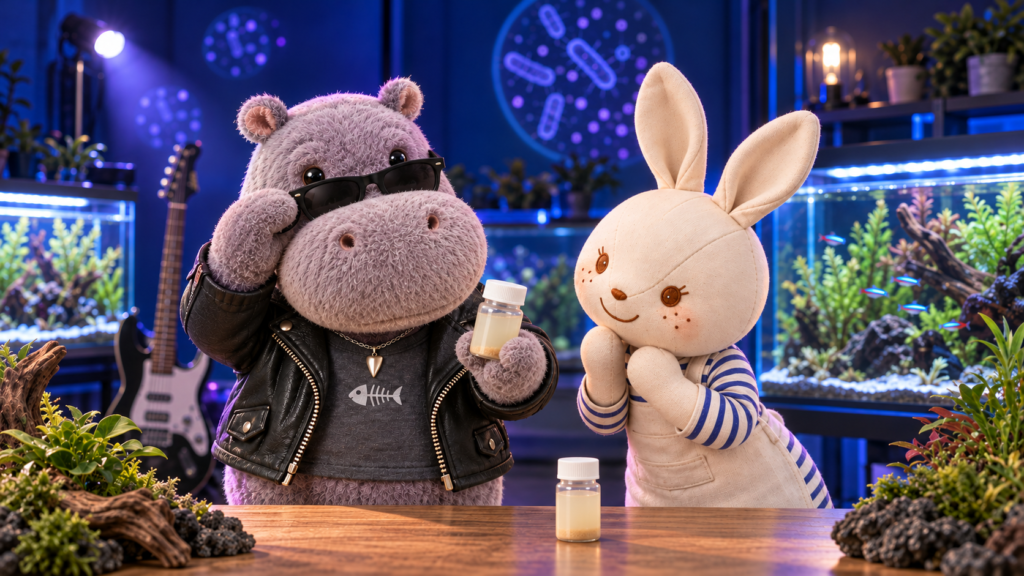 アイのアクアグッズ案内バクテリアって、結局なんなんだ? タマスとアイのボトル探究ロック好きのカバ・タマスが初登場。サイクル、ベストバイオ、バイコムのボトルから、菌の役割と保存の工夫、二本組の歴史をアイと探ります。記事はコチラ →
さまざまな飼育テーマをご紹介。リンク先の記事には広告・商品紹介が含まれます。
案内・紹介記事一覧へ →分布マップ
カエルアンコウ(Antennarius striatus)は、インド洋から西・中部太平洋に広く分布し、東大西洋にも記録があります。日本では瀬戸内海を含む各地の沿岸で見られます。かつて同種とされていた西大西洋の個体群は、現在は近縁種の Antennarius scaber として区別されています。
地図は分布地域を広く見渡すための概略表示で、表示範囲全域での生息を示すものではありません。マーカーは位置関係を示すために設定した代表地点(緯度0度・東経125度)で、実際の採集・確認地点ではありません。
参考文献
分類・分布・生態・繁殖
- Fricke, R., Eschmeyer, W. N. & van der Laan, R.(編)(2026). Eschmeyer’s Catalog of Fishes: Genera, Species, References(Antennarius 属). California Academy of Sciences.
- Bray, D. J. & Thompson, V. J.(2025). Striate Anglerfish, Antennarius striatus (Shaw 1794). Fishes of Australia, Museums Victoria / OzFishNet.
- 林 和希(2020). ハナオコゼじゃありません カエルアンコウ. 香川県水産試験場.
- 日本魚類学会(2007). 日本産魚類の差別的標準和名の改名最終勧告. 日本魚類学会.
飼育条件・栄養・病気と予防
- Francis-Floyd, R., Yanong, R. P. E. & Petty, B. D.(2026年更新). Environmental Diseases of Aquatic Animals in Aquatic Systems. Merck Veterinary Manual.
- Petty, B. D., Francis-Floyd, R. & Yanong, R. P. E.(2026年更新). Nutritional Diseases of Fish. Merck Veterinary Manual.
- Petty, B. D., Francis-Floyd, R. & Yanong, R. P. E.(2026年更新). Parasitic Diseases of Fish. Merck Veterinary Manual.
- Yanong, R. P. E.(2009、2012年改訂). Cryptocaryon irritans Infections (Marine White Spot Disease) in Fish. UF/IFAS Extension, FA164.
形態・捕食行動
- Hagio, H., Nishino, H., Miyake, K., Sato, N., Sawada, K., Nakayama, T. & Yamamoto, N.(2024). Fish That Fish for Fish—A Peculiar Location of “Fishing Motoneurons” in the Striated Frogfish Antennarius striatus. Journal of Comparative Neurology, 532(10), e25674. DOI: 10.1002/cne.25674.
- De Brauwer, M. & Hobbs, J.-P. A.(2016). Stars and stripes: biofluorescent lures in the striated frogfish indicate role in aggressive mimicry. Coral Reefs, 35(4), 1171. DOI: 10.1007/s00338-016-1493-1.
- Fish, F. E.(1987). Kinematics and Power Output of Jet Propulsion by the Frogfish Genus Antennarius (Lophiiformes: Antennariidae). Copeia, 1987(4), 1046–1048. DOI: 10.2307/1445573.



コメント