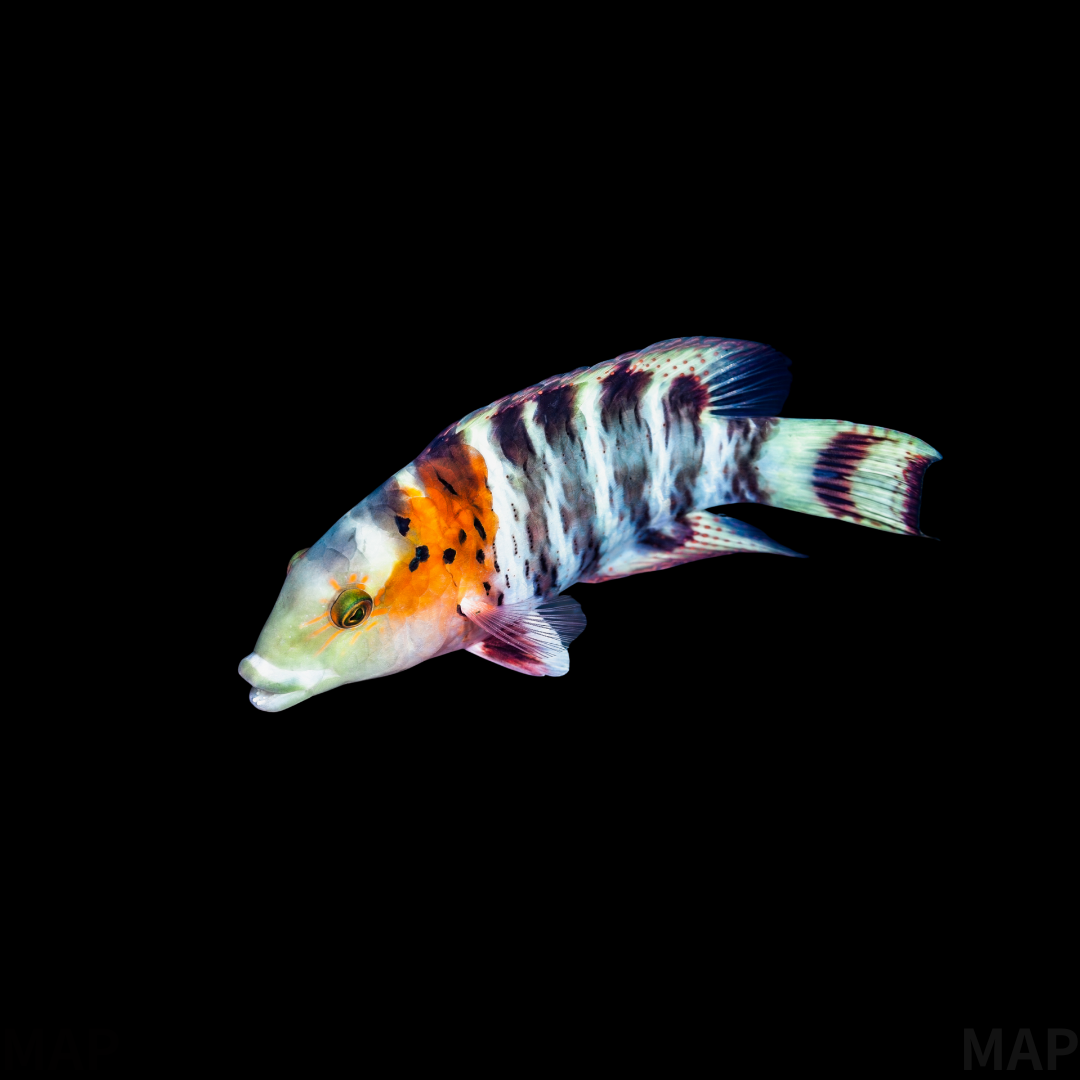
ヤシャベラは、インド洋から西太平洋にかけてのサンゴ礁に生息する、中・大型のベラ科魚類です。鮮烈な朱色の斑紋と、成魚で見られる明瞭な白黒の横帯模様が最大の特徴です。自然界ではサンゴ礁の捕食者として、強靭な顎を使い、巻貝やウニ、甲殻類などの硬い殻を噛み砕いて捕食します。従来はモチノウオ属(Cheilinus)に分類されてきましたが、2025年に発表された最新の分子系統解析(Thomas J. Nearら)によって新属 Concholabrus への再編が提唱されるなど、学術的にも注目を集めています。観賞魚としてはその知的な振る舞いと色彩から人気がありますが、成魚は35cmを超え、底砂を掘り返すなどの力強い習性を持つため、飼育には180cmクラスの大型水槽と強固な設備が求められます。The Red-breasted Wrasse is a medium-to-large wrasse inhabiting coral reefs across the Indo-Pacific. It is characterized by vibrant scarlet patches and distinct black-and-white bands in adults. As a reef predator, it uses powerful jaws to crush the shells of mollusks, sea urchins, and crustaceans. Long classified under the genus Cheilinus, recent 2025 molecular phylogenetic studies (by Thomas J. Near et al.) have proposed its reclassification into the new genus Concholabrus, making it a subject of significant academic interest. While popular in the aquarium trade for its intelligent behavior and colors, its potential size of over 35 cm and habit of rearranging sand require large-scale tanks (180 cm class) and robust equipment.
インド洋、西太平洋。日本では和歌山県以南の太平洋沿岸、南西諸島。Indo-West Pacific. In Japan, found south of Wakayama Prefecture and the Nansei Islands.
最大体長 / Max Size
約35cm(大型個体では40cmに達することもある)Approx. 35 cm (Large individuals may reach 40 cm)
寿命 / Lifespan
約10年 ~ 15年(飼育環境により変動)Approx. 10 – 15 years (varies by environment)
飼育環境 / Aquarium Environment
水槽サイズ / Tank Size
幼魚:90cm規格水槽(約160L以上)
成魚:180cm規格水槽(約650L以上)または1,200L級の大型水槽を推奨Juveniles: 90 cm standard tank (160L+). Adults: 180 cm standard tank (650L+) or 1,200L class systems are recommended.
水温 / Temperature
24℃ ~ 26℃24°C – 26°C (75°F – 79°F)
水質 / Water Quality
海水(pH 8.1 ~ 8.4、比重 1.020 ~ 1.025)。大型肉食魚のため強力な生物ろ過とスキマーの併用が必須。Marine (pH 8.1 – 8.4, SG 1.020 – 1.025). Robust filtration and protein skimming are essential for large carnivores.
レイアウト / Layout
掘り返されても崩れないよう固定した岩組み、底砂。夜間や驚いた際の飛び出しを防ぐ堅牢なフタが必須。Secure rockwork and substrate. A solid lid is mandatory to prevent jumping at night or when startled.
注意点 / Precautions
底砂の掘り返しや岩の移動を行う習性があります。固定されていないレイアウトは崩落の危険があるため注意してください。They rearrange sand and rocks. Unsecured layouts pose a risk of collapse.
餌と給餌 / Feeding
餌の種類 / Diet
肉食性。アサリ、エビ、イカ、カニ。導入初期はイサザアミなどの活餌。慣れれば人工飼料も摂取します。Carnivorous. Clams, shrimp, squid, crab. Live food like mysis shrimp for acclimation. They eventually accept artificial pellets.
給餌のポイント / Feeding Tips
殻付きの甲殻類を定期的に与えることは、歯の伸びすぎ防止と自然な捕食行動の充足に繋がります。知能が高く、飼育者を認識して餌をねだることもあります。Feeding unshelled crustaceans prevents tooth overgrowth and satisfies natural instincts. They are intelligent and may beg for food from their keeper.
性格と混泳 / Temperament and Tank Mates
性格 / Temperament
やや攻撃的で強い縄張り意識を持ちます。小型魚や無脊椎動物は「お掃除役」ではなく「餌」とみなします。Semi-aggressive and territorial. Small fish and invertebrates are viewed as prey, not utility animals.
混泳の相性 / Compatibility
サンゴ水槽(リーフタンク)には不向き。エビ、カニ、貝、ウニは捕食されます。大型ヤッコやハギ、ハタ類など体格の近い強健な魚種とは混泳可能です。Not suitable for reef tanks. Shrimp, crabs, snails, and urchins will be consumed. Compatible with robust fish of similar size, such as large angelfish, tangs, and groupers.
病気と対策 / Diseases and Prevention
かかりやすい病気 / Common Diseases
白点病、ウーディニウム病、ストレスによる拒食。White spot disease, velvet disease, and stress-induced anorexia.
対策と予防 / Prevention
導入初期は警戒心から隠れることが多いですが、落ち着ける環境を整えることで順応を促します。水質管理を徹底し、ストレスを最小限に抑えることが予防の基本です。Maintain stable water quality and provide hiding spots to reduce stress and facilitate acclimation.
増やし方(繁殖) / Breeding
雌雄の判別 / Sexing
雌性先熟の雌雄同体。大型個体で額が突出し、模様がより鮮明になるのがオス(終相)の特徴です。Protogynous hermaphrodites. Large individuals with protruding foreheads and vivid patterns are terminal phase males.
繁殖形態 / Reproduction
卵生。特定のペアを形成して産卵を行うことが報告されています。Oviparous. Reported to form distinct pairs for spawning.
繁殖のポイント / Breeding Tips
攻撃性が強く複数飼育が困難なため、家庭水槽での繁殖例は極めて稀です。広大なスペースと社会的な環境が必要となります。Breeding in home aquaria is very rare due to their aggression and the need for vast space and social structure.
雑学と豆知識 / Trivia and Fun Facts
1. 進化のミステリー:ギチベラとの系統的近縁性1. Evolutionary Mystery: Relationship with the Sling-jaw Wrasse
近年の系統解析研究(2025年、Nearら)によれば、ヤシャベラは従来のモチノウオ属よりも、口を極端に伸ばすことで知られるギチベラ(Epibulus)に近い系統である可能性が示唆されています。同じ祖先から分かれ、一方は吸い込み(吸引)、一方は噛み砕き(物理破壊)という対照的な捕食スタイルへと進化した、適応放散の興味深い事例として注目されています。Recent phylogenetic studies (2025, Near et al.) suggest that the Red-breasted Wrasse may be more closely related to the Sling-jaw Wrasse (Epibulus) than to the traditional genus Cheilinus. It serves as a fascinating example of adaptive radiation, where two lineages from a common ancestor evolved contrasting feeding styles: suction vs. physical crushing.
2. 和名「ヤシャ」の由来と歴史的背景2. Origin of the Name “Yasha” and Historical Context
「ヤシャ(夜叉)」という名は、眼の後方の赤い色彩や厳つい顔つきが、仏教の鬼神を連想させることに由来すると語り継がれています。また、1791年に記載された際のタイプ産地が「日本」とされており、江戸時代の日本から渡った標本がヨーロッパでこの魚の科学的記載の礎となったという歴史的なつながりも、愛好家の間でロマンを持って語られています。The name “Yasha” (Demon) is traditionally thought to come from its scarlet facial markings and stern mature look, reminiscent of Buddhist deities. Historically, its 1791 description listed its type locality as “Japan,” suggesting that specimens from Edo-period Japan played a role in its scientific discovery in Europe.
3. 夜の防衛術:粘液の寝袋3. Nocturnal Defense: The Mucus Cocoon
ベラ科の一部には、夜間に体表から粘液を分泌し、自身を包み込む「寝袋(コクーン)」を作る習性があります。これはウツボなどの天敵の嗅覚から身を隠すための生存戦略です。ヤシャベラも岩の隙間などで休息しますが、こうしたベラ類特有の不思議な生態は、適切な環境を整えた飼育者だけが観察できる魅力的な一面です。Some wrasses exhibit the habit of secreting a mucus “sleeping bag” (cocoon) at night to mask their scent from predators like moray eels. While the Red-breasted Wrasse rests in rock crevices, such unique behaviors of wrasses are a captivating aspect that only attentive keepers may get to observe.
まとめ / Conclusion
ヤシャベラは、サンゴ礁の色彩を象徴する鮮烈な美しさと、強靭な生命力を併せ持った魅力溢れる魚です。最新の研究によって明らかになりつつあるギチベラとの意外な近縁関係や、新属 Concholabrus への再編といった知見は、この魚の進化の物語に新たな深みを与えています。最大で35cmから40cmに達するサイズやその力強い習性は、飼育者に相応の覚悟と巨大な設備を要求しますが、それはまさに本種がサンゴ礁の強者であることの証でもあります。The Red-breasted Wrasse possesses both the symbolic beauty of coral reefs and an overwhelming vitality. Emerging research into its close relationship with the Sling-jaw Wrasse and the proposed reclassification into Concholabrus adds a new layer to its evolutionary story. Its potential size and powerful habits demand significant commitment and large-scale systems, a testament to its status as a formidable reef inhabitant.
その知的な振る舞いや、時折見せる繊細な生態を観察しながら、1,000Lを超える巨大な閉鎖循環系を維持し育てる喜びは、アクアリストにとって至福の体験となるでしょう。強固なレイアウトと適切な管理を尽くすことで、ヤシャベラは水槽の中でその威厳ある姿を末永く見せてくれるはずです。Nurturing this species within a massive 1,000L+ closed system while observing its intelligent behavior is a pinnacle experience for any aquarist. With a secure layout and proper management, the Red-breasted Wrasse will continue to display its majestic presence in your care for many years to come.
Thomas J. Near, et al. (2025). Phylogenomics and the evolution of the wrasses (Labridae).
Bulletin of the Peabody Museum of Natural History. (2025年の系統解析と新属 Concholabrus の提唱)
Bloch, M. E. (1791). Naturgeschichte der ausländischen Fische. Vol. 5.
Berlin. (ヤシャベラの原記載およびタイプ産地「日本」に関する記録)
Westneat, M. W. (1993). Phylogenetic relationships of the tribe Cheilinini (Labridae: Perciformes).
Bulletin of the American Museum of Natural History. (従来のモチノウオ属の形態学的分類)
IUCN Red List of Threatened Species. (2008). Cheilinus fasciatus.
International Union for Conservation of Nature. (保全状況および自然界の分布データ)



 アイのアクアグッズ案内コケを食べるコイの仲間に合わせる飼育用品|フライングフォックス・アルジイーター・ガラ道具の特徴や使い方、選ぶときのポイントをアイが紹介します。記事はコチラ →
 アイのアクアグッズ案内金魚を長く楽しむ飼育用品|水槽・フィルター・エアレーション・水換え道具の特徴や使い方、選ぶときのポイントをアイが紹介します。記事はコチラ →



コメント