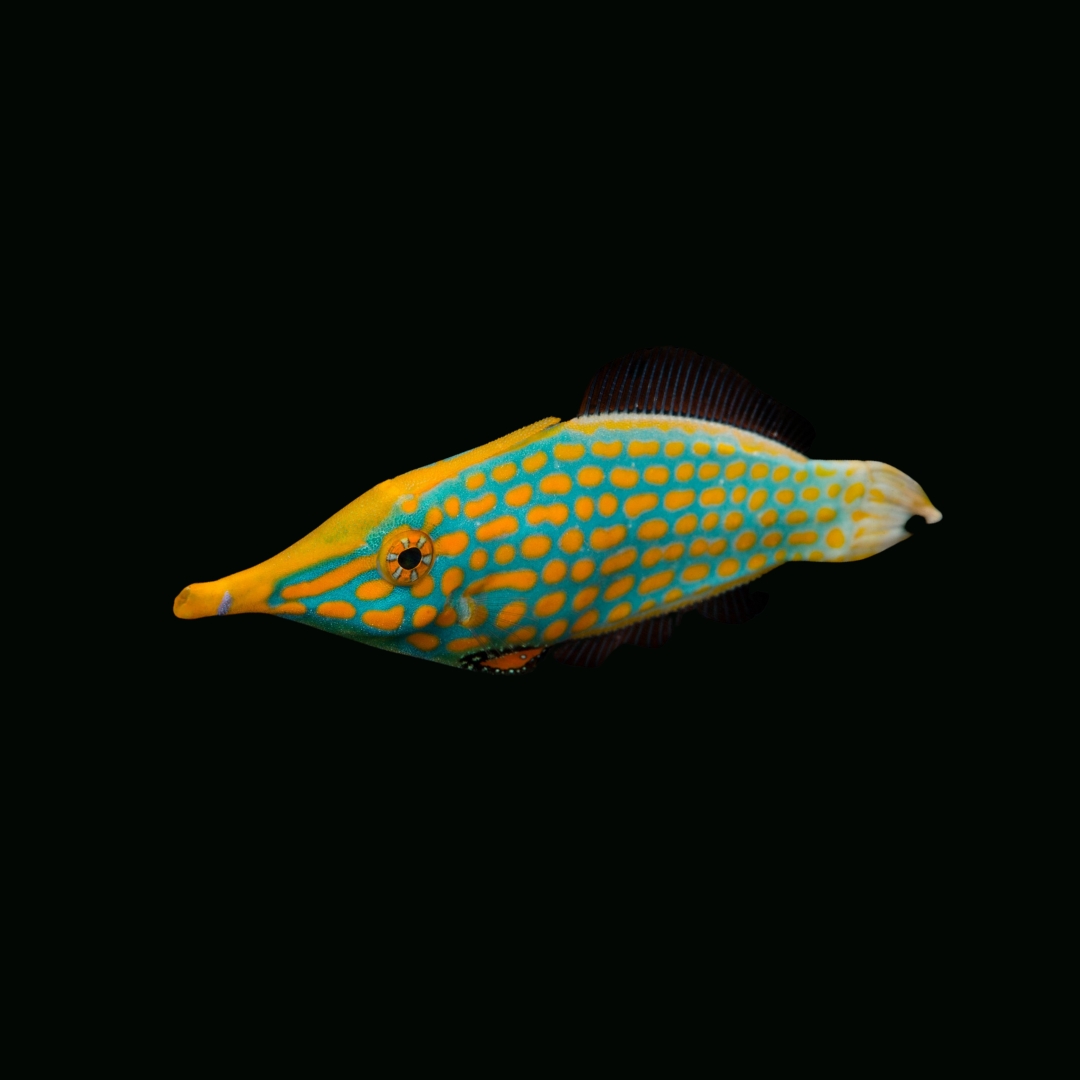
テングカワハギは、青緑色の体に橙色の斑点が並ぶ、非常に印象的な小型の海水魚です。自然下では主にミドリイシ類など枝状サンゴのポリプに強く依存して暮らすため、観賞魚としては美しさと引き換えに高い飼育技術を求められる種類です。水槽では餌付けと多回数給餌が最大の課題で、一般的な海水魚の感覚で迎えると長期維持は難しくなります。一方で、落ち着いた環境、状態のよい個体、適切な餌付け手順をそろえれば、人工飼料や冷凍餌を利用した飼育例もあります。サンゴ礁の生態、化学的擬態、繁殖研究の面でも興味深く、アクアリウムを通じて海の生物多様性を考えさせてくれる魚です。The harlequin filefish is a small marine fish with a striking blue-green body covered in orange spots. In the wild it is highly dependent on branching corals, especially Acropora polyps, which makes it a beautiful but demanding aquarium species. Feeding conversion and frequent small meals are the most important challenges, and it should not be treated like a typical hardy marine fish. With a calm aquarium, a healthy specimen, and a careful feeding program, some individuals can be maintained on frozen and prepared foods. It is also a fascinating species from ecological, chemical crypsis, and breeding perspectives.
フグ目 カワハギ科 テングカワハギ属Order Tetraodontiformes, family Monacanthidae, genus Oxymonacanthus
英名 / English Name
Harlequin filefish / Longnose filefish
分布 / Distribution
インド太平洋のサンゴ礁域。東アフリカ方面からサモア周辺、北は琉球列島、南はグレートバリアリーフ南部・ニューカレドニア・トンガ方面まで記録されます。紅海では近縁種の Oxymonacanthus halli に置き換わるとされます。Indo-Pacific coral reefs, from East Africa toward Samoa, north to the Ryukyu Islands, and south to the southern Great Barrier Reef, New Caledonia, and Tonga. In the Red Sea it is replaced by the related species Oxymonacanthus halli.
最大体長 / Max Size
最大で全長約12cm。観賞魚として流通する個体は4〜7cm前後が多いです。Up to about 12 cm total length. Aquarium specimens are often around 4–7 cm.
寿命 / Lifespan
正確な自然寿命は十分に整理されていません。飼育下では餌付けと栄養管理に成功した場合、数年以上の維持例がありますが、導入初期の拒食で短命に終わる例も少なくありません。Its exact natural lifespan is not well established. In aquaria, well-acclimated individuals may be maintained for several years, but many fail early if feeding is not established.
飼育環境 / Aquarium Environment
水槽サイズ / Tank Size
単独またはペア飼育でも、最低45〜60cm規格水槽以上を目安にし、安定性を重視するなら60cmワイド水槽から90cm規格水槽程度が安心です。小型魚ですが水質変化と餌不足に弱いため、水量に余裕のある成熟した海水水槽が向きます。Although small, it is best kept in a mature marine aquarium with stable water. A 45–60 cm standard tank is a practical minimum for a single fish or pair, while a larger 60 cm wide to 90 cm standard aquarium offers better stability.
水温 / Temperature
24〜26℃前後を目安に安定させます。高水温や急変は拒食や衰弱につながりやすいため、夏場はクーラーなどで上昇を抑えます。Keep the temperature stable at around 24–26°C. High temperatures and rapid fluctuations can lead to stress and feeding problems, so aquarium cooling is recommended in hot seasons.
水質 / Water Quality
比重1.023〜1.026、pH8.1〜8.4を目安に、アンモニアと亜硝酸は検出されない状態を維持します。硝酸塩はできるだけ低く保ちますが、繁殖報告には硝酸塩がある程度検出される環境での産卵例もあるため、数値だけでなく餌食い、呼吸、体型を総合的に観察します。Aim for a specific gravity of 1.023–1.026 and pH 8.1–8.4, with ammonia and nitrite undetectable. Nitrate should be kept low, although spawning has been reported even in systems with measurable nitrate; always judge water quality together with feeding response, breathing, and body condition.
レイアウト / Layout
ライブロックや枝状の隠れ場所を多めに組み、強すぎる直線的な水流を避けます。枝状サンゴに似た構造物や清潔なサンゴ骨格は、隠れ場所としてだけでなく餌付けの足場にも利用できます。ただし、生きたミドリイシ類を入れる場合は食害を前提に考える必要があります。Provide live rock and branching shelters, while avoiding strong direct flow. Branching structures or clean dead coral skeletons can be useful both as cover and as feeding stations. Live Acropora and similar SPS corals should be considered at risk of predation.
注意点 / Precautions
最大の注意点は拒食と痩せです。入荷直後で腹部がへこんだ個体、呼吸が荒い個体、ショップでまったく餌を取らない個体は避けます。水槽導入後は静かな環境で観察し、餌の競争が強い魚を先に入れないことが大切です。The main risks are refusal to feed and weight loss. Avoid newly imported fish with sunken bellies, rapid breathing, or no feeding response at the store. After introduction, keep the environment calm and avoid strong food competitors.
餌と給餌 / Feeding
餌の種類 / Diet
自然下ではミドリイシ類などのサンゴポリプに強く依存します。飼育下では活ブラインシュリンプ、活コペポーダ、冷凍コペポーダ、イサザアミ、魚卵、細かく刻んだイカやアサリ、粘着性のある人工飼料、微細な海水魚用顆粒を段階的に試します。In the wild it is strongly dependent on coral polyps, especially Acropora. In captivity, live brine shrimp, live copepods, frozen copepods, mysids, fish roe, finely chopped squid or clam, adhesive prepared foods, and small marine pellets can be introduced gradually.
給餌のポイント / Feeding Tips
最初は動く餌で捕食反応を引き出し、次に冷凍餌や練り餌へ移行します。清潔なサンゴ骨格や枝状の人工物にペースト状の餌を薄く塗ると、ポリプをついばむ行動を利用しやすくなります。自然下では日中にこまめに採餌するため、人工餌に慣れてからも1日1回の大量給餌ではなく、少量を複数回与える管理が向きます。Begin with moving live foods to trigger feeding, then gradually introduce frozen and prepared foods. Smearing paste food onto clean coral skeletons or branching structures can use its natural pecking behavior. Because it feeds repeatedly during the day in nature, small frequent meals are preferable to one large daily feeding.
性格と混泳 / Temperament and Tank Mates
性格 / Temperament
基本的には温和で臆病です。導入初期は隠れがちで、強い魚に追われたり餌を奪われたりすると拒食しやすくなります。同種ではペアで行動することがあり、相性が合えば落ち着きやすい反面、無理な複数飼育は争いの原因になることがあります。It is generally peaceful and shy. Newly introduced fish often hide, and bullying or strong food competition can quickly cause feeding refusal. A compatible pair may settle well, but forcing multiple individuals together can lead to conflict.
混泳の相性 / Compatibility
混泳相手は小型ハゼ、ネズッポ類、穏やかな小型魚など、餌の競争が弱い種類が向きます。スズメダイ類、大型ベラ、活発なハギ類、大型ヤッコなど、気が強く泳ぎ回る魚との混泳は避けた方が無難です。SPS、とくにミドリイシ類は食害対象になりやすく、ソフトコーラルやマメスナギンチャク類でも個体差によるつつき行動には注意します。Suitable tank mates include small gobies, dragonets, and other calm fish with low food competition. Avoid damselfish, large wrasses, active tangs, and large angelfish. SPS corals, especially Acropora, are highly vulnerable to predation, and even soft corals or zoanthids should be monitored for individual pecking behavior.
病気と対策 / Diseases and Prevention
かかりやすい病気 / Common Diseases
白点病、ウーディニウム症、外傷、輸送ストレスによる拒食と痩せに注意します。体表が薄い印象の小型カワハギ類で、網に引っかかることもあるため、捕獲時の擦れや棘の損傷にも配慮します。Watch for marine ich, velvet disease, injuries, and stress-related refusal to feed or weight loss. As a small filefish, it may also be damaged by rough netting or by its spines becoming caught.
対策と予防 / Prevention
購入前に餌食いと体型を確認し、導入後はできれば隔離水槽で観察します。薬浴は種類や濃度を誤ると負担になるため、病気の種類を見極めて慎重に行います。日常管理では水温の安定、溶存酸素の確保、過密回避、栄養価の高い餌を少量多回数で与えることが最も重要です。Check feeding response and body condition before purchase, and observe the fish in a quarantine system when possible. Medication should be used carefully after identifying the disease, as incorrect treatment can be stressful. Stable temperature, good oxygenation, low crowding, and frequent nutritious meals are the best daily prevention.
増やし方(繁殖) / Breeding
雌雄の判別 / Sexing
オスは尾柄部の剛毛が比較的発達し、背鰭・臀鰭の軟条部に淡い橙色を帯びることがあります。また、腹部のフラップに黒い縁取りと白い小斑点を伴う鮮やかな橙赤色が出やすいとされます。メスは背鰭・臀鰭が透明に近く、腹部フラップは黒色または地味な色合いで、白点が少ないか見られない傾向があります。Males tend to have more developed bristles on the caudal peduncle, slight orange coloration in the soft dorsal and anal fins, and a brighter orange-red pelvic flap with black edging and fine white spots. Females usually have clearer dorsal and anal fins and a darker or plainer pelvic flap with few or no white spots.
繁殖形態 / Reproduction
ペアで行動し、藻類などに沈性粘着卵を産みつける繁殖形態です。観察例では、メスが藻類の房を選ぶように吻で押し、オスが寄り添って放精します。卵は保護されないため、繁殖を狙う場合は産卵後に親魚から隔離します。It forms pairs and lays demersal adhesive eggs in algae or similar substrates. Observations describe the female probing algae with her snout while the male follows and fertilizes the eggs. The eggs are not guarded, so they should be separated from the adults for rearing.
繁殖のポイント / Breeding Tips
繁殖は可能ですが、仔魚育成の難度は高いです。報告例では、親魚に冷凍ブラインシュリンプ、イサザアミ、魚卵、刻んだイカ、ペレットなどを1日4〜5回与え、赤い海藻などを産卵基質に使っています。卵はおよそ0.8mmで、50時間以上で孵化する例があり、仔魚はワムシ、グリーンウォーター、アルテミア幼生、微細配合飼料へと段階的に移行させます。着底はおよそ56日以降とされますが、環境やロットによって変動します。Breeding is possible but larval rearing is difficult. Reports describe broodstock being fed enriched frozen brine shrimp, mysids, roe, chopped squid, and pellets 4–5 times per day, with red macroalgae used as a spawning substrate. Eggs are about 0.8 mm and may hatch after more than 50 hours. Larvae are typically transitioned from rotifers and greenwater to brine shrimp nauplii and fine prepared foods. Settlement has been reported around 56 days post hatch, but timing varies.
雑学と豆知識 / Trivia and Fun Facts
1. 学名に込められた形 / 1. The shape hidden in the name
属名 Oxymonacanthus は「鋭い」「一つの」「棘」に由来するとされ、背中にある目立つ第1背鰭棘をよく表しています。種小名 longirostris は「長い吻」を意味し、サンゴの枝の間からポリプをついばむための細長い口先を思わせます。古い文献では、現在とは異なる学名の組み合わせや表記が見られることもあります。The genus name Oxymonacanthus is derived from roots meaning sharp, single, and spine, matching the prominent first dorsal spine. The species name longirostris refers to a long snout, a fitting description for a fish that picks coral polyps from between branches. Older sources may use different historical combinations or spellings of the scientific name.
2. 食べたサンゴの匂いをまとう魚 / 2. A fish that smells like what it eats
テングカワハギの有名な研究に、食べたサンゴに由来する化学的な手がかりによって、自分の匂いを周囲のサンゴに近づけるという「化学的擬態」があります。これは単に色がサンゴに似ているという話ではなく、水中で重要な情報になる匂いの世界にまで溶け込む可能性を示したものです。捕食者やサンゴ共生生物の反応を使った実験で示された点が特に興味深く、サンゴ礁の生き物たちが視覚だけでなく化学的な情報にも強く依存していることを教えてくれます。One of the most famous studies on this species concerns diet-induced chemical crypsis: by eating corals, the fish can make its odor more similar to its coral surroundings. This is not simply visual camouflage; it suggests blending into the chemical world of the reef. Experiments using predators and coral-associated organisms are especially fascinating because they show how strongly reef life can depend on chemical cues as well as vision.
3. 飼育が難しい理由は「弱い魚」だからではない / 3. Why it is difficult is not simply weakness
本種が難しいとされる理由は、体が特別に虚弱だからというより、自然下での生活があまりにも専門化しているからです。野生ではサンゴのポリプを日中に何度もついばむ生活をしており、水槽ではその行動をどう置き換えるかが勝負になります。サンゴ骨格に餌を塗る方法や少量多回数給餌は、この魚の自然な行動を尊重した工夫といえます。This species is difficult not merely because it is fragile, but because its natural lifestyle is highly specialized. In the wild it repeatedly pecks coral polyps throughout the day, so aquarium success depends on replacing that behavior with an appropriate feeding routine. Smearing food on coral skeletons and offering many small meals are practical methods that respect its natural behavior.
4. 保全の視点で見たい観賞魚 / 4. An aquarium fish with a conservation story
本種はIUCNレッドリストで絶滅危惧II類にあたるVulnerableとして扱われています。サンゴへの依存度が高い魚であるため、サンゴ白化やサンゴ礁の劣化は生息場所と餌の両方を失う問題につながります。観賞魚として迎える場合は、状態のよい個体を選び、長期飼育できる準備を整えてから購入することが、趣味としての楽しさと生き物への責任を両立させる第一歩です。The species is listed as Vulnerable on the IUCN Red List. Because it depends heavily on corals, coral bleaching and reef degradation threaten both its habitat and food supply. For aquarists, choosing a healthy individual and preparing for long-term care before purchase is an important way to enjoy the hobby responsibly.
まとめ / Conclusion
テングカワハギは、サンゴ礁の美しさと複雑さをそのまま小さな体に詰め込んだような魚です。鮮やかな体色、細長い吻、枝状サンゴに寄り添う暮らし、そして食べ物に由来する化学的擬態の可能性まで、知れば知るほど魅力が増していきます。The harlequin filefish seems to carry the beauty and complexity of a coral reef in its small body. Its vivid colors, long snout, close association with branching corals, and possible diet-induced chemical crypsis make it more fascinating the more one learns about it.
ただし、飼育は明らかに上級者向けです。餌付け、少量多回数給餌、穏やかな混泳、SPSサンゴへの食害対策、安定した水質管理を準備できてはじめて、本種本来の魅力を引き出せます。美しいから衝動的に迎えるのではなく、サンゴ食のスペシャリストとして尊重し、長く付き合う覚悟を持って迎えたい魚です。However, it is clearly an advanced aquarium fish. Its true appeal can only be brought out with careful feeding conversion, frequent small meals, calm tank mates, awareness of SPS coral predation, and stable water quality. It should not be purchased impulsively for its beauty alone, but welcomed with respect for its specialized coral-feeding lifestyle.



 アイのアクアグッズ案内テトラミンって、こんなにあるの? アイとコタロウのごはん探究旅道具の特徴や使い方、選ぶときのポイントをアイが紹介します。記事はコチラ →
 アイのアクアグッズ案内お魚を撮ったのに、ボクが写ってる! スマホで楽しむ水槽撮影と便利な道具道具の特徴や使い方、選ぶときのポイントをアイが紹介します。記事はコチラ →



コメント