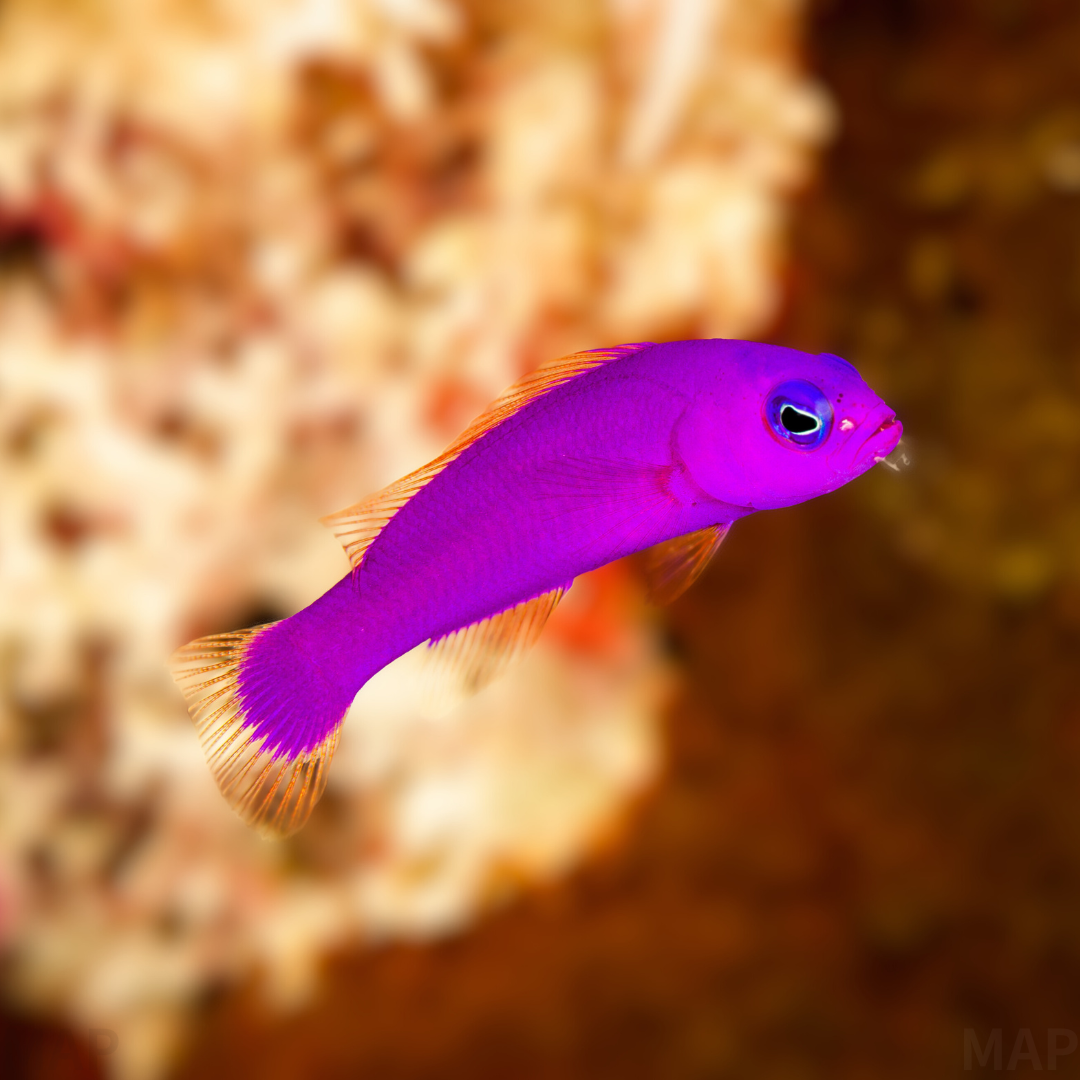
クレナイニセスズメは、西太平洋のサンゴ礁に生息するメギス科の小型海水魚です。その名の通り、全身を鮮烈なマゼンタ色(赤紫色)で包み込んだ姿は、水槽内でも一際目を引く存在です。全長6cmほどと小型ながら非常に強健で、環境の変化にも強いため、海水魚飼育の入門種として古くから親しまれています。岩の隙間やサンゴの枝間を縫うように泳ぐ姿は愛らしく、サンゴ礁のドロップオフを切り取ったようなレイアウトによく映えます。一方で、強い縄張り意識を持っており、自分のテリトリーに侵入する者には果敢に立ち向かう気の強さも持ち合わせています。The Magenta Dottyback (Pictichromis porphyrea) is a small marine fish belonging to the family Pseudochromidae, native to the coral reefs of the Western Pacific. As its name suggests, its entire body is wrapped in a vivid magenta (red-purple) color, making it a standout presence in any aquarium. Reaching a maximum length of about 6cm, it is extremely hardy and resilient to environmental changes, making it a long-standing favorite for beginners in the marine aquarium hobby. While its movement through rock crevices and coral branches is charming, it possesses a strong territorial instinct and will boldly confront intruders in its space.
西太平洋(琉球列島、フィリピン、インドネシア、サモアなど)Western Pacific (Ryukyu Islands, Philippines, Indonesia, Samoa, etc.)
最大体長 / Max Size
約6.0 cmApprox. 6.0 cm
寿命 / Lifespan
3〜5年程度Approx. 3 to 5 years
飼育環境 / Aquarium Environment
水槽サイズ / Tank Size
60cm規格水槽(約60〜70L)以上推奨。単独飼育ならより小型でも可能ですが、混泳を考えるなら120cmワイド水槽(約380L)クラスの大型水槽が理想です。Recommended 60cm standard tank (approx. 60-70L) or larger. Smaller tanks are possible for single specimens, but for community tanks, a 120cm wide tank (approx. 380L) is ideal.
水温 / Temperature
23〜27度。日本の夏場は水槽用クーラーでの温度管理が必須です。23 to 27 degrees Celsius. Temperature control with a chiller is essential during Japanese summers.
水質 / Water Quality
pH 8.0〜8.4、比重 1.020〜1.026。硝酸塩を低く抑えた清浄な海水を好みます。pH 8.0-8.4, Specific Gravity 1.020-1.026. Prefers clean seawater with low nitrate levels.
レイアウト / Layout
ライブロックを複雑に組み、洞窟や隙間を多く作ってください。安心できる隠れ家を提供することが重要です。Arrange live rock complexly to create many caves and crevices. Providing secure hiding places is vital.
注意点 / Precautions
飛び出し事故が非常に多いため、隙間のない確実なフタが絶対に必要です。Jumping accidents are very common, so a secure lid with no gaps is absolutely necessary.
餌と給餌 / Feeding
餌の種類 / Diet
肉食性。人工飼料(フレーク・ペレット)のほか、冷凍のイサザアミ、ブラインシュリンプなどを好みます。Carnivorous. Prefers artificial food (flakes/pellets) as well as frozen mysis shrimp and brine shrimp.
給餌のポイント / Feeding Tips
体色の維持には、色素を含む高品質な餌が不可欠です。ビタミン強化剤やアスタキサンチンを含む餌をローテーションに加えると退色を防げます。To maintain body color, high-quality food containing pigments is essential. Adding food with vitamin boosters or astaxanthin to the rotation prevents color loss.
性格と混泳 / Temperament and Tank Mates
性格 / Temperament
非常に気が強く、縄張り意識が強固です。同種間では激しく争います。Highly aggressive with a strong territorial instinct. They fight fiercely among their own kind.
混泳の相性 / Compatibility
原則として1水槽に1匹。体型や色の似た魚(ハタタテハゼ等)は攻撃対象になりやすいです。導入は最後にするのがコツです。小型のエビは食べられる可能性があります。Generally one per tank. Fish with similar shapes or colors are likely to be attacked. It is best to introduce them last. Small shrimp may be eaten.
病気と対策 / Diseases and Prevention
かかりやすい病気 / Common Diseases
白点病、ウーディニウム病。非常に丈夫ですが、導入直後のストレス時は注意が必要です。Cryptocaryon irritans (White Spot Disease), Amyloodinium. Though hardy, caution is needed during stress periods after introduction.
対策と予防 / Prevention
殺菌灯の設置や、導入前の十分な水合わせが有効です。安定した水温と清潔な水質を維持してください。Installing a UV sterilizer and thorough acclimation before introduction are effective. Maintain stable temperature and clean water quality.
増やし方(繁殖) / Breeding
雌雄の判別 / Sexing
外見での判別は困難ですが、ハレム内では大型の個体がオスになります。Difficult to distinguish by appearance, but the largest individual in a harem becomes the male.
繁殖形態 / Reproduction
岩の隙間などに粘着性の卵塊を産み付けます。オスが孵化まで卵を保護する父性保護を行います。Lays adhesive egg masses in rock crevices. The male performs paternal care, protecting the eggs until they hatch.
繁殖のポイント / Breeding Tips
双方向性性転換の能力を持つため、サイズの異なる個体を組み合わせることでペア形成の可能性があります。Due to their bidirectional sex change ability, pairing may be possible by combining individuals of different sizes.
雑学と豆知識 / Trivia and Fun Facts
1. 名前が語る「紫の宝石」1. A “Purple Gem” by Name
学名の Pictichromis porphyrea には、この魚の美しさがそのまま凝縮されています。属名の Pictichromis は「色彩を施されたスズメダイのような魚」、種小名の porphyrea はラテン語で「紫」を意味します。かつてはメギス属(Pseudochromis)に分類されていましたが、そのあまりにも鮮烈な色彩から、現在の「彩られた」という名を持つ属へと移されました。The scientific name Pictichromis porphyrea encapsulates this fish’s beauty. The genus name Pictichromis means “painted chromis-like fish,” and the species name porphyrea is Latin for “purple.” Originally classified in the genus Pseudochromis, it was moved to its current genus, which literally means “painted,” due to its vivid coloration.
水槽では鮮やかなマゼンタ色に見える彼らですが、自然界の深い海中では少し違った表情を見せます。太陽光が水に吸収される物理現象により、特定の水深ではこのマゼンタ色が鮮烈な「青色」に輝いて見えることがあるのです。これは周囲の環境に溶け込むための光学的擬態の一種と考えられており、自然が作り出した不思議な魔法の一つと言えるでしょう。While they appear magenta in aquariums, they show a different face in the deep sea. Due to how water absorbs sunlight, at certain depths, this magenta body can appear to glow a brilliant “blue.” This is thought to be a form of optical camouflage to blend into the environment, one of nature’s mysterious magic tricks.
3. 自由自在に性を変える「究極の適応」3. “Ultimate Adaptation”: Changing Sex at Will
クレナイニセスズメの最も驚くべき生態は、オスとメスを自由に行き来できる「双方向性性転換」の能力です。多くの魚は一方通行の性転換を行いますが、彼らは周囲に大きなオスがいればメスになり、オスがいなくなれば自分がオスに変わるだけでなく、環境次第で再びメスに戻ることさえ可能です。これは、過酷なサンゴ礁で確実に子孫を残すための、究極の生存戦略なのです。The most astonishing trait of the Magenta Dottyback is its “bidirectional sex change” ability. While many fish change sex in one direction, they can become female if a larger male is present, turn male if the male disappears, and even revert to female if the environment changes. This is an ultimate survival strategy to ensure reproduction in harsh coral reef environments.
4. 水槽の掃除屋?ウミケムシの天敵4. Tank Cleaner? Natural Enemy of Bristleworms
気の強い性格の裏で、アクアリストにとって非常に頼もしい一面も持っています。彼らは、ライブロックから発生してサンゴを悩ませる「ウミケムシ」などの多毛類を好んで捕食します。化学薬品を使わずに、自然な食物連鎖によって害虫を制御してくれる「生物兵器」として、ベテランのアクアリストに重宝されることも少なくありません。Behind their aggressive temperament, they have a side that is very reliable for aquarists. They enjoy preying on polychaetes like “bristleworms” that emerge from live rock and plague corals. Experienced aquarists often value them as a “biological control” to manage pests through the natural food chain without using chemicals.
まとめ / Conclusion
クレナイニセスズメは、その鮮烈なマゼンタ色の美しさだけでなく、双方向性性転換という驚異的な生命の神秘を秘めた魚です。強健で飼育しやすい反面、その気の強さをどうコントロールするかがアクアリストの腕の見せ所となります。適切な隠れ家と多様な食事を提供することで、その色彩を長期間維持し、サンゴ礁の宝石のような輝きを水槽内で楽しむことができるでしょう。The Magenta Dottyback is not only beautiful for its vivid color but also hides the incredible mystery of bidirectional sex change. While hardy and easy to keep, managing its aggressive nature is where an aquarist shows their skill. By providing proper hiding spots and a varied diet, you can maintain its color for a long time and enjoy its gem-like radiance in your aquarium.
近年では、野生個体への採集圧を減らすための飼育下繁殖(CB)個体の流通も増えており、持続可能なアクアリウムホビーの象徴的な存在にもなりつつあります。この小さな魚が持つ進化の歴史に思いを馳せながら、日々の飼育を楽しんでいただければ幸いです。In recent years, the availability of Captive-Bred (CB) individuals has increased to reduce collection pressure on wild populations, making them a symbolic presence in the sustainable aquarium hobby. We hope you enjoy your daily care while contemplating the evolutionary history within this small fish.
Kuwamura, T., T. Sunobe, and Y. Sakai. 2015. Bidirectional sex change in the dottyback Pictichromis porphyrea. Copeia 103(2): 328-332. DOI: 10.1643/CE-14-118
Lubbock, R. 1974. A new species of Pseudochromis (Pisces: Pseudochromidae) from the Great Barrier Reef. Zoological Journal of the Linnean Society 55(2): 115-117.



 アイのアクアグッズ案内ダニオの仲間に合わせる飼育用品|ゼブラダニオから超小型種まで水槽・ろ過・餌を選ぶ道具の特徴や使い方、選ぶときのポイントをアイが紹介します。記事はコチラ →
 アイのアクアグッズ案内エーハイムはおもちゃから始まった? 小さな噴水から水槽へ、アイとコタロウの探訪道具の特徴や使い方、選ぶときのポイントをアイが紹介します。記事はコチラ →
 アイのアクアグッズ案内プレコ飼育に必要なもの|餌・流木・ろ過・隠れ家・掃除用品道具の特徴や使い方、選ぶときのポイントをアイが紹介します。記事はコチラ →
 アイのアクアグッズ案内おとひめ物語|養殖生まれの餌を、わが家の魚に合う一粒へ道具の特徴や使い方、選ぶときのポイントをアイが紹介します。記事はコチラ →



コメント