

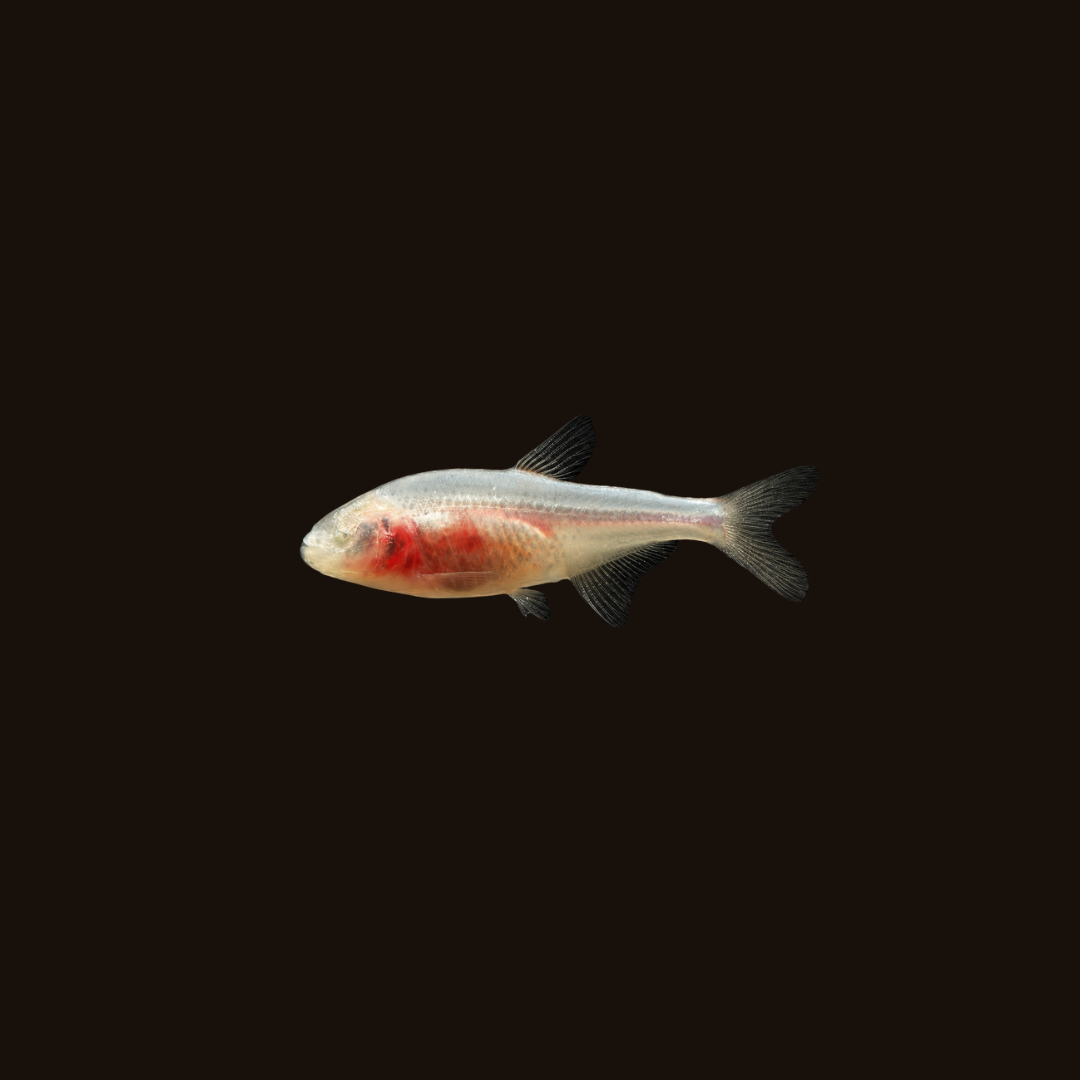
解説 / Description
ブラインドケーブ・テトラは、メキシコ北東部の洞窟水系に適応したメキシカンテトラの仲間です。光の届かない環境で世代を重ねた結果、成魚では外から見える目がほとんどなく、体色も白から淡いピンク色を帯びます。見た目は非常に個性的ですが、観賞魚として流通する個体はブリード個体が中心で、丈夫で餌付きもよく、基本を押さえれば家庭の熱帯魚水槽でも飼育しやすい魚です。 The Blind Cave Tetra is a cave-adapted form related to the Mexican tetra. After generations in lightless waters, adults have little to no externally visible eyes and a pale white to pinkish body. Despite its unusual appearance, aquarium specimens are usually captive-bred, hardy, quick to feed, and manageable in home tropical aquariums when the basics are observed.
基本情報 / Basic Information
| 学名 / Scientific Name | Astyanax mexicanus(洞窟型。過去の学名や流通名として, cave form. The name Astyanax jordaniが使われることもあります) may also appear as an older scientific name or trade-associated name. |
|---|---|
| 通称 / Common Name | ブラインドケーブ・テトラ、ブラインドケーブ・カラシン、盲目カラシンBlind Cave Tetra, Blind Cave Characin, Mexican Cavefish |
| 分類 / Family | カラシン目 アセストロリンクス科。資料や分類体系によっては、広義のカラシン科として扱われることもありますOrder Characiformes, family Acestrorhamphidae. Some references and classification systems still treat it within a broad Characidae concept. |
| 英名 / English Name | Blind Cave Tetra / Mexican Cavefish |
| 分布 / Distribution | 洞窟型はメキシコ北東部の洞窟水系に由来します。観賞魚として日本に流通する個体は、野生採集個体ではなく、養殖場で繁殖されたブリード個体が中心です。The cave form originates from cave waters in northeastern Mexico. Aquarium specimens in Japan are mainly captive-bred fish from farms rather than wild-collected individuals. |
| 最大体長 / Max Size | 観賞魚としては7から10cm前後が目安です。種としては12cmほどに達する記録もあります。In aquariums, about 7 to 10 cm is a practical expectation. The species has records of reaching around 12 cm. |
| 寿命 / Lifespan | 飼育下では数年単位で飼える魚です。水質と給餌を安定させれば、5年以上の長期飼育も十分に期待できます。It is a fish that can live for several years in captivity. With stable water quality and controlled feeding, five years or more is a realistic long-term goal. |
飼育環境 / Aquarium Environment
| 水槽サイズ / Tank Size | 幼魚や一時的な飼育なら30cm水槽でも管理できますが、終生飼育では45cm規格水槽以上を目安にします。3から5匹以上で飼うなら、遊泳スペースを確保しやすい60cm規格水槽が安心です。A 30 cm tank can manage juveniles or temporary housing, but a standard 45 cm tank or larger is a better baseline for long-term care. For a group of 3 to 5 or more, a standard 60 cm tank is the more comfortable choice. |
|---|---|
| 水温 / Temperature | 通常飼育では22から26度前後が扱いやすい範囲です。ある程度の幅には耐えますが、高温が続く環境は避け、冬場はヒーターで安定させます。繁殖を狙う場合は、18から20度前後のやや低い水温が刺激になることがあります。 For normal care, around 22 to 26 degrees Celsius is easy to manage. The fish is tolerant within reason, but prolonged high temperatures should be avoided, and a heater should keep the water stable in winter. For breeding attempts, a cooler period around 18 to 20 degrees Celsius may act as a trigger. |
| 水質 / Water Quality | 中性付近を中心に、pH6.8から7.8程度を目安にします。極端に酸性へ傾ける必要はなく、日本の水道水をカルキ抜きして使えば、多くの地域で無理なく飼育できます。Aim for near-neutral water, roughly pH 6.8 to 7.8. Strongly acidic water is unnecessary, and dechlorinated tap water is suitable in many areas. |
| レイアウト / Layout | 底砂は大磯砂や田砂など、管理しやすく水質を安定させやすいものが向きます。流木、丸みのある石、土管、アヌビアスやミクロソリウムなど丈夫な水草を配置すると、側線を使って空間を把握する本種の探索行動を引き出せます。飼育に完全な暗闇は必要なく、鑑賞用の照明も使えます。Easy-to-maintain substrates such as fine gravel or river sand work well. Driftwood, rounded stones, caves, and hardy plants such as Anubias or Microsorum provide landmarks that stimulate the fish’s lateral-line-based exploration. Complete darkness is not necessary for captive care, and aquarium lighting can be used for viewing. |
| 注意点 / Precautions | 目が見えないため、餌を探すときに周囲へ突っ込むような動きをすることがあります。鋭利な石や角の立った装飾品は避け、ヒレの長い小型魚との混泳では接触やヒレかじりに注意します。強健ですが大食いなので、水質悪化と肥満には気をつけてください。Because it cannot see, it may rush around while searching for food. Avoid sharp stones and hard-edged decorations, and be careful when keeping it with small long-finned fish because accidental contact or fin nipping can occur. It is hardy, but heavy feeding can quickly lead to poor water quality and obesity. |
餌と給餌 / Feeding
| 餌の種類 / Diet | 人工飼料のフレーク、顆粒、沈下性タブレット、冷凍アカムシ、ブラインシュリンプなどをよく食べます。嗅覚と味覚が発達しているため、沈んだ餌にも反応しやすい魚です。It readily accepts flakes, granules, sinking tablets, frozen bloodworms, and brine shrimp. Its enhanced smell and taste make it good at finding food even after it sinks. |
|---|---|
| 給餌のポイント / Feeding Tips | 給餌は1日1から2回、数分で食べ切れる量に抑えます。洞窟環境に適応した代謝の影響で脂肪を蓄えやすいとされるため、食べるからといって与えすぎないことが大切です。腹部が常に張るようなら量を減らし、必要に応じて断食日を設けます。Feed once or twice a day, only as much as they finish within a few minutes. Because cave-adapted metabolism can make them prone to storing fat, avoid overfeeding even if they seem eager. If the belly remains swollen, reduce the ration or add occasional fasting days. |
性格と混泳 / Temperament and Tank Mates
| 性格 / Temperament | 活発でよく泳ぎ、餌への反応も強い魚です。一般的な群泳魚のように整った群れを作るタイプではありませんが、単独よりも複数匹で飼うほうが落ち着きやすい傾向があります。It is active, explores constantly, and reacts strongly to food. It does not school neatly like many sight-oriented characins, but it often settles better in a group than alone. |
|---|---|
| 混泳の相性 / Compatibility | 同程度以上のサイズで、遊泳力があり、ヒレが長すぎない魚と相性がよいです。小さすぎる魚、動きの遅い魚、グッピーやベタのように目立つ長いヒレを持つ魚は避けたほうが無難です。混泳水槽では、他種が休めるシェルターを複数用意すると事故を減らせます。Best tank mates are similarly sized or larger, reasonably active fish without overly long fins. Very small fish, slow fish, and long-finned species such as fancy guppies or bettas are best avoided. Multiple shelters help other fish rest safely in a community aquarium. |
病気と対策 / Diseases and Prevention
| かかりやすい病気 / Common Diseases | 特別に弱い病気が多い魚ではありません。一般的な熱帯魚と同じく、白点病、尾ぐされ病、水質悪化による肌荒れ、過食による肥満や内臓への負担に注意します。It is not especially disease-prone. As with other tropical fish, watch for ich, fin rot, skin irritation from poor water quality, and health problems related to overfeeding and obesity. |
|---|---|
| 対策と予防 / Prevention | 安定した水温、定期的な換水、食べ残しの除去、過密飼育の回避が基本です。新しく導入する個体は状態を確認し、可能であれば短期間の隔離観察を行います。丈夫な魚ほど管理が雑になりやすいため、給餌量と水質の確認を習慣にすると長く楽しめます。Stable temperature, regular water changes, removal of leftovers, and avoiding overcrowding are the foundation. Check new arrivals carefully and, if possible, observe them in quarantine before introduction. Because hardy fish can tempt keepers to relax maintenance, consistent feeding control and water-quality checks are important. |
増やし方(繁殖) / Breeding
| 雌雄の判別 / Sexing | 成熟したメスは腹部がふっくらしやすく、オスはややスリムに見える傾向があります。ただし外見差は大きくないため、複数匹を育てて自然にペアや産卵群を作らせるほうが現実的です。Mature females tend to look fuller in the abdomen, while males are often slimmer. The difference is not dramatic, so raising a group and allowing natural breeding groups to form is usually more practical. |
|---|---|
| 繁殖形態 / Reproduction | カラシンらしいばらまき型の産卵を行います。水草、ウィローモス、産卵床、底面付近などに卵を散らし、親魚は卵を食べることがあるため、産卵後は親を戻すか、卵を保護する工夫が必要です。It is an egg-scattering characin. Eggs are scattered among plants, spawning mops, moss, or near the substrate. Adults may eat the eggs, so the parents should be removed after spawning or the eggs should be protected. |
| 繁殖のポイント / Breeding Tips | 繁殖を狙う場合は、冷凍アカムシなどで親魚のコンディションを整えたうえで、産卵用水槽に移し、水温を18から20度前後へ下げる方法が有効とされます。卵の孵化日数は水温によって変わり、低めの水温では5から7日、高めの水温では2から3日ほどが目安です。孵化後はインフゾリアやブラインシュリンプ幼生など、口に入る小さな餌から始めます。For breeding attempts, condition the adults with rich foods such as frozen bloodworms, then move them to a spawning tank and lower the temperature to around 18 to 20 degrees Celsius. Hatching time depends on temperature, roughly 5 to 7 days in cooler water and 2 to 3 days in warmer water. Start fry on very small foods such as infusoria and newly hatched brine shrimp. |
雑学と豆知識 / Trivia and Fun Facts
| 1. 目は最初からないわけではない / 1. The eyes are not absent from the start | ブラインドケーブ・テトラは、発生の初期に水晶体や網膜を備えた小さな眼の原基を作ります。その後、成長の過程で眼の発達が止まり、組織が退縮して皮膚に覆われていきます。成魚だけを見ると「目のない魚」に見えますが、その姿は発生の途中で起こる変化によって形づくられています。Blind Cave Tetras initially form small eye primordia with lenses and retinas. During development, eye growth arrests, the tissue regresses, and the eyes become covered by skin. Adults may look simply eyeless, but that appearance is produced through changes during development. |
|---|---|
| 2. 暗闇で進んだ並行進化 / 2. Parallel evolution in darkness | 洞窟型のブラインドケーブ・テトラは、単一の洞窟で一度だけ生まれた存在ではないと考えられています。複数の集団がそれぞれ地下水系に適応し、目や色素の退縮といった似た特徴を示すようになりました。同じような環境圧が、別々の集団に似た姿をもたらした例として、進化学でよく取り上げられます。The cave form is not thought to have arisen only once in a single cave. Multiple populations adapted to subterranean waters and came to show similar traits such as reduced eyes and pigmentation. It is often discussed as an example of similar environmental pressures producing similar evolutionary outcomes. |
| 3. 視覚の代わりに発達した感覚 / 3. Senses that replaced vision | 目を失った代わりに、本種は水流の変化を感じる側線、においを追う嗅覚、餌を探す味覚を発達させています。新しい水槽に入れると、壁や障害物にぶつかるだけの魚ではなく、水圧の反射を読むように空間を覚えていきます。複雑なレイアウトが楽しめるのは、この感覚世界を刺激できるからです。Instead of relying on sight, this fish uses a highly developed lateral line, smell, and taste. In a new aquarium it is not simply bumping around; it gradually maps the space through water movement and reflected pressure cues. A thoughtful layout can enrich this hidden sensory world. |
| 4. 研究分野でも注目される魚 / 4. A fish of scientific interest | 本種は、眼の退縮だけでなく、代謝、脂肪蓄積、睡眠、行動の研究でも使われています。餌が限られる洞窟環境に適応した結果、栄養を効率よく蓄える性質や、地表型とは異なる睡眠・行動パターンを示すことが知られています。観賞魚として身近でありながら、進化や発生を考えるうえでも重要な魚です。This species is studied not only for eye regression, but also for metabolism, fat storage, sleep, and behavior. Adaptation to food-limited cave habitats is associated with efficient nutrient storage and sleep and behavior patterns that differ from surface forms. It is familiar in aquariums yet important for understanding evolution and development. |
| 5. 日本で買える個体と野生個体の違い / 5. Aquarium fish and wild populations are different stories | 日本のショップで見かけるブラインドケーブ・テトラは、養殖場で増やされたブリード個体が中心です。そのため入手しやすく価格も手頃ですが、原産地の洞窟個体群は限られた地下水域に依存しています。身近な観賞魚である一方、野生では特殊な環境に支えられた魚でもあることを知っておきたい種類です。Blind Cave Tetras seen in Japanese aquarium shops are mainly captive-bred, which makes them accessible and affordable. Wild cave populations, however, depend on limited subterranean waters. It is a familiar aquarium fish, but its wild background is tied to highly specialized habitats. |
まとめ / Conclusion
ブラインドケーブ・テトラは、丈夫で飼いやすいだけでなく、暗い洞窟環境への適応を体全体で示してくれる魚です。外から見える目を失った淡い体色、側線を頼りに水槽内を泳ぐ動き、餌をすばやく探し当てる反応には、一般的な小型カラシンとは違う存在感があります。 The Blind Cave Tetra is not only hardy and manageable; its entire body reflects adaptation to dark cave habitats. Its pale body, reduced externally visible eyes, lateral-line-guided swimming, and quick food-finding response give it a presence unlike ordinary small characins.
終生飼育を見据えた水槽サイズ、角の立たないレイアウト、控えめな給餌を意識すれば、安定して長く付き合えます。見えないはずの水槽内を迷わず泳ぐ姿は、生命が環境に合わせて姿を変えてきたことを、日々の観察の中で静かに伝えてくれます。 With a tank size chosen for long-term care, a layout without sharp edges, and controlled feeding, it can be kept steadily for many years. Watching it navigate an aquarium without visible eyes quietly shows how life can change in response to its environment.

気になる道具や飼い方を見つけてみませんか?
 アイのアクアグッズ案内水槽のエアーポンプの選び方|水深・音・泡で選ぶおすすめ用品道具の特徴や使い方、選ぶときのポイントをアイが紹介します。記事はコチラ →
 アイのアクアグッズ案内エーハイムはおもちゃから始まった? 小さな噴水から水槽へ、アイとコタロウの探訪道具の特徴や使い方、選ぶときのポイントをアイが紹介します。記事はコチラ →
 アイのアクアグッズ案内水槽フィルターの選び方|外掛け・外部・上部から小型オーバーフローまで道具の特徴や使い方、選ぶときのポイントをアイが紹介します。記事はコチラ →
 アイのアクアグッズ案内バルブの仲間に合わせる飼育用品|チェリーバルブ・スマトラ・中型種の水槽とろ過道具の特徴や使い方、選ぶときのポイントをアイが紹介します。記事はコチラ →
さまざまな飼育テーマをご紹介。リンク先の記事には広告・商品紹介が含まれます。
案内・紹介記事一覧へ →分布マップ
ブラインドケーブ・テトラの洞窟型は、メキシコ北東部の洞窟水系に由来します。この地図では、分布イメージを示すため、原産地域の概略代表地点をプロットしています。
注記:この地点は分布欄の「メキシコ北東部の洞窟水系」という情報をもとにした概略プロットです。実際の採集地点や厳密な生息範囲を示すものではありません。
参考文献・参照資料
以下は、ブラインドケーブ・テトラ(Astyanax mexicanus)の分類、分布、生息環境、飼育条件、繁殖、病気や注意点を確認するために参照した主要資料です。店舗、通販、個人ブログ、まとめサイトは含めず、魚類データベース、分類カタログ、査読論文、大学Extension資料、標準的な専門書に絞っています。
-
Froese, R. and D. Pauly, eds. FishBase: Astyanax mexicanus (Mexican tetra).
分類、分布、淡水性の生息環境、最大体長、食性、繁殖に関する基礎情報、観賞魚としての利用状況を確認するために参照。 https://www.fishbase.se/summary/Astyanax-mexicanus.html -
Fricke, R., Eschmeyer, W. N. and Van der Laan, R., eds. 2026. Eschmeyer's Catalog of Fishes: Genera, Species, References. California Academy of Sciences.
学名、属名、分類上の扱い、シノニム確認など、魚類分類の基礎資料として参照。 https://researcharchive.calacademy.org/research/ichthyology/catalog/fishcatmain.asp -
Schmitter-Soto, J. J. 2017. A revision of Astyanax (Characiformes: Characidae) in Central and North America, with the description of nine new species. Journal of Natural History 51(23-24): 1331-1424.
中米・北米産Astyanaxの分類整理、近縁種との関係、地域的な分類上の扱いを確認するために参照。 https://doi.org/10.1080/00222933.2017.1324050 -
Hubbs, C. L. and Innes, W. T. 1936. The first known blind fish of the family Characidae: a new genus from Mexico. Occasional Papers of the Museum of Zoology, University of Michigan 342: 1-7.
洞窟型個体の記載史、旧名Anoptichthys jordani、ブラインドケーブ・テトラの分類史を確認するために参照。 -
Bradic, M., Beerli, P., García-de León, F. J., Esquivel-Bobadilla, S. and Borowsky, R. L. 2012. Gene flow and population structure in the Mexican blind cavefish complex (Astyanax mexicanus). BMC Evolutionary Biology 12: 9.
地表型と洞窟型の関係、洞窟個体群の遺伝的構造、複数回の洞窟適応に関する背景資料として参照。 https://doi.org/10.1186/1471-2148-12-9 -
Jeffery, W. R. 2009. Regressive evolution in Astyanax cavefish. Annual Review of Genetics 43: 25-47.
眼や色素の退行、洞窟環境への適応、発生学的な特徴を整理するために参照。 https://doi.org/10.1146/annurev-genet-102108-134216 -
McGaugh, S. E. et al. 2014. The cavefish genome reveals candidate genes for eye loss. Nature Communications 5: 5307.
洞窟型のゲノム、眼の退縮、モデル生物としての科学的背景を確認するために参照。 https://doi.org/10.1038/ncomms6307 -
Baensch, H. A. and Riehl, R. 1997. Aquarium Atlas, Volume 1. Mergus Verlag.
観賞魚としての飼育条件、水槽内での管理、混泳や繁殖の実務的な照合資料として参照。 -
Francis-Floyd, R., Yanong, R. P. E. and Pouder, D. B. Ichthyophthirius multifiliis (White Spot) Infections in Fish. UF/IFAS Extension, University of Florida.
白点病の原因、症状、感染拡大、温度との関係、隔離と予防管理を確認するために参照。 https://ask.ifas.ufl.edu/publication/FA006 -
Noga, E. J. 2010. Fish Disease: Diagnosis and Treatment, 2nd ed. Wiley-Blackwell.
淡水魚の一般的な疾病、診断、治療、二次感染、水質管理の考え方を確認するために参照。 https://doi.org/10.1002/9781118786758
確認日:2026年7月8日





コメント