

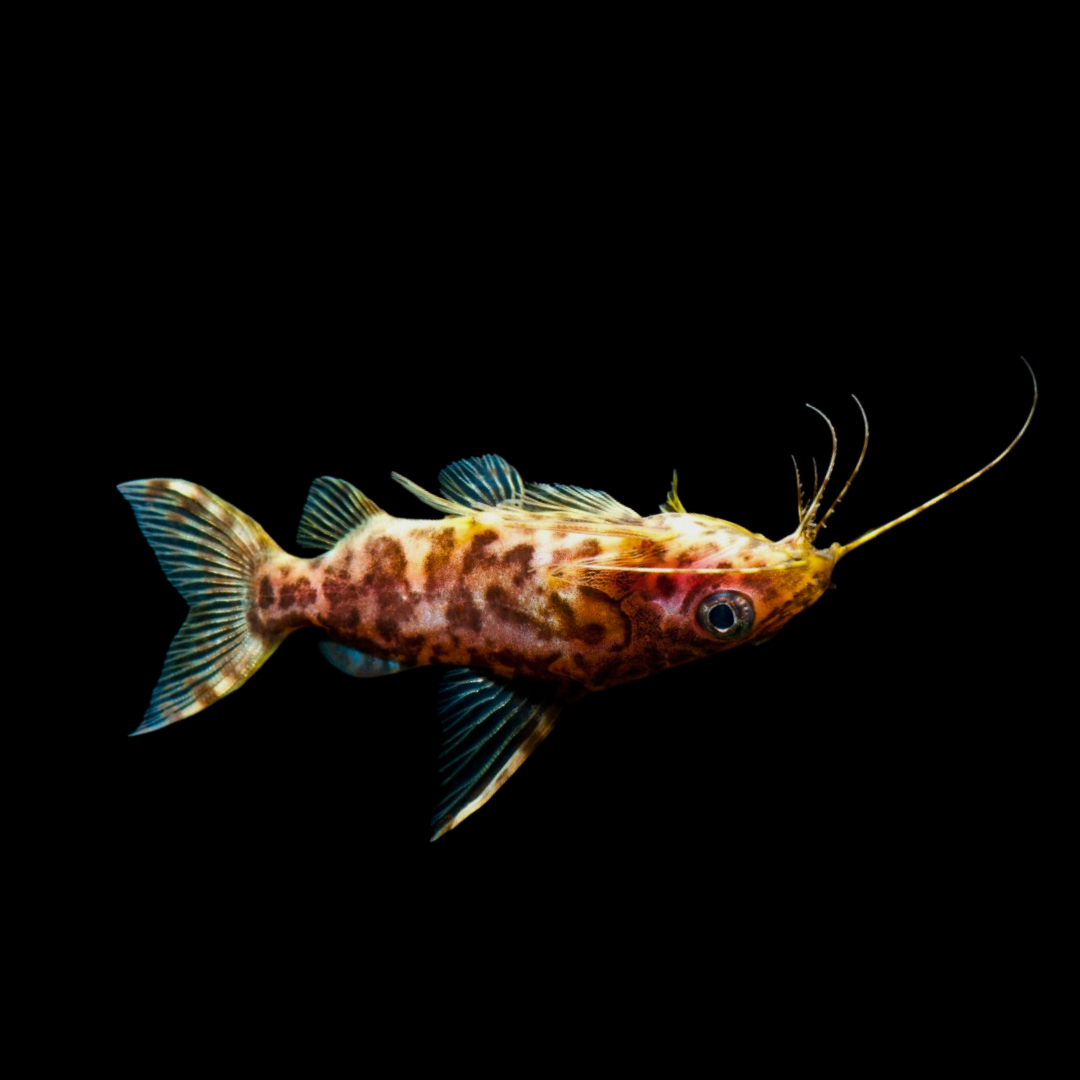
解説 / Description
サカサナマズは、名前の通り腹部を上に向けて泳ぐ姿で知られる小型のアフリカ産ナマズです。体を逆さにして水面近くや流木の裏、水草の葉裏に定位する姿は非常に個性的で、観察する楽しさの大きい熱帯魚として親しまれています。小型で温和なため混泳水槽にも導入しやすい一方、夜行性が強く、隠れ家や複数匹での飼育環境を整えることで本来の行動を引き出しやすくなります。 The upside-down catfish is a small African catfish known for swimming with its belly facing upward. Its habit of resting beneath driftwood, plant leaves, and near the water surface makes it a fascinating species to observe. It is peaceful and suitable for many community aquariums, but its nocturnal and social nature means that shelters and group keeping are important for bringing out its natural behavior.
基本情報 / Basic Information
| 学名 / Scientific Name | Synodontis nigriventris |
|---|---|
| 通称 / Common Name | サカサナマズ、アップサイドダウンキャットフィッシュUpside-down catfish |
| 分類 / Family | ナマズ目 サカサナマズ科 シノドンティス属Order Siluriformes, family Mochokidae, genus Synodontis |
| 英名 / English Name | Upside-down catfish |
| 分布 / Distribution | アフリカ中部のコンゴ川水系。コンゴ川中流域、ウバンギ川、カサイ川周辺などに分布するとされます。Central Africa, mainly within the Congo River basin, including the middle Congo region and tributaries such as the Ubangi and Kasai rivers. |
| 最大体長 / Max Size | 約10cm。記録上は9.6cm前後とされ、水槽内でも小型のナマズとして扱いやすいサイズに収まります。About 10 cm. Records list it at around 9.6 cm, and it remains a manageable small catfish in aquariums. |
| 寿命 / Lifespan | おおよそ5年以上。良好な環境で長期飼育されることもあり、安定した水質と無理のない混泳環境が寿命を伸ばすポイントになります。Generally 5 years or more. Long-term keeping is possible under good conditions, especially with stable water quality and suitable tank mates. |
飼育環境 / Aquarium Environment
| 水槽サイズ / Tank Size | 単独や少数なら45cm規格水槽程度から飼育できますが、本種は群れで落ち着きやすい魚です。5匹以上で本来の行動を楽しむ場合は、60cm規格水槽を最低ラインとし、余裕を持つなら75〜80cm以上の水槽を目安にすると安心です。A 45 cm standard tank can work for a single fish or a small number, but this species is more comfortable in groups. For a group of five or more, a 60 cm standard aquarium should be considered the minimum, while a 75–80 cm or larger tank is preferable. |
|---|---|
| 水温 / Temperature | 22〜28℃前後。実際の飼育では24〜26℃前後を安定して維持すると扱いやすく、急な低水温は避けます。 Around 22–28°C. In aquarium care, a stable range of about 24–26°C is usually practical, and sudden chilling should be avoided. |
| 水質 / Water Quality | 弱酸性〜中性付近を中心に、軟水から中硬水程度で飼育できます。pHは6.0〜7.5前後を目安にし、急激な水質変化を避けて、ろ過の効いた落ち着いた水槽で管理することが大切です。It can be kept in soft to moderately hard water, mainly around slightly acidic to neutral conditions. A pH of about 6.0–7.5 is a useful guide. Avoid sudden water-quality changes and keep it in a stable, well-filtered aquarium. |
| レイアウト / Layout | 流木、石、土管、広葉の水草などで暗い隠れ家を複数用意します。葉裏や流木の下面に腹部を向けて休むため、天井のように使える面を意識してレイアウトすると本種らしい姿を観察しやすくなります。Provide multiple shaded shelters using driftwood, stones, caves, and broad-leaved plants. Since it often rests belly-up beneath surfaces, layouts with overhangs help encourage natural behavior. |
| 注意点 / Precautions | 驚いたときに飛び出すことがあるため、フタは隙間なく設置します。また、ヒーターと水槽壁の隙間に入り込む事故を防ぐため、ヒーターカバーを使うと安心です。口ひげを傷めやすい鋭利な底砂は避け、角の丸い砂や細かな底床を選びます。Use a tight-fitting lid because startled individuals may jump. A heater guard is also recommended to prevent burns or entrapment. Avoid sharp substrates that may damage the barbels, and choose smooth sand or fine gravel. |
餌と給餌 / Feeding
| 餌の種類 / Diet | 雑食性で、沈下性のナマズ用フード、コリドラス用タブレット、冷凍赤虫、ブラインシュリンプ、イトミミズなどをよく食べます。植物質を含むタブレットや、少量の野菜系の餌も補助的に使えます。Omnivorous. It accepts sinking catfish pellets, corydoras tablets, frozen bloodworms, brine shrimp, and tubifex-type foods. Vegetable-based tablets or small amounts of plant matter can be offered as supplements. |
|---|---|
| 給餌のポイント / Feeding Tips | 夜行性が強いため、消灯前後に餌を与えると食べ残しを減らしやすくなります。見た目以上に食欲があるため、与えすぎによる水質悪化や腹部の膨れには注意が必要です。Because it is strongly nocturnal, feeding shortly before or after lights-out is effective. It can be surprisingly greedy, so avoid overfeeding to prevent poor water quality and digestive issues. |
性格と混泳 / Temperament and Tank Mates
| 性格 / Temperament | 基本的には温和で、日中は隠れていることが多い落ち着いた魚です。単独では警戒心が強くなりやすいため、可能であれば複数匹で飼育すると行動が安定しやすくなります。Generally peaceful and calm, often hiding during the day. Single individuals can become shy, so group keeping is recommended when possible. |
|---|---|
| 混泳の相性 / Compatibility | 同程度以上のサイズで温和な小〜中型魚と相性がよいです。小型カラシン、ラスボラ、レインボーフィッシュ、温和なシクリッドなどと混泳できます。ただし、口に入るほど小さな稚魚や、極端に攻撃的な魚との混泳は避けるのが安全です。Compatible with peaceful small to medium-sized fish of similar or larger size, such as tetras, rasboras, rainbowfish, and peaceful cichlids. Avoid very small fry and highly aggressive tank mates. |
病気と対策 / Diseases and Prevention
| かかりやすい病気 / Common Diseases | 白点病、細菌感染、口ひげの損傷からの炎症、消化不良による腹部の膨れなどに注意します。急な低水温や水質悪化、鋭い底床、餌の与えすぎが不調のきっかけになりやすいです。Watch for ich, bacterial infections, inflammation from damaged barbels, and bloating from digestive problems. Sudden chilling, poor water quality, sharp substrate, and overfeeding are common triggers. |
|---|---|
| 対策と予防 / Prevention | 水温と水質を安定させ、定期的な換水を行います。底床は口ひげを傷めにくいものを選び、導入直後は無理に餌を多く与えず、落ち着いた環境で様子を見ることが大切です。薬に敏感なナマズ類として扱い、治療時は薬剤の使用量と酸欠に注意します。Maintain stable temperature and water quality with regular water changes. Use barbel-safe substrate and avoid heavy feeding immediately after introduction. Treat it as a medication-sensitive catfish and pay close attention to dosage and oxygenation during treatment. |
増やし方(繁殖) / Breeding
| 雌雄の判別 / Sexing | 明確な判別はやや難しいですが、成熟したメスはオスより大きく、抱卵時には腹部がふっくらしやすいとされます。オスは比較的細身で、体色がやや濃く見えることがあります。Sexing can be difficult. Mature females tend to be larger and fuller-bodied, especially when carrying eggs, while males are usually slimmer and may appear somewhat darker. |
|---|---|
| 繁殖形態 / Reproduction | 卵生です。水槽内繁殖は簡単ではなく、暗いパイプやシェルター内に産卵した例が知られています。稚魚は最初から逆さに泳ぐわけではなく、成長とともに倒立行動が目立つようになります。Egg-laying species. Aquarium breeding is not common, but spawning has been reported in dark pipes or shelters. Fry do not swim upside down immediately; the inverted behavior develops as they grow. |
| 繁殖のポイント / Breeding Tips | 高栄養の餌で親魚を仕上げ、雨季を思わせる大きめの換水や一時的な水温変化が刺激になるとされます。ただし再現性は高くないため、一般的な家庭水槽では繁殖を狙う魚というより、長期飼育と行動観察を楽しむ魚と考えると扱いやすいです。Conditioning adults with nutritious foods and simulating seasonal change through larger water changes and temporary temperature shifts may help trigger spawning. However, breeding is not highly reliable in home aquariums, so it is usually best enjoyed for long-term keeping and behavioral observation. |
雑学と豆知識 / Trivia and Fun Facts
| 1. 逆さに泳ぐための体色 / 1. Coloration for upside-down swimming | 多くの魚は背中側が暗く腹側が明るい体色をしていますが、サカサナマズは腹側が暗く、背中側が比較的明るい配色をしています。これは逆さに泳ぐ生活と関係すると考えられており、水面近くで腹側を上に向けたときに周囲へなじみやすい、非常にユニークな適応です。Most fish are darker on the back and lighter on the belly, but the upside-down catfish shows the opposite tendency. Its darker belly and lighter back are thought to match its inverted lifestyle, helping it blend in when swimming belly-up near the water surface. |
|---|---|
| 2. 葉裏や流木の裏を好む理由 / 2. Why it likes the underside of leaves and wood | サカサナマズは単に変わった泳ぎ方をする魚ではなく、腹部を何かの面に近づけて落ち着く性質が強い魚です。そのため、広い葉の裏や流木の下面は、本種にとってちょうどよい「天井」のような休息場所になります。レイアウトにこうした面を作ると、水槽内での居場所が明確になり、観察もしやすくなります。This species does not merely swim in an unusual way; it often feels secure with its belly close to a surface. The underside of broad leaves or driftwood works like a ceiling-like resting spot. Providing these surfaces helps it settle and makes observation easier. |
| 3. 似た名前の大型種に注意 / 3. Beware of similar-looking larger species | シノドンティス属には、幼魚のうちはサカサナマズに似て見える種類もいます。中には成長すると20cm前後、あるいはそれ以上になる種もいるため、購入時は学名や最終サイズを確認しておくと安心です。小型で温和な本種を求める場合は、単に「サカサナマズ系」として選ぶのではなく、Synodontis nigriventris として確認する意識が大切です。Some Synodontis species can resemble the upside-down catfish when young, but several grow much larger. When buying one, confirm the scientific name and adult size. If you want the small, peaceful species, look specifically for Synodontis nigriventris rather than relying only on a general trade name. |
| 4. 古代エジプトにも登場する逆さのナマズ / 4. Upside-down catfish in ancient Egypt | ナイル川にすむ近縁のサカサナマズ類は、古代エジプトの美術や装身具にも表現されてきました。逆さに浮かぶように泳ぎながら生きている姿は、当時の人々にとって強い生命力や再生を連想させる存在だったと考えられています。水槽で見る小さなナマズの不思議な行動は、実は人類が古くから注目してきた自然観察の対象でもあります。Related upside-down catfishes from the Nile were depicted in ancient Egyptian art and ornaments. Their ability to live while appearing to float upside down may have suggested vitality and renewal to ancient observers. The curious behavior seen in aquariums today has fascinated people for thousands of years. |
まとめ / Conclusion
サカサナマズは、逆さに泳ぐ独特の行動と温和な性格をあわせ持つ、観察価値の高い小型ナマズです。丈夫で飼いやすい部類ですが、夜行性で隠れ家を好むため、流木や水草の葉裏、土管などを使って安心できる場所を多く用意することが重要です。 The upside-down catfish is a small and peaceful catfish with highly distinctive inverted swimming behavior. It is relatively hardy, but because it is nocturnal and shelter-oriented, it is important to provide many secure resting places using driftwood, plant leaves, and caves.
複数匹で飼育すると落ち着きやすく、本来の群れ行動や倒立遊泳を観察しやすくなります。小型魚との混泳水槽に個性を加えたい場合や、少し変わった行動を楽しみたい場合に、とても魅力的な選択肢になる魚です。 Keeping it in a group helps it feel secure and makes its natural social and inverted behaviors easier to observe. It is an excellent choice for aquarists who want to add character to a peaceful community aquarium and enjoy unusual fish behavior.

気になる道具や飼い方を見つけてみませんか?
 アイのアクアグッズ案内テトラミンって、こんなにあるの? アイとコタロウのごはん探究旅道具の特徴や使い方、選ぶときのポイントをアイが紹介します。記事はコチラ →
 アイのアクアグッズ案内バクテリアって、結局なんなんだ? タマスとアイのボトル探究ロック好きのカバ・タマスが初登場。サイクル、ベストバイオ、バイコムのボトルから、菌の役割と保存の工夫、二本組の歴史をアイと探ります。記事はコチラ →
さまざまな飼育テーマをご紹介。リンク先の記事には広告・商品紹介が含まれます。
案内・紹介記事一覧へ →参考文献・参照情報
本記事では、サカサナマズの分類、分布、最大体長、飼育環境、倒立遊泳の生態、古代エジプト文化との関わりについて、以下の資料を参考にしています。
-
Froese, R. and Pauly, D. Editors. FishBase. Synodontis nigriventris David, 1936. 分布、最大体長、水質範囲、食性、群れでの飼育に関する基礎情報を参照。
https://www.fishbase.se/summary/synodontis-nigriventris.html -
GBIF Secretariat. GBIF Backbone Taxonomy. Synodontis nigriventris David, 1936. 学名、記載者、分類階級、一般名の確認に使用。
https://www.gbif.org/species/2344418 -
PlanetCatfish Cat-eLog. Synodontis nigriventris. シノドンティス属の専門的な種情報、外部形態、流通名、近縁種との比較確認に使用。
https://www.planetcatfish.com/synodontis_nigriventris -
Seriously Fish. Synodontis nigriventris. 水槽サイズ、飼育環境、餌、混泳、レイアウトに関する実用的な飼育情報の確認に使用。
https://www.seriouslyfish.com/species/synodontis-nigriventris/ -
Blake, R. W. et al. 2007. Swimming in the upside down catfish Synodontis nigriventris: it matters which way is up. 倒立遊泳と水面近くでの遊泳効率に関する研究として参照。
https://pubmed.ncbi.nlm.nih.gov/17704073/ -
The Metropolitan Museum of Art. The Upside-down Catfish / Fish Pendant. 古代エジプトにおけるサカサナマズ類の図像、髪飾り、再生や護符としての文化的背景の確認に使用。
https://www.metmuseum.org/perspectives/upside-down-catfish
https://www.metmuseum.org/art/collection/search/546742




コメント