

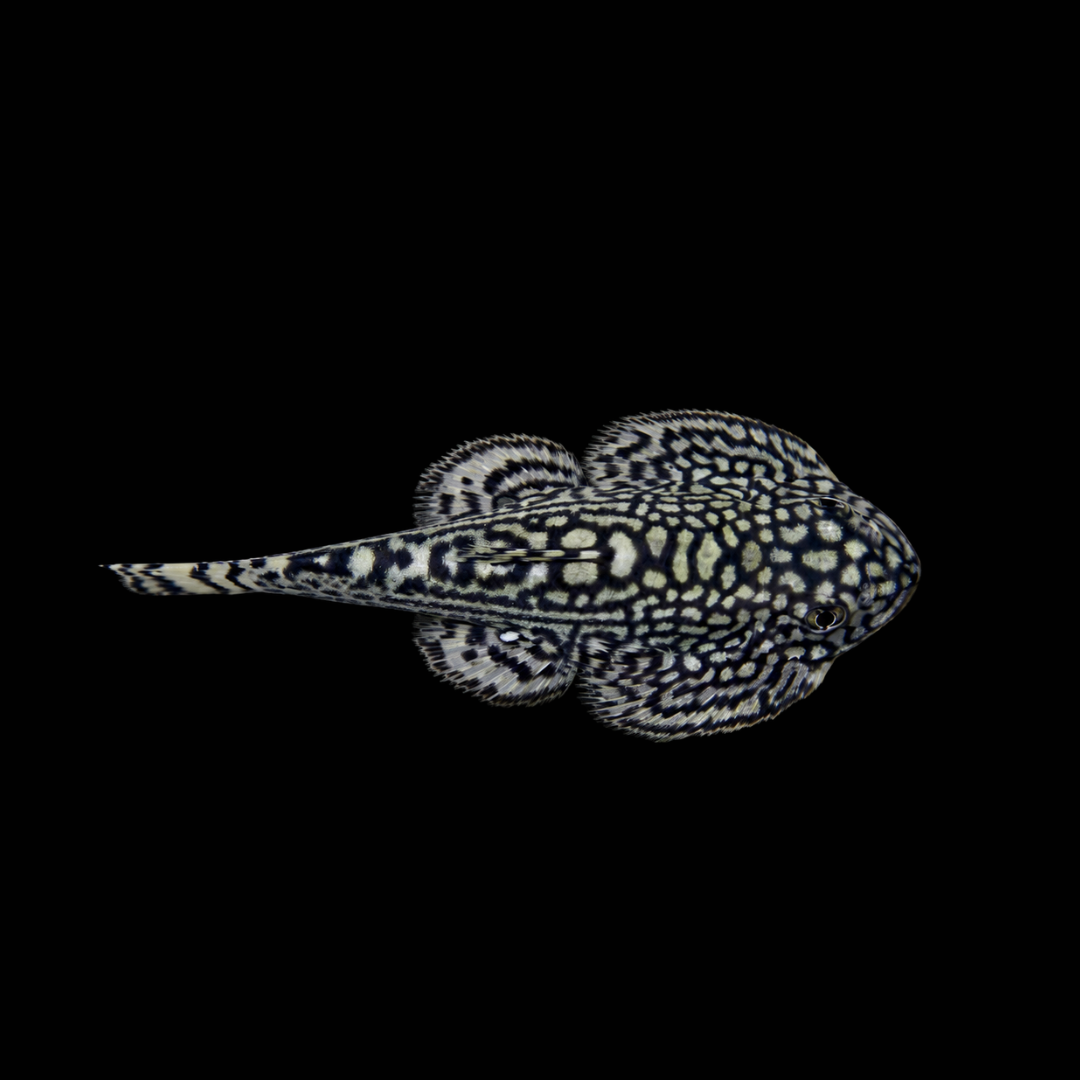
解説 / Description
クロコダイルプレコは、日本の観賞魚流通で使われる名前で、分類上は南米産の「真のプレコ」ではなく、コイ目ガストロミゾン科に属するセウェルリア・リネオラータ、Sewellia lineolataを指すのが一般的です。英名ではReticulated Hillstream LoachやTiger Hillstream Loachなどと呼ばれ、扁平な体、横へ大きく広がる胸鰭と腹鰭、そしてワニ革のようにも見える網目模様が大きな魅力です。 The Japanese trade name “Crocodile Pleco” usually refers to Sewellia lineolata, not to a true South American pleco. This species belongs to the family Gastromyzontidae within Cypriniformes and is better known in English as the Reticulated Hillstream Loach or Tiger Hillstream Loach. Its flattened body, expanded paired fins, and crocodile-like reticulated pattern make it a striking aquarium fish.
自然下ではベトナム中部の流れの速い河川や早瀬に暮らす、強い水流と豊富な酸素に適応した魚です。水槽内でも、低めの水温、十分なエアレーション、清浄な水、石の表面に育つバイオフィルムを意識した環境づくりが長期飼育の鍵になります。見た目は小さく愛らしいですが、一般的な「コケ取り魚」の感覚で導入するよりも、渓流レイアウトの主役として迎えたい種類です。 In nature it inhabits fast-flowing rivers, rapids, and riffles in central Vietnam, where the water is clear and oxygen-rich. In the aquarium, long-term success depends on relatively cool water, strong aeration, clean conditions, current, and mature biofilm on stones. Although it is small and charming, it is better treated as the centerpiece of a hillstream-style aquarium than as a simple algae-eating utility fish.
基本情報 / Basic Information
| 学名 / Scientific Name | Sewellia lineolata (Valenciennes, 1846) |
|---|---|
| 通称 / Common Name | クロコダイルプレコ、クロコダイルバタフライプレコ、ベトナムバタフライプレコ、セウェルリア・リネオラータReticulated Hillstream Loach, Tiger Hillstream Loach, Gold Ring Butterfly Sucker |
| 分類 / Family | 条鰭綱・コイ目・ガストロミゾン科・セウェルリア属。古い文献や一部資料ではタニノボリ科、またはBalitoridaeとして扱われることがあります。Actinopterygii, Cypriniformes, Gastromyzontidae, genus Sewellia. Older literature and some references may place it in Balitoridae. |
| 英名 / English Name | Reticulated Hillstream Loach / Tiger Hillstream Loach / Gold Ring Butterfly Sucker |
| 分布 / Distribution | 確実性の高い中核分布はベトナム中部の沿岸河川で、トゥアティエン=フエ省からビンディン省周辺にかけて記録されています。データベースによっては中国・カンボジアなどを含む広い分布が示されることもあるため、図鑑上はベトナム中部を中心とする種として扱うのが安全です。The most reliable core range is in coastal rivers of central Vietnam, from around Thua Thien-Hue Province southwards toward Binh Dinh Province. Some databases list a broader range including China and Cambodia, so this guide treats central Vietnam as the best-supported range. |
| 最大体長 / Max Size | 標準体長で約5.7cm、飼育下では全長6cm前後を目安に考えます。販売個体は4〜6cmほどが多く見られます。About 5.7 cm standard length; in aquaria, roughly around 6 cm total length is a practical guideline. Most traded individuals are around 4–6 cm. |
| 寿命 / Lifespan | 適切な環境では5年以上、良好な飼育例では8〜10年程度とされることがあります。ただし、寿命は水温・酸素量・餌の確保・輸送状態の影響を強く受けます。Often kept for more than 5 years when conditions are suitable, with some husbandry sources reporting 8–10 years. Lifespan is strongly affected by temperature, oxygen, food availability, and import or transport condition. |
飼育環境 / Aquarium Environment
| 水槽サイズ / Tank Size | 単独飼育でも45cm水槽以上、複数飼育では60cm規格水槽以上が安心です。5匹前後の群れで水流をしっかり作るなら、60cmワイド水槽や90cm規格水槽がより扱いやすくなります。A 45 cm tank is a minimum for a single fish, while a standard 60 cm tank or larger is safer for a group. For a group of around five fish with strong current, a wider 60 cm tank or standard 90 cm tank is easier to manage. |
|---|---|
| 水温 / Temperature | 20〜24℃を目安にします。短時間の上昇には耐えることがありますが、25℃を超える状態が続く環境は避け、夏季は冷却ファンや水槽用クーラーで管理します。 Aim for 20–24°C. Short-term rises may be tolerated, but prolonged temperatures above about 25°C should be avoided. Cooling fans or an aquarium chiller may be needed in summer. |
| 水質 / Water Quality | pH6.5〜7.5前後、軟水から中硬水を目安に、アンモニア・亜硝酸を出さない安定した水を維持します。硝酸塩や有機物の蓄積にも弱いため、強いろ過と定期的な換水が大切です。Keep stable, clean water around pH 6.5–7.5, from soft to moderately hard. Ammonia and nitrite should be zero, and nitrate or organic buildup should be controlled with strong filtration and regular water changes. |
| レイアウト / Layout | 丸石や平たい石を多めに配置し、水流ポンプや外部式フィルターで一方向の流れを作ると本来の行動を観察しやすくなります。石やガラス面に藻類・バイオフィルムが育つ、よくこなれた水槽に導入するのが理想です。Use rounded or flat stones and create directional flow with a powerhead or canister filter. A mature aquarium with algae and biofilm on stones and glass is ideal, because the fish spends much of its time grazing on these surfaces. |
| 注意点 / Precautions | 最大の注意点は、高水温、低酸素、餌不足です。新規立ち上げ直後の水槽では食べられるバイオフィルムが少なく、腹部がへこむ「痩せ」が起こりやすくなります。また、水流を遡ってガラス面を移動するため、飛び出し防止のフタも必要です。The main risks are high temperature, low oxygen, and starvation. Newly set up tanks often lack enough biofilm, which can lead to a sunken belly. A tight-fitting lid is also important because these fish can climb glass surfaces in flowing water and may escape. |
餌と給餌 / Feeding
| 餌の種類 / Diet | 自然下では石の表面の付着藻類、バイオフィルム、底生の小さな無脊椎動物などを食べます。飼育下では、藻類の生えた石、沈下性の植物質タブレット、プレコ用タブレット、クロレラ系の餌、冷凍赤虫、ブラインシュリンプ、ミジンコ、ゲル状フードなどを組み合わせます。In nature it feeds on algae, biofilm, and small benthic invertebrates from stone surfaces. In aquaria, offer algae-covered stones, sinking vegetable tablets, pleco tablets, chlorella-based foods, frozen bloodworms, brine shrimp, daphnia, and gel foods in rotation. |
|---|---|
| 給餌のポイント / Feeding Tips | 人工飼料だけに頼らず、常に表面を削り取れる素材を用意します。餌を見つけるのが遅い個体もいるため、活発な魚や大型の底ものと競合させすぎないことが大切です。腹部が薄くへこむ場合は、給餌量、餌の種類、混泳相手、水槽の成熟度を見直します。Do not rely on prepared foods alone; provide surfaces that can be grazed throughout the day. Some individuals feed slowly, so avoid excessive competition from fast or larger bottom dwellers. If the belly becomes sunken, review food variety, feeding frequency, tank maturity, and tank mates. |
性格と混泳 / Temperament and Tank Mates
| 性格 / Temperament | 基本的には温和で、他魚を積極的に攻撃するタイプではありません。同種間では場所をめぐって腹を合わせるような小競り合いを見せることがありますが、十分な面積と石の数があれば大きな問題になりにくいです。Generally peaceful and not actively aggressive toward other fish. Conspecifics may display belly-to-belly shoving over favored spots, but this is usually manageable when there is enough surface area and plenty of stones. |
|---|---|
| 混泳の相性 / Compatibility | 低めの水温、強い水流、高酸素を好む小型魚と相性がよく、アカヒレ、小型ダニオ類、同じ渓流系ローチ、ヤマトヌマエビなどが候補になります。高水温を好む魚、餌を独占する魚、生活圏が重なる大型プレコや攻撃的な底生魚との混泳は避けた方が安全です。Best tank mates are small species that also tolerate cooler, oxygen-rich, flowing water, such as White Cloud Mountain minnows, small danios, other suitable hillstream loaches, and Amano shrimp. Avoid warm-water species, aggressive bottom dwellers, large plecos, or fish that monopolize food. |
病気と対策 / Diseases and Prevention
| かかりやすい病気 / Common Diseases | 本種だけに特有の病気が広く知られているわけではありませんが、輸送後や水質悪化時には白点病、細菌性の皮膚トラブル、ヒレの傷み、痩せが問題になります。特に高水温と低酸素は大きなストレスになり、病気の引き金になりやすい条件です。No widely recognized disease is unique to this species, but after transport or under poor water conditions it may suffer from ich, bacterial skin problems, fin damage, and wasting. High temperature and low oxygen are major stressors that can trigger disease. |
|---|---|
| 対策と予防 / Prevention | 予防の基本は、清浄な水、十分な溶存酸素、低めで安定した水温、餌不足を起こさない成熟水槽です。導入時は点滴法などでゆっくり水合わせを行い、薬剤を使う場合はローチ類が薬に敏感なことを前提に、用量や成分を慎重に確認します。状態を崩した個体は、強すぎない水流の隔離水槽で観察すると回復の機会を作りやすくなります。Prevention depends on clean water, high dissolved oxygen, stable cool temperatures, and a mature tank with enough food. Acclimate slowly when introducing new fish. If medication is needed, check dosage and ingredients carefully because loaches can be sensitive. A weakened individual may recover more easily in a separate, well-oxygenated tank with gentler flow. |
増やし方(繁殖) / Breeding
| 雌雄の判別 / Sexing | 成熟したオスは胸鰭前縁に細かな追星状の隆起が出やすく、上から見ると胸鰭の付け根が角張って見える傾向があります。メスはやや丸みがあり、腹部がふっくらして見える個体が多いです。Mature males tend to develop fine tubercles along the leading edge of the pectoral fins, and the pectoral base may look more angular from above. Females are usually rounder and fuller-bodied. |
|---|---|
| 繁殖形態 / Reproduction | 外部受精を行う卵生魚で、飼育例ではばらまき型に近い産卵をするとされます。親が卵や稚魚を守るタイプではないため、底床の隙間が卵や稚魚の隠れ場になります。An egg-laying species with external fertilization. Aquarium reports describe it as a scatter-spawning type. The parents do not guard eggs or fry, so gaps in the substrate provide important shelter. |
| 繁殖のポイント / Breeding Tips | 繁殖を狙う場合は、複数匹を状態よく飼い、丸みのある小石を厚めに敷いて卵が落ち込む隙間を作ります。水温を一時的にやや上げた後、冷たい換水で季節変化を刺激する方法が飼育例で知られています。稚魚はしばらく底床内やフィルター周辺の微生物・バイオフィルムを利用するため、スポンジフィルターやマッテンフィルターのような稚魚を吸い込みにくい設備が向いています。For breeding, keep a healthy group and provide a thick layer of rounded pebbles so eggs can fall into protected gaps. Aquarium reports often use a mild warming period followed by cooler water changes to simulate seasonal change. Fry rely on microorganisms and biofilm around the substrate and filter, so sponge filters or matten filters are safer than strong uncovered intakes. |
雑学と豆知識 / Trivia and Fun Facts
| 1. 「プレコ」ではなく、渓流性ローチの仲間 / 1. Not a true pleco, but a hillstream loach | クロコダイルプレコという名前は日本の流通名として親しまれていますが、分類上はロリカリア科のプレコではありません。岩に張り付く姿と下向きの口がプレコを思わせるため、流通名として「プレコ」が付いたと考えられます。実際には、速い流れの底面で暮らすために体を低く広げ、胸鰭と腹鰭で流れを受け止める、まったく別系統の進化を見せる魚です。The Japanese name “Crocodile Pleco” is a trade name, but the fish is not a loricariid pleco. Its clinging posture and downward-facing mouth likely led to the pleco-like name. In reality, it is a hillstream loach that evolved a flattened body and expanded paired fins for life in swift current. |
|---|---|
| 2. 150年近い空白を経て再確認された魚 / 2. A fish rediscovered after a long gap | Sewellia lineolataは1846年にBalitora lineolataとして記載されましたが、古い標本には正確な採集地の情報がありませんでした。その後、1994年にモーリス・コッテラトによってベトナムのアンナン山脈東斜面、フエ近郊で再確認され、古い記載の一部が標本状態による見かけの特徴だったことも示されました。水槽のガラス面を滑るように移動する小さな魚の背後には、魚類学史の長い空白を埋める物語があります。Sewellia lineolata was described in 1846 as Balitora lineolata, but early specimens lacked precise locality data. In 1994, Maurice Kottelat confirmed the species again near Hue on the eastern slope of the Annam mountain range in Vietnam and clarified that some earlier mouth characters were artifacts of specimen condition. Behind this small aquarium fish is a long and interesting taxonomic story. |
| 3. 分布情報は資料によって広さが異なる / 3. Distribution differs among sources | 本種の分布は、IUCN系資料ではベトナム中部の沿岸河川を中心に扱われます。一方、FishBaseのようなデータベースでは中国・ベトナム・カンボジアやメコン流域を含む広い記載が見られます。こうした差は、分類の見直し、近縁種との混同、古い記録の扱い方によって起こり得ます。飼育図鑑としては、より確度の高いベトナム中部の急流性魚として理解しておくと、必要な水流・酸素・水温を外しにくくなります。IUCN-linked sources treat the species mainly as a central Vietnamese fish of coastal rivers, while databases such as FishBase may list a broader range including China, Vietnam, Cambodia, and the Mekong basin. Such differences can arise from taxonomic revision, confusion with related species, or the treatment of older records. For aquarium care, understanding it as a central Vietnamese hillstream fish helps keep husbandry priorities clear. |
| 4. 保全状況と飼育下繁殖の意味 / 4. Conservation status and the value of captive breeding | 本種はIUCNレッドリストで危急種とされ、ダム建設、森林伐採に伴う土砂流入、採集圧などが懸念されています。近年は動物園や専門機関でも保全対象として注目され、飼育下繁殖の知見が重視されています。水槽内での繁殖は単なる楽しみだけではなく、野生個体への依存を減らす可能性を持つ、アクアリウム文化と保全をつなぐ取り組みでもあります。The species is listed as Vulnerable on the IUCN Red List, with concerns including dam construction, siltation from deforestation, and collecting pressure. Zoos and conservation programs have increasingly shown interest in the species, and captive breeding knowledge is valuable. Aquarium breeding is not only rewarding for keepers; it can also help reduce dependence on wild-caught fish. |
| 5. 輸入防疫は「コイ目だから一律」ではなく、対象リストで確認するもの / 5. Import quarantine is determined by regulated lists, not simply by order | 日本の水産防疫制度では、対象疾病と対象水産動物の組み合わせが定められており、単にコイ目の魚であるというだけで全種が同じ扱いになるとは限りません。観賞魚を輸入・販売する場合は、最新の農林水産省・動物検疫所の対象リスト、輸入形態、用途、保管条件を個別に確認する必要があります。In Japan, aquatic animal import controls are based on specified combinations of regulated diseases and target animals; not every cypriniform fish is automatically treated the same way. Importers and sellers should check the latest official lists and conditions for the actual species, purpose, and holding situation. |
まとめ / Conclusion
クロコダイルプレコは、小さな体に渓流魚らしい機能美を凝縮したような存在です。石に寄り添い、流れを受けながらガラス面や岩肌を進む姿には、一般的な熱帯魚とは少し違う静かな迫力があります。名前に「プレコ」と付いていても、その本質は冷涼で酸素豊かな流れの中に生きるセウェルリアの仲間です。 The Crocodile Pleco condenses the functional beauty of a hillstream fish into a small body. Its way of moving across glass and stone while holding position in current gives it a quiet presence unlike many typical tropical fish. Despite the word “pleco” in its Japanese trade name, its true nature is that of a Sewellia loach from cool, oxygen-rich flowing water.
水温を低めに保ち、酸素と水流を切らさず、石の表面に育つ小さな命まで含めて環境を整えると、この魚は本来の魅力を見せてくれます。水槽の中に小さな早瀬を作るような気持ちで向き合えば、網目模様の背中としなやかな動きが、日々の観察を長く楽しませてくれるでしょう。 When the water is kept cool, oxygen-rich, and flowing, and when the aquarium is mature enough to support life on the surfaces of stones, this fish reveals its best qualities. Treat the tank as a small riffle, and its reticulated back and graceful clinging movements will reward careful observation for many years.
気になる道具や飼い方を見つけてみませんか?
 アイのアクアグッズ案内金魚を長く楽しむ飼育用品|水槽・フィルター・エアレーション・水換え道具の特徴や使い方、選ぶときのポイントをアイが紹介します。記事はコチラ →
 アイのアクアグッズ案内水草用ソイルの選び方|土・砂の違いとおすすめ商品道具の特徴や使い方、選ぶときのポイントをアイが紹介します。記事はコチラ →
 アイのアクアグッズ案内プレコ飼育に必要なもの|餌・流木・ろ過・隠れ家・掃除用品道具の特徴や使い方、選ぶときのポイントをアイが紹介します。記事はコチラ →
 アイのアクアグッズ案内海水魚初心者の必需品|水槽・人工海水・比重計・水質検査道具の特徴や使い方、選ぶときのポイントをアイが紹介します。記事はコチラ →
さまざまな飼育テーマをご紹介。リンク先の記事には広告・商品紹介が含まれます。
案内・紹介記事一覧へ →分布マップ
クロコダイルプレコ(セウェルリア・リネオラータ)は、ベトナム中部の沿岸河川を中心に記録される渓流性の魚です。この地図では、分布欄の内容をもとに、トゥアティエン=フエ省からビンディン省周辺にかけての中部ベトナムを概略代表地点として示しています。
Google Earthで開くこのプロットは分布イメージを示すための概略代表地点です。実際の採集地点や厳密な生息範囲を示すものではありません。
参考文献
この記事の分類、分布、生息環境、飼育条件、繁殖、病気や注意点を支える資料として、店舗・通販サイト、個人ブログ、まとめサイト、SNS投稿は除外し、学術文献、公的機関、専門データベース、大学・行政系の魚病資料を中心に選定しました。
1. Kottelat, M. 1994. Rediscovery of Sewellia lineolata in Annam, Viet Nam (Teleostei: Balitoridae). Zoologische Mededelingen, 68(11): 109-112.
分類史、初記載後の再発見、ベトナム・アンナン山脈東斜面での記録、口部構造の再検討を支える一次文献です。
2. Freyhof, J. and Serov, D. V. 2000. Review of the genus Sewellia with description of two new species from Vietnam (Cypriniformes: Balitoridae). Ichthyological Exploration of Freshwaters, 11(3): 217-240.
属レベルの分類、ベトナム産セウェルリア類の分布・形態、生息環境、底生生活への適応、雌雄差に関する基礎資料として採用しました。
3. Fricke, R., Eschmeyer, W. N. and Van der Laan, R. Eschmeyer’s Catalog of Fishes. California Academy of Sciences.
学名の著者表記、シノニム、魚類分類名の確認に用いる標準的な魚類分類データベースです。記事内の学名表記と分類整理の裏付けとして採用しました。
4. GBIF Secretariat. Sewellia lineolata (Valenciennes, 1846). GBIF Backbone Taxonomy / IUCN Red List dataset.
界・門・綱・目・科・属・種の階層、シノニム、IUCN由来の分類情報を確認するための国際的な生物多様性データベースです。
5. Froese, R. and Pauly, D. (eds.). FishBase: Sewellia lineolata species summary.
最大体長、分布、生息環境、急流性、利用状況、IUCN評価への参照など、図鑑本文の基本情報を横断的に確認するための専門データベースです。
6. Huckstorf, V. and Freyhof, J. Sewellia lineolata. The IUCN Red List of Threatened Species.
危急種としての保全状況、限定的な分布、野生個体群への圧力を扱うための基礎資料です。記事内の保全上の注意や持続可能な流通に関する記述を支える資料として採用しました。
7. Department of Agriculture, Water and the Environment / Department of Climate Change, Energy, the Environment and Water. Sewellia lineolata: Report addressing the terms of reference for proposed amendments to the Live Import List.
分類、CITES・IUCN上の扱い、分布、水温・pH・硬度・高酸素環境、繁殖、外来定着リスク、病害虫リスクをまとめた公的リスク評価資料です。飼育条件と注意点を支える中核資料として採用しました。
8. Ministry of Agriculture, Forestry and Fisheries of Japan. The diseases that are subjects for import quarantine.
水産資源保護法に基づく輸入防疫対象疾病、コイ類に関連するコイ春ウイルス血症やコイヘルペスウイルス病、管理期間の考え方を確認するための公的資料です。輸入・検疫・病気に関する注意点の裏付けとして採用しました。
9. University of Florida IFAS Extension. Stress—Its Role in Fish Disease.
魚病の直接原因だけでなく、水質悪化、酸素不足、不適切な水温、栄養、衛生状態がストレスとなり疾病の引き金になることを説明する大学拡張機関の資料です。病気予防の基本方針を支える補助資料として採用しました。
注記:飼育・繁殖に関する情報は、分類や分布に比べて査読済み論文が少ないため、公的リスク評価資料と専門データベースを併用しています。販売ページや個人の飼育記録は、今回の参考文献リストから意図的に外しています。




コメント