

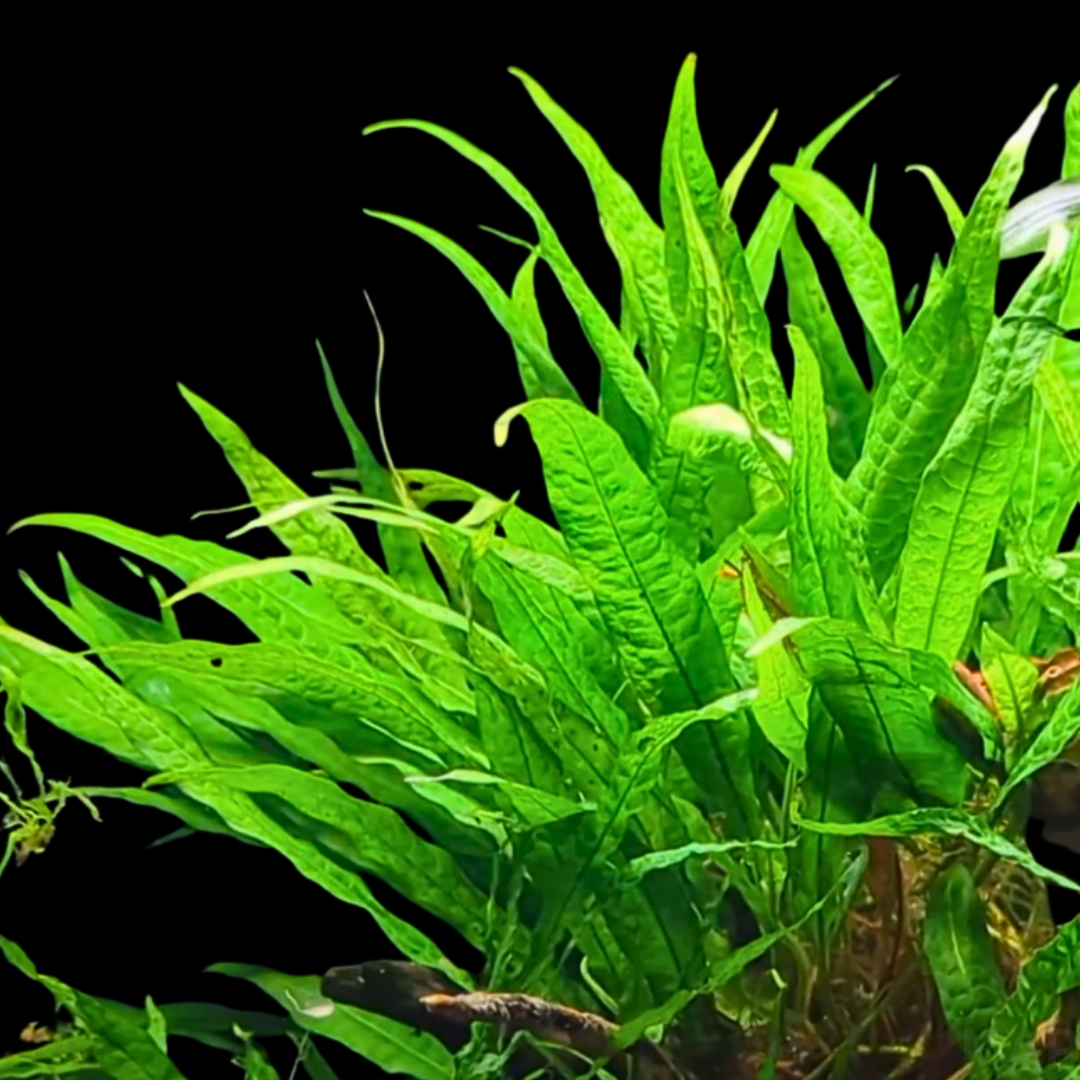

解説 / Description
レプトキルス・プテロプス(ミクロソリウム・プテロプス)は、アクアリウムにおける「陰性水草」の王道として、世界中で不動の人気を誇る水生シダ植物です。かつてはミクロソリウム属に分類されていましたが、近年の分子系統学的な解析により、現在はレプトキルス属に統合されています。本種は東南アジアから南アジアにかけての熱帯・亜熱帯地域に広く分布しており、自然界では山間部の渓流沿いにある岩や流木に活着して生育しています。非常に強健な性質を持ち、「最も枯らすのが難しい水草」の一つとして初心者の方にも安心してお勧めできます。その一方で、深みのある濃緑色の葉が群生する姿には、熟練のアクアスケーパーをも魅了する荘厳な美しさが宿っています。 Leptochilus pteropus (widely known as Microsorum pteropus) is a quintessential low-light plant that maintains immense popularity in the global aquarium hobby. Previously classified under the genus Microsorum, recent molecular phylogenetic analyses have moved it to the genus Leptochilus. This species is widely distributed across tropical and subtropical regions of Southeast and South Asia, where it grows attached to rocks and driftwood along mountain streams. While it is celebrated as one of the hardiest aquatic plants, perfect for beginners, its dense, deep green foliage possesses a majestic beauty that also captivates expert aquascapers.
基本情報 / Basic Information
| 学名 / Scientific Name | Leptochilus pteropus (シノニム:Microsorum pteropus) |
|---|---|
| 通称 / Common Name | プテロプス、ジャワファンPteropus, Java Fern |
| 分類 / Family | ウラボシ科 レプトキルス属Polypodiaceae, Genus Leptochilus |
| 分布 / Distribution | タイ、マレーシア、インドネシア、中国南部、インドなど、東南アジアから南アジア一帯Throughout Southeast and South Asia, including Thailand, Malaysia, Indonesia, Southern China, and India. |
| 育成難易度 / Difficulty | 容易。基本となる活着の知識さえあれば、長期にわたる安定した育成が可能です。Easy. Long-term stable cultivation is possible with basic knowledge of epiphytic growth. |
育成環境 / Cultivation Environment
| 光量 / Light | 低光量から中光量。強い光は必ずしも必要ではなく、むしろ過剰な照明は葉面への藻類の付着を招く原因となります。Low to Medium. Strong light is not strictly necessary; excessive lighting can lead to algae growth on the leaves. |
|---|---|
| CO2添加 / CO2 Injection | 不要。ただし、適度な添加を行うことで成長スピードが向上し、色艶の良い新芽が次々と展開します。Not required. However, moderate injection improves growth rates and promotes vibrant new shoots. |
| 水質 / Water Quality | 水温:20〜25度。28度を超えるような高温環境は、生理代謝の乱れから病気を誘発しやすいため避けてください。pH:5.0〜8.0。Temperature: 20-25 C. Avoid high temperatures above 28 C, as they can disrupt metabolism and trigger disease. pH: 5.0-8.0. |
| 底床 / Substrate | 砂、ソイル、砂利など、どのような底床でも育成可能です。ただし、底床には直接植えず、流木や石に固定して育てます。Can be kept with any substrate, including sand, soil, or gravel. However, grow attached to materials rather than planting in the substrate. |
レイアウト / Layout
| 配置 / Positioning | 中景から後景に最適です。大型水槽での重厚な茂みから、小型水槽のワンポイントまで幅広く活用できます。Ideal for mid-ground to background. Versatile for both dense thickets in large tanks and accents in small tanks. |
|---|---|
| 注意点 / Precautions | プテロプスを育成する上で、最も重要な点は、太い茎の部分である「根茎(リゾーム)」を底床に埋めないことです。埋めてしまうと組織が窒息し、短期間で腐敗してしまいます。必ず石や流木にビニタイや釣り糸等で固定し、新鮮な水流が植物体全体に当たるように配置してください。これが健全な成長を促すための絶対的な鍵となります。The most critical point in growing Pteropus is not to bury the thick “rhizome” in the substrate. Doing so will suffocate the tissue and cause rapid decay. Always secure it to stones or wood with ties or thread, and place it where fresh water flow can reach the entire plant. This is the absolute key to healthy growth. |
増やし方(トリミング) / Propagation & Trimming
| 増やし方 / Propagation | 葉の裏にあるソーラス(胞子嚢群)から芽生える「不定芽」と呼ばれる子株を切り離すか、長く伸びた根茎を清潔なハサミで分割することで容易に増やせます。Easily propagated by detaching plantlets that grow from sori on the leaf undersides or by dividing the long rhizome with clean scissors. |
|---|---|
| トリミング / Trimming | 古くなって黒ずんだ葉や、藻類が強固に付着した葉を根元からカットしてください。株が密集しすぎると中心部の通水性が悪くなるため、定期的に間引きを行い、風通しを良くすることが重要です。Prune old, blackened, or algae-covered leaves from the base. When clusters become too dense, internal water flow decreases, so regular thinning is essential to maintain health. |
病気と対策(コケなど) / Pests & Algae
| かかりやすい病気 / Common Issues | シダ病(葉が半透明になり、急速に黒変して崩壊する致死的な病気)。また、成長が緩やかなため、葉の表面にヒゲ状の藻類(黒髭苔)が付着しやすいです。Fern Disease (a lethal condition where leaves turn translucent and rapidly blacken). It is also prone to Black Brush Algae due to its slow growth. |
|---|---|
| 対策と予防 / Prevention | シダ病の主な要因は「高温」と「通水性の悪化」です。特に夏場は水温を25度以下に保ち、適度な水流を確保してください。万が一発症した場合は、感染部位を迷わず根茎から切除し、被害の拡大を防ぎます。藻類の予防には、照明時間の管理に加え、ヤマトヌマエビなどのお掃除役の生体を導入するのが効果的です。The primary causes of Fern Disease are high temperatures and poor water flow. Especially in summer, keep temperatures below 25 C and ensure proper flow. If it occurs, immediately prune infected parts from the rhizome. To prevent algae, manage light duration and introduce cleanup crews like Amano Shrimp. |
雑学と豆知識 / Trivia and Fun Facts
| 1. 学名変更の背景と「薄い唇」の由来 / 1. Taxonomic History and the Origin of “Thin Lip” | 長年ミクロソリウムの名で親しまれてきたプテロプスですが、近年の系統分類学の進展により、正式にレプトキルス属へと移されました。この属名「Leptochilus」は、ギリシャ語で「薄い唇」を意味する言葉に由来しており、このグループに特有の細長い胞子嚢群の形状を示唆しています。また、種小名のプテロプスは「翼のある足」を意味し、その優雅な葉の広がりが、コウモリの翼を彷彿とさせるところから名付けられました。Pteropus, long cherished as Microsorum, was officially moved to the genus Leptochilus based on modern systematics. The genus name Leptochilus comes from the Greek for “thin lip,” referring to its slender sporangial structures. The species name pteropus means “winged foot,” named after its graceful leaves that resemble bat wings swaying in the current. |
|---|---|
| 2. 激流に耐える「レオファイト」としての進化 / 2. Evolution as a “Rheophyte” Built for Torrents | プテロプスは、自然界では山間部の渓流沿いに自生する「レオファイト(渓流沿い植物)」です。あの強靭で厚みのある葉は、草食魚から身を守るためだけではなく、激しい増水時の強烈な水圧に耐え、葉が破損するのを防ぐために獲得した進化の結晶なのです。水没した状態でも数年にわたり生き続ける圧倒的な環境適応能力は、この過酷な自生地での生存戦略に基づいています。Pteropus is a “rheophyte” found along mountain streams. Its tough, thick leaves evolved not just to deter herbivores, but to withstand physical pressure during heavy floods. Its incredible ability to thrive submerged for years is a survival strategy honed in these harsh natural habitats. |
| 3. 葉を「船」にして新天地を拓く戦略 / 3. Strategy of Using Leaves as Ships to Find New Frontiers | 葉の裏や縁にできる小さな子株(不定芽)には、巧妙な繁殖戦略が隠されています。自然界では、親株の葉が寿命を迎えて剥がれ落ちた際、その葉は水面を漂う「イカダ」の役割を果たします。子株を載せた葉は水流に乗って下流へと運ばれ、新たな岩場や流木に漂着することで、生息域を拡大していくのです。この自己複製能力こそが、アクアリウムでも簡単に増やせる理由となっています。The tiny plantlets (adventitious buds) on the leaf margins hide a clever dispersal strategy. In nature, when an old leaf detaches, it acts as a floating raft. Carrying the plantlets, the leaf drifts downstream to settle on new rocks or wood, expanding its territory. This self-cloning ability is why it is so easy to propagate in aquariums. |
| 4. 多彩な表情を持つバリエーション豊かな品種群 / 4. A Diverse Array of Cultivars with Unique Expressions | プテロプスには多くの魅力的な栽培品種が存在します。葉先が複雑に枝分かれする「ウェンディロフ」や、流麗な細葉が美しい「ナローリーフ」、三叉の矛のように葉が裂ける「トライデント」などは、すべて本種の変異個体を固定したものです。それぞれ成長速度や茂みのシルエットが異なるため、水槽のサイズやレイアウトの意図に合わせて最適な品種を選択する楽しみがあります。There are many stunning cultivars of Pteropus. Varieties like “Windelov” with crested tips, the elegant “Narrow Leaf,” and the “Trident” with divided foliage are all variants of this species. Each has unique growth rates and bush shapes, allowing aquascapers to choose the perfect variety for their specific design goals. |
まとめ / Conclusion
プテロプスは、その強靭な生命力と、深緑の静謐な美しさによって、アクアリウムにおける「時間の積み重ね」を象徴する特別な存在です。根茎を埋めないという基本原則を守り、適切な水温と通水性を維持することで、初心者の方でも失敗することなくその魅力を存分に引き出すことができます。 Pteropus, with its immense vitality and serene deep-green beauty, is a special plant that symbolizes the passage of time in an aquarium. By following the fundamental rule of not burying the rhizome and maintaining proper temperature and flow, even beginners can fully unlock its potential without failure.
時の経過とともに流木や石と共生し、水景に深みをもたらす様子は、まさに動く芸術品と呼ぶにふさわしいものです。ぜひ、あなたの水槽にもこの気品あるジャワファンを迎え、自然の悠久の息吹を感じる癒やしの空間を築き上げてみてください。 As it lives in symbiosis with wood and stone over time, bringing depth to the waterscape, it truly deserves the name living art. We invite you to welcome this elegant Java Fern into your tank and build a healing space that breathes with the eternal rhythm of nature.

気になる道具や飼い方を見つけてみませんか?
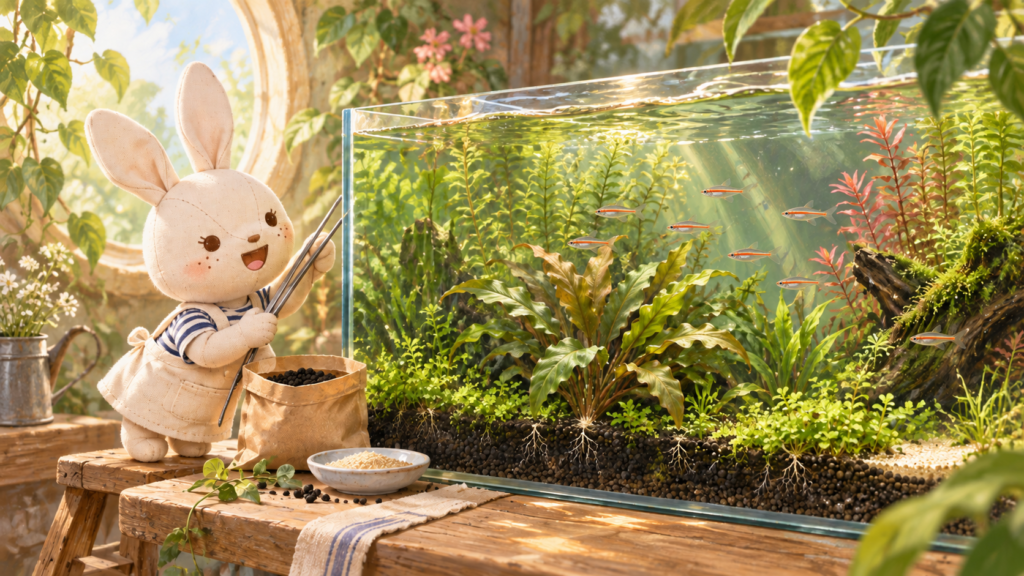 アイのアクアグッズ案内水草用ソイルの選び方|土・砂の違いとおすすめ商品道具の特徴や使い方、選ぶときのポイントをアイが紹介します。記事はコチラ →
 アイのアクアグッズ案内あい先生のアクアグッズ深堀り!|泡で汚れを取り出す? プロテインスキマーの歴史と仕組み道具の特徴や使い方、選ぶときのポイントをアイが紹介します。記事はコチラ →
さまざまな飼育テーマをご紹介。リンク先の記事には広告・商品紹介が含まれます。
案内・紹介記事一覧へ →【分類学・植物学】
- Blume, C. L. (1828). Enumeratio plantarum Javae et insularum adjacentium.(原記載論文:Polypodium pteropus)
- Fraser-Jenkins, C. R. (2010). A Check-list of Indian Pteridophytes.(属名変更:Leptochilus pteropusへの移行に関する体系)
- Ernst, A. (1908). Beiträge zur Kenntnis der Flora von Java.(ジャワ島における植物相と形態学的研究)
【生態学・自然環境】
- Tarutao National Park, Thailand. Ecological Survey Reports.(タイ、タルタオ国立公園におけるレオファイトの生育環境調査)
- Hovenkamp, P. H. (1998). An account of the Malay-Pacific species of Selliguea (Polypodiaceae).(東南アジア・太平洋地域におけるウラボシ科の分布)
【流通・検疫・園芸品種】
- 農林水産省 植物防疫所. 「輸入植物検疫の概要:水草の輸入規制について」.(日本国内の植物検疫制度および土壌持ち込み制限)
- Tropica Aquarium Plants A/S. Cultivar Information Sheet: “Microsorum pteropus ‘Windeløv'”.(トロピカ社による栽培品種ウェンディロフの固定と特性資料)
- USDA/APHIS. Federal Order regarding the importation of aquatic plants.(米国農務省による国際的な水草取引規制に関する文書)




コメント