

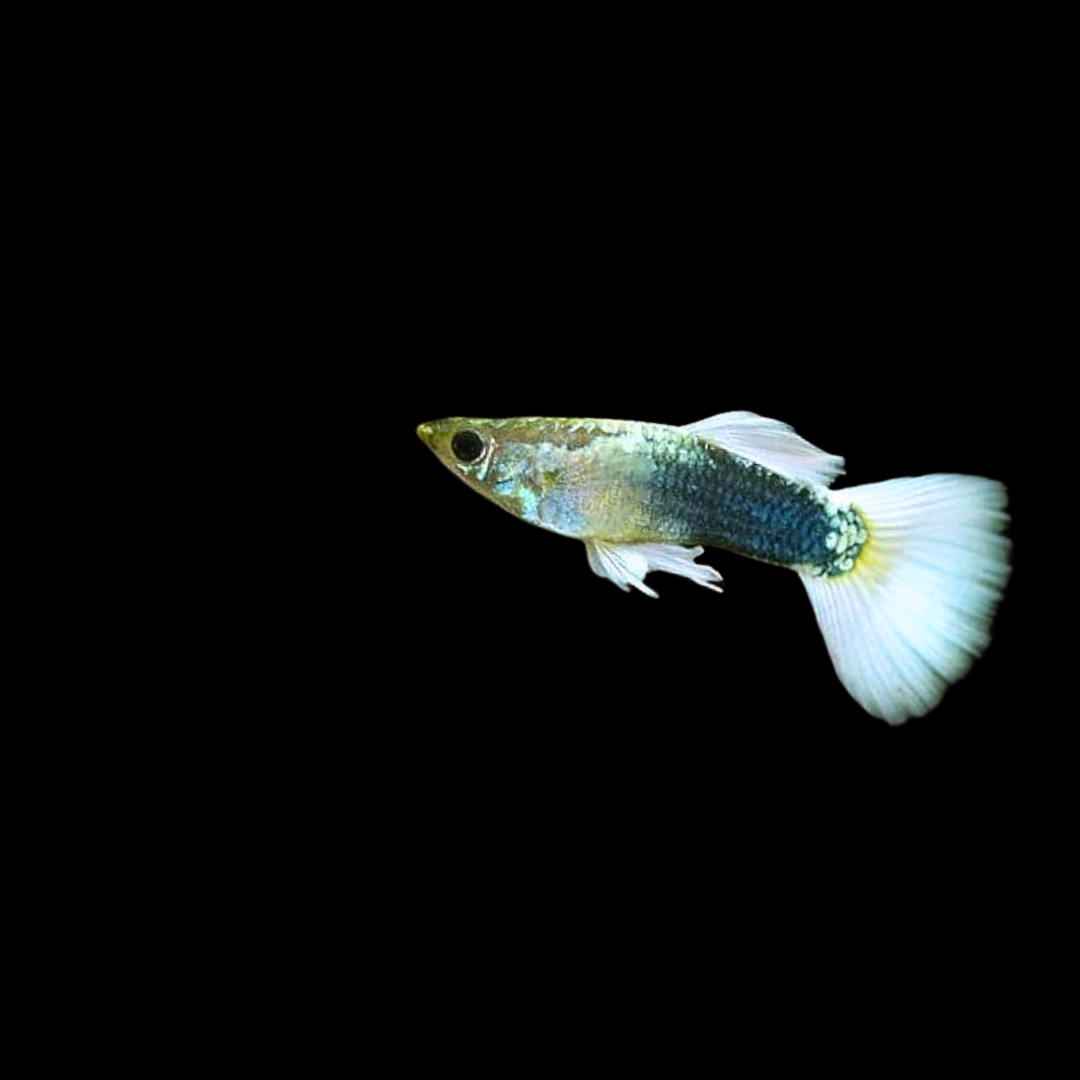
解説 / Description
ドイツイエロータキシードグッピーは、体の後半を黒く染めるタキシード模様と、白から淡いクリーム色に見える大きな尾びれが魅力の改良グッピーです。名称には「イエロー」と入りますが、日本国内で流通する系統では、黄色味を強く出すよりも、黒い体側と白い尾びれのコントラストを重視して選別されてきた個体が多く見られます。 The German Yellow Tuxedo Guppy is a cultivated guppy variety known for its dark tuxedo pattern over the rear half of the body and its large white to pale cream-colored caudal fin. Although the name includes “yellow,” many lines distributed in Japan have been selected more for the contrast between the dark body and a clean white tail than for a strong yellow coloration.
国産グッピーの定番品種として流通量が多く、比較的丈夫で繁殖も狙いやすいため、初めて品種グッピーに挑戦する人にも扱いやすい存在です。一方で、尾びれの白さ、黒いタキシード模様の濃さ、尾筒の太さ、デルタテールの形などを高い水準で維持しようとすると、種親選びや系統管理の奥深さが見えてくる品種でもあります。 It is one of the classic fancy guppy varieties in Japan and is widely available. Because it is relatively hardy and easy to breed, it is suitable for aquarists trying selectively bred guppies for the first time. At the same time, maintaining a high standard of white tail color, deep tuxedo markings, a strong caudal peduncle, and a well-shaped delta tail reveals the depth of selective breeding and line management.
基本情報 / Basic Information
| 学名 / Scientific Name | Poecilia reticulata |
|---|---|
| 通称 / Common Name | ドイツイエロータキシード、ドイツイエロータキシードグッピー、国産ドイツイエロータキシード、タキシードグッピーGerman Yellow Tuxedo Guppy, German Yellow Tuxedo, Half-Black Yellow Guppy |
| 分類 / Family | カダヤシ目カダヤシ科グッピー属Order Cyprinodontiformes, family Poeciliidae, genus Poecilia |
| 英名 / English Name | German Yellow Tuxedo Guppy |
| 分布 / Distribution | 原種グッピーは南米北部からカリブ海周辺に自然分布します。本品種は観賞用に作出・累代された改良品種であり、野生分布を持つ地域変異ではありません。Wild guppies are native to northern South America and nearby Caribbean regions. This variety is a selectively bred aquarium strain and is not a naturally occurring geographic form. |
| 最大体長 / Max Size | オス約3〜4cm、メス約4〜6cm。大きな尾びれを持つオスは、実際の体長以上に存在感があります。Males grow to about 3–4 cm, while females may reach about 4–6 cm. Males often appear larger than their body length suggests because of their broad tail fins. |
| 寿命 / Lifespan | 一般的に約1〜2年ほどです。水温を高めに維持すると成長や繁殖は早まりますが、代謝も上がるため、長く楽しむには極端な高水温を避けることが大切です。The typical lifespan is about 1–2 years. Higher temperatures can accelerate growth and breeding, but they also increase metabolism, so avoiding excessively warm conditions is important for long-term keeping. |
飼育環境 / Aquarium Environment
| 水槽サイズ / Tank Size | ペアや少数飼育なら30cmキューブ水槽前後から飼育できます。繁殖や複数ペアの管理を考える場合は、45cm規格水槽以上、余裕を持たせるなら60cm規格水槽が扱いやすいです。A pair or small group can be kept in an aquarium around the size of a 30 cm cube tank. For breeding or keeping multiple pairs, a standard 45 cm tank or larger is recommended, with a standard 60 cm tank offering greater stability and ease of management. |
|---|---|
| 水温 / Temperature | 22〜26℃前後が扱いやすく、繁殖を意識する場合もこの範囲で安定させると管理しやすいです。20℃前後でも維持できることはありますが、急な水温低下は白点病などのきっかけになりやすいため注意が必要です。 A range of about 22–26°C is easy to manage, including for breeding. They may tolerate temperatures around 20°C, but sudden drops can trigger issues such as white spot disease, so temperature stability is important. |
| 水質 / Water Quality | 中性から弱アルカリ性を好みます。pHはおおむね7.0〜7.5前後を目安にし、極端に酸性へ傾けない管理が向いています。日本の軟水では水換えを怠るとpHが下がりやすいため、必要に応じてサンゴ砂や硬度を補う素材を少量使うと安定させやすくなります。They prefer neutral to slightly alkaline water, with a general target of around pH 7.0–7.5. Avoid strongly acidic conditions. In soft tap water, pH can gradually drop if maintenance is neglected, so a small amount of coral sand or mineral-buffering material may help stabilize the water when needed. |
| レイアウト / Layout | 水草、流木、浮草などを組み合わせた穏やかなレイアウトが適しています。尾びれが大きいため、強すぎる水流や鋭利な素材は避け、泳ぎやすい空間と隠れ場所の両方を用意しておくと安心です。A calm layout with aquatic plants, driftwood, and floating plants is suitable. Because males have large tails, strong current and sharp materials should be avoided. Providing both open swimming space and shelter helps reduce stress. |
| 注意点 / Precautions | 尾びれが大きい個体は、水流の強さや尾びれの傷みに影響を受けやすいです。外部式フィルターなどを使う場合は排水を壁面に当てる、シャワーパイプを使うなどして水流をやわらげるとよいでしょう。また、酸性化した古い水では尾腐れや体調不良が出やすいため、少量でも定期的な水換えを続けることが重要です。Individuals with large tails are sensitive to strong currents and fin damage. If using a canister filter or similar equipment, soften the flow by directing the outflow toward the glass or using a spray bar. Old, acidic water can increase the risk of fin rot and poor condition, so regular partial water changes are important. |
餌と給餌 / Feeding
| 餌の種類 / Diet | 主食にはグッピー用の人工飼料、細かなフレーク、顆粒飼料が使いやすいです。繁殖を狙う場合や若魚をしっかり育てたい場合は、孵化したてのブラインシュリンプ、冷凍アカムシ、冷凍ミジンコなどを補助的に与えると成長とコンディションを整えやすくなります。Guppy foods, fine flakes, and small granules are suitable as staple foods. For breeding or raising young fish robustly, newly hatched brine shrimp, frozen bloodworms, and frozen daphnia can be used as supplemental foods to support growth and condition. |
|---|---|
| 給餌のポイント / Feeding Tips | 一度に多く与えるよりも、食べきれる量を1日1〜2回に分けて与えると水を汚しにくくなります。白い尾びれを美しく保つには、餌そのものよりも水質悪化を防ぐことが重要で、食べ残しを出さない給餌量を意識することが大切です。It is better to feed small amounts once or twice a day rather than overfeeding. To maintain clean-looking white tails, preventing water deterioration is more important than relying on any single food, so careful portion control is essential. |
性格と混泳 / Temperament and Tank Mates
| 性格 / Temperament | 性格は温和で、同種同士でも比較的扱いやすい魚です。ただし、オスがメスを追いかけ続けることがあるため、繁殖を前提にする場合はメスを多めに入れる、隠れ場所を増やすなどの配慮が必要です。They are peaceful and generally easy to keep with their own kind. However, males may persistently chase females, so when breeding, it is helpful to keep more females than males and provide ample shelter. |
|---|---|
| 混泳の相性 / Compatibility | 小型カラシン、コリドラス、オトシンクルス、小型の穏やかな卵胎生メダカ類などと相性がよいです。スマトラのようにひれをかじりやすい魚、大型魚、攻撃性の強い魚との混泳は避けた方が安全です。エビとの混泳は可能な場合もありますが、稚エビが食べられることはあります。They are compatible with small peaceful tetras, Corydoras, Otocinclus, and other gentle livebearers. Avoid fin-nipping species such as tiger barbs, large fish, and aggressive tank mates. Shrimp may be kept with them in some setups, but baby shrimp may be eaten. |
病気と対策 / Diseases and Prevention
| かかりやすい病気 / Common Diseases | 白点病、尾腐れ病、カラムナリス症、針病、痩せ、産後の体調不良などに注意が必要です。特に尾びれの大きなオスは、尾びれの傷や水質悪化から細菌性のトラブルにつながることがあります。Common concerns include white spot disease, fin rot, columnaris, wasting, clamped fins, and poor condition after giving birth. Males with large tails are especially prone to bacterial issues when fins are damaged or water quality declines. |
|---|---|
| 対策と予防 / Prevention | 急な水温変化を避け、定期的な水換えで古い水をためないことが基本です。新しく迎えた個体はすぐに本水槽へ入れず、可能であれば別容器で数日から1〜2週間ほど様子を見ると安全性が高まります。病気が出た場合は、早めに隔離し、症状に合った薬浴や塩分調整を検討することが必要です。Avoid sudden temperature changes and maintain regular water changes to prevent old water conditions. Newly purchased fish should ideally be observed in a separate tank for several days to one or two weeks before introduction. If disease appears, early isolation and appropriate treatment, such as medication or adjusted salinity, should be considered. |
増やし方(繁殖) / Breeding
| 雌雄の判別 / Sexing | オスは体が小さめで、尾びれや背びれが華やかに発達し、尻びれが交接器に変化しています。メスは体が大きく丸みを帯び、尾びれの表現は控えめで、腹部に妊娠斑が見えることがあります。Males are usually smaller, with more colorful and developed tail and dorsal fins, and their anal fin is modified into a gonopodium. Females are larger and rounder, with more modest fin coloration, and may show a gravid spot near the abdomen. |
|---|---|
| 繁殖形態 / Reproduction | 卵胎生で、メスは体内で卵をふ化させ、泳げる状態の稚魚を産みます。妊娠期間は水温や個体差によりますが、おおむね約1か月前後を目安に考えるとよいでしょう。They are livebearers. Females hatch the eggs internally and give birth to free-swimming fry. The gestation period varies with temperature and individual condition, but it is generally around one month. |
| 繁殖のポイント / Breeding Tips | 増やすだけなら難しくありませんが、美しい系統として維持するには種親選びが重要です。オスは尾びれの白さ、タキシード模様の濃さ、体型、尾筒の太さを見ます。メスも軽視せず、体格がしっかりしていて尾びれに黒いシミや大きな色ムラが少ない個体を残すと、次世代の崩れを抑えやすくなります。長期間同じ水槽内で無計画に近親交配を重ねると、体型の小型化、尾びれの薄さ、黄色味やシミの再出現が目立つことがあるため、選別と系統更新を意識することが大切です。Breeding for numbers is not difficult, but maintaining a beautiful line requires careful selection. In males, look for a clean white tail, deep tuxedo markings, strong body shape, and a thick caudal peduncle. Females should also be selected carefully; robust females with minimal black spots or uneven color in the tail are useful for reducing decline in the next generation. If uncontrolled inbreeding continues for many generations, smaller body size, thinner fins, yellowish patches, and spots may become more noticeable, so selection and line management are important. |
雑学と豆知識 / Trivia and Fun Facts
| 1. 「イエロー」なのに白く見える理由 / 1. Why a “Yellow” Guppy Often Looks White | ドイツイエロータキシードグッピーは、名前だけを見ると黄色い尾びれを想像しやすい品種です。しかし、日本国内で評価されてきた系統では、黒いタキシード模様と対比する清潔感のある白い尾びれが好まれ、黄色味を抑えた個体が選ばれてきたと考えられます。そのため、現在の国内流通では「イエロー」という名を残しながら、実際の鑑賞ポイントは白い尾びれに寄っている個体が多いという、改良品種ならではの面白い歴史が見られます。From the name alone, one might expect a strongly yellow-tailed guppy. In Japan, however, lines with a clean white tail contrasting against the black tuxedo pattern have been highly valued, and fish with reduced yellow coloration appear to have been selectively favored. As a result, many Japanese strains retain the word “yellow” in the name while the main visual appeal has shifted toward a white tail, showing how aquarium varieties can change through selective breeding and market preference. |
|---|---|
| 2. タキシード模様とグッピーの遺伝 / 2. Tuxedo Pattern and Guppy Genetics | グッピーのタキシード模様は、体の後半に黒〜濃紺の色を出す遺伝的な形質として知られています。専門的にはハーフブラック系の表現と関係し、尾筒から体側後半が黒く塗られたように見えるのが特徴です。グッピーは性染色体に関係する色彩形質が多い魚としても有名で、同じ品種名でも、どの系統をどのように累代してきたかによって、黒の濃さや尾びれの色、体型に差が出ます。ドイツイエロータキシードが単なる入門魚にとどまらず、ブリーダーの選別眼が問われる品種である理由は、この遺伝的な奥深さにあります。The tuxedo pattern in guppies is known as a genetic trait that produces black to dark blue coloration over the rear half of the body. It is related to half-black type expression and gives the impression that the caudal peduncle and rear body have been painted dark. Guppies are famous for having many color traits associated with sex chromosomes, and even within the same variety name, the depth of black, tail color, and body shape can differ depending on how the line has been maintained. This genetic depth is why the German Yellow Tuxedo Guppy is not merely a beginner fish, but also a variety that rewards careful breeder selection. |
| 3. 国産グッピーの定番としての位置づけ / 3. A Classic Strain in Japanese Fancy Guppies | ドイツイエロータキシードグッピーは、ブルーグラスやフルレッド系のグッピーと並んで、日本の国産グッピーを代表する定番品種として扱われることがあります。流通量が多く、繁殖も狙いやすいため入門向きでありながら、きれいな白尾、太い尾筒、乱れの少ないデルタテールをそろえようとすると一気に難易度が上がります。この「入り口は広いのに、極めようとすると深い」という性格が、長く愛されてきた理由の一つです。The German Yellow Tuxedo Guppy is often regarded as one of the classic Japanese fancy guppy strains, alongside varieties such as Blue Grass and Full Red types. It is widely available and relatively easy to breed, making it approachable for beginners. However, producing individuals with a clean white tail, thick caudal peduncle, and well-balanced delta tail is far more demanding. This combination of accessibility and depth is one reason the variety has remained popular for so long. |
| 4. 系統維持で見たいポイント / 4. Points to Watch When Maintaining a Line | ドイツイエロータキシードを繁殖する場合、つい華やかなオスだけに目が向きがちですが、実際にはメスの選別も非常に重要です。尾筒が細いメス、尾びれに黒いシミが多いメス、体型が弱いメスを残すと、次世代のオスにも尾びれの崩れや体型の弱さが出やすくなります。逆に、体格がよく、尾筒がしっかりしていて、色ムラの少ないメスを種親に使うと、品種全体の安定感を保ちやすくなります。派手なオスを楽しむ魚でありながら、良いメスを見抜くことが系統維持の鍵になる点は、グッピー育種の面白いところです。When breeding German Yellow Tuxedo Guppies, it is easy to focus only on the showy males, but female selection is also extremely important. Females with a narrow caudal peduncle, many black spots in the tail, or weak body shape may pass these weaknesses to the next generation. Conversely, robust females with strong caudal peduncles and minimal uneven coloration help stabilize the line. Although this is a fish admired for its striking males, the ability to evaluate good females is a key part of successful guppy breeding. |
まとめ / Conclusion
ドイツイエロータキシードグッピーは、黒いタキシード模様と白い尾びれのコントラストが美しい、国産グッピーを代表する定番品種です。丈夫で繁殖もしやすいため、品種グッピーの入門にも向いていますが、美しい系統として維持するには水質管理と種親選びが重要です。 The German Yellow Tuxedo Guppy is a classic fancy guppy variety admired for the contrast between its dark tuxedo pattern and white tail. It is hardy and easy to breed, making it suitable as an entry point into selectively bred guppies, but maintaining a beautiful line requires good water management and careful breeder selection.
中性から弱アルカリ性の安定した水質、強すぎない水流、定期的な水換えを意識すれば、長く美しい姿を楽しめます。さらに繁殖に挑戦する場合は、オスの見た目だけでなくメスの体型や尾びれの状態にも注目し、世代ごとに丁寧に選別していくことが大切です。 By maintaining stable neutral to slightly alkaline water, avoiding excessive current, and performing regular water changes, aquarists can enjoy this variety in good condition for a long time. For breeding, it is important not only to evaluate the males, but also to look closely at the females’ body shape and tail quality, selecting carefully in each generation.

気になる道具や飼い方を見つけてみませんか?
 アイのアクアグッズ案内ラスボラ・ボララスの群泳を楽しむ飼育用品|水槽・ろ過・ヒーター・餌・水草道具の特徴や使い方、選ぶときのポイントをアイが紹介します。記事はコチラ →
 アイのアクアグッズ案内金魚を長く楽しむ飼育用品|水槽・フィルター・エアレーション・水換え道具の特徴や使い方、選ぶときのポイントをアイが紹介します。記事はコチラ →
さまざまな飼育テーマをご紹介。リンク先の記事には広告・商品紹介が含まれます。
案内・紹介記事一覧へ →参考文献・参照資料
本記事は、グッピーの分類、原種の分布、繁殖生態、飼育環境、タキシード模様に関わる色彩遺伝、国内での品種解説を確認するため、以下の資料を参照しています。販売ページや店舗系ページは参考文献から除外しています。
分類・学名・原種分布に関する資料
-
Fricke, R., Eschmeyer, W. N. & Van der Laan, R. eds. Eschmeyer’s Catalog of Fishes. California Academy of Sciences. Poecilia reticulata Peters, 1859.
https://researcharchive.calacademy.org/research/ichthyology/catalog/fishcatget.asp?spid=58598 -
Froese, R. and Pauly, D. eds. FishBase. Poecilia reticulata, Guppy.
https://www.fishbase.se/summary/Poecilia-reticulata -
Global Invasive Species Database. Poecilia reticulata.
https://www.iucngisd.org/gisd/speciesname/Poecilia+reticulata
繁殖生態・飼育環境に関する資料
-
CABI Compendium. Poecilia reticulata (guppy).
https://www.cabidigitallibrary.org/doi/full/10.1079/cabicompendium.68208 -
Fernando, A. A. and Phang, V. P. E. 1985. Culture of the guppy, Poecilia reticulata, in Singapore. Aquaculture, 51(1), 49-63.
https://www.sciencedirect.com/science/article/abs/pii/004484868590239X -
Seriously Fish. Poecilia reticulata – Guppy.
https://www.seriouslyfish.com/species/poecilia-reticulata/
色彩遺伝・タキシード模様に関する資料
-
Nayudu, P. L. and Hunter, C. R. 1979. Cytological Aspects and Differential Response to Melatonin of Melanophore Based Color Mutants in the Guppy, Poecilia reticulata. Copeia, 1979(2), 232-242.
https://www.jstor.org/stable/1443408 -
Nayudu, P. L. 1979. Genetic Studies of Melanic Color Patterns and Atypical Sex Determination in the Guppy, Poecilia reticulata. Copeia, 1979(2), 225-231.
https://www.jstor.org/stable/1443407 -
Petrescu-Mag, I. V., Bourne, G. R. and Pop, I. F. 2008. An overview of the genetics of sex-linked and autosomal color traits in guppies. AACL Bioflux, 1(2), 161-164.
https://bioflux.com.ro/docs/vol1/2008.2.161-164.pdf
国内での品種解説・流通名の確認に関する補助資料
-
GEX. グッピーを上手に飼う方法・グッピーの種類。
https://www.gex-fp.co.jp/guppy/zukan/guppy_syurui.html -
Guppy Journal. ドイツイエロータキシードの特徴。
https://www.guppy-journal.com/entry/german-yellow-tuxedo




コメント