

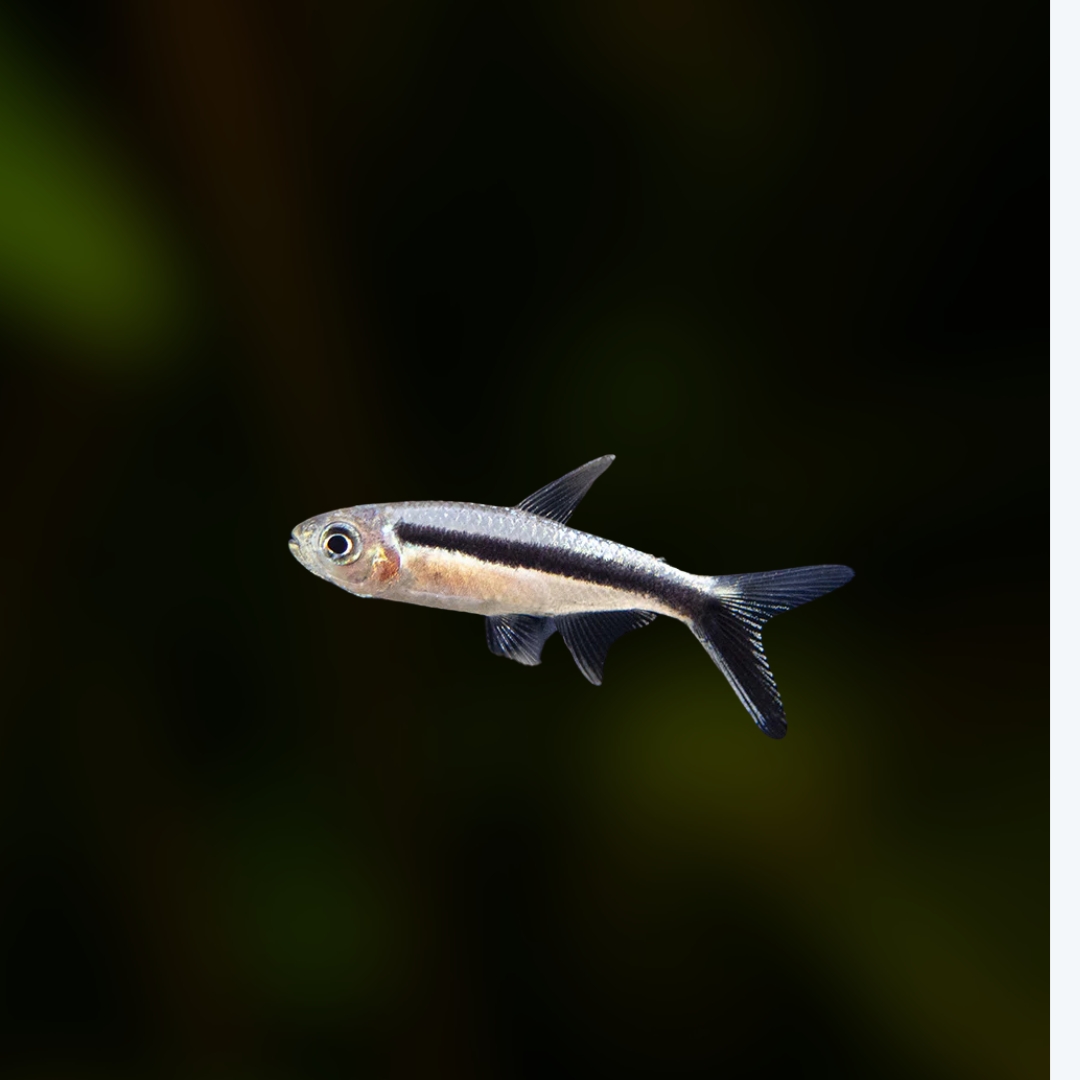
解説 / Description
ペンギンテトラは、南米アマゾン川流域を中心に分布する小型から中型のカラシンです。銀色の体に、エラ蓋の後方から尾びれ下葉へ向かって走る太い黒いラインが入り、水中で斜め上を向くように泳ぐ姿から「ペンギン」の名で親しまれています。丈夫で流通量も多く、初心者にも扱いやすい定番種でありながら、群れで斜めに定位する姿は水草水槽に独特のリズムを与えてくれます。 The penguin tetra is a small to medium-sized characin mainly distributed in the Amazon River basin of South America. It is known for its silvery body, a bold black stripe running from behind the gill cover to the lower lobe of the caudal fin, and its distinctive head-up oblique swimming posture. Although it is hardy, widely available, and suitable for beginners, a group of penguin tetras adds a uniquely rhythmic accent to planted aquariums.
基本情報 / Basic Information
| 学名 / Scientific Name | Thayeria boehlkei |
|---|---|
| 通称 / Common Name | ペンギンテトラ、サンタマリアPenguin tetra, Penguin fish, Hockey-stick tetra |
| 分類 / Family | カラシン目 アセストロランプス科 タエリア属Order Characiformes, family Acestrorhamphidae, genus Thayeria |
| 英名 / English Name | Penguin tetra / Hockey-stick tetra |
| 分布 / Distribution | 南米のアマゾン川流域、アラグアイア川、トカンチンス川、シングー川、タパジョス川などに分布します。流れの緩やかな河川、氾濫原、岸辺の止水域や緩流域を好みます。Distributed in South America, including the Amazon basin, Araguaia, Tocantins, Xingu, and Tapajós river systems. It favors slow-moving streams, floodplains, marginal waters, and gently flowing habitats. |
| 最大体長 / Max Size | 通常4.5〜7cmほど。良好な条件では約8cmに達することもあります。Usually about 4.5–7 cm, occasionally reaching around 8 cm under favorable conditions. |
| 寿命 / Lifespan | 一般的には3〜5年ほど。水質が安定した環境では、より長く飼育できる例もあります。Typically about 3–5 years, with longer lifespans possible in stable, well-maintained aquariums. |
飼育環境 / Aquarium Environment
| 水槽サイズ / Tank Size | 最低でも45cm規格水槽、できれば60cm規格水槽以上がおすすめです。10匹以上で群泳させる場合は、60cm規格水槽から90cm規格水槽を用意すると遊泳スペースを確保しやすくなります。A standard 45 cm tank is the minimum, while a standard 60 cm tank or larger is recommended. For groups of 10 or more, a 60–90 cm aquarium provides more comfortable swimming space. |
|---|---|
| 水温 / Temperature | 20〜30℃に適応しますが、日常管理では22〜28℃前後が扱いやすい範囲です。急な水温変化は白点病などのきっかけになるため、季節の変わり目はヒーターで安定させます。 It tolerates about 20–30°C, with 22–28°C being a practical range for routine care. Sudden temperature changes can trigger problems such as ich, so use a heater to stabilize the aquarium during seasonal transitions. |
| 水質 / Water Quality | 弱酸性から中性を中心に、pH6.0〜8.0程度まで幅広く適応します。日本の水道水は軟水寄りの地域が多く、カルキ抜き後の水が南米産カラシンの飼育に向きやすいです。ソイル、流木、マジックリーフを使うと、自然に近い弱酸性で落ち着いた環境を作りやすくなります。It adapts to a broad range around pH 6.0–8.0, with slightly acidic to neutral water being ideal. In many parts of Japan, tap water is relatively soft after dechlorination and suits South American characins well. Soil substrate, driftwood, and botanical leaves help create a calm, slightly acidic environment closer to its natural habitat. |
| レイアウト / Layout | 後景や側面には有茎草を植え、中央には群泳できる空間を残す構成が向いています。強すぎる照明よりも、浮き草や流木で少し陰影を作ると落ち着きやすく、黒いラインと銀色の体色も引き立ちます。Plant stem plants along the back and sides while leaving an open swimming area in the center. Rather than intense lighting, a softly shaded layout with floating plants or driftwood helps the fish settle and enhances its black stripe and silvery body. |
| 注意点 / Precautions | 活発に中層から上層を泳ぐため、飛び出し防止のフタがあると安心です。給餌不足が続くと柔らかい水草の新芽をかじることがあるため、植物質を含む餌も組み合わせて空腹状態を避けます。導入直後は輸送ストレスを受けやすいため、水合わせを丁寧に行ってください。Because it actively swims in the middle to upper levels, a lid is recommended to prevent jumping. If underfed, it may nibble tender new shoots of soft aquatic plants, so include plant-based foods and avoid chronic hunger. New arrivals can be stressed from transport, so acclimate them carefully. |
餌と給餌 / Feeding
| 餌の種類 / Diet | 雑食性です。フレークフード、小型カラシン用の顆粒フード、冷凍赤虫、冷凍ブラインシュリンプ、イトミミズなどを食べます。水草へのかじりを抑えたい場合は、植物質を含む人工飼料も取り入れるとよいでしょう。It is omnivorous and accepts flake foods, small characin pellets, frozen bloodworms, frozen brine shrimp, and tubifex-type foods. To reduce nibbling on plants, include prepared foods containing vegetable matter. |
|---|---|
| 給餌のポイント / Feeding Tips | 1日1〜2回、2〜3分で食べきれる量を目安にします。上層から中層で素早く餌を取るため、底棲魚と混泳する場合は、沈下性のタブレットや顆粒も併用して底の魚にも餌が届くようにします。食べ残しは水質悪化の原因になるため、与えすぎには注意します。Feed once or twice daily, offering only what they can finish within 2–3 minutes. Since they quickly feed in the upper and middle water layers, use sinking tablets or pellets as well when keeping bottom-dwelling tank mates. Avoid overfeeding, as leftovers can degrade water quality. |
性格と混泳 / Temperament and Tank Mates
| 性格 / Temperament | 群れで生活する魚で、5匹以上、理想的には10匹以上で飼うと落ち着きやすくなります。基本的には丈夫で飼いやすい一方、成長すると同種間で小競り合いをしたり、泳ぎの遅い魚やヒレの長い魚を追うことがあります。It is a social schooling or shoaling fish and settles best in groups of five or more, ideally ten or more. It is generally hardy and manageable, but adults may spar among themselves and may chase slow-moving or long-finned fish. |
|---|---|
| 混泳の相性 / Compatibility | コリドラス、オトシンクルス、小型プレコ、クーリーローチ、ヤマトヌマエビなど、生活圏が分かれる底層の生体とは相性がよいです。中層魚と合わせる場合は、同程度以上のサイズで遊泳力のあるラスボラ類や中型カラシンが向きます。ネオンテトラなどの小型で温和な魚、グッピーのようなヒレの目立つ魚との混泳では、追い回しがないか観察してください。It pairs well with bottom-oriented species such as Corydoras, Otocinclus, small plecos, kuhli loaches, and Amano shrimp because their living zones differ. For midwater tank mates, choose similarly sized or larger active rasboras or medium characins. Watch carefully when keeping them with small peaceful fish such as neon tetras or showy long-finned fish such as guppies. |
病気と対策 / Diseases and Prevention
| かかりやすい病気 / Common Diseases | 白点病、尾腐れ病を含むカラムナリス症、輸送直後のスレ傷からくる細菌感染に注意します。丈夫な魚ですが、水温の急変、過密、ろ過不足、水換え不足が重なると体調を崩しやすくなります。Watch for ich, columnaris-related conditions including fin rot, and bacterial infections that may develop from abrasions after transport. Although hardy, it is more likely to decline when sudden temperature changes, crowding, weak filtration, and insufficient water changes occur together. |
|---|---|
| 対策と予防 / Prevention | 新規導入時は温度合わせと水合わせを丁寧に行い、導入後1〜2週間は水質を大きく動かさないようにします。日常管理では、定期的な部分換水、ろ過の維持、適正密度、安定した水温が基本です。異常が見られた個体は早めに隔離し、症状に応じた薬浴を検討します。Acclimate new fish slowly for both temperature and water chemistry, and avoid major water-parameter swings for the first 1–2 weeks. Routine prevention relies on regular partial water changes, maintained filtration, appropriate stocking density, and stable temperature. Isolate affected fish early and consider medication according to the symptoms. |
増やし方(繁殖) / Breeding
| 雌雄の判別 / Sexing | 成熟したメスは腹部がややふっくらし、オスは比較的スリムに見えます。ただし外見差は大きくないため、複数匹を状態よく育てて自然にペアができるのを待つ方法が現実的です。Mature females tend to have a slightly fuller abdomen, while males appear slimmer. The differences are subtle, so raising a healthy group and allowing pairs to form naturally is the most practical approach. |
|---|---|
| 繁殖形態 / Reproduction | 卵を水草などにばらまく散卵型です。ウィローモスや細かい葉の水草、産卵モップなどに粘着性のある卵を産みつけます。親魚は卵を食べることがあるため、産卵後は親を戻すか卵を隔離します。It is an egg-scattering species. Adhesive eggs are deposited among Java moss, fine-leaved plants, or spawning mops. Adults may eat the eggs, so remove the parents or separate the eggs after spawning. |
| 繁殖のポイント / Breeding Tips | 繁殖自体は可能ですが、稚魚の初期育成が難関です。卵は比較的早く孵化し、孵化後数日で自由遊泳を始めます。自由遊泳直後の稚魚は非常に小さいため、ブラインシュリンプ幼生だけでは大きすぎる場合があり、事前にインフゾリアを用意しておくことが成功率を高めます。成長後はブラインシュリンプ幼生や微細な稚魚用フードへ移行します。Breeding is possible, but early fry care is the main challenge. The eggs hatch relatively quickly, and the fry begin free swimming after a few days. Newly free-swimming fry are extremely small, so baby brine shrimp may initially be too large; preparing infusoria in advance greatly improves success. As the fry grow, transition them to baby brine shrimp and fine powdered fry foods. |
雑学と豆知識 / Trivia and Fun Facts
| 1. 学名に残る南米魚類研究の歴史 / 1. A scientific name tied to the history of South American ichthyology | 属名のThayeriaは、19世紀にブラジル探検を支援したナサニエル・セイヤー・ジュニアに由来します。種小名のboehlkeiは、南米産カラシン研究に貢献した魚類学者ジェームズ・E・ボールケへの献名です。小さな熱帯魚の名前の中には、標本を集め、分類し、川の生き物を学術の世界へつないできた人々の足跡が刻まれています。The genus name Thayeria honors Nathaniel Thayer Jr., a supporter of a major 19th-century Brazilian expedition. The species name boehlkei honors ichthyologist James E. Böhlke, who contributed to the study of South American characins. Hidden within the name of this small aquarium fish is a trail of explorers, collections, and taxonomic work that connected river life to science. |
|---|---|
| 2. 斜め泳ぎは飾りではない / 2. The tilted posture is more than a curiosity | ペンギンテトラの斜め泳ぎは、単なる癖ではなく、環境に適応した姿勢と考えられています。水没した枝や水草、落ち葉が斜めに重なるアマゾンの水辺では、体側の黒いラインが植物の茎や影に溶け込み、魚の輪郭を目立ちにくくします。水槽の中で見える「少し不思議な立ち姿」は、野生下では身を守るための合理的な戦略だった可能性があります。The penguin tetra’s oblique posture is not merely a habit, but is considered an adaptation to its environment. In Amazonian waters full of submerged twigs, plants, and leaf litter, the black lateral stripe can blend with stems and shadows, making the fish’s outline harder to detect. What looks like a charmingly unusual stance in the aquarium may have been a practical survival strategy in the wild. |
| 3. ナマズにまねされたテトラ / 3. A tetra convincing enough to be imitated by catfish | 南米には、ペンギンテトラに似た斜めの黒い模様と尾びれ形状をもつ小型ナマズが知られています。まったく別の仲間であるナマズが、タエリア属の姿を思わせる模様を身につけて群れに紛れるという現象は、擬態の例としてとても興味深いものです。ペンギンテトラの姿がそれほど水辺の景色に溶け込み、捕食者を惑わせる効果をもっていたことを示しているのかもしれません。In South America, small catfish are known that resemble Thayeria tetras, with a similar diagonal dark stripe and caudal-fin shape. The fact that an unrelated catfish can resemble and associate with Thayeria-like fish is a fascinating example of mimicry. It may suggest that the penguin tetra’s appearance is highly effective at blending into the waterscape and confusing predators. |
| 4. 「サンタマリア」という日本市場の記憶 / 4. The Japanese market memory of “Santa Maria” | 日本では、かつてペンギンテトラが「サンタマリア」という名前で紹介されることがありました。現在は直感的にわかりやすい「ペンギンテトラ」の名が定着していますが、旧称は1980年代の熱帯魚文化を知る愛好家にとって懐かしい響きを持ちます。さらに、グッピーの一部改良品種名にもその名残が見られ、ひとつの魚の通称が別の観賞魚文化へ影響を与えた例としても楽しめます。In Japan, this species was once introduced under the name “Santa Maria.” Today the more visually intuitive name “penguin tetra” is firmly established, but the older name still carries a nostalgic tone for aquarists familiar with the tropical fish culture of the 1980s. Its echo can even be found in the names of some guppy strains, showing how one aquarium fish’s trade name influenced another corner of the hobby. |
まとめ / Conclusion
ペンギンテトラは、丈夫で入手しやすく、群泳の美しさも楽しめる優秀な熱帯魚です。45cm規格水槽以上でも飼育は可能ですが、本来の活発さと群れの魅力を引き出すなら、60cm規格水槽以上で5〜10匹以上をゆったり泳がせるのがおすすめです。 The penguin tetra is an excellent aquarium fish: hardy, easy to obtain, and attractive in groups. It can be kept in a standard 45 cm tank or larger, but to bring out its active nature and schooling appeal, a standard 60 cm tank or larger with a group of five to ten or more is recommended.
一方で、成長すると小競り合いが増えることや、柔らかい水草をかじる場合があることは覚えておきたいポイントです。水質を安定させ、餌を不足させず、生活圏の異なる混泳相手を選べば、ペンギンテトラは水草水槽の中で黒いラインと斜め泳ぎが映える、長く付き合える魅力的な一種になってくれます。 At the same time, remember that adults may spar more often and may nibble tender plants if underfed. With stable water quality, adequate feeding, and compatible tank mates that occupy different zones, the penguin tetra becomes a long-term, charming species whose black stripe and tilted swimming posture stand out beautifully in a planted aquarium.

気になる道具や飼い方を見つけてみませんか?
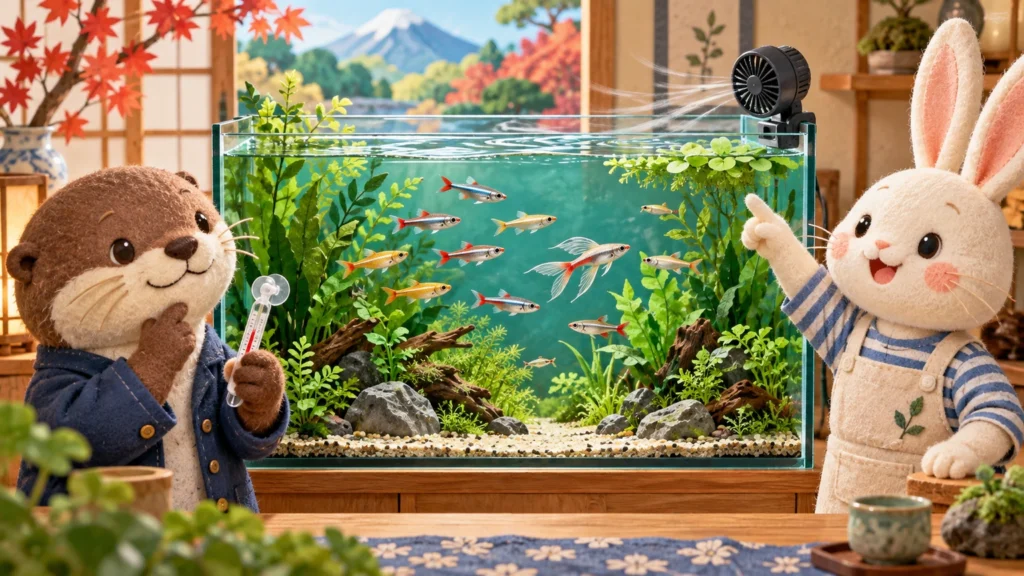 アイのアクアグッズ案内アカヒレの仲間に合わせる飼育用品|無加温・混泳・繁殖の水槽とろ過道具の特徴や使い方、選ぶときのポイントをアイが紹介します。記事はコチラ →
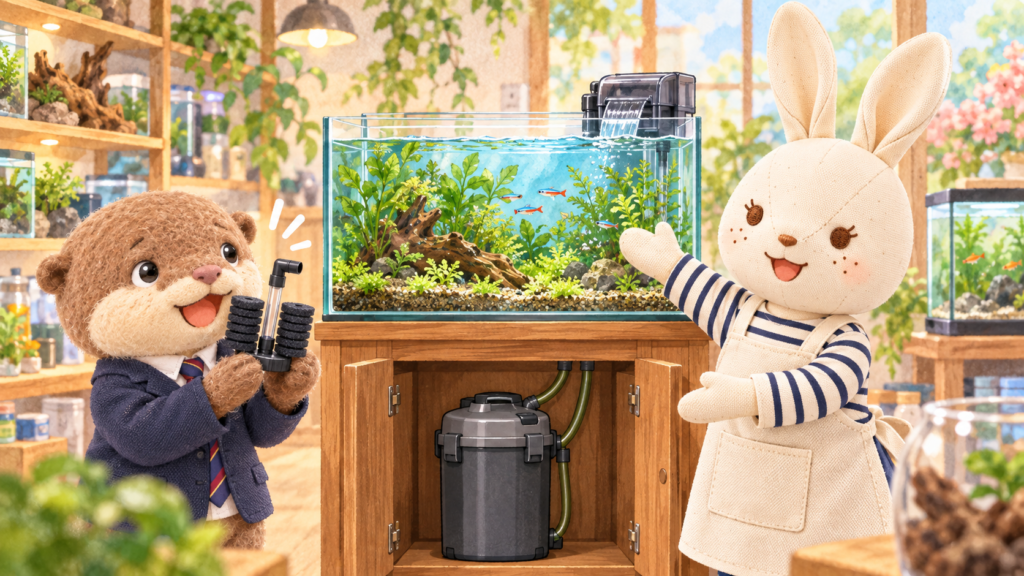 アイのアクアグッズ案内水槽フィルターの選び方|外掛け・外部・上部から小型オーバーフローまで道具の特徴や使い方、選ぶときのポイントをアイが紹介します。記事はコチラ →
さまざまな飼育テーマをご紹介。リンク先の記事には広告・商品紹介が含まれます。
案内・紹介記事一覧へ →分布マップ
ペンギンテトラ(Thayeria boehlkei)は、南米のアマゾン川流域を中心に、アラグアイア川、トカンチンス川、シングー川、タパジョス川などの水系に分布します。
※この地図は、記事に記載された分布地域をもとにした概略表示です。表示範囲は実際の分布境界を示すものではなく、マーカーは分布域を把握しやすくするために設定した代表地点であり、実際の採集地点・確認地点を示すものではありません。
参考文献・参照資料
本記事では、ペンギンテトラ(Thayeria boehlkei)の分類、分布、生息環境、飼育条件、繁殖、病気・管理上の注意点を確認するため、店舗・通販サイト、個人ブログ、まとめサイトを除外し、魚類分類データベース、国際的な生物多様性データベース、学術論文、獣医学・水産学系の専門資料を中心に参照しました。
-
Fricke, R., Eschmeyer, W. N. & Van der Laan, R. (eds.). Eschmeyer’s Catalog of Fishes. California Academy of Sciences.
参照箇所:学名、記載者、記載年、タイプ情報、現行の有効名、分類上の位置づけ、分布・淡水魚であることの確認。
https://researcharchive.calacademy.org/research/ichthyology/catalog/fishcatget.asp?spid=24929 -
Froese, R. & Pauly, D. (eds.). FishBase: Thayeria boehlkei, Blackline penguinfish.
参照箇所:分類、英名、分布、水温、pH、硬度、最大サイズ、餌、群れでの飼育、60cm以上の水槽目安、繁殖時の産卵と孵化時間、IUCN評価の確認。
https://www.fishbase.se/summary/Thayeria-boehlkei -
GBIF Secretariat. GBIF Backbone Taxonomy: Thayeria boehlkei Weitzman, 1957.
参照箇所:学名、記載情報、分類階級、国際的な分類データベース上での扱いの確認。なお、科の扱いはデータベースにより更新状況が異なるため、本文ではEschmeyer’s Catalog of FishesおよびFishBaseの新しい分類も併せて確認しました。
https://www.gbif.org/species/5204168 -
IUCN Red List of Threatened Species: Thayeria boehlkei.
参照箇所:保全状況、分布、生息環境に関する基礎情報の確認。野生個体群の保全評価に関する資料であり、観賞魚としての飼育可否を示すものではありません。
https://www.iucnredlist.org/species/22732/50664030 -
Moreira, C. R. & Lima, F. C. T. (2017). Thayeria tapajonica (Characiformes: Characidae), a new species from rio Tapajós basin, Brazil. Zootaxa, 4344(1), 137–146.
参照箇所:タエリア属の近縁種比較、Thayeria tapajonicaの記載、体側ラインや尾びれ下葉などタエリア属に特徴的な形態の確認。
https://doi.org/10.11646/zootaxa.4344.1.5 -
Çelik, İ. & Çelik, P. (2024). Larval development of penguin tetra (Thayeria boehlkei): Morphological observations. Journal of Agricultural Production, 5(2), 97–105.
参照箇所:ペンギンテトラ仔魚の発生、初期摂餌、遊泳開始、アルテミア幼生などの初期餌、稚魚期への移行に関する繁殖・育成情報。
https://doi.org/10.56430/japro.1464516 -
Francis-Floyd, R. & Reed, P. Ichthyophthirius multifiliis (White Spot) Infections in Fish. University of Florida IFAS Extension.
参照箇所:白点病の原因生物、導入時の持ち込みリスク、隔離・予防、症状確認と治療時の注意点。記事内の「導入直後の注意」「白点病対策」の根拠として参照しました。
https://ask.ifas.ufl.edu/publication/FA006 -
Petty, B. D., Francis-Floyd, R. & Yanong, R. P. E. Bacterial Diseases of Fish. MSD Veterinary Manual.
参照箇所:観賞魚・養殖魚における細菌性疾患、水質悪化、過密、輸送、急な水温変化、低酸素などのストレス要因と病気発生リスク。記事内の「尾腐れ・カラムナリス症などの予防」「水質管理の重要性」の根拠として参照しました。
https://www.msdvetmanual.com/exotic-and-laboratory-animals/aquarium-fish/bacterial-diseases-of-fish
最終確認日:2026年6月4日。分類体系やデータベースの記載は更新されることがあるため、記事更新時には上記資料の最新版を再確認してください。




コメント