
解説 / Description
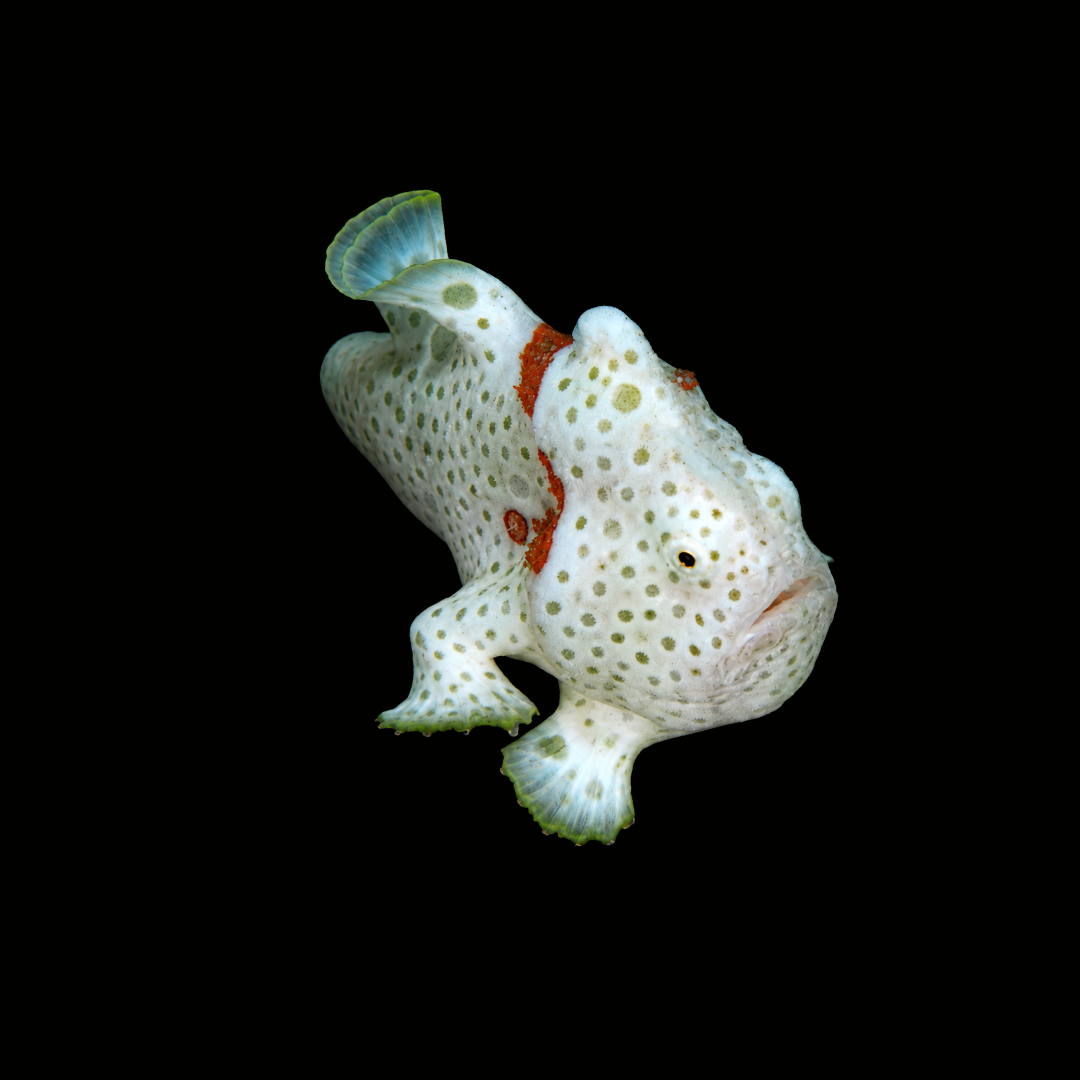
イロカエルアンコウは、色鮮やかな姿と、海底を歩くように移動する独特の仕草が魅力的な海水魚です。丸みを帯びた体に大きな口、手足のように発達した胸鰭と腹鰭を持ち、一般的な魚とはひと味違った姿をしています。赤、黄、オレンジ、白、茶、黒など体色の変化に富み、周囲のカイメンや岩肌に見事に溶け込む擬態の名手として知られています。頭上には釣り竿のような特殊な器官があり、その先端に付いた疑似餌を動かして小魚を誘い寄せ、驚くほど素早く丸呑みにします。普段はほとんど泳がず、同じ場所でじっと獲物を待ち構える姿も、本種ならではの特徴です。日本では伊豆半島や南紀、南西諸島などの海域で観察され、ダイバーや水中写真愛好家からも人気を集めています。水槽内でもユニークな行動を観察できますが、強い捕食性を持つため基本的には単独飼育が適しており、餌の大きさや給餌頻度、水質の安定には十分な配慮が必要です。 The painted frogfish is a fascinating marine fish known for its remarkable colors and unusual ability to walk across the seafloor. Its rounded body, enormous mouth, and limb-like pectoral and pelvic fins give it an appearance unlike that of most familiar aquarium fish. Individuals may be red, yellow, orange, white, brown, black, or other shades, allowing them to blend into surrounding sponges and rocky habitats. Above its mouth is a specialized fishing-rod-like structure bearing a lure that attracts unsuspecting prey. When a small fish approaches, the frogfish swallows it with an astonishingly rapid suction strike. Rather than swimming constantly, it usually remains motionless in a carefully chosen ambush position. In Japanese waters, it can be observed around the Izu Peninsula, the Kii Peninsula, and the Nansei Islands, where it is popular among divers and underwater photographers. Its unusual behavior makes it captivating in an aquarium, but its powerful predatory instincts mean that solitary housing is generally best. Appropriate prey size, controlled feeding, and stable water conditions are essential for its long-term care.
基本情報 / Basic Information
| 学名 / Scientific Name | Antennarius pictus (Shaw, 1794) |
|---|---|
| 通称 / Common Name | イロカエルアンコウ、ペインテッドフロッグフィッシュPainted Frogfish, Spotted Frogfish, Painted Anglerfish |
| 分類 / Family | アンコウ目・カエルアンコウ科・カエルアンコウ属Order Lophiiformes, Family Antennariidae, Genus Antennarius |
| 英名 / English Name | Painted Frogfish |
| 分布 / Distribution | 紅海、東アフリカ沿岸からインド洋、東南アジア、日本南部、オーストラリア、ハワイ諸島、ソシエテ諸島に至るインド太平洋の熱帯・亜熱帯海域。日本では伊豆半島、相模湾、南紀、南西諸島などで観察されます。主に浅い岩礁やサンゴ礁、カイメンの多い場所に生息し、水深約75mまで記録があります。Widely distributed throughout the tropical and subtropical Indo-Pacific, from the Red Sea and East African coast through the Indian Ocean and Southeast Asia to southern Japan, Australia, Hawaii, and the Society Islands. In Japan, it is observed around the Izu Peninsula, Sagami Bay, the Kii Peninsula, and the Nansei Islands. It primarily inhabits shallow reefs, rocky areas, and sponge-rich habitats, with records from depths down to approximately 75 m. |
| 最大体長 / Max Size | 最大約30cmとする記録があります。ただし、一般的に観察される個体は5〜15cm前後が多く、20cmを超える大型個体は比較的少数です。最大体長については約21cmとする資料もあります。Reported maximum total length is approximately 30 cm, although individuals commonly encountered are around 5–15 cm. Specimens exceeding 20 cm are relatively uncommon. Some references report a maximum length closer to 21 cm. |
| 寿命 / Lifespan | 飼育下では3〜5年程度がひとつの目安とされますが、本種に限定した信頼性の高い寿命データは十分ではありません。飼育環境や導入時の健康状態、給餌管理によって大きく左右されます。Approximately 3–5 years is sometimes used as a general aquarium-care estimate, but reliable species-specific longevity data remain limited. Actual lifespan depends considerably on health at acquisition, feeding management, and environmental stability. |
飼育環境 / Aquarium Environment
| 水槽サイズ / Tank Size | 長期飼育には90cm規格水槽(約180L)以上を推奨します。小型の幼魚であれば60cmワイド水槽(約120L)でも飼育可能ですが、成長に応じて水槽の拡張が必要です。20cmを超える大型個体では120cm規格水槽(約240L)以上も検討してください。遊泳距離よりも、安定した水質と十分な底面積、安心して定位できる空間の確保が重要です。A standard 90 cm aquarium of approximately 180 L or larger is recommended for long-term care. Small juveniles can be maintained in a 60 cm wide aquarium of approximately 120 L, but upgrades may become necessary as they grow. For especially large individuals exceeding 20 cm, consider a standard 120 cm aquarium of approximately 240 L or more. Stable water conditions, adequate bottom space, and secure resting areas are more important than extensive swimming room. |
|---|---|
| 水温 / Temperature | 24〜27℃を目安に、年間を通して安定させます。特に25〜26℃前後は管理しやすい範囲です。急激な水温変化や高水温による酸欠を避け、夏季は必要に応じて水槽用クーラーを使用してください。Maintain a stable temperature of approximately 24–27°C throughout the year. Around 25–26°C is a practical target. Avoid sudden temperature fluctuations and oxygen depletion during hot weather. Aquarium cooling equipment may be necessary in summer. |
| 水質 / Water Quality | 一般的な熱帯性海水魚に適した弱アルカリ性の海水を維持します。推奨pHは8.1〜8.4、比重は25℃付近で1.023〜1.026を目安とします。アンモニアと亜硝酸は検出されない状態を保ち、硝酸塩の蓄積も抑えてください。大きな排泄物や食べ残しが水質悪化につながるため、十分な生物ろ過能力を確保し、定期的な換水と底面清掃を行います。Maintain slightly alkaline seawater suitable for tropical marine fish. Recommended parameters are pH 8.1–8.4 and a specific gravity of approximately 1.023–1.026 near 25°C. Ammonia and nitrite should remain undetectable, while nitrate accumulation should be minimized. Because large waste deposits and uneaten food can rapidly degrade water quality, provide effective biological filtration, regular water changes, and prompt debris removal. |
| レイアウト / Layout | ライブロックや安定した擬岩、カイメンを思わせる装飾を配置し、体を支えながら待ち伏せできる場所を作ります。複雑すぎる岩組みは清掃しにくいため、隠れ場所とメンテナンス性の両立が理想的です。底床は薄く敷いた細かいサンゴ砂、または清掃しやすいベアタンク方式でも管理できます。餌とともに底砂を大量に吸い込まないよう配慮してください。水流は強すぎない程度に調整し、酸素供給と水の循環は十分に確保します。強い照明は必須ではありません。Provide stable live rock, artificial rockwork, or sponge-like decorations where the fish can brace itself and wait for prey. Avoid excessively complicated structures that make cleaning difficult. A thin layer of fine aragonite sand or an easily maintained bare-bottom setup can both work. Arrange feeding areas to reduce accidental ingestion of substrate. Water movement should be gentle enough for comfortable resting while still providing adequate oxygenation and circulation. Intense lighting is unnecessary. |
| 注意点 / Precautions | 導入時は水温、比重、pHの違いに注意します。短時間の輸送で状態の良い個体なら、必要に応じて点滴法などで徐々に水質を合わせます。ただし、長時間輸送された個体を開封後の汚れた袋の水に長く留めると、pH上昇によってアンモニアの毒性が強まることがあるため、輸送状況に応じて迅速かつ慎重に清潔な飼育水へ移してください。導入直後は照明を落として静かに休ませます。また、体表や誘引器官は傷つきやすいため、移動には柔らかい網よりも水を張った容器を使う方法が適しています。必ずフタを設置し、吸水口やポンプへの接触にも注意してください。Pay close attention to temperature, specific gravity, and pH differences during acclimation. Gradual water adjustment, including drip acclimation when appropriate, can be useful after a short journey. However, fish transported for many hours should not remain in polluted shipping water after opening, because rising pH can increase ammonia toxicity. Transfer them carefully and efficiently into clean, appropriately matched seawater. Keep lighting subdued after introduction. Their skin and fishing lure are vulnerable to injury, so a water-filled container is generally safer for transfers than rough net handling. Use a secure aquarium cover and protect the fish from pump intakes and other equipment. |
餌と給餌 / Feeding
| 餌の種類 / Diet | 肉食性で、自然界では小魚やエビなどの甲殻類を捕食します。飼育下では、状態の良い小型の海産エビや小魚などの活き餌を利用できます。人工的な給餌に慣れた個体には、解凍した冷凍エビ、イサザアミ、海産魚の切り身などを与えることも可能です。幼魚には口の大きさに合わせて小型の餌を用意してください。金魚やメダカなどの淡水魚を常用の餌にすることは、栄養面や衛生面から推奨されません。This carnivorous species feeds mainly on small fishes and crustaceans in the wild. In captivity, suitable live marine shrimp and small fish can be offered. Individuals trained to accept nonliving foods may eat thawed shrimp, mysis shrimp, and appropriately sized pieces of marine fish. Juveniles require correspondingly smaller prey. Freshwater feeder fish, such as goldfish or medaka, should not be used as a regular staple because of nutritional and hygiene concerns. |
|---|---|
| 給餌のポイント / Feeding Tips | 成魚では週1〜2回程度の給餌から始め、体格や消化状態に応じて調整します。幼魚は成長段階に合わせて、よりこまめな給餌が必要になる場合があります。餌は体長に対して過大なものを避け、腹部が極端に膨らむまで食べさせないことが重要です。過食は消化不良や腹部膨満につながるおそれがあります。冷凍餌への餌付けには、先端が滑らかな給餌用ピンセットなどを使い、獲物が泳いでいるようにゆっくり動かす方法が有効です。口や誘引器官を傷つけないよう注意し、食べ残しは速やかに取り除きます。導入当日は無理に給餌せず、呼吸や姿勢が落ち着いてから少量ずつ開始してください。For adults, begin with approximately one or two feedings per week and adjust according to body condition and digestion. Growing juveniles may need more frequent, carefully controlled meals. Avoid oversized prey and never feed until the abdomen becomes excessively distended, as overfeeding may contribute to digestive problems and bloating. To encourage acceptance of thawed food, use smooth-tipped feeding tongs and gently move the food to imitate swimming prey. Avoid injuring the mouth or lure, and remove leftovers promptly. Do not force feeding immediately after arrival; wait until breathing and posture have returned to normal before offering a small first meal. |
性格と混泳 / Temperament and Tank Mates
| 性格 / Temperament | 普段はおとなしく、気に入った場所で長時間じっとしていることが多い魚です。ただし、捕食行動は非常に積極的で、口に入ると判断した生き物には瞬間的に襲いかかります。一般的な意味での縄張り争いは目立ちませんが、同種を含む他魚を捕食する可能性があります。落ち着いた姿と強い捕食性を併せ持つ、典型的な待ち伏せ型の肉食魚です。Usually calm and sedentary, the painted frogfish often remains in one favored position for long periods. Nevertheless, it is a highly opportunistic predator and may strike instantly at an animal it can swallow. Overt territorial behavior is less conspicuous than in many active reef fishes, but predation on other fishes, including members of its own species, is possible. It combines a quiet appearance with exceptionally effective ambush hunting. |
|---|---|
| 混泳の相性 / Compatibility | 基本的には単独飼育を強く推奨します。小型魚や観賞用エビ、カニなどは捕食される危険性が高く、同程度の大きさの魚でも安全とは限りません。一方、ヤッコ類やチョウチョウウオ類など、他魚の体表や突起物をつつく魚との混泳では、誘引器官や皮膚を傷つけられるおそれがあります。同種同士でも成長に伴って共食いの危険が生じるため、安易な複数飼育は避けてください。サンゴそのものを積極的に食べる魚ではありませんが、小型の魚類や甲殻類が暮らす一般的なサンゴ水槽には適していません。Solitary housing is strongly recommended. Small fishes, ornamental shrimp, and crabs are at substantial risk of being eaten, and even similarly sized fish are not necessarily safe. Conversely, angelfishes, butterflyfishes, and other species that peck at protruding structures may injure the frogfish’s lure or skin. Cannibalism is also a concern when multiple frogfish are kept together, particularly as they mature. Although the species does not normally feed on corals, it is unsuitable for typical reef communities containing small fishes and ornamental crustaceans. |
病気と対策 / Diseases and Prevention
| かかりやすい病気 / Common Diseases | 注意したい健康上の問題には、海水性白点病、細菌性の皮膚炎、輸送やレイアウトとの接触による体表の損傷、過食に伴う消化不良や腹部膨満などがあります。また、体が浮いて底に留まれなくなる異常浮遊が飼育下で報告されています。これは単一の病気を示す名称ではなく、消化管内のガス、空気の取り込み、浮力調節の異常など、複数の原因が考えられる症状です。呼吸が速い、食欲が急に落ちる、皮膚に赤みやただれが現れる、正常な姿勢を保てないといった変化には注意が必要です。Potential health problems include marine ich, bacterial skin infections, injuries caused by transport or aquarium furnishings, and digestive disorders associated with excessive feeding. Abdominal bloating and abnormal floating behavior have also been reported in captivity. Floating is a symptom rather than a single confirmed disease and may involve intestinal gas, swallowed air, or other buoyancy-related disturbances. Warning signs include rapid breathing, sudden loss of appetite, reddened or damaged skin, and difficulty maintaining a normal resting posture. |
|---|---|
| 対策と予防 / Prevention | 予防の基本は、成熟したろ過環境、安定した水温と比重、適度な給餌、定期的な水質検査です。特に大きな排泄物はスポイトなどで速やかに取り除き、アンモニアの蓄積を防ぎます。新規導入魚は可能であれば隔離水槽で状態を観察し、皮膚や呼吸の異常がないことを確認してから本水槽へ移します。異常浮遊が見られた場合は給餌を中止し、水質と水温を確認してください。無理に体を押したり腹部を圧迫したりせず、改善しない場合は魚類を診療できる獣医師などに相談します。鱗を持たない本種への薬剤使用には慎重さが必要で、特に銅を含む治療薬を自己判断で使用することは避けてください。薬浴が必要な場合は、薬剤への感受性を考慮し、専門的な助言のもと隔離水槽で行うことが望まれます。Prevention depends on mature biological filtration, stable temperature and salinity, appropriate feeding, and regular water testing. Remove large waste deposits promptly to prevent ammonia accumulation. Whenever possible, observe new arrivals in a separate quarantine aquarium before introducing them to the permanent setup. If abnormal floating occurs, suspend feeding and check water quality and temperature. Do not squeeze the abdomen or attempt forceful physical treatment. Persistent symptoms warrant advice from a veterinarian experienced with fish. Medication requires caution in this scaleless species, particularly treatments containing copper. When treatment is necessary, use an appropriate hospital aquarium under knowledgeable supervision rather than medicating the main display without a diagnosis. |
増やし方(繁殖) / Breeding
| 雌雄の判別 / Sexing | 雌雄の外見上の違いは乏しく、通常時の確実な判別は困難です。繁殖期の成熟したメスは、卵の発達に伴って腹部が大きく膨らむことがあります。ただし、腹部の膨らみは食後の状態や体調によっても変化するため、それだけで雌雄を断定することはできません。External sexual differences are subtle, making reliable sex determination difficult outside the breeding period. Mature females may develop noticeably swollen abdomens as eggs mature. However, abdominal size also changes with feeding and health, so this characteristic alone is insufficient for confirming sex. |
|---|---|
| 繁殖形態 / Reproduction | 卵生で、体外受精によって繁殖します。繁殖時にはオスとメスが接近し、海底から浮上しながら産卵と放精を行います。受精卵はゼラチン質の粘液に包まれ、細長いリボン状の浮遊卵塊となって海中を漂います。卵塊には多数の卵が含まれ、孵化後の仔魚はプランクトンとして生活します。親魚が卵を保護する習性は知られていません。The species is oviparous and reproduces through external fertilization. During spawning, a male and female approach each other and may rise from the bottom while releasing eggs and sperm. The fertilized eggs are held together in a long, ribbon-like mass of gelatinous mucus that drifts through the water. These floating egg rafts contain numerous eggs, and the hatchlings undergo a planktonic larval stage. Parental egg guarding is not known in this species. |
| 繁殖のポイント / Breeding Tips | 一般家庭での繁殖は非常に難しく、特に孵化後の仔魚育成が大きな課題となります。仔魚は極めて小さく、初期には繊毛虫やカイアシ類の幼生、ワムシなどの微小な餌が必要です。成長に伴い、栄養強化したワムシやブラインシュリンプなどへ段階的に切り替えます。2022年にはFrank Baensch氏によって、野外で採集された卵塊から仔魚を育成し、孵化後約80日で着底する稚魚まで成長させた記録が公表されました。着底時の体長は約6.8mmで、長い浮遊幼生期間と浮き袋の形成が育成上の重要な課題でした。この成果は養殖の可能性を示すものですが、飼育下の親魚による産卵から次世代の繁殖までを含む完全養殖が一般化したわけではありません。繁殖に取り組む場合は、親魚の安全な隔離、産卵用の十分な空間、専用の仔魚飼育設備、継続的な微小生物餌料の培養が必要になります。Breeding in a home aquarium is extremely challenging, especially because the larvae require specialized care after hatching. Newly feeding larvae need tiny live foods such as ciliates, copepod nauplii, and rotifers. As they develop, feeding must gradually transition to enriched rotifers and brine shrimp. In 2022, Frank Baensch documented the successful rearing of larvae from a wild-collected egg raft through settlement, which occurred at approximately 80 days after hatching. The juveniles measured only about 6.8 mm at settlement. The prolonged planktonic period and successful swim-bladder inflation were major developmental challenges. Although this demonstrated the species’ potential for aquaculture, it did not establish routine closed-cycle breeding from captive parents. Successful breeding attempts require safe separation of adults, suitable spawning space, dedicated larval systems, and reliable cultures of microscopic live foods. |
雑学と豆知識 / Trivia and Fun Facts
| 1. 学名に刻まれた「彩られた魚」の歴史 / 1. A Scientific Name Inspired by Color | イロカエルアンコウの学名にある「pictus」は、ラテン語で「描かれた」「彩られた」を意味する言葉です。赤や黄色、白、黒など、同じ種とは思えないほど多彩な姿を見せる本種にふさわしい名前といえるでしょう。一方、属名の「Antennarius」は、触角を意味するラテン語の「antenna」に由来し、頭上に伸びる釣り竿のような器官を連想させます。カエルアンコウ属は1816年にフランスの自然科学者Daudinによって提唱されましたが、本種そのものはそれより早い1794年、イギリスの博物学者George Shawによって「Lophius pictus」として記載されました。この記載は、植物や動物を美しい図版とともに紹介した博物誌『The Naturalist’s Miscellany』に掲載されたものです。図版制作にはFrederick Polydore Nodderも関わっていました。 ところが、あまりに体色の変化が大きかったため、異なる色彩の個体が別種として扱われることもありました。かつて使用された「Antennarius horridus」や「Chironectes leprosus」などの学名は、現在では本種の異名として整理されています。さらに、1987年にはタヒチ産の標本が新模式標本として指定され、種の基準を明確にする重要な役割を果たしました。鮮やかな色彩に惑わされた分類の歴史そのものが、本種の擬態能力の高さを物語っています。 The species name “pictus” comes from Latin and means “painted” or “colored,” an appropriate description for a fish that can appear in red, yellow, white, black, and numerous other shades. The genus name “Antennarius” derives from the Latin word “antenna,” referring to the antenna-like fishing apparatus above the mouth. The genus was proposed by the French naturalist Daudin in 1816, although the painted frogfish had already been described in 1794 by the British naturalist George Shaw under the name “Lophius pictus.” The original description appeared in “The Naturalist’s Miscellany,” an illustrated natural-history publication to which Frederick Polydore Nodder also contributed. Its extraordinary color variation once caused different-looking individuals to be described as separate species. Names such as “Antennarius horridus” and “Chironectes leprosus” are now treated as synonyms of the painted frogfish. In 1987, a specimen from Tahiti was designated as a neotype, helping stabilize the scientific identity of the species. The long history of taxonomic confusion is itself evidence of how remarkably varied its appearance can be. |
|---|---|
| 2. 体色だけでは見分けられない、カエルアンコウたちの秘密 / 2. Why Color Alone Cannot Identify a Frogfish | イロカエルアンコウを見分けるとき、鮮やかな体色は意外にもあまり頼りになりません。よく似たオオモンカエルアンコウやクマドリカエルアンコウも、環境に応じてさまざまな色彩を示すからです。特に幼魚では外見が似通っており、色だけで判断すると誤同定につながります。 イロカエルアンコウの特徴として知られているのが、尾鰭に縦方向に並ぶことが多い、淡い縁取りのある3つの暗色斑です。また、体の表面には小さな円形の斑紋やくぼみが数多くあり、カイメンに開いた穴のように見えます。頭上の釣り竿状の器官は第2背鰭棘より長く、その先端には細長い房状の疑似餌が付いています。 クマドリカエルアンコウでは、体側の褐色や赤色の模様が眼の周囲までつながることが多いのに対し、イロカエルアンコウでは眼の周囲まで達しない傾向があります。オオモンカエルアンコウは成長すると大型化し、体形や誘引器官にも違いが現れます。ただし、尾鰭の斑紋などには種間で共通する特徴もあり、一つの形質だけで断定することはできません。疑似餌の形状、第2背鰭棘、体表の斑紋などを総合的に観察することが正確な同定につながります。 Bright coloration is surprisingly unreliable for identifying a painted frogfish. Closely related species, including Commerson’s frogfish and the warty frogfish, also display considerable color variation. Juveniles are particularly difficult to distinguish, and relying solely on color can lead to misidentification. One characteristic often associated with the painted frogfish is a vertical series of three dark, pale-edged spots on the caudal fin. Its skin also carries numerous small circular markings and crater-like depressions resembling the openings of marine sponges. The fishing rod above the mouth is longer than the second dorsal-fin spine and ends in an elongated tuft-like lure. In the warty frogfish, reddish or brownish markings frequently extend toward or around the eyes, whereas comparable markings on the painted frogfish generally do not reach the eye region. Commerson’s frogfish usually grows considerably larger and differs in body proportions and lure morphology. However, certain features, including caudal spots, can overlap between species. Reliable identification therefore requires examination of several characteristics together, particularly the lure, the second dorsal-fin spine, and the skin markings. |
| 3. カイメンになりきる、色彩と質感のカモフラージュ / 3. Camouflage That Recreates Both Color and Texture | イロカエルアンコウの擬態は、体色を周囲に合わせるだけではありません。体表に散らばる小さなくぼみや盛り上がりは、海底に付着して暮らすカイメンの表面を思わせます。カイメンには海水を通すための大小さまざまな穴があり、本種の丸い斑紋や凹凸は、その独特な質感に視覚的によく似ています。オレンジ色のカイメンに寄り添う個体や、黒っぽい海底に身を潜める個体が見つかるのは、こうした外見が背景に溶け込むためです。 本種は環境の変化に応じて体色を変えることもできます。ただし、周囲の色に合わせて瞬時に変身するわけではなく、一般的には数日から数週間かけて徐々に変化すると考えられています。実際、飼育環境で黒っぽい個体が約1か月かけて黄色系へと変化した観察例もあります。また、黒色型では胸鰭の先端が白く見えることがあり、体の輪郭を分かりにくくする模様の一部と考えられます。 この擬態は外敵から身を守るためだけでなく、獲物に自分の存在を気づかせないためにも役立っています。魚がいるとは思えない場所から突然大きな口が現れることこそ、イロカエルアンコウの狩りの強みなのです。 The painted frogfish’s camouflage involves much more than matching the color of its surroundings. Small pits, bumps, and circular markings on the skin resemble the surface of marine sponges. Sponges possess numerous openings through which seawater circulates, and the frogfish’s skin markings visually imitate these structures. An orange specimen resting beside an orange sponge or a dark individual hidden against black volcanic substrate can become extremely difficult to distinguish from its background. This species can also change coloration in response to its environment. However, the transformation is generally gradual, taking days or weeks rather than occurring instantaneously. One aquarium observation documented a dark individual changing toward a yellow coloration over approximately a month. Black-colored individuals may also have conspicuously pale tips on the pectoral-fin rays, possibly contributing to the visual disruption of their body outline. Such camouflage serves two purposes. It helps the frogfish remain hidden from potential predators while simultaneously concealing its presence from approaching prey. An unsuspecting fish may perceive nothing more than a harmless sponge until an enormous mouth suddenly opens beside it. |
| 4. 頭の上の釣り竿と、数ミリ秒の捕食 / 4. A Fishing Rod and a Millisecond-Scale Strike | カエルアンコウ類の最も有名な特徴といえば、頭部の上に伸びた釣り竿のような器官でしょう。これは第1背鰭棘が特殊化したもので、棒状の部分を「イリシウム(誘引突起)」、先端の疑似餌を「エスカ」と呼びます。イロカエルアンコウのエスカは平たい小さな付属物が集まった房状で、細長い生物や小さな餌を連想させる姿をしています。本種はこれを口の前で巧みに動かし、周囲を泳ぐ魚の注意を引きつけます。 獲物が十分近づくと、静止していた体からは想像できないほどの速さで口を開きます。口腔内の容積が急激に広がることで水圧が下がり、目の前の海水と獲物が一緒に吸い込まれます。カエルアンコウ類の捕食動作は数ミリ秒という極めて短い時間で行われることが知られ、魚類の中でも非常に素早い吸引捕食の一例です。大きく広がる口と伸縮性の高い胃によって、体に対して驚くほど大きな獲物を飲み込めますが、それだけに水槽内では混泳相手や餌のサイズを慎重に選ぶ必要があります。 Perhaps the most recognizable feature of frogfishes is the fishing-rod-like appendage above the head. It is a modified first dorsal-fin spine consisting of a rod called the illicium and a lure called the esca. In the painted frogfish, the esca consists of an elongated cluster of flattened appendages that can resemble a small aquatic organism. By moving this structure in front of its mouth, the fish draws the attention of nearby prey. When the prey comes close enough, the apparently motionless frogfish opens its mouth with extraordinary speed. Rapid expansion of the oral cavity creates a pressure drop that draws water and prey inward together. Frogfish suction strikes can occur on a millisecond timescale, making them among the remarkable examples of rapid suction feeding in fishes. Their expandable mouths and stomachs allow them to swallow unexpectedly large prey relative to their body size. This impressive adaptation is also the reason that aquarium companions and food items must be selected with great care. |
| 5. 魚なのに「歩く」理由と、意外な移動方法 / 5. Why a Fish Walks—and Its Unexpected Way of Swimming | 多くの魚が尾鰭を振って水中を泳ぎ回るのに対し、イロカエルアンコウは海底を歩くように移動します。胸鰭と腹鰭が体を支える構造になっており、岩の上に手をつくような姿勢を取ることができます。移動するときは、体を左右に揺らしながら鰭を交互に動かし、ゆっくりと底を進みます。そのぎこちない動きはユーモラスですが、実は擬態に適した場所を探し、目立たずに待ち伏せする生活に合った移動方法です。 もちろん、まったく泳げないわけではありません。危険を感じたときには尾鰭を使って泳ぐほか、大きな口から取り込んだ海水を、胸鰭の後方にある小さな鰓孔から勢いよく排出し、推進力を得ることもあります。これはジェット推進に似た仕組みです。ただし、日常的にはこうした移動を頻繁に行うわけではなく、気に入った場所に長く留まることが多い魚です。水槽内でほとんど動かずにいる姿も、必ずしも不調を意味するわけではありません。普段の呼吸や姿勢、給餌時の反応と合わせて状態を判断することが大切です。 Unlike most fishes that travel by continuously beating their tails, the painted frogfish often moves by walking along the bottom. Its pectoral and pelvic fins are modified to support the body, allowing it to brace itself against rock surfaces almost as though using arms and legs. It advances slowly, shifting its weight and moving the fins while rocking its body. Although this movement appears comical, it is well suited to a lifestyle based on remaining concealed and selecting effective ambush locations. The species is not incapable of swimming. When disturbed, it can propel itself with its tail and may also gain thrust by drawing water into its mouth and expelling it through the small gill openings behind the pectoral fins. This resembles a form of jet propulsion. Nevertheless, these movements are not its primary means of everyday travel. A painted frogfish may remain in a favored position for extended periods. A resting individual is therefore not necessarily unhealthy; its breathing, posture, and response to food should also be assessed. |
| 6. 2007年、日本で魚の名前が変わった日 / 6. The 2007 Change in Japanese Standard Names | 現在ではすっかり親しまれている「イロカエルアンコウ」という名前ですが、かつての標準和名は「イロイザリウオ」でした。2007年、日本魚類学会は差別的な意味合いを含む、あるいはそのように受け取られるおそれのある語を含む魚類の標準和名を見直し、カエルアンコウ科とその仲間の名称を変更することを決定しました。イロカエルアンコウも、その対象となった魚の一種です。 新しい名前の「カエルアンコウ」は、魚とは思えない丸い体つきや、手足のような鰭を使う姿がカエルを連想させること、そして英名が「frogfish」であることなどを踏まえて採用されました。実は、日本では以前から「ウミガエル」や「カエルボッカ」といった、カエルを連想させる地方名も使われていました。また、江戸時代の博物学にも、カエルが変化した魚という伝承が記されています。 こうした背景を知ると、現在の和名は単に見た目のかわいらしさを表すだけでなく、日本で長く受け継がれてきた自然観察の文化ともつながっていることが分かります。 The now-familiar Japanese name “Irokaeruankou” was not always the species’ official common name. It was formerly called “Iroizariuo.” In 2007, the Ichthyological Society of Japan reviewed standard Japanese fish names containing expressions considered discriminatory or potentially offensive and recommended replacing a number of them. The painted frogfish was among the species affected. The replacement name incorporates “kaeru,” meaning frog, reflecting the animal’s rounded appearance, limb-like fins, and the established English name “frogfish.” Interestingly, frog-related regional names such as “Umigaeru” and “Kaerubokka” already existed in Japan. Historical Japanese natural-history writings also recorded folklore involving fishes thought to have originated from frogs. The modern name therefore reflects not only the fish’s memorable appearance but also a much older Japanese tradition of observing and interpreting unusual marine animals. |
| 7. 黒潮が運ぶ小さな訪問者と、日本の観賞魚市場 / 7. Seasonal Visitors Carried by the Kuroshio Current | イロカエルアンコウは熱帯・亜熱帯に広く分布していますが、日本の太平洋側の温帯海域でも観察されます。その背景の一つに、南方から暖かい海水を運ぶ黒潮の存在があります。海中を漂う仔魚や幼魚が海流によって伊豆半島や南紀などに運ばれ、海底に定着することがあるのです。こうした季節来遊個体は、夏から秋にかけてダイバーの目に触れる機会が増えることがあります。一方、冬の水温低下を乗り越えられない個体もいると考えられています。南西諸島のような温暖な海域では、本来の分布域の一部として生息しています。 観賞魚としての国内流通では、インドネシアやフィリピンなど東南アジアから輸入された個体が見られるほか、日本近海で採集された個体が販売されることもあります。価格はサイズ、体色、産地、入荷状況などによって変動し、鮮やかな黄色や赤色の個体が注目を集めることもあります。しかし、本種は環境に応じて色が変わるため、購入時の美しい発色が生涯維持されるとは限りません。色だけで選ぶのではなく、皮膚の状態、呼吸、体形、餌への反応、冷凍餌への餌付き具合などを確かめることが、長期飼育につながります。 Although the painted frogfish is primarily distributed in tropical and subtropical waters, it also appears along the temperate Pacific coast of Japan. One explanation is the Kuroshio Current, which carries warm water and drifting marine larvae northward. Larvae and juveniles can arrive in areas such as the Izu and Kii Peninsulas and settle on the seabed. These seasonal visitors may be encountered more frequently by divers from summer through autumn, although some may not survive the colder winter months. In warmer areas such as the Nansei Islands, the species occurs within its normal geographic range. In the Japanese aquarium trade, specimens are commonly sourced from Southeast Asian countries such as Indonesia and the Philippines, while locally collected individuals also occasionally appear for sale. Prices vary with size, coloration, origin, and availability. Bright yellow and red individuals may attract particular attention, but their coloration is not necessarily permanent. When choosing a specimen, its skin condition, breathing, body shape, feeding response, and acceptance of frozen food are generally more important than color alone. |
| 8. 約80日間の小さな旅が開いた、養殖への可能性 / 8. An 80-Day Journey Toward Aquaculture | イロカエルアンコウの繁殖で最も難しいのは、親魚に産卵させることだけではありません。孵化した仔魚を、海底で暮らす稚魚へと育て上げる過程に大きな壁があります。2022年、海洋魚類の繁殖研究に取り組むFrank Baensch氏は、ハワイのオアフ島沖で採集された野生の卵塊からイロカエルアンコウの仔魚を育成し、着底まで成長させることに成功しました。カエルアンコウ類の仔魚育成が記録された重要な成果です。 採集された卵塊は、長さ約30cm、幅約4cmの帯状でした。内部には多数の小さな卵が保持されており、孵化直後の仔魚の体長はわずか約1.5mmでした。孵化後5日目ごろから摂餌を始めますが、この段階の仔魚は口が小さく、非常に微細な生き餌しか食べられません。研究では繊毛虫やカイアシ類の幼生、栄養強化したワムシなどが用いられ、その後、成長に合わせてブラインシュリンプへと餌が切り替えられました。 特に難しかったのが、仔魚の体内に浮き袋が形成され、正常に空気が入るまでの段階でした。孵化後29〜38日ごろに尾部の発達が進み、43日ごろには腹鰭が確認されるようになります。そして約80日が経過したころ、体長約6.8mmの仔魚が海底生活へ移行しました。着底直前には頭上に小さな疑似餌が現れ、着底後は体色や鰭の形が急速に成魚に近づいていきました。 興味深いことに、この研究では着底した稚魚が2〜3匹で集まる様子も観察されています。ただし、これは成魚の複数飼育が安全であることを意味しません。研究によって、長い浮遊幼生期間を乗り越えられる可能性が具体的に示された一方、親魚の飼育下繁殖から次世代までを安定して生産する技術には、なお多くの課題が残されています。将来的に養殖技術が発展すれば、野生採集への依存を抑えることにもつながると期待されています。 One of the greatest challenges in breeding painted frogfish is not simply obtaining eggs but raising the tiny larvae until they become bottom-dwelling juveniles. In 2022, marine fish researcher Frank Baensch successfully reared painted frogfish larvae from a wild egg raft collected offshore of Oahu, Hawaii, through their settlement stage. This was an important documented achievement in frogfish larval culture. The collected egg raft was approximately 30 cm long and 4 cm wide, containing numerous tiny eggs. Newly hatched larvae measured only about 1.5 mm in total length. They began feeding around five days after hatching, but their mouths were so small that they required exceptionally tiny live prey. The culture process involved ciliates, copepod nauplii, enriched rotifers, and, later, brine shrimp as the larvae developed. A particularly difficult stage involved the development and successful inflation of the swim bladder. Tail development progressed around days 29–38, and the pelvic fins became visible near day 43. At approximately 80 days after hatching, larvae measuring around 6.8 mm began settling into a bottom-dwelling lifestyle. A tiny fishing lure appeared shortly before settlement, while the body color and fin structures rapidly became more adult-like during the transition. Interestingly, some newly settled juveniles were observed gathering in groups of two or three. This observation should not be interpreted as evidence that housing multiple adults together is safe. The research demonstrated that the unusually long planktonic stage can be overcome under specialized culture conditions. However, reliable closed-cycle production, from captive parents through successive generations, still presents substantial challenges. Further advances could eventually reduce dependence on wild-caught specimens. |
| 9. 自然界での保護状況と、飼育情報で気をつけたい誤解 / 9. Conservation Status and Common Care Misconceptions | イロカエルアンコウは広い海域に分布する魚であり、国際自然保護連合(IUCN)の2021年の評価では、絶滅リスクが比較的低い「低懸念(LC)」に分類されています。ただし、この評価は個体数が無制限に存在することを意味するものではありません。生息する岩礁やサンゴ礁の環境悪化、地域ごとの採集圧などには引き続き配慮が必要です。 また、観賞魚の輸入に関して誤解されやすいのが、すべての海水魚に同じ水産防疫手続きが適用されるという考え方です。日本の水産資源保護法に基づく輸入許可制度は、法令で定められた特定の水産動物を対象としています。2026年時点の対象魚類にはサケ科魚類、コイ、マダイなどが含まれますが、イロカエルアンコウはその指定魚種に含まれていません。したがって、本種の輸入について、対象魚種に義務付けられた水産防疫上の輸入許可や衛生証明書が必ず必要であるとはいえません。実際の輸入では、税関手続きやその他の適用法令、輸出国側の規制を個別に確認する必要があります。 さらに、カエルアンコウが強いストレスを受けると「パフトキシン」という毒素を水中へ放出するという説明も見られますが、パフトキシンは主にハコフグ類の皮膚分泌物から知られる毒性物質であり、イロカエルアンコウが同じ毒素を分泌することが確認されているわけではありません。水槽が急に白濁した場合や魚が異常な行動を示した場合は、原因を毒素と決めつけず、まず水温、酸素供給、アンモニアなどを確認し、必要に応じて換水や活性炭の使用を検討することが大切です。正確な知識と日々の観察こそが、この魚を健康に飼い続けるための確かな支えになります。 The painted frogfish has a broad geographic distribution and was assessed as Least Concern (LC) by the International Union for Conservation of Nature in 2021. However, this classification does not mean that wild populations are unlimited or immune to environmental pressures. Habitat degradation on reefs and localized collection pressure remain relevant concerns. An important misconception in the ornamental fish trade is that every imported marine fish must undergo the same Japanese aquatic-animal quarantine procedures. Japan’s import-permission system under the Act on the Protection of Fishery Resources applies to specifically designated aquatic animals. As of 2026, listed fish groups include salmonids, carp, and red seabream, but the painted frogfish is not among the designated species. It is therefore incorrect to assume that the aquatic-animal import permit and associated health certificate required for those specified species automatically apply to painted frogfish. Applicable customs procedures, other Japanese laws, and regulations in the exporting country must still be considered. Another misconception concerns claims that frogfish release a powerful toxin called pahutoxin when stressed. Pahutoxin is primarily known from the skin secretions of boxfishes, and the same toxin has not been established as a characteristic secretion of the painted frogfish. If aquarium water suddenly becomes cloudy or a fish behaves abnormally, the cause should not automatically be attributed to toxins. Checking temperature, oxygenation, ammonia, and other water parameters should come first, followed by appropriate corrective measures such as water changes or activated carbon where indicated. Careful observation and scientifically grounded husbandry remain the most reliable ways to protect this unusual fish. |
まとめ / Conclusion
イロカエルアンコウは、鮮やかな色彩、カイメンを思わせる独特の質感、海底を歩くような動き、そして釣り竿状の疑似餌を使った捕食行動など、ほかの海水魚にはない魅力を数多く備えています。普段はほとんど動かない魚ですが、わずかな姿勢の変化や餌への反応を観察するだけでも、その巧妙な生態を実感できます。同じ場所にじっとしている姿にも、周囲の環境を利用して生きるための洗練された戦略が隠されています。 The painted frogfish possesses an extraordinary combination of vivid coloration, sponge-like skin texture, walking movements, and specialized hunting behavior using a fishing lure. Although it spends much of its time motionless, even subtle changes in posture and responses to food reveal the sophistication of its lifestyle. Behind its seemingly inactive appearance lies a highly specialized strategy for surviving among reefs and sponges.
健康に長く飼育するためには、単独飼育を基本とし、十分な水量と安定した水質を確保したうえで、適切な大きさの餌を与えすぎないことが大切です。体色は環境によって変化するため、色の美しさだけでなく、呼吸や姿勢、食欲などの日常的な変化にも目を向けてあげましょう。安心して身を寄せられる場所があり、穏やかな環境の中で自然な行動を見せてくれるイロカエルアンコウは、海の生き物が持つ多様な進化の面白さを身近に感じさせてくれる、特別な存在です。 Successful long-term care depends on solitary housing, adequate water volume, stable conditions, and carefully controlled feeding with appropriately sized prey. Because coloration may change with the surroundings, daily attention to breathing, posture, appetite, and general condition is more meaningful than appearance alone. When provided with a peaceful environment and secure resting places, the painted frogfish can display an extraordinary range of natural behaviors. Its presence offers a close and memorable view of the remarkable diversity of evolutionary adaptations found in marine life.
気になる道具や飼い方を見つけてみませんか?
 アイのアクアグッズ案内水槽のコケ掃除|道具の選び方とお掃除生体の得意・不得意道具の特徴や使い方、選ぶときのポイントをアイが紹介します。記事はコチラ →
 アイのアクアグッズ案内小型カラシンの群れを楽しむ|餌と水換えから考える飼育用品ガイド小型カラシンの群れを眺める時間を、もっと楽しく。泳ぐ余白、餌の食べ方、続けやすい水換えを軸に、日本で揃えやすい用品の選び方を紹介します。記事はコチラ →
さまざまな飼育テーマをご紹介。リンク先の記事には広告・商品紹介が含まれます。
案内・紹介記事一覧へ →分布マップ
イロカエルアンコウ(Antennarius pictus)は、紅海・東アフリカ沿岸から東南アジア、日本南部、オーストラリア、ハワイ諸島、ソシエテ諸島に至る、インド太平洋の熱帯・亜熱帯海域に広く分布します。主に浅い岩礁やサンゴ礁、カイメンの多い場所に生息します。
この地図は、分布地域の位置関係を示す概略表示です。正確な分布境界を示したり、表示範囲全体での生息を保証したりするものではありません。ピンは便宜的に設定した代表地点(北緯5度・東経135度)であり、実際の採集地点や確認済みの生息地点ではありません。Google Earthのリンクも、この代表地点を開きます。
参考文献
分類・分布・生息環境
-
California Academy of Sciences.
Eschmeyer’s Catalog of Fishes:Antennarius pictus. -
Pietsch, T. W. & Grobecker, D. B.(1987).
Frogfishes of the World: Systematics, Zoogeography, and Behavioral Ecology.
Stanford University Press, 420 pp. ISBN: 0-8047-1263-8. -
Bray, D. J. & Thompson, V. J.
Antennarius pictus. Fishes of Australia. Museums Victoria. -
鳥羽水族館.
イロカエルアンコウ. 生きもの図鑑.
飼育条件・給餌・健康管理
-
串本海中公園.
水族館の人気者/イロカエルアンコウ. -
Francis-Floyd, R., Yanong, R. P. E. & Petty, B. D.(2026年6月更新).
Environmental Diseases of Aquatic Animals in Aquatic Systems.
Merck Veterinary Manual. -
Petty, B. D., Francis-Floyd, R. & Yanong, R. P. E.(2026年6月更新).
Management of Aquarium Fish.
Merck Veterinary Manual.
繁殖
-
森の中の水族館。(2023年1月30日).
イロカエルアンコウが産卵した.
森の中の水族館。スタッフブログ.
病気と薬剤使用
-
Yanong, R. P. E.
Cryptocaryon irritans Infections (Marine White Spot Disease) in Fish.
University of Florida, IFAS Extension, FA164. -
Yanong, R. P. E.
Use of Copper in Marine Aquaculture and Aquarium Systems.
University of Florida, IFAS Extension, FA165.
標準和名・輸入制度
-
日本魚類学会(2007年2月1日).
標準和名の改名について(差別的語を含む標準和名の改名とお願い). -
農林水産省 動物検疫所.
水産動物の検査について.
ウェブ資料の閲覧日:



コメント