

解説 / Description
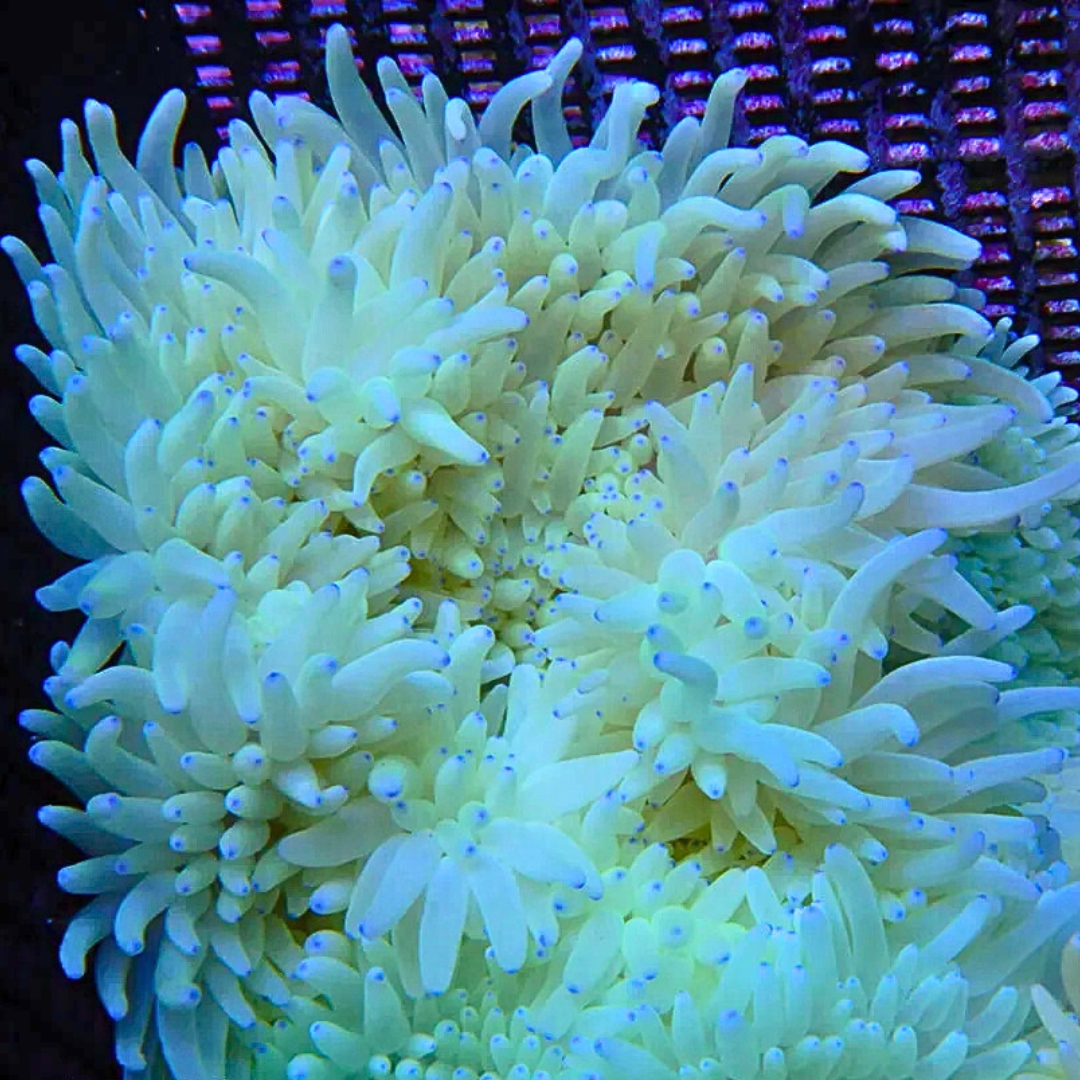
シライトイソギンチャクは、長くたなびく触手とクマノミ類との共生で親しまれている大型のサンゴ礁性イソギンチャクです。体内に褐虫藻を持ち、光合成産物に大きく支えられて暮らすため、長期飼育では強めの照明、安定した水温と水質、足盤を安全に固定できるレイアウトが重要になります。見た目は優雅ですが、導入直後の環境変化や高水温、足盤の傷に弱く、手頃に流通していても簡単な生体ではありません。白く透き通った個体は美しく見えることがありますが、褐虫藻を失った白化状態の可能性もあるため、購入時は褐色味、口の締まり、足盤の状態を丁寧に確認しましょう。 The sebae or leathery sea anemone is a large reef-dwelling anemone admired for its long flowing tentacles and its association with anemonefish. Because it contains symbiotic zooxanthellae and relies heavily on photosynthesis, long-term care depends on strong lighting, stable temperature and water quality, and a layout where the pedal disc can anchor safely. Although elegant in appearance, it is sensitive to sudden environmental changes, high temperature, and damage to the pedal disc, so it should not be treated as an easy species simply because it is commonly available. Very white, translucent specimens may look attractive, but they may be bleached individuals that have lost zooxanthellae, so a healthy tan to brown coloration, a closed mouth, and an intact pedal disc should be checked before purchase.
基本情報 / Basic Information
| 学名 / Scientific Name | Heteractis crispa。国内の流通名や水族館資料で広く使われる表記です。分類データベースによっては. This name is widely used in Japanese aquarium materials and the aquarium trade. Some taxonomic databases treat Radianthus crispaを受容名として扱う場合があります。 as the accepted name. |
|---|---|
| 通称 / Common Name | シライトイソギンチャク、セバエイソギンチャク。流通上は近縁種のチクビイソギンチャクと混同されることがあります。Sebae anemone, leathery sea anemone. In the trade, it may sometimes be confused with the related Heteractis malu. |
| 分類 / Family | 刺胞動物門、花虫綱、イソギンチャク目。国内水族館資料ではハタゴイソギンチャク科として紹介されることが多く、分類体系によってはHeteractidaeとして扱われる場合があります。Phylum Cnidaria, Class Anthozoa, Order Actiniaria. It is often presented as a member of Stichodactylidae in Japanese aquarium materials, while some taxonomic treatments place it in Heteractidae. |
| 英名 / English Name | Sebae Anemone, Leathery Sea Anemone, Leather Anemone |
| 分布 / Distribution | インド洋から西太平洋のサンゴ礁域に広く分布し、紅海からの記録もあります。日本では主に奄美諸島以南の温暖な海域で知られます。Widely distributed in coral reef habitats from the Indian Ocean to the western Pacific, with records from the Red Sea as well. In Japan, it is mainly known from warm waters south of the Amami Islands. |
| 最大体長 / Max Size | 口盤直径で50cmほどに達する大型種です。水槽内でも20から50cmほどになることがあり、成長後の広いスペースを前提に迎える必要があります。A large species that can reach about 50 cm across the oral disc. In aquariums it may still reach roughly 20 to 50 cm, so it should be planned for with generous space. |
| 寿命 / Lifespan | 正確な寿命データは限られますが、安定した環境では長期維持を目指せる生体です。数年単位で状態を保つ前提で、水槽の成熟度と設備を整えてから導入します。Precise lifespan data are limited, but it can be maintained long-term in a stable system. It should be introduced only after the aquarium has matured and the equipment is ready for years of care. |
飼育環境 / Aquarium Environment
| 水槽サイズ / Tank Size | 最低でも90cm規格水槽前後、できれば90cmワイド水槽以上を推奨します。小さな個体でも成長後は大きく広がり、移動した際にサンゴやポンプに触れるリスクがあるため、水量と空間に余裕を持たせます。A standard 90 cm tank is a practical minimum, and a 90 cm wide tank or larger is preferable. Even small specimens can expand substantially as they grow, and extra water volume and space reduce the risk of contact with corals or pumps when the anemone moves. |
|---|---|
| 水温 / Temperature | 22から26℃前後を目安に、日中と夜間、季節による急変を避けて安定させます。夏場の高水温は白化や衰弱の原因になりやすいため、水槽用クーラーや冷却ファンを早めに準備します。 Aim for about 22 to 26°C and avoid rapid daily or seasonal swings. High summer temperatures can contribute to bleaching and decline, so a chiller or cooling fan should be prepared before overheating occurs. |
| 水質 / Water Quality | 比重は1.023から1.026前後、pHは8.1から8.4前後を目安にします。アンモニアと亜硝酸は検出されない状態を保ち、硝酸塩とリン酸塩も低めで安定させます。立ち上げ直後ではなく、生物ろ過が安定した成熟水槽に導入してください。A specific gravity around 1.023 to 1.026 and pH around 8.1 to 8.4 are suitable targets. Ammonia and nitrite should remain undetectable, while nitrate and phosphate should be kept low and stable. Introduce this species only to a mature aquarium with stable biological filtration. |
| レイアウト / Layout | 底砂とライブロックの境目に、足盤を深く差し込めるくぼみや隙間を作ります。砂だけ、岩だけに無理に置くのではなく、自然下でよく見られる砂と岩の接点を再現すると定着しやすくなります。水流は触手が柔らかく揺れる程度の中程度を基本にし、ポンプの吸い込み口にはガードを付けます。Create a depression or crevice at the boundary between sand and live rock so the pedal disc can settle deeply. Rather than forcing it onto bare rock or open sand, recreate the sand-rock margin it often uses in nature. Moderate flow that gently moves the tentacles is ideal, and pump intakes should be guarded. |
| 注意点 / Precautions | 白化個体、口が開いたままの個体、足盤に裂けや傷がある個体は立て直しが難しい場合があります。導入時は時間をかけて水合わせし、空気中に長く出さず、水中でそっと移動させます。照明は強めが必要ですが、白化個体をいきなり強光に当てると負担になることがあるため、状態を見ながら徐々に慣らします。Bleached specimens, individuals with a gaping mouth, or those with tears in the pedal disc can be difficult to recover. Acclimate slowly and move the animal gently under water without prolonged air exposure. Strong lighting is needed, but a bleached specimen may be stressed by abrupt intense light, so light acclimation should be gradual. |
餌と給餌 / Feeding
| 餌の種類 / Diet | 主なエネルギー源は褐虫藻の光合成産物ですが、必要に応じてイサザアミ、細かく刻んだエビ、アサリや魚肉などの海産性の餌を少量与えます。大きすぎる餌は消化不良や吐き戻しの原因になるため避けます。Much of its energy comes from photosynthates produced by zooxanthellae, but small marine meaty foods such as mysid-type shrimp, finely chopped shrimp, clam, or fish flesh can be offered when needed. Oversized food should be avoided because it may cause regurgitation or digestive stress. |
|---|---|
| 給餌のポイント / Feeding Tips | 健康な褐色個体は、強い照明と魚への給餌から得られる微細な餌だけで維持できることもあります。白化気味の個体や痩せた個体には、週1回程度から少量を口元へそっと届け、反応を見ながら回数を調整します。無理に口へ押し込む強制給餌は組織を傷めることがあるため避けます。A healthy tan or brown specimen may need little direct feeding if lighting is strong and it receives fine particles from fish feeding. For a bleached or thin individual, offer small portions near the mouth about once a week at first and adjust according to its response. Avoid force-feeding by pushing food into the mouth, as this can damage delicate tissue. |
性格と混泳 / Temperament and Tank Mates
| 性格 / Temperament | 定着後は比較的その場にとどまりますが、光、水流、水質、足場が合わないと移動します。刺胞を持つため、接触したサンゴや小型無脊椎動物にダメージを与えることがあります。Once settled it may remain in place, but it can move if light, flow, water quality, or anchoring conditions are unsuitable. Its stinging cells can damage corals and small invertebrates that it contacts. |
|---|---|
| 混泳の相性 / Compatibility | 日本では主にハナビラクマノミやクマノミとの共生が知られます。水槽内ではカクレクマノミなどが入ることもありますが、必ず共生するとは限りません。大型ヤッコ、チョウチョウウオ、つつく性質の強い魚、ポンプに追いやるほど遊泳圧の強い魚との組み合わせは注意が必要です。In Japan, it is especially known as a host for pink skunk anemonefish and Clark’s clownfish. In aquariums, other clownfish such as ocellaris may sometimes use it, but hosting is never guaranteed. Use caution with large angelfish, butterflyfish, persistent pickers, or strong swimmers that may disturb or push the anemone toward pumps. |
病気と対策 / Diseases and Prevention
| かかりやすい病気 / Common Diseases | 魚の白点病のような典型的な病名で語るよりも、白化、萎縮、口の開き、足盤の損傷、組織の崩れとして異常が現れることが多い生体です。輸送ストレス、高水温、急な比重変化、未成熟水槽、ポンプ事故が主なリスクになります。Problems are usually seen less as named fish-like diseases and more as bleaching, shrinking, a gaping mouth, pedal-disc injury, or tissue breakdown. Major risks include shipping stress, high temperature, sudden salinity changes, immature aquariums, and pump accidents. |
|---|---|
| 対策と予防 / Prevention | 購入時に色、口、足盤、粘着力、悪臭の有無を確認します。導入後は水温と比重の急変を避け、強い光を段階的に慣らし、ポンプガードを徹底します。調子を崩した場合は、動かすよりもまず水質、温度、照明、水流を点検し、腐敗が進んでいる場合は水質悪化を防ぐ判断も必要です。At purchase, check color, mouth condition, pedal-disc integrity, stickiness, and any foul smell. After introduction, avoid rapid changes in temperature or salinity, acclimate to strong light gradually, and use pump guards. If the anemone declines, check water quality, temperature, lighting, and flow before moving it; if decay advances, action may be needed to protect the aquarium from water-quality deterioration. |
増やし方(繁殖) / Breeding
| 雌雄の判別 / Sexing | 外見だけで雌雄を判断するのは難しいとされます。一般家庭の水槽で雌雄を判別して計画的に繁殖させることは、現実的にはかなり難しい分野です。Sexing by external appearance is considered difficult. Planned breeding with reliable sex identification is currently very challenging in home aquariums. |
|---|---|
| 繁殖形態 / Reproduction | 有性繁殖を行い、卵や幼生を経て成長します。家庭水槽で安定して繁殖させる技術は一般化していませんが、国内の水族館では雌雄判別と飼育技術を組み合わせた繁殖成功例が報告されています。It reproduces sexually, with eggs and larvae developing into juveniles. Reliable captive propagation is not yet common in home aquariums, but a Japanese public aquarium has reported successful breeding using sex-identification and husbandry techniques. |
| 繁殖のポイント / Breeding Tips | 一般飼育では繁殖を狙うよりも、まず長期維持を目標にします。十分な光、安定した水質、栄養状態の維持、足盤を傷つけない管理が基本です。繁殖を目指す場合は、研究施設や水族館レベルの観察、記録、幼生管理が必要になります。For most keepers, long-term maintenance should be the first goal rather than breeding. Strong light, stable water quality, good nutrition, and careful handling of the pedal disc are essential. Attempting propagation requires the kind of observation, recordkeeping, and larval care more typical of research or public-aquarium facilities. |
雑学と豆知識 / Trivia and Fun Facts
| 1. 学名表記が揺れる理由 / 1. Why the scientific name varies | 本種は長いあいだHeteractis crispaとして飼育書や水族館資料に定着してきました。しかし、分類学では属の扱いが見直されることがあり、現在の主要な海洋生物データベースではRadianthus crispaを受容名とする扱いも見られます。Heteractis crispaとRadianthus crispaの両方の表記を知っておくと、飼育情報や海外文献、データベースを調べるときに役立ちます。This species has long been familiar in aquarium books and public-aquarium materials as Heteractis crispa. However, taxonomic treatments can change, and major marine-species databases currently also use Radianthus crispa as the accepted name. Knowing both Heteractis crispa and Radianthus crispa makes it easier to search aquarium sources and scientific databases. |
|---|---|
| 2. 白い個体は美個体とは限らない / 2. A white individual is not always a healthy color morph | シライトイソギンチャクは名前の印象もあり、白い個体が「きれいな色」と受け取られやすい生体です。けれども健康な個体は褐虫藻の影響で淡褐色から褐色に見えることが多く、極端に白い個体は輸送や高水温などのストレスで褐虫藻を失った白化状態の可能性があります。白化個体を立て直すには、安定した環境、急がない光順化、少量給餌を根気よく続ける必要があります。Because of its Japanese name and pale appearance in the trade, white specimens may be mistaken for attractive color forms. Healthy animals are often tan to brown because of their zooxanthellae, and very white individuals may be bleached after stress such as shipping or overheating. Recovering a bleached anemone requires stable conditions, gradual light acclimation, and patient small feedings. |
| 3. クマノミの宿は単なる隠れ家ではない / 3. A host anemone is more than a shelter | クマノミにとってイソギンチャクは、外敵から身を守るための避難場所です。一方、イソギンチャク側もクマノミの動きによって水が動かされ、餌の残りや排泄物由来の栄養を利用できると考えられています。つまり水槽で共生が成立すると、見た目の魅力だけでなく、サンゴ礁の小さな相互作用を観察できる貴重な場になります。ただし、水槽内でどのクマノミが入るかは個体差があり、必ず共生するとは限りません。For anemonefish, the anemone is a refuge from predators. The anemone may also benefit from water movement generated by the fish and from nutrients derived from leftover food and waste. When this relationship develops in an aquarium, it offers more than visual appeal; it allows keepers to observe a small but meaningful reef interaction. However, hosting behavior varies by individual fish and is not guaranteed. |
| 4. 繁殖研究と保全への期待 / 4. Breeding research and conservation value | 国内では水族館によってシライトイソギンチャクの繁殖成功と繁殖個体の展示が発表されています。クマノミ類が共生するイソギンチャクは観賞用として人気が高い一方、自然採集への依存が問題になりやすい生体です。繁殖技術が進めば、将来的には野生個体への負担を減らしながら、健康状態の分かりやすい個体を流通させる道が広がると期待されます。A Japanese public aquarium has announced successful breeding and display of captive-bred individuals of this species. Clownfish-hosting anemones are popular in the aquarium trade, but reliance on wild collection can raise conservation concerns. Advances in propagation could help reduce pressure on wild populations while making healthier, more traceable specimens available in the future. |
| 5. 刺胞毒は研究材料としても注目される / 5. Venom is also of scientific interest | イソギンチャクの刺胞毒には、イオンチャネルに作用するペプチドなど、神経科学や薬理学で研究対象となる成分が含まれます。これは本種を含む刺胞動物が、獲物をとらえたり外敵から身を守ったりするために発達させてきた仕組みです。家庭の水槽ではむやみに触れないことが基本ですが、こうした毒の研究は、海の無脊椎動物が持つ生理活性物質の奥深さを知る手がかりにもなっています。Sea-anemone venoms include peptides and other compounds that act on ion channels and are studied in neuroscience and pharmacology. These substances are part of the defensive and predatory systems that cnidarians have evolved. In the home aquarium, unnecessary handling should be avoided, but this field of research also shows how chemically rich marine invertebrates can be. |
まとめ / Conclusion
シライトイソギンチャクは、クマノミとの共生を観察できる魅力的な生体ですが、長期飼育にはしっかりした準備が必要です。成熟した海水水槽、強めの照明、急変の少ない水質、そして砂と岩の境目に足盤を守れるレイアウトを整えてから迎えることで、本来の美しさを引き出しやすくなります。 The sebae or leathery sea anemone is a fascinating animal for observing its relationship with clownfish, but long-term care requires careful preparation. A mature marine aquarium, strong lighting, stable water quality, and a sand-rock margin that protects the pedal disc will make it easier to maintain the anemone in good condition.
特に、白く透き通った個体を美しい色彩変異として安易に選ばないことが大切です。健康な個体は褐虫藻の影響で淡褐色から褐色に見えることが多く、口が締まり、足盤に傷がないことが重要な判断材料になります。無理に繁殖を狙うより、まずは安定した環境で長く維持することを目標にしましょう。 It is especially important not to choose a very white, translucent specimen simply as an attractive color form. Healthy individuals are often tan to brown because of their zooxanthellae, and a closed mouth and undamaged pedal disc are important signs to check. Rather than aiming for breeding in a home aquarium, focus first on keeping the animal stable and healthy over the long term.

気になる道具や飼い方を見つけてみませんか?
 アイのアクアグッズ案内水草用ライトの選び方|緑の絨毯と赤い水草を楽しむ照明・植栽用品道具の特徴や使い方、選ぶときのポイントをアイが紹介します。記事はコチラ →
 アイのアクアグッズ案内おとひめ物語|養殖生まれの餌を、わが家の魚に合う一粒へ道具の特徴や使い方、選ぶときのポイントをアイが紹介します。記事はコチラ →
 アイのアクアグッズ案内旅行中、お魚のごはんはどうする? 自動給餌器・使える餌・スマート水槽の選び方旅行中の魚の餌やりを助ける自動給餌器を、アイとコタロウが紹介。時間指定、おかわり給餌、対応するフレークや顆粒、設置台、スマホ管理、一体型水槽、留守番フードまで、使いどころと選び方を案内します。記事はコチラ →
 アイのアクアグッズ案内エンゼルフィッシュの飼育用品|高さのある水槽・ろ過・水草・餌の選び方道具の特徴や使い方、選ぶときのポイントをアイが紹介します。記事はコチラ →
さまざまな飼育テーマをご紹介。リンク先の記事には広告・商品紹介が含まれます。
案内・紹介記事一覧へ →参考文献
この記事の分類、分布、生息環境、飼育条件の根拠となる生物学的情報、繁殖、白化・注意点を支える資料だけを選定しました。店舗、通販、個人ブログ、まとめサイト、価格情報、販売ページは除外しています。
-
Rodríguez, E.; Fautin, D.; Daly, M. World List of Actiniaria. Heteractis crispa (Hemprich & Ehrenberg in Ehrenberg, 1834). World Register of Marine Species.
分類体系、Heteractis crispaの扱い、受容名Radianthus crispa、和名「シライトイソギンチャク」、海産種であることの確認に使用。 WoRMSで確認する -
SeaLifeBase. Heteractis crispa, Leathery sea anemone.
インド・西太平洋に分布する熱帯性のサンゴ礁関連種であること、死サンゴや岩礫周辺に見られること、イソギンチャク類の摂餌・生活史の基礎情報の確認に使用。 SeaLifeBaseで確認する -
沖縄美ら海水族館. クマノミの宿「シライトイソギンチャク」の繁殖個体を世界初展示.
国内向けの分布表現、奄美諸島以南での生息、最大直径約50cm、褐虫藻から光合成産物を受け取る性質、主な共生クマノミ、2023年の繁殖成功情報の確認に使用。 沖縄美ら海水族館で確認する -
Hattori, A. 2006. Vertical and horizontal distribution patterns of the giant sea anemone Heteractis crispa with symbiotic anemonefish on a fringing coral reef. Journal of Ethology 24: 51–57.
沖縄の裾礁における生息場所、礁縁部や浅い礁原でのサイズ別分布、褐虫藻とクマノミ類を伴う生態、移動性や生息適地の説明に使用。 Springerで確認する -
服部昭尚. 2011. イソギンチャクとクマノミ類の共生関係の多様性:分布と組合せに関する生態学的レビュー. 日本サンゴ礁学会誌 13(1): 1–27.
宿主イソギンチャクとクマノミ類の共生、褐虫藻、宿主選択性、生息場所の一致、日本近海での分類・分布情報を扱う総説として使用。 J-STAGEで確認する -
Scott, A.; Harrison, P. 2007. Broadcast spawning of two species of sea anemone, Entacmaea quadricolor and Heteractis crispa, that host anemonefish. Invertebrate Reproduction & Development 50(3): 163–171.
雌雄が分かれる個体、放卵放精、体外受精、季節的・同調的な産卵など、繁殖形態の説明に使用。 EPA HEROで確認する -
Scott, A.; Harrison, P. L. 2007. Embryonic and larval development of the host sea anemones Entacmaea quadricolor and Heteractis crispa. Biological Bulletin 213(2): 110–121.
胚発生、プラヌラ幼生、外部受精、産卵時の卵に褐虫藻が含まれることなど、繁殖と初期発生の説明に使用。 PubMedで確認する -
Scott, A. 2012. Effects of feeding on the growth rates of captive-bred Heteractis crispa: a popular marine ornamental for aquariums. Bulletin of Marine Science 88(1): 81–87.
飼育下で育成された幼体に対する給餌と成長の関係を扱う研究として、給餌欄の「補助的給餌」「過剰給餌を避ける」考え方の補助資料として使用。 論文ページで確認する -
Wu, Y. et al. 2022. Adaptive Responses of the Sea Anemone Heteractis crispa to the Interaction of Acidification and Global Warming. Animals 12(17): 2259.
高水温・酸性化ストレスが光合成装置、褐虫藻密度、クロロフィル、ステロール代謝に与える影響を扱う研究として、白化や温度ストレスへの注意点に使用。 MDPIで確認する -
Lönnstedt, O. M.; Frisch, A. J. 2014. Habitat bleaching disrupts threat responses and persistence in anemonefish. Marine Ecology Progress Series 517: 265–270.
白化したHeteractis crispaが共生クマノミの行動や生残に影響する可能性を示す研究として、白化個体を軽く扱わないための注意喚起に使用。 James Cook Universityで確認する
注:飼育水温、比重、照明、水流などの具体的な数値は、上記の生態・繁殖・ストレス応答研究と一般的なリーフアクアリウム管理の考え方を合わせて記事化したものです。店舗販売ページや個人飼育記録に依存する数値は、参考文献リストには含めていません。




コメント