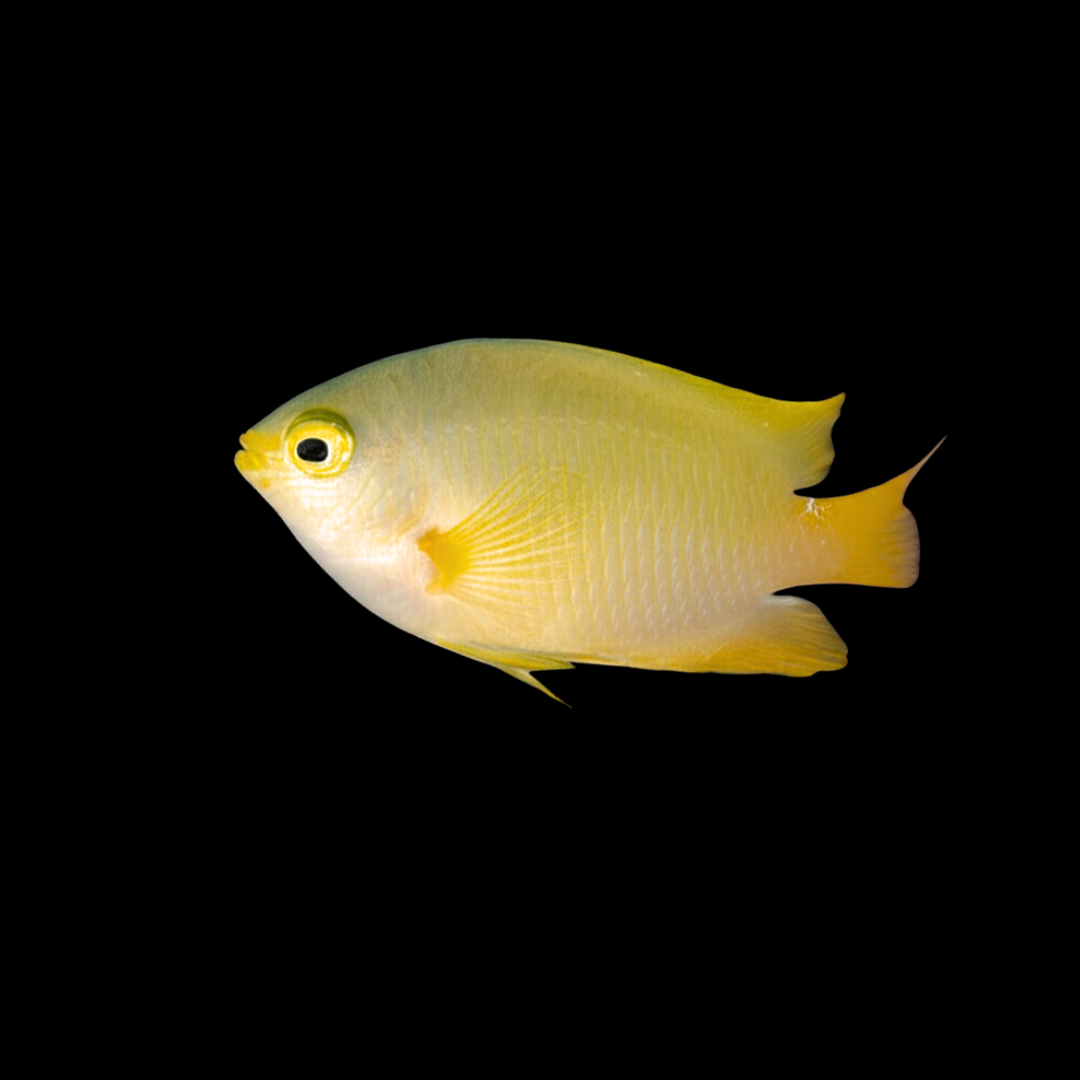
ネッタイスズメダイは、全身の鮮やかなレモンイエローが目を引く小型の海水魚です。体は左右に薄く、丸みのある輪郭を持ち、成長しても黄色い姿を楽しめます。日本では観賞魚として流通するほか、南西諸島のサンゴ礁でも見られます。野生では枝状サンゴの周囲で暮らし、危険が近づくと枝の間へ素早く身を隠します。丈夫で人工飼料にも慣れやすい一方、縄張りを守る気質があるため、長く付き合うには水質管理と混泳への配慮が欠かせません。The lemon damselfish is a small marine fish with vivid lemon-yellow coloration and a rounded, laterally compressed body. Its yellow appearance remains attractive as it grows. It is traded as an aquarium fish in Japan and also occurs on reefs in the southwestern Japanese islands. In the wild, it lives around branching corals and quickly retreats between their branches when threatened. It is hardy and usually accepts prepared foods, but successful long-term care requires stable water conditions and careful management of its territorial behavior.
基本情報 / Basic Information
学名 / Scientific Name
Pomacentrus moluccensis Bleeker, 1853
通称 / Common Name
ネッタイスズメダイ。販売名としてレモンスズメダイなどが用いられることもありますが、黄色い近縁種との混同には注意が必要です。Lemon damselfish, lemon damsel, or yellow damselfish. Trade names may also be applied to other yellow damselfishes, so species identification matters.
分類 / Family
条鰭綱・スズメダイ科・ソラスズメダイ属。Class Actinopterygii; family Pomacentridae; genus Pomacentrus.
英名 / English Name
Lemon damselfish / Lemon damsel
分布 / Distribution
東部インド洋から西部太平洋。アンダマン海、東南アジア、オーストラリア周辺からフィジー、トンガなどに分布し、日本では南西諸島に生息します。The eastern Indian Ocean and western Pacific, including the Andaman Sea, Southeast Asia, waters around Australia, Fiji, and Tonga. In Japan, it occurs in the southwestern islands.
最大体長 / Max Size
全長約9cm。販売個体はこれより小さい幼魚や若魚が多く、購入時の大きさだけで収容数を決めないようにします。Approximately 9 cm total length. Juveniles are commonly sold, so stocking should account for their adult size.
寿命 / Lifespan
本種の飼育下での平均寿命を一律に示せる十分な情報はありません。数年単位の飼育を見据え、安定した環境を維持しましょう。There is insufficient information to give a reliable average captive lifespan for this species. Plan for care over several years and maintain stable conditions.
飼育環境 / Aquarium Environment
水槽サイズ / Tank Size
単独飼育では60cm規格水槽(幅60×奥行30×高さ36cm、満水容量約65L)をひとつの目安にします。混泳には90cm規格水槽(幅90×奥行45×高さ45cm、満水容量約182L)以上を検討し、相手の成魚サイズに合わせて広さを確保してください。底砂や岩を入れた実水量は満水容量より少なくなります。広い水槽でも、同種同士が必ず共存できるとは限りません。For a single fish, a standard Japanese 60 cm aquarium measuring 60 × 30 × 36 cm, with a nominal capacity of about 65 L, is a useful starting point. For a community, consider a standard 90 cm aquarium measuring 90 × 45 × 45 cm, about 182 L nominal capacity, or larger, depending on tankmates. Actual water volume is lower after adding substrate and rock. Even a large aquarium does not guarantee peaceful coexistence between conspecifics.
水温 / Temperature
飼育の目安は23~26℃。24~25℃前後で安定させ、急な温度変化を避けます。冬季はヒーター、夏季は必要に応じて水槽用クーラーを使用します。A practical aquarium range is 23–26°C, preferably stable around 24–25°C. Avoid abrupt changes and use a heater or aquarium chiller as needed.
水質 / Water Quality
人工海水を使用し、塩分濃度33~35‰程度、比重約1.024~1.026(25℃付近)、pH8.1~8.4を目安にします。比重は測定温度と機器の仕様に影響されるため、校正した機器で確認してください。アンモニアと亜硝酸は検出されない状態を維持し、硝酸塩は20mg/L以下を管理目標のひとつにします。サンゴを収容する場合は、その種類に適した管理を優先します。蒸発分は淡水で補い、換水には温度と塩分を合わせた海水を使います。Use marine salt mix and aim for approximately 33–35 ppt salinity, specific gravity around 1.024–1.026 near 25°C, and pH 8.1–8.4. Check instrument calibration and temperature specifications. Ammonia and nitrite should remain undetectable; nitrate below 20 mg/L is a useful management target. For reef aquariums, also meet the requirements of the corals. Replace evaporated water with freshwater and perform water changes with temperature- and salinity-matched seawater.
レイアウト / Layout
ライブロックや海水用の岩を安定して組み、体が収まる隙間と複数の逃げ道を作ります。岩で互いの視線を遮りつつ、前面には遊泳空間を残してください。枝状サンゴは自然の隠れ家ですが、飼育に生きたサンゴが必須というわけではありません。適度な水流と水面の撹拌を確保し、吸水口には巻き込み対策を施します。Arrange stable live rock or marine-safe rock with sheltered crevices and several escape routes. Break up sightlines while retaining open swimming space. Branching corals provide natural shelter, but live coral is not essential in captivity. Provide moderate circulation and surface agitation, and protect pump intakes.
注意点 / Precautions
生物ろ過が十分に機能した水槽へ導入します。丈夫な魚であっても、立ち上げ直後の水槽で水質を試すために使うことは避けてください。導入時は水温と塩分の差を確認し、輸送状態に応じて適切に水合わせを行います。ふたを設けて飛び出しを防ぎ、追い回される魚を退避させられる隔離容器も準備しておくと安心です。Introduce the fish only after biological filtration is established. Do not use it to test or cycle a new aquarium. Check temperature and salinity differences and acclimate appropriately for its transport condition. Fit a lid to prevent jumping and have a separation container available for bullied tankmates.
餌と給餌 / Feeding
餌の種類 / Diet
海水魚用の小粒人工飼料を主食にし、冷凍のコペポーダ、ブラインシュリンプ、イサザアミなどを口の大きさに合わせて補助的に与えます。植物質を含む配合飼料も取り入れると、餌の偏りを抑えられます。野生では小型の浮遊性甲殻類や藻類を利用する雑食性で、サンゴを餌として用意する必要はありません。Use small marine-fish pellets or flakes as the staple, supplemented with suitably sized frozen copepods, brine shrimp, or mysid shrimp. Foods containing plant ingredients can help provide variety. In the wild, it consumes small planktonic crustaceans and algae; coral does not need to be supplied as food.
給餌のポイント / Feeding Tips
1日1~2回、短時間で食べ切れる量を少しずつ与えます。小さな幼魚では、総量を増やしすぎずに回数を分ける方法が適しています。餌を複数の場所へ散らし、混泳魚にも行き渡るか確認してください。食べ残しは取り除き、食欲の低下が見られたら、水質、呼吸、体表、混泳相手からの圧迫を順に点検します。Offer small portions once or twice daily that are eaten promptly. Small juveniles may benefit from more frequent meals without excessive total feeding. Distribute food across several locations and ensure tankmates can feed. Remove leftovers, and investigate water conditions, breathing, skin condition, and social stress if appetite declines.
性格と混泳 / Temperament and Tank Mates
性格 / Temperament
活発で、隠れ家の周囲に縄張りを持ちます。幼魚のうちは穏やかに見えても、成長や繁殖に伴って追い払い行動が強くなることがあります。自然の小さな集まりを、そのまま狭い水槽で再現するのは難しく、個体差も大きい魚です。Active and territorial around its shelter. Juveniles may appear peaceful, but chasing can intensify with growth or breeding. Natural small aggregations are difficult to reproduce in confined aquariums, and individual behavior varies considerably.
混泳の相性 / Compatibility
同種や近縁のスズメダイ、体色や居場所が似た魚とは争うことがあります。小型でおとなしいハゼ類や遊泳の遅い魚との組み合わせは慎重に判断してください。本種を後から導入し、岩で視線を遮る方法は役立ちますが、相性を保証するものではありません。争いを抑える目的だけで大型魚を追加せず、各魚の必要な水槽サイズを優先します。通常はサンゴを積極的に食害する魚として扱われませんが、サンゴへの接触や周囲の生体を追う行動は観察してください。Conflicts may occur with conspecifics, related damselfishes, or fish sharing similar coloration and shelter preferences. Be cautious with small peaceful gobies and slow swimmers. Introducing this species later and breaking up sightlines may help but cannot guarantee compatibility. Do not add large fish solely to suppress aggression; meet each species’ space requirements. It is generally not regarded as a dedicated coral feeder, but monitor contact with corals and chasing of nearby animals.
病気と対策 / Diseases and Prevention
かかりやすい病気 / Common Diseases
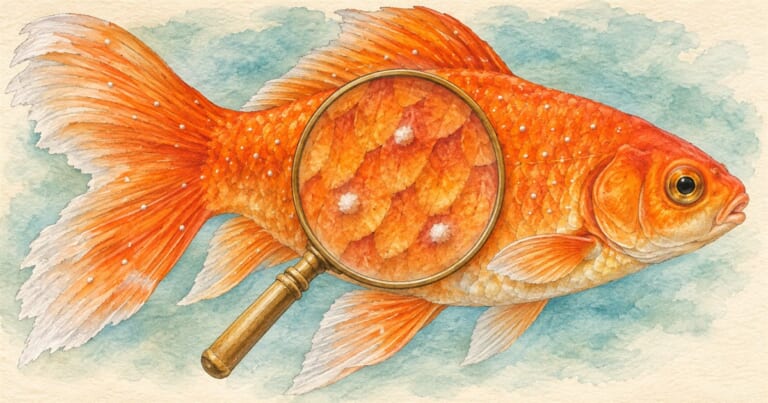
本種だけに特有の好発疾患を示す十分な情報はありませんが、海水魚の白点病やウーディニウム病などの寄生虫感染には注意が必要です。混泳による傷、輸送ストレス、水質悪化に伴う細菌感染や摂餌不良も起こり得ます。丈夫であることと、病気に感染しないことは別です。There is insufficient evidence for a distinctive disease profile, but marine ich and marine velvet are important concerns. Injuries, transport stress, and poor water conditions may also contribute to bacterial infections or feeding problems. Hardiness does not imply immunity.
対策と予防 / Prevention
新しい魚は別水槽で状態を観察し、網や器具の共用による病原体の持ち込みを避けます。日々の食欲、呼吸数、体表、ヒレの状態を確認し、白い点、体をこする行動、速い呼吸が見られたら早めに対応してください。治療は原因に合わせて隔離水槽で行い、薬剤の説明書に従います。銅を含む薬剤などはサンゴやエビ、貝に有害なため、無脊椎動物のいる水槽へ安易に使用しないでください。Observe new fish in a separate aquarium and avoid transferring pathogens through shared equipment. Check appetite, breathing, skin, and fins daily. Respond promptly to spots, scratching, or rapid breathing. Treat according to the diagnosis in a separate tank and follow the medication instructions. Copper-based treatments and some other medicines are harmful to corals, shrimp, and snails.
増やし方(繁殖) / Breeding
雌雄の判別 / Sexing
通常の体色や体型だけで確実に見分けるのは難しく、体の大きさも決め手にはなりません。産卵時に卵を産み付ける個体と、その後に卵を守る個体の行動を観察する方が判断しやすくなります。本種が日常的にメスからオスへ性転換するという前提で、ペア作りを進めることは避けます。Sex is difficult to determine reliably from ordinary coloration, body shape, or size. Observing egg laying and subsequent egg guarding provides better evidence. Do not assume that females routinely change into males when attempting to establish a pair.
繁殖形態 / Reproduction
卵生で、岩やサンゴの死骸などの硬い面に粘着性の卵を産み付けます。繁殖時にはペアを形成し、オスが卵を守ってヒレで水を送り、卵の周囲の水を入れ替えます。孵化後の仔魚は水中を漂う段階を持つため、親魚が産卵できる環境と、仔魚が育つ環境は分けて考える必要があります。An egg-laying species that attaches adhesive eggs to hard surfaces such as rock or dead coral. A pair forms during breeding, and the male guards and fans the eggs. Newly hatched larvae pass through a pelagic stage, so successful spawning and successful larval rearing require different conditions.
繁殖のポイント / Breeding Tips
相性のよい成熟個体に、落ち着ける産卵面と十分な栄養を与えます。仔魚育成には別水槽を用意し、穏やかな通気と清潔な海水を維持してください。初期餌料は仔魚が飲み込める大きさの小型ワムシやカイアシ類などを検討し、培養を孵化前から準備します。S型ワムシとして扱われるものにはシオミズツボワムシ類の Brachionus rotundiformis があり、サイズと栄養価の確認が重要です。ワムシは親魚水槽とは別に培養し、海産仔魚用の栄養強化剤を適切に使用します。成長に合わせてブラインシュリンプ幼生や微粒子飼料へ移行しますが、切り替え時期や餌密度は摂餌と成長を見て調整し、固定した日数だけで判断しないようにします。Provide a compatible mature pair with a sheltered spawning surface and good nutrition. Rear larvae separately with gentle aeration and clean seawater. Prepare suitably sized live prey, such as small rotifers or copepods, before hatching. S-type rotifers may include Brachionus rotundiformis; prey size and nutritional quality are important. Culture rotifers separately and use appropriate marine-larval enrichment products. Introduce brine shrimp nauplii and fine prepared foods as the larvae develop, adjusting timing and prey density to actual feeding and growth rather than a rigid schedule.
雑学と豆知識 / Trivia and Fun Facts
1. 学名に残るモルッカ諸島の記憶 / 1. The Moluccas Preserved in Its Name
ネッタイスズメダイが記載されたのは1853年。命名したピーター・ブリーカーは、現在のインドネシアで活動し、多くの魚類を分類した医師・魚類学者でした。種小名の moluccensis はモルッカ諸島に由来し、「モルッカの」という意味を持ちます。一方、属名の Pomacentrus は、ふたや鰓蓋を表す語と、とげを表す語を組み合わせたものです。身近な黄色い魚の学名には、採集地の歴史と、鰓蓋周辺の形態への着目が重なっています。The species was described in 1853 by Pieter Bleeker, a physician and ichthyologist who classified many fishes while working in what is now Indonesia. The epithet moluccensis means “of the Moluccas.” Pomacentrus combines Greek roots referring to a cover or gill cover and a spine. Its name therefore links the history of its collection locality with a morphological feature.
2. よく似た黄色い魚を見分ける / 2. Distinguishing Similar Yellow Damselfishes
黄色いスズメダイを見つけたとき、体色だけで名前を決めると迷うことがあります。ニセネッタイスズメダイの幼魚には背鰭後方に目玉のような眼状斑が見られますが、ネッタイスズメダイの幼魚には通常この模様がありません。尾鰭の黄色の濃さや胸鰭の付け根の斑点も手掛かりになります。ただし、斑点の目立ち方には個体差や地域差があり、眼状斑も成長で変化するため、ひとつの特徴だけに頼らず見比べるのが大切です。ヤマブキスズメダイは別属で、より体高のある姿をしています。Yellow coloration alone can make identification difficult. Juvenile Pomacentrus amboinensis have an eye-like spot near the rear of the dorsal fin, whereas juvenile lemon damselfish normally lack it. Tail coloration and markings at the pectoral-fin base provide additional clues. Because markings vary and change with growth, identification should use several features. The golden damselfish, Amblyglyphidodon aureus, belongs to another genus and has a deeper body.
3. サンゴの枝は、ただの隠れ家ではない / 3. Coral Branches Are More Than Shelter
小さな魚にとって、サンゴの枝の間は大きな捕食者が入り込みにくい避難場所です。ネッタイスズメダイも、こうした複雑な隙間のある環境を利用します。その関係は、単に身を隠せるかどうかにとどまりません。本種を対象とした研究では、サンゴの死滅や劣化に伴い、危険に関わる化学的な手掛かりへの反応や、捕食者を避ける行動が変化することが報告されています。サンゴ礁の変化は、魚の住まいだけでなく、周囲の危険を読み取る仕組みにも関わっているのです。Spaces between coral branches provide refuges that larger predators cannot easily enter. Lemon damselfish make use of this structural complexity. Their relationship with coral extends beyond physical shelter: studies of this species have reported changes in responses to chemical danger cues and predator avoidance as coral dies and degrades. Reef deterioration can therefore affect both shelter and the information fish use to assess risk.
4. 環境の変化で、魚同士の関係も変わる / 4. Changing Conditions Can Alter Competition
サンゴ礁では、隠れ家を巡って近縁の魚同士が競い合います。ネッタイスズメダイとニセネッタイスズメダイを用いた実験では、高い二酸化炭素濃度への曝露によって、空間を巡る競争の優劣が逆転する結果が報告されました。これは、環境変化が魚の数や成長だけでなく、魚同士の関係にも影響し得ることを示す例です。ただし、特定の条件で得られた実験結果を、すべての海域や水槽にそのまま当てはめることはできません。飼育では、こうした変化を意図的に起こすのではなく、安定した水質と十分な逃げ場を整えることが基本になります。Related reef fishes compete for shelter. An experiment with lemon and Ambon damselfishes reported a reversal in competitive dominance after exposure to elevated carbon dioxide. This illustrates how environmental change may influence social interactions as well as growth or abundance. Such findings are specific to experimental conditions and should not be generalized to every reef or aquarium. In captivity, the priority remains stable water conditions and adequate refuge.
5. 黒潮とともに現れる黄色い来訪者 / 5. Yellow Visitors Carried by the Kuroshio
南西諸島で暮らす熱帯性の魚でも、幼い時期には海流に運ばれて遠くの海岸へ到達することがあります。ネッタイスズメダイも、本州の太平洋側などで季節来遊魚として観察される魚のひとつです。夏から秋の暖かい海で姿を見せても、冬の低水温を乗り切れるかどうかは地域や年によって異なります。「死滅回遊魚」という呼び名も知られていますが、往復する回遊とは性質が違い、必ずすべての個体が死滅するという意味でもありません。小さな黄色い姿は、海流による分散と水温の境界を身近に感じさせてくれます。Larval tropical fishes can be transported far from their usual habitats by currents. Lemon damselfish are among the seasonal visitors observed along Japan’s Pacific coast. Survival through winter depends on local conditions and the year. The traditional Japanese term sometimes translated as “doomed migrants” does not describe a regular return migration or imply that every individual necessarily dies. These yellow visitors reveal the connection between dispersal by currents and temperature limits.
6. 卵を守る父親と、水中を漂う仔魚 / 6. Guarding Fathers and Drifting Larvae
岩に並んだ卵をオスが守る姿は、スズメダイの繁殖を観察する楽しみのひとつです。ところが、孵化した仔魚は親と同じ餌を食べられるわけではありません。小さな口に合う生き餌と、その餌が持つ栄養が成長を左右します。繁殖の難しさは、卵を得る段階から、目に見えにくい餌の世界へと移っていくのです。本種では人工繁殖・仔魚育成の取り組みが報告されていますが、家庭で再現するには生き餌の培養と細かな観察が必要です。親魚の丈夫さと、仔魚育成の容易さを分けて考えると、準備すべきことが見えてきます。Watching a male guard rows of eggs is one of the rewards of observing damselfish reproduction. Newly hatched larvae, however, cannot simply eat the parents’ food. Their growth depends on appropriately sized live prey and its nutritional quality. The challenge shifts from obtaining eggs to maintaining a microscopic food supply. Captive breeding and larval rearing have been reported for this species, but home attempts require live-food cultures and close observation. Hardy adults do not necessarily mean easy larval rearing.
まとめ / Conclusion
ネッタイスズメダイは、澄んだ海を思わせる鮮やかな黄色と、岩陰を行き来する軽快な動きが魅力の魚です。十分に立ち上がった海水水槽に迎え、温度と塩分を安定させ、口に合う餌を少量ずつ与えることで、日々の姿を落ち着いて楽しめます。The lemon damselfish brings vivid yellow color and lively movement to a marine aquarium. An established tank, stable temperature and salinity, and modest portions of suitable food provide the foundation for enjoying its daily behavior.
小さな体にも、自分の居場所を守ろうとするはっきりした意思が感じられます。その気質を受け止め、隠れ家と混泳相手を丁寧に選べば、黄色い住人の暮らしはぐっと見守りやすくなります。餌を待つ姿や岩陰へ戻る仕草のひとつひとつに、サンゴ礁で生きる魚らしさが息づいています。Despite its small size, this fish is determined to defend its home. Respecting that temperament and choosing shelters and tankmates carefully makes its behavior easier to appreciate. From waiting for food to slipping back into a crevice, its everyday movements reflect life on a coral reef.








コメント