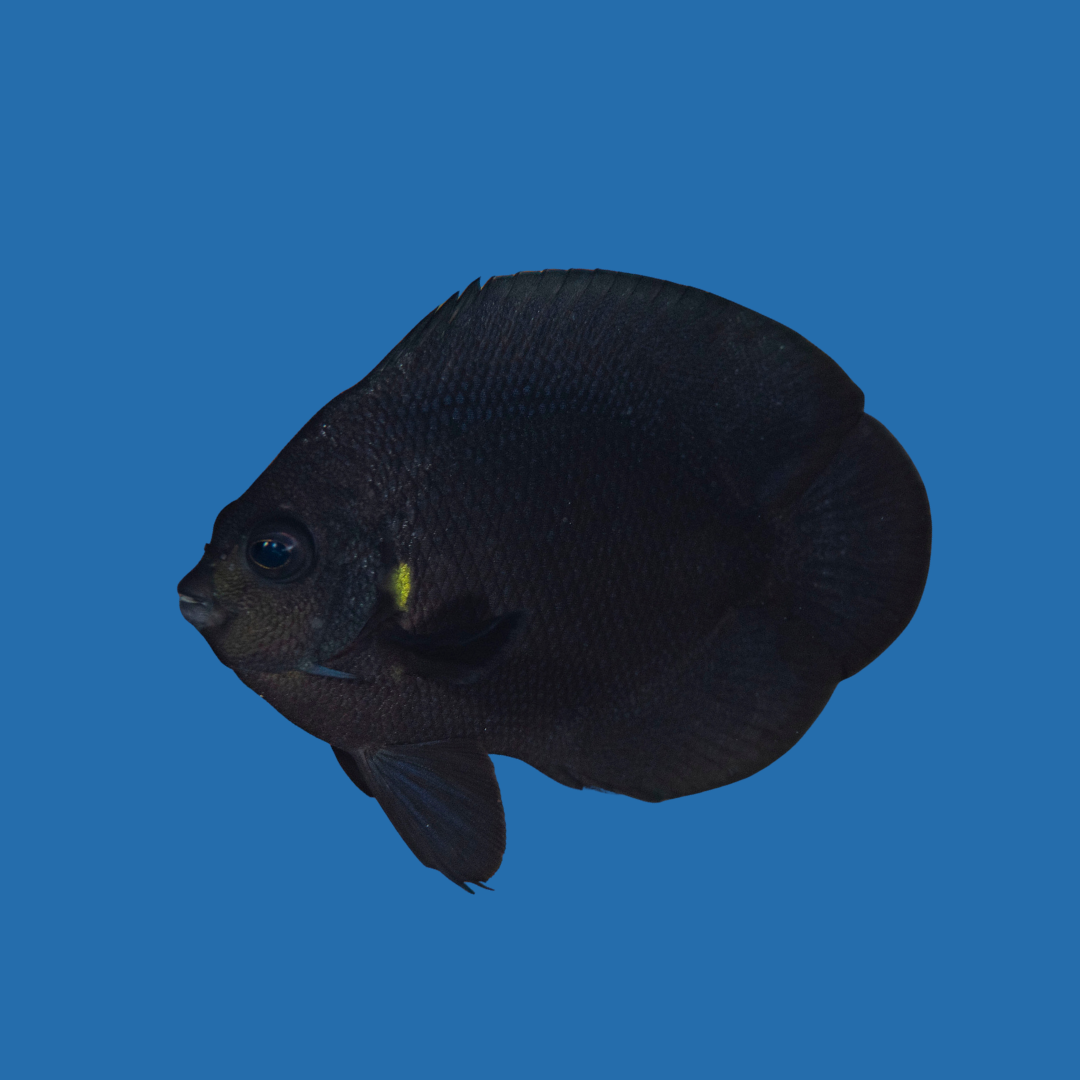
オハグロヤッコは、その名の通り全身が深い漆黒に包まれた、キンチャクダイ科ケントロピーゲ属の中でも独特な存在感を持つ海水魚です。鮮やかな色彩が多いサンゴ礁において、この落ち着いた黒色は水槽内でも他の魚を引き立てる優れたコントラストとなります。一見すると地味に思われがちですが、状態良く飼育された個体は上品な光沢を見せ、通好みの美しさを持っています。また、クレナイニセスズメ類との擬態関係が指摘されるなど、生態的にも非常に興味深い特徴を持っており、サンゴ礁の進化の多様性を感じさせてくれる一冊の図鑑のような魚と言えます。The Midnight Angelfish, known for its deep black coloration, holds a unique presence within the genus Centropyge. In the vibrant coral reefs, this understated black provides an excellent contrast that highlights other fish in an aquarium. While it may seem plain at first glance, a well-maintained specimen displays an elegant luster, appealing to sophisticated aquarists. Furthermore, it is ecologically fascinating due to its noted mimicry relationship with certain dottyback species, serving as a living testament to the evolutionary diversity of coral reefs.
西部太平洋(日本の琉球列島からインドネシア、オーストラリア北東部、ニューカレドニア周辺まで)Western Pacific (from the Ryukyu Islands of Japan to Indonesia, Northeastern Australia, and New Caledonia)
最大体長 / Max Size
約10cmApprox. 10 cm
寿命 / Lifespan
飼育下では数年〜10年程度(環境による長期飼育例あり)Approx. several years to 10 years in captivity (depending on the environment)
飼育環境 / Aquarium Environment
水槽サイズ / Tank Size
90cm規格水槽(約160L)以上を推奨。60cm水槽でも飼育例はありますが、安定性と隠れ家の確保を考えるとゆとりあるサイズが安心です。90cm standard tank (approx. 160L) or larger is recommended. While they can be kept in 60cm tanks, a larger size is safer for stability and providing enough hiding spots.
水温 / Temperature
22〜27度。安定した水温を維持することが、ストレスによる病気予防に繋がります。22-27°C. Maintaining a stable temperature is crucial for preventing stress-related diseases.
水質 / Water Quality
pH 8.1〜8.4、比重 1.020〜1.025。硝酸塩などの蓄積に注意し、清浄な水質を保ってください。pH 8.1-8.4, Specific Gravity 1.020-1.025. Maintain clean water quality by monitoring nitrate levels.
レイアウト / Layout
ライブロック等で複雑な隠れ家を作ってください。岩肌をついばむ習性があるため、十分な量のライブロックがあると落ち着きやすいです。Create complex hiding spots with live rock. They feel more secure with ample live rock to graze upon.
注意点 / Precautions
導入直後は神経質な個体が多いため、静かな環境で落ち着かせることが重要です。また、LPSやソフトコーラルのポリプをつつく場合があるため注意してください。They can be nervous upon introduction, so a quiet environment is important. Be cautious as they may nip at LPS or soft coral polyps.
餌と給餌 / Feeding
餌の種類 / Diet
雑食性。人工飼料(ヤッコ用)に慣れやすいですが、補助として冷凍のイサザアミや乾燥海藻なども有効です。Omnivorous. They generally accept prepared angelfish foods, but frozen mysis shrimp or dried seaweed are also effective supplements.
給餌のポイント / Feeding Tips
岩肌をついばみながら藻類や微小な付着生物を食べる習性があるため、少量の餌を1日2〜3回に分けて与えるのが理想的です。Since they naturally graze on algae and microorganisms on rocks, it is ideal to provide small amounts of food 2-3 times a day.
性格と混泳 / Temperament and Tank Mates
性格 / Temperament
個体によってはやや強い縄張り意識を示すことがあります。小型ヤッコの中では標準的な気性とされます。Some individuals may exhibit territorial awareness. Their temperament is generally considered standard for dwarf angelfish.
混泳の相性 / Compatibility
温和な他種や清掃生物とは比較的合わせやすい一方、同種・近縁種や似た体型の魚とは争う可能性があるため注意が必要です。Generally compatible with peaceful species and cleaners, but use caution with the same or closely related species or fish of similar body shapes.
病気と対策 / Diseases and Prevention
かかりやすい病気 / Common Diseases
白点病、ウーディニウム病。特に輸入直後や水質悪化時のストレスで発症しやすくなります。Saltwater Ich, Marine Velvet Disease. They are more susceptible when stressed by transport or poor water quality.
対策と予防 / Prevention
導入前の検疫を推奨します。日頃からバランスの良い給餌と安定した水質を維持し、自己免疫力を保つことが最大の予防策です。Quarantine before introduction is recommended. Providing a balanced diet and stable water quality to maintain immunity is the best prevention.
増やし方(繁殖) / Breeding
雌雄の判別 / Sexing
外見での判別は困難ですが、ハレム内で最大の個体がオス化する雌性先熟の性質を持つと考えられています。External identification is difficult, but they are believed to be protogynous hermaphrodites, where the largest individual in a harem becomes male.
繁殖形態 / Reproduction
ヤッコ類一般と同様、夕暮れ時にペアで浮上しながら放卵・放精を行う「スポーニング・ライズ」という行動が知られます。Like other angelfishes, they are known to perform a “spawning rise,” releasing eggs and sperm while ascending as a pair at dusk.
繁殖のポイント / Breeding Tips
水槽内での産卵成功には水柱の高さが必要です。また、仔魚の口径に合う微細なカイアシ類の確保が、育成における大きな課題となります。Success in tank spawning requires a tall water column. A major challenge in rearing is securing ultra-fine copepods suitable for the larvae’s mouth size.
雑学と豆知識 / Trivia and Fun Facts
1. 学名が語る漆黒のアイデンティティ / 1. A Black Identity Told by Its Scientific Name
種小名の「nox」はラテン語で「夜」を意味し、その全身を覆う漆黒の体色に由来しています。19世紀の博物学者ピーター・ブリーカーがこの魚を記載した際、闇夜のようなその姿が深い印象を与えたことが推察されます。派手な色彩が好まれる熱帯魚の世界において、あえて「夜」を冠するこの魚は、静寂と気品を象徴する存在と言えるでしょう。The species name “nox” means “night” in Latin, derived from its all-black body color. When the 19th-century naturalist Pieter Bleeker described this fish, its appearance, reminiscent of a dark night, likely left a deep impression. In the world of tropical fish where bright colors are often preferred, this fish, named after “night,” symbolizes tranquility and elegance.
2. 巧妙な擬態関係:クレナイニセスズメとの繋がり / 2. Clever Mimicry: The Connection with the Midnight Dottyback
オハグロヤッコは、メギス科の「クレナイニセスズメ類」との擬態関係が知られています。クレナイニセスズメの一部には、オハグロヤッコに酷似した外見や泳ぎ方をもつ個体群がおり、これにより周囲の警戒を解いて獲物に近づく「攻撃的擬態」を行っているという説があります。完璧な模倣かどうかは議論の余地がありますが、自然界の複雑な相互作用を物語る興味深い事例です。The Midnight Angelfish is known for its mimicry relationship with certain species of dottybacks. Some dottybacks resemble the Midnight Angelfish in appearance and swimming style, leading to theories of “aggressive mimicry” to approach prey without causing alarm. While the perfection of this mimicry is debated, it is a fascinating example of complex natural interactions.
3. 性転換のドラマ:ハレムの社会的秩序 / 3. The Drama of Sex Change: Social Order in a Harem
多くの小型ヤッコと同様に、オハグロヤッコも社会的地位に応じて性別が変わる仕組みを持っています。通常は1匹のオスと複数のメスで群れを作りますが、オスが消失すると群れの中で最も優位なメスがオスへと性転換を始めます。この変化は社会的刺激によって引き起こされ、個体群の維持に貢献する洗練された生存戦略です。Like many dwarf angelfish, the Midnight Angelfish has a mechanism where its sex changes according to social status. They usually form groups with one male and several females; if the male disappears, the dominant female begins to transition into a male. This change is triggered by social stimuli and is a sophisticated survival strategy for population maintenance.
4. 人工繁殖の未来と課題 / 4. Future and Challenges of Captive Breeding
小型ヤッコの人工繁殖技術は近年大きく進歩していますが、オハグロヤッコを含め、まだ一般的な流通には至っていません。最大の難関は孵化直後の仔魚の小ささで、適切なサイズの生餌を安定して供給する技術が不可欠です。将来的に人工繁殖個体が普及すれば、野生資源の保護と、より丈夫で飼育しやすい個体の供給が両立されることが期待されています。Captive breeding technology for dwarf angelfish has advanced significantly, though it has not yet reached common distribution for species like the Midnight Angelfish. The biggest hurdle is the small size of the larvae, requiring stable supplies of appropriately sized live food. Future success in this area promises both the conservation of wild resources and the supply of hardier, easier-to-keep fish.
まとめ / Conclusion
オハグロヤッコは、その漆黒の色彩が水景に落ち着きと奥行きを与えてくれる、非常に趣深い魚です。擬態や性転換といった興味深い生態を持ち、飼育を通じてサンゴ礁の不思議を身近に感じることができます。サンゴとの相性や導入時のケアには注意が必要ですが、それらを乗り越えて長期飼育に成功した時の喜びは格別なものになるでしょう。The Midnight Angelfish is a deeply interesting fish whose black coloration adds tranquility and depth to an aquascape. Its fascinating biology, including mimicry and sex change, allows you to experience the wonders of the reef firsthand. While careful attention is needed for coral compatibility and initial care, the joy of successful long-term maintenance is truly exceptional.
状態の良い個体を選び、十分な隠れ家とバランスの良い食事を用意することが、本種と長く付き合うための第一歩です。派手さはありませんが、飽きのこないその独特のシルエットは、あなたの水槽において欠かせない存在となるはずです。漆黒の衣を纏ったこの「夜のヤッコ」を、ぜひ大切に育ててみてください。Selecting a healthy specimen and providing ample hiding spots and a balanced diet are the first steps to a long relationship with this species. Though not flamboyant, its distinctive silhouette will become an indispensable part of your aquarium. We hope you will cherish and carefully raise this “Midnight Angelfish” dressed in its ink-black robes.
Bleeker, P. (1853). Vierde bijdrage tot de kennis der ichthyologische fauna van Amboina. Natuurkundig Tijdschrift voor Nederlandsch-Indie, 5, 317-359.
Lubbock, R., and Goldman, B. (1976). Two distinctive new species of dottybacks (Teleostei: Pseudochromidae) from the Western Pacific. Journal of Natural History, 10(1), 57-64.
Baensch, F. (2002). The Captive Culture of High Value Marine Ornamental Fish Species. Reef Culture Technologies (RCT).
Michael, S. W. (2004). Angelfishes and Butterflyfishes: Reef Fishes Series. Microcosm Ltd.
IUCN Red List of Threatened Species. (2010). Centropyge nox. International Union for Conservation of Nature.

 アイのアクアグッズ案内アフリカンシクリッドの飼育用品|水槽・ろ過・底砂・岩組み・餌の選び方道具の特徴や使い方、選ぶときのポイントをアイが紹介します。記事はコチラ →
 アイのアクアグッズ案内アカヒレの仲間に合わせる飼育用品|無加温・混泳・繁殖の水槽とろ過道具の特徴や使い方、選ぶときのポイントをアイが紹介します。記事はコチラ →
 アイのアクアグッズ案内水草用ライトの選び方|緑の絨毯と赤い水草を楽しむ照明・植栽用品道具の特徴や使い方、選ぶときのポイントをアイが紹介します。記事はコチラ →
 アイのアクアグッズ案内ローチの仲間に合わせる飼育用品|クーリー・流水性・ボーシャの水槽と底砂道具の特徴や使い方、選ぶときのポイントをアイが紹介します。記事はコチラ →
コメント