

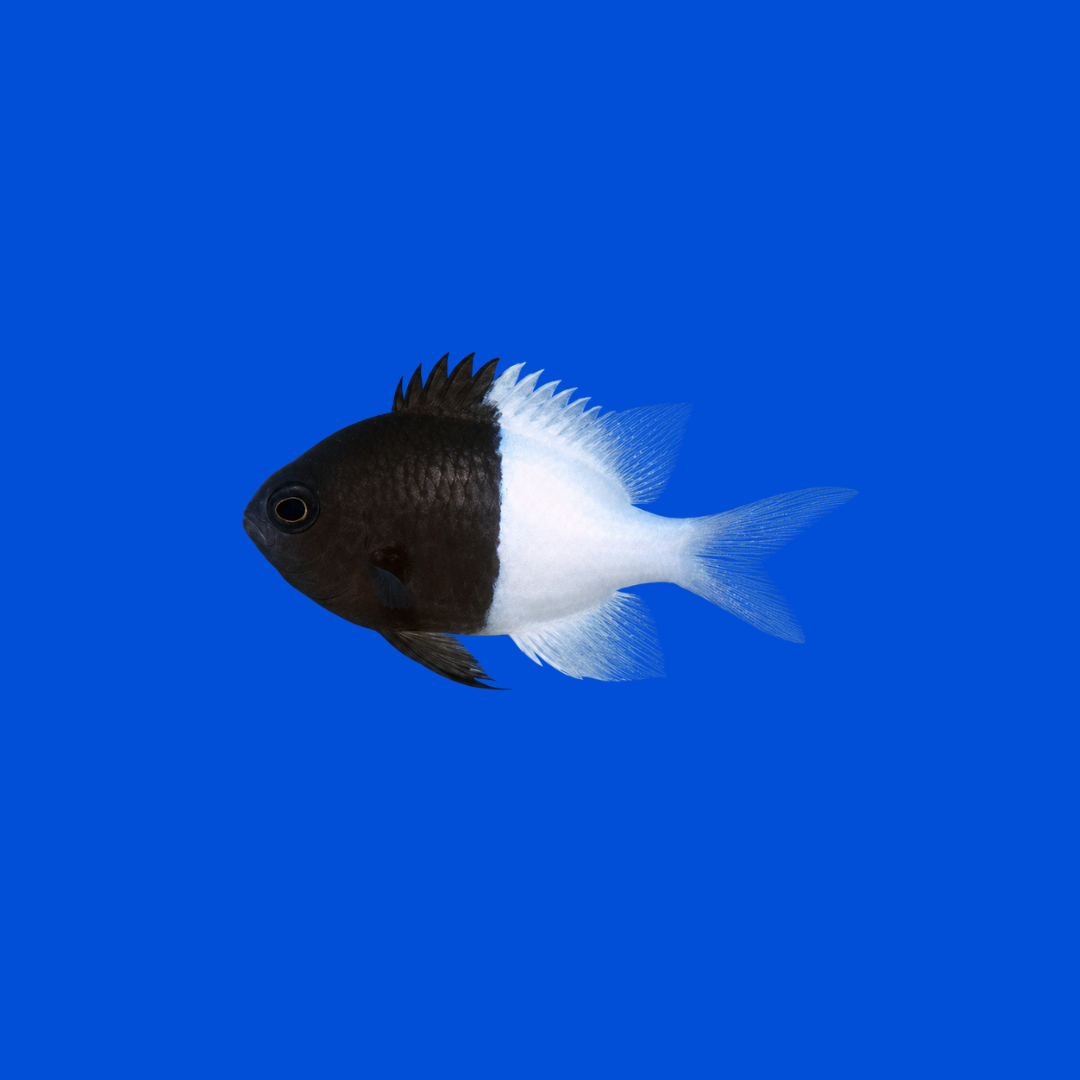
解説 / Description
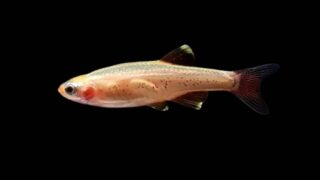
ツートーンクロミスは、インド洋のサンゴ礁で見られる小型のスズメダイです。体の前半はチョコレート色から黒褐色、後半は白く抜けるような二色模様をもち、水槽内でも落ち着いたコントラストがよく映えます。かつては紅海産の近縁種と混同されていましたが、現在は Pycnochromis fieldi として扱われる魚です。群れで中層を泳ぐ姿が魅力的で、適切な水量と隠れ家を用意できるリーフタンクでは、サンゴを傷めにくいタンクメイトとして楽しめます。 The Two-tone Chromis is a small damselfish found on coral reefs in the Indian Ocean. Its front half is chocolate-brown to dark brown, while the rear half is clean white, creating a calm but striking two-tone pattern in reef aquariums. It was once confused with a closely related Red Sea species, but it is now treated as Pycnochromis fieldi. With enough swimming space and shelter, it can be enjoyed as a reef-safe schooling fish in a well-managed marine aquarium.
基本情報 / Basic Information
| 学名 / Scientific Name | Pycnochromis fieldi (Randall & DiBattista, 2013) |
|---|---|
| 通称 / Common Name | ツートーンクロミス、チョコレートディップクロミス、チョコレートディップダムゼルTwo-tone Chromis, Chocolate Dip Chromis, Chocolate Dip Damselfish |
| 分類 / Family | スズメダイ科・スズメダイ亜科・ヒメスズメダイ属Family Pomacentridae, subfamily Chrominae, genus Pycnochromis |
| 英名 / English Name | Two-tone Chromis, Chocolate Dip Damselfish |
| 分布 / Distribution | インド洋。東アフリカ沿岸、ソコトラ周辺、セーシェル、コモロ、マダガスカル、モーリシャスなどの西部・中部インド洋から、クリスマス島、ココス(キーリング)諸島、インドネシア西部方面まで記録があります。紅海のよく似た個体群は、通常は近縁種 Pycnochromis dimidiatus として区別して扱います。Indian Ocean. It is recorded from the western and central Indian Ocean, including East Africa, the Socotra region, Seychelles, Comoros, Madagascar and Mauritius, eastward to Christmas Island, the Cocos (Keeling) Islands and western Indonesia. The very similar Red Sea form is generally treated separately as the closely related Pycnochromis dimidiatus. |
| 最大体長 / Max Size | 標準体長で約5.1〜6cm。水槽内では尾鰭を含めて6cm前後に見えることがあります。About 5.1–6 cm standard length. Including the caudal fin, aquarium individuals may appear around 6 cm overall. |
| 寿命 / Lifespan | 本種単独の確実な寿命データは多くありません。安定した海水水槽では、近縁の小型スズメダイ類と同様に数年単位の長期飼育を目指せます。Reliable species-specific lifespan data are limited. In a stable marine aquarium, it can be maintained for several years, as is typical for many small damselfishes. |
飼育環境 / Aquarium Environment
| 水槽サイズ / Tank Size | 単独または少数なら60cmワイド水槽以上が現実的ですが、本来の群泳感を楽しむなら90cm規格水槽、約180L以上を目安にします。5匹前後で導入する場合は、遊泳スペースと逃げ込める場所を両方確保することが大切です。A 60 cm wide aquarium or larger can work for a single fish or a very small group, but a standard 90 cm aquarium of around 180 L or more is a better target for displaying natural shoaling behavior. For a group of about five, provide both open swimming space and secure retreats. |
|---|---|
| 水温 / Temperature | 22〜28℃を目安に管理します。日本の夏場は水温上昇を避けるため、水槽用クーラーや冷却ファンを用意すると安心です。日常管理では24〜26℃付近で安定させると扱いやすくなります。 Maintain the aquarium at about 22–28°C. In Japan, a chiller or cooling fan is useful to prevent summer overheating. For daily care, a stable range around 24–26°C is easy to manage. |
| 水質 / Water Quality | 比重は1.023〜1.025前後を目安にします。アンモニアと亜硝酸は検出されない状態を保ち、硝酸塩やリン酸塩が蓄積しすぎないよう、プロテインスキマー、十分な生物ろ過、定期的な換水で安定させます。Aim for a specific gravity of about 1.023–1.025. Ammonia and nitrite should remain undetectable, while nitrate and phosphate should be kept from accumulating through efficient protein skimming, biological filtration and regular water changes. |
| レイアウト / Layout | ライブロックや人工ライブロックで複数の隠れ家を作り、前面から中央には泳げる空間を残します。自然界ではサンゴ礁の隠れ家から大きく離れすぎずにプランクトンを追うため、開けた中層とすぐ戻れる岩組みを両立させると落ち着きやすくなります。Create multiple shelters with live rock or artificial reef rock while leaving open midwater swimming space. In nature, this fish feeds on plankton close to reef shelter, so it settles best when open water and nearby retreat spaces are both available. |
| 注意点 / Precautions | スズメダイ科としては比較的扱いやすい一方、成長や順位づけに伴って同種間の追い回しが起こることがあります。小型水槽で複数飼育すると弱い個体に攻撃が集中しやすいため、導入数、水槽サイズ、隠れ家の数を事前にそろえておきます。Although relatively manageable for a damselfish, individuals may chase each other as they grow and form a hierarchy. In small aquariums, weaker fish can become targets, so plan group size, tank volume and the number of shelters carefully before introduction. |
餌と給餌 / Feeding
| 餌の種類 / Diet | 自然下では主に動物プランクトンを食べます。飼育下では小粒の海水魚用ペレット、フレークフード、冷凍のイサザアミ、コペポーダ、ブラインシュリンプなどを組み合わせるとよいでしょう。In nature, it feeds mainly on zooplankton. In aquariums, offer a combination of small marine pellets, flake foods, frozen mysid-type foods, copepods and brine shrimp. |
|---|---|
| 給餌のポイント / Feeding Tips | 水流に乗って漂う小さな餌をよく追うため、1日1〜2回、少量ずつ水槽全体に広がるように与えます。導入直後は消灯前後や照明を少し落とした時間に細かい冷凍餌を混ぜると、警戒心の強い個体も食べ始めやすくなります。It readily takes small foods drifting in the current, so feed modest portions once or twice daily, allowing the food to spread through the water column. Newly introduced fish often begin feeding more readily if fine frozen foods are offered under slightly dimmed lighting. |
性格と混泳 / Temperament and Tank Mates
| 性格 / Temperament | 小型で活発に泳ぐ群泳性の魚です。極端に荒い性格ではありませんが、スズメダイらしい縄張り意識はあり、特に狭い環境や隠れ家が少ない環境では同種間の小競り合いが目立つことがあります。This is an active, shoaling small fish. It is not among the most aggressive damselfishes, but it still has some territorial tendencies, especially in cramped aquariums or layouts with too few shelters. |
|---|---|
| 混泳の相性 / Compatibility | ハゼ、ベラ、小型ヤッコ、ハナダイ、小型から中型のハギ類など、サイズと性格の合う海水魚と混泳しやすい魚です。サンゴを直接食害する魚ではないため、リーフタンクにも向きます。ただし、ごく小さな遊泳性の弱い魚や、導入直後の臆病な魚とは、様子を見ながら組み合わせます。It is generally compatible with suitably sized gobies, wrasses, dwarf angelfishes, anthias and small to medium tangs. It does not normally damage corals, making it suitable for reef tanks. Very timid or newly introduced small fish should be monitored carefully. |
病気と対策 / Diseases and Prevention
| かかりやすい病気 / Common Diseases | 本種に特有の病気がよく知られているわけではありません。一般的な海水魚と同じく、導入時のストレスや水質悪化によって白点病、ウーディニウム症、細菌性のヒレ傷みなどが問題になることがあります。No disease is known to be especially specific to this species. As with many marine fishes, transport stress and poor water quality can lead to marine white spot, marine velvet or bacterial fin damage. |
|---|---|
| 対策と予防 / Prevention | 購入時は体表の白点、呼吸の速さ、痩せ、ヒレの裂けを確認します。可能であれば隔離水槽で観察し、餌食いと体表の状態を整えてから本水槽へ移します。急な比重変化と水温変化を避け、過密飼育を控えることが最も基本的な予防になります。At purchase, check for white spots, rapid breathing, emaciation and torn fins. Quarantine observation is recommended when possible, allowing feeding and body condition to stabilize before transfer to the display tank. Avoid sudden salinity or temperature changes and do not overstock. |
増やし方(繁殖) / Breeding
| 雌雄の判別 / Sexing | 外見だけでの雌雄判別は難しい魚です。成熟したペアでは、繁殖期の行動、縄張りの形成、産卵床を守る個体の動きから推測できる場合があります。Sexing by appearance alone is difficult. In mature pairs, sex may be inferred from breeding behavior, territory formation and the behavior of the fish guarding the spawning site. |
|---|---|
| 繁殖形態 / Reproduction | スズメダイ科に典型的な基質産卵型と考えられます。岩面やサンゴ礫などの表面に粘着性の卵を産み、雄が卵を守りながら水流を送る形式です。It is considered a demersal spawner, as is typical of damselfishes. Adhesive eggs are laid on a hard surface such as rock or coral rubble, and the male guards and aerates the clutch. |
| 繁殖のポイント / Breeding Tips | 家庭水槽での安定した繁殖・育成例は多くありません。産卵まで進んだ場合でも、仔魚は非常に小さく、初期餌料としてワムシや微細なプランクトンを安定供給する必要があります。繁殖を狙う場合は、親魚用水槽とは別に仔魚育成用の小型水槽を用意するのが現実的です。Reliable home-aquarium breeding reports are limited. Even if spawning occurs, the larvae are very small and require a stable supply of rotifers or other fine planktonic foods. A separate larval rearing tank is the most practical approach for breeding attempts. |
雑学と豆知識 / Trivia and Fun Facts
| 1. かつては紅海産の近縁種と混同されていた魚 / 1. Once confused with a Red Sea relative | ツートーンクロミスは、長い間、紅海にすむよく似た種 Pycnochromis dimidiatus と同じ魚として扱われてきました。現在では、インド洋の個体群が Pycnochromis fieldi として分けられています。見た目はよく似ていますが、胸鰭軟条数や有孔側線鱗数、体色境界の形に違いがあり、分類学的には重要な識別点になります。The Two-tone Chromis was long treated as the same species as the very similar Red Sea damselfish Pycnochromis dimidiatus. The Indian Ocean population is now separated as Pycnochromis fieldi. Although the two look similar, differences in pectoral-fin rays, lateral-line scales and the shape of the color boundary are important taxonomic clues. |
|---|---|
| 2. 学名に刻まれたリチャード・フィールド氏の観察眼 / 2. Richard Field’s observation preserved in the name | 種小名 fieldi は、インド洋産の個体が別種かもしれないと最初に疑った水中写真家 Richard Field 氏への献名です。専門の分類学者だけでなく、海で継続的に観察を続けた人の気づきが新種記載につながった点は、本種を語るうえでとても印象的です。The specific name fieldi honors underwater photographer Richard Field, who first suspected that the Indian Ocean population might represent a distinct species. This is a memorable example of careful long-term field observation contributing to formal taxonomy. |
| 3. ヒメスズメダイ属への移動 / 3. Reassignment to Pycnochromis | 本種は記載時には Chromis fieldi とされましたが、スズメダイ科の分子系統解析を受け、現在は Pycnochromis fieldi として扱われます。日本では Pycnochromis 属に対して「ヒメスズメダイ属」という標準和名が提唱されていますが、本種そのものには広く定着した標準和名はなく、観賞魚流通ではツートーンクロミスという呼び名が実用的です。This species was described as Chromis fieldi, but after molecular work on damselfish relationships it is now treated as Pycnochromis fieldi. In Japan, the genus Pycnochromis has been given the standard Japanese genus name Himesuzumedai-zoku, although this particular species does not yet have a widely established standard Japanese species name; in the aquarium trade, Two-tone Chromis remains the practical name. |
| 4. 見分けるときは白黒の境界に注目 / 4. Look closely at the black-white boundary | よく似た二色型のスズメダイと見分けるときは、体の暗色部と白色部の境界に注目します。本種では境界がやや弧を描き、白い部分が背側へ入り込むように見えます。販売名だけでは近縁種と混同されることがあるため、入荷産地と体色パターンを合わせて確認すると安心です。When distinguishing it from similar two-tone damselfishes, focus on the boundary between the dark and white areas. In this species, the boundary is slightly curved and the white area appears to extend upward toward the back. Trade names can be inconsistent, so checking both collection locality and color pattern is helpful. |
| 5. クリスマス島とココス諸島で見られる交雑の物語 / 5. Hybridization at Christmas and Cocos Islands | クリスマス島とココス(キーリング)諸島は、インド洋と太平洋の魚類相が出会う重要な海域です。この地域では、ツートーンクロミスと太平洋系の近縁種 Pycnochromis margaritifer の交雑が報告されています。見た目の美しさだけでなく、海流や過去の海水準変動、生物地理の歴史を映し出す魚としても興味深い存在です。Christmas Island and the Cocos (Keeling) Islands are important meeting points between Indian and Pacific Ocean reef fish faunas. In this region, hybridization has been reported between the Two-tone Chromis and the Pacific relative Pycnochromis margaritifer. Beyond its beauty, the species is also interesting as a living clue to currents, sea-level history and marine biogeography. |
まとめ / Conclusion
ツートーンクロミスは、派手さだけで目を引く魚ではなく、落ち着いた二色模様と軽やかな群泳でリーフタンクに奥行きを加えてくれる海水魚です。小型でサンゴとの相性もよく、餌にも慣れやすい一方、スズメダイらしい順位づけが起こるため、複数飼育では水量と隠れ家の余裕が飼育の安定につながります。 The Two-tone Chromis is not merely a flashy fish; its calm two-tone pattern and light shoaling movement add depth to a reef aquarium. It is small, generally reef-safe and usually adapts well to prepared foods, but group keeping should be supported by enough water volume and shelter because damselfish-style hierarchy can develop.
かつて近縁種の陰に隠れていた本種は、分類の見直しによって独自の存在として整理されました。水槽に迎えるときは、体色の境界、入荷産地、健康状態を丁寧に確認し、インド洋のサンゴ礁を思わせるゆったりとした遊泳空間を用意してあげると、その魅力を長く味わえます。 Once hidden under the name of a close relative, this species has gained its own clearer identity through taxonomic revision. When adding it to an aquarium, check the color boundary, collection origin and condition carefully, then provide a spacious swimming environment that evokes the reefs of the Indian Ocean.

気になる道具や飼い方を見つけてみませんか?
 アイのアクアグッズ案内グッピー・プラティ・モーリーを親子で楽しむ飼育用品|水槽・稚魚保護・ろ過・餌・水草道具の特徴や使い方、選ぶときのポイントをアイが紹介します。記事はコチラ →
 アイのアクアグッズ案内旅行中、お魚のごはんはどうする? 自動給餌器・使える餌・スマート水槽の選び方旅行中の魚の餌やりを助ける自動給餌器を、アイとコタロウが紹介。時間指定、おかわり給餌、対応するフレークや顆粒、設置台、スマホ管理、一体型水槽、留守番フードまで、使いどころと選び方を案内します。記事はコチラ →
 アイのアクアグッズ案内エーハイムはおもちゃから始まった? 小さな噴水から水槽へ、アイとコタロウの探訪道具の特徴や使い方、選ぶときのポイントをアイが紹介します。記事はコチラ →
 アイのアクアグッズ案内水草用ソイルの選び方|土・砂の違いとおすすめ商品道具の特徴や使い方、選ぶときのポイントをアイが紹介します。記事はコチラ →
さまざまな飼育テーマをご紹介。リンク先の記事には広告・商品紹介が含まれます。
案内・紹介記事一覧へ →分布マップ
ツートーンクロミスは、東アフリカ沿岸、ソコトラ周辺、セーシェル、コモロ、マダガスカル、モーリシャスなどの西部・中部インド洋から、クリスマス島、ココス(キーリング)諸島、インドネシア西部方面まで記録があります。この地図では、インド洋に広がる分布イメージを概略範囲として示しています。
この地図は分布欄の記述をもとにした概略プロットです。表示している範囲や代表地点は分布イメージ用であり、実際の採集地点、厳密な生息範囲、個体群の境界を示すものではありません。
参考文献・参照資料
この記事では、分類、分布、生息環境、飼育管理、繁殖、病気の注意点を確認するため、学術論文、公的・大学系データベース、獣医学系マニュアルを中心に参照しました。店舗、通販サイト、個人ブログ、一般的なまとめサイトは参考文献から除外しています。
分類・分布・形態・生態
-
Eschmeyer’s Catalog of Fishes, California Academy of Sciences. “Pycnochromis fieldi (Randall & DiBattista, 2013).”
https://researcharchive.calacademy.org/research/ichthyology/catalog/fishcatget.asp?spid=72631
現行学名、旧名 Chromis fieldi、記載情報、分類上の位置づけ、分布記述の確認に使用。 -
Randall, J. E. & DiBattista, J. D. 2013. “A new species of damselfish (Pomacentridae) from the Indian Ocean.” aqua, International Journal of Ichthyology, 19(1): 1–16.
https://aqua-aquapress.com/a-new-species-of-damselfish-pomacentridae-from-the-indian-ocean/
本種の原記載。紅海産近縁種との識別、胸鰭軟条数、有孔側線鱗数、体色境界、Richard Field 氏への献名などの根拠。 -
Bray, D. J. 2023. “Pycnochromis fieldi.” Fishes of Australia.
https://fishesofaustralia.net.au/home/species/4855
英名、分布、ラグーン・外礁での生息、水深、最大体長、計数形質、動物プランクトン食、近縁種との識別点の確認に使用。 -
Froese, R. & Pauly, D. eds. FishBase. “Pycnochromis fieldi, Two-tone Chromis.”
https://www.fishbase.se/summary/Chromis-fieldi.html
サンゴ礁性、1〜40mの水深、波浪の強い場所を避ける点、動物プランクトン食、標準体長、温度推定値などの補助確認に使用。 -
Tang, K. L., Stiassny, M. L. J., Mayden, R. L. & DeSalle, R. 2021. “Systematics of Damselfishes.” Ichthyology & Herpetology, 109(1): 258–318.
https://doi.org/10.1643/i2020105
Chromis 属の再編、Pycnochromis 属の復活、本種の現在の属配置を支える分子系統・分類整理の根拠。 -
古橋龍星・本村浩之. 2021.「スズメダイ科魚類の高次分類群に対応する標準和名」Ichthy, Natural History of Fishes of Japan, 10: 60–74.
https://www.museum.kagoshima-u.ac.jp/ichthy/INHFJ_2021_010_060.pdf
Pycnochromis 属に対する標準和名「ヒメスズメダイ属」、日本産同属種、分類再編後の和名整理の根拠。 -
He, S., Robitzch, V., Hobbs, J.-P. A., Travers, M. J., Lozano-Cortés, D., Berumen, M. L. & DiBattista, J. D. 2019. “An examination of introgression and incomplete lineage sorting among three closely related species of chocolate-dipped damselfish (genus: Chromis).” Ecology and Evolution, 9: 5468–5479.
https://doi.org/10.1002/ece3.5142
クリスマス島・ココス(キーリング)諸島周辺での P. fieldi と P. margaritifer の交雑・遺伝子浸透に関する記述の根拠。
繁殖・飼育管理・病気の注意点
-
Weinheimer, M. 2003. “Pomacentridae.” Animal Diversity Web, University of Michigan Museum of Zoology.
https://animaldiversity.org/accounts/Pomacentridae/
スズメダイ科全般の基質産卵、雄による卵保護、縄張り性、プランクトン食グループの行動など、繁殖・行動面の補助資料。 -
Petty, B. D., Francis-Floyd, R. & Yanong, R. P. E. 2024 update. “Management of Aquarium Fish.” MSD Veterinary Manual.
https://www.msdvetmanual.com/exotic-and-laboratory-animals/aquarium-fish/management-of-aquarium-fish
導入時の隔離、検疫設備、アンモニア・亜硝酸などの水質問題、ろ過の立ち上がり、過密・水質悪化への注意点の根拠。 -
Yanong, R. P. E. “Cryptocaryon irritans Infections (Marine White Spot Disease) in Fish.” UF/IFAS Extension, FA164.
https://ask.ifas.ufl.edu/publication/FA164
海水魚の白点病の症状、呼吸異常、痩せ、ヒレの傷み、迅速な診断・対応の重要性を確認するために使用。 -
Merck Veterinary Manual. “Parasitic Diseases of Fish.”
https://www.merckvetmanual.com/exotic-and-laboratory-animals/aquarium-fish/parasitic-diseases-of-fish
Cryptocaryon など海水魚寄生虫症、治療時に隔離水槽で扱うべき理由、比重・薬剤管理に関する一般的な獣医学的背景の確認に使用。
注記:本種単独で確立された家庭水槽内繁殖・疾病感受性の研究は限られるため、繁殖と病気の項目では、P. fieldi の自然生態資料に加え、スズメダイ科全般および海水観賞魚管理に関する信頼性の高い資料を補助的に使用しています。




コメント