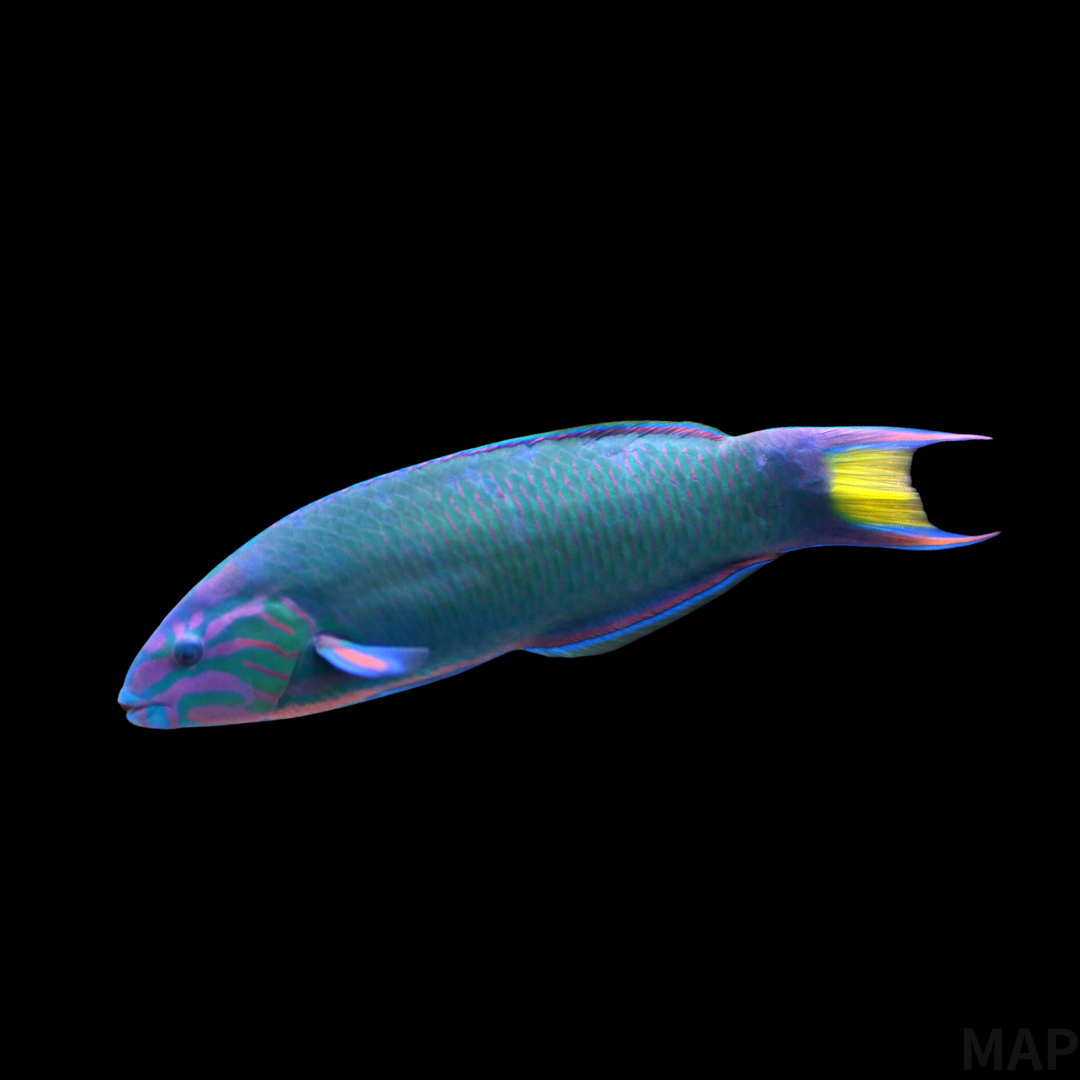
オトメベラは、インド太平洋の熱帯・亜熱帯域に広く分布するベラ科の代表的な魚種です。その名はギリシャ語で「海の色をした体」を意味する属名にふさわしく、鮮烈な青緑色の体色が特徴です。幼魚から成魚へと成長する過程で、まるで別の生き物かと思わせるほど劇的な色彩変化を遂げ、成熟したオスは尾鰭に美しい黄色の三日月模様を宿します。サンゴ礁生態系においては、底生生物のバランスを制御する活動的なハンターとして知られていますが、飼育下ではその強烈な遊泳力と獰猛な縄張り意識に見合った広大な環境が必要とされる、エキスパート向けの側面を持つ魅力的な魚です。The Moon Wrasse (Thalassoma lunare) is a quintessential wrasse species widely distributed across the tropical and subtropical waters of the Indo-Pacific. Fittingly named after its genus, which translates to “sea-colored body” in Greek, it is characterized by its vivid blue-green coloration. This species undergoes a dramatic transformation from juvenile to adult, with mature males developing a stunning yellow crescent marking on their tail fin. While known in reef ecosystems as active hunters that control benthic populations, they require expansive environments in captivity due to their powerful swimming ability and fierce territorial instincts, making them a captivating species for experienced aquarists.
基本情報 / Basic Information
学名 / Scientific Name
Thalassoma lunare
通称 / Common Name
オトメベラMoon wrasse
分類 / Family
スズキ目(またはベラ目)ベラ科カンムリベラ亜科ニシキベラ属Order Perciformes (or Labriformes), Family Labridae, Subfamily Julidinae, Genus Thalassoma
英名 / English Name
Moon wrasse, Crescent wrasse, Lyretail wrasse
分布 / Distribution
インド太平洋全域。西は南アフリカ東岸・紅海から、東はライン諸島、北は日本近海(伊豆半島以南)、南はニュージーランド北部まで。Throughout the Indo-Pacific. From the eastern coast of South Africa and the Red Sea in the west, to the Line Islands in the east, north to the waters near Japan (south of Izu Peninsula), and south to northern New Zealand.
最大体長 / Max Size
通常25cm程度、自然界の老成個体では最大45cmに達する記録があります。Typically around 25 cm, but elderly specimens in the wild have been recorded reaching up to 45 cm.
寿命 / Lifespan
正確な飼育下でのデータは少ないですが、数年から10年程度と考えられます。Accurate data for lifespan in captivity is limited, but it is thought to be several years to around a decade.
飼育環境 / Aquarium Environment
水槽サイズ / Tank Size
最低でも470L以上(150cm規格水槽または180cm規格水槽)。その強烈な遊泳力から、広大なオープンスペースが必須です。Minimum 470 liters or more (standard 150cm or 180cm tanks). Vast open swimming space is essential due to their powerful swimming ability.
水温 / Temperature
23度から28度。熱帯・亜熱帯の標準的な海水温を維持します。23 to 28 degrees Celsius. Maintain standard tropical/subtropical seawater temperatures.
水質 / Water Quality
比重 1.020から1.025、pH 8.1から8.4。強力な濾過とプロテインスキマーによる安定した水質と高い溶存酸素量が求められます。Specific gravity 1.020 to 1.025, pH 8.1 to 8.4. Requires stable water quality and high dissolved oxygen levels provided by robust filtration and protein skimmers.
レイアウト / Layout
ライブロックで隠れ家を作りつつ、中央に十分な遊泳スペースを確保します。夜間に潜るため、パウダー状のサンゴ砂を7.6cmから10cm以上の厚さで敷くことが絶対条件です。Create hiding spots with live rock while ensuring ample swimming space in the center. A fine coral sand bed of 7.6 to 10 cm or more is an absolute requirement for their nighttime burying habit.
注意点 / Precautions
驚くと驚異的なスピードで水面を突破するため、隙間のない頑丈で重い蓋が必須です。砂が不足すると体表を傷つけ、致死的な感染症を招くリスクがあります。A tight-fitting, heavy lid is mandatory as they can breach the water surface at incredible speeds when startled. Insufficient sand depth poses a risk of skin injuries and fatal infections.
餌と給餌 / Feeding
餌の種類 / Diet
肉食性。イサザアミ、ブラインシュリンプ、クリル、刻んだアサリやイカ、魚肉など。高品質な肉食魚用人工飼料もよく食べます。Carnivorous. Diet should include mysis shrimp, brine shrimp, krill, chopped clams, squid, and fish meat. They also readily accept high-quality prepared foods for carnivores.
給餌のポイント / Feeding Tips
1日に2回から3回、少量を回数分けて与えます。色揚げや健康維持のため、冷凍餌にビタミン剤を添加するなどの栄養強化が推奨されます。Feed in small portions 2 to 3 times a day. For color enhancement and health maintenance, vitamin enrichment of frozen foods is highly recommended.
性格と混泳 / Temperament and Tank Mates
性格 / Temperament
非常に活動的で、成長とともに極めて攻撃的かつ獰猛になります。強い縄張り意識を持ち、水槽の主導権を握ろうとします。Highly active and becomes extremely aggressive and fierce as it matures. It possesses a strong territorial sense and will attempt to dominate the tank.
混泳の相性 / Compatibility
小型魚やエビ、貝などの無脊椎動物は捕食されるため不適合です。大型のヤッコ、トリガーフィッシュ、ハタなどの強靭な大型魚とのみ混泳可能です。導入は必ず最後に行ってください。Incompatible with small fish and invertebrates like shrimp and snails, as they will be preyed upon. Compatibility is limited to robust large fish such as large angelfish, triggerfish, and groupers. Must be the last fish added to the aquarium.
病気と対策 / Diseases and Prevention
かかりやすい病気 / Common Diseases
白点病、細菌性感染症(特に底砂の状態が悪い場合)。潜水時に体表を傷つけることによる感染が見られます。Marine Ich (Cryptocaryon irritans) and bacterial infections, especially if substrate conditions are poor. Infections can occur through skin abrasions sustained while burying in the sand.
対策と予防 / Prevention
底砂の清潔さを保ち、十分な深さを確保すること。ストレスを最小限にするための広大なスペースと、ビタミン豊富な餌による免疫力向上が鍵となります。Keep the substrate clean and ensure adequate depth. Providing ample space to minimize stress and boosting immunity with vitamin-rich foods are key preventive measures.
増やし方(繁殖) / Breeding
雌雄の判別 / Sexing
色彩と鰭の形状で判別します。成熟したオス(終期段階)は頭部が青やマゼンタに染まり、尾鰭に黄色の三日月模様が現れ、鰭がメスよりも有意に長く発達します。Identified by coloration and fin shape. Mature males (Terminal Phase) develop blue or magenta heads, yellow crescent markings on their tails, and significantly longer fins than females.
繁殖形態 / Reproduction
雌性先熟の性転換を行います。大部分がメスとして生まれ、社会環境に応じてオスに転換します。浮遊性産卵を行い、ペアで中層へ泳ぎ上がりながら放卵・放精します。Engages in protogynous hermaphroditism. Most are born female and transition to male based on social environment. They are pelagic spawners, swimming upward in pairs to release eggs and sperm.
繁殖のポイント / Breeding Tips
飼育下での繁殖例は極めて稀です。広大な遊泳空間と、性転換を促すための適切な社会的階層(複数のメスと優位なオス)の構築が必要となります。Breeding in captivity is extremely rare. It requires massive swimming space and the establishment of a proper social hierarchy (multiple females and a dominant male) to trigger sex reversal.
雑学と豆知識 / Trivia and Fun Facts
1. 学名の由来と「月」の紋章 / 1. Scientific Name and the “Lunar” Crest
1758年、近代分類学の父リンネによって記載されたこの魚。属名のThalassomaは「海の色をした体」を、種小名のlunareは「月」を意味します。これは成熟したオスの尾鰭に見られる鮮やかな黄色の三日月模様に由来しており、まさに海を駆ける月影のような美しさを象徴しています。Described in 1758 by Carl Linnaeus, the father of modern taxonomy. The genus name Thalassoma means “sea-colored body,” and the specific epithet lunare means “moon.” This refers to the vivid yellow crescent moon marking on the tail fin of mature males, symbolizing a moon shadow racing through the sea.
2. 精密な体内時計:砂の中の目覚まし時計 / 2. Biological Clock: The Alarm in the Sand
オトメベラは夜間、砂の中に潜って眠りますが、その覚醒サイクルは驚くほど精密な「体内時計」に支配されています。水族館での観察では、周囲の照明が点灯したままでも定刻になれば砂に潜り、逆に真っ暗な状態であっても朝になれば自ら砂から這い出して活動を始めます。光の情報が届かない砂の底にいても、彼らは「時」を完璧に把握しているのです。While Moon Wrasses bury themselves in the sand to sleep at night, their wake-up cycle is governed by an incredibly precise internal biological clock. Observations in aquariums show they retreat to the sand at a set time even if lights remain on, and conversely, emerge to start their day in total darkness once morning arrives. Even deep in the sand where light cannot reach, they maintain a perfect grasp of time.
3. 複雄性という複雑な社会構造 / 3. The Complex Social Structure of Diandry
ベラ科の中でも、オトメベラは「複雄性」という特殊な性質を持ちます。生まれながらのオス(一次オス)と、メスから性転換したオス(二次オス)の両方が存在します。一次オスはメスに擬態して他の強力なオスの目を盗み繁殖に参加することもあり、その鰭の長さや生殖器の構造までもが戦略的に異なっていることが学術的に証明されています。Among wrasses, the Moon Wrasse exhibits a specialized trait called “diandry.” Both “primary males” (born male) and “secondary males” (transitioned from female) coexist. Primary males sometimes mimic females to sneak past dominant males for breeding. Scientific research has proven that their fin lengths and even reproductive organ structures differ strategically between these two types of males.
4. 波の激しさが成長を左右する? / 4. Does Wave Intensity Affect Growth?
興味深い研究により、生息地の波の強さがオトメベラの成長速度に影響を与えることが判明しています。潮流や波が激しい海域の個体は、姿勢維持に膨大なエネルギーを消費するため、穏やかな海域の個体に比べて初期の成長が遅くなる傾向があります。環境に対するエネルギー配分のトレードオフが、彼らの体格形成に直接現れているのです。Interesting research has revealed that the intensity of waves in their habitat affects the growth rate of Moon Wrasses. Individuals in high-energy areas with strong currents and waves tend to grow slower initially compared to those in calmer waters, as they expend vast amounts of energy just maintaining their position. This trade-off in energy allocation is directly reflected in their physical development.
まとめ / Conclusion
オトメベラは、その圧倒的な色彩美とダイナミックな遊泳で、見る者をサンゴ礁の鼓動へと誘う魚です。しかし、その真の魅力を引き出すためには、45cmに達しうる巨体と、強靭な遊泳力、そして何よりも砂に潜るという繊細な習性を完全に理解した「最高水準の設備」が必要不可欠です。The Moon Wrasse is a fish that invites onlookers to feel the pulse of the coral reef with its overwhelming chromatic beauty and dynamic swimming. However, to bring out its true charm, “highest-standard facilities” are essential—ones that fully accommodate its potential 45 cm size, powerful swimming, and above all, its delicate instinct for burying itself in sand.
安価な入門種として扱われがちな本種ですが、その生態は複雄性の社会構造や精密な体内時計など、生命の神秘に満ち溢れています。彼らを迎えることは、サンゴ礁という巨大なパズルの重要なピースを預かることに他なりません。相応の敬意と準備をもって、この「月影の狩人」との共生に挑んでみてください。Though often treated as an inexpensive beginner species, its ecology is brimming with the mysteries of life, from its diandric social structure to its precise biological clock. Welcoming them into your home is nothing less than being entrusted with a vital piece of the grand puzzle that is the coral reef. Approach the coexistence with this “Lunar Hunter” with the respect and preparation it truly deserves.
Linnaeus, C. (1758). Systema Naturae per regna tria naturae, secundum classes, ordines, genera, species, cum characteribus, differentiis, synonymis, locis (10th ed.). Holmiae: Laurentii Salvii.
IUCN Red List of Threatened Species. Thalassoma lunare (Least Concern).
Lee Kong Chian Natural History Museum, National University of Singapore. Zoological Records of Thalassoma lunare (Specimen: ZRC 43366).



 アイのアクアグッズ案内小型カラシンの群れを楽しむ|餌と水換えから考える飼育用品ガイド小型カラシンの群れを眺める時間を、もっと楽しく。泳ぐ余白、餌の食べ方、続けやすい水換えを軸に、日本で揃えやすい用品の選び方を紹介します。記事はコチラ →
 アイのアクアグッズ案内バルブの仲間に合わせる飼育用品|チェリーバルブ・スマトラ・中型種の水槽とろ過道具の特徴や使い方、選ぶときのポイントをアイが紹介します。記事はコチラ →



コメント