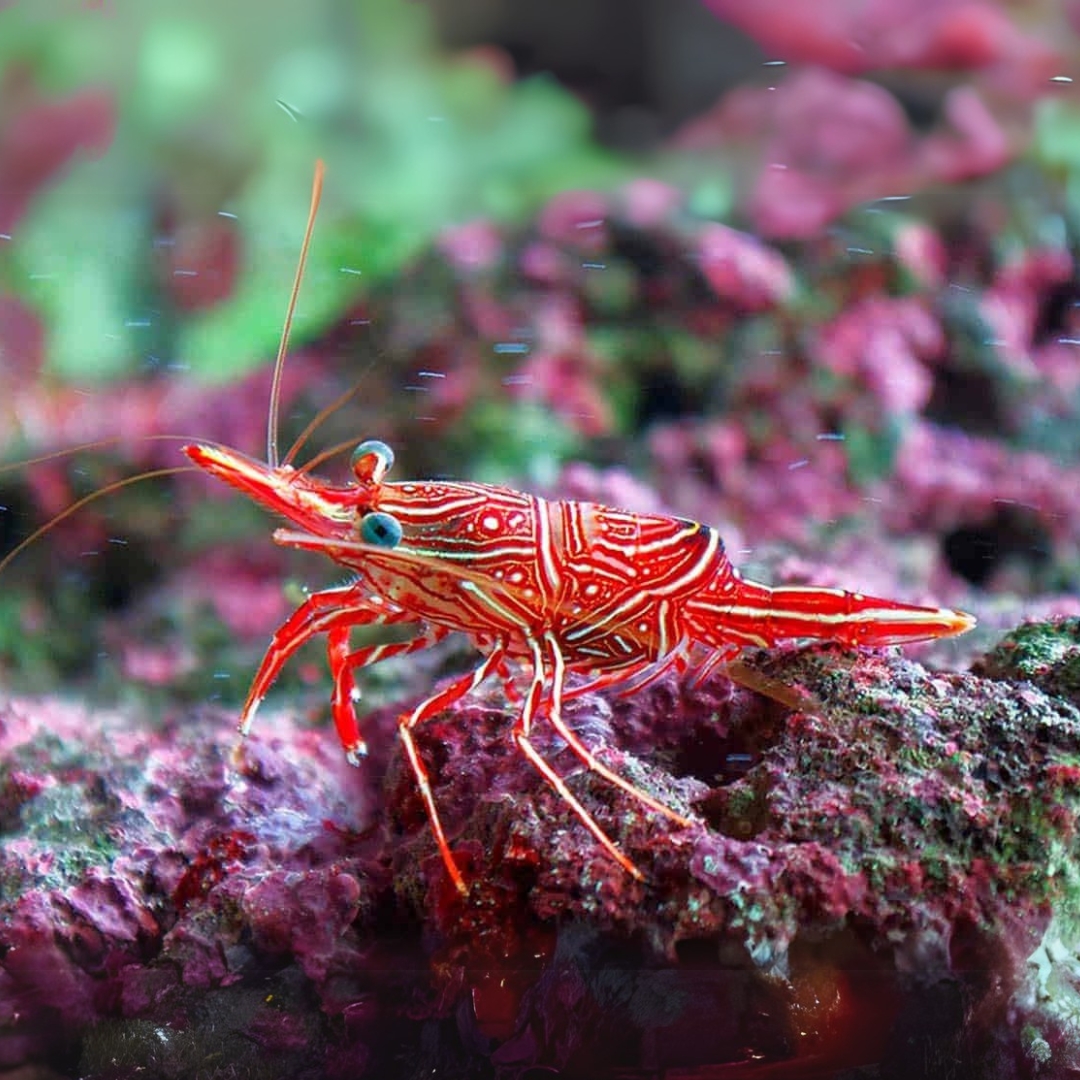
キャメルシュリンプは、赤と白の更紗模様、丸い黒い目、そして背中が少し盛り上がって見える体型が印象的な小型の海水エビです。日本ではスザクサラサエビとして扱われることが多く、ライブロックの陰から姿を見せて餌を探すしぐさや、体をゆらゆらと揺らすような動きが観察の楽しみになります。丈夫で人工飼料にも慣れやすい一方、サンゴのポリプをつつくことがあるため、サンゴ水槽よりも魚中心の海水水槽での飼育に向いた種類です。The camel shrimp is a small marine shrimp known for its red-and-white pattern, rounded black eyes, and slightly humped body profile. In Japan it is commonly treated as Suzaku-sarasa-ebi. It is enjoyable to watch as it emerges from live rock crevices, searches for food, and gently sways its body. Although hardy and usually easy to feed, it may nip coral polyps, so it is better suited to fish-only or fish-dominant marine aquariums than reef tanks.
インド洋から西部・中部太平洋にかけての熱帯から亜熱帯域。日本では琉球列島以南の暖かい海域で記録されるサラサエビ類として扱われます。自然下では岩礁やサンゴ礫の隙間、洞窟状の場所に群れて潜むことが多いです。Tropical to subtropical Indo-Pacific waters. In Japan it is associated with warm southern waters such as the Ryukyu region. In the wild, it often shelters in groups within rocky crevices, coral rubble, and cave-like spaces.
最大体長 / Max Size
おおむね4cm前後。流通個体はさらに小さいことも多く、オスは成熟するとハサミ脚が目立つようになります。Around 4 cm in total length. Specimens in the aquarium trade are often smaller, and mature males develop more conspicuous claws.
寿命 / Lifespan
明確な寿命データは限られますが、飼育下では1から3年程度を目安にされることが多いです。導入時の水合わせ、脱皮不全の予防、安定した水質が長期飼育の鍵になります。Precise lifespan data are limited, but in aquariums they are commonly expected to live roughly 1 to 3 years. Slow acclimation, prevention of molting problems, and stable water quality are important for longevity.
飼育環境 / Aquarium Environment
水槽サイズ / Tank Size
単独から少数であれば30cmキューブ水槽以上でも飼育可能ですが、水質を安定させやすい45cm規格水槽以上が安心です。魚との混泳や複数飼育を考える場合は、60cm規格水槽以上をおすすめします。A 30 cm cube tank can work for a single or small number of shrimp, but a standard 45 cm tank or larger is safer because water quality is easier to stabilize. For groups or fish tank mates, a standard 60 cm tank or larger is recommended.
水温 / Temperature
24から26℃前後が管理しやすい目安です。短期的には22から28℃程度に耐えることがありますが、急変と高水温は避けてください。About 24 to 26°C is an easy-to-manage target. It may tolerate roughly 22 to 28°C for short periods, but sudden changes and overheating should be avoided.
水質 / Water Quality
海水比重は1.023から1.025前後、pHは8.0から8.4を目安にします。アンモニアと亜硝酸は0を維持し、硝酸塩も低めに保ちます。甲殻類なので銅を含む薬剤や急な比重変化には非常に弱い点に注意してください。Aim for a specific gravity of about 1.023 to 1.025 and pH 8.0 to 8.4. Ammonia and nitrite should remain at zero, and nitrate should be kept low. As crustaceans, they are highly sensitive to copper-based medications and sudden salinity changes.
レイアウト / Layout
ライブロックやサンゴ岩で、暗い隙間、洞窟、オーバーハングを作ると落ち着きます。昼間は隠れていることも多いため、無理に明るい前面へ出そうとせず、夜間や消灯前後の行動を観察すると本来の姿が見やすくなります。Provide live rock or reef rock with shaded crevices, caves, and overhangs. They often hide during the day, so do not force them into bright open areas. Their natural behavior is easier to observe around dusk or after the lights are off.
注意点 / Precautions
サンゴやイソギンチャクのポリプをつつくことがあるため、リーフセーフなエビとしては扱わない方が安全です。特にマメスナギンチャク、スターポリプ、ディスクコーラル、柔らかいソフトコーラル、弱ったLPSなどは被害を受ける可能性があります。It should not be treated as a reliably reef-safe shrimp because it may nip coral and anemone polyps. Zoanthids, star polyps, mushroom corals, soft corals, and weakened LPS corals may be at risk.
餌と給餌 / Feeding
餌の種類 / Diet
沈下性の海水魚用ペレット、甲殻類向けの人工飼料、冷凍ブラインシュリンプ、細かく刻んだ冷凍餌、魚の食べ残しなどを食べます。自然下ではデトリタスや小動物質、付着物をついばむ雑食性のスカベンジャーとして行動します。It accepts sinking marine pellets, crustacean foods, frozen brine shrimp, finely chopped frozen foods, and leftover fish food. In nature it behaves as an omnivorous scavenger, picking at detritus, small animal matter, and surface films.
給餌のポイント / Feeding Tips
魚の餌だけに頼ると栄養が偏ったり、空腹時にサンゴをつつきやすくなったりします。消灯前後に、エビが隠れている場所の近くへ少量の沈下性餌を落とすと食べやすくなります。食べ残しは水質悪化につながるため、少量を観察しながら与えてください。Do not rely only on fish leftovers, as nutrition may become unbalanced and hungry shrimp may be more likely to nip corals. Offer a small amount of sinking food near its shelter around lights-out. Feed sparingly while observing consumption to avoid water pollution.
性格と混泳 / Temperament and Tank Mates
性格 / Temperament
魚に対してはおおむね温和で、同種同士でも複数飼育しやすいエビです。ただし、餌場では小競り合いをすることがあり、脱皮直後は非常に無防備になるため、隠れ家を十分に用意します。It is generally peaceful toward fish and can often be kept in groups with its own kind. Minor squabbles may occur around food, and newly molted shrimp are vulnerable, so ample hiding places are important.
混泳の相性 / Compatibility
カクレクマノミ、デバスズメダイ、ハタタテハゼ、小型ハゼ類など、甲殻類を積極的に捕食しない穏やかな魚と相性がよいです。一方、フグ、ゴンベ、大型ベラ、カサゴ、ハタ、ウツボなど、エビを餌として見やすい魚との混泳は避けます。ペパーミントシュリンプやスカンクシュリンプなど他の小型エビとは、水槽が狭い場合に餌や隠れ家をめぐる競合が起こることがあります。Good tank mates include peaceful fish that do not actively prey on crustaceans, such as clownfish, blue-green chromis, firefish, and small gobies. Avoid puffers, hawkfish, large wrasses, scorpionfish, groupers, and moray eels, which may treat shrimp as food. With other small shrimp such as peppermint or cleaner shrimp, competition for food and shelter may occur in small tanks.
病気と対策 / Diseases and Prevention
かかりやすい病気 / Common Diseases
魚の白点病のように目立つ病気よりも、導入直後のショック、脱皮不全、脚や触角の欠損、急な水質変化による衰弱が問題になりやすいです。銅系薬剤への中毒も甲殻類では重大なリスクです。Rather than obvious fish diseases such as marine ich, common problems include acclimation shock, failed molts, damaged legs or antennae, and weakness caused by sudden water-quality changes. Copper medication toxicity is also a serious risk for crustaceans.
対策と予防 / Prevention
購入後は点滴法などでゆっくり水合わせを行い、比重と水温を急に変えないことが重要です。定期的な少量換水でミネラルバランスと水質を保ち、脱皮殻はすぐに取り除かず、食べ戻しによるミネラル補給に任せてもかまいません。薬浴が必要な魚とは別管理にし、銅を含む薬剤を同じ水槽で使わないでください。After purchase, acclimate slowly using a drip method and avoid sudden salinity or temperature changes. Regular small water changes help maintain water quality and mineral balance. Molted shells may be left temporarily because shrimp may consume them to recover minerals. Keep medicated fish in a separate system and never use copper-based treatments in the shrimp tank.
増やし方(繁殖) / Breeding
雌雄の判別 / Sexing
成熟したオスは第一胸脚のハサミや第三顎脚が大きく発達し、メスよりもがっしりした印象になります。若い個体では差が分かりにくく、確実な判別は難しいことがあります。Mature males develop larger first chelipeds and third maxillipeds, giving them a more robust appearance than females. Young individuals can be difficult to sex reliably.
繁殖形態 / Reproduction
雌雄異体で、交尾後にメスが卵を腹部の腹肢に抱えます。孵化した幼生はプランクトン生活を送るため、淡水エビのように親と同じ形の稚エビがすぐに底で育つタイプではありません。It has separate sexes. After mating, the female carries eggs under her abdomen. The hatched larvae are planktonic, so they do not immediately grow on the bottom as miniature versions of the adults like some freshwater shrimp.
繁殖のポイント / Breeding Tips
水槽内で抱卵個体が見られることはありますが、幼生を成長させるには専用の育成水槽、微細な初期餌、安定した水温と水質、吸い込まれにくいエアレーションなどが必要です。一般家庭では観察対象として楽しみ、計画的な繁殖は上級者向けと考えるのが現実的です。Egg-carrying females may appear in aquariums, but raising larvae requires a dedicated rearing tank, very small starter foods, stable temperature and water quality, and gentle aeration that does not trap larvae. In most home aquariums, breeding is best regarded as an advanced challenge.
雑学と豆知識 / Trivia and Fun Facts
1. ラクダのような背中が名前の由来 / 1. A hump that inspired the name
キャメルシュリンプという名前は、体の中央付近が盛り上がって見える独特のシルエットに由来します。小さなエビでありながら、横から見ると背中にこぶを背負っているように見えるため、英語圏ではキャメル、つまりラクダの名で親しまれてきました。The name camel shrimp comes from its distinctive profile, where the middle of the body appears raised like a small hump. Although tiny, its side view resembles a miniature camel-like silhouette.
2. ヒンジビークと呼ばれる可動式の額角 / 2. The movable hinge-beak
サラサエビ科の仲間は、額角が上下に動く独特の構造を持つことで知られます。この特徴から、英名ではヒンジビーク、つまり蝶番のようなくちばしを持つエビとも呼ばれます。狭い岩の隙間で暮らす本種にとって、前方の障害物を探るうえで役立つ構造だと考えられています。Members of the family Rhynchocinetidae are known for a rostrum that can move like a hinge. This is why they are also called hinge-beak shrimp. For a shrimp that lives among tight rocky crevices, this structure is thought to help it sense and navigate obstacles.
3. 赤白模様は派手でも、自然下では隠れるための色 / 3. Bright colors that can work as camouflage
水槽照明の下では鮮やかに見える赤と白の模様も、暗い岩陰や洞窟では体の輪郭を分断する保護色として働くと考えられます。赤い色は水中の暗所では目立ちにくくなり、複雑な白斑やラインは体の形をぼかします。観賞魚としての美しさと、野生での隠れ上手な性質が同じ模様に同居している点が魅力です。Under aquarium lights, the red-and-white pattern looks vivid, but in shaded crevices and caves it may help break up the outline of the body. Red becomes less conspicuous in dim underwater settings, while the white spots and lines blur the body shape. The same pattern offers both ornamental beauty and natural concealment.
4. ダンシングシュリンプと呼ばれる揺れる動き / 4. The swaying movement behind the name dancing shrimp
本種は体を前後左右にゆっくり揺らすような動きを見せることがあり、ダンシングシュリンプという呼び名にもつながっています。この動きの意味は完全には一つに決められていませんが、周囲の距離感をつかむ、体の輪郭を目立ちにくくする、仲間や周囲の生物へ存在を示すなど、複数の役割が考えられます。This shrimp may gently sway its body from side to side or back and forth, which has led to the name dancing shrimp. The purpose is not limited to a single confirmed explanation, but it may help with spatial perception, concealment, or signaling to nearby animals.
5. ペパーミントシュリンプとの混同に注意 / 5. Do not confuse it with peppermint shrimp
赤白の小型エビという共通点から、ペパーミントシュリンプと混同されることがあります。しかし、キャメルシュリンプは背中の盛り上がり、白い斑点やライン、可動式の額角が目立ち、飼育面でもサンゴへの食害リスクがより問題になりやすい種類です。カーリー対策やサンゴ水槽のメンテナンス要員として導入する場合は、販売名だけでなく外見と性質を確認することが大切です。Because it is a small red-and-white shrimp, it is sometimes confused with peppermint shrimp. Camel shrimp have a more humped body, distinctive white spots and lines, and a movable rostrum. They are also more likely to cause problems by nipping corals. When choosing shrimp for pest anemone control or reef maintenance, check both appearance and behavior, not just the sales name.
まとめ / Conclusion
キャメルシュリンプは、派手な赤白模様とユニークな体型、夜間にライブロックの隙間から姿を見せる観察の楽しさを兼ね備えた、海水水槽向けの魅力的な小型甲殻類です。丈夫で餌付きやすく、魚中心の水槽では残餌をついばむお掃除役としても活躍します。The camel shrimp is an attractive small marine crustacean with bold red-and-white markings, a unique body shape, and interesting nocturnal behavior around live rock crevices. It is hardy, easy to feed, and can serve as a useful scavenger in fish-dominant marine aquariums.
一方で、サンゴやイソギンチャクのポリプをつつく可能性があるため、リーフセーフなエビとして安易に導入するのは避けたい種類です。ゆっくりした水合わせ、銅薬を使わない管理、十分な隠れ家、穏やかな魚との混泳を意識すれば、キャメルシュリンプらしい愛らしい動きを長く楽しめます。However, it should not be added casually as a reef-safe shrimp because it may nip coral and anemone polyps. With slow acclimation, copper-free care, plenty of shelters, and peaceful fish tank mates, you can enjoy its charming camel shrimp behavior for a long time.
Gordon, I. (1936). On the macruran genus Rhynchocinetes, with description of a new species. Proceedings of the Zoological Society of London. 確認した主な内容: Rhynchocinetes durbanensis の原記載、学名の著者年、分類学的な出発点。
World Register of Marine Species. Rhynchocinetes durbanensis Gordon, 1936. 確認した主な内容: 現行の学名、分類階級、シノニムや分類上の扱い。 URL: https://www.marinespecies.org/aphia.php?p=taxdetails&id=210592
De Grave, S. & Fransen, C. H. J. M. (2011). Carideorum Catalogus: The Recent species of the dendrobranchiate, stenopodidean, procarididean and caridean shrimps. Zoologische Mededelingen, 85. 確認した主な内容: コエビ下目およびサラサエビ科・サラサエビ属の分類整理、近縁群との位置づけ。
Ocean Biodiversity Information System (OBIS). Occurrence records for Rhynchocinetes durbanensis. 確認した主な内容: インド太平洋域を中心とした分布記録、海産種としての出現情報。 URL: https://obis.org/
Okuno, J. and related taxonomic works on Indo-West Pacific Rhynchocinetes species. 確認した主な内容: Rhynchocinetes durbanensis と近縁種の識別、サラサエビ類で起こりやすい同定上の注意点。
Bauer, R. T. (2004). Remarkable Shrimps: Adaptations and Natural History of the Carideans. University of Oklahoma Press. 確認した主な内容: コエビ類の形態、生態、抱卵、幼生、行動、生息場所への適応に関する基礎情報。
Calado, R. (2008). Marine Ornamental Shrimp: Biology, Aquaculture and Conservation. Wiley-Blackwell. 確認した主な内容: 観賞用海産エビ類の飼育、繁殖、幼生育成、餌料、導入時の注意点。
Timmons, M. B. & Ebeling, J. M. (2013). Recirculating Aquaculture. Ithaca Publishing Company. 確認した主な内容: 閉鎖循環式水槽におけるアンモニア、亜硝酸、硝酸塩、溶存酸素、濾過管理などの水質管理の基礎。
Vaughan, D. B., Grutter, A. S., Costello, M. J. and Hutson, K. S. (2017). Cleaner fishes and shrimp diversity and a re-evaluation of cleaning symbioses. Fish and Fisheries, 18(4), 698-716. 確認した主な内容: クリーナーシュリンプ類の行動、生態的役割、清掃共生を扱う際の注意点。
World Organisation for Animal Health (WOAH). Manual of Diagnostic Tests for Aquatic Animals: White spot disease. 確認した主な内容: 甲殻類に関わる重要疾病、輸入・移動時の疾病リスクを説明するための基礎資料。 URL: https://www.woah.org/



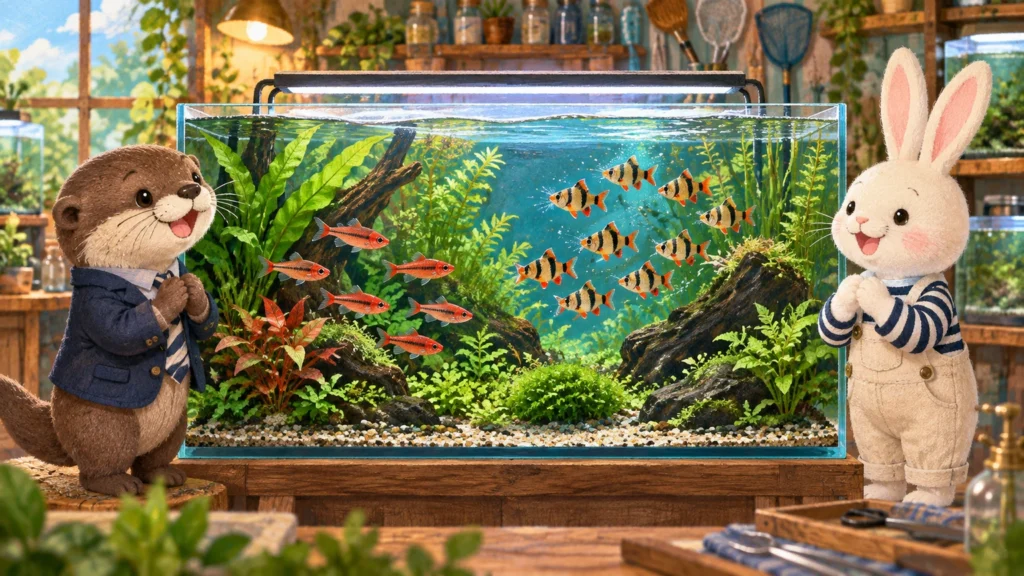 アイのアクアグッズ案内バルブの仲間に合わせる飼育用品|チェリーバルブ・スマトラ・中型種の水槽とろ過道具の特徴や使い方、選ぶときのポイントをアイが紹介します。記事はコチラ →
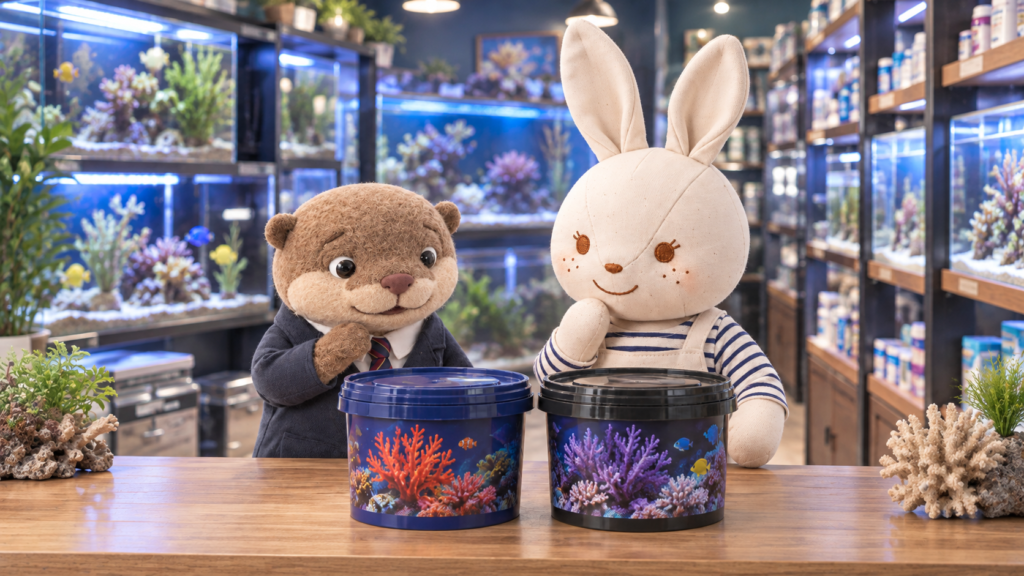 アイのアクアグッズ案内ショップで見かけるカラフルなバケツ。いったい何が入ってる?道具の特徴や使い方、選ぶときのポイントをアイが紹介します。記事はコチラ →
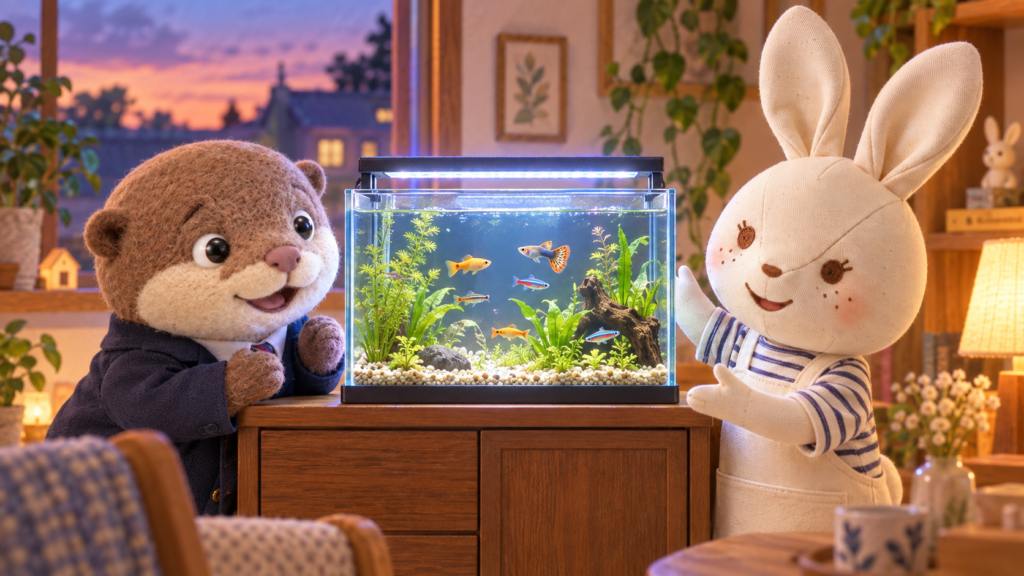 アイのアクアグッズ案内水槽ライトの選び方|魚の見え方・水草・海水で選ぶおすすめ照明道具の特徴や使い方、選ぶときのポイントをアイが紹介します。記事はコチラ →
 アイのアクアグッズ案内エーハイムはおもちゃから始まった? 小さな噴水から水槽へ、アイとコタロウの探訪道具の特徴や使い方、選ぶときのポイントをアイが紹介します。記事はコチラ →



コメント