

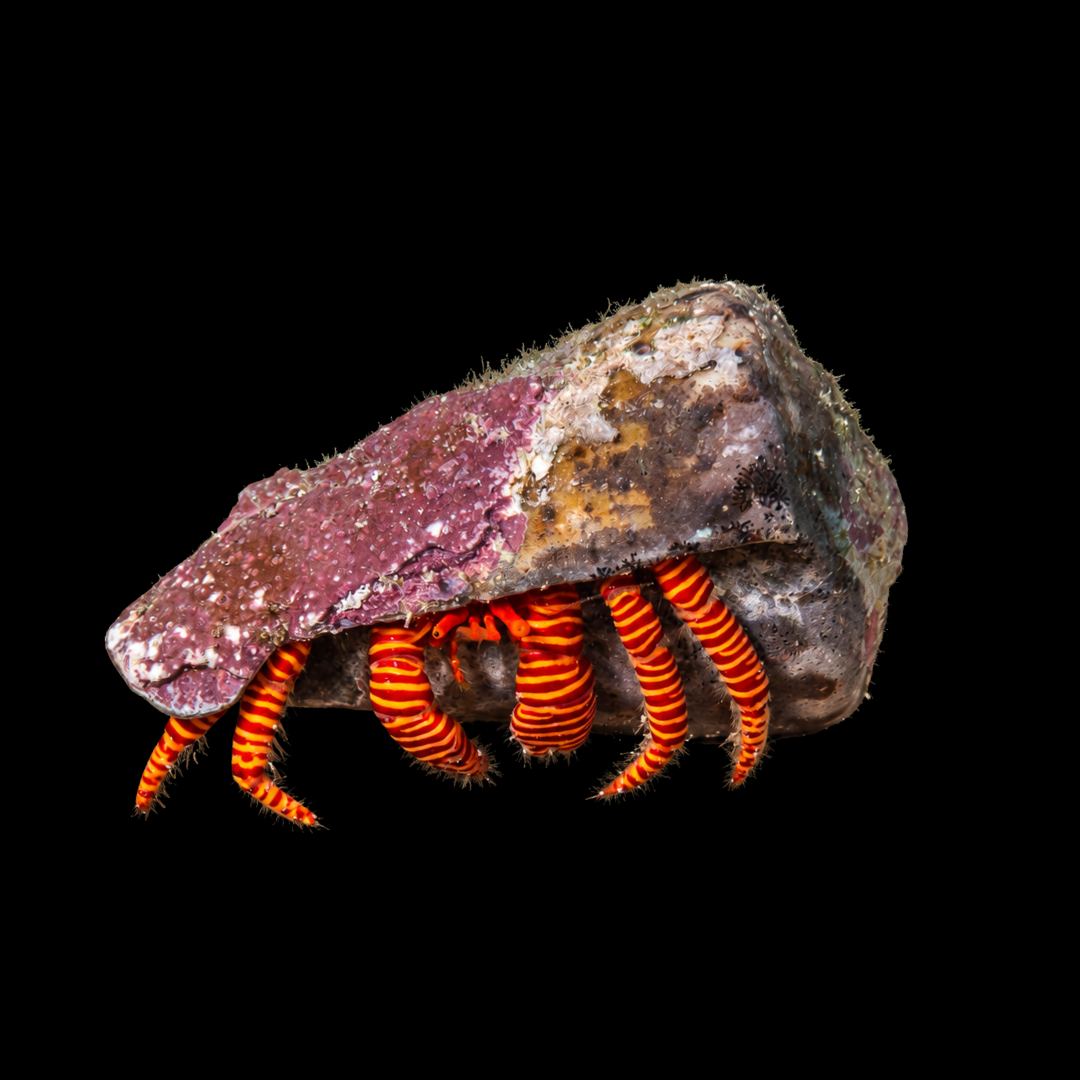
解説 / Description
ベニワモンヤドカリは、赤から赤橙色の脚に黄色や淡色の輪模様が並ぶ、色鮮やかな海水性のヤドカリです。浅い岩礁やサンゴ礁に暮らし、平たい体を生かしてイモガイ類の空き殻をよく利用します。ハサミで岩の表面から餌を拾う姿や、気に入った貝殻へ引っ越す様子には、魚とはひと味違う魅力があります。藻類や残餌を食べるため、お掃除役として迎えられることもありますが、それだけで十分な栄養が得られるとは限りません。安定した海水環境と適切な給餌、体に合う交換用の貝殻が、健やかな暮らしを支えます。 The Halloween hermit crab is a colorful marine hermit crab with red to reddish-orange legs marked by yellow or pale rings. It inhabits shallow rocky and coral reefs, where its flattened body allows it to make frequent use of empty cone-snail shells. Watching it collect food from rock surfaces or move into a preferred shell offers a different kind of fascination from watching fish. Although it is sometimes introduced as a cleanup animal because it eats algae and leftover food, these resources may not provide adequate nutrition. Stable seawater conditions, appropriate feeding, and suitably sized replacement shells support its well-being.
基本情報 / Basic Information
| 学名 / Scientific Name | Ciliopagurus strigatus (Herbst, 1804) |
|---|---|
| 通称 / Common Name | ベニワモンヤドカリ。海外ではハロウィン・ハーミットクラブとも呼ばれます。Halloween hermit crab; also known as the striped hermit crab or cone-shell hermit crab. |
| 分類 / Family | 節足動物門・軟甲綱・十脚目・ヤドカリ下目・ヤドカリ上科・ヤドカリ科(Diogenidae)・ワモンヤドカリ属(Ciliopagurus)。Phylum Arthropoda; class Malacostraca; order Decapoda; infraorder Anomura; superfamily Paguroidea; family Diogenidae; genus Ciliopagurus. |
| 英名 / English Name | Halloween hermit crab |
| 分布 / Distribution | 紅海、東アフリカ沿岸から日本、熱帯太平洋、フランス領ポリネシアにかけてのインド太平洋。国内では房総半島、紀伊半島、四国、沖縄などに記録があります。主に浅い岩礁やサンゴ礁、その周辺の砂礫底で見られます。The Indo-Pacific, from the Red Sea and East Africa to Japan, the tropical Pacific, and French Polynesia. Japanese records include the Boso Peninsula, Kii Peninsula, Shikoku, and Okinawa. It mainly occurs on shallow rocky and coral reefs and adjacent sandy or rubble-covered bottoms. |
| 最大体長 / Max Size | 全長約4cmとされますが、ヤドカリの大きさは測定部位によって数値が異なります。分類学で用いる頭胸甲前部の長さでは、約12mmまでの記録があります。背負っている貝殻の大きさとは区別してください。Reported total length reaches about 4 cm, but measurements of hermit crabs differ according to the body parts measured. Shield length, the measurement commonly used in taxonomy, has been reported up to about 12 mm. These measurements should be distinguished from the size of the occupied shell. |
| 寿命 / Lifespan | 本種に限定した信頼できる寿命の情報は十分ではありません。購入時の年齢も分かりにくいため、購入後の飼育期間がそのまま寿命を示すわけではありません。長期飼育を目指して、安定した環境を整えましょう。Reliable species-specific lifespan data are limited. The age of a purchased animal is also usually unknown, so the time it survives after purchase does not represent its full lifespan. Provide stable conditions suitable for long-term care. |
飼育環境 / Aquarium Environment
| 水槽サイズ / Tank Size | 1匹を飼う場合は、水質の安定と歩行場所の確保を考え、60cm規格水槽(60×30×36cm、容量約65L)以上を飼育設備の目安にします。複数飼育や魚との混泳では、90cm規格水槽(90×45×45cm、容量約182L)以上を検討してください。これらは本種の生存に必要な最低水量を示す数値ではなく、管理のしやすさを考えた目安です。実際の水量は底砂、岩、水位によって少なくなるため、底面積や隠れ場所、同居する生体の数も合わせて判断します。For one crab, a standard Japanese 60 cm aquarium measuring 60 × 30 × 36 cm, with an approximate capacity of 65 L, is a practical equipment guideline for water stability and walking space. For multiple crabs or a fish community, consider a standard 90 cm aquarium measuring 90 × 45 × 45 cm, approximately 182 L, or larger. These are management guidelines rather than established minimum water volumes required for survival. Actual water volume is reduced by sand, rocks, and water level, so also consider floor area, shelters, and total stocking. |
|---|---|
| 水温 / Temperature | 飼育管理の目安は24~26℃です。季節に応じてヒーターや冷却設備を使い、高温が続く状態や急な温度変化を避けます。水温が高いほど水に溶け込める酸素量は少なくなるため、水面を適度に動かし、水槽内にも水流を確保してください。A practical aquarium target is 24–26°C. Use heating or cooling as needed to avoid prolonged overheating and sudden temperature changes. Warmer water holds less dissolved oxygen, so maintain appropriate surface movement and circulation throughout the aquarium. |
| 水質 / Water Quality | 海水用の人工海水を使い、塩分濃度は33~35‰程度、比重は25℃でおよそ1.024~1.026、pHは8.1~8.4を管理の目安にします。測定器の基準温度や補正方法を確認し、数値を急に変えないことが大切です。十分に立ち上がったろ過を用い、アンモニアと亜硝酸は検出されない状態を維持します。硝酸塩やリン酸塩は過剰に蓄積させず、定期的な換水と残餌の回収で管理してください。蒸発分は適切に処理した淡水で補い、換水には水槽と温度・塩分を合わせた海水を使います。Use a marine aquarium salt mix and maintain salinity around 33–35 ppt, approximately specific gravity 1.024–1.026 at 25°C, with pH around 8.1–8.4 as management guidelines. Check your instrument’s reference temperature and correction requirements, and avoid abrupt changes. Use fully established biological filtration and keep ammonia and nitrite undetectable. Prevent excessive nitrate and phosphate accumulation through regular water changes and removal of leftovers. Replace evaporated water with appropriately treated freshwater, and use temperature- and salinity-matched seawater for water changes. |
| レイアウト / Layout | ライブロックや海水用の岩を安定して組み、暗い隙間と歩き回れる場所を作ります。底砂を敷く場合は、汚れを管理できる厚さにしてください。小さなサンゴや倒れやすい岩は固定します。交換用には、清潔で欠けのないイモガイ類などの空き殻を、現在の宿と同程度から少し大きめまで複数用意しましょう。殻の外寸だけでなく、入口の形と内部の広さが体に合うことが大切です。Arrange stable live rock or marine-safe rock to provide shaded crevices and open walking areas. If using sand, choose a depth that can be kept clean. Secure small corals and unstable rocks. Offer several clean, undamaged empty shells, particularly cone-snail shells, ranging from the current shell size to slightly larger sizes. Aperture shape and internal space matter as much as external dimensions. |
| 注意点 / Precautions | 導入時は温度と塩分の差を確認し、急変を避けて水合わせします。脱皮前後は岩陰にこもることがあるため、無理に取り出したり、貝殻から引き抜いたりしないでください。銅を含む魚病薬は同居水槽で使用しません。脱皮不全の予防を目的として、ヨウ素やストロンチウムをすべての飼育水槽に添加すべきだとする十分な根拠はありません。測定せずに添加量を増やすことは避けます。交換用には空き殻を使い、生きたイモガイを導入しないでください。イモガイ類には、人に危険な毒を持つ種類があります。Check temperature and salinity differences before introduction and acclimate without abrupt changes. The crab may hide before or after molting; do not force it out or pull it from its shell. Never use copper-based fish medications in its aquarium. There is insufficient evidence to recommend iodine or strontium dosing in every aquarium specifically to prevent failed molts. Avoid increasing supplements without measurement. Use empty replacement shells, never live cone snails, some of which possess venom dangerous to people. |
餌と給餌 / Feeding
| 餌の種類 / Diet | 藻類や岩などに付着した有機物、動物質を食べる雑食性です。飼育下では海水性甲殻類向けの沈下性人工飼料を中心に、藻類を含む飼料、無調味の海苔、少量のアサリのむき身や冷凍イサザアミなどを組み合わせます。コケや他の生体の食べ残しだけに頼らず、植物質と動物質の両方を用意しましょう。It is an omnivore that consumes algae, organic material attached to surfaces, and animal matter. In captivity, use sinking foods suitable for marine crustaceans, supplemented with algae-based foods, unseasoned nori, and small portions of clam meat or frozen mysid shrimp. Provide both plant and animal foods rather than relying entirely on algae and leftovers from other animals. |
|---|---|
| 給餌のポイント / Feeding Tips | 夕方から消灯後など、実際に活動している時間帯に少量を与えます。水槽内で得られる餌の量が異なるため、給餌頻度は一律に決めず、食べ方や同居する魚に餌を奪われていないかを見ながら調整してください。餌が乏しい水槽では、こまめな補助給餌が必要です。ピンセットで近くに置くと食べたか確認しやすくなりますが、ハサミに無理に押し付ける必要はありません。食べ残したアサリなどは回収し、脱皮中の個体に給餌を強要しないようにします。Offer small portions when the crab is actually active, often in the evening or after lights out. Because available food varies between aquariums, adjust feeding frequency according to intake and competition from fish rather than following a fixed schedule. Aquariums with little natural food require regular supplemental feeding. Placing food nearby with tongs makes intake easier to observe, but do not force food against its claws. Remove uneaten animal foods and do not force a molting crab to feed. |
性格と混泳 / Temperament and Tank Mates
| 性格 / Temperament | 警戒すると素早く貝殻へ引っ込み、落ち着くと岩や底砂の上を歩いて餌を探します。比較的おとなしい個体もいますが、空腹や貝殻の不足、個体間の競争によって、ほかのヤドカリや巻貝を攻撃することがあります。性格には個体差があるため、お掃除役として導入した場合も、同居生体への行動を観察してください。When alarmed, it quickly retreats into its shell; when settled, it walks over rocks and sand searching for food. Some individuals are relatively quiet, but hunger, shell shortages, and competition can lead to attacks on other hermit crabs or snails. Temperament varies, so observe its interactions with tank mates even when it has been introduced as a cleanup animal. |
|---|---|
| 混泳の相性 / Compatibility | 甲殻類を捕食しない温和な小型海水魚が候補ですが、魚種ごとの食性や個体の行動を確認します。フグ類、モンガラカワハギ類、大型の肉食性ベラ、タコなどとの同居は避けてください。小型ヤドカリや巻貝は攻撃される可能性があり、十分な餌と空き殻を用意しても安全を保証できません。サンゴとの同居では、背負った貝殻による接触や転倒に注意します。弱った生体をつつく場合もあるため、導入後は継続して行動を観察しましょう。Peaceful small marine fish that do not prey on crustaceans may be suitable, but assess the diet of each species and the behavior of individual fish. Avoid pufferfish, triggerfish, large predatory wrasses, and octopuses. Small hermit crabs and snails may be attacked, and abundant food and spare shells cannot guarantee their safety. With corals, watch for contact damage and toppling caused by the occupied shell. Continue observing behavior after introduction, as weakened animals may also be picked at. |
病気と対策 / Diseases and Prevention
| かかりやすい病気 / Common Diseases | 本種特有の病気については情報が限られます。飼育上は、脱皮不全、水質や塩分の急変による衰弱、栄養不足、争いによる脚やハサミの損傷、銅などによる中毒に注意します。これらには感染症ではない問題も含まれます。体表の変色やただれ、長く続く摂餌不良は異常の手掛かりになりますが、隠れていることや脱皮殻が見つかったことだけで、病気や死亡と判断しないでください。Information on diseases specific to this species is limited. Important aquarium problems include failed molts, weakness following abrupt water or salinity changes, poor nutrition, injuries from fighting, and poisoning by copper or other contaminants. Some are noninfectious conditions. Surface discoloration, lesions, or persistent loss of appetite can indicate trouble, but hiding or finding a shed exoskeleton alone does not establish illness or death. |
|---|---|
| 対策と予防 / Prevention | 安定した塩分と水温、適切な水流、偏りのない給餌、脱皮時の隠れ場所を確保します。異常が見られたら、まず水温、塩分、アンモニアなどを測り、最近使用した添加剤や薬剤、同居生体からの攻撃を確認してください。魚の治療は別水槽で行い、銅を使用した器具やろ材の流用にも注意します。定期的な換水を基本とし、脱皮不全をヨウ素不足と決めつけて添加剤を増量しないでください。失った脚はその後の脱皮で再生することがあります。損傷した個体は、さらに攻撃を受けない環境で保護します。Provide stable salinity and temperature, appropriate circulation, a varied diet, and sheltered molting places. If problems arise, first measure temperature, salinity, ammonia, and other relevant parameters, then review recent supplements, medications, and possible attacks by tank mates. Treat sick fish in a separate aquarium and exercise caution with equipment or media previously exposed to copper. Use regular water changes as the foundation of care; do not assume a failed molt is iodine deficiency and increase dosing. Lost limbs may regenerate through later molts. Protect injured animals from further attacks. |
増やし方(繁殖) / Breeding
| 雌雄の判別 / Sexing | 体色や貝殻の形だけで確実に見分けることは難しく、腹側の生殖孔や腹部の付属肢を確認します。ヤドカリ類では、ハサミを持つ脚を第1対として数え、雌の生殖孔は第3対、雄の生殖孔は第5対の脚の付け根に位置します。腹部に卵を抱えている個体は雌です。ただし、貝殻に入ったままでは見えにくいため、観察のために無理に引き出さないでください。Color and shell shape do not provide reliable sex identification. Sexing involves examination of ventral gonopores or abdominal appendages. In hermit crabs, counting the claw-bearing legs as the first pair, female gonopores occur at the bases of the third pair and male gonopores at the bases of the fifth. An animal carrying abdominal eggs is female. These structures can be difficult to see while the animal remains in its shell; never pull it out merely to inspect its sex. |
|---|---|
| 繁殖形態 / Reproduction | 雌雄が交尾し、雌が腹部の付属肢に卵を保持する卵生です。ヤドカリ類の幼生は、一般に海水中を浮遊するゾエア期を経て、底で暮らす準備をするグラウコトエ期へ移ります。グラウコトエはメガロパに相当する段階の呼び名で、この頃に小さな貝殻を利用し始めます。本種については、抱卵期間や卵数、幼生の発育日数を飼育の目安として示せる情報が十分ではありません。This is an egg-laying species: after mating, the female carries eggs on abdominal appendages. Hermit crab larvae generally pass through planktonic zoeal stages before reaching the glaucothoe stage, when they prepare for bottom-dwelling life. Glaucothoe is the name used for the stage corresponding to the megalopa, during which use of tiny shells begins. Species-specific information is insufficient to provide reliable aquarium guidelines for incubation time, egg numbers, or larval development periods. |
| 繁殖のポイント / Breeding Tips | 通常の混泳水槽で、放出された幼生を稚ヤドカリまで育てることは難しく、繁殖には専門的な管理が必要です。幼生は魚に食べられたり、ポンプやろ過装置に取り込まれたりしやすいため、別の幼生飼育設備を用意します。発育段階に合う微小な餌、清潔な海水、幼生を傷めない水流を確保し、底で暮らし始める時期には十分に小さい空き殻を用意する必要があります。本種に適した餌や発育条件には不明点があり、抱卵や孵化が見られても、稚ヤドカリまで育つとは限りません。Raising released larvae to juvenile hermit crabs in a normal community aquarium is difficult and requires specialist management. Larvae are vulnerable to fish predation and intake into pumps or filters, so a separate rearing system is needed. Care requires suitably small foods for each developmental stage, clean seawater, gentle circulation, and very small empty shells when bottom-dwelling life begins. Appropriate species-specific diets and developmental conditions remain incompletely understood; observing eggs or hatching does not guarantee survival to the juvenile stage. |
雑学と豆知識 / Trivia and Fun Facts
| 1. 狭い殻口に収まる、平たい体 / 1. A Flat Body for a Narrow Shell Opening | イモガイの貝殻を眺めると、入口が細長く、丸い入口を持つ巻貝とは形が違うことに気付きます。ベニワモンヤドカリは体が平たく、この狭い入口に収まることができます。つまり、宿として使える貝殻は、体の形とも深く結び付いているのです。飼育下で空き殻を用意しても引っ越さないときは、大きさだけでなく、入口の幅や内部の形も見直してみましょう。見た目が立派な殻でも、その個体にとって使いやすいとは限りません。A cone-snail shell has a long, narrow opening, unlike the rounded aperture of many other snails. The Halloween hermit crab’s flattened body allows it to fit through that restricted entrance. The shells it can use are therefore closely connected to its body shape. If an aquarium crab ignores a replacement shell, check its aperture width and internal shape as well as its size. An impressive-looking shell is not necessarily a suitable home for that individual. |
|---|---|
| 2. 1804年から続く学名の歩み / 2. A Scientific Name with Roots in 1804 | ベニワモンヤドカリは1804年にHerbstによって、Cancer strigatusという名前で記載されました。当時のCancer属には、現在なら別々の仲間として扱う甲殻類も含まれていました。その後、分類の研究が進むにつれて属の位置付けが変わり、Trizopagurus strigatusなどの学名を経て、1995年に設立されたCiliopagurus属に置かれています。古い文献で異なる属名に出会うのは、同じ生き物について、どの仲間に近いのかという理解や分類の基準が見直されてきたためです。Herbst described this crab in 1804 as Cancer strigatus. At that time, Cancer included crustaceans that would now be assigned to different groups. As classification developed, its generic placement changed, including use of Trizopagurus strigatus, before placement in Ciliopagurus, established in 1995. Different genus names in older literature reflect revisions to classification and understanding of the animal’s relationships. |
| 3. 輪模様が教えてくれる種の違い / 3. Color Rings as Clues to Species Identity | よく似た輪模様を持つ仲間でも、すべてがベニワモンヤドカリではありません。2009年の研究では、本種とC. tricolor、C. vakovako、C. galziniからなる近縁な4種が比較され、色彩の違いが遺伝的な違いとも対応することが確かめられました。つまり、よく似た体の形を持つ仲間でも、輪模様の色や並び方が種を見分ける手掛かりになるのです。ただし、成長による変化にも注意が必要です。本種の成体は脚の先端近くまで縞が続きますが、若い個体では先端付近が白くなるため、一部分の色だけで判断しないことが大切です。Not every similarly ringed hermit crab belongs to this species. A 2009 study compared four close relatives—C. strigatus, C. tricolor, C. vakovako, and C. galzini—and confirmed that color differences correspond to genetic distinctions. Even when body shapes are very similar, the colors and arrangement of rings can therefore help distinguish species. Growth-related changes must also be considered: adults have banding extending nearly to the leg tips, whereas young individuals have whitish distal areas. Identification should not depend on one small patch of color. |
| 4. ハサミに備わる発音の仕組み / 4. Sound-Producing Structures on the Claws | ベニワモンヤドカリのハサミには、細かな隆起が並ぶ発音器官があります。硬い部分をこすり合わせて音や振動を生む仕組みで、昆虫が体の一部をこすって鳴く方法にも似ています。ただし、発音器官があることと、その音が何のために使われるかは別の問題です。近縁のヤドカリでは防御に関わる発音が研究されていますが、その結果をそのまま本種に当てはめることはできません。本種の発音を求愛や仲間への警報と断定せず、どの場面で使われるのかを慎重に捉える必要があります。The Halloween hermit crab has sound-producing structures consisting of fine ridges on its claws. Rubbing hard surfaces together produces sound or vibration, resembling the mechanism used by some insects. However, the presence of a sound-producing structure does not by itself establish the function of the sound. Defensive sound production has been studied in a related hermit crab, but those findings cannot automatically be applied to this species. Courtship and alarm signaling should not be presented as established functions without species-specific evidence. |
| 5. ハロウィンという愛称と、お掃除役の素顔 / 5. A Halloween Nickname and the Reality of Cleanup | 英名のHalloween hermit crabは、暖色の鮮やかな模様がハロウィンを連想させる呼び名です。華やかな脚で岩の表面を探り、細かな餌を拾う姿には、お掃除役として親しまれる理由が感じられます。ただし、食べた有機物がすべて水槽の外へ消えるわけではありません。摂取した栄養の一部は排泄物として水槽内に戻るため、ろ過や換水は引き続き必要です。また、藍藻やヒドロ虫の駆除を確実に任せられる生体ではありません。何を食べているかを観察し、足りない食事を補うことが、その個体の健康を支えます。The name Halloween hermit crab evokes the holiday through its vivid warm-colored markings. Watching it explore rock surfaces and collect small food particles helps explain its popularity as a cleanup animal. Yet consumed organic material does not simply vanish from the aquarium: some nutrients return through waste, so filtration and water changes remain necessary. It is also not a dependable solution for cyanobacteria or hydroids. Observing what an individual eats and supplementing its diet when needed supports its health. |
| 6. 脱皮で変わる体、引っ越しで変わる宿 / 6. Molting Changes the Body; Moving Changes the Home | ヤドカリの外骨格は脱皮によって更新されますが、背負っている貝殻はヤドカリ自身が作ったものではなく、体と一緒に大きくなることもありません。そのため、体の成長と宿の交換は別々の出来事です。毎回の脱皮で必ず引っ越すわけではなく、同じ宿を使い続ける場合もあります。脱皮直後の柔らかい体を守れる隠れ場所と、必要なときに選べる空き殻の両方を用意することが大切です。海辺に残された空き殻も、こうした小さな生き物が暮らすための資源になります。A hermit crab renews its exoskeleton through molting, but its borrowed shell is not made by the crab and does not grow with its body. Body growth and changing homes are therefore separate events. A crab does not necessarily move after every molt and may continue using the same shell. Provide both a shelter for its soft post-molt body and suitable empty shells to choose when needed. Empty shells left in coastal habitats likewise provide resources for these small animals. |
まとめ / Conclusion
ベニワモンヤドカリは、鮮やかな輪模様と、貝殻を背負って岩の間を歩く姿が魅力の海の住人です。安定した海水、安心して隠れられる場所、植物質と動物質を含む食事、体に合う空き殻をそろえることで、日々の小さな仕草をじっくり楽しめます。 The Halloween hermit crab brings vivid rings and the charm of a shell-carrying traveler to a marine aquarium. Stable seawater, secure shelters, a diet containing both plant and animal foods, and suitable spare shells create the conditions for enjoying its everyday behavior.
同居する生体との関係を見守りながら、脱皮や引っ越しの際には静かに過ごせるよう配慮しましょう。岩陰からそっと顔を出し、選んだ貝殻を背負って歩き出す姿は、水槽の中に営まれる小さな暮らしを感じさせてくれます。 Observe its interactions with tank mates and allow it to remain undisturbed during molting and shell changes. A cautious emergence from the rocks, followed by a walk in its chosen shell, offers a glimpse of a small life unfolding within the aquarium.

気になる道具や飼い方を見つけてみませんか?
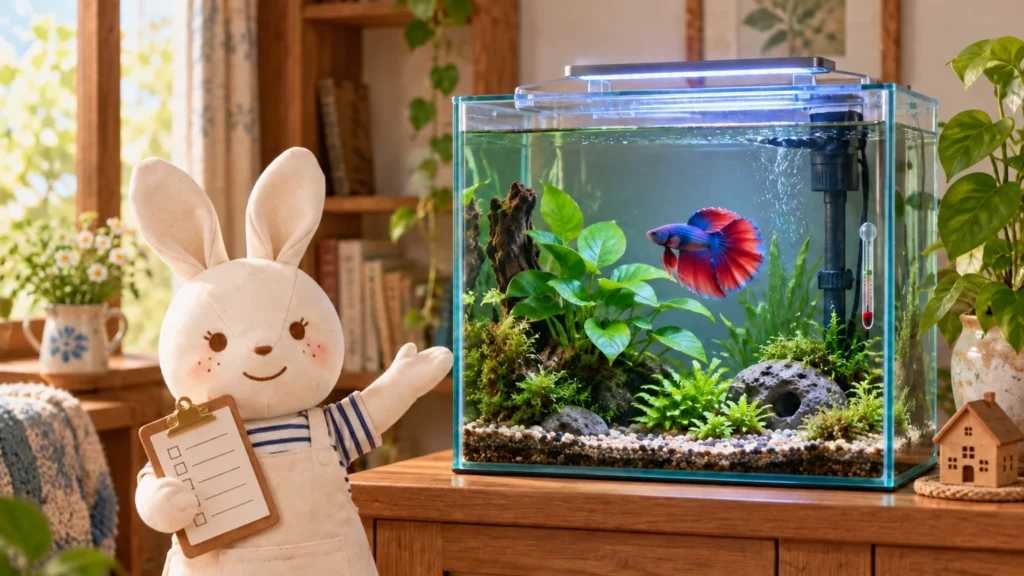 アイのアクアグッズ案内ベタの一匹飼いを楽しむ|水槽・ヒーター・ふた・フィルターの選び方ベタの一匹飼いに向く水槽容量、ふたと空気層、ヒーターと水温計、弱い水流のフィルターを、コタロウとアイの会話で分かりやすく解説します。記事はコチラ →
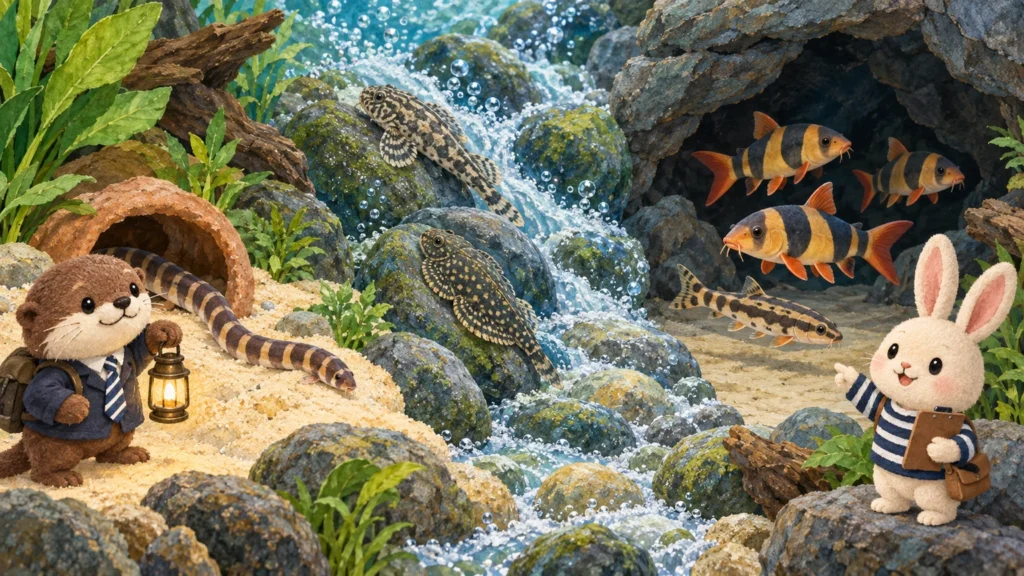 アイのアクアグッズ案内ローチの仲間に合わせる飼育用品|クーリー・流水性・ボーシャの水槽と底砂道具の特徴や使い方、選ぶときのポイントをアイが紹介します。記事はコチラ →
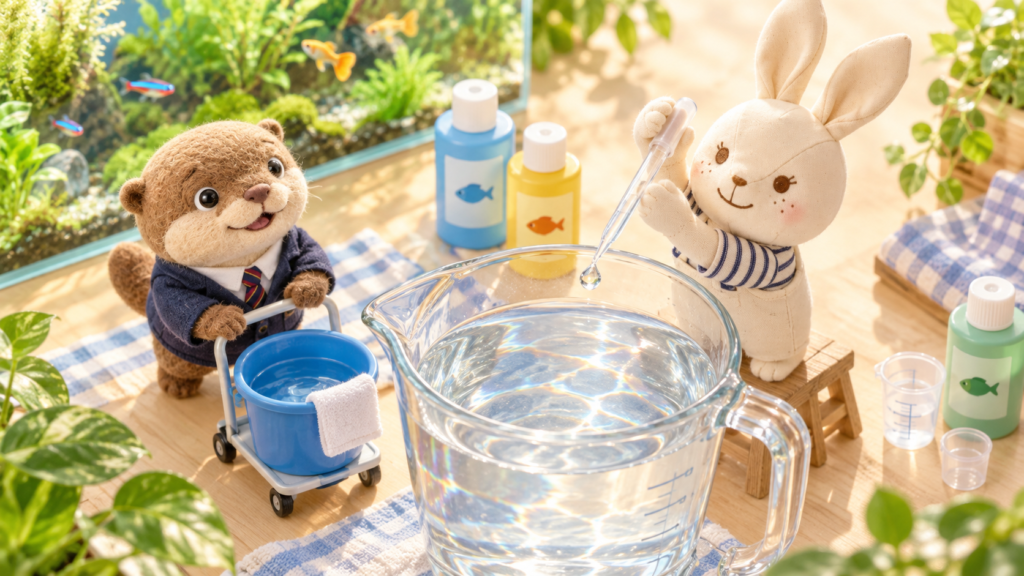 アイのアクアグッズ案内カルキ抜き・水質調整剤の選び方|水換えと水槽の種類に合わせて選ぶ道具の特徴や使い方、選ぶときのポイントをアイが紹介します。記事はコチラ →
 アイのアクアグッズ案内ラスボラ・ボララスの群泳を楽しむ飼育用品|水槽・ろ過・ヒーター・餌・水草道具の特徴や使い方、選ぶときのポイントをアイが紹介します。記事はコチラ →
さまざまな飼育テーマをご紹介。リンク先の記事には広告・商品紹介が含まれます。
案内・紹介記事一覧へ →分布マップ
ベニワモンヤドカリ(Ciliopagurus strigatus)は、紅海・東アフリカ沿岸から日本、熱帯太平洋、フランス領ポリネシアにかけて分布します。国内では房総半島、紀伊半島、四国、沖縄などに記録があり、主に浅い岩礁やサンゴ礁、その周辺の砂礫底で見られます。
地図は分布地域全体を見渡すための概略表示です。表示範囲のすべてに生息することを示すものではありません。マーカーは沖縄周辺に置いた代表地点(北緯26度・東経128度)で、実際の採集地点ではありません。「Google Earthで開く」リンクも同じ代表地点を表示します。
参考文献・資料
-
海洋研究開発機構(JAMSTEC).BISMaL「Ciliopagurus strigatus(ベニワモンヤドカリ)」
学名、分類階級、旧学名、および国内の標本に基づく出現記録。
-
Poupin, J. & Malay, M.(2009).Identification of a Ciliopagurus strigatus (Herbst, 1804) species-complex, with description of a new species from French Polynesia (Crustacea, Decapoda, Anomura, Diogenidae).Zoosystema, 31(2), 209–232.
本種と近縁3種の分類、分布、浅海域の生息環境、色彩による識別、および色彩差と遺伝的差異の対応。
-
沖縄美ら海水族館.美ら海生き物図鑑「ベニワモンヤドカリ」
イモガイ類の貝殻の利用、近縁種との識別、および成体と若齢個体で異なる脚先の色彩。
-
Ornamental Aquatic Trade Association(OATA).How to look after marine crustaceans
海水性甲殻類全般の水温・水質管理、水合わせ、給餌、脱皮時の隠れ場所、混泳、銅への注意、および浮遊幼生の飼育。本種専用ではなく、海水性甲殻類の一般的な飼育資料。
-
Nayak, V. N.(1981).Larval development of the hermit crab Diogenes planimanus Henderson (Decapoda, Anomura, Diogenidae) in the Laboratory.Indian Journal of Marine Sciences, 10(2), 136–141.
同じヤドカリ科の別種で確認された、ゾエアからグラウコトエ、稚ヤドカリへ至る発育過程。ヤドカリ類の幼生段階を理解するための資料。
-
Yanong, R. P. E..Use of Copper in Marine Aquaculture and Aquarium Systems.University of Florida, IFAS Extension, FA165.
海水飼育における銅の毒性、無脊椎動物への影響、および底床などに結合した銅が再び溶出する可能性。
-
Mykles, D. L.(2011).Ecdysteroid metabolism in crustaceans.The Journal of Steroid Biochemistry and Molecular Biology, 127(3–5), 196–203.
甲殻類の脱皮ホルモンの合成と代謝を扱う総説。脱皮を支える生理機構についての資料。
-
Field, L. H., Evans, A. & Macmillan, D. L.(1987).Sound production and stridulatory structures in hermit crabs of the genus Trizopagurus.Journal of the Marine Biological Association of the United Kingdom, 67(1), 89–110.
旧属名で扱われた本種を含むヤドカリ類の発音器官。発音の防御機能に関する行動実験は、近縁の別種を対象としたもの。




コメント