

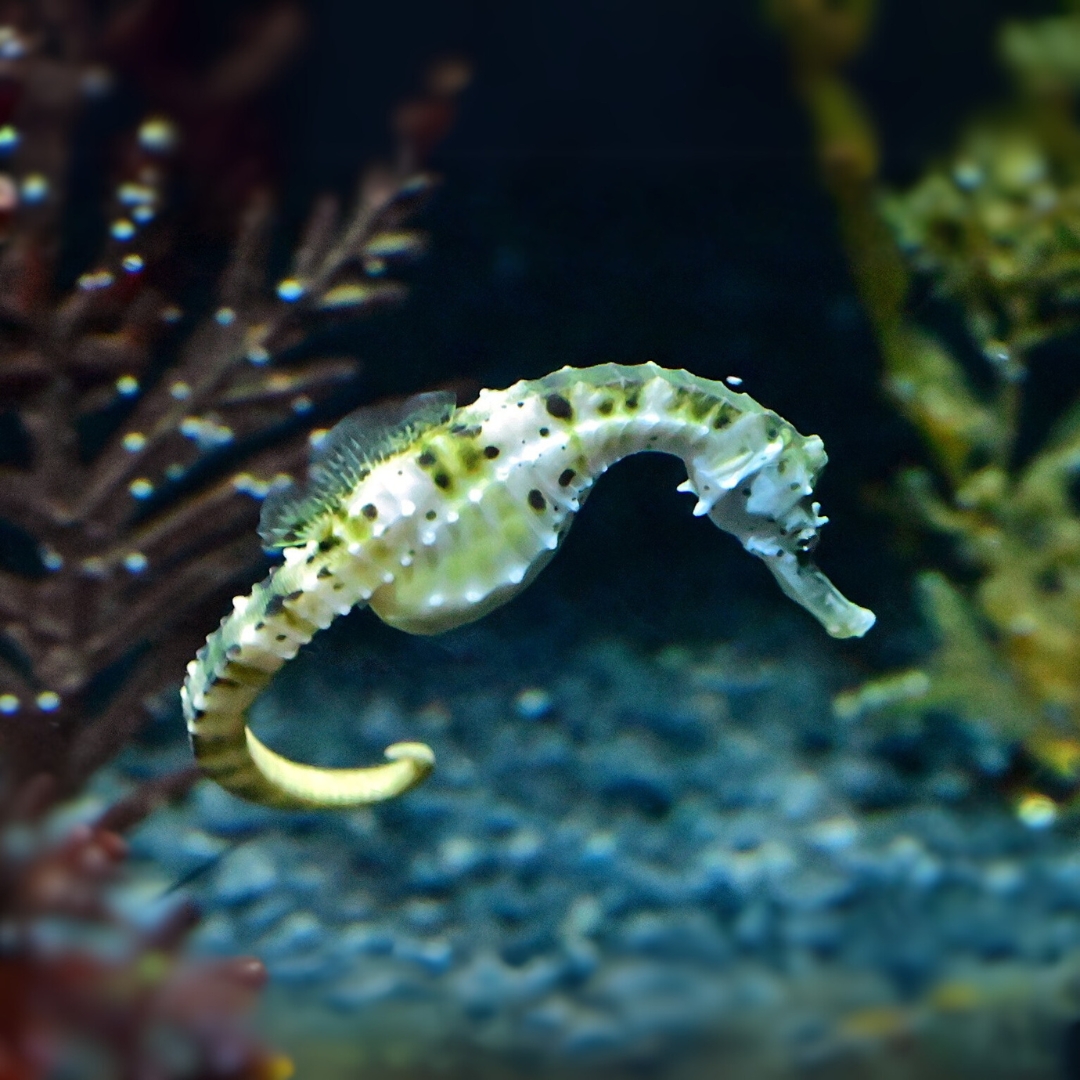
解説 / Description
シーポニーは、ビッグベリーシーホースやポットベリーシーホースとも呼ばれる大型のタツノオトシゴです。丸みを帯びた腹部と長い尾、ゆっくりとした独特の泳ぎが魅力で、タツノオトシゴ類の中でも存在感のある種類として知られています。自然下ではオーストラリア南東部からニュージーランド周辺の温帯域に分布し、海藻、海綿、ヒドロ虫、桟橋の支柱などに尾を巻き付けて生活します。観賞魚としては魅力的な一方で、低めの水温、穏やかな水流、こまめな給餌、CITESを含む流通上の確認が重要になる、やや専門性の高い海水魚です。 The seapony, also known as the big-belly seahorse or pot-bellied seahorse, is a large seahorse with a rounded abdomen, a prehensile tail, and a slow, distinctive swimming style. It occurs naturally in temperate waters around southeastern Australia and New Zealand, where it often attaches to seaweeds, sponges, hydroids, or jetty structures. In aquariums it is highly attractive, but it requires cool, stable water, gentle flow, frequent feeding, and careful attention to legal and ethical sourcing under CITES regulations.
基本情報 / Basic Information
| 学名 / Scientific Name | Hippocampus abdominalis |
|---|---|
| 通称 / Common Name | シーポニー、ビッグベリーシーホース、ポットベリーシーホースSeapony, big-belly seahorse, pot-bellied seahorse |
| 分類 / Family | トゲウオ目またはヨウジウオ目として扱われることがあるグループの、ヨウジウオ科タツノオトシゴ属Family Syngnathidae, genus Hippocampus; treated within syngnathiform or related classifications depending on the reference |
| 英名 / English Name | Big-belly Seahorse / Pot-bellied Seahorse |
| 分布 / Distribution | 主にオーストラリア南東部およびニュージーランド周辺の温帯海域。タイドプール、藻場、岩礁、桟橋周辺などで見られます。Mainly temperate waters of southeastern Australia and New Zealand, including rock pools, algal beds, rocky reefs, and jetty habitats. |
| 最大体長 / Max Size | 最大で約35cm。タツノオトシゴ類の中でも大型種として扱われます。Up to about 35 cm, making it one of the larger seahorse species. |
| 寿命 / Lifespan | 飼育下ではおおむね数年程度が目安です。入荷状態、餌付き、水温管理、水質の安定性によって大きく変わります。Usually several years in captivity, depending strongly on condition at purchase, feeding response, temperature control, and water stability. |
飼育環境 / Aquarium Environment
| 水槽サイズ / Tank Size | 最大約35cmになる大型種のため、幅60cmという数字だけで適否を判断できません。成魚が体を伸ばし、上下にも動ける実際の水深と、尾を巻く足場を入れた後の遊泳空間を確保します。繁殖を狙う設備と通常の飼育設備は分けて考えてください。繁殖研究では高さ90〜100cm級の水槽が論じられていますが、これは卵の受け渡しのための条件で、横幅90cmの水槽を意味するものではありません。This large species can reach about 35 cm, so tank length alone is not an adequate suitability criterion. Allow sufficient working water depth for adults to extend their bodies and move vertically, leaving swimming room after adding hitching posts. Separate ordinary maintenance from breeding-system requirements: breeding research discusses tanks around 90–100 cm high for egg transfer. This refers to height, not a tank that is 90 cm long. |
|---|---|
| 水温 / Temperature | 18〜22℃前後を中心に、上がっても24℃程度までに抑える管理が無難です。温帯性の種類なので、日本の夏は水槽用クーラーがほぼ必須になります。高水温は代謝上昇、酸欠、細菌性トラブルのリスクを高めるため、熱帯性海水魚と同じ水温での管理は避けます。 Aim for around 18–22°C, keeping the water preferably no higher than about 24°C. As a temperate species, it usually requires a chiller during hot Japanese summers. High temperatures can increase metabolic stress, reduce oxygen availability, and raise the risk of bacterial problems. |
| 水質 / Water Quality | 比重は一般的な海水魚水槽と同等の1.020〜1.024前後を目安にします。餌の食べ残しが出やすく、水質悪化に弱いため、十分なろ過、プロテインスキマー、定期的な換水を組み合わせて、アンモニアと亜硝酸が検出されない環境を維持します。Maintain marine salinity around specific gravity 1.020–1.024. Because uneaten food can quickly degrade water quality, use adequate biological filtration, a protein skimmer, and regular water changes to keep ammonia and nitrite undetectable. |
| レイアウト / Layout | 尾を巻き付けて休むためのホールドファストを必ず用意します。ライブロック、人工海藻、海藻、毒性の弱いヤギ類などが候補ですが、刺胞毒の強いイソギンチャクやサンゴ、鋭利な飾りは避けます。強い直線的な水流ではなく、全体にやさしく回る水流を作ることが大切です。Provide multiple holdfasts such as live rock, artificial algae, macroalgae, or low-sting gorgonians. Avoid anemones, strongly stinging corals, and sharp decorations. The flow should be broad and gentle rather than strong and direct. |
| 注意点 / Precautions | 導入時は輸送ストレスと餌付きの確認が重要です。購入前に冷凍イサザアミや冷凍ホワイトシュリンプなどを目の前で食べる個体か確認しましょう。日本国内で販売される個体は、CITESに沿った正規輸入個体または国内繁殖個体であることを販売店に確認するのが安心です。When introducing this species, pay close attention to transport stress and feeding response. Before purchase, confirm that the animal eats frozen mysids or similar foods. In Japan, it is safest to confirm with the seller that the specimen is either legally imported under CITES procedures or domestically captive-bred. |
餌と給餌 / Feeding
| 餌の種類 / Diet | 主食は冷凍イサザアミ、冷凍ホワイトシュリンプ、栄養強化した小型甲殻類系の餌が中心です。野生ではカイアシ類やヨコエビなどの微小甲殻類を捕食します。人工飼育では、冷凍餌に餌付いたブリード個体を選ぶことが長期飼育の大きなポイントです。Staple foods include frozen mysids, frozen white shrimp, and nutritionally enriched small crustacean foods. In the wild, it feeds on tiny crustaceans such as copepods and amphipods. For aquarium care, captive-bred individuals already trained to frozen food are strongly preferred. |
|---|---|
| 給餌のポイント / Feeding Tips | 一度に大量に与えるより、1日2〜3回に分けて少量ずつ与える方が安定します。スポイトや給餌皿を使い、他魚に奪われる前に確実に食べたか観察します。食べ残しは水質悪化の原因になるため、給餌後に回収します。外骨格に覆われて痩せが分かりにくいため、腹部の張り、反応、捕食回数を日々確認します。Small feedings two or three times per day are better than one large feeding. Use a pipette or feeding station and watch to confirm that the seahorse actually eats. Remove leftovers promptly to prevent water deterioration. Because weight loss can be hard to detect under the bony plates, monitor body fullness, response, and feeding frequency every day. |
性格と混泳 / Temperament and Tank Mates
| 性格 / Temperament | おとなしく、動きは非常にゆっくりです。餌を追い回す魚ではなく、近くに来た小型甲殻類を吸い込む待ち伏せ型の捕食者です。そのため、環境の変化や強い水流、活発な魚の動きがストレスになりやすい面があります。It is peaceful and very slow-moving. Rather than chasing food, it ambushes small crustaceans that come within range. For this reason, sudden environmental change, strong currents, and fast-moving tank mates can easily become stressful. |
|---|---|
| 混泳の相性 / Compatibility | 最も安全なのは本種のみ、または同じような性質のタツノオトシゴ類との専用水槽です。スズメダイ、ヤッコ、チョウチョウウオ、ベラなど餌取りの速い魚は不向きです。候補を挙げるなら、非常におとなしい底生魚やヨウジウオ類などに限られますが、それでも餌の競合と病原体の持ち込みには注意が必要です。大型のエビ、カニ、攻撃的な甲殻類も避けます。The safest setup is a species-only aquarium or a tank with similarly slow syngnathids. Fast feeders such as damselfish, angelfish, butterflyfish, and wrasses are unsuitable. Very peaceful bottom-dwellers or pipefish may be possible, but food competition and pathogen introduction must be considered. Large shrimps, crabs, and aggressive crustaceans should be avoided. |
病気と対策 / Diseases and Prevention
| かかりやすい病気 / Common Diseases | 高水温や水質悪化に伴う細菌性の皮膚トラブル、尾や吻の損傷、ガス病、拒食、痩せに注意します。特にタツノオトシゴ類は、外見上は急変が分かりにくいまま進行することがあります。Watch for bacterial skin problems associated with high temperature or poor water quality, tail or snout injuries, gas bubble disease, refusal to feed, and gradual weight loss. In seahorses, problems may progress before obvious external signs appear. |
|---|---|
| 対策と予防 / Prevention | 予防の基本は、低めで安定した水温、清浄な水質、食べ残しの除去、強すぎない水流、傷を付けないレイアウトです。新規個体や混泳魚は可能な限り検疫し、導入直後は食欲と呼吸、尾を巻き付ける力を観察します。治療が必要な場合は、海水魚とタツノオトシゴ類に詳しい専門店や獣医師に相談するのが安全です。Prevention depends on cool and stable temperature, clean water, removal of leftovers, gentle flow, and safe decorations. Quarantine new animals whenever possible, and observe appetite, respiration, and tail grip after introduction. If treatment is needed, consult an experienced marine fish specialist or veterinarian familiar with seahorses. |
増やし方(繁殖) / Breeding
| 雌雄の判別 / Sexing | オスは腹部から尾の付け根にかけて育児嚢を持ち、成熟するとこの部分がなめらかに膨らみます。メスは育児嚢がなく、腹部から尾へのラインが比較的すっきりしています。若い個体では判別が難しいことがあります。Males have a brood pouch from the abdomen toward the base of the tail, which becomes smoother and fuller when mature. Females lack this pouch and usually show a cleaner transition from abdomen to tail. Juveniles can be difficult to sex. |
|---|---|
| 繁殖形態 / Reproduction | メスがオスの育児嚢に卵を渡し、オスが育児嚢内で受精卵を保護して、発達した稚魚を放出します。抱卵期間は環境条件に左右されますが、約4週間前後とされます。タツノオトシゴらしいオスの育児行動が、本種の大きな魅力です。The female transfers eggs into the male’s brood pouch. The male protects the developing embryos and later releases developed young. The brooding period varies with conditions but is often around four weeks. This male brooding behavior is one of the most fascinating features of seahorses. |
| 繁殖のポイント / Breeding Tips | 親魚には縦方向に余裕のある落ち着いた水槽を用意し、栄養状態を高く保ちます。ただし、本種のペア関係や繁殖行動については「常に長期一夫一婦制」と断定せず、個体差や飼育条件による変化を考慮します。稚魚育成では、ワムシ、アルテミア幼生、カイアシ類などの生き餌と、それらの栄養強化が重要です。稚魚用水槽では水流、油膜、餌密度、水質の管理が成否を大きく左右します。Provide the adults with a calm aquarium that has enough vertical space and maintain excellent nutrition. However, pair bonding should not be stated as a fixed lifelong monogamous rule for every individual; behavior can vary by species, individual, and conditions. Rearing young requires live foods such as rotifers, Artemia nauplii, and copepods, often with nutritional enrichment. In fry tanks, flow, surface film, prey density, and water quality are critical. |
雑学と豆知識 / Trivia and Fun Facts
| 1. 学名に隠れた「馬」と「腹部」 / 1. The “Horse” and “Belly” in Its Name | 属名のHippocampusは、ギリシャ語で馬を意味する語と海の怪物を思わせる語に由来するとされ、頭部が馬のように見えるタツノオトシゴ類の姿をよく表しています。種小名のabdominalisは腹部に関係する言葉で、大きく目立つ腹部を持つ本種の特徴に合った名前です。英名のBig-belly SeahorseやPot-bellied Seahorseも、まさにこの姿をそのまま表した呼び名です。The genus name Hippocampus is derived from Greek words associated with a horse and a sea creature, reflecting the horse-like head of seahorses. The species name abdominalis refers to the abdomen, matching the species’ large, conspicuous belly. Its English names, big-belly seahorse and pot-bellied seahorse, describe the same feature directly. |
|---|---|
| 2. 「大きいタツノオトシゴ」だからこそ水槽選びが重要 / 2. A Large Seahorse Needs a Thoughtful Tank | シーポニーは最大約35cmに達する大型種として扱われます。小さな水槽でも一時的なストックは可能な場合がありますが、長期飼育では体の大きさ、給餌量、水質の安定、垂直方向の動きを考える必要があります。横幅だけでなく、成魚が無理なく体を伸ばし、上下にも動ける水深が重要です。尾を巻き付ける足場を配置した後にも、十分な遊泳空間が残る水槽を選びましょう。This species can reach about 35 cm, so tank planning matters. Temporary holding in a small tank may be possible, but long-term care must account for body size, feeding load, water stability, and vertical movement. Tank width alone is not enough: adults need water depth that allows them to extend their bodies and move vertically. Leave adequate swimming room after adding hitching posts. |
| 3. CITESとエシカルな流通 / 3. CITES and Ethical Trade | タツノオトシゴ属は国際取引の監視対象となるCITES附属書IIに掲載されています。これは「飼育してはいけない」という意味ではなく、野生個体群に悪影響を与えないよう、輸出入を適切に管理するための仕組みです。購入時は、正規輸入個体か、国内で繁殖された個体かを販売店に確認することで、アクアリウム趣味と保全の両立につながります。The genus Hippocampus is listed in CITES Appendix II, meaning international trade is monitored and controlled. This does not mean the species cannot be kept, but it does mean sourcing should be legal and traceable. Asking whether a specimen is legally imported or domestically captive-bred helps align aquarium keeping with conservation. |
| 4. 一夫一婦制については断定しすぎない / 4. Be Careful with Claims of Monogamy | タツノオトシゴ類にはペア行動で有名な種類がいますが、シーポニーについては資料によって記述に差があり、長期的な一夫一婦制をすべての個体に当てはめて断定するのは避けるべきです。Some seahorses are famous for pair behavior, but claims about long-term monogamy in this species should be made cautiously because references differ. |
まとめ / Conclusion
シーポニーは、大型で丸みのある体型、オスが育児嚢で卵を守る繁殖様式、ゆったりとした姿が魅力のタツノオトシゴです。飼育では、温帯性であることを意識した低めの水温管理、穏やかな水流、掴まる場所の確保、こまめで確実な給餌が基本になります。 The seapony is an impressive large seahorse with a rounded body, male brooding behavior, and a calm, graceful presence. Successful care depends on cool temperate water, gentle flow, suitable holdfasts, and frequent, reliable feeding.
また、タツノオトシゴ類はCITESの対象であり、流通経路の確認も飼育者の大切な責任です。冷凍餌に餌付いた健全なブリード個体を選び、十分な水量と安定した環境を用意できれば、シーポニーは海水水槽の中で非常に印象深い存在になってくれるでしょう。 Seahorses are also covered by CITES, so checking the source of any specimen is part of responsible keeping. If you choose a healthy captive-bred individual that accepts frozen food and provide enough water volume and stability, the seapony can become a remarkable centerpiece in a marine aquarium.

気になる道具や飼い方を見つけてみませんか?
 アイのアクアグッズ案内コードもホースもないのに酸素が出る? アイとコタロウのオキシデーター探訪道具の特徴や使い方、選ぶときのポイントをアイが紹介します。記事はコチラ →
 アイのアクアグッズ案内金魚を長く楽しむ飼育用品|水槽・フィルター・エアレーション・水換え道具の特徴や使い方、選ぶときのポイントをアイが紹介します。記事はコチラ →
さまざまな飼育テーマをご紹介。リンク先の記事には広告・商品紹介が含まれます。
案内・紹介記事一覧へ →参考文献・参照資料
本記事の分類、分布、生息環境、飼育条件、繁殖、病気や注意点の記述を確認するために、学術論文、公的・準公的データベース、国際条約関連資料を中心に選定しています。店舗、通販サイト、個人ブログ、一般的なまとめサイトは除外しました。
注記:CITESやIUCNなどの保全・取引規制情報は改訂されることがあります。輸入、販売、譲渡に関わる判断では、必ず最新の公的情報を確認してください。
-
Froese, R. and Pauly, D. Editors. FishBase: Hippocampus abdominalis, Bigbelly seahorse.
分類、英名、最大体長、分布、生息水深、汽水域利用、食性、繁殖形態、CITES附属書II、IUCN評価、推定適水温の確認に使用。
https://www.fishbase.se/summary/Hippocampus-abdominalis.html -
World Register of Marine Species. Hippocampus abdominalis Lesson, 1827.
学名、命名者、分類上の有効性、シノニム確認の補助資料として使用。
https://www.marinespecies.org/aphia.php?p=taxdetails&id=127245 -
Pollom, R. 2017. Hippocampus abdominalis. The IUCN Red List of Threatened Species.
保全状況、分布、脅威、取引・利用に関する記述の確認に使用。保全評価は更新されるため、記事公開時点で再確認する資料。
https://www.iucnredlist.org/species/10056/54905659 -
CITES. The CITES Appendices and Species+ / Checklist of CITES Species: Hippocampus spp.
タツノオトシゴ属が国際取引規制の対象であること、商業流通時にCITES確認が必要になることを支える資料として使用。
https://checklist.cites.org/ -
Lourie, S. A., Pollom, R. A. and Foster, S. J. 2016. A global revision of the seahorses Hippocampus Rafinesque 1810: taxonomy and biogeography with recommendations for further research. Zootaxa, 4146(1), 1-66.
タツノオトシゴ属全体の分類、生物地理、研究上の注意点を確認する基礎文献として使用。
https://doi.org/10.11646/zootaxa.4146.1.1 -
Woods, C. M. C. 2002. Natural diet of the seahorse Hippocampus abdominalis. New Zealand Journal of Marine and Freshwater Research, 36(3), 655-660.
自然下の食性、餌となる小型甲殻類、給餌内容を考える際の裏付けとして使用。
https://doi.org/10.1080/00288330.2002.9517121 -
Woods, C. M. C. 2005. Growth of cultured seahorses Hippocampus abdominalis in relation to feed ration. Aquaculture International, 13, 305-314.
人工飼育下での給餌量、成長、冷凍イサザアミ類を用いた飼育管理の参考資料として使用。
https://doi.org/10.1007/s10499-004-3100-7 -
Woods, C. M. C. 2005. Reproductive output of male seahorses, Hippocampus abdominalis, from Wellington Harbour, New Zealand: implications for conservation. New Zealand Journal of Marine and Freshwater Research, 39(4), 881-888.
オスの育児嚢、繁殖出力、繁殖期の理解を支える資料として使用。
https://doi.org/10.1080/00288330.2005.9517335 -
Wilson, A. B. and Martin-Smith, K. M. 2007. Genetic monogamy despite social promiscuity in the pot-bellied seahorse Hippocampus abdominalis. Molecular Ecology, 16, 2345-2352.
ペア形成や繁殖行動を単純に断定しないための補助資料として使用。
https://doi.org/10.1111/j.1365-294X.2007.03283.x -
Martinez-Cardenas, L. and Purser, G. J. 2012. Substrate-attachment preferences of cultured newborn pot-bellied seahorses, Hippocampus abdominalis. Journal of the World Aquaculture Society, 43(2), 286-290.
稚魚や若い個体に掴まる場所を用意する必要性、レイアウト上の注意点を支える資料として使用。
https://doi.org/10.1111/j.1749-7345.2012.00552.x -
Cohen, F. P. A., Valenti, W. C., Planas, M. and Calado, R. 2017. Seahorse aquaculture, biology and conservation: knowledge gaps and research opportunities. Reviews in Fisheries Science & Aquaculture, 25(1), 100-111.
タツノオトシゴ類の養殖、保全、人工飼育技術全般の背景資料として使用。
https://doi.org/10.1080/23308249.2016.1237469 -
Dudley, J. S., et al. 2021. Structural changes to the brood pouch of male pregnant seahorses Hippocampus abdominalis facilitate exchange between father and embryos. Placenta.
オスの育児嚢が単なる卵の保護場所ではなく、胚との物質交換に関わる高度な器官であることを説明する際の裏付けとして使用。
https://doi.org/10.1016/j.placenta.2021.09.001 -
Di Cicco, E., Paradis, E., Stephen, C., Turba, M. E. and Rossi, G. Scuticociliatid ciliate outbreak in Australian pot-bellied seahorse, Hippocampus abdominalis: clinical signs, histopathologic findings, and treatment with metronidazole. Journal of Zoo and Wildlife Medicine.
シーポニーを含む飼育下タツノオトシゴ類で問題となる繊毛虫症、皮膚障害、衰弱などの病気・注意点の補助資料として使用。
https://bioone.org/journals/journal-of-zoo-and-wildlife-medicine




コメント