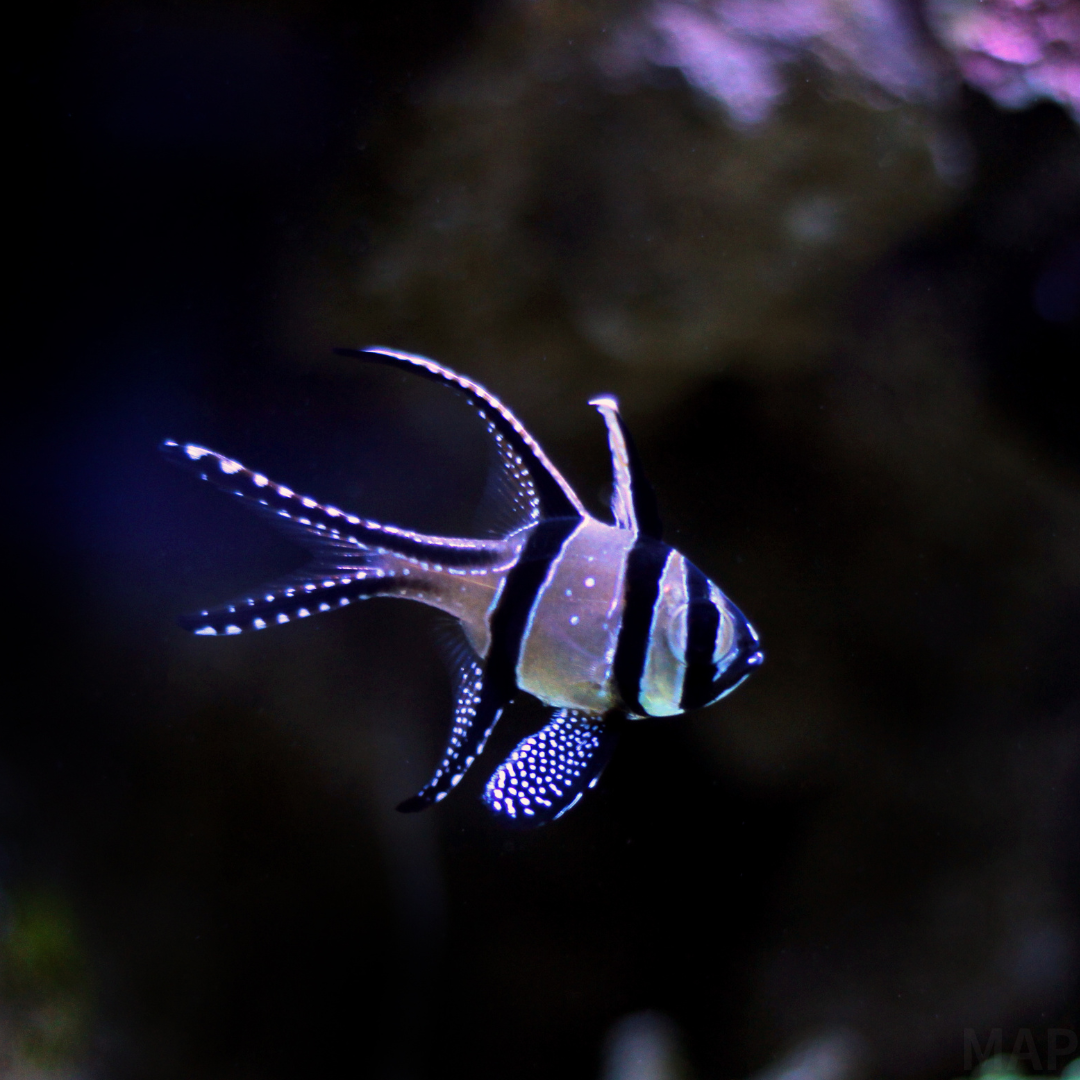
プテラポゴン・カウデルニィは、インドネシアのバンガイ諸島周辺という極めて限定された海域にのみ生息する、スズキ目テンジクダイ科の海水魚です。日本ではその美しい姿から「アマノガワテンジクダイ(天の川天竺鯛)」という風雅な名前で親しまれています。銀色の体に走る漆黒のラインと、星空のように散りばめられた白い斑点が最大の特徴で、優雅に漂う姿は多くのアクアリストを魅了して止みません。しかしその人気ゆえ、野生個体群の減少が深刻な問題となっており、現在は国際的な保全活動の象徴的な存在としても知られています。Pterapogon kauderni is a marine fish in the family Apogonidae, found exclusively in the extremely limited waters around the Banggai Islands of Indonesia. In Japan, it is gracefully known as Amanogawa Tenjikudai (Milky Way Cardinalfish) due to its celestial appearance. Its most distinctive features are the bold black vertical bars against a silvery-bronze body and shimmering white spots reminiscent of a starry night. While it is a beloved species among aquarists for its elegant swimming style, its immense popularity has led to a serious decline in wild populations, making it a symbolic icon for international conservation efforts.
インドネシア中部(バンガイ諸島周辺)Central Indonesia (endemic to the Banggai Islands)
最大体長 / Max Size
約5センチから6センチApproximately 5 cm to 6 cm (SL)
寿命 / Lifespan
約5年から6年(飼育下)Approximately 5 to 6 years (in captivity)
飼育環境 / Aquarium Environment
水槽サイズ / Tank Size
30cm規格水槽(約20リットル)以上、推奨は45cm規格水槽(約30リットル)以上Minimum 30 cm standard tank (approx. 20L), recommended 45 cm standard tank (approx. 30L) or larger.
水温 / Temperature
24度から26度24°C to 26°C
水質 / Water Quality
pH 8.1から8.4、比重 1.020から1.025(清浄な海水)pH 8.1 to 8.4, Specific Gravity 1.020 to 1.025 (Clean saltwater)
レイアウト / Layout
ライブロック等で隠れ家を多く作る。自然界での隠れ家を模した「擬似ガンガゼ(ウニ)」やサンゴの配置が有効。Provide plenty of hiding spots using live rock. Adding artificial sea urchins or corals to mimic their natural habitat is highly effective.
注意点 / Precautions
急激な水質変化に弱いため、水合わせは時間をかけて慎重に行う必要があります。驚くと飛び出すことがあるため、フタは必須です。Sensitive to sudden changes in water quality, so acclimatization must be done slowly and carefully. A lid is essential as they may jump when startled.
餌と給餌 / Feeding
餌の種類 / Diet
動物性プランクトン食。イサザアミ(冷凍マイシス)やブラインシュリンプを好みます。Carnivorous (planktivore). Prefers frozen mysid shrimp and brine shrimp.
給餌のポイント / Feeding Tips
野生個体は人工飼料に慣れにくいため、まずは冷凍飼料から始め、徐々に慣らします。夜行性のため、消灯前後の給餌も有効です。Wild-caught specimens can be picky; start with frozen foods before transitioning to pellets. Night feeding can be effective due to their nocturnal nature.
性格と混泳 / Temperament and Tank Mates
性格 / Temperament
極めて温和で臆病。自分から他の魚を攻撃することはほとんどありません。Extremely peaceful and shy. Rarely aggressive toward other species.
混泳の相性 / Compatibility
気の強い魚や大型魚との混泳は避け、同じく温和な小型魚やサンゴと組み合わせるのがベストです。Avoid housing with aggressive or large fish. Best suited for community tanks with peaceful small fish and corals.
病気と対策 / Diseases and Prevention
かかりやすい病気 / Common Diseases
白点病、輸送ストレスに伴うビブリオ菌感染症など。Marine ich (Cryptocaryon irritans) and Vibrio infections associated with shipping stress.
対策と予防 / Prevention
導入時のトリートメントを徹底し、ストレスの少ない環境(隠れ家の確保)を維持することが最大の予防です。Thorough quarantine upon arrival and maintaining a low-stress environment with plenty of hiding spots are the best preventive measures.
増やし方(繁殖) / Breeding
雌雄の判別 / Sexing
外見での判別は困難ですが、成熟した雄は抱卵時に下顎が大きく膨らむ(ブルドッグのような顔つき)のが特徴です。Difficult to distinguish by appearance alone, but mature males develop a significantly distended lower jaw (bulldog-like) when brooding eggs.
繁殖形態 / Reproduction
父系口内保育(マウスブルーディング)。雄が約20日から30日間、口の中で卵を守り続けます。Paternal mouthbrooding. The male carries and protects the eggs in his mouth for 20 to 30 days.
繁殖のポイント / Breeding Tips
稚魚は放出された時点で1cm以上と大きく、すぐに孵化直後のブラインシュリンプを食べられるため、海水魚としては繁殖の難易度は低めです。The fry are relatively large (over 1 cm) when released and can immediately eat newly hatched brine shrimp, making them easier to breed than most marine fish.
雑学と豆知識 / Trivia and Fun Facts
1. 歴史的発見とドラマチックな再発見 / 1. Historical Discovery and Dramatic Rediscovery
本種が最初に採集されたのは1920年、記載されたのは1933年でしたが、その後半世紀以上にわたり、その存在は実質的に忘れ去られていました。1994年、著名な魚類学者ジェリー・アレン博士によって「再発見」されると、その美しさが世界中のアクアリストに衝撃を与え、一躍マリンアクアリウム界のスターダムにのし上がったのです。The species was first collected in 1920 and described in 1933, but it was virtually forgotten for over half a century. Its “rediscovery” in 1994 by renowned ichthyologist Dr. Gerry Allen shocked the aquarium world with its beauty, instantly turning it into a superstar of the hobby.
多くの海水魚が海流に乗って数万の卵を分散させるのに対し、本種は卵を雄が口で守り、稚魚として泳ぎ出すまで育て上げる「少数精鋭」の戦略を選びました。この進化は狭い生息域での生存を確実にする一方、海流による分布の拡大や個体群の回復を難しくしており、乱獲に対して非常に脆弱な一因となっています。Unlike most marine fish that disperse thousands of eggs into currents, this species employs a “quality over quantity” strategy where the male protects the eggs in his mouth until they emerge as fully formed fry. While this ensures survival in their specific habitat, it prevents dispersal via currents, making the species highly vulnerable to overfishing.
3. 「ニフレル」で見られるユニークな隠れ家 / 3. Unique Shelters Seen at “NIFREL”
大阪の生きているミュージアム「NIFREL(ニフレル)」では、水槽の中に長靴を配置し、そこに本種が群れる様子を展示しています。これは、自然界でウニの棘やマングローブの根などに身を寄せる彼らの「複雑な構造物に寄り添う習性」を逆手に取った、非常にユニークで教育的な展示手法です。At the “NIFREL” museum in Osaka, they exhibit these fish swarming around a rubber boot placed in the tank. This clever display highlights their natural instinct to seek shelter in complex structures like sea urchin spines or mangrove roots, even if that structure is man-made.
4. 絶滅の危機を救う「ブリード個体」の選択 / 4. Choosing “Captive-Bred” to Save the Species
野生個体群(ワイルド)はIUCNレッドリストで「絶滅危惧種」に指定されています。現在、日本市場では人工繁殖された「ブリード個体」の流通が増えており、これを選択することは野生の資源を守るだけでなく、病気に強く餌付きやすいという飼育上のメリットも得られる賢明な選択です。Wild populations are listed as “Endangered” on the IUCN Red List. Choosing captive-bred specimens, which are increasingly available in Japan, not only protects wild resources but also provides hardier fish that are easier to feed, making it a wise choice for the conscientious aquarist.
5. 献身的な父の愛:絶食の抱卵期間 / 5. A Devoted Father’s Love: Fasting During Brooding
雄は卵を口に含んでいる約1ヶ月間、一切の食事を摂らずに子育てに専念します。自身の体力を削って次世代を守るこの献身的な姿は、魚類の中でも特に際立った愛情深い(本能的な)行動として知られています。For about a month while carrying eggs, the male focuses entirely on parenting and does not eat a single morsel. This selfless act of sacrificing his own physical strength to protect the next generation is one of the most remarkable parental behaviors among fish.
まとめ / Conclusion
プテラポゴン・カウデルニィは、その美しさと飼育のしやすさから海水魚飼育の入門種としても人気ですが、その背景には極めて限られた生息域と絶滅の危機という深刻な側面があります。私たちアクアリストができる最大の貢献は、彼らの生態を深く理解し、可能な限りブリード個体を選び、そして最適な環境で大切に育てることです。While Pterapogon kauderni is a popular choice for beginners due to its beauty and hardiness, we must remember its background as a vulnerable species with a very limited range. The greatest contribution we as aquarists can make is to deeply understand their ecology, choose captive-bred individuals whenever possible, and provide them with the best possible care in a stable environment.
水槽の中に輝く「天の川」を永遠のものにするために、一人一人が責任ある飼育を楽しむことが、この美しい魚の未来を形作ることにつながります。By enjoying responsible fishkeeping, each of us can help ensure that the “Milky Way” shimmering in our tanks continues to shine for generations to come, securing the future of this magnificent species.
Koumans, F. P. (1933). On a new genus and species of Apogonidae. Zoologische Mededelingen, 16(1-2), 78-142.(本種の原記載文献)
Allen, G. R. (1995). Banggai cardinalfish: A spectacular new species from Indonesia. Tropical Fish Hobbyist, 44, 154-159.(Gerry Allen博士による再発見時の報告)
IUCN Red List of Threatened Species. (2007). Pterapogon kauderni.(国際自然保護連合による絶滅危惧種指定データ)
NOAA Fisheries / National Marine Fisheries Service. (2016). Final Rule to List the Banggai Cardinalfish as Threatened Under the Endangered Species Act.(米国絶滅危惧種法に基づく脅威種指定の最終規則)
CITES (Convention on International Trade in Endangered Species of Wild Fauna and Flora). (2025). Summary Record of the 20th Meeting of the Conference of the Parties (CoP20).(ワシントン条約第20回締約国会議の記録)
Indonesian Ministry of Marine Affairs and Fisheries (MMAF). (2017-2021/2022-2026). National Plan of Action (NPOA) for Banggai Cardinalfish Conservation.(インドネシア政府による国家行動計画)
Lesmana, G. et al. (2017). Banggai Cardinalfish: Management and Conservation. LINI (Yayasan Alam Indonesia Lestari).(現地保全団体による管理ガイドライン)



 アイのアクアグッズ案内水草トリミングの道具とやり方|ハサミ・ピンセットを水草に合わせて選ぼう伸びすぎた水草は切っていい? 有茎草の差し戻し、前景草の絨毯、流木のモスを整える場面から、水草用ハサミ・ピンセット・ゴミ取りネットの選び方と片付けを紹介します。記事はコチラ →
 アイのアクアグッズ案内マジックリーフ物語|一枚の葉がアクアリウム用品になるまで道具の特徴や使い方、選ぶときのポイントをアイが紹介します。記事はコチラ →




コメント