

解説 / Description
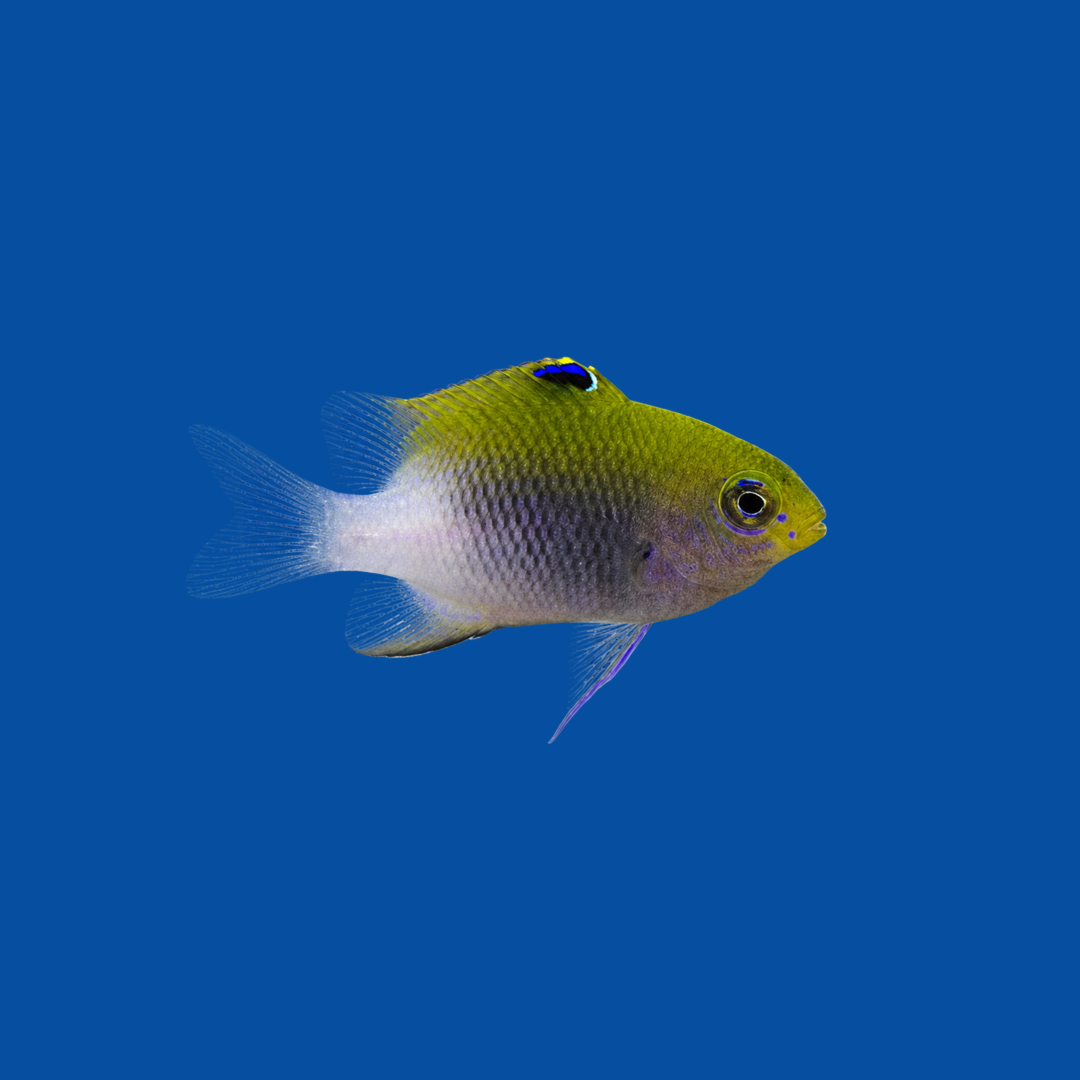
セダカスズメダイは、日本周辺を中心とする北西太平洋の岩礁域に生息するスズメダイ科の海水魚です。和名のとおり体高があり、幼魚では頭部から背にかけて緑色、腹側から尾びれにかけて白色が目立ちます。背びれ前方には黒い斑があり、成長後も本種を見分ける手がかりになります。 The Japanese gregory is a damselfish that inhabits rocky reef environments in the northwestern Pacific, especially around Japan. As its Japanese name suggests, it has a relatively deep body. Juveniles show a noticeable green area from the head to the back and a white underside toward the caudal fin. A black mark on the front of the dorsal fin remains an important identification clue as the fish grows.
観賞魚としては、丈夫で人工飼料にも慣れやすい一方、成長とともに縄張り意識が強くなりやすい魚です。近海産として流通する個体では、採集された季節によって到着時の水温が大きく変わることがあるため、導入時の水合わせを丁寧に行うことが飼育成功の大切なポイントになります。 As an aquarium fish, it is hardy and usually adapts well to prepared foods, but it can become strongly territorial as it matures. Because specimens available in Japan are often locally collected, the arrival temperature may vary greatly by season. Careful acclimation is therefore one of the most important points for successful care.
基本情報 / Basic Information
| 学名 / Scientific Name | Plectroglyphidodon altus (Okada & Ikeda, 1937) |
|---|---|
| 通称 / Common Name | セダカスズメダイJapanese gregory |
| 分類 / Family | スズキ目スズメダイ科。資料によってはMicrospathodontinae亜科に置かれます。Family Pomacentridae, order Perciformes. Some references place it in the subfamily Microspathodontinae. |
| 英名 / English Name | Japanese gregory |
| 分布 / Distribution | 北西太平洋。日本では本州太平洋岸、伊豆諸島、紀伊半島、四国、九州、琉球列島、小笠原諸島などの岩礁域で見られます。海外では台湾や朝鮮半島周辺からの記録があり、資料によっては北部ベトナムまで分布に含められます。石川県片野海岸からも記録が報告されています。Northwestern Pacific. In Japan, it is known from rocky reef habitats along the Pacific side of Honshu and around areas such as the Izu Islands, Kii Peninsula, Shikoku, Kyushu, the Ryukyu Islands, and the Ogasawara Islands. It has also been recorded from Taiwan and the Korean Peninsula region, and some references include northern Vietnam in its range. Records from the Katano Coast of Ishikawa Prefecture have also been reported. |
| 最大体長 / Max Size | 最大で約15cm。幼魚は小さくても、成長後は水槽内でしっかり存在感のあるサイズになります。Up to about 15 cm. Even if introduced as a small juvenile, it becomes a noticeably robust fish as it matures. |
| 寿命 / Lifespan | 本種だけを対象にした飼育下寿命の明確な統一データは多くありません。丈夫なスズメダイ類として、安定した環境では数年以上の長期飼育を前提に迎えたい魚です。Reliable aquarium lifespan data specific to this species are limited. As a hardy damselfish, it should be kept with the expectation of long-term care over several years in a stable environment. |
飼育環境 / Aquarium Environment
| 水槽サイズ / Tank Size | 単独飼育でも60cm規格水槽、水量約57L以上を目安にします。混泳を考える場合は、90cm規格水槽以上を用意すると、遊泳スペースと隠れ家を確保しやすくなります。幼魚期だけの大きさで判断せず、成魚時の体長と縄張り行動を見越して水槽を選びます。For a single specimen, a standard 60 cm aquarium of about 57 liters or more is a practical guide. For community keeping, a standard 90 cm aquarium or larger makes it easier to provide swimming space and shelters. Choose the aquarium with adult size and territorial behavior in mind, not only the juvenile size. |
|---|---|
| 水温 / Temperature | 飼育では22〜25℃前後を基本に、一般的な海水魚水槽では24℃前後が扱いやすい目安です。高水温が続く環境や、到着時の水温から大きく離れた水槽へ急に入れることは避けます。近海産個体では季節ごとの水温差を考慮し、導入時は時間をかけてゆっくり合わせてください。 A practical aquarium range is around 22–25°C, with about 24°C being easy to manage in many marine aquariums. Avoid prolonged high temperatures and avoid moving the fish abruptly into water that differs greatly from the arrival temperature. For locally collected specimens, seasonal temperature differences should be considered and acclimation should be slow. |
| 水質 / Water Quality | 一般的な海水魚水槽の水質を保ちます。比重は1.020〜1.025程度、pHは8.0〜8.4前後を目安にし、アンモニアと亜硝酸が検出されない状態を維持します。丈夫な魚ではありますが、水質の急変や濾過不足が続くと体調を崩すため、立ち上がった濾過システムと定期的な換水が大切です。Maintain standard marine aquarium conditions. A specific gravity of about 1.020–1.025 and a pH around 8.0–8.4 are useful targets, with ammonia and nitrite kept undetectable. Although hardy, it can decline under unstable water quality or insufficient filtration, so mature filtration and regular water changes are important. |
| レイアウト / Layout | ライブロックや人工ライブロックを組み、隠れ家と視線を遮る構造を作ります。セダカスズメダイは岩礁に結びついた生活をする魚なので、身を寄せられる穴や割れ目があると落ち着きやすくなります。混泳では、追われた魚が逃げ込める場所を複数用意し、水槽全体を一匹が占有しにくい構造にします。Use live rock or artificial reef rock to create shelters and visual barriers. Because this species is closely associated with rocky reef habitats, holes and crevices help it settle. In a community aquarium, provide multiple escape spaces and design the layout so that one fish is less likely to control the entire tank. |
| 注意点 / Precautions | 導入時は袋を浮かべるだけで済ませず、点滴法などで水温と水質をゆっくり合わせます。特に冬季や早春に低水温で届いた個体を、短時間で24℃前後の水槽へ入れるのは避けてください。また、強い縄張り行動が出ることがあるため、小型でおとなしい魚を後から追加する場合は慎重な判断が必要です。Do not rely only on briefly floating the bag during introduction; use drip acclimation or another slow method to match both temperature and water chemistry. Avoid moving a cool-season specimen directly into a 24°C aquarium over a short period. Because strong territorial behavior may appear, adding small or timid fishes later requires caution. |
餌と給餌 / Feeding
| 餌の種類 / Diet | 野生下では底生藻類をよく利用する雑食寄りの藻食性魚です。飼育下では、植物質を含む海水魚用の顆粒フードやフレークフードを主食にします。補助的に、冷凍イサザアミ、冷凍ブラインシュリンプ、クリル、細かくしたエビや貝類などを与えると、栄養の偏りを抑えやすくなります。In the wild, it is an algae-oriented omnivore that makes frequent use of benthic algae. In aquariums, marine pellets or flakes containing plant matter are suitable as staple foods. Frozen mysid shrimp, frozen brine shrimp, krill, and finely chopped shrimp or shellfish can be offered as supplements to improve dietary balance. |
|---|---|
| 給餌のポイント / Feeding Tips | 餌付きは比較的よく、落ち着けば人工飼料にも慣れやすい魚です。1日1〜2回、数分で食べ切る量を与えます。食欲があるからといって多く与えすぎると水質悪化につながるため、残餌を出さない量に調整してください。植物質を含む餌を継続的に使うと、自然下の食性に近づけやすくなります。It usually feeds readily and adapts well to prepared foods once settled. Feed once or twice daily, only as much as it can eat within a few minutes. Overfeeding can quickly degrade water quality, so adjust the amount to avoid leftovers. Using foods that include plant matter helps better match its natural diet. |
性格と混泳 / Temperament and Tank Mates
| 性格 / Temperament | 丈夫で活発ですが、縄張り意識は強めです。同種、近縁のスズメダイ類、体形や生活場所が似た魚には攻撃的になることがあります。幼魚のうちは可愛らしい印象でも、成長後は水槽内での主張が強くなるため、最初から成魚の性格を見越して飼育計画を立てます。It is hardy and active, but strongly territorial. It may behave aggressively toward its own kind, related damselfishes, or fishes with similar body shape and habitat use. Even if a juvenile looks charming, its presence can become much stronger as it matures, so care plans should be based on adult behavior from the beginning. |
|---|---|
| 混泳の相性 / Compatibility | 混泳相手には、セダカスズメダイより一回り大きく、極端に臆病ではない魚が向きます。ヤッコ類やハギ類など、十分な水槽サイズを用意したうえで体格と遊泳力のある魚を検討します。小型ハゼ類、臆病な魚、同じスズメダイ科の魚との組み合わせはトラブルになりやすいため慎重に判断してください。攻撃が続く場合は、隔離やレイアウト変更を早めに行います。Suitable tank mates are generally somewhat larger and not extremely timid. In adequately sized aquariums, robust fishes such as angelfishes or tangs may be considered. Small gobies, shy fishes, and other damselfishes can be risky combinations. If aggression continues, separation or layout changes should be made promptly. |
病気と対策 / Diseases and Prevention
| かかりやすい病気 / Common Diseases | 特定の病気に極端に弱い魚ではありませんが、海水魚に一般的な白点病、ウーディニウム症、細菌性のスレ傷悪化、輸送ストレスによる体調不良には注意します。採集や輸送の直後は、見た目に問題がなくても数日後に傷や不調が目立つことがあります。This species is not especially fragile, but standard marine fish problems such as marine ich, velvet, bacterial worsening of abrasions, and stress-related decline should be watched for. After collection or shipping, wounds or poor condition may become more obvious several days later even if the fish initially looks fine. |
|---|---|
| 対策と予防 / Prevention | 可能であれば隔離水槽で数日から数週間観察してから本水槽へ入れると安心です。導入時は急な水温変化を避け、落ち着いた環境で水合わせを行います。日常管理では、安定した水温、十分な濾過、定期的な換水、栄養バランスのよい餌を保つことが予防の基本です。When possible, observe the fish in a quarantine tank for several days to several weeks before adding it to the display aquarium. Avoid sudden temperature changes and acclimate it in a calm environment. Stable temperature, adequate filtration, regular water changes, and a balanced diet are the foundations of prevention. |
増やし方(繁殖) / Breeding
| 雌雄の判別 / Sexing | 通常時の外見だけで雌雄を確実に見分けるのは難しい魚です。繁殖期には、オスが岩肌や壁面を清掃して産卵床を整え、求愛や卵の保護を行います。行動の変化や産卵床への執着が、雌雄や繁殖状態を判断する手がかりになります。Reliable sexing by appearance alone is difficult. During the breeding season, males clean rock surfaces or walls as spawning sites, court females, and care for the eggs. Changes in behavior and attachment to a nesting site are useful clues for judging sex and breeding condition. |
|---|---|
| 繁殖形態 / Reproduction | 卵生で、卵は岩肌などの基質に付着する付着沈性卵です。産卵後はオスが卵を守り、ヒレで新鮮な水を送るようにあおぎます。スズメダイ類らしい、親による卵保護が見られる繁殖形態です。It is oviparous and lays adhesive demersal eggs on substrates such as rock surfaces. After spawning, the male guards the eggs and fans them with his fins to provide fresh water flow. This is a typical damselfish pattern of parental egg care. |
| 繁殖のポイント / Breeding Tips | 家庭水槽で産卵行動を観察できる可能性はありますが、仔魚の育成は簡単ではありません。孵化した仔魚は浮遊生活を送るため、微細な初期餌、安定した水質、専用の育成容器が必要になります。繁殖を狙う場合は、相性のよいペア、平らな産卵面、落ち着いた環境を整え、他魚からの干渉をできるだけ減らします。Spawning behavior may be observed in home aquariums, but rearing the larvae is difficult. Newly hatched larvae are planktonic and require very small first foods, stable water quality, and a dedicated rearing container. For breeding attempts, provide a compatible pair, a flat spawning surface, a calm environment, and minimal interference from other fishes. |
雑学と豆知識 / Trivia and Fun Facts
| 1. 学名が変わっても、和名はそのまま / 1. The scientific name changed, but the Japanese name remained | セダカスズメダイは、1937年に Pomacentrus altus として記載され、その後 Stegastes altus として長く扱われてきました。近年の分類整理では、現在の学名 Plectroglyphidodon altus が用いられています。これは、見た目や暮らしぶりだけでなく、進化のつながりをもとに分類を見直す流れの中で起きた変更です。飼育名として親しまれてきたセダカスズメダイという和名は変わらず、学術名だけが研究の進展に合わせて整理された形になります。The Japanese gregory was described in 1937 as Pomacentrus altus and was long treated as Stegastes altus. Recent taxonomic treatments use the current name Plectroglyphidodon altus. This reflects a broader shift toward classification based not only on appearance and ecology, but also on evolutionary relationships. The familiar Japanese common name remains unchanged, while the scientific name has been updated with taxonomic progress. |
|---|---|
| 2. 縄張りを守る理由を知ると、性格が見えてくる / 2. Understanding its territory reveals its temperament | セダカスズメダイの強い気の荒さは、単なる性格の問題ではありません。岩礁で生活するスズメダイ類にとって、餌場や隠れ場所を守ることは生き残りに直結します。近縁の藻食性スズメダイ類では、縄張り内の藻類群落を維持する行動が詳しく研究されており、侵入してくる草食動物を追い払い、食べやすい藻が残る環境を保つ例が知られています。水槽内で他魚を追う行動も、このような岩礁での暮らしを背景に考えると理解しやすくなります。The strong territoriality of this fish is not simply a matter of temperament. For damselfishes living on rocky reefs, defending feeding areas and shelters is closely tied to survival. Related herbivorous damselfishes have been studied for their ability to maintain algal assemblages within territories, driving away grazing animals and preserving favorable algae. Its chasing behavior in aquariums becomes easier to understand when viewed through this rocky-reef lifestyle. |
| 3. 幼魚の黒い斑は、見分けるための大切な目印 / 3. The juvenile black mark is an important clue | 幼魚の背びれ前方にある黒い斑は、セダカスズメダイを見分けるうえで重要な特徴です。幼魚では緑と白のコントラストが強く、成魚になると全体に落ち着いた褐色系へ変化しますが、背びれ前方の黒色斑は残ります。小さなころの華やかさと、大きくなってからの渋い雰囲気が大きく変わる魚なので、成長による姿の変化も楽しみの一つです。The black mark on the front of the dorsal fin is an important identification feature. Juveniles show a strong green-and-white contrast, while adults become more subdued brownish fish, but the anterior dorsal black mark remains. Because the fish changes from a vivid juvenile to a more understated adult, its growth-related transformation is part of its appeal. |
| 4. オスが卵を守るスズメダイらしい繁殖 / 4. A damselfish-style breeding strategy with male egg care | スズメダイ類の多くは、岩肌などに卵を産みつけ、オスがその卵を守ります。セダカスズメダイも同じように、基質に付着する卵を産み、オスが卵を守りながら水を送ります。水槽内で繁殖まで狙うのは簡単ではありませんが、産卵床を気にする行動や、特定の場所を守る動きが見られたら、繁殖に関わる行動の一部かもしれません。Many damselfishes lay eggs on rock surfaces or similar substrates, and males guard those eggs. The Japanese gregory follows this general pattern, producing adhesive eggs that are protected and fanned by the male. Breeding it successfully in the aquarium is not easy, but close attention to a selected surface or persistent defense of one spot may be part of breeding-related behavior. |
| 5. 近海産ならではの水合わせが重要 / 5. Local collection makes acclimation especially important | セダカスズメダイは、日本の海で採集された近海産個体として入荷することがあります。熱帯域から輸入される魚とは違い、採集時期によって魚が慣れている水温が大きく変わる点に注意が必要です。丈夫な魚であっても、低水温に慣れた個体を急に暖かい水槽へ移すと負担になります。到着した魚の状態だけでなく、採集された海の季節まで想像して水合わせを行うことが、長く飼うための第一歩になります。This species may arrive as a locally collected fish from Japanese coastal waters. Unlike many tropical imports, the temperature to which it has adapted can vary greatly depending on collection season. Even a hardy fish can be stressed if moved abruptly from cool water into a warm aquarium. Thinking not only about the condition of the fish on arrival but also about the season of its source waters is the first step toward long-term care. |
まとめ / Conclusion
セダカスズメダイは、幼魚期の鮮やかな色彩と、成魚になってからの落ち着いた力強さをあわせ持つ近海産の海水魚です。丈夫で餌付きやすい反面、成長後のサイズと縄張り行動を考えずに迎えると、混泳で苦労することがあります。 The Japanese gregory is a locally collected marine fish with vivid juvenile coloration and a calm but powerful adult presence. It is hardy and usually easy to feed, but community keeping can become difficult if adult size and territorial behavior are not considered from the beginning.
水槽に迎えるなら、十分な水量、岩組みによる隠れ家、ゆっくりとした水合わせ、そして無理のない混泳計画を整えておきたい魚です。小さな体に岩礁で生きる魚らしいたくましさを備え、水槽の中に日本近海の磯を思わせる存在感を添えてくれます。 When keeping this species, provide adequate water volume, rockwork with shelters, slow acclimation, and realistic tank mate planning. Its compact body carries the toughness of a rocky-reef fish, bringing a strong sense of Japan’s coastal reef environment into the aquarium.

気になる道具や飼い方を見つけてみませんか?
 アイのアクアグッズ案内コードもホースもないのに酸素が出る? アイとコタロウのオキシデーター探訪道具の特徴や使い方、選ぶときのポイントをアイが紹介します。記事はコチラ →
 アイのアクアグッズ案内水槽の中に陸地がある!? コタロウと探るアクアテラリウムのメカニズム滝の水はどこから来るの? 白い霧の正体は? アイとコタロウが、水の循環、隠れたポンプ、霧の装置、陸上の植物と水草の葉の変化から、アクアテラリウムのメカニズムを探ります。記事はコチラ →
さまざまな飼育テーマをご紹介。リンク先の記事には広告・商品紹介が含まれます。
案内・紹介記事一覧へ →分布マップ
セダカスズメダイは、日本各地の岩礁域を中心に、台湾、朝鮮半島周辺、北部ベトナムを含む北西太平洋に分布するとされています。
この地図は記事の分布欄に記載された地域をもとに作成した分布イメージです。表示範囲と代表地点は概略であり、実際の採集地点や厳密な生息範囲を示すものではありません。
参考文献・根拠資料
本項では、セダカスズメダイの分類、分布、生息環境、形態、繁殖、飼育管理、病気予防に関わる記述を確認するため、学術論文、魚類データベース、公的・専門機関系の資料を中心に選定しています。店舗、通販サイト、個人ブログ、まとめサイトは参考文献から除外しています。
-
分類・分布・生息環境
Fricke, R., Eschmeyer, W. N. and Van der Laan, R. Eschmeyer’s Catalog of Fishes: Plectroglyphidodon altus. California Academy of Sciences.
現行学名、原記載名、シノニム、スズメダイ科内での位置づけ、北西太平洋における分布、生息環境の確認に用いた基礎資料です。
-
形態・最大体長・水深
Froese, R. and Pauly, D. (eds.). FishBase: Plectroglyphidodon altus, Japanese gregory. FishBase.
最大体長、背びれ・しりびれの計数形質、体色の説明、岩礁性・非回遊性、主な水深帯、分布情報の確認に用いた資料です。
-
分類再編
Tang, K. L. et al. 2021. Systematics of Damselfishes. Ichthyology & Herpetology, 109(1): 258–318.
スズメダイ科の分子系統解析と属の再整理、とくに Stegastes と Plectroglyphidodon の再編に関する根拠として参照した論文です。
-
日本語分類名
古橋龍星・本村浩之. 2021. スズメダイ科魚類の高次分類群に対応する標準和名. Ichthy, Natural History of Fishes of Japan, 10: 60–74.
Tang et al. 2021の体系を踏まえたスズメダイ科高次分類群の標準和名整理として、分類表記の確認に用いた日本語資料です。
-
国内記録・分布補足
櫻井佳明・田尻浩伸. 2022. 石川県片野海岸におけるセダカスズメダイ Plectroglyphidodon altus の記録. のと海洋ふれあいセンター研究報告, 28: 1–5.
石川県片野海岸からの記録、および幼魚の色彩・眼状斑に基づく同定情報を確認するための国内資料です。
-
縄張り・藻類管理行動
Hata, H. and Kato, M. 2006. A novel obligate cultivation mutualism between damselfish and Polysiphonia algae. Biology Letters, 2(4): 593–596.
近縁の藻食性スズメダイ類における縄張り防衛、藻類群落の維持、不要な藻の除去といった行動を説明するための基礎論文です。本種の行動を直接断定するためではなく、スズメダイ類の生態背景を補足する資料として用います。
-
繁殖・卵保護
Myers, P. et al. Animal Diversity Web: Pomacentridae. University of Michigan Museum of Zoology.
スズメダイ科に共通する繁殖様式として、基質に付着する卵、オスによる巣・卵の保護といった説明を補強する資料です。
-
飼育管理・病気予防
Petty, B. D., Francis-Floyd, R. and Yanong, R. P. E. 2024. Management of Aquarium Fish. Merck Veterinary Manual.
水質管理、導入時の注意、ストレス低減、健康管理など、観賞魚全般の飼育管理を確認するための獣医学系資料です。セダカスズメダイ専用の飼育データではないため、水槽サイズや混泳判断は本種の最大体長・縄張り行動と合わせて安全側に整理しています。
補足:飼育水温、混泳、水槽サイズ、導入時の水合わせに関する記述は、上記の種情報、スズメダイ科の生態、一般的な海水魚管理原則を組み合わせ、家庭水槽で無理が出にくいよう安全側に整理しています。





コメント