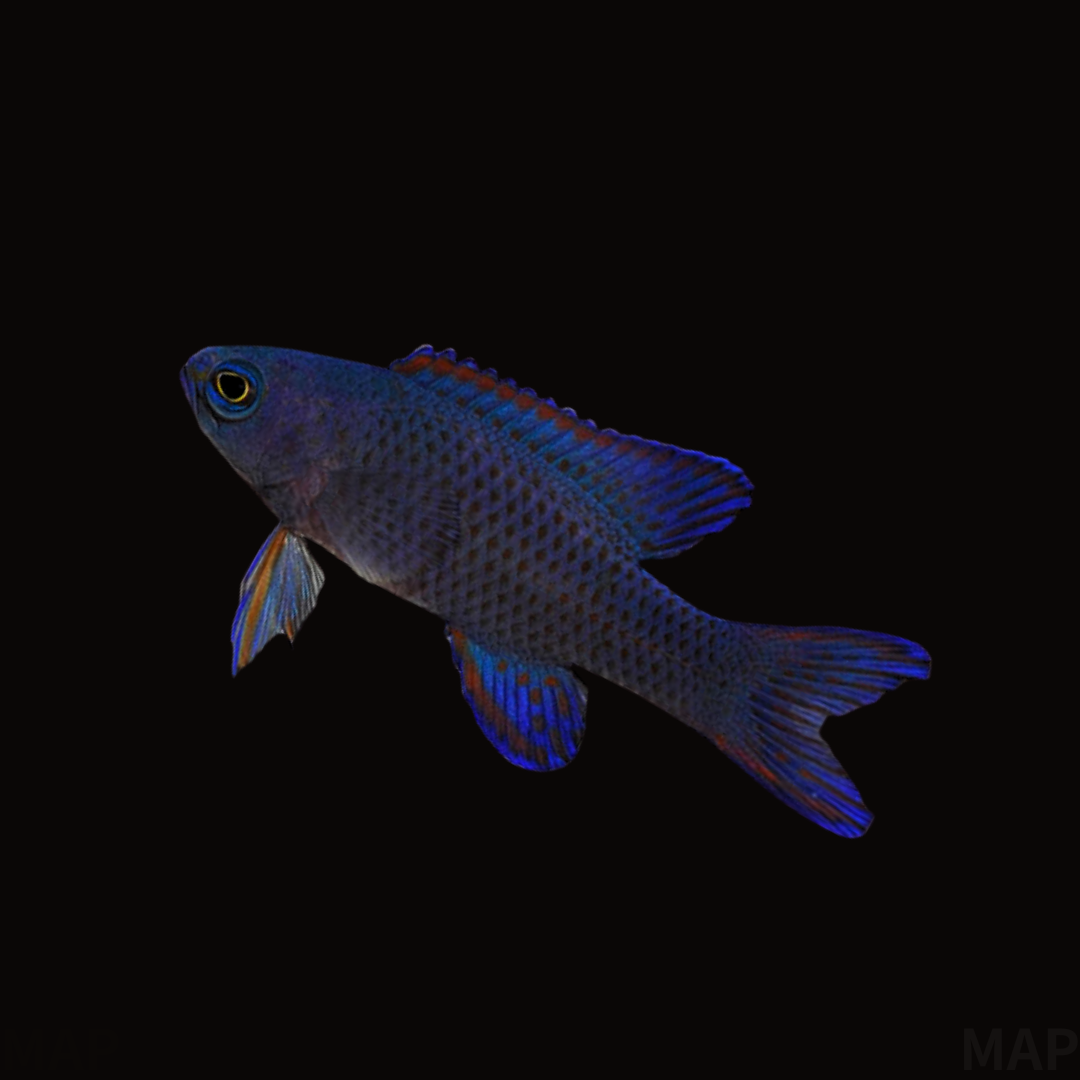
ツバメタナバタウオは、日本の琉球列島から台湾にかけての限られたサンゴ礁域に生息する、タナバタウオ科の美しい小型海水魚です。その最大の特徴は、腹部を岩の天井や壁面に向けて逆さまに泳ぐ「腹側基質定位」という独特の習性です。紺碧の夜空を思わせるネイビーブルーの体色に、オレンジ色の繊細な斑点が散りばめられた姿は非常に美しく、暗い洞窟内で舞う姿はまさにアクアリウムの宝石と呼ぶにふさわしいものです。性格は極めて温和で、サンゴを傷つけることもないため、リーフタンクにおける名脇役として古くから熱心なアクアリストに愛されてきました。近年では、日本から送られた種親を元に米国で人工繁殖が成功し、環境に配慮されたブリード個体が安定して流通するようになっています。The Randall’s Assessor is a beautiful small marine fish in the family Plesiopidae, inhabiting the limited coral reef areas from Japan’s Ryukyu Islands to Taiwan. Its most distinctive feature is the unique behavior known as “Ventral Substrate Orientation,” where it swims upside down with its belly facing the ceiling or walls of caves. With a deep navy blue body reminiscent of a midnight sky adorned with delicate orange spots, its appearance is truly breathtaking, like a gem dancing in the dark. Being extremely peaceful and reef-compatible, it has long been cherished by dedicated aquarists as a perfect addition to reef tanks. In recent years, successful captive-breeding programs in the US, using broodstock from Japan, have ensured a stable supply of environmentally friendly bred specimens.
基本情報 / Basic Information
学名 / Scientific Name
Assessor randalli
通称 / Common Name
ツバメタナバタウオRandall’s Assessor
分類 / Family
スズキ目(またはギンポ目)タナバタウオ科 ツバメタナバタウオ亜科Order Perciformes (or Blenniiformes), Family Plesiopidae, Subfamily Plesiopinae
約7.5cm(野生下では約4cm程度が多い)Approx. 7.5 cm (usually around 4 cm in the wild)
寿命 / Lifespan
約3年から5年程度Approximately 3 to 5 years
飼育環境 / Aquarium Environment
水槽サイズ / Tank Size
60cmワイド水槽(約114リットル)以上を推奨Recommended tank size: 60 cm wide (approx. 114 liters) or larger
水温 / Temperature
22度から27度(25度前後での定温管理が理想的)22 to 27 degrees Celsius (25 degrees Celsius is ideal)
水質 / Water Quality
比重 1.020から1.026、pH 8.1から8.4の清浄な海水Clean seawater with specific gravity 1.020-1.026 and pH 8.1-8.4
レイアウト / Layout
ライブロックで洞窟、隙間、オーバーハング(庇)を多数設けるProvide many caves, crevices, and overhangs using live rock
注意点 / Precautions
導入直後は神経質なため隠れることが多い。また、隙間を好むため水槽外への飛び出しに注意が必要。They are nervous and hide frequently right after introduction. Be careful of jumping out of the tank as they like crevices.
餌と給餌 / Feeding
餌の種類 / Diet
イサザアミ、ブラインシュリンプなどの冷凍飼料。ブリード個体は人工飼料(ペレット)にも容易に餌付く。Frozen foods such as mysis shrimp and brine shrimp. Captive-bred specimens easily accept pellet food.
給餌のポイント / Feeding Tips
胃が小さいため、一度に大量に与えるよりも、1日に2回以上少量をこまめに与えるのが痩せを防ぐコツ。Since they have small stomachs, frequent small feedings (twice or more a day) are better than one large feeding to prevent weight loss.
性格と混泳 / Temperament and Tank Mates
性格 / Temperament
極めて温和で臆病な面がある。サンゴに害を与えない完全リーフセーフ。Very peaceful and can be shy. Completely reef-safe and does not harm corals.
混泳の相性 / Compatibility
クマノミやハゼ等の温和な種との相性は抜群。同種や近縁のアセッサー類とは縄張り争いをするため注意。Excellent with other peaceful species like clownfish and gobies. Use caution with conspecifics or closely related assessors due to territoriality.
病気と対策 / Diseases and Prevention
かかりやすい病気 / Common Diseases
白点病、吸虫による寄生など。海水魚の標準的な病気に準ずる。Marine Ich (Cryptocaryon irritans), flukes, etc. Similar to standard marine fish diseases.
対策と予防 / Prevention
清浄な水質維持と殺菌灯の使用が有効。逆さ泳ぎを病気(転覆病)と見間違えて不必要な治療を行わないこと。Maintaining clean water and using UV sterilizers are effective. Do not mistake their upside-down swimming for swim bladder disease.
増やし方(繁殖) / Breeding
雌雄の判別 / Sexing
外見での判別は困難だが、群れの中で最も大きな個体がオスになる傾向がある。Difficult to distinguish by appearance, but the largest individual in a group tends to be the male.
繁殖形態 / Reproduction
基質産卵魚(ネストスポウナー)。洞窟の天井などに卵塊を産み付ける。Nest spawner. They lay egg masses on the ceilings of caves.
繁殖のポイント / Breeding Tips
かつては口内保育魚(マウスブリーダー)と思われていたが、人工繁殖の成功により、巣を作って卵を保護する習性が判明した。They were once thought to be mouthbreeders, but successful captive breeding revealed they are nest spawners that protect their eggs.
雑学と豆知識 / Trivia and Fun Facts
1. 伝説の魚類学者と学名の由来1. Legendary Ichthyologist and the Etymology of the Name
種小名の randalli は、生涯で800種以上の新種記載に関与した伝説的な魚類学者ジョン・E・ランドール博士への献名です。博士自らが石垣島で模式標本を採集したという歴史があり、日本の海と世界の学術界を繋ぐ象徴的な存在です。また、属名の Assessor はラテン語で「補佐する者」を意味しており、命名者の同僚への敬意が込められていると推測されています。The species name randalli honors the legendary ichthyologist Dr. John E. Randall, who described over 800 species. He personally collected the holotype specimen in Ishigaki Island, making this fish a symbol connecting Japan’s seas with global academia. The genus name Assessor means “assistant” in Latin, likely a tribute to the namer’s colleague.
ツバメタナバタウオが逆さまに泳ぐのは「最も近い基質に腹を向ける」という空間認識アルゴリズムの結果です。これは、暗い洞窟内で重力や光の方向に依存せずに自身の位置を安定させるため、また海底を徘徊する捕食者から身を隠し、「天井」という他種が利用しない空間ニッチを独占するための、高度に進化した生存戦略なのです。Their upside-down swimming results from a spatial recognition algorithm of “facing the belly toward the nearest substrate.” This is a highly evolved survival strategy to stabilize their position in dark caves without relying on gravity or light, to hide from predators on the seabed, and to monopolize the “ceiling” space niche unused by other species.
3. マウスブリーダー説を覆した「逆輸入」モデル3. The “Reverse Import” Model that Overturned the Mouthbreader Theory
長年、学術界では本種を「マウスブリーダー(口内保育魚)」と信じてきましたが、2012年に米国ORA社が日本から送られた個体で繁殖に成功した際、実は岩に卵を産む「ネストスポウナー(基質産卵魚)」であることが判明しました。日本産の親魚が米国で増え、再び日本へ輸入されるというサステナブルな流通形態が、科学的新発見をもたらしたのです。For years, it was believed to be a mouthbreeder. However, when the US company ORA successfully bred specimens sent from Japan in 2012, they discovered it was actually a nest spawner. This sustainable distribution model, where Japanese broodstock are bred in the US and imported back to Japan, led to a significant scientific discovery.
まとめ / Conclusion
ツバメタナバタウオは、その神秘的な「逆さ泳ぎ」と紺碧の美しさで、私たちにサンゴ礁の奥深さを教えてくれる特別な魚です。本来なら出会うことが難しい日本の固有種に近い存在でありながら、現代のブリード技術によって身近に楽しめるようになったことは、海水魚飼育の文化における一つの到達点と言えるでしょう。The Randall’s Assessor is a special fish that teaches us the depth of coral reefs through its mysterious upside-down swimming and navy blue beauty. Although it is a near-endemic species to Japan and would normally be difficult to encounter, the fact that modern breeding technology allows us to enjoy them is a significant milestone in marine aquarium culture.
適切な隠れ家を用意し、愛情を持って見守ることで、彼らは水槽の天井を自在に舞う見事な姿を披露してくれます。単なるペットとしてだけでなく、進化の妙や海洋環境の保護についても考えさせてくれるこの魚との暮らしは、きっとあなたのアクアリウムライフをより豊かで知的なものに変えてくれるはずです。By providing appropriate hiding spots and caring for them with love, they will show you their magnificent dance on the ceiling of your tank. Living with this fish, which encourages us to think about the wonders of evolution and marine conservation, will surely make your aquarium life richer and more intellectual.
Allen, G. R. and Kuiter, R. H. (1976) A review of the plesiopid fish genus Assessor, with descriptions of two new species. Records of the Australian Museum, 30(13), 257-274. (ツバメタナバタウオの原記載論文)
Froese, R. and D. Pauly. Editors. (2024) FishBase. World Wide Web electronic publication. Assessor randalli Allen & Kuiter, 1976. (分類および分布に関する基礎データ)
ORA (Oceans, Reefs & Aquariums) Official Release (2012) Captive Bred Randall’s Assessor (Assessor randalli). (繁殖生態の解明および完全養殖成功に関する公式記録)
Blue Harbor (Koji Wada) Domestic distribution and Broodstock supply reports. (日本国内における流通背景および種親提供に関する記録)
WoRMS Editorial Board (2024) World Register of Marine Species. Assessor randalli. (最新の分類学的ステータスおよびタクソノミーの確認)


 アイのアクアグッズ案内水槽のエアーポンプの選び方|水深・音・泡で選ぶおすすめ用品道具の特徴や使い方、選ぶときのポイントをアイが紹介します。記事はコチラ →
 アイのアクアグッズ案内おとひめ物語|養殖生まれの餌を、わが家の魚に合う一粒へ道具の特徴や使い方、選ぶときのポイントをアイが紹介します。記事はコチラ →
 アイのアクアグッズ案内海水魚の底砂の選び方|サンゴ砂・ライブサンドとおすすめ商品道具の特徴や使い方、選ぶときのポイントをアイが紹介します。記事はコチラ →
 アイのアクアグッズ案内水槽の底砂の選び方|砂・砂利の違いとおすすめ商品道具の特徴や使い方、選ぶときのポイントをアイが紹介します。記事はコチラ →



コメント