

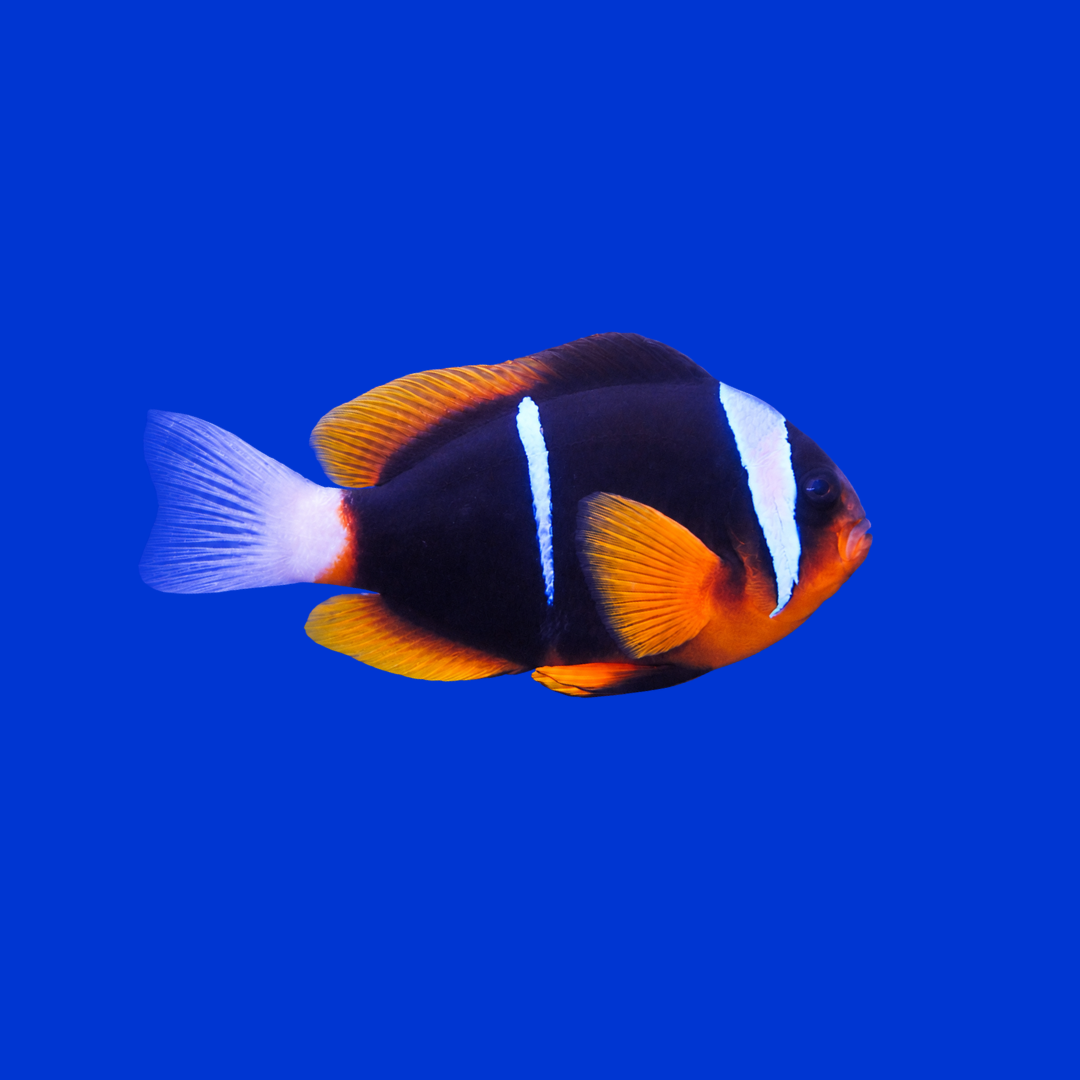
解説 / Description
アラルズアネモネフィッシュは、西部インド洋の東アフリカ沿岸を中心に暮らす中大型のクマノミです。成魚は濃い暗褐色から黒色の体に2本の白い帯をまとい、鮮やかな橙黄色の顔やヒレと、純白の三日月形の尾鰭が美しい対比をつくります。幼魚は全身が明るい橙褐色ですが、成長に伴って体側がゆっくり暗くなるため、育てながら色彩の変化を楽しめることも大きな魅力です。 Allard’s anemonefish is a medium-to-large clownfish native mainly to the East African coast of the western Indian Ocean. Adults display two white bars on a dark brown to nearly black body, contrasted by a bright orange-yellow face and fins and a pure white, crescent-shaped tail. Juveniles begin with a much lighter orange-brown body and gradually darken as they mature, making their color development especially rewarding to observe in an aquarium.
基本情報 / Basic Information
| 学名 / Scientific Name | Amphiprion allardi |
|---|---|
| 通称 / Common Name | アラーズクラウン、ツーバーアネモネフィッシュAllard’s clownfish, two-bar anemonefish |
| 分類 / Family | スズメダイ科・クマノミ属Family Pomacentridae, genus Amphiprion |
| 英名 / English Name | Allard’s Anemonefish |
| 分布 / Distribution | ケニアから南アフリカ北東部にかけての東アフリカ沿岸、セーシェル、マダガスカル周辺、マスカレン諸島など、西部インド洋の熱帯海域Tropical waters of the western Indian Ocean, including the East African coast from Kenya to northeastern South Africa, the Seychelles, waters around Madagascar, and the Mascarene Islands |
| 最大体長 / Max Size | 全長約14〜15cmApproximately 14–15 cm in total length |
| 寿命 / Lifespan | 本種だけの長期記録は限られますが、適切な環境では10年以上の長期飼育を目指せます。クマノミ類には15年以上生きた飼育例もあります。Species-specific long-term records are limited, but a lifespan of more than ten years is a reasonable goal under stable care. Captive clownfish of related species have lived for over fifteen years. |
飼育環境 / Aquarium Environment
| 水槽サイズ / Tank Size | 単独または若いペアなら最低でも60cm規格水槽相当の約60〜75Lを確保し、成魚のペアを長期飼育する場合は90cm規格水槽相当の約150L以上が安心です。混泳魚が多い場合は、さらに余裕のある水量を選びます。Provide at least about 60–75 L, roughly equivalent to a standard 60 cm aquarium, for a single fish or young pair. For a mature pair kept long term, about 150 L or more, comparable to a standard 90 cm aquarium, is preferable. Choose a larger system when keeping multiple tank mates. |
|---|---|
| 水温 / Temperature | 24〜27℃を中心に安定させます。短期的には22〜28℃程度に対応できますが、急変を避けることが重要です。 Maintain a stable temperature around 24–27°C. The fish can tolerate roughly 22–28°C for short periods, but sudden changes should be avoided. |
| 水質 / Water Quality | 比重1.020〜1.025、pH8.1〜8.4を目安に、アンモニアと亜硝酸が検出されない状態を維持します。硝酸塩の蓄積を抑え、十分なろ過と定期的な換水で水質を安定させてください。Aim for a specific gravity of 1.020–1.025 and a pH of 8.1–8.4, with no detectable ammonia or nitrite. Control nitrate accumulation through adequate filtration and regular water changes. |
| レイアウト / Layout | ライブロックなどで落ち着ける隠れ場所をつくりつつ、前面には十分な遊泳空間を残します。飼育下ではイソギンチャクは必須ではありません。導入する場合は、本種が自然下で利用するサンゴイソギンチャクなどを候補にできますが、イソギンチャク側に強い照明と安定した水質が必要です。Create secure retreats with live rock while leaving open swimming space toward the front. A host anemone is not essential in captivity. If one is added, a bubble-tip anemone is among the natural host options, but the anemone itself requires strong lighting and very stable water quality. |
| 注意点 / Precautions | 丈夫な種類ですが、成熟すると縄張り意識が強まります。導入直後は輸送疲れや寄生虫の有無を観察し、できれば隔離水槽で状態を整えてから本水槽へ移します。イソギンチャクを導入する場合は、移動によるポンプ吸い込みやサンゴへの接触にも備えてください。This is a hardy species, but territorial behavior becomes stronger with maturity. After purchase, watch for shipping stress and parasites, ideally conditioning the fish in a quarantine tank before transfer. When keeping an anemone, protect pump intakes and allow for the possibility that it may move and contact corals. |
餌と給餌 / Feeding
| 餌の種類 / Diet | 海水魚用の良質な粒餌やフレークを主食にし、冷凍ブラインシュリンプ、イサザアミ、細かく刻んだオキアミなどを組み合わせます。海藻成分を含む餌も時折加えると、雑食性に合ったバランスを整えやすくなります。Use high-quality marine pellets or flakes as the staple diet, supplemented with frozen brine shrimp, mysid shrimp, and finely chopped krill. Occasional foods containing marine algae help provide a balanced omnivorous diet. |
|---|---|
| 給餌のポイント / Feeding Tips | 1日2〜3回、数分で食べ切れる量を少量ずつ与えます。大きな個体にも口に合う粒径を選び、同居魚がいる場合は全個体に餌が行き渡るよう複数箇所へ分けて投入します。食べ残しは水質悪化につながるため、過剰給餌を避けてください。Feed small portions two or three times daily, offering only what can be eaten within a few minutes. Select a suitable particle size for larger individuals and distribute food in several areas when tank mates are present. Avoid overfeeding because uneaten food quickly degrades water quality. |
性格と混泳 / Temperament and Tank Mates
| 性格 / Temperament | 普段は丈夫で物おじしにくい一方、クマノミの中ではやや気が強く、成魚や繁殖中のペアは巣の周囲を積極的に守ります。ペア内には大きなメスを頂点とする明確な順位があり、体格差によって関係が保たれます。Generally bold and resilient, this species is moderately assertive among clownfish. Mature or breeding pairs vigorously defend the area around their nest. A clear social hierarchy is maintained within the pair, with the larger female holding the highest rank. |
|---|---|
| 混泳の相性 / Compatibility | サンゴや多くの無脊椎動物には基本的に無害で、リーフタンクに向きます。ただし、同種を含む別のクマノミ類とは激しく争う可能性が高いため、原則として1水槽に1ペアとします。温和すぎる小型魚や、同じ場所を縄張りにする気の強いスズメダイ類との組み合わせは慎重に判断してください。It is generally reef safe and does not normally harm corals or most invertebrates. However, it may fight intensely with other clownfish, including its own species, so one established pair per aquarium is the safest rule. Use caution with very timid small fish and aggressive damselfish that compete for the same territory. |
病気と対策 / Diseases and Prevention
| かかりやすい病気 / Common Diseases | 海水魚白点病、ウーディニウム病、トリコディナなどの外部寄生虫症に注意します。クマノミ類ではブルックリネラ症も重要で、体表粘液の増加、呼吸の速さ、体をこすりつける行動、食欲低下などが初期の手掛かりになります。Watch for marine ich, marine velvet, Trichodina and other external parasitic infections. Brooklynellosis is also important in clownfish; early signs can include excess skin mucus, rapid breathing, flashing or rubbing, and loss of appetite. |
|---|---|
| 対策と予防 / Prevention | 新しい魚は隔離して観察し、水温・比重・pHを合わせてから導入します。安定した水質、過密を避けた飼育、栄養の偏りを抑えた給餌が基本です。異常が見られた場合は病魚を治療水槽へ移し、原因を見極めて魚用の薬剤を使用します。サンゴやイソギンチャクのいる本水槽へ薬剤を直接入れないでください。Quarantine and observe new fish, and carefully match temperature, salinity and pH before introduction. Stable water quality, moderate stocking density and varied nutrition are the foundations of prevention. Move affected fish to a hospital tank for diagnosis and treatment, and do not add fish medications directly to a display containing corals or anemones. |
増やし方(繁殖) / Breeding
| 雌雄の判別 / Sexing | 外見上の色彩差はほとんどありません。形成されたペアでは、最大の個体がメス、その次に大きい個体が繁殖に参加するオスです。クマノミ類は雄性先熟で、メスがいなくなると優位なオスが時間をかけてメスへ性転換します。There is little reliable color difference between the sexes. In an established pair, the largest fish is the female and the second largest is the breeding male. Clownfish are protandrous hermaphrodites, and the dominant male can gradually change sex if the female is lost. |
|---|---|
| 繁殖形態 / Reproduction | 基質産卵型です。メスが平らな岩面や植木鉢などに粘着性の卵を産み、オスが受精させます。産卵後は主にオスが胸鰭で新鮮な水を送り、死卵を取り除きながら孵化まで守ります。孵化は通常、消灯後の暗い時間帯に起こります。This is a substrate-spawning species. The female lays adhesive eggs on a cleaned rock surface, tile or clay pot, and the male fertilizes them. The male then fans the clutch, removes dead eggs and guards it until hatching, which usually occurs after lights-out in darkness. |
| 繁殖のポイント / Breeding Tips | 成熟した相性の良いペアに、安定した水質と栄養価の高い餌を継続して与えます。孵化仔魚は親魚とは分け、弱い通気の専用水槽で管理します。初期餌料には培養したシオミズツボワムシを用い、成長後に栄養強化したブラインシュリンプ幼生へ移行します。植物プランクトンで水を薄い緑色に保つ方法は、餌生物の維持と仔魚の衝突防止に役立ちます。Maintain a compatible mature pair under stable water conditions and provide rich, varied nutrition. Newly hatched larvae must be separated from the parents and raised in a dedicated tank with gentle aeration. Cultured rotifers are essential as the first food, followed by enriched Artemia nauplii as the larvae grow. Lightly tinting the water green with phytoplankton helps sustain live food and reduces larval collisions with tank walls. |
雑学と豆知識 / Trivia and Fun Facts
| 1. 名前に残る東アフリカの採集史 / 1. A Name Rooted in East African Collecting History | 本種は1970年に魚類学者ヴォルフガング・クラウゼヴィッツによって新種として記載されました。種小名の「allardi」は、ケニアで海水魚の採集と輸出に携わり、学術調査にも協力したジャック・アラールに献名されたものです。白い尾鰭を揺らす一匹の魚の名前には、東アフリカの海と研究者、現地の協力者が結びついた時代の記憶が残されています。The species was formally described in 1970 by ichthyologist Wolfgang Klausewitz. Its specific name, “allardi,” honors Jacques Allard, who worked in marine fish collection and export in Kenya and supported scientific fieldwork. The name therefore preserves a small piece of history linking East African reefs, researchers and local collaborators. |
|---|---|
| 2. 2本の白帯と進化の物語 / 2. Two White Bars and an Evolutionary Story | クマノミ類の祖先は3本の白帯を持っていた可能性が高いと考えられています。その後の進化では、尾に近い帯から順に失われる傾向が示されており、アラルズアネモネフィッシュの2本帯は、その長い変化の途中を映す姿と見ることができます。よく似た太平洋産のオレンジフィンアネモネフィッシュとは系統的に離れており、似た環境の中で似た外見が生まれた収斂進化の可能性も興味深い点です。The common ancestor of clownfish is thought to have carried three white bars. Evolutionary studies suggest that bars were often lost in sequence beginning near the tail, so the two-bar pattern of Allard’s anemonefish may represent one stage in that long history. Its striking resemblance to the distantly related orange-fin anemonefish of the Pacific also raises an intriguing example of convergent evolution in similar reef environments. |
| 3. イソギンチャクと築く小さな共同体 / 3. A Small Community Built Around an Anemone | 自然下ではサンゴイソギンチャク、シライトイソギンチャクの仲間、イボハタゴイソギンチャクなどを宿主にします。クマノミは刺胞の間に安全な住み場所を得る一方、イソギンチャクを狙う魚を追い払い、排泄物を通じて栄養も供給します。水槽ではイソギンチャクなしでも暮らせますが、自然の海では一つの宿主を中心に、メス、オス、未成熟個体からなる厳格な小社会が営まれています。In the wild it associates with hosts such as the bubble-tip anemone, beaded sea anemone and Mertens’ carpet anemone. The clownfish gains shelter among the stinging tentacles, while defending the host from predators and supplying nutrients through its waste. Although it can live without an anemone in an aquarium, wild groups form a strict miniature society of a female, a male and subordinate juveniles around a single host. |
| 4. 顎を鳴らして会話する魚 / 4. A Fish That Communicates by Snapping Its Jaws | クマノミ類は、威嚇や順位確認の場面で「ポップ」という音を発します。この音は浮き袋を直接鳴らすのではなく、顎を素早く閉じた衝撃が骨格を伝わって水中へ放射される仕組みと考えられています。大きな個体ほど低い音を出す傾向があるため、相手は姿を詳しく見なくても、音から発信者の体格や強さを推し量れます。水槽の前で静かに耳を澄ますと、魚同士の目に見えない会話を感じられるかもしれません。Clownfish produce popping sounds during threats and social encounters. Rather than sounding the swim bladder directly, they rapidly snap their jaws, transmitting the impact through the skeleton and into the surrounding water. Larger fish tend to produce lower-frequency sounds, allowing rivals to estimate the caller’s size and status without relying on vision alone. A quiet observer beside the aquarium may occasionally sense this otherwise invisible conversation. |
| 5. 守られた暮らしが支える長寿 / 5. A Protected Life That Favors Longevity | 小型のサンゴ礁魚は捕食されやすく、一般には長生きしにくい存在です。しかしクマノミ類は、イソギンチャクという強力な避難場所を得たことで外敵による死亡率を大きく下げています。近縁種では野生下で非常に長く生きる例が報告され、細胞膜の脂質組成や酸化への耐性も研究されています。本種の正確な最長寿命はまだ十分に分かっていませんが、安定した水槽で一匹と長く付き合える可能性は、飼育者にとって大きな魅力です。Small reef fish are usually exposed to intense predation and often have limited lifespans. Clownfish, however, greatly reduce this external risk by sheltering within a powerful anemone refuge. Exceptionally long lives have been documented in related species, and researchers are investigating whether membrane lipids and resistance to oxidative damage also contribute. The exact maximum lifespan of this species remains uncertain, but its potential for a long relationship with its keeper is one of its most appealing qualities. |
| 6. 希少な流通と人工繁殖の意義 / 6. Scarce Availability and the Value of Captive Breeding | 日本ではカクレクマノミやクラーキーほど頻繁には流通せず、東アフリカ由来の野生個体は輸送距離の長さもあって入荷が安定しません。一方、海外では人工繁殖個体の生産が進み、野生個体への依存を減らしながら健康な幼魚を供給する道が広がっています。人工飼料に慣れた繁殖個体は導入しやすいことが多く、本来の色彩を守った持続可能な流通にもつながります。In Japan this species is encountered far less often than ocellaris or Clark’s clownfish, and shipments of wild fish from East Africa can be irregular because of the long transport route. Overseas captive breeding has expanded, creating a way to supply healthy juveniles while reducing reliance on wild collection. Captive-bred fish are often already accustomed to prepared foods and can support a more sustainable trade while preserving the species’ natural appearance. |
まとめ / Conclusion
アラルズアネモネフィッシュは、黒褐色の体、2本の白帯、橙黄色のヒレ、そして純白の尾鰭が調和した、落ち着きと華やかさを併せ持つクマノミです。成長とともに体色が深まるため、幼魚から育てれば、一匹の変化を長い時間をかけて見守れます。 Allard’s anemonefish combines a dark brown body, two white bars, orange-yellow fins and a pure white tail in a pattern that is both elegant and vivid. Because the body darkens with age, raising a juvenile offers the pleasure of watching one individual transform over many years.
十分な広さ、安定した海水、偏りのない餌、そして縄張りを尊重した混泳計画を整えれば、力強い泳ぎと複雑な社会行動をじっくり観察できます。水槽の中で白い尾鰭が翻る姿は、東アフリカのサンゴ礁とイソギンチャクの暮らしを身近に感じさせてくれるでしょう。 With adequate space, stable seawater, balanced food and tank mates chosen with its territory in mind, the fish rewards its keeper with strong swimming and complex social behavior. Its white tail flashing through the aquarium offers a vivid reminder of life among the anemones and reefs of East Africa.

気になる道具や飼い方を見つけてみませんか?
 アイのアクアグッズ案内水槽のろ材の選び方|ウール・リング・活性炭の違いとおすすめ商品フィルターの中の綿や石は何をしている? アイとコタロウが、ウール・スポンジ・セラミック・焼結ガラス・活性炭・ゼオライトを比較。機種との相性、入れ方、洗い方と交換まで商品とともに紹介します。記事はコチラ →
 アイのアクアグッズ案内コケを食べるコイの仲間に合わせる飼育用品|フライングフォックス・アルジイーター・ガラ道具の特徴や使い方、選ぶときのポイントをアイが紹介します。記事はコチラ →
さまざまな飼育テーマをご紹介。リンク先の記事には広告・商品紹介が含まれます。
案内・紹介記事一覧へ →分布マップ
アラルズアネモネフィッシュは、ケニアから南アフリカ北東部にかけての東アフリカ沿岸、セーシェル、マダガスカル周辺、マスカレン諸島など、西部インド洋の熱帯海域に分布します。
この地図は、記事の分布情報をもとに西部インド洋の代表的な範囲と中心地点を概略表示したものです。実際の採集地点や厳密な生息範囲を示すものではありません。
参考文献・根拠資料
アラルズアネモネフィッシュの分類、分布、生息環境、飼育管理、繁殖、病気および導入時の注意点を確認するために用いた資料です。店舗、通販サイト、個人ブログ、情報の出典が不明確なまとめサイトは含めていません。
分類・分布・生息環境
-
Klausewitz, W. (1970). Amphiprion allardi n. sp., ein neuer Anemonfisch von der ostafrikanischen Küste. Senckenbergiana Biologica, 51(3–4), 181–192.
本種固有原記載、学名、タイプ産地および分類史の根拠。
-
Fricke, R., Eschmeyer, W. N. & Van der Laan, R. (eds.). Eschmeyer’s Catalog of Fishes: Amphiprion allardi. California Academy of Sciences.
本種固有有効な学名、原記載、タイプ標本、既知の分布を確認するための魚類分類データベース。
-
Froese, R. & Pauly, D. (eds.). FishBase: Amphiprion allardi.
本種固有西部インド洋における分布、水深、水温、生息場所、最大体長、自然宿主、基質産卵と雄による卵保護の根拠。
-
Fautin, D. G. & Allen, G. R. (1992). Field Guide to Anemonefishes and Their Host Sea Anemones. Western Australian Museum.
専門モノグラフクマノミ類と宿主イソギンチャクの組み合わせ、自然環境での共生関係および識別情報の根拠。
飼育条件・病気・導入時の注意点
-
Merck Veterinary Manual. Management of Aquarium Fish.
海水魚全般比重・塩分管理、アンモニアと亜硝酸の監視、隔離治療、薬剤使用時の水質確認、銅が無脊椎動物に及ぼす危険性を支える獣医学資料。
-
Yanong, R. P. E. Cryptocaryon irritans Infections (Marine White Spot Disease) in Fish. University of Florida IFAS Extension, FA164.
疾病資料海水魚の白点病の病原体、症状、診断、生活環、隔離および予防管理の根拠。
-
Francis-Floyd, R. & Floyd, M. R. (2011). Amyloodinium ocellatum, an Important Parasite of Cultured Marine Fish. Southern Regional Aquaculture Center Publication No. 4705.
疾病資料海水魚のアミルウーディニウム症について、鰓や皮膚への寄生、急速な拡大、診断と管理上の注意を支える大学・水産養殖普及資料。
-
Fioravanti, M. L. et al. (2017). Common Diseases in Marine Ornamental Fishes. In Marine Ornamental Species Aquaculture. Wiley-Blackwell.
疾病資料海産観賞魚にみられる寄生虫性疾患を体系的に扱う専門書の章。ブルックリネラ症を含む疾病の鑑別と健康管理を補強する資料。
繁殖・社会構造
-
Fricke, H. & Fricke, S. (1977). Monogamy and Sex Change by Aggressive Dominance in Coral Reef Fish. Nature, 266, 830–832. DOI: 10.1038/266830a0.
クマノミ属社会的順位によって制御される雄性先熟型の性転換を示した基礎研究。
-
Buston, P. (2003). Social Hierarchies: Size and Growth Modification in Clownfish. Nature, 424, 145–146. DOI: 10.1038/424145a.
クマノミ類体サイズに基づく順位制と成長調整を扱い、最大個体が雌、次位個体が繁殖雄となる社会構造の理解を補う研究。
-
Roux, N. et al. (2021). A Star Is Born Again: Methods for Larval Rearing of an Emerging Model Organism, the False Clownfish Amphiprion ocellaris. Journal of Experimental Zoology Part B: Molecular and Developmental Evolution, 336(4), 376–385. DOI: 10.1002/jez.b.23028.
近縁種の飼育研究産卵ペアの管理、孵化仔魚の分離、ワムシなどの生物餌料を用いた初期育成法を支える実験手順。本種固有の繁殖試験ではなく、クマノミ類に応用される基礎資料として採用。
資料の適用範囲について
分布、水深、水温、最大体長、自然宿主、産卵形態は、本種に対応するデータベースと原記載を優先しています。一方、水槽容量、目標とする比重・pH、給餌回数、隔離期間、仔魚育成の細かな手順には、アラルズアネモネフィッシュだけを対象に比較検証した研究が限られます。そのため、これらは海水魚医学、一般的なサンゴ礁水槽管理、クマノミ類および近縁種の繁殖研究を組み合わせた実用上の目安であり、本種固有の絶対条件を示すものではありません。病名は外見だけで確定できないため、異常がみられる場合は隔離したうえで、可能な限り魚病に詳しい獣医師または検査機関へ相談することが望まれます。
資料確認日:2026年7月14日





コメント