

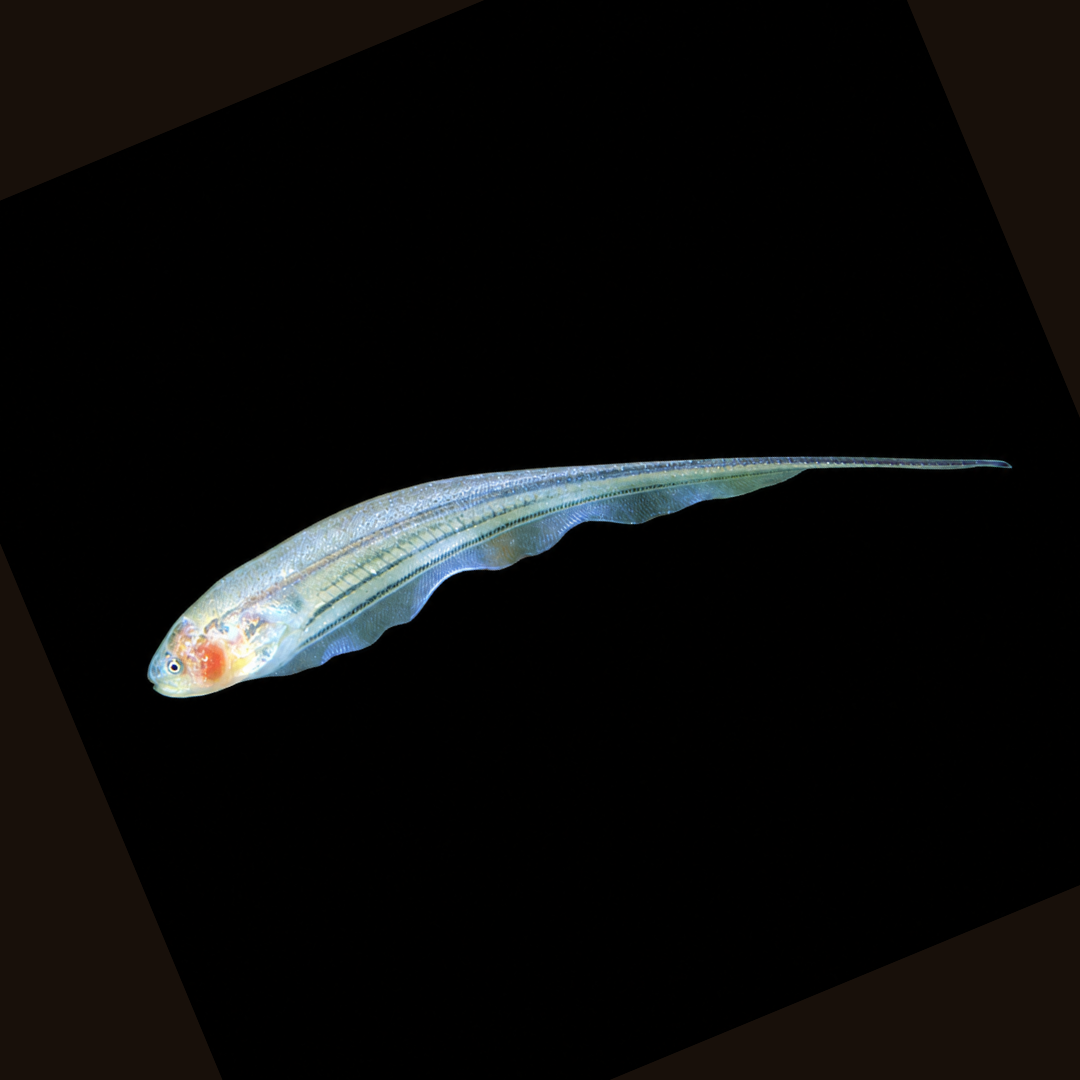
解説 / Description
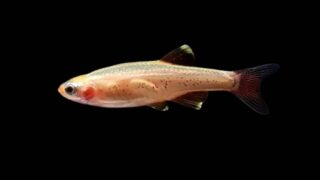
グリーンナイフは、南米に分布するアイゲンマニア属の弱電気魚です。半透明の灰色から灰褐色の体は左右に薄く、体の下面には長い臀鰭が続きます。この鰭に細かな波を送ることで、前進だけでなく後退や静止に近い動きも滑らかに行います。背鰭と腹鰭を欠く独特の体形と、照明を落とした水槽で見せる静かな遊泳が大きな魅力です。 The Green Knifefish is a weakly electric member of the genus Eigenmannia from South America. Its translucent gray to gray-brown body is strongly compressed from side to side, with a long anal fin extending along the underside. Fine waves traveling along this fin allow smooth forward movement, reverse swimming, and near-stationary hovering. Its unusual finless back and subdued movement under dim lighting give it a distinctive presence in the aquarium.
日本では「グリーンナイフ」や「ペルビアングリーンナイフ」の名で流通しますが、アイゲンマニア属は外見がよく似た種を多く含みます。そのため、流通名だけでEigenmannia limbataと断定できない場合があります。飼育では、微弱な電場を使って周囲を捉える夜行性の生活に合わせ、薄暗い環境、十分な隠れ家、穏やかな水流、急変の少ない水質を整えることが重要です。 In the aquarium trade, names such as “Green Knifefish” and “Peruvian Green Knifefish” are used broadly. Because Eigenmannia contains many closely similar species, a trade label alone may not confirm an identification as Eigenmannia limbata. Husbandry should reflect its nocturnal, electrosensory lifestyle by providing subdued lighting, secure shelters, gentle current, and consistently stable water conditions.
基本情報 / Basic Information
| 学名 / Scientific Name | Eigenmannia limbata |
|---|---|
| 通称 / Common Name | グリーンナイフ、ペルビアングリーンナイフ、グラスナイフ(いずれも主に流通名)Green Knifefish, Peruvian Green Knifefish, Glass Knifefish (primarily trade names) |
| 分類 / Family | デンキウナギ目・ステルノピュグス科・アイゲンマニア属Order Gymnotiformes, family Sternopygidae, genus Eigenmannia |
| 英名 / English Name | Glass knifefish / Green knifefish (trade usage varies) |
| 分布 / Distribution | アマゾン川流域からギアナ地域を中心とする南米北部。近年の分類学的資料では、アマゾン・オリノコ・ギアナ地域に広く分布する種として扱われています。河川の岸辺、支流、湖沼、氾濫原などで採集記録がありますが、分布情報には近縁種との再同定が必要な標本も含まれ得ます。Northern South America, centered on the Amazon basin and the Guiana region. Recent taxonomic literature treats the species as broadly distributed across the Amazon–Orinoco–Guiana region. Records come from river margins, tributaries, lakes, and floodplain habitats, although some historical records may require re-examination because of confusion with closely related species. |
| 最大体長 / Max Size | 資料によっては全長40cmを超える最大値が掲載されています。また、近年の分類学的研究では、臀鰭の終端までの長さが33cm前後に達する標本が確認されています。ナイフフィッシュ類は尾部が損傷・再生することがあり、全長と「臀鰭終端までの長さ」が混在するため、数値の単純比較には注意が必要です。飼育設備は40cm級まで成長する可能性を見込んで選びます。Some references report a maximum total length exceeding 40 cm, while recent taxonomic work includes specimens measuring about 33 cm to the end of the anal fin. Because the caudal filament can be damaged or regenerated, and because total length and length to the anal-fin end are both used in the literature, size figures are not always directly comparable. Aquarium planning should allow for a fish in the 40 cm size class. |
| 寿命 / Lifespan | Eigenmannia limbataに限定した信頼性の高い飼育下寿命は、現時点では明確に示されていません。数年単位の長期飼育を前提とし、成長後も維持できる設備を準備して迎える必要があります。A reliable, species-specific captive lifespan has not been clearly established for Eigenmannia limbata. It should be treated as a multi-year commitment, with equipment capable of supporting the fish after it reaches adult size. |
飼育環境 / Aquarium Environment
| 水槽サイズ / Tank Size | 幼魚の一時的な育成には60〜90cm水槽を使えますが、長期飼育では120cm規格水槽または120cmワイド水槽を基本とし、十分な遊泳距離と隠れ家を確保します。最大体長には不確実性があるため、90cm規格水槽を終生飼育の基準とは考えない方が安全です。同種を複数飼育する場合は、さらに大きな水量と、互いの視線を遮れる複数の退避場所が必要です。A 60–90 cm aquarium may be used temporarily for juveniles, but long-term care is better planned around a standard or wide 120 cm aquarium with ample swimming length and shelter. Because the adult size remains somewhat uncertain, a standard 90 cm tank should not be treated as a universal lifetime minimum. Groups require substantially more water volume and several retreats that break lines of sight. |
|---|---|
| 水温 / Temperature | 飼育上の実用的な目安は24〜28℃です。特定の数値へ急に合わせるより、季節や換水による急変を避け、溶存酸素を確保しながら安定させることを優先します。 A practical captive target is 24–28°C. Stability is more important than rapidly adjusting to a particular number; avoid sudden seasonal or water-change fluctuations and maintain adequate dissolved oxygen. |
| 水質 / Water Quality | 弱酸性から中性の水を基本とし、pH6.0〜7.5程度を実用上の目安とします。硬度は軟水から中程度まで対応できますが、本種だけを対象とした厳密な耐性試験は乏しいため、数値を追い込むよりも、アンモニアと亜硝酸を検出させず、硝酸塩の蓄積とpHの急変を抑えることが重要です。Slightly acidic to neutral water is appropriate, with pH 6.0–7.5 serving as a practical guideline. Soft to moderately hard water can be used, but controlled tolerance data for this species are limited. Rather than chasing exact values, keep ammonia and nitrite undetectable and prevent nitrate accumulation and sudden pH shifts. |
| レイアウト / Layout | 流木、土管、角を滑らかにした塩ビパイプなどで、体全体を収められる隠れ家を複数用意します。浮き草や控えめな照明で明暗差をつくると、魚が自ら落ち着ける場所を選びやすくなります。長い臀鰭と細い尾部を傷つけないよう、鋭い石、粗い装飾、抜け出せない狭い隙間は避けます。Provide several full-body shelters using driftwood, ceramic tubes, or smooth-edged PVC pipe. Floating plants and restrained lighting create shaded zones and allow the fish to choose a secure resting place. Avoid sharp rocks, abrasive decorations, and narrow gaps that could trap or damage the long anal fin and slender caudal filament. |
| 注意点 / Precautions | 驚いた個体が水面へ飛び出す可能性があるため、配管やコードの周囲まで塞げるフタを使用します。導入時は照明を落とし、温度と水質をゆっくり合わせてください。強い水流、明るすぎる照明、隠れ家不足、頻繁なレイアウト変更は、夜行性で警戒心の強い本属にとって負担になります。Use a close-fitting lid that also covers openings around pipes and cables, as startled fish may leave the water. During introduction, dim the lights and acclimate the fish gradually to temperature and water chemistry. Strong current, excessive lighting, inadequate shelter, and frequent rearrangement can be stressful for this shy, nocturnal genus. |
餌と給餌 / Feeding
| 餌の種類 / Diet | 冷凍赤虫、小型の甲殻類、イトミミズ類などの動物質の餌を利用できます。状態が落ち着いた個体には、沈下性またはゆっくり沈む肉食魚用ペレットへ段階的に慣らします。生きた小魚だけに偏る給餌は、栄養の偏りや病原体持ち込みの原因になり得るため、主食には適しません。Animal-based foods such as frozen bloodworms, small crustaceans, and aquatic worms are readily accepted. Once settled, the fish should be gradually trained onto sinking or slow-sinking carnivore pellets. A diet based mainly on live feeder fish is unsuitable because it may be nutritionally unbalanced and can introduce pathogens. |
|---|---|
| 給餌のポイント / Feeding Tips | 消灯前後など活動が高まる時間帯に、隠れ家の近くへ少量ずつ与えます。視覚よりも電気感覚や嗅覚を活用して餌を探すため、底へ届く餌が使いやすい一方、食べ残しは水質を急速に悪化させます。混泳水槽では、活発な同居魚に先取りされていないか、腹部の張りや体つきを個体ごとに確認します。Offer small portions near shelters around dusk or after the lights go out. Because the fish relies strongly on electrosensory and chemical cues, sinking food is often effective, but uneaten food can quickly degrade water quality. In a community aquarium, confirm that faster tank mates are not taking the entire ration and monitor the condition of each individual. |
性格と混泳 / Temperament and Tank Mates
| 性格 / Temperament | アイゲンマニア属は、ナイフフィッシュ類の中では比較的おとなしく、自然下で複数個体が同じ遮蔽物を利用する例も知られています。ただし、Eigenmannia limbataの飼育下での社会性には情報が少なく、個体差もあります。複数飼育は必須ではなく、広い水槽と十分な隠れ家を用意できる場合に限って慎重に試します。Eigenmannia is generally considered peaceful compared with many other knifefishes, and several individuals may use the same cover in the wild. Species-specific information on captive social behavior in Eigenmannia limbata is limited, however, and individual differences occur. Group keeping is not essential and should be attempted only in a large aquarium with abundant shelter. |
|---|---|
| 混泳の相性 / Compatibility | 口に入らない大きさで、攻撃性が低く、餌を独占しない中層・上層魚が候補になります。大型で攻撃的なシクリッド、鰭をかじる魚、底層で激しく競合する魚は避けます。別種の弱電気魚との混泳については、電気信号の干渉や行動上の競合を評価した飼育データが十分ではないため、原則として別水槽に分ける方が安全です。Potential tank mates are peaceful midwater or upper-water fishes that are too large to swallow and do not monopolize food. Avoid large aggressive cichlids, fin-nippers, and highly competitive bottom dwellers. Because captive evidence on electrical interference and behavioral competition between different weakly electric fishes is limited, keeping them in separate aquariums is the safer default. |
病気と対策 / Diseases and Prevention
| かかりやすい病気 / Common Diseases | 輸送や導入直後には、白点病を含む外部寄生虫症、細菌性の皮膚障害、食欲低下などが起こる可能性があります。ただし、Eigenmannia limbataが白点病に特別かかりやすいとする種固有の資料は十分ではありません。また、本属は完全な無鱗魚ではなく、体表には小さな円鱗があります。体が繊細に見えることと「鱗がないこと」は分けて考える必要があります。After transport or introduction, external parasites including ich, bacterial skin problems, and loss of appetite may occur. However, species-specific evidence that Eigenmannia limbata is uniquely prone to ich is limited. The genus is not truly scaleless; the body bears small cycloid scales. A delicate appearance should therefore not be confused with a complete absence of scales. |
|---|---|
| 対策と予防 / Prevention | 可能であれば新規個体を隔離して観察し、本水槽では水質、酸素量、水温を安定させます。白点や呼吸促迫が見られても、原因を確かめずに水温を30℃まで上げたり、塩や薬を一律に減量したりする方法は避けます。病原体や製品によって有効条件が異なるため、使用薬の対象魚、禁忌、用量を製品表示で確認し、ろ材や活性炭への影響も含めて手順どおりに治療します。重症例や診断が難しい場合は、観賞魚診療に対応する獣医師へ相談します。Quarantine new arrivals when possible and keep water quality, oxygenation, and temperature stable in the main aquarium. Even when white spots or rapid breathing are observed, avoid automatically raising the temperature to 30°C or arbitrarily reducing salt or medication doses without identifying the likely cause. Effective conditions differ among pathogens and products, so follow the label for suitable species, contraindications, dosage, and filter or activated-carbon management. Severe or uncertain cases should be referred to a veterinarian experienced with ornamental fish. |
増やし方(繁殖) / Breeding
| 雌雄の判別 / Sexing | Eigenmannia limbataについて、一般飼育者が外見だけで確実に雌雄を判別できる方法は確立されていません。アイゲンマニア属では体格や電気器官放電に性差が報告された種がありますが、その特徴を本種へそのまま当てはめることはできません。No reliable visual method for routine sexing of Eigenmannia limbata has been established for aquarists. Sexual differences in body size or electric-organ discharge have been reported in some Eigenmannia species, but those traits cannot automatically be applied to this species. |
|---|---|
| 繁殖形態 / Reproduction | 卵生の魚ですが、Eigenmannia limbataそのものを対象とした産卵数、卵径、産卵場所などの詳細な資料は限られています。近縁のアイゲンマニア属では、複数回に分けて卵を放出する分割産卵や、水位・水温など季節変化との関連が報告されていますが、本種の確定情報とは区別して扱う必要があります。The species is egg-laying, but detailed species-specific information on fecundity, egg diameter, and spawning site remains limited. Batch spawning and relationships with seasonal changes in water level and temperature have been reported in other Eigenmannia species, but these observations should not be presented as confirmed data for E. limbata. |
| 繁殖のポイント / Breeding Tips | 家庭水槽で再現性のある繁殖手順は確立されていません。繁殖を試みる場合は、成熟個体の正確な同定、十分に大きな専用水槽、導電率を含む継続的な水質記録が前提になります。雨季を模した換水や水位変化は候補となる刺激ですが、急激な低温化やpH変動は親魚を弱らせるため、実験的な操作は小さな変化から慎重に行います。No repeatable home-aquarium breeding protocol has been established. Any serious attempt requires correctly identified mature fish, a large dedicated aquarium, and continuous records of water conditions including conductivity. Water changes and gradual water-level shifts that imitate seasonal flooding may be possible cues, but abrupt cooling or pH changes can harm the adults and should be avoided. |
雑学と豆知識 / Trivia and Fun Facts
| 1. 学名と流通名が示すもの / 1. What the scientific and trade names tell us | 属名Eigenmanniaは、南北アメリカの淡水魚研究で知られる魚類学者カール・H・アイゲンマンにちなみます。種小名limbataは「縁取られた」という意味を持つラテン語に由来すると解釈され、鰭や体側に見られる暗色の縁取りを想起させます。一方、「グリーンナイフ」や「グラスナイフ」は観賞魚流通で広く使われる呼び名であり、学名と一対一に対応するとは限りません。The genus Eigenmannia honors Carl H. Eigenmann, an ichthyologist noted for his work on freshwater fishes of the Americas. The epithet limbata is interpreted from Latin for “bordered” or “edged,” evoking the dark edging visible on the fins or body. By contrast, aquarium names such as Green Knifefish and Glass Knifefish are used broadly and do not always correspond to a single scientific species. |
|---|---|
| 2. 一本の鰭で前進と後退を切り替える / 2. One fin switches between forward and reverse | グリーンナイフは尾鰭を左右へ大きく振る代わりに、長い臀鰭へ波を送って進みます。波の向きを反転させれば、体の向きを変えずに後退できます。流木や植物の根が入り組む場所で姿勢を保ち、電気感覚で周囲を調べる生活に適した移動方法です。Rather than producing broad tail beats, the Green Knifefish moves by sending waves along its long anal fin. Reversing the direction of the wave produces reverse swimming without turning the body. This form of locomotion is well suited to holding position among submerged wood and plant roots while examining the surroundings electrically. |
| 3. 弱い電気で周囲の輪郭を読む / 3. Weak electricity outlines the surroundings | 発電器官から生じる連続的な電気器官放電は、獲物を感電させる武器ではありません。魚の周囲にできた弱い電場は、物体の電気的性質によってわずかに変化します。体表の電気受容器がその変化を捉えることで、暗い水中でも障害物や小動物の位置を把握できます。The continuous electric-organ discharge is not a weapon used to stun prey. Instead, it creates a weak field around the fish that is subtly distorted by the electrical properties of nearby objects. Electroreceptors in the skin detect those changes, helping the fish locate obstacles and small animals even in dim water. |
| 4. 混信回避行動は属を代表する研究テーマ / 4. Jamming avoidance became a landmark research topic | 放電周波数の近い個体が接近すると、電場に「うなり」が生じて電気定位の精度が下がります。アイゲンマニア属では、相手の周波数が自分より低ければ自分の周波数を上げ、高ければ下げる混信回避行動が研究されてきました。この現象は1963年に渡辺昭と竹田君久によって報告され、その後の神経行動学を代表する研究系となりました。ただし、実験で用いられてきた個体の多くはEigenmannia属として扱われたもので、得られた知見のすべてがE. limbata固有とは限りません。When fish with similar discharge frequencies approach one another, interference produces beats that reduce electrolocation accuracy. In Eigenmannia, a fish raises its frequency when the neighboring signal is lower and lowers it when the neighboring signal is higher. Reported by Akira Watanabe and Kimihisa Takeda in 1963, this jamming avoidance response became a landmark system in neuroethology. Much of the experimental literature concerns Eigenmannia broadly, however, and not every result is necessarily specific to E. limbata. |
| 5. よく似た外見の内側に隠れた多様性 / 5. Hidden diversity behind a similar appearance | アイゲンマニア属は、外部形態がよく似るため分類が難しいグループです。近年は骨格、鱗数、歯、染色体、DNAなどを組み合わせた研究によって、新種の記載や既存種の再検討が続いています。近縁種や別地域個体群で得られた染色体・繁殖・行動の情報を、そのままE. limbataへ移すことはできません。販売名、産地、学名表示を手がかりにしつつ、同定には不確実性が残ることを理解して飼育情報を読む必要があります。Eigenmannia is taxonomically difficult because many species look strikingly similar. Recent studies combine skeletal characters, scale counts, teeth, chromosomes, and DNA to describe new species and reassess older identifications. Chromosomal, reproductive, or behavioral findings from a related species or another population cannot simply be transferred to E. limbata. Trade name, locality, and scientific label are useful clues, but some uncertainty in identification often remains. |
まとめ / Conclusion
グリーンナイフは、半透明の体とリボン状の臀鰭による独特の遊泳に加え、微弱な電気で周囲を捉える感覚世界を備えた魚です。薄暗い水辺で障害物を避け、仲間の信号と干渉しないよう放電を調節する姿は、南米の淡水魚が育んだ進化の多様さを静かに伝えます。 The Green Knifefish combines a translucent body and ribbon-like fin movement with a sensory world built around weak electricity. Its ability to navigate dim water and adjust electrical signals in the presence of neighboring fish offers a striking example of the evolutionary diversity of South American freshwater fishes.
長期飼育には、40cm級への成長を見込んだ広い水槽、確実なフタ、落ち着ける隠れ家、安定した水質、競争を避けた給餌が欠かせません。さらに、流通名だけでは正確な種を決めにくいことを理解し、近縁種の情報を断定的に当てはめない姿勢も大切です。十分な空間と慎重な管理のもとでは、水槽に穏やかな動きと、目には見えない電気感覚の世界をもたらす、学術的にも観賞上も興味深い存在となります。 Long-term care requires a spacious aquarium planned for a fish in the 40 cm size class, a secure lid, dependable shelter, stable water, and feeding that avoids competition. It is equally important to recognize that trade names do not always provide a precise identification and that information from related species should not be applied uncritically. With adequate space and careful management, this fish becomes both a graceful aquarium resident and a compelling window into an invisible electrical sense.
気になる道具や飼い方を見つけてみませんか?
 アイのアクアグッズ案内コリドラスのもふもふ時間を楽しむ|餌・底砂・お掃除用品の選び方コリドラスのもふもふする食事風景を楽しむために。沈む餌2種類の違い、口元に配慮した底砂、食べ残しを回収する道具を、アクアグッズナビゲーターのアイが紹介します。記事はコチラ →
 アイのアクアグッズ案内コケを食べるコイの仲間に合わせる飼育用品|フライングフォックス・アルジイーター・ガラ道具の特徴や使い方、選ぶときのポイントをアイが紹介します。記事はコチラ →
さまざまな飼育テーマをご紹介。リンク先の記事には広告・商品紹介が含まれます。
案内・紹介記事一覧へ →分布マップ
グリーンナイフは、アマゾン川流域からオリノコ川流域、ギアナ地域にかけての南米北部に広く分布するとされています。地図では、この広域分布を把握するための概略的な代表範囲を示しています。
この地図の円と中心点は、記事に記載された広域分布をイメージしやすくするための概略表示です。実際の採集地点、個体の確認地点、厳密な生息範囲を示すものではありません。
参考文献・根拠資料
分類、分布、生息環境、飼育管理、繁殖、疾病対策に関する記述を確認するため、査読論文、公的・国際的データベース、獣医学資料から選定しています。店舗、通販サイト、個人ブログ、まとめサイトは含めていません。
資料の適用範囲について
Eigenmannia limbataを対象とした飼育下の比較試験や繁殖研究は非常に限られています。記事中の120cm級水槽、24〜28℃、pH6.0〜7.5、給餌方法などは、最大体長、本属の自然史、一般的な観賞魚医療を踏まえた安全側の実用目安であり、本種だけを用いた実験で確立された絶対値ではありません。近縁種の繁殖・食性資料は、本種の確定情報としてではなく、アイゲンマニア属で知られる傾向を慎重に説明するために使用します。
-
分類・分布 本種を直接掲載
1. Peixoto, L. A. W. & Ohara, W. M. (2019)
A new species of Eigenmannia Jordan & Evermann (Gymnotiformes: Sternopygidae) from rio Tapajós, Brazil, with discussion on its species group and the myology within Eigenmanniinae. PLOS ONE, 14(8), e0220287.
記事内で支える内容:アイゲンマニア属の分類の難しさ、形態による検索、本属の生息環境、弱電気魚としての性質、E. limbataがアマゾン・オリノコ水系に広く分布するとする整理。
-
分類・標本記録 本種を直接掲載
2. Uliam, M. I. M., Ribeiro, H. P. A. & Dutra, G. M. (2025)
Description of a new species of glass knifefish genus Eigenmannia (Gymnotiformes: Sternopygidae) from the rio Negro basin, Brazil. Neotropical Ichthyology, 23(3), e250004.
記事内で支える内容:近年の形態・分子データを併用した分類研究、リオ・ネグロ水系における複数種の共存と再同定の必要性、E. limbataの比較標本、臀鰭終端まで約32〜33cmに達する標本記録。
-
学名・異名 国際データベース
3. GBIF Secretariat
Eigenmannia limbata (Schreiner & Miranda Ribeiro, 1903). GBIF Backbone Taxonomy / Catalogue of Life.
記事内で支える内容:受容されている学名、原記載者と記載年、原記載時の組み合わせSternopygus limbatus、原記載文献への書誌的な導線。
https://www.gbif.org/ja/taxon/38VF5 (参照日:2026年7月16日)
-
分布・最大体長 専門データベース
4. Froese, R. & Pauly, D. (eds.)
FishBase: Eigenmannia limbata (Schreiner & Miranda Ribeiro, 1903).
記事内で支える内容:ステルノピュグス科への分類、淡水性・底中層性、ギアナおよびアマゾン川流域という分布、最大全長48.5cmとして収録される値。最大値は標本計測法や尾部の状態による差を考慮して使用します。
https://www.fishbase.se/summary/Eigenmannia-limbata.html (参照日:2026年7月16日)
-
生息環境 本種の採集記録あり
5. Correa, S. B., Crampton, W. G. R., Chapman, L. J. & Albert, J. S. (2008)
A comparison of flooded forest and floating meadow fish assemblages in an upper Amazon floodplain. Journal of Fish Biology, 72(3), 629–644.
記事内で支える内容:上部アマゾン氾濫原の水没林と浮遊植物群落に形成される魚類群集、および調査対象群集におけるE. limbataの記録。氾濫原や植物性カバーを利用するという生態説明の根拠になります。
-
生態・氾濫原 デンキウナギ目全般
6. Crampton, W. G. R. (1996)
Gymnotiform fish: an important component of Amazonian floodplain fish communities. Journal of Fish Biology, 48(2), 298–301.
記事内で支える内容:アマゾン氾濫原におけるデンキウナギ目魚類の生態的重要性。E. limbata固有の飼育値を示す資料ではなく、野生環境の背景説明に用います。
-
食性 近縁種
7. Giora, J., Fialho, C. B. & Dufech, A. P. S. (2005)
Feeding habit of Eigenmannia trilineata López & Castello, 1966 (Teleostei: Sternopygidae) of Parque Estadual de Itapuã, RS, Brazil. Neotropical Ichthyology, 3(2), 291–298.
記事内で支える内容:アイゲンマニア属の近縁種における動物質中心の食性と水生無脊椎動物の利用。E. limbataの胃内容物を直接調べた研究ではないため、給餌欄では属レベルの参考に限定します。
-
繁殖 近縁種
8. Tondato-Carvalho, K. K. et al. (2025)
Life history traits of the glass knifefish Eigenmannia desantanai (Gymnotiformes: Sternopygidae) in the Southern Pantanal, Brazil. Acta Limnologica Brasiliensia, 37, e26.
記事内で支える内容:近縁種で確認された分割産卵、繁殖期と河川水位・水温との関連、長期にわたる繁殖期間。本種の産卵数や卵径へ直接転用せず、属内で知られる繁殖傾向の説明に限定します。
-
飼育水・設備管理 獣医学資料
9. Merck Veterinary Manual
Management of Aquarium Fish/“Normal” Reference Ranges for Routine Water Quality Analysis.
記事内で支える内容:アンモニア・亜硝酸管理、硝酸塩の蓄積、溶存酸素、急激なpH補正の危険性、日常的な換水と水質検査。記事のpHや温度範囲そのものを本種固有値として証明する資料ではありません。
Routine Water Quality Analysis (参照日:2026年7月16日)
-
導入・隔離 獣医学資料
10. Merck Veterinary Manual
Production Medicine and Biosecurity in Aquaculture.
記事内で支える内容:新規導入魚の隔離、輸送・過密・水質悪化が疾病発生を助長すること、器具の分離と衛生管理、環境条件と栄養の最適化。野生採集個体を導入する際の注意点を支えます。
https://www.merckvetmanual.com/exotic-and-laboratory-animals/aquaculture/production-medicine-and-biosecurity-in-aquaculture (参照日:2026年7月16日)
-
白点病・寄生虫 獣医学資料
11. Merck Veterinary Manual
Parasitic Diseases of Fish.
記事内で支える内容:淡水性白点病の原因となるIchthyophthirius multifiliisの生活環、魚体外の段階を含めた反復治療の必要性、水温によって治療間隔が変わること、原因確認なしの一律な昇温や自己流の投薬を避ける理由。
https://www.merckvetmanual.com/exotic-and-laboratory-animals/aquarium-fish/parasitic-diseases-of-fish (参照日:2026年7月16日)
-
弱電気・行動 古典的原著論文
12. Watanabe, A. & Takeda, K. (1963)
The Change of Discharge Frequency by A.C. Stimulus in a Weak Electric Fish. Journal of Experimental Biology, 40(1), 57–66.
記事内で支える内容:アイゲンマニア属で最初に報告された、近い周波数の電気刺激から自らの放電周波数を離す反応。実験魚はE. limbataと確定されていないため、本種固有の行動として断定せず、属を代表する研究史として扱います。
参考文献を本文へ対応させる際は、「E. limbataを直接対象とした情報」「アイゲンマニア属または近縁種から得られた参考情報」「一般的な観賞魚医療の原則」を区別してください。特に水槽サイズ、混泳、人工飼料への移行、繁殖操作は、査読研究による本種固有の標準手順ではなく、安全性を優先した飼育上の判断を含みます。




コメント