
解説 / Description
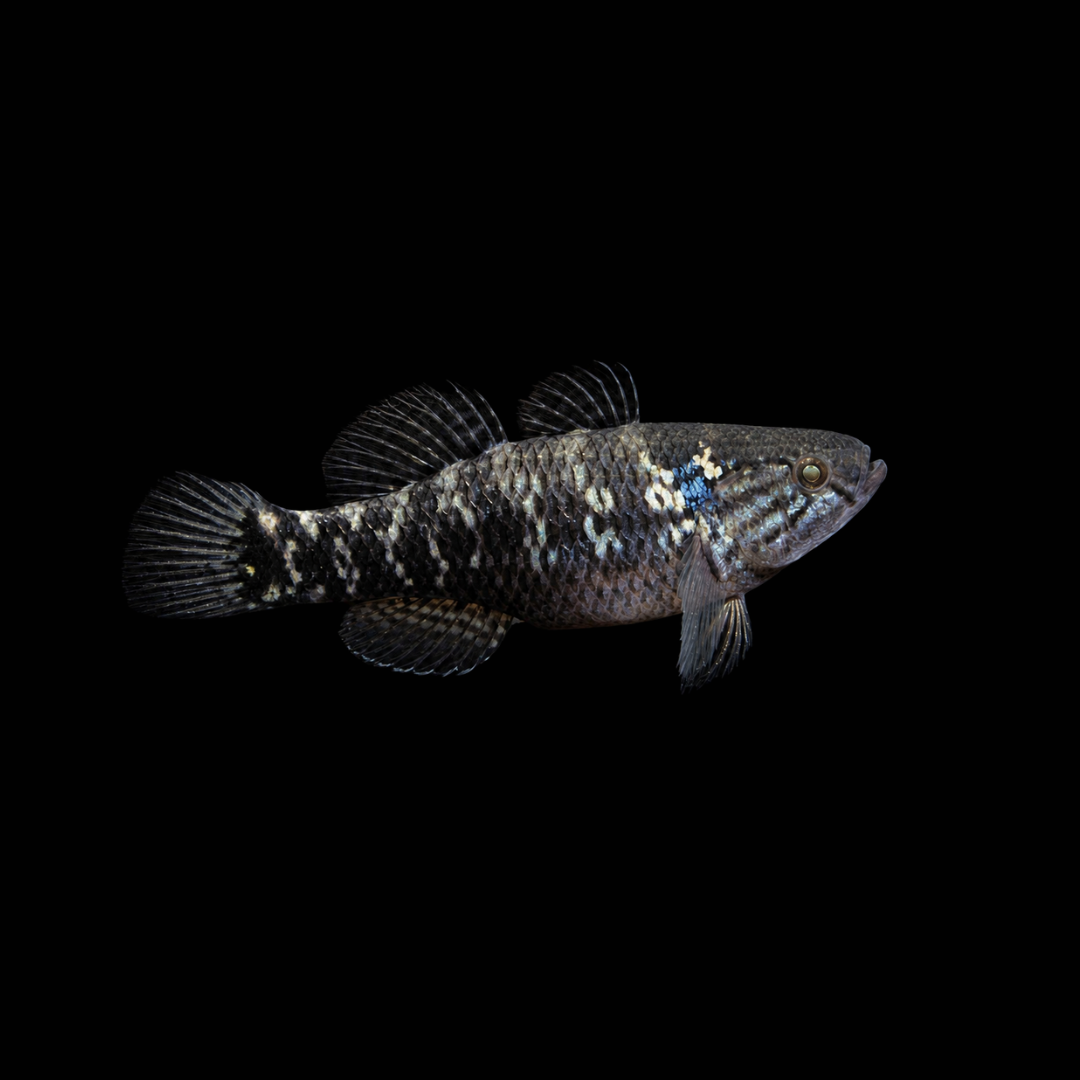
ドルミテーターゴビーは、カワアナゴ科Dormitator属の魚を指す流通上の呼称です。ハゼ類の一群ではあるものの、一般に「ハゼ」と呼ばれるハゼ科ではなく、左右の腹ビレが吸盤状に癒合しないカワアナゴ科に属します。幅広く扁平な頭部、厚みのある胴体、底付近で静かに過ごす姿が特徴です。属内では分布域、塩分への適応、成魚サイズに大きな差があるため、流通名だけで飼育条件を決めず、購入時に学名、産地、現在の全長を確認することが重要です。 Dormitator goby is a trade name used for fishes of the eleotrid genus Dormitator. Although they belong to the broader goby lineage, they are sleepers in the family Eleotridae rather than true gobies of the family Gobiidae, and their pelvic fins are not fused into a suction disc. A broad flattened head, deep body, and quiet bottom-oriented behavior give them a distinctive appearance. Distribution, salinity tolerance, and adult size differ substantially among species, so the scientific name, origin, and current length should be confirmed before husbandry conditions are selected.
基本情報 / Basic Information
| 学名 / Scientific Name | Dormitator spp. Gill, 1861 |
|---|---|
| 通称 / Common Name | ドルミテーターゴビー、ファットスリーパー、パシフィック・ファットスリーパー、チャメDormitator goby, fat sleeper, Pacific fat sleeper, chame |
| 分類 / Family | ハゼ目カワアナゴ科Dormitator属Order Gobiiformes, family Eleotridae, genus Dormitator |
| 英名 / English Name | Fat sleeper (D. maculatus) / Pacific fat sleeper (D. latifrons) |
| 分布 / Distribution | 属全体では、アメリカ大陸の大西洋岸と東部太平洋岸、および西アフリカ沿岸に分布します。Dormitator maculatusは米国ノースカロライナ州からブラジル南部、Dormitator latifronsは米国カリフォルニア州からペルーとガラパゴス諸島、Dormitator lebretonisはセネガルからナミビアに分布します。このほか、キューバ固有のDormitator cubanus、ガイアナの限られた水系に知られるDormitator gymnocephalusが含まれます。生息環境は河川下流、河口、潟湖、マングローブ、水路などで、種によって淡水・汽水・沿岸海域を利用します。Across the genus, Dormitator occurs on the Atlantic and eastern Pacific coasts of the Americas and along West Africa. Dormitator maculatus ranges from North Carolina in the United States to southern Brazil; Dormitator latifrons occurs from California to Peru and the Galápagos Islands; and Dormitator lebretonis ranges from Senegal to Namibia. The genus also includes the Cuban endemic Dormitator cubanus and Dormitator gymnocephalus, known from a restricted drainage in Guyana. Depending on the species, habitats include lower rivers, estuaries, lagoons, mangroves, ditches, and connected fresh, brackish, and coastal marine waters. |
| 最大体長 / Max Size | 種による差が大きく、Dormitator maculatusには全長70cm、Dormitator latifronsには全長約41cmの最大記録があります。ただし、これらはデータベース上の最大記録であり、一般的な飼育個体の標準サイズを示すものではありません。学名が確認できない個体は少なくとも30〜40cm級に成長する可能性を見込み、将来の水槽を準備します。Maximum size differs greatly among species. Database records list a maximum total length of 70 cm for Dormitator maculatus and about 41 cm for Dormitator latifrons. These are maximum records rather than typical captive sizes. When the species is uncertain, the aquarium should be planned for a fish capable of reaching at least the 30–40 cm class. |
| 寿命 / Lifespan | 属全体に共通する信頼性の高い寿命資料は見当たらず、具体的な年数を断定できません。大型種は長期飼育になることを前提とし、成魚用の水槽と維持可能なろ過設備を早い段階から準備します。Reliable lifespan data applicable to the genus as a whole are not available, so a precise number of years cannot be stated confidently. Large species should be treated as long-term commitments, with adult housing and sustainable filtration planned from an early stage. |
飼育環境 / Aquarium Environment
| 水槽サイズ / Tank Size | 水槽は学名と予想される成魚サイズに合わせて選びます。10cm前後の幼魚であれば90cm規格水槽を一時的な育成用にできますが、30〜40cm級になる種には120cmワイド水槽から150cm水槽以上を基本とします。Dormitator maculatusのようにさらに大型化する可能性がある場合は、180cm級で奥行きの広い水槽も検討が必要です。水量だけでなく、魚が無理なく方向転換できる底面積を重視します。Choose the aquarium according to the confirmed species and expected adult size. A standard 90 cm aquarium can serve temporarily for a juvenile of about 10 cm, but species reaching the 30–40 cm class should be planned around a 120 cm wide or 150 cm aquarium. A fish with the growth potential of Dormitator maculatus may eventually require a broad 180 cm-class system. Footprint and turning room are more important than volume alone. |
|---|---|
| 水温 / Temperature | 飼育の目安は22〜28℃です。Dormitator latifronsでは21〜30℃の環境耐性が報告されていますが、耐えられる範囲と長期飼育に適した条件は同じではありません。通常は24〜27℃前後を安定させ、導入時は輸送水との温度差を小さくします。 A practical aquarium range is 22–28°C. Dormitator latifrons has been reported from conditions between 21 and 30°C, but tolerance limits should not be confused with optimal long-term husbandry. For routine care, maintain approximately 24–27°C and minimize the temperature difference during acclimation. |
| 水質 / Water Quality | 中性から弱アルカリ性を基本とし、目安はpH 7.0〜8.0です。アンモニアと亜硝酸は検出されない状態を保ち、硝酸塩の蓄積を定期換水で抑えます。Dormitator属には淡水・汽水・海水を利用する種が含まれますが、広塩性であることを理由に塩分を頻繁に変える必要はありません。汽水で管理する場合は観賞魚用の人工海水を使い、比重計で確認しながら段階的に調整します。Neutral to mildly alkaline water is a practical baseline, with a target pH of approximately 7.0–8.0. Keep ammonia and nitrite undetectable and control nitrate through regular water changes. The genus includes fishes that use fresh, brackish, and marine waters, but euryhalinity is not a reason to change salinity frequently. When brackish conditions are appropriate, use a marine salt mix and adjust salinity gradually while measuring it with a hydrometer or refractometer. |
| レイアウト / Layout | 角のない細かな砂を敷き、太い流木や安定した岩組みで隠れ場所を作ります。同時に、底面には体を休められる広い空間を残します。底床を動かすことがあるため、重い石は砂の上に不安定に積まず、水槽底面から崩れないよう設置します。根張りの弱い水草は抜かれる可能性があるので、丈夫な活着性水草や人工水草が扱いやすいでしょう。照明をやや控えめにすると落ち着きやすくなります。Use fine, non-abrasive sand and provide shelters with substantial driftwood or securely positioned rocks, while leaving a broad open area where the fish can rest. Because the substrate may be moved, heavy stones should be supported from the aquarium base rather than balanced loosely on sand. Weakly rooted plants may be uprooted, so hardy epiphytes or artificial plants are easier to manage. Moderately subdued lighting generally helps the fish settle. |
| 注意点 / Precautions | 大型化する個体は排泄量も増えるため、余裕のあるろ過能力と定期的な底床掃除・換水が必要です。Dormitator latifronsの空気呼吸能力は、酸欠や汚れた水を許容する根拠にはなりません。十分なエアレーションを行い、水面へ到達できる空間を確保します。飛び出しを防ぐため、給餌口、配管、コード周辺まで隙間のない丈夫な蓋を使用してください。Waste production increases substantially as the fish grows, so generous filtration, regular substrate cleaning, and water changes are essential. The air-breathing ability documented in Dormitator latifrons is not a reason to accept oxygen-poor or polluted water. Provide strong aeration, keep access to the surface unobstructed, and use a durable tight-fitting cover that also seals gaps around feeding openings, pipes, and cables. |
餌と給餌 / Feeding
| 餌の種類 / Diet | 機会的な雑食性で、自然下ではデトリタス、藻類や植物片、プランクトン、底生無脊椎動物などを利用します。飼育下では植物質を含む沈下性の雑食魚用ペレットを主食とし、スピルリナ配合のタブレット、冷凍赤虫、ブラインシュリンプ、イサザアミ、オキアミなどを組み合わせます。大型魚用の高タンパク飼料だけに偏らせず、植物質と繊維質を含む餌も継続して与えます。餌用魚の常用は、病原体の持ち込みと栄養の偏りを招くため避けます。They are opportunistic omnivores that use detritus, algae and plant fragments, plankton, and benthic invertebrates in natural habitats. In captivity, make a sinking omnivore pellet containing plant material the staple diet and rotate spirulina tablets, frozen bloodworms, brine shrimp, mysid shrimp, and krill as supplements. Do not rely exclusively on high-protein foods formulated for predatory fishes; plant matter and fiber should remain part of the diet. Routine use of feeder fish should be avoided because it can introduce pathogens and cause nutritional imbalance. |
|---|---|
| 給餌のポイント / Feeding Tips | 幼魚は1日1〜2回、成魚は1日1回を目安に、短時間で食べ切れる量を与えます。腹部が常に大きく張るほど与えず、食べ残しは回収します。混泳水槽では底まで餌が届いているかを確認し、個体ごとの摂餌量、体形、便の状態を観察してください。大型化しても植物質を含む餌を切らさず、単一の餌だけで管理しないことが大切です。Feed juveniles once or twice daily and adults about once daily, offering only what can be consumed promptly. Do not keep the abdomen continuously distended, and remove uneaten food. In a community aquarium, make sure food actually reaches the bottom and monitor the intake, body condition, and feces of each fish. Plant-containing foods should remain in the rotation even after the fish becomes large, and long-term feeding should not rely on a single product. |
性格と混泳 / Temperament and Tank Mates
| 性格 / Temperament | 普段は底層で静かに過ごし、大型の底生魚としては比較的穏やかです。ただし、機会があれば小さな魚や甲殻類を飲み込む可能性があり、サイズ差のある混泳は安全とはいえません。隠れ場所や給餌場所をめぐって同種やほかの底生魚を追うこともあるため、個体ごとの行動を観察します。専門的な魚食魚ではありませんが、口の大きさを考慮した管理が必要です。They usually remain quiet near the bottom and are relatively mild for large benthic fishes. Even so, small fishes or crustaceans may be swallowed opportunistically, so tank mates with a marked size difference are not safe. Individuals may also chase conspecifics or other bottom dwellers away from favored shelters or feeding sites. They are not specialized piscivores, but their mouth size must be taken into account. |
|---|---|
| 混泳の相性 / Compatibility | 同程度以上の大きさがあり、丈夫で、極端に攻撃的でない魚が候補です。大型カラシン、中大型のコイ科魚類、丈夫なプレコ類、シノドンティス類などが考えられますが、要求する水温と塩分を一致させる必要があります。小型魚、細長い魚、動きの遅い長鰭種、口に入る甲殻類との混泳は避けます。同種を複数飼育する場合は、十分な底面積、個体数以上の隠れ場所、視線を遮る流木や岩組みを用意し、劣位個体が餌を取れているか確認します。Potential companions should be similarly sized or larger, robust, and not excessively aggressive. Large characins, medium to large cyprinids, sturdy plecos, and Synodontis catfishes may be considered, provided that temperature and salinity requirements match. Avoid small or slender fishes, slow long-finned species, and crustaceans that can be swallowed. When keeping several Dormitator together, provide ample floor space, more shelters than fish, strong visual barriers, and confirm that subordinate individuals are feeding. |
病気と対策 / Diseases and Prevention
| かかりやすい病気 / Common Diseases | Dormitator属に特有の「かかりやすい病気」は、観賞魚飼育の資料として十分に整理されていません。Dormitator latifronsでは、養殖仔魚に寄生したトリコディナ類による死亡例が報告され、野生成魚からは吸虫、線虫、鉤頭虫、条虫、魚ジラミ類などが確認されています。ただし、これらの報告をすべての流通個体へ一律に当てはめることはできません。輸入魚では、輸送による擦れ、食欲低下、呼吸異常、痩せ、体表の粘液増加などを総合的に観察します。No species-specific list of common aquarium diseases has been established for Dormitator. Mortality caused by trichodinid ciliates has been reported in cultured Dormitator latifrons larvae, while wild adults have been found with trematodes, nematodes, acanthocephalans, cestodes, and parasitic crustaceans. These findings should not be applied automatically to every imported fish. New arrivals should instead be assessed for transport abrasions, appetite loss, abnormal respiration, progressive emaciation, and increased skin mucus. |
|---|---|
| 対策と予防 / Prevention | 新規個体は本水槽へ直接入れず、独立した検疫水槽で少なくとも2〜4週間観察します。アンモニアと亜硝酸を検出させず、輸送傷がある場合は清浄な水、安定した水温、十分な酸素を優先します。症状のない個体へ塩水浴や駆虫薬を一律に使用するのではなく、体表や便の検査、症状、飼育塩分、薬剤の有効成分を確認して治療方針を決めます。研究用の薬浴濃度を家庭でそのまま再現せず、必要に応じて魚類を診療できる獣医師や経験豊富な専門店へ相談してください。Do not place a new arrival directly into the display aquarium. Observe it in an independent quarantine system for at least two to four weeks. Keep ammonia and nitrite undetectable, and prioritize clean water, stable temperature, and strong oxygenation when transport damage is present. Rather than applying salt or dewormers routinely to an asymptomatic fish, base treatment on examination of the skin or feces, observed signs, the salinity in use, and the active ingredient. Experimental bath concentrations should not be copied directly at home; consult an aquatic veterinarian or an experienced specialist retailer when necessary. |
増やし方(繁殖) / Breeding
| 雌雄の判別 / Sexing | 属全体に共通する簡単な雌雄判別法は確立されていません。Dormitator latifronsでは、生殖腺の発達に伴って生殖乳頭の大きさや外観が変化することが報告されていますが、非繁殖期の外見だけで確実に判定するのは困難です。成熟した同種個体を比較し、繁殖期の体形、生殖乳頭、行動を総合して判断します。No simple external sexing method applies reliably to the entire genus. In Dormitator latifrons, the size and appearance of the genital papilla change with gonadal development, but confident identification from appearance alone remains difficult outside the reproductive period. Mature individuals of the same species should be compared using body form, genital papilla, and behavior together. |
|---|---|
| 繁殖形態 / Reproduction | 代表的なDormitator maculatusとDormitator latifronsは両側回遊性として扱われ、成魚が河川や河口域で生活し、孵化した微小な仔魚が下流や沿岸域へ移動したのち、成長した稚魚が河川へ加入する生活史が想定されています。ただし、小分布種を含む属内のすべての種で同じ生活史が確認されているわけではありません。Dormitator latifronsでは淡水域と海域の双方で繁殖活動が報告されており、産卵場所や移動経路には個体群差がある可能性があります。親魚による巣の保護など、属全体に共通する詳細な繁殖行動も十分には確立されていません。The better-known Dormitator maculatus and Dormitator latifrons are treated as amphidromous fishes: adults occupy rivers and estuaries, minute larvae move downstream or into coastal waters, and developed juveniles later recruit into rivers. The same life history has not been demonstrated for every restricted-range species in the genus. Reproductive activity of Dormitator latifrons has also been reported in both freshwater and marine systems, suggesting population-level variation in spawning sites and migration routes. Detailed behaviors such as nest guarding have not been established as a shared trait across the genus. |
| 繁殖のポイント / Breeding Tips | 親魚を成熟させるには、大型水槽、安定した水質、過不足のない栄養管理が必要です。最大の難関は仔魚の初期飼育で、Dormitator latifronsの仔魚は孵化後72〜96時間ほどで口が機能し始める一方、適切な初期餌料と標準化された仔魚育成法はまだ確立されていません。家庭水槽での繁殖は研究・養殖レベルの難度があり、産卵を得られても、塩分管理、微小な生き餌、水質維持を行う専用設備が必要です。Maturing broodfish requires a large aquarium, stable water quality, and balanced nutrition. The principal challenge is early larval rearing. The mouth of Dormitator latifrons larvae begins to function roughly 72–96 hours after hatching, yet an appropriate first-feed regime and a standardized larviculture protocol have not been established. Home breeding is therefore comparable to a research or aquaculture project and requires dedicated facilities for salinity control, microscopic live foods, and water-quality management even after spawning is achieved. |
雑学と豆知識 / Trivia and Fun Facts
| 1. 「眠る者」という属名 / 1. A Genus Name Meaning “Sleeper” | Dormitatorは、ラテン語で「眠る者」を意味する語に由来する属名です。底付近で長時間動かずにいる習性が、眠っているように見えたことから名付けられました。静止している時間が長い一方、餌への反応や水槽内での移動は素早く、落ち着いた外見だけでは分からない機敏さも備えています。Dormitator is derived from a Latin word meaning “one who sleeps.” The name reflects the long periods these fishes spend motionless near the bottom, as though asleep. Their stillness does not indicate general sluggishness, however, because feeding responses and short movements can be rapid. |
|---|---|
| 2. パナマ地峡形成と太平洋・大西洋系統 / 2. Formation of the Isthmus and the Pacific–Atlantic Lineages | 2016年の分子系統研究では、Dormitator属から太平洋系統と大西洋系統が検出され、両者の分岐は約100万年前と推定されました。これは、パナマ地峡の形成に伴う中央アメリカ海峡の閉鎖と、その後の海洋・気候変動による隔離と整合する結果です。資料によって示される年代に幅があるのは、地峡形成が単一の瞬間ではなく、長期にわたる複雑な地史だったためでもあります。A 2016 molecular phylogenetic study recovered Pacific and Atlantic Dormitator lineages and estimated their separation at about one million years ago. The result is consistent with isolation associated with closure of the Central American Seaway and the oceanographic and climatic changes that followed formation of the Isthmus of Panama. Differences among published dates also reflect that isthmus formation was a complex geological process rather than a single instantaneous event. |
| 3. 空気呼吸は「汚れた水で飼える」という意味ではない / 3. Air Breathing Does Not Mean Poor Water Is Acceptable | Dormitator latifronsでは、低酸素時に浮き袋を膨らませて正の浮力を得ると、毛細血管が発達した額の皮膚を水面上へ出し、空気中の酸素を利用する特異な呼吸様式が報告されています。鰓上器官で空気を吸うという説明とは異なり、重要なのは外気にさらされる額の皮膚です。この能力があっても、飼育水の酸欠や有機物汚染を放置してよいわけではありません。Dormitator latifrons has a highly unusual form of facultative air breathing. Under hypoxia, it inflates the gas bladder to become positively buoyant and exposes a capillary-rich patch of skin on the forehead to air. This differs from explanations that invoke a suprabranchial air-breathing organ: the exposed frontal skin is the important respiratory surface. The adaptation does not justify allowing low dissolved oxygen or organic pollution in an aquarium. |
| 4. チャメの流通を支えた耐気曝性 / 4. Emersion Tolerance in the Chame Trade | 太平洋側のDormitator latifronsは、エクアドルなどでチャメと呼ばれ、食用魚・養殖魚として利用されています。1984年の実験では、空気中に置かれた個体の半数致死時間は、湿った植物で覆わない条件で約18時間、覆った条件で約54時間でした。これは陸上輸送への強さを示す結果ですが、乾燥状態で代謝を停止する本来の「無水生存」と同じ現象ではありません。観賞魚として扱う場合も、意図的に水から出して耐性を試すべきではありません。The Pacific species Dormitator latifrons is known as chame in countries such as Ecuador and is used as a food and aquaculture fish. In a 1984 experiment, the median lethal time during air exposure was about 18 hours without a cover of moist plants and about 54 hours when moist vegetation was provided. This demonstrates unusual emersion tolerance, but it is not equivalent to true anhydrobiosis, in which metabolism is suspended during extreme dehydration. Aquarium specimens should never be deliberately removed from water to test this tolerance. |
| 5. 有効種の一覧は更新される / 5. The List of Valid Species Changes | 2026年7月7日更新のEschmeyer’s Catalog of Fishesでは、Dormitator cubanus、Dormitator gymnocephalus、Dormitator latifrons、Dormitator lebretonis、Dormitator maculatusの5種が有効種として扱われています。古い資料で独立種とされることがあるDormitator lophocephalusは、同カタログではDormitator maculatusのシノニムです。流通名が同じでも種が異なる可能性があるため、学名を確認することは分類上だけでなく、成魚サイズや飼育環境を判断するうえでも重要です。In the July 7, 2026 update of Eschmeyer’s Catalog of Fishes, five species are treated as valid: Dormitator cubanus, Dormitator gymnocephalus, Dormitator latifrons, Dormitator lebretonis, and Dormitator maculatus. Dormitator lophocephalus, which appears as a separate species in some older references, is treated as a synonym of Dormitator maculatus. Confirming the scientific name is therefore important not only for taxonomy but also for estimating adult size and selecting husbandry conditions. |
| 6. 日本への輸入時は対象魚種リストを確認する / 6. Check Japan’s Regulated Aquatic Animal List Before Import | 日本の水産資源保護法に基づく輸入防疫は、すべての観賞魚を一律に対象とする制度ではなく、指定された水産動物と疾病に適用されます。2026年6月9日施行の対象魚類一覧は、さけ科魚類、こい、ふな属魚類、こくれん、はくれん、あおうお、そうぎょ、ナイルティラピア、まだいであり、Dormitator属は含まれていません。そのため、現行一覧上は同制度の輸入許可対象魚とは確認できません。ただし、税関手続、輸出国側の証明、航空会社の生体輸送条件などは別に確認が必要で、制度改正にも注意します。Japan’s aquatic animal import quarantine system under the Fisheries Resources Protection Act applies to listed aquatic animals and diseases rather than to every ornamental fish. The fish list effective June 9, 2026 covers salmonids, common carp, Carassius species, bighead carp, silver carp, black carp, grass carp, Nile tilapia, and red sea bream; Dormitator is not included. It is therefore not identified as a permit-regulated fish under the current list. Customs procedures, exporting-country certification, and airline requirements for live animals must still be checked separately, and future regulatory changes should be monitored. |
| 7. 寄生虫相から見える沿岸の食物網 / 7. Parasites Reveal a Coastal Food Web | メキシコの潟湖で調べられた野生のDormitator latifronsからは、吸虫、線虫、鉤頭虫、条虫、寄生性甲殻類が確認されています。調査個体の食性はデトリタスや植物片を中心とし、寄生虫の一部は魚食性鳥類を終宿主としていました。寄生虫相は病気のリスクを示すだけでなく、この魚が底生生物や鳥類を含む沿岸の食物網に組み込まれていることを読み解く手掛かりにもなります。Wild Dormitator latifrons examined in a Mexican coastal lagoon carried trematodes, nematodes, acanthocephalans, cestodes, and parasitic crustaceans. The studied fish fed mainly on detritus and plant remains, and several parasites used fish-eating birds as their definitive hosts. The parasite community therefore indicates not only potential disease risks but also the fish’s position within a coastal food web extending from benthic resources to birds. |
まとめ / Conclusion
ドルミテーターゴビーは、幅広く扁平な頭部と厚みのある体形、底付近で静かに過ごす行動が印象的な魚です。一方で、Dormitator属には成魚サイズや分布、利用する塩分環境が異なる複数の種が含まれるため、属名だけで飼育条件を一括することはできません。学名と産地を確認し、成長後の全長を見据えた水槽、十分なろ過能力、飛び出しを防ぐ蓋を準備することが、適切な飼育の基本となります。 Dormitator gobies are striking fishes, recognized by a broad flattened head, deep body, and quiet behavior near the bottom. The genus nevertheless contains several species that differ in adult size, distribution, and salinity use, so one set of husbandry conditions cannot be applied solely from the genus name. Confirming the scientific name and origin, then preparing an aquarium, filtration system, and secure cover for the expected adult size, forms the basis of appropriate care.
低酸素環境に適応した特異な呼吸生理や、パナマ地峡の形成と結び付く系統史、チャメとして地域の漁業と養殖を支えてきた背景は、この魚の学術的な魅力を深めています。頑健さだけを強調せず、清浄で酸素の豊富な水、余裕のある底面積、植物質を含むバランスのよい給餌、慎重な検疫を維持することで、ドルミテーターゴビー本来の落ち着いた姿と力強い存在感を長期にわたって観察できます。 Their unusual respiratory physiology for low-oxygen habitats, evolutionary history linked to formation of the Isthmus of Panama, and regional importance as the food and aquaculture fish known as chame add considerable scientific interest. Rather than relying on resilience alone, long-term husbandry should maintain clean oxygen-rich water, generous floor space, a balanced diet containing plant material, and careful quarantine. Under those conditions, the calm posture and substantial presence characteristic of Dormitator can be observed over the long term.
分布マップ
ドルミテーター属は、アメリカ大陸の大西洋岸と東部太平洋岸、西アフリカ沿岸の河川下流、河口、潟湖、マングローブなどに分布します。地図では、離れている三つの分布域を概略範囲で示しています。
この地図は記事の分布記述を視覚化した概略図です。表示範囲は実際の採集地点や厳密な生息範囲を示すものではなく、種や地域によって分布状況は異なります。
ドルミテーターゴビーの参考文献
分類データベース、公的機関、査読付き学術論文、獣医療専門資料のうち、本文の分類、分布、生息環境、生理生態、飼育管理、繁殖、病理、輸入時の注意を直接支える資料に限定しています。店舗、通販サイト、個人ブログ、まとめサイトは含めていません。
根拠の読み方と本文上の留意点
- 90cm、120cm、150cm、180cmといった水槽寸法は、最大体長、体形、底生性、排泄量を踏まえた編集上の飼育提案です。Dormitator属に共通する学術的な規格水槽基準ではありません。
- 水温、pH、塩分の推奨範囲は、自然分布、養殖試験、飼育実験で用いられた条件を総合した目安です。属内の全種・全個体群に同じ最適値が実証されているわけではありません。
- 本文の「検疫2〜4週間」は、魚類臨床資料に照らすと短めです。専門家向け資料は最低30日、一般向け資料は30〜60日を示しているため、本文を根拠資料に厳密に合わせる場合は「最低30日」を基本とする表現が適切です。
- 寄生虫の報告は野生個体群や養殖仔魚を対象とした事例であり、すべての流通個体が感染していることを意味しません。予防的な一律投薬ではなく、検疫、観察、検査に基づく対応を支える資料として位置づけています。
分類・分布・最大体長
-
Fricke, R., Eschmeyer, W. N. & Van der Laan, R.(eds.)(2026) Eschmeyer’s Catalog of Fishes: Species in the genus Dormitator. California Academy of Sciences. Online version updated 7 July 2026.
支える内容:Dormitator属の有効種、原記載、科の所属、シノニム、各種の大まかな分布と淡水・汽水・海水環境の利用。
-
Froese, R. & Pauly, D.(eds.)(2026) FishBase: Dormitator maculatus(Fat sleeper). World Wide Web electronic publication. 2026年7月22日閲覧。
支える内容:カワアナゴ科への分類、大西洋岸の分布、淡水・汽水・海水への出現、両側回遊性、最大全長70cmの記録、生息塩分、食性と繁殖に関する集約情報。
-
Froese, R. & Pauly, D.(eds.)(2026) FishBase: Dormitator latifrons(Pacific fat sleeper). World Wide Web electronic publication. 2026年7月22日閲覧。
支える内容:東部太平洋岸の分布、最大体長、河口・低流速水路・砂泥底での生息、淡水から海域への移動、デトリタスとプランクトンを利用する食性、条件的空気呼吸。
系統・生息環境・生理生態・飼育条件
-
Galván-Quesada, S., Doadrio, I., Alda, F., Perdices, A., Reina, R. G., García-Varela, M., Hernández, N., Mendoza, A. C., Bermingham, E. & Domínguez-Domínguez, O.(2016) Molecular Phylogeny and Biogeography of the Amphidromous Fish Genus Dormitator Gill 1861(Teleostei: Eleotridae). PLoS ONE, 11, e0153538.
支える内容:Dormitator属の分子系統、太平洋系統と大西洋系統の分化、両側回遊性、中央アメリカ海峡の閉鎖と生物地理学的分断の関係。
-
Vega-Villasante, F., Ruiz-González, L. E., Chong-Carrillo, O., Basto-Rosales, M. E. R., Palma-Cancino, D. J., Tintos-Gómez, A. et al.(2021) Biology and use of the Pacific fat sleeper Dormitator latifrons(Richardson, 1844): state of the art review. Latin American Journal of Aquatic Research, 49(3), 391–403.
支える内容:D. latifronsの分布、生息環境、デトリタスを中心とする雑食性、塩分適応、空気呼吸、養殖条件、繁殖、発生、寄生虫と健康管理に関する研究の総説。
-
Chang, B. D.(1984) Tolerances to salinity and air exposure of Dormitator latifrons(Pisces: Eleotridae). Revista de Biología Tropical, 32(1), 155–157.
支える内容:D. latifronsの広い塩分耐性、水外曝露への耐性、湿潤条件が生存時間へ与える影響。水外耐性を通常飼育の低酸素許容と混同しないための基礎資料。
繁殖・仔魚の初期発育
-
Reyes-Mero, B. M., Santana-Piñeros, A. M., Muñoz-Chumo, L. G., Cruz-Quintana, Y. & Gisbert, E.(2022) Yolk Absorption Rate and Mouth Development in Larvae of Dormitator latifrons(Perciformes: Eleotridae). Fishes, 7(6), 375.
支える内容:ホルモン誘導による産卵、仔魚の卵黄吸収、孵化後約96時間での口器発達、初期餌料サイズ、初期飼育が繁殖上の主要な難関であること。
-
Cruz-Quintana, Y., Santana-Piñeros, A. M., Reyes-Mero, B. M., Muñoz-Chumo, L. G., Vélez-Chica, J. C., Alcaraz, C. & Duncan, N.(2026) Gonadal development and reproductive traits of pacific flat sleeper Dormitator latifrons(Gobiiformes: Eleotridae): insights for sustainable management in Ecuador. Neotropical Ichthyology, 24(1), e250013.
支える内容:雌雄の生殖器官と生殖突起の変化、成熟段階、性比、成熟サイズ、繁殖特性。外見だけによる通年の雌雄判別が容易ではないという説明の基礎。
病理・検疫・輸入時の注意
-
Reyes-Mero, B. M., Cruz-Quintana, Y., Rodríguez-Canul, R., Gisbert, E. & Santana-Piñeros, A. M.(2024) The Effect of Parasitization by Trichodinid Ciliates on the Mortality of Cultured Pacific Fat Sleeper Larvae(Dormitator latifrons). Animals, 14(20), 3037.
支える内容:養殖されたD. latifrons仔魚におけるトリコディナ類の同定と、寄生が死亡速度・死亡率へ与える影響。成魚一般の「好発病」としてではなく、仔魚養殖で確認された事例として扱う根拠。
-
Violante-González, J., Aguirre-Macedo, M. L. & Vidal-Martínez, V. M.(2008) Temporal Variation in the Helminth Parasite Communities of the Pacific Fat Sleeper, Dormitator latifrons, from Tres Palos Lagoon, Guerrero, Mexico. The Journal of Parasitology, 94(2), 326–334.
支える内容:野生のD. latifronsにみられる蠕虫群集と感染動態。野生採集個体に内部寄生虫が存在し得ることを支える一方、流通個体すべてへの一律適用はできないことも示す資料。
-
Petty, B. D., Francis-Floyd, R. & Yanong, R. P. E.(2024年更新) Management of Aquarium Fish. Merck Veterinary Manual.
支える内容:独立した検疫設備、最低30日の検疫、専用器具、アンモニア・亜硝酸の監視、体表・鰓・便などの検査、診断を伴わない予防的一律投薬を避けるという魚類臨床上の管理原則。
-
農林水産省 動物検疫所(2026) 水産動物の検査について。対象水産動物一覧は2026年6月9日追加・拡大版。2026年7月22日閲覧。
支える内容:水産資源保護法に基づく輸入防疫対象の水産動物と手続の確認。2026年6月9日施行の公表一覧にDormitator属が記載されていないこと、および制度改正時に最新情報を再確認すべきこと。
閲覧日は、内容が随時更新される分類データベース、魚類データベース、公的制度ページに付記しています。学術論文の種名、分類階級、研究条件は発表時点の表記を尊重して記載しています。

コメント