

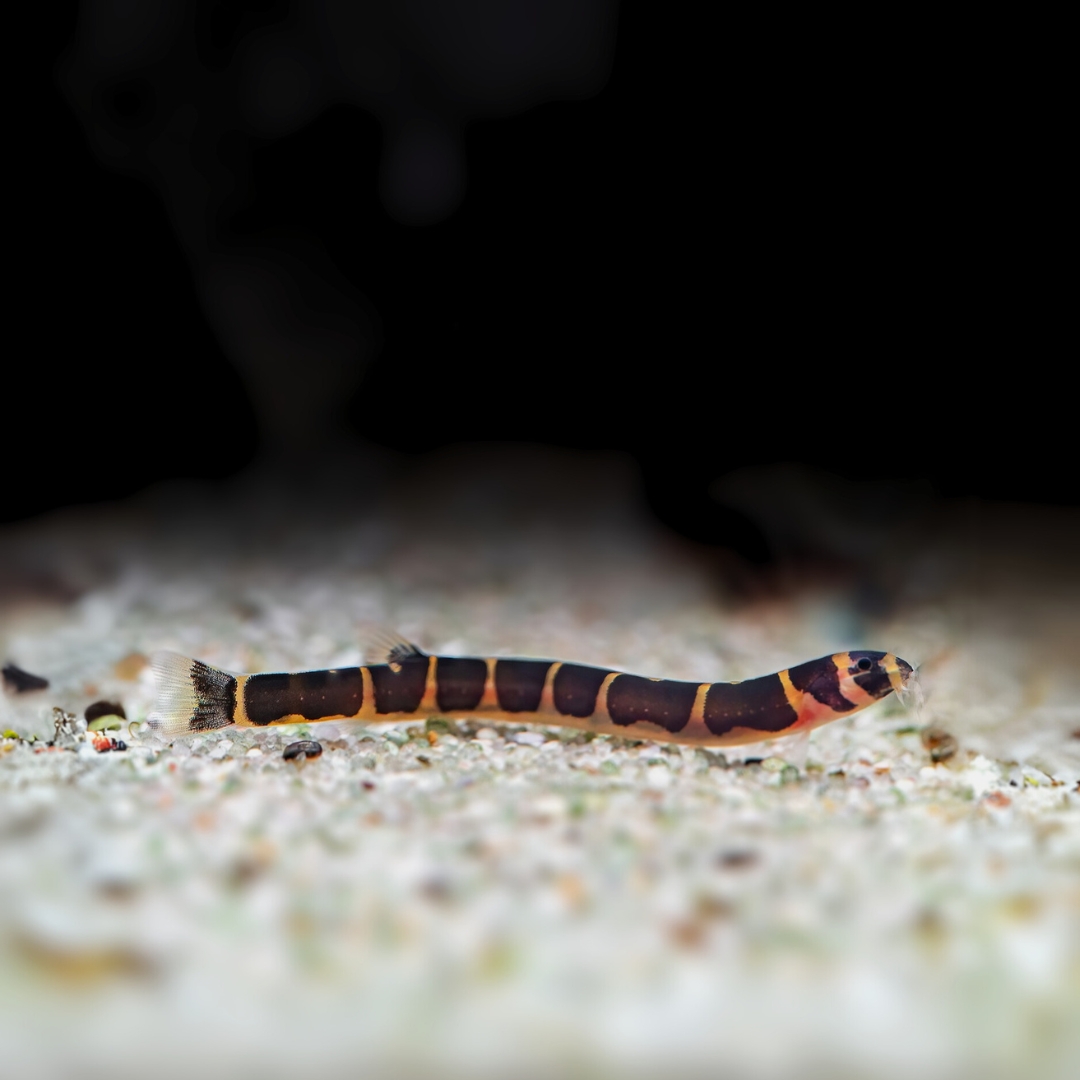
解説 / Description
クーリーローチ類は、東南アジアに分布するパンギオ属の小型ローチです。ウナギのように細長い体、黄色から橙色の地色に入る黒褐色の帯、砂の中を探るような採餌行動が魅力で、古くから混泳水槽の底層魚として親しまれてきました。日本の観賞魚店で「クーリーローチ」として販売される個体は、入荷名だけで厳密な種同定が難しいことがあり、Pangio kuhlii、Pangio semicincta、または近縁種が混同される場合があります。本記事では、国内流通名としてのクーリーローチ類を前提に、共通して重要になる砂底、隠れ家、群れでの飼育、安定した水質管理を中心に解説します。 Kuhli loaches are small Pangio loaches from Southeast Asia. They are popular bottom-dwelling aquarium fish, admired for their eel-like bodies, yellow to orange base color with dark brown bands, and their habit of foraging through sand. In the aquarium trade, fish sold simply as “Kuhli loach” can be difficult to identify precisely from the trade name alone, and Pangio kuhlii, Pangio semicincta, or related Pangio species may be confused. This guide therefore treats them as the Kuhli loach group commonly seen in the Japanese trade, focusing on the care points they broadly share: soft sand, hiding places, group keeping, and stable water quality.
基本情報 / Basic Information
| 学名 / Scientific Name | Pangio cf. semicincta / Pangio kuhlii / Pangio spp.。流通名ではまとめてクーリーローチと呼ばれることがあります。. In the trade, these may be grouped under the name Kuhli loach. |
|---|---|
| 通称 / Common Name | クーリーローチ、クーリーローチ類、パンギオ、ハーフバンデッド・クーリーローチKuhli Loach, Coolie Loach, Pangio Loach, Half-banded Kuhli Loach |
| 分類 / Family | コイ目 ドジョウ科 パンギオ属Order Cypriniformes, family Cobitidae, genus Pangio |
| 英名 / English Name | Kuhli Loach / Coolie Loach / Half-banded Kuhli Loach |
| 分布 / Distribution | パンギオ属は南アジアから東南アジアにかけて広く知られ、クーリーローチ類として扱われる近縁種はマレー半島、スマトラ島、ボルネオ島、ジャワ島周辺などの森林河川、湿地、泥炭湿地、落ち葉の多い緩やかな水域に関連して語られます。ただし種ごとに分布は異なるため、入荷名だけで産地を断定しない方が安全です。The genus Pangio is known from South and Southeast Asia. Species traded as Kuhli loaches are associated with forest streams, swamps, peatlands, and leaf-litter-rich slow waters around areas such as the Malay Peninsula, Sumatra, Borneo, and Java. Distribution differs by species, so the exact origin should not be assumed from the trade name alone. |
| 最大体長 / Max Size | 一般的な流通個体では8〜10cm前後が目安です。Pangio kuhliiとしては文献上12cm程度の記録もあり、近縁種や個体差によって幅があります。Most traded individuals are around 8–10 cm. Pangio kuhlii has been recorded up to about 12 cm in some references, and size varies by species and individual. |
| 寿命 / Lifespan | 適切な環境では6〜8年ほどが目安です。安定した水質、清潔な底床、十分な隠れ家を保てば、さらに長期飼育されることもあります。Around 6–8 years is a practical expectation in good conditions. With stable water quality, clean substrate, and sufficient hiding places, some individuals may live longer. |
飼育環境 / Aquarium Environment
| 水槽サイズ / Tank Size | 5〜6匹以上のグループ飼育を前提に、45〜60cm規格水槽、約40〜60L以上を目安にします。底を歩き回る魚なので、水量だけでなく底面積に余裕がある水槽が向いています。混泳魚が多い場合や8匹以上で楽しみたい場合は、60cm規格水槽以上が扱いやすくなります。For a group of 5–6 or more, a 45–60 cm standard tank of roughly 40–60 L or more is a practical starting point. Since these fish use the bottom, floor space matters as much as volume. A 60 cm standard aquarium or larger is easier for larger groups or busy community tanks. |
|---|---|
| 水温 / Temperature | 24〜28℃前後が扱いやすい範囲です。低めの水温にも短期的には耐える場合がありますが、熱帯魚として日本の冬季はヒーターで安定させます。急な温度変化は避けてください。 Around 24–28°C is a practical aquarium range. They may tolerate slightly cooler conditions for short periods, but as tropical fish they should be heated through Japanese winters. Avoid sudden temperature changes. |
| 水質 / Water Quality | 弱酸性から中性寄りの軟水を好みます。目安はpH5.5〜7.0前後、GH1〜8dGH程度です。慣れた個体は中性付近でも飼育できますが、強いアルカリ性や高硬度に寄せる必要はありません。硝酸塩は低めに保ち、底床に汚れをため込まないことが重要です。They prefer soft, slightly acidic to near-neutral water. A practical range is around pH 5.5–7.0 and GH 1–8 dGH. Acclimated fish can do well near neutral, but strongly alkaline or hard water is unnecessary. Keep nitrate low and prevent detritus buildup in the substrate. |
| レイアウト / Layout | 最も重要なのは、角のない細かい砂を用意することです。クーリーローチ類は砂を口で探り、潜ることもあるため、粗い砂利や尖った底床はヒゲや体表の傷につながります。流木、落ち葉、石の隙間、ウィローモス、アヌビアス、ミクロソリウムなどで、暗く落ち着ける隠れ家を複数作るとよいでしょう。The most important point is fine, rounded sand. Kuhli loaches forage through sand and may burrow, so coarse or sharp gravel can damage their barbels or skin. Provide several dim hiding places using driftwood, leaf litter, rock gaps, mosses, Anubias, Microsorum, or similar plants. |
| 注意点 / Precautions | 細長い体で非常に狭い隙間にも入り込むため、吸水パイプ、外掛けフィルター、外部フィルターのストレーナー、水槽フタの切り欠きは必ず確認します。吸水部にはストレーナースポンジを付け、フタの隙間もふさぎます。また、眼の下に棘を持つため、移動時は網で無理に追い込まず、プラスチック容器などで水ごとすくう方法が安全です。Their slender bodies allow them to enter surprisingly small gaps, so check filter intakes, hang-on filters, canister filter strainers, and cutouts around tank lids. Use a pre-filter sponge and close lid gaps. They also possess small spines below the eyes, so it is safer to scoop them with a plastic container rather than forcing them into a net. |
餌と給餌 / Feeding
| 餌の種類 / Diet | 沈下性のコリドラス用タブレット、ドジョウ用フード、細かく砕いた沈下性人工飼料、冷凍赤虫、ブラインシュリンプ、ミジンコなどを与えます。自然下では底生生物や小さな無脊椎動物を探す魚で、いわゆる残餌処理だけで健康を維持する魚ではありません。Offer sinking Corydoras tablets, loach foods, crushed sinking pellets, frozen bloodworms, brine shrimp, and daphnia. In nature they search for benthic organisms and small invertebrates, so they should not be expected to live only on leftovers. |
|---|---|
| 給餌のポイント / Feeding Tips | 夜行性が強く、明るい時間帯は他の魚に餌を先取りされやすいため、消灯直前または消灯後に少量を沈めると食べやすくなります。口が小さいので、大きなタブレットは割って与えます。小型スネールを食べることはありますが、個体差や餌の量、貝の種類とサイズに左右されるため、確実なスネール駆除役として導入するのは避けた方が無難です。They are strongly nocturnal, and faster midwater fish may take food first during the day. Offer small amounts just before or after lights-out. Their mouths are small, so break large tablets into pieces. They may eat small pest snails, but results vary with the individual fish, feeding level, and snail species and size, so they should not be purchased as a guaranteed snail-removal solution. |
性格と混泳 / Temperament and Tank Mates
| 性格 / Temperament | 非常に温和で、他魚を攻撃することはほとんどありません。一方で臆病な面があり、単独や少数では隠れたままになりがちです。5〜6匹以上で飼うと安心しやすく、昼間でも姿を見せる機会が増えます。群泳魚のように整列して泳ぐ魚ではありませんが、同種と寄り添う社会性があります。They are very peaceful and rarely attack other fish. However, they can be shy and may remain hidden when kept alone or in very small numbers. Groups of 5–6 or more help them feel secure and increase the chance of seeing them during the day. They do not school in a tight formation, but they are social and often rest close to their own kind. |
|---|---|
| 混泳の相性 / Compatibility | ネオンテトラ、ラスボラ、小型グラミー、温和なダニオ、コリドラスなど、穏やかな小型魚との混泳に向きます。大型魚、肉食魚、気の荒いシクリッド、ザリガニ、大型のカニは避けます。親サイズのミナミヌマエビやヤマトヌマエビを積極的に襲うことは少ないものの、生まれたばかりの稚エビは食べられる可能性があります。They suit peaceful community fish such as neon tetras, rasboras, small gouramis, gentle danios, and Corydoras. Avoid large predatory fish, aggressive cichlids, crayfish, and large crabs. Adult dwarf shrimp and Amano shrimp are usually not targeted, but newly hatched shrimplets may be eaten. |
病気と対策 / Diseases and Prevention
| かかりやすい病気 / Common Diseases | 導入直後の白点病、痩せ、体表の荒れ、ヒゲの損傷、尾ぐされ病などに注意します。底床と接する時間が長いため、汚れがたまった砂や尖った底床による小さな傷が、細菌性トラブルのきっかけになることがあります。Watch for ich after introduction, weight loss, skin irritation, barbel damage, and fin rot. Because they spend much time in contact with the substrate, dirty sand or sharp gravel can cause small injuries that may lead to bacterial problems. |
|---|---|
| 対策と予防 / Prevention | 予防の基本は、清潔な底床、安定した水温、急な水質変化を避けること、そして購入後の隔離観察です。クーリーローチ類は体表の鱗が細かく、薬品や塩分に敏感に反応することがあります。治療時は必ず魚病薬の説明書でドジョウ類や無鱗魚への使用可否を確認し、可能なら隔離水槽で少量から慎重に行います。塩水浴も万能の対処法ではないため、濃度を自己判断で上げないようにします。Prevention is based on clean substrate, stable temperature, avoidance of sudden water changes, and quarantine after purchase. Kuhli loaches have very small scales and may react strongly to medications or salt. When treatment is needed, always check the medication label for use with loaches or scaleless fish, and treat cautiously in a hospital tank when possible. Salt baths are not a universal solution, and concentrations should not be increased casually. |
増やし方(繁殖) / Breeding
| 雌雄の判別 / Sexing | 成熟したメスはオスよりやや太く、抱卵時には腹部がふっくらし、卵が透けて見えることがあります。オスは比較的細身で、胸ビレの前方の条が太く発達する傾向があるとされます。ただし、普段の見分けは簡単ではありません。Mature females are usually a little fuller than males, and eggs may be visible through the abdomen when gravid. Males tend to be slimmer, and the leading pectoral-fin ray may be thickened. However, reliable sexing is not easy in everyday aquarium conditions. |
|---|---|
| 繁殖形態 / Reproduction | 卵生です。水草の根、浮草、ウィローモスのような細かい茂みに粘着性の卵を産み付ける、または散らすタイプとして扱われます。親は卵や稚魚を保護しないため、繁殖を狙う場合は親魚と卵を分ける管理が必要です。They are oviparous. They are treated as adhesive egg layers or egg scatterers that use fine plant roots, floating plants, or moss-like cover. Adults do not guard eggs or fry, so separating the parents from the eggs is needed when breeding is attempted. |
| 繁殖のポイント / Breeding Tips | 家庭水槽での自然繁殖は稀で、狙って再現するのは難しい部類です。繁殖を試みる場合は、複数個体を十分に成熟させ、冷凍赤虫やブラインシュリンプなどでコンディションを整え、弱酸性の軟水、暗めの環境、浮草の根やウィローモス、卵を守るネットを用意します。低気圧や雨季を思わせる水換えが刺激になるという飼育報告もありますが、確実な方法ではありません。稚魚が得られた場合は、初期飼料としてインフゾリアや液状稚魚用飼料から始め、成長に合わせてブラインシュリンプへ移行します。Natural breeding in home aquaria is rare and difficult to reproduce reliably. If attempting it, keep a mature group in good condition with foods such as frozen bloodworms and brine shrimp, and prepare soft slightly acidic water, dim lighting, floating plant roots or moss, and a mesh barrier to protect eggs. Some aquarists report that water changes simulating rainfall or falling pressure may help trigger spawning, but it is not a guaranteed method. If fry are obtained, start with infusoria or liquid fry food and move to newly hatched brine shrimp as they grow. |
雑学と豆知識 / Trivia and Fun Facts
| 1. 「クーリー」は人名に由来する名前 / 1. The name “Kuhli” comes from a person | クーリーローチの名前は、19世紀初頭に活動したドイツの博物学者ハインリヒ・クールに由来します。彼の名は複数の生物名に残されており、クーリーローチもその一つです。英語圏で見られる「Coolie loach」という表記は、現在では「Kuhli loach」と分けて理解されることが多く、人物名に由来する綴りは「Kuhli」です。The name “Kuhli” honors Heinrich Kuhl, a German naturalist of the early 19th century. His name remains attached to several organisms, and the Kuhli loach is one of them. The spelling “Coolie loach” is still seen in English, but the spelling derived from the naturalist’s name is “Kuhli.” |
|---|---|
| 2. 流通名と学名がずれやすい魚 / 2. A fish whose trade name and scientific identity often differ | クーリーローチ類は、見た目の似たパンギオ属が複数存在するうえ、古い資料や流通名でPangio kuhliiと表記され続けることがあります。そのため、ショップ名や商品名だけで正確な学名を決め打ちするのは危険です。正確な種名を知りたい場合は、産地情報や専門家による確認が手掛かりになります。Several Pangio species look very similar, and older references or trade labels may continue to use Pangio kuhlii broadly. For that reason, it is risky to assign a precise scientific name based only on a shop label. Locality data and specialist examination can help establish a more precise identification. |
| 3. 目の下に隠された小さな棘 / 3. A small hidden spine beneath the eye | ドジョウ科の仲間には、眼の下に棘を持つものがいます。普段の観察では目立ちませんが、強いストレスや捕食の危機で展開されることがあり、捕食者から身を守る役割を持つと考えられます。飼育下では、この棘が網に引っかかる事故につながることがあるため、移動時は容器で水ごとすくう方法が適しています。Some loaches in the family Cobitidae possess spines beneath the eyes. These are not obvious during normal observation, but may be extended under severe stress or predatory threat, likely serving a defensive role. In aquaria, the spines can snag in nets, so moving the fish with a container of water is often safer. |
| 4. 低酸素環境に役立つ補助的な空気呼吸 / 4. Supplemental air breathing in low-oxygen habitats | パンギオ属では、低酸素環境で補助的に空気を利用する性質が知られています。水槽内でときどき水面へ素早く上がる行動が見られても、それだけで異常とは限りません。ただし、頻繁に水面へ走る、他の魚も苦しそうにする、水が白濁するなどのサインが重なる場合は、酸欠や水質悪化を疑って確認しましょう。The genus Pangio is known for facultative air breathing, which can help in low-oxygen habitats. An occasional quick dash to the surface is not automatically abnormal. However, if it becomes frequent or is accompanied by other fish gasping or cloudy water, check oxygen and water quality. |
| 5. 天候の変化に反応するように見えることがある / 5. They may appear to react to weather changes | クーリーローチ類は、低気圧や大きな水換えの前後に水槽内を上下に泳ぎ回ることがあります。これは鰾や側線を通じた圧力変化、光量、水流、水質変化など複数の要因が関係している可能性があります。よく「生きた気圧計」と表現されますが、すべての行動を気圧だけで説明できるわけではありません。いつもと違う泳ぎ方が続くときは、水質や水温なども確認しましょう。Kuhli loaches may swim up and down the aquarium around low-pressure weather or major water changes. Pressure changes detected through the swim bladder or lateral line, as well as light, flow, and water chemistry, may all contribute. They are sometimes called “living barometers,” but not every behavior can be explained by barometric pressure alone, so it is best presented as an interesting observation rather than a certain weather forecast. |
| 6. 安価でも、飼育の要点は繊細 / 6. Inexpensive, but not carelessly kept | クーリーローチ類は比較的安価に流通することが多く、初心者向けの底層魚として紹介されがちです。しかし、長く健康に飼うには、砂の質、隙間事故の防止、同種の数、薬品への慎重な対応など、独自のポイントを押さえる必要があります。環境が整うと、ただ隠れている魚ではなく、砂を探り、仲間と寄り添い、夜の水槽で活発に動く魅力的な観察対象になります。Kuhli loaches are often inexpensive and are commonly introduced as beginner-friendly bottom fish. Yet long-term care depends on several specific points: fine sand, preventing gap-related accidents, keeping enough of their own kind, and caution with medications. With the right setup, they become more than hidden fish, actively foraging through sand, resting with companions, and coming alive after dark. |
まとめ / Conclusion
クーリーローチ類は、温和で混泳しやすく、砂底での行動が楽しい人気のパンギオ属ローチです。飼育の中心は、細かく角のない砂、十分な隠れ家、ストレーナースポンジとフタによる事故防止、そして5〜6匹以上のグループ飼育です。流通名と学名が一致しない場合があるため、名前だけで種を決めつけず、購入時に産地や入荷情報も確認しておくとよいでしょう。 Kuhli loaches are peaceful Pangio loaches that do well in community aquaria and are enjoyable to watch on a sandy bottom. Their care is built around fine rounded sand, plenty of hiding places, pre-filter sponges and secure lids, and group keeping with at least 5–6 fish. Because trade names and scientific names may not match precisely, it helps to ask about locality and shipment information rather than rely on the trade name alone.
また、病気を出してから強い薬で治すよりも、清潔な底床と安定した水質で予防することが大切です。夜行性を考えた給餌、同種同士で落ち着ける数、狭い隙間をふさぐ細かな配慮ができれば、クーリーローチ類は水槽の底で静かに暮らすだけでなく、砂を探る姿や仲間と寄り添う姿を見せてくれる、奥深い観賞魚になります。 Rather than relying on strong medication after problems appear, prevention through clean substrate and stable water quality is especially important. With nighttime feeding, enough companions for security, and careful sealing of dangerous gaps, Kuhli loaches become deeply rewarding aquarium fish, showing natural sand-foraging behavior and close social resting with their own kind.

気になる道具や飼い方を見つけてみませんか?
 アイのアクアグッズ案内バクテリアって、結局なんなんだ? タマスとアイのボトル探究ロック好きのカバ・タマスが初登場。サイクル、ベストバイオ、バイコムのボトルから、菌の役割と保存の工夫、二本組の歴史をアイと探ります。記事はコチラ →
 アイのアクアグッズ案内ダニオの仲間に合わせる飼育用品|ゼブラダニオから超小型種まで水槽・ろ過・餌を選ぶ道具の特徴や使い方、選ぶときのポイントをアイが紹介します。記事はコチラ →
さまざまな飼育テーマをご紹介。リンク先の記事には広告・商品紹介が含まれます。
案内・紹介記事一覧へ →この記事では、クーリーローチ類の分類、分布、生息環境、飼育条件、繁殖、病気・導入時の注意点を確認するため、店舗・通販サイト・個人ブログ・まとめサイトを除外し、魚類データベース、公的機関、学術論文、大学・研究機関系の資料を中心に参照しています。
-
Kottelat, M. & Lim, K.K.P. (1993). A review of the eel-loaches of the genus Pangio (Teleostei: Cobitidae) from the Malay Peninsula, with descriptions of six new species. Raffles Bulletin of Zoology, 41(2), 203–249.
資料ページを開く
パンギオ属の分類整理、近縁種の扱い、流通名だけでは種同定が難しいという記事内の注意書きを支える中核資料です。 -
Kottelat, M. (2012). Conspectus cobitidum: an inventory of the loaches of the world (Teleostei: Cypriniformes: Cobitoidei). The Raffles Bulletin of Zoology, Supplement 26, 1–199.
PDFを開く
ドジョウ類全体の分類・命名を確認するための基礎資料です。記事内の「コイ目・ドジョウ科・パンギオ属」という分類の確認に使用します。 -
Bohlen, J., Šlechtová, V., Tan, H.H. & Britz, R. (2011). Phylogeny of the Southeast Asian freshwater fish genus Pangio (Cypriniformes; Cobitidae). Molecular Phylogenetics and Evolution, 61(3), 854–865.
PubMedページを開く
パンギオ属の系統関係、複数系統の存在、近縁種が多い属であることを補強する資料です。 -
Froese, R. & Pauly, D. (eds.). FishBase: Pangio kuhlii, Coolie loach.
FishBaseの種ページを開く
最大体長、水温、pH、淡水底生魚であること、卵生であることなど、基本情報・飼育条件・繁殖形態の確認に使用します。 -
Froese, R. & Pauly, D. (eds.). FishBase: Pangio semicincta.
FishBaseの種ページを開く
森林河川、泥底、岸辺植物、夜行性、底生生物食、補助的な空気呼吸など、生息環境・行動・食性の確認に使用します。 -
U.S. Geological Survey, Nonindigenous Aquatic Species Database. Coolie loach (Pangio kuhlii) Species Profile.
USGS NASの種プロフィールを開く
Pangio kuhliiが種群として扱われ得ること、旧学名・シノニム、サイズ情報、識別上の注意点を確認するための公的資料です。 -
Budi, D.S. et al. (2024). Primary and Secondary Sexual Characteristics of Kuhli Loach (Pangio kuhlii). Jurnal Medik Veteriner, 7(2), 264–275.
論文ページを開く
雌雄判別、胸ビレの差、成熟個体の観察など、繁殖欄の「雌雄の判別」を補強する資料です。 -
Yanong, R.P.E. (University of Florida IFAS Extension). Ichthyophthirius multifiliis (White Spot) Infections in Fish.
UF/IFAS Extensionの解説を開く
白点病、導入時の隔離観察、検疫期間、水温と発症タイミングなど、病気と予防欄の根拠として使用します。 -
Food and Agriculture Organization of the United Nations (FAO). Procedures for the quarantine of live aquatic animals.
FAO資料を開く
新規導入個体の検疫、病原体持ち込みリスク、隔離管理の考え方を支える公的資料です。 -
ICAR-Central Institute of Fisheries Education. Common Diseases of Ornamental Fishes: Diagnosis, Treatment, and Preventive Management.
PDFを開く
観賞魚の病気、輸送ストレス、水質悪化、過密、栄養不良、バイオセキュリティ不足が疾病リスクを高める点を確認するための研究機関系資料です。
注:家庭水槽での産卵やスネールの捕食には、個体や飼育条件による違いがあります。経験談と同じ結果になるとは限りません。





コメント