

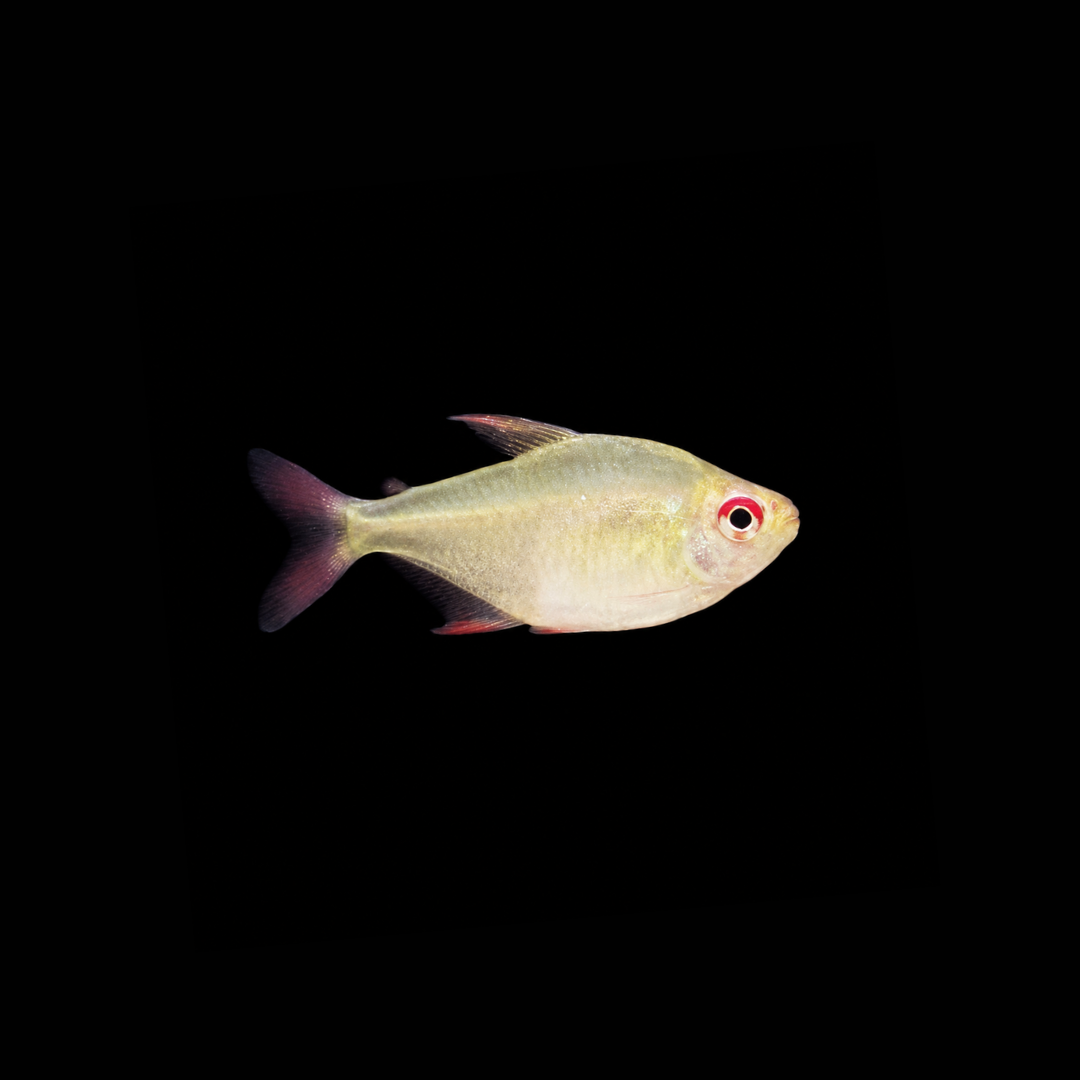
解説 / Description
スーパーレモンテトラは、南米ブラジルのタパジョス川水系に関係するレモンテトラ近縁群として日本の観賞魚市場で流通する小型カラシンです。鮮やかなレモンイエローから黄橙色の体色、上半分が赤く染まる瞳、背鰭や尻鰭に入る黄色と黒のコントラストが大きな魅力です。ただし、この名前は現時点で単一の有効学名を指すというより、レモンテトラの地域変異、近縁種、未記載種の可能性を含む流通名として使われることがあります。飼育記事としては、基準種であるレモンテトラの確かな情報を土台にしつつ、スーパーレモンテトラ特有の流通上の曖昧さを踏まえて扱うのが安全です。 The Super Lemon Tetra is a small characin traded in Japan as a close relative or locality-related form of the Lemon Tetra from the Tapajós River system in Brazil, South America. Its appeal lies in its vivid lemon-yellow to yellow-orange body color, red upper iris, and the contrast of yellow and black markings on the dorsal and anal fins. However, the name does not currently refer to a single formally accepted scientific species. In the aquarium trade, it may cover regional forms of the Lemon Tetra, closely related species, or potentially undescribed taxa. For care guidance, it is safest to use reliable information on the standard Lemon Tetra as a foundation while noting the uncertainty around the trade name.
基本情報 / Basic Information
| 学名 / Scientific Name | Hyphessobrycon cf. pulchripinnis / Hyphessobrycon sp. 基準種レモンテトラはThe standard Lemon Tetra is Hyphessobrycon pulchripinnis Ahl, 1937 |
|---|---|
| 通称 / Common Name | スーパーレモンテトラ、スーパーレモン、タパジョス系レモンテトラSuper Lemon Tetra, Super Lemon, Tapajós Lemon Tetra form |
| 分類 / Family | カラシン目 ハイフェソブリコン属。科階級は資料によりカラシン科 Characidae、またはAcestrorhamphidaeとして扱われることがあります。Order Characiformes, genus Hyphessobrycon. Depending on the taxonomic source, the family may be treated as Characidae or Acestrorhamphidae. |
| 英名 / English Name | Super Lemon Tetra |
| 分布 / Distribution | 基準種レモンテトラは南米ブラジルのタパジョス川流域が主な分布として扱われます。スーパーレモンテトラの流通では、イガラッペ・ピメンタル、ジャカレアカンガ、ジャトゥアラナ、ウルマンドゥーバなどのローカリティ名が付くことがありますが、これらは流通上の産地表記を含むため、正確な産地確認には入荷時のインボイスや販売店の説明を確認する必要があります。The standard Lemon Tetra is treated as a species from the Tapajós River basin in Brazil, South America. In the trade, Super Lemon Tetras may be offered with locality names such as Igarapé Pimental, Jacareacanga, Jatuarana, or Urmanduba. Because these are trade locality labels, exact origin should be checked through the import invoice or the retailer’s information. |
| 最大体長 / Max Size | 約4cm前後。基準種レモンテトラでは標準体長3.8cm前後のデータがあり、観賞魚流通では全長として5cm前後と表現されることもあります。Around 4 cm. Published data for the standard Lemon Tetra gives roughly 3.8 cm standard length, while aquarium trade descriptions may express size as about 5 cm total length. |
| 寿命 / Lifespan | おおむね4〜6年。安定した水質、適切な群れ、栄養バランスのよい給餌が整えば、それ以上長く維持できる場合もあります。Generally about 4-6 years. With stable water quality, a proper group size, and balanced feeding, some individuals may live longer. |
飼育環境 / Aquarium Environment
| 水槽サイズ / Tank Size | 小型群であれば30cmキューブ水槽でも維持は可能ですが、群泳の美しさと水質安定を重視するなら45cm規格水槽以上、理想的には60cm規格水槽以上がおすすめです。10匹以上でゆったり泳がせると、雄同士のディスプレイや群れのまとまりが観察しやすくなります。A 30 cm cube tank can maintain a small group, but a 45 cm standard tank or larger is preferable for stable water and natural schooling. A 60 cm standard tank or larger is ideal, especially for groups of 10 or more where male display and schooling behavior are easier to observe. |
|---|---|
| 水温 / Temperature | 23〜28℃。日常管理では24〜26℃前後で安定させると扱いやすく、繁殖を狙う場合やコンディションを整える場合は25〜27℃前後を目安にします。 23-28°C. For daily maintenance, around 24-26°C is easy to manage, while about 25-27°C is a useful target for conditioning or breeding. |
| 水質 / Water Quality | 弱酸性から中性寄りの軟水を好みます。目安はpH5.5〜7.5前後ですが、ブリード個体は日本の一般的な水道水にも慣れやすいことがあります。ワイルド個体や色揚げを重視する場合は、流木、ピートモス、ヤシャブシの実などを使って、急変させずに穏やかなブラックウォーター寄りへ整えると調子を引き出しやすくなります。They prefer soft water from slightly acidic to near neutral, roughly around pH 5.5-7.5. Captive-bred individuals often adapt well to ordinary tap-water-based aquaria. For wild fish or stronger coloration, driftwood, peat, or alder cones can be used to create a gently tinted, blackwater-style environment without sudden changes. |
| レイアウト / Layout | 水草を多めに植え、前面から中層に遊泳スペースを残したレイアウトが向いています。アマゾンソード、ミクロソリウム、アヌビアス、有茎草、流木などを組み合わせると落ち着きやすく、暗色系の底床を使うと黄橙色の体色と赤い瞳が引き立ちます。A planted layout with open swimming space in the front and midwater areas works well. Amazon swords, Microsorum, Anubias, stem plants, and driftwood provide cover, while a darker substrate helps the yellow-orange body and red iris stand out. |
| 注意点 / Precautions | 単独や2〜3匹だけの少数飼育では警戒心が強まり、色が出にくくなったり、弱い個体への追い回しが目立ったりします。最低でも5〜6匹以上、できれば10匹以上での群泳を心がけましょう。水質の急変、残餌の蓄積、水温低下はコンディションを崩す原因になるため、定期的な換水とフィルター管理を続けることが大切です。Avoid keeping them singly or in very small groups of only two or three, as this can cause stress, poor coloration, and chasing of weaker individuals. Keep at least five to six, and preferably 10 or more. Sudden water changes, leftover food, and low temperatures can weaken their condition, so regular water changes and filter maintenance are important. |
餌と給餌 / Feeding
| 餌の種類 / Diet | 雑食性で、細かなフレーク、顆粒飼料、冷凍アカムシ、冷凍ミジンコ、ブラインシュリンプなどをよく食べます。自然下のレモンテトラでは小動物性の餌と植物質を利用することが知られているため、人工飼料だけに偏らせず、動物性と植物性を適度に組み合わせると管理しやすくなります。色揚げを意識する場合は、クリル、スピルリナ、アスタキサンチンなどカロテノイドを含む飼料をローテーションに加えます。They are omnivorous and usually accept fine flakes, small granules, frozen bloodworms, frozen daphnia, and brine shrimp. Lemon Tetras are known to feed on small animal foods and plant matter, so a mix of animal-based and plant-based foods is better than relying on one food type. For color enhancement, include carotenoid-rich foods such as krill, spirulina, or astaxanthin in the rotation. |
|---|---|
| 給餌のポイント / Feeding Tips | 1日1〜2回、2〜3分以内に食べ切れる量を与えます。食べ残しは水質悪化の原因になるため、少量を丁寧に与えるのが基本です。群れ全体に餌が行き渡るよう、浮く餌とゆっくり沈む餌を使い分けると、気の弱い個体も食べやすくなります。Feed once or twice daily, only as much as they can finish within two to three minutes. Leftover food quickly degrades water quality, so small, careful portions are best. Combining floating and slowly sinking foods helps shy individuals receive enough food. |
性格と混泳 / Temperament and Tank Mates
| 性格 / Temperament | 性格は温和で、群れの中で雄同士がヒレを広げて張り合うことはありますが、深刻なダメージにつながる争いは少ない魚です。落ち着いた環境では中層から上層をよく泳ぎ、群れとしての動きと個体ごとの発色差を楽しめます。They are peaceful fish. Males may flare fins and display at one another within the group, but serious injuries are uncommon. In a calm aquarium, they swim actively in the middle to upper levels and show both group movement and individual color differences. |
|---|---|
| 混泳の相性 / Compatibility | ネオンテトラ、グリーンネオンテトラ、ラスボラ類、コリドラス、オトシンクルス、小型アピストグラマなど、サイズと性格が合う魚との混泳に向きます。一方で、エンゼルフィッシュや中型シクリッドなど、口に入るサイズの魚を捕食できる相手は避けてください。長いヒレを持つ動きの遅い魚と合わせる場合は、追い回しや餌の競合が出ないか観察します。They mix well with similarly sized, peaceful fish such as Neon Tetras, Green Neon Tetras, rasboras, Corydoras, Otocinclus, and small Apistogramma. Avoid larger fish that can swallow them, such as angelfish or medium-sized cichlids. With slow-moving long-finned fish, observe carefully for chasing or feeding competition. |
病気と対策 / Diseases and Prevention
| かかりやすい病気 / Common Diseases | 特定の病気に極端に弱い魚ではありませんが、導入直後や水温低下時には白点病、輸送ストレス後にはヒレ裂けや細菌性の症状、ワイルド個体では寄生虫やコンディション不良に注意が必要です。瞳の赤みが急に薄く見える場合は、ストレス、水質悪化、体調不良のサインのひとつとして早めに確認しましょう。They are not especially delicate, but newly introduced fish or fish exposed to low temperatures may develop ich. After transport, fin damage or bacterial symptoms can appear, and wild specimens may carry parasites or arrive in poor condition. If the red iris suddenly appears faded, check early for stress, water deterioration, or health problems. |
|---|---|
| 対策と予防 / Prevention | 新規導入時は水合わせを丁寧に行い、可能であれば隔離水槽で数日から2週間ほど観察します。水温の急変を避け、定期的な換水とフィルター管理で清潔な水を維持してください。病気が疑われる場合は、まず水質、温度、混泳相手からのストレスを確認し、症状に応じて隔離と薬浴を検討します。Acclimate new fish carefully and, where possible, observe them in a quarantine tank for several days to two weeks. Avoid sudden temperature changes and maintain clean water through regular water changes and filter care. If disease is suspected, first check water quality, temperature, and stress from tank mates, then consider isolation and medication according to the symptoms. |
増やし方(繁殖) / Breeding
| 雌雄の判別 / Sexing | 雄は比較的スリムで、発情時には体色と鰭の発色が強まり、尻鰭の黒い縁取りが太く明瞭になります。雌は体高があり、抱卵すると腹部がふっくら丸みを帯びます。雌の尻鰭の黒いラインは雄より細く見えることが多いですが、個体群やコンディションによって差があるため、体型と行動を合わせて判断します。Males are generally slimmer and show stronger body and fin coloration when in breeding condition, with a broader, clearer black margin on the anal fin. Females are deeper-bodied, and gravid females have a rounded belly. The black line on the female’s anal fin is often finer than that of the male, but differences vary by population and condition, so body shape and behavior should also be considered. |
|---|---|
| 繁殖形態 / Reproduction | 水草や産卵モップの周辺に卵をばらまくエッグスキャッターです。親魚は卵や稚魚を保護せず、むしろ食卵することがあるため、産卵後は親魚を速やかに戻す必要があります。They are egg-scatterers that release eggs among fine plants or spawning mops. The parents do not guard the eggs or fry and may eat the eggs, so adults should be removed soon after spawning. |
| 繁殖のポイント / Breeding Tips | 30〜40L程度の繁殖水槽を用意し、水温24〜27℃、pH6.0〜6.5前後の弱酸性軟水を目安にします。ウィローモスやマツモ、産卵モップを入れ、底にビー玉やネットを使って卵が親の口から逃げる構造を作ると成功率が上がります。産卵は早朝や点灯直後に起こりやすく、卵は水温条件によりおよそ24〜72時間で孵化します。自由遊泳後の初期餌にはインフゾリアなどの微細な餌を用い、成長に合わせてブラインシュリンプ幼生へ切り替えます。Prepare a breeding tank of about 30-40 L with soft, slightly acidic water around 24-27°C and pH 6.0-6.5. Add Java moss, hornwort, or spawning mops, and use marbles or a mesh barrier on the bottom so the eggs fall out of reach of the adults. Spawning often occurs in the early morning or soon after lights come on. Eggs hatch in roughly 24-72 hours depending on temperature. Once the fry become free-swimming, start with microscopic foods such as infusoria, then switch to newly hatched brine shrimp as they grow. |
雑学と豆知識 / Trivia and Fun Facts
| 1. 流通名としてのスーパーレモンテトラ / 1. Super Lemon Tetra as a Trade Name | スーパーレモンテトラという名前は、学術的に確定したひとつの種名というより、レモンテトラに近い美しい黄橙色の個体群を指す流通名として使われます。そのため、販売名だけで分類や産地を断定するのは避けるべきです。ローカリティ付きの個体を選ぶ場合は、体色や鰭の模様だけでなく、入荷名、採集地名、販売店が把握している輸入情報を合わせて確認すると、後の飼育記録にも価値が残ります。The name Super Lemon Tetra is best understood as a trade name for attractive yellow-orange forms close to the Lemon Tetra, rather than as a single formally settled species name. For that reason, classification and exact origin should not be assumed from the sales name alone. When choosing locality-labeled fish, it is useful to record the import name, locality label, and retailer information as well as body color and fin patterns. |
|---|---|
| 2. レモンテトラの学名と科名の揺れ / 2. Scientific Name and Family Treatment | 基準となるレモンテトラは、1937年にAhlによってHyphessobrycon pulchripinnisとして記載された魚です。一方で、近年の分類整理では、古くから親しまれてきた「カラシン科」という呼び方だけでなく、Acestrorhamphidaeとして整理される資料もあります。アクアリウムの現場では今もカラシンの仲間として説明されることが多いものの、図鑑情報としては資料ごとの扱いの違いを残しておくと正確です。The standard Lemon Tetra was described by Ahl in 1937 as Hyphessobrycon pulchripinnis. However, modern taxonomic sources may differ in family placement, using either the familiar aquarium-trade treatment under Characidae or the more recently used Acestrorhamphidae. In aquarium contexts it is still commonly explained as a characin, but a careful reference entry should note that family treatment differs among sources. |
| 3. 観賞魚市場が先に知っていた魚 / 3. A Fish Known by Aquarists before Science Caught Up | レモンテトラには、観賞魚としての流通が学術的な産地確認に先行したという興味深い背景があります。原記載は観賞魚として輸入された個体に基づいており、当初の産地情報は曖昧でした。のちにタパジョス川流域との関係が明確になっていき、現在のスーパーレモンテトラを語るうえでも、タパジョス系ローカリティへの関心が大きな意味を持つようになりました。The Lemon Tetra has an intriguing history: its aquarium trade history came before firm scientific clarification of its locality. The original description was based on imported aquarium specimens, and the locality information was vague at first. Later, its connection to the Tapajós River basin became clearer, which helps explain why Tapajós-related locality labels are important in discussions of Super Lemon Tetras today. |
| 4. 赤い瞳は日々の観察ポイント / 4. The Red Iris as a Daily Observation Point | 上半分が赤く染まる瞳は、スーパーレモンテトラの印象を決める大切な特徴です。この赤みは個体差や光の当たり方でも見え方が変わりますが、普段より急に薄く感じるときは、ストレス、水質悪化、体調不良を疑うきっかけになります。体表の白点やヒレの傷だけでなく、瞳の色、群れから離れる行動、餌への反応を一緒に見ると、小さな異変に気づきやすくなります。The red upper iris is one of the defining visual features of the Super Lemon Tetra. Its appearance varies with individual condition and lighting, but if it suddenly seems much paler than usual, it can prompt a check for stress, water deterioration, or health problems. Observing eye color together with white spots, fin damage, isolation from the school, and feeding response makes small problems easier to notice. |
| 5. ローカリティで表情が変わる楽しさ / 5. Localities Add Character | 日本の珍カラシン市場では、産地名そのものが魚の魅力を語る大切な情報になります。イガラッペ・ピメンタル、ジャカレアカンガ、ジャトゥアラナ、ウルマンドゥーバといった名前は、単なる地名ではなく、体色の濃さ、尾鰭の赤み、目の赤さ、鰭の伸び方など、個体群ごとの微妙な表情を楽しむ手がかりになります。もちろん、流通名には不確実さもあるため、観察記録を残しながら大切に飼い込むことが、この魚の魅力をいちばん丁寧に味わう方法です。In the Japanese market for rare characins, locality names are an important part of a fish’s appeal. Names such as Igarapé Pimental, Jacareacanga, Jatuarana, and Urmanduba are more than place names; they are clues to subtle differences in body color, red markings on the tail, iris intensity, and fin development among populations. Because trade names can carry uncertainty, careful observation records add value to the experience of keeping these fish. |
まとめ / Conclusion
スーパーレモンテトラは、飼いやすい小型美魚としての親しみやすさと、ローカリティや分類の未整理さが生む探究心をあわせ持つカラシンです。弱酸性寄りの清潔な水、安心できる水草の茂み、十分な数の群れを整えることで、淡いレモン色は少しずつ深みを帯び、赤い瞳と黒く縁取られた鰭が水景の中で際立ちます。 The Super Lemon Tetra combines the approachability of a hardy, beautiful small fish with the curiosity created by locality variation and unresolved taxonomy. Clean, slightly acidic water, sheltering plants, and a proper school allow its pale lemon color to deepen gradually, while the red iris and black-edged fins stand out in the aquascape.
群れが光を受けて向きを変えるたび、黄橙色の体色は水槽にあたたかな明るさを添えます。確かな管理で長く飼い込み、個体ごとの発色や行動の変化を観察していくほど、この小さな魚は南米水系の多様性と、観賞魚文化の奥行きを静かに語ってくれる存在になります。 Each time the school turns in the light, the yellow-orange bodies add a warm brightness to the aquarium. The longer they are kept with steady care, the more their individual colors and behaviors reveal. In this small fish, the diversity of South American waters and the depth of aquarium culture can be appreciated quietly over time.

気になる道具や飼い方を見つけてみませんか?
 アイのアクアグッズ案内ラスボラ・ボララスの群泳を楽しむ飼育用品|水槽・ろ過・ヒーター・餌・水草道具の特徴や使い方、選ぶときのポイントをアイが紹介します。記事はコチラ →
 アイのアクアグッズ案内水草用ライトの選び方|緑の絨毯と赤い水草を楽しむ照明・植栽用品道具の特徴や使い方、選ぶときのポイントをアイが紹介します。記事はコチラ →
 アイのアクアグッズ案内カルキ抜き・水質調整剤の選び方|水換えと水槽の種類に合わせて選ぶ道具の特徴や使い方、選ぶときのポイントをアイが紹介します。記事はコチラ →
 アイのアクアグッズ案内海水魚の底砂の選び方|サンゴ砂・ライブサンドとおすすめ商品道具の特徴や使い方、選ぶときのポイントをアイが紹介します。記事はコチラ →
さまざまな飼育テーマをご紹介。リンク先の記事には広告・商品紹介が含まれます。
案内・紹介記事一覧へ →分布マップ
スーパーレモンテトラは、南米ブラジルのタパジョス川流域に関係するレモンテトラ近縁群として扱われます。この地図では、分布イメージとしてタパジョス川流域周辺の概略代表地点を示しています。
このマップは分布欄の内容をもとにした概略プロットです。実際の採集地点や厳密な生息範囲を示すものではありません。流通上の産地名には不確実性があるため、正確な産地確認には入荷時の情報や販売店の説明が必要です。
参考文献・出典
この参考文献欄は、スーパーレモンテトラを単一の確定学名ではなく、Hyphessobrycon pulchripinnisに近縁な地域変異・未記載種を含む可能性のある流通名として扱うための根拠資料です。店舗・通販ページ、個人ブログ、まとめサイト、販売価格や入荷情報のみを扱うページは除外し、分類、分布、生息環境、飼育条件、繁殖、病気や導入時の注意点を支える資料に絞りました。
分類については、GBIFなどでCharacidaeとして扱われる表記と、近年の系統分類やFishBaseでAcestrorhamphidaeとして扱われる表記が併存しています。そのため、本文では「資料により分類体系が異なる」と補足するのが安全です。
-
Froese, R. and Pauly, D. (eds.). FishBase: Hyphessobrycon pulchripinnis, Lemon tetra.
主な裏付け:学名、タパジョス川流域の分布、淡水・底中層性の生態、水温23〜28℃、pH 5.5〜8.0、最大体長、雑食性、5匹以上の群れ、60cm水槽目安、IUCN評価。
-
GBIF Secretariat. Hyphessobrycon pulchripinnis Ahl, 1937 in GBIF Backbone Taxonomy.
主な裏付け:Hyphessobrycon pulchripinnis Ahl, 1937としての受理名、原記載情報、GBIF側の分類体系。分類欄でCharacidae表記が残ることを説明する根拠にもなります。
-
Melo, B. F. et al. (2024). Phylogenomics of Characidae, a hyper-diverse Neotropical freshwater fish lineage, with a phylogenetic classification including four families. Zoological Journal of the Linnean Society, 202, zlae101.
DOI: 10.1093/zoolinnean/zlae101
主な裏付け:従来Characidaeに含められてきたネオトロピカル小型カラシン類の系統分類、Acestrorhamphidaeを含む新しい分類枠組み、ハイフェソブリコン類の分類が現在も動いているという説明。
-
Fricke, R., Eschmeyer, W. N. and Van der Laan, R. (eds.). Eschmeyer’s Catalog of Fishes. California Academy of Sciences.
主な裏付け:魚類の学名・命名者・分類を確認するための基礎資料。記事内で学名や分類表記を断定しすぎないための照合先として有用です。
-
Cole, B., Kotol, P. and Haring, M. (1999). Spawning and Production of the Lemon Tetra, Hyphessobrycon pulchripinnis. Center for Tropical and Subtropical Aquaculture, Publication Number 142.
CTSA / University of Hawaii Sea Grant Extension Service PDF
主な裏付け:性格、群泳性、雌雄差、繁殖向け水質、産卵水槽、卵の隔離、孵化、稚魚の初期餌、ブラインシュリンプへの切り替えなど、飼育・繁殖の実務的な記述。
-
Burt, A., Kramer, D. L., Nakatsuru, K. and Spry, C. (1988). The tempo of reproduction in Hyphessobrycon pulchripinnis (Characidae), with a discussion on the biology of multiple spawning in fishes. Environmental Biology of Fishes, 22, 15–27.
主な裏付け:レモンテトラの短周期の産卵、複数回産卵、卵生カラシンとしての繁殖リズム。繁殖欄の背景資料として適しています。
-
Nakatsuru, K. and Kramer, D. L. (1982). Is Sperm Cheap? Limited Male Fertility and Female Choice in the Lemon Tetra (Pisces, Characidae). Science, 216(4547), 753–755.
DOI: 10.1126/science.216.4547.753
主な裏付け:レモンテトラの繁殖行動、雄の連続産卵に伴う受精率低下、雌の選好に関する行動生態学的知見。雑学・繁殖行動の補強資料として扱えます。
-
Freshwater Ecoregions of the World. Tapajós - Juruena Ecoregion.
主な裏付け:タパジョス・ジュルエナ水系の淡水魚相と水草・抽水植物環境の概略。水草を使ったレイアウトや生息地を意識した環境づくりの背景資料として利用できます。
-
Merck Veterinary Manual. Management of Aquarium Fish.
主な裏付け:水温が魚の生理に与える影響、水質管理、診断・治療判断、隔離とバイオセキュリティの重要性。導入時や不調時の注意点を支える獣医学的資料です。
-
MSD Veterinary Manual. Disorders and Diseases of Fish.
主な裏付け:ストレス、水質悪化、過密飼育、隔離不足が病気の発生や拡大につながるという一般的な魚病管理。白点病、細菌・真菌・寄生虫性疾患への注意喚起を補強します。
参考文献から外したもの
販売価格、入荷履歴、通信販売の梱包方法、店舗独自のローカリティ表記、個人飼育例、まとめサイト由来の記述は、本文の読み物要素として扱う場合でも、ファクト確認用の参考文献には採用していません。「スーパーレモンテトラ」「ボリビアンオレンジ」「ムゼル」などは流通名であり、それぞれの正確な分類や系統関係には不明な点が残ります。
最終確認日:2026年6月25日




コメント