

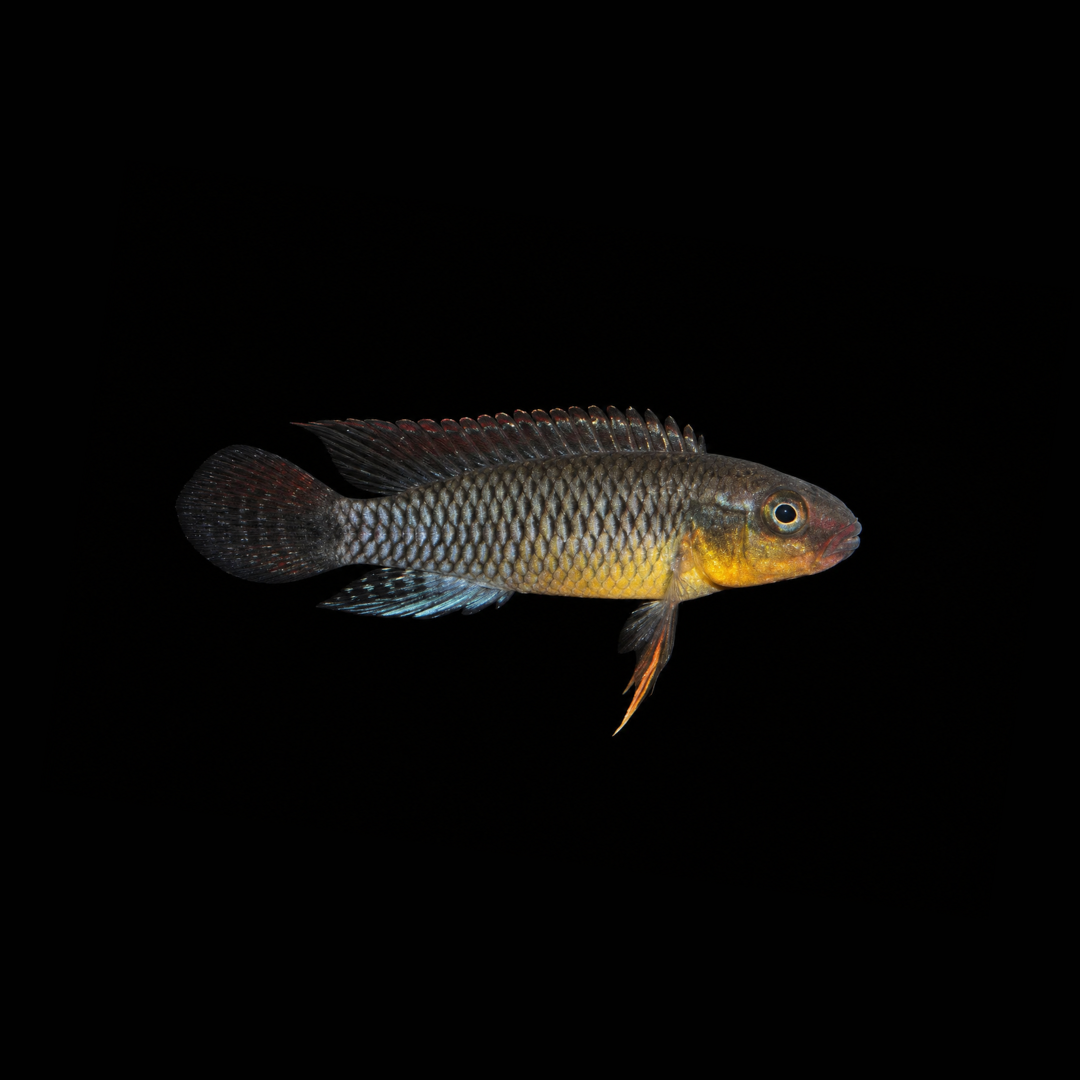
解説 / Description
コンゴクロミス・ディミディアトゥスは、中央アフリカの中部コンゴ川流域を中心に分布し、上部シャリ川水系からも記録されている小型のシクリッドです。細身の体をもち、気分や社会的状況によって暗色の体側模様の現れ方が変わり、繁殖期には体色にも変化が見られます。飼育では水質を安定させ、流木や落ち葉、隠れ家を使って個体同士の視線を遮ると落ち着きやすくなります。分類学的にも興味深く、かつてはペルマトクロミス属、のちにナノクロミス属に置かれ、2007年に頭部の感覚器官や眼下骨、歯列、鱗の配列などの特徴を根拠としてコンゴクロミス属へ移されました。 Congochromis dimidiatus is a small cichlid distributed mainly in the middle Congo River basin of Central Africa, with additional records from the upper Chari drainage. It has a slender body, dark lateral markings whose visibility changes with social condition, and coloration that shifts during breeding. In captivity, stable water conditions and a layout with driftwood, leaf litter and enough shelters to break lines of sight between individuals help the fish settle. Its taxonomic history is also notable: after being placed first in Pelmatochromis and later in Nanochromis, it was transferred to Congochromis in 2007 on the basis of characters including the cephalic sensory system, infraorbital bones, dentition and squamation.
基本情報 / Basic Information
| 学名 / Scientific Name | Congochromis dimidiatus (Pellegrin, 1900) |
|---|---|
| 通称 / Common Name | コンゴクロミス・ディミディアトゥス。旧学名のナノクロミス・ディミディアトゥスの名で扱われることもあります。Congochromis dimidiatus; the former scientific combination Nanochromis dimidiatus may also be encountered |
| 分類 / Family | シクリッド科(Cichlidae)・プセウドクレニラブルス亜科(Pseudocrenilabrinae)・クロミドティラピア族(Chromidotilapiini)・コンゴクロミス属(Congochromis)Family Cichlidae, subfamily Pseudocrenilabrinae, tribe Chromidotilapiini, genus Congochromis |
| 英名 / English Name | No widely standardized English common name; usually referred to as Congochromis dimidiatus |
| 分布 / Distribution | 中央アフリカ。中央アフリカ共和国、コンゴ共和国、コンゴ民主共和国の中部コンゴ川水系を中心に、中央アフリカ共和国の上部シャリ川水系からも記録されています。コンゴ盆地では河川だけでなく湖沼からの記録もあり、本種の生息環境を浅いブラックウォーター支流だけに限定して捉えるのは適切ではありません。Central Africa. The species is recorded mainly from the middle Congo River basin in the Central African Republic, Republic of the Congo and Democratic Republic of the Congo, and also from the upper Chari drainage in the Central African Republic. Records from the Congo basin include both rivers and lakes, so it should not be treated as a species restricted only to shallow blackwater tributaries. |
| 最大体長 / Max Size | 最大6.2cm程度(全長)。メスはオスより小型になる傾向があります。Maximum recorded length is about 6.2 cm total length. Females tend to remain smaller than males. |
| 寿命 / Lifespan | 本種について種単位で確立された寿命データは乏しく、明確な年数は不明です。長期飼育では数年単位の維持を前提に、急変の少ない水質と栄養管理を続けることが重要です。Reliable species-specific lifespan data are scarce, so a definitive figure is not established. Long-term husbandry should be planned on a multi-year basis, with emphasis on stable water chemistry and consistent nutrition. |
飼育環境 / Aquarium Environment
| 水槽サイズ / Tank Size | ペア飼育では60cm規格水槽(約57〜65L)を最低目安とします。複数個体を維持する場合や底層魚と混泳させる場合は、縄張りを分けられる90cm規格水槽以上が扱いやすくなります。水量だけでなく底面積と隠れ家の数が重要です。For a pair, a standard Japanese 60 cm aquarium of roughly 57–65 L should be regarded as the minimum practical size. For groups or when keeping other bottom-dwelling fishes, a 90 cm aquarium or larger is easier to manage because territories can be separated. Floor area and the number of shelters are as important as total volume. |
|---|---|
| 水温 / Temperature | 22〜25℃を目安にし、急激な温度変化を避けて安定させます。 22–25°C is a suitable reference range. Keep the temperature stable and avoid sudden fluctuations. |
| 水質 / Water Quality | pH6.0〜7.0、硬度5〜8°dH程度を一つの目安とし、数値そのものより安定性を優先します。極端な低pHや超軟水を必須条件とはせず、導入時や換水時にpH・硬度を急変させないことが重要です。マジックリーフ、ヤシャブシの実、ピート、RO水などを使って調整する場合も、測定しながらゆっくり変化させます。A practical reference range is pH 6.0–7.0 with hardness around 5–8°dH. Stability is more important than forcing the water to an extreme pH or very low hardness. Avoid abrupt changes during acclimation and water changes. If leaf litter, alder cones, peat or reverse-osmosis water are used to adjust the water, make changes gradually while measuring the actual parameters. |
| レイアウト / Layout | 細かな砂を薄く敷き、流木、落ち葉、ココナッツシェル、素焼きの筒などで暗い洞窟状の隠れ家を複数作ります。個体同士の視線が長く通らないよう、流木などで水槽内を区切るのがポイントです。低光量に強いアヌビアス・ナナやボルビティスを流木に活着させると、照明を抑えた落ち着きのある環境を作れます。Use a thin layer of fine sand and provide several dark cave-like shelters with driftwood, leaf litter, coconut shells or terracotta tubes. Arrange the hardscape so that fish cannot maintain long lines of sight across the tank, helping divide territories. Shade-tolerant plants such as Anubias barteri var. nana and Bolbitis heudelotii can be attached to wood to create a calm, subdued environment. |
| 注意点 / Precautions | 注意したいのは、水質の急変と同種間の力関係です。導入時は慎重に水合わせし、pHや硬度を短時間で大きく変えないようにします。繁殖期にはペアの縄張り意識が強くなるため、弱い個体が追い詰められない逃げ場を確保してください。底層付近で砂や堆積物をついばむため、口や鰓を傷つけやすい角の鋭い底床は避けます。Important concerns are abrupt changes in water chemistry and social pressure among conspecifics. Acclimate new fish carefully without rapidly shifting pH or hardness. Territorial behavior intensifies during breeding, so subordinate fish must have secure escape routes. Because the species forages close to the bottom and picks through substrate and detritus, avoid coarse, sharp-edged gravel that could damage the mouth or gills. |
餌と給餌 / Feeding
| 餌の種類 / Diet | 雑食性ですが動物質の餌への反応がよく、冷凍アカムシ、冷凍ブラインシュリンプ、冷凍ミジンコなどを利用できます。状態が安定した個体には、沈下性の高品質な小粒ペレットや顆粒飼料も主食として使えます。底層付近で採餌するため、沈む餌を組み合わせると食べ残しや取り負けを減らしやすくなります。Omnivorous, with a strong response to animal-based foods. Frozen bloodworms, brine shrimp and daphnia can be used, and settled aquarium specimens can also take high-quality small sinking pellets or granules as a staple. Because the species feeds close to the bottom, including sinking foods helps reduce competition and uneaten food. |
|---|---|
| 給餌のポイント / Feeding Tips | 導入直後など人工飼料への反応が鈍い個体では、嗜好性の高い冷凍飼料を利用し、少量の人工飼料を混ぜながら段階的に慣らします。底層で食べるため、上層魚だけに餌を奪われないよう沈下性の餌を使い、少量ずつ与えると管理しやすくなります。繁殖を狙う場合も単一の餌に偏らず、複数の餌を組み合わせます。Individuals that respond poorly to prepared foods after introduction can be started on palatable frozen foods, with small amounts of prepared feed mixed in gradually. Because the species feeds near the bottom, use sinking foods so that surface and midwater tank mates do not consume everything first. Small portions and dietary variety are preferable to relying heavily on a single food. |
性格と混泳 / Temperament and Tank Mates
| 性格 / Temperament | 他種に対しては比較的温和ですが、警戒心が強く、同種間では順位関係と縄張り意識が見られます。非繁殖期はペアや小集団で落ち着いて行動することがありますが、繁殖期には巣穴周辺を強く防衛します。十分な遮蔽物があると無用な追尾が減り、前面にも出やすくなります。Generally peaceful toward other species but naturally cautious. Conspecifics establish social rank and territories. Outside the breeding period they may remain calm as pairs or small groups, while breeding pairs defend the area around their spawning cave vigorously. Abundant cover and broken lines of sight reduce persistent chasing and help the fish become more visible in the aquarium. |
|---|---|
| 混泳の相性 / Compatibility | 上層〜中層を泳ぐ穏やかな小型魚など、生活圏が重なりにくい相手が向いています。警戒心の強い個体では、穏やかな同居魚がいる環境のほうが前面に出やすくなることもあります。大型で攻撃的なシクリッドや、強い縄張り性を持つ魚との混泳は避けます。コリドラスなど底層魚と組み合わせる場合は、90cm規格水槽以上を目安に底面の縄張りを十分に分け、繁殖期の追尾に注意します。Peaceful small fishes that occupy the upper and middle water layers are generally easier to combine because they overlap less with the cichlid’s bottom-oriented territories. In some cautious individuals, calm tank mates may also make the fish more willing to remain in view. Avoid large, aggressive or strongly territorial cichlids. If combining the species with bottom-dwelling fishes such as Corydoras, use a tank of about 90 cm or larger, divide the bottom area clearly and watch for increased chasing during breeding. |
病気と対策 / Diseases and Prevention
| かかりやすい病気 / Common Diseases | 本種に特有の「かかりやすい病気」として確立した飼育データは乏しく、特定の疾病名を挙げるのは適切ではありません。実際の飼育では、導入時のストレス、水質悪化、急激な温度・水質変化によって体調を崩すと、一般的な淡水魚と同様に外部寄生虫症や細菌性感染症などが起こる可能性があります。There is little established husbandry evidence identifying a particular disease as uniquely common in this species, so naming a specific characteristic disease would be inappropriate. As with other freshwater fishes, stress after introduction, deteriorating water quality and sudden changes in temperature or water chemistry can weaken fish and increase the risk of common external parasitic or bacterial infections. |
|---|---|
| 対策と予防 / Prevention | 導入魚は可能なら別水槽で経過観察し、食欲、呼吸、体表、排泄物を確認します。予防の中心は薬剤の常用ではなく、有機物をためすぎないこと、安定した水温と水質を保つこと、急変を避けて換水することです。治療が必要な場合は症状から原因を見極め、使用する薬剤の用法と対象魚への適否を確認して処置します。Whenever possible, observe new arrivals in a separate aquarium and monitor appetite, respiration, skin condition and feces. Prevention should focus on avoiding excessive organic loading, maintaining stable temperature and water chemistry, and carrying out water changes without abrupt shifts rather than relying on routine medication. If treatment becomes necessary, identify the likely cause and confirm that the chosen medication and dosage are appropriate for the fish. |
増やし方(繁殖) / Breeding
| 雌雄の判別 / Sexing | オスはメスよりやや大きくなり、背鰭、尻鰭、腹鰭が長く、特に腹鰭は先端が尖って見えやすくなります。メスは各鰭が比較的短く、腹鰭は丸みを帯びる傾向があります。成熟したメスは繁殖期に腹部がオレンジ〜赤みを帯び、背鰭には白〜銀色の帯が目立つことがあります。オスでは尾鰭や背鰭・尻鰭の軟条部に淡色の小斑点が現れることがあり、体格と鰭、婚姻色を合わせて判断すると見分けやすくなります。Males tend to grow slightly larger and have longer dorsal, anal and pelvic fins, with the pelvic fins appearing more pointed. Females generally have shorter fins and more rounded pelvic fins. Mature females can develop an orange to reddish belly in breeding condition, and a white to silvery band may become conspicuous in the dorsal fin. Males may show pale spotting on the caudal fin and on the soft portions of the dorsal and anal fins. Size, fin shape and breeding coloration are best considered together when sexing the fish. |
|---|---|
| 繁殖形態 / Reproduction | 一夫一婦のペアを形成し、両親で卵と稚魚を守る洞窟内産卵型です。メスは流木の下、ヤシ殻や石組みの裏などの暗い空間を選び、壁面や天井面に産卵します。産卵後はメスが卵の世話をする比重が高く、オスは周囲の防衛を担い、稚魚が自由遊泳を始めると両親が群れを誘導します。A monogamous, biparental cave-spawning cichlid. The female selects a dark enclosed site beneath wood, inside a coconut-shell shelter or behind rocks and deposits eggs on a wall or ceiling surface. After spawning, the female performs most close egg care while the male guards the surrounding territory. Once fry become free-swimming, both parents help guide and defend the group. |
| 繁殖のポイント / Breeding Tips | 水質を安定させ、入口が狭く内部が暗い洞窟を複数用意します。良質な冷凍飼料や小型生餌を組み合わせて親魚の状態を整えると、メスが腹部の色を強め、体を曲げながら求愛することがあります。稚魚が自由遊泳を始めたら、孵化直後のブラインシュリンプ幼生など、口に入る大きさの餌を少量ずつ複数回与えます。親魚が次の繁殖行動を示し、稚魚を追うようになった場合は、育成水槽へ分けると安全です。Maintain stable water conditions and provide several caves with narrow entrances and dark interiors. Conditioning the pair with varied high-quality frozen and small live foods can bring the female into breeding color and courtship displays. Once fry become free-swimming, offer foods small enough for them to take, such as newly hatched brine shrimp, in small portions several times a day. If the parents begin another breeding cycle and start driving the juveniles away, move the young to a rearing aquarium for safety. |
雑学と豆知識 / Trivia and Fun Facts
| 1. 三つの属名を渡り歩いた分類史 / 1. A Taxonomic Journey Through Three Genera | 本種が初めて科学的に記載されたのは1900年で、当時の名前はペルマトクロミス・ディミディアトゥスでした。ペルマトクロミス属は当時、アフリカ産のさまざまな小型シクリッドを広く含む分類群として使われていました。その後、本種はナノクロミス属へ移され、長いあいだナノクロミス・ディミディアトゥスの名で知られることになります。ところが形態研究が進むと、ナノクロミス属の中には解剖学的に異なる二つのまとまりがあることが見えてきました。2007年、StiassnyとSchliewenはその一方をコンゴクロミス属として独立させ、本種は現在の学名へ移されました。小さな魚の名前が何度も変わった背景には、骨格や鱗、感覚器官の違いを見直し、形態的なまとまりをより明確に反映するよう分類が整理されてきた歴史があります。The species was first described in 1900 as Pelmatochromis dimidiatus, at a time when Pelmatochromis functioned as a broad grouping for many rather different African cichlids. It was later transferred to Nanochromis and became widely known as Nanochromis dimidiatus. As anatomical studies progressed, however, researchers recognized two distinct morphological assemblages within Nanochromis. In 2007, Stiassny and Schliewen erected Congochromis for one of those groups, giving this species its present combination. Its changing name reflects the progressive reassessment of bones, scales and sensory structures as taxonomists refined the morphological limits of these genera. |
|---|---|
| 2. 属を分けたのは色ではなく「骨と鱗」 / 2. Bones and Scales, Not Color, Defined the Genus | 観賞魚の世界では体色が目立ちますが、コンゴクロミス属をナノクロミス属から分ける決め手になったのは、頭部の側線感覚管、眼下骨の構造、口内の歯列、項部や頬、胸部の鱗の付き方といった地味ながら安定した形質でした。コンゴクロミス属では項部が鱗に覆われ、頬や胸部にも部分的に鱗があり、涙骨の後方に管状の眼下骨を持つなどの特徴が組み合わさります。水槽で眺めると一見よく似た小型シクリッドでも、研究者の目には頭骨と鱗の配列が系統の履歴を語る「解剖学的な地図」として見えているわけです。Aquarists naturally notice color first, but Congochromis was separated from Nanochromis using much less conspicuous and more stable characters: the cephalic lateral-line sensory system, infraorbital bones, oral dentition and the distribution of scales on the nape, cheek and chest. Congochromis combines a fully scaled nape, partial scaling on the cheek and chest, and a tubular infraorbital bone behind the lachrymal, among other traits. To a taxonomist, these arrangements of bone and scales function almost like an anatomical map of evolutionary history. |
| 3. 「dimidiatus」が示す二分のイメージ / 3. The Divided Image Behind “dimidiatus” | 種小名のdimidiatusには、「半分になった」「二分された」といった意味があります。ただし、1900年の原記載では、命名者がどの形質を指したのか明確に説明されていません。上下に分かれる側線や、暗色の縦帯が体を二分して見せることへの言及ではないかと解釈されていますが、確定した命名理由ではありません。語そのものの意味と、推定される命名意図を分けて考えるのが適切です。The epithet dimidiatus carries the sense of “halved” or “divided in two.” The original 1900 description does not clearly explain which character inspired the name. It has been interpreted as possibly referring to the divided lateral-line system and/or to a dark longitudinal band that visually divides the body, but the intended allusion is not confirmed. The literal meaning should therefore be kept separate from the inferred naming rationale. |
| 4. ブラックウォーターは有効な飼育表現だが、生息地すべてではない / 4. Blackwater Is Useful in Husbandry, but Not the Whole Habitat | 落ち葉や流木から溶け出すタンニンや腐植由来の成分を利用したブラックウォーター風の環境は、本種を落ち着かせるレイアウトの一つです。ただし、本種はコンゴ盆地の大きな河川や湖からも知られており、分布域全体を典型的なブラックウォーター環境として説明するのは正確ではありません。水槽では水を茶色くすること自体を目的にせず、水質を安定させ、照明を抑え、落ち葉や流木で隠れ場所を作ることを重視します。A blackwater-style aquarium using leaf litter, wood and tannin-rich materials can be a useful way to create subdued conditions for this species. However, Congochromis dimidiatus is also known from larger rivers and lakes in the Congo basin, so its entire range should not be described as typical blackwater habitat. In the aquarium, the goal should not simply be to turn the water brown, but to maintain stable conditions, subdued lighting and abundant shelter created by leaves and wood. |
| 5. 近縁種の識別は一つの色斑だけで決めない / 5. Close Relatives Should Not Be Identified by One Color Mark Alone | コンゴクロミス属の魚は全体の輪郭がよく似ており、体色だけでの同定は簡単ではありません。近縁種では、体側の暗色帯、鰭の模様、頭部や体側の鱗の付き方など、複数の形質を組み合わせて判断します。例えばC. sabinaeではメスの生殖突起周辺に銀色の鱗が記載されるなど、種ごとに識別の手掛かりがありますが、一つの色斑だけで種名を決めると地域変異や個体差を取り違える可能性があります。観賞魚としての見た目と、分類学的な同定に使う形質が必ずしも同じではない点が、この仲間の面白さです。Species of Congochromis can look very similar in overall form, so color alone is not sufficient for reliable identification. Close relatives are separated using combinations of characters such as dark lateral markings, fin patterns and the distribution of scales on the head and body. For example, silvery scales around the female genital region are described in C. sabinae, but no single color mark should be used by itself because geographic and individual variation can be misleading. The traits that attract attention in an aquarium are not always the same traits that carry the most taxonomic weight. |
| 6. 同じ種小名を持つホンソメワケベラと鏡の研究 / 6. A Shared Epithet and the Cleaner Wrasse Mirror Studies | 海にすむホンソメワケベラの学名はLabroides dimidiatusで、本種と同じdimidiatusという種小名を持ちますが、両者は近縁ではありません。2019年の研究では、ホンソメワケベラが鏡を利用して喉元の色付きマークを底面にこすり付ける行動が報告され、2022年の追試でも同様の反応が多数の個体で確認されました。研究者は、これをそのまま「人間と同じ自己意識の証明」とするのではなく、魚がマークテストを通過したとみなすべきか、あるいはテスト自体の解釈を見直すべきかという問題を提示しています。この研究はコンゴクロミス・ディミディアトゥスの認知能力を調べたものではなく、両種を結び付けるのは共通する種小名だけです。その違いを押さえたうえで読むと、魚類研究の広がりを知る興味深い寄り道になります。The marine bluestreak cleaner wrasse is Labroides dimidiatus, sharing the epithet dimidiatus with this cichlid despite not being closely related. In 2019, researchers reported cleaner wrasses using a mirror and scraping a colored throat mark against the substrate, and a 2022 follow-up found the same general response in many additional individuals. The authors did not simply equate this with human-like self-awareness; they raised the question of whether the fish should be considered to have passed the mark test or whether the interpretation of the test itself requires revision. These experiments did not test the cognition of Congochromis dimidiatus. The only direct connection between the two fishes in this context is the shared species epithet. |
| 7. 国内繁殖で世代をつなぐ価値 / 7. The Value of Maintaining Captive-Bred Generations | 国内で繁殖を継続できれば、由来や飼育履歴を引き継ぎながら次の世代へつなげることができます。特に近縁種が多く、外見だけでは同定しにくい仲間では、親魚の名称や産地情報を記録しておくことが大切です。輸入個体を飼う場合も、国内繁殖個体を育てる場合も、個体の履歴を残すことが、この魚を長く維持していくうえで役立ちます。Continued captive breeding can carry collection and husbandry information forward from one generation to the next. This is especially valuable in a genus containing several similar-looking species, where parent identification and locality data deserve careful record keeping. Whether fish are imported or captive bred, preserving their history helps maintain clearly documented aquarium populations over time. |
まとめ / Conclusion
コンゴクロミス・ディミディアトゥスは、派手な色彩だけで魅力を語る魚ではありません。体側模様を変化させながら流木や隠れ家を使い分け、繁殖期にはペアで巣を守り、稚魚を導く行動に、この小型シクリッドならではの奥深さがあります。水質を安定させ、細かな底床と十分な隠れ家を用意すると、落ち着いた体色と社会行動をじっくり観察しやすくなります。 The appeal of Congochromis dimidiatus does not depend on flamboyant coloration alone. Its depth becomes apparent in the changing lateral markings, the way it uses wood and shelters, and the way a breeding pair guards a nest and guides its fry. With stable water conditions, fine substrate and abundant cover, its subdued coloration and social behavior become much easier to observe.
分類の歴史をたどると、目立たない骨格や鱗の特徴が近縁種との関係を読み解く手掛かりになってきたことが分かります。水槽では、縄張りの取り方、求愛、両親による子育てといった行動が、この魚の魅力をさらに深めます。環境を急変させず、隠れ場所と生活空間を丁寧に整えるほど、静かな水槽の中で長く観察したくなる存在です。 Its taxonomic history shows how inconspicuous skeletal and scale characters can help clarify relationships among close relatives. In the aquarium, territorial behavior, courtship and biparental care add further depth to its appeal. By avoiding abrupt environmental changes and providing carefully structured shelter and living space, the keeper is rewarded with a fish that invites patient, long-term observation.

気になる道具や飼い方を見つけてみませんか?
 アイのアクアグッズ案内水草用ライトの選び方|緑の絨毯と赤い水草を楽しむ照明・植栽用品道具の特徴や使い方、選ぶときのポイントをアイが紹介します。記事はコチラ →
 アイのアクアグッズ案内マジックリーフ物語|一枚の葉がアクアリウム用品になるまで道具の特徴や使い方、選ぶときのポイントをアイが紹介します。記事はコチラ →
 アイのアクアグッズ案内旅行中、お魚のごはんはどうする? 自動給餌器・使える餌・スマート水槽の選び方旅行中の魚の餌やりを助ける自動給餌器を、アイとコタロウが紹介。時間指定、おかわり給餌、対応するフレークや顆粒、設置台、スマホ管理、一体型水槽、留守番フードまで、使いどころと選び方を案内します。記事はコチラ →
 アイのアクアグッズ案内水槽用浄水器の選び方|水換えを楽にするタイプとROの違い道具の特徴や使い方、選ぶときのポイントをアイが紹介します。記事はコチラ →
さまざまな飼育テーマをご紹介。リンク先の記事には広告・商品紹介が含まれます。
案内・紹介記事一覧へ →分布マップ
中央アフリカの中部コンゴ川水系を中心に、中央アフリカ共和国・コンゴ共和国・コンゴ民主共和国に分布し、中央アフリカ共和国の上部シャリ川水系からも記録されています。
※この地図は文献上の分布地域をもとにした概略表示です。マーカーは分布域を把握しやすくするための代表地点であり、実際の採集地点・確認地点を示すものではありません。
参考文献
- Stiassny, M. L. J. & Schliewen, U. K. (2007). Congochromis, a New Cichlid Genus (Teleostei: Cichlidae) from Central Africa, with the Description of a New Species from the Upper Congo River, Democratic Republic of Congo. American Museum Novitates, 3576, 1–14. DOI
- Fricke, R., Eschmeyer, W. N. & Van der Laan, R. (eds.). Eschmeyer’s Catalog of Fishes: Congochromis dimidiatus. California Academy of Sciences. Catalog of Fishes
- Stiassny, M. L. J., Lamboj, A., De Weirdt, D. & Teugels, G. G. (2008). Cichlidae. In Stiassny, M. L. J., Teugels, G. G. & Hopkins, C. D. (eds.), The Fresh and Brackish Water Fishes of Lower Guinea, West-Central Africa, Volume 2, pp. 269–403. IRD, Muséum national d’Histoire naturelle & Musée royal de l’Afrique centrale. IRD
- Froese, R. & Pauly, D. (eds.). FishBase: Congochromis dimidiatus (Pellegrin, 1900). Species summary. FishBase
- Lamboj, A. (2004). The Cichlid Fishes of Western Africa. Birgit Schmettkamp Verlag, Bornheim, Germany. 255 pp. Smithsonian Libraries
- Merck Veterinary Manual. Disorders and Diseases of Fish. Merck Veterinary Manual




コメント