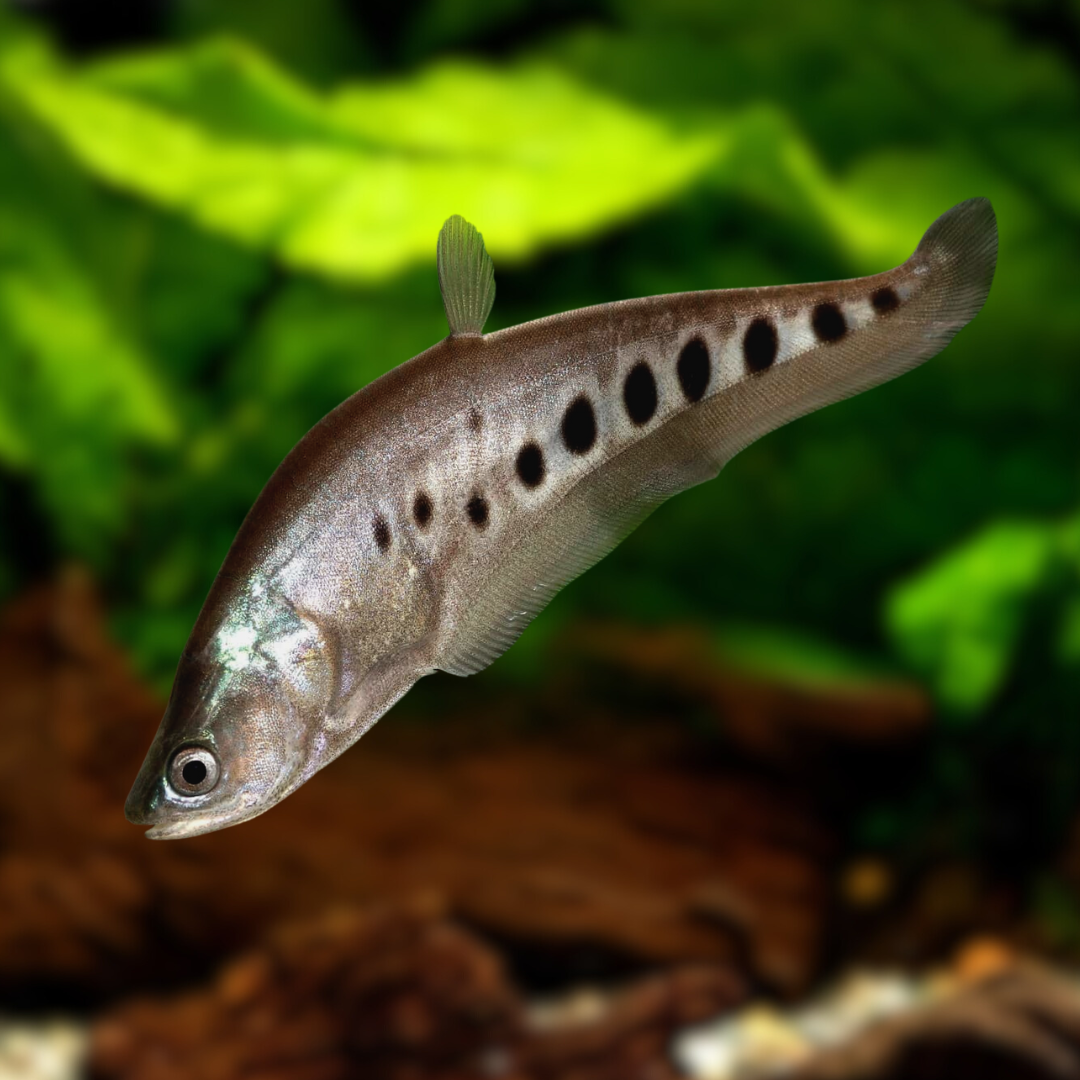
スポッテッドナイフフィッシュは、東南アジア原産の大型肉食魚で、薄く側扁した体と、腹側から尾まで続く長い臀びれを波打たせるように泳ぐ姿が印象的な古代魚です。幼魚は比較的安価に流通することがありますが、成長すると非常に大きくなり、終生飼育には大型水槽と強力なろ過設備が必要になります。見た目の美しさだけでなく、夜行性の性質、肉食性、薬品への弱さを理解したうえで迎えることが大切です。The clown knifefish, also known as the spotted knifefish, is a large predatory freshwater fish from Southeast Asia. It is known for its laterally compressed body and elegant undulating swimming produced by its long anal fin. Although juveniles are often sold at affordable prices, adults require a very large aquarium, powerful filtration, and long-term commitment. Its nocturnal behavior, carnivorous diet, and sensitivity to medications must be understood before keeping this species.
アロワナ目 ナギナタナマズ科 チタラ属Order Osteoglossiformes, family Notopteridae, genus Chitala
英名 / English Name
Clown Knifefish / Spotted Knifefish
分布 / Distribution
タイ、ラオス、カンボジア、ベトナムなど、メコン川・チャオプラヤ川・メークロン川流域を中心とした東南アジアの淡水域に分布します。Native to freshwater systems in Southeast Asia, including the Mekong, Chao Phraya, and Mae Klong river basins in Thailand, Laos, Cambodia, and Vietnam.
最大体長 / Max Size
自然下では1m前後に達することがあります。水槽内では50〜60cm程度で成長が落ち着くことも多いものの、十分な奥行きのある大型水槽が必要です。Can reach around 1 m in the wild. In aquariums, many individuals remain around 50–60 cm, but a large tank with enough turning space is still required.
寿命 / Lifespan
適切に飼育すれば10年以上生きることがあり、短期的な飼育ではなく長く付き合う魚として考える必要があります。Can live for more than 10 years with proper care, so it should be regarded as a long-term commitment.
飼育環境 / Aquarium Environment
水槽サイズ / Tank Size
幼魚のうちは90cm規格水槽でも管理できますが、成長は早く、成魚では最低ラインとして120cmワイド水槽以上を視野に入れます。個体サイズによってはさらに大型の水槽や屋内池に近い設備が望ましく、横幅だけでなく奥行き60cm以上を確保することが重要です。Juveniles can be started in a standard 90 cm tank, but they grow quickly. For adults, a 120 cm wide tank should be considered a minimum starting point, and larger aquaria or indoor pond-like setups may be preferable depending on the individual size. At least 60 cm of depth is important for turning space.
水温 / Temperature
24〜28℃前後を目安に安定させます。白点病などを防ぐ意味でも、急な水温低下を避け、25〜26℃以上を保つと管理しやすい魚です。Maintain the temperature around 24–28°C. Avoid sudden drops, and keeping it above about 25–26°C helps reduce stress and disease risk.
水質 / Water Quality
pH6.0〜8.0前後を目安に、極端に酸性へ傾かない安定した水質を維持します。肉食魚で水を汚しやすいため、強力なろ過と定期的な換水を前提に飼育することが大切です。Aim for stable water around pH 6.0–8.0, avoiding extreme acidification. Because this predatory fish produces heavy waste, powerful filtration and regular water changes are essential.
レイアウト / Layout
夜行性で臆病な面があるため、大型流木、土管、塩ビ管など、体を隠せる広いシェルターを用意します。明るすぎる照明や過度に複雑な障害物は避け、泳ぐ空間と隠れる場所の両方を確保すると落ち着きやすくなります。Provide spacious shelters such as large driftwood, ceramic pipes, or PVC tubes. Keep open swimming space while offering hiding places, and avoid overly bright lighting or cluttered layouts.
注意点 / Precautions
幼魚は手に取りやすい価格で流通しますが、成魚は大型化し、ろ過設備や床の耐荷重も含めた準備が必要になります。飼いきれなくなった個体を野外へ放すことは、生態系への影響につながるため絶対に避けなければなりません。Juveniles are often inexpensive, but adults require large equipment and serious planning, including floor load considerations. Never release unwanted individuals into the wild, as this can harm local ecosystems.
餌と給餌 / Feeding
餌の種類 / Diet
肉食性で、小魚、エビ、冷凍赤虫、冷凍エビなどをよく食べます。長期飼育では栄養バランスと管理のしやすさを考え、大型肉食魚用の人工飼料へ慣らしていくのが理想です。A carnivorous species that accepts small fish, shrimp, frozen bloodworms, and frozen shrimp. For long-term care, training it onto high-quality pellets for large predatory fish is recommended.
給餌のポイント / Feeding Tips
導入直後は生餌や冷凍餌に反応しやすい一方、人工飼料には警戒する個体もいます。消灯前後の落ち着いた時間に給餌し、クリルや冷凍餌の匂いを利用しながら少しずつ人工飼料へ移行すると成功しやすくなります。一度人工飼料に慣れた後は、生餌へ戻しすぎないことが重要です。Newly introduced fish often respond better to live or frozen foods than pellets. Feeding near lights-out and using the scent of shrimp or frozen foods can help transition them to prepared diets. Once trained onto pellets, avoid overusing live food again.
性格と混泳 / Temperament and Tank Mates
性格 / Temperament
基本的には夜行性で、日中は物陰に隠れて過ごすことが多い魚です。大型肉食魚らしい捕食性を持つ一方、環境に慣れるまでは神経質な面もあるため、導入初期は強い照明や過度な干渉を避けると安心です。Mostly nocturnal and often hides during the day. It is predatory but can be shy, especially when newly introduced, so avoid intense lighting and excessive disturbance at first.
混泳の相性 / Compatibility
口に入るサイズの魚やエビは捕食されるため混泳できません。同程度以上の大きさを持つ大型魚とは混泳できる場合がありますが、同種同士やナイフフィッシュ類同士では争うことがあるため注意が必要です。混泳ではサイズ差、遊泳層、夜間の行動をよく観察することが大切です。Small fish and shrimp will be eaten. It may coexist with similarly sized large fish, but individuals of the same species or other knifefish can fight. Carefully monitor size differences, swimming levels, and nighttime behavior.
病気と対策 / Diseases and Prevention
かかりやすい病気 / Common Diseases
白点病、水質悪化による肌荒れ、導入時のストレスによる食欲不振に注意します。本種は体表がデリケートで、特に色素系の魚病薬に弱いとされるため、一般的な熱帯魚と同じ感覚で投薬しないことが重要です。Watch for ich, skin irritation caused by poor water quality, and appetite loss after introduction. This species has a delicate body surface and is considered sensitive, especially to dye-based fish medications, so do not medicate it as casually as common community fish.
対策と予防 / Prevention
予防の基本は、水温を安定させ、強力なろ過と週1回程度の換水で水質を保つことです。白点病の初期には、まず水温管理や換水など環境改善を優先し、薬を使う場合は古代魚への使用可否と濃度を慎重に確認します。新しい魚を入れる前にトリートメント期間を設けておくと安心です。Prevention starts with stable temperature, strong filtration, and regular weekly water changes. For early ich symptoms, prioritize environmental correction such as temperature control and water changes. If medication is needed, confirm safety and dosage carefully for sensitive ancient fish. Quarantine new fish whenever possible.
増やし方(繁殖) / Breeding
雌雄の判別 / Sexing
外見だけで雌雄を正確に見分けるのは難しく、一般的な飼育環境では判別が容易な魚ではありません。Sexing is difficult by external appearance alone and is not easy in typical home aquariums.
繁殖形態 / Reproduction
卵生です。原産地や養殖環境では繁殖が行われていますが、成魚の大きさやペア形成、産卵場所の確保を考えると、家庭水槽での繁殖は難易度が高い魚です。An egg-laying species. It is bred in farms and in its native region, but home breeding is difficult due to adult size, pair formation, and the need for suitable spawning sites.
繁殖のポイント / Breeding Tips
家庭で繁殖を狙う場合は、非常に大きな水槽、安定した水質、相性のよい成魚ペア、落ち着いた産卵場所が必要になります。一般的には観賞魚店で流通する養殖個体を入手する魚と考えるのが現実的です。Breeding would require a very large aquarium, stable water, a compatible adult pair, and secure spawning sites. For most aquarists, it is more realistic to obtain farm-bred juveniles from aquarium shops.
雑学と豆知識 / Trivia and Fun Facts
1. 「ナマズ」ではないナギナタナマズ / 1. A knifefish that is not a catfish
和名ではナギナタナマズと呼ばれることがありますが、分類上はナマズ目ではなくアロワナ目に含まれます。アロワナやピラルクーと同じく、古い系統の特徴を残す魚として扱われるため、一般的な小型熱帯魚とは体のつくりや扱い方が大きく異なります。名前の印象だけで判断せず、大型古代魚として準備することが大切です。Although it is sometimes called “naginata-namazu” in Japanese, it is not a catfish. It belongs to Osteoglossiformes, the same order as arowanas and arapaima. Its biology and husbandry differ greatly from typical small tropical fish, so it should be prepared for as a large ancient fish.
2. 体側の模様が名前の由来 / 2. Its spots inspired the name
種小名のornataは「装飾された」という意味を持ち、体の後方に並ぶ大きな眼状斑が名前の由来とされています。この模様は幼魚のころから目立ち、成長して体が大きくなるほど存在感が増していきます。ゆったり泳ぐ姿と眼状斑の組み合わせが、本種ならではの観賞価値につながっています。The species name ornata means “decorated,” referring to the large eye-like markings along the rear part of the body. These spots are visible from a young age and become increasingly impressive as the fish grows, contributing to its strong ornamental appeal.
3. 波打つヒレで前にも後ろにも泳ぐ / 3. Swimming forward and backward with a ribbon-like fin
スポッテッドナイフフィッシュの泳ぎは、体全体を強く振るというより、長い臀びれを波のように動かして進むのが特徴です。この動きによって前進だけでなく、後退やその場での微調整も行いやすく、夜間に障害物の多い環境を移動するのに適した体になっています。大きくなっても泳ぎ方は優雅ですが、方向転換には広い空間が必要です。Rather than swinging the whole body strongly, this fish moves by undulating its long anal fin like a ribbon. This allows it to move forward, backward, and hover with precision, which is useful in complex nighttime habitats. Even as an adult it swims gracefully, but it still needs ample turning space.
4. 原産地では食用魚としても重要 / 4. An important food fish in its native range
日本では観賞魚として知られていますが、東南アジアでは食用魚としても利用されます。タイなどではすり身にして魚団子や揚げ物に使われることがあり、地域の食文化にも深く関わる魚です。観賞魚としての姿だけでなく、原産地の暮らしと結びついた魚である点も興味深いところです。In Japan it is mainly known as an aquarium fish, but in Southeast Asia it is also used as a food fish. In Thailand, its flesh may be processed into fish balls or fried fish cakes, making it part of local food culture as well as the aquarium trade.
5. 放流してはいけない大型魚 / 5. A large fish that must never be released
本種は成長すると持て余されやすい一方、温暖な地域では外来魚として問題になる可能性があります。海外では観賞魚の放流が定着の一因とされる例もあり、大型魚を飼う責任を考えるうえで重要な魚です。購入前に、最終サイズ、設備、寿命、引き取り先に頼らない終生飼育の見通しを立てておく必要があります。Because it grows large, unwanted individuals may become a problem if released, especially in warm regions. In some countries, aquarium releases are considered one cause of established non-native populations. Before purchase, plan for adult size, equipment, lifespan, and lifelong responsibility.
まとめ / Conclusion
スポッテッドナイフフィッシュは、独特な体型と優雅な泳ぎ、眼状斑の美しさが魅力の大型古代魚です。幼魚は入手しやすい魚ですが、成長後は少なくとも120cmワイド水槽級、できればさらに余裕のある設備を視野に入れる必要があり、ろ過、餌、水質管理にも相応の手間がかかります。The clown knifefish is a fascinating large ancient fish with a unique body shape, graceful swimming, and striking eye-like markings. Juveniles are easy to obtain, but adults require serious equipment, including a large tank, strong filtration, and careful feeding and water management.
本種を飼育するなら、安価な幼魚としてではなく、長く付き合う大型肉食魚として迎える意識が欠かせません。十分な水槽スペース、安定した水質、人工飼料への餌付け、薬品に頼りすぎない予防管理を整えれば、その存在感と古代魚らしい魅力をじっくり楽しめる魚です。This species should not be treated merely as an inexpensive juvenile, but as a large predatory fish requiring long-term commitment. With enough space, stable water, successful pellet training, and careful preventive care, it can become an impressive and rewarding centerpiece fish.
Fricke, R., Eschmeyer, W. N. and van der Laan, R. Editors. Eschmeyer’s Catalog of Fishes. Chitala ornata (Gray, 1831). California Academy of Sciences. 参照日:2026年5月18日.
学名、命名者、分類上の有効性、分布情報を確認するために参照しました。
IUCN Red List. Vidthayanon, C. Chitala ornata, Ocellated Featherback. The IUCN Red List of Threatened Species. 参照日:2026年5月18日.
保全状況が低懸念(LC)とされている点、および原産地における分布情報を確認するために参照しました。



 アイのアクアグッズ案内お魚を撮ったのに、ボクが写ってる! スマホで楽しむ水槽撮影と便利な道具道具の特徴や使い方、選ぶときのポイントをアイが紹介します。記事はコチラ →
 アイのアクアグッズ案内エーハイムはおもちゃから始まった? 小さな噴水から水槽へ、アイとコタロウの探訪道具の特徴や使い方、選ぶときのポイントをアイが紹介します。記事はコチラ →




コメント