

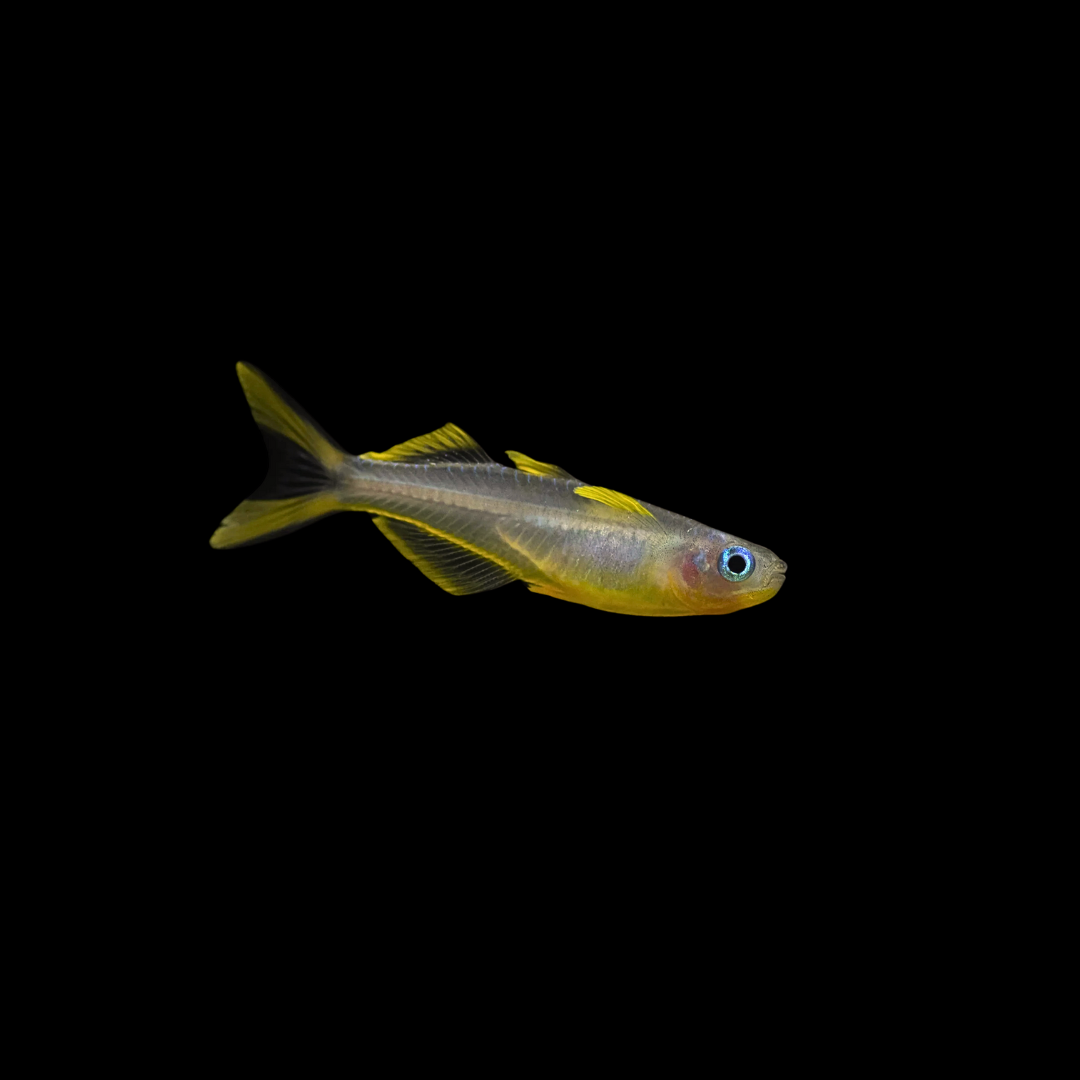
▶ 記事の生体をAMAZONで買う ▶ 記事の生体をYahooで買う
解説 / Description
ポポンデッタ・フルカタは、パプアニューギニア東部に分布する小型のブルーアイ系レインボーフィッシュです。青く輝く眼、黄色く縁取られたヒレ、二又に分かれたように見える尾ビレが特徴で、水草水槽の中を群れで泳がせるとよく映えます。日本では旧属名に由来する「ポポンデッタ」の名前で広く流通していますが、現在の学名はPseudomugil furcatusです。性格は温和で飼育しやすい一方、よく泳ぎ、驚いた拍子に飛び出すこともあります。寿命もやや短めなので、余裕のある水槽で水質を安定させ、複数匹の群れで維持する飼い方が向いています。 Pseudomugil furcatus is a small blue-eye rainbowfish from eastern Papua New Guinea. Its bright blue eyes, yellow-edged fins, and forked-looking tail make it especially attractive in planted aquariums, where it shows its best charm as an active schooling fish. In Japan it is still widely sold under the old trade name “Popondetta,” although its currently accepted scientific name is Pseudomugil furcatus. It is peaceful and generally easy to keep, but it is also very active, prone to jumping, and relatively short-lived, so it benefits from a spacious covered aquarium, stable water quality, and group keeping.
基本情報 / Basic Information
| 学名 / Scientific Name | Pseudomugil furcatus |
|---|---|
| 通称 / Common Name | ポポンデッタ・フルカタ、ポポンデッタ・フルカトゥス、フォークテール・ブルーアイForktail blue-eye, forktail rainbowfish |
| 分類 / Family | トウゴロウイワシ目 プセウドムギル科 プセウドムギル属Order Atheriniformes, family Pseudomugilidae, genus Pseudomugil |
| 英名 / English Name | Forktail Blue-eye |
| 分布 / Distribution | パプアニューギニア東部に分布します。ポポンデッタ南東部のSufia Valley周辺など、比較的限られた地域の小河川に生息する淡水魚として知られます。Eastern Papua New Guinea. It is regarded as a restricted-range freshwater fish from small streams around the Sufia Valley area southeast of Popondetta. |
| 最大体長 / Max Size | 最大で全長5〜6cmほどになります。流通個体では4cm前後のサイズで見かけることが多いです。Up to about 5–6 cm in total length. Aquarium specimens are often seen at around 4 cm. |
| 寿命 / Lifespan | 寿命はおおむね2〜3年ほどです。水質の悪化や導入時のストレスが重なると短くなりやすいため、1匹を長く飼い込む魚というより、群れとして安定して維持する意識が大切です。Usually around 2–3 years. Poor water quality or stressful acclimation can shorten its lifespan, so it is best maintained as a breeding group rather than as single long-lived individuals. |
飼育環境 / Aquarium Environment
| 水槽サイズ / Tank Size | 小型魚ですが遊泳力が高いため、少数でも45cm水槽以上は用意したいところです。8〜10匹以上の群れで飼う場合は、60cm規格水槽以上を基本にすると、泳ぎや群れでの行動を観察しやすくなります。Although small, it is a very active swimmer. A 45 cm aquarium is the practical minimum for a small group, while a standard 60 cm aquarium or larger is recommended for groups of 8–10 or more. |
|---|---|
| 水温 / Temperature | 22〜28℃で飼育できます。通常は24〜27℃前後を保つと管理しやすく、高温が長く続く時期は酸欠や水質悪化を防ぐ意識が必要です。 22–28°C. For routine care, keeping the water stable at around 24–27°C is suitable. During prolonged high temperatures, watch for low oxygen and declining water quality. |
| 水質 / Water Quality | 弱酸性から弱アルカリ性まで適応しますが、流通している個体は、中性付近から弱アルカリ性で、ある程度ミネラルを含む水のほうが安定しやすい傾向があります。目安はpH6.5〜8.0、GH5〜15程度です。数値を無理に合わせるより、水質を急変させない管理を意識することが大切です。It can adapt from slightly acidic to slightly alkaline water, but captive-bred aquarium strains often do well in neutral to slightly alkaline water with some mineral content. A useful guide is pH 6.5–8.0 and GH 5–15. Stability is more important than chasing exact numbers. |
| レイアウト / Layout | 水草を多めに植えたレイアウトと相性がよい魚です。細かい葉の水草や浮草は、隠れ場所や産卵場所としても役立ちます。前面には泳ぐための空間を残し、暗めの底床を使うと黄色いヒレと青い眼が引き立ちます。水流は強くしすぎず、ろ過は安定性を重視して組むと管理しやすくなります。It is well suited to planted aquariums. Fine-leaved plants and floating plants help the fish feel secure and may serve as spawning sites. Leave open swimming space at the front, and a darker substrate can enhance the yellow fins and blue eyes. Use moderate flow and prioritize stable filtration. |
| 注意点 / Precautions | もっとも注意したいのは飛び出しです。水面近くをよく泳ぎ、驚いた時やオス同士が追い合った時に跳ねることがあるため、フタは必須と考えてください。また、輸入直後や購入直後の個体は体力を落としている場合があるため、水合わせを丁寧に行い、導入初期は特に水質を汚さない管理が重要です。The most important precaution is jumping. It often swims near the surface and may leap when startled or during male displays, so a secure lid is essential. Newly imported or newly purchased fish may be weakened, so careful acclimation and clean water during the first weeks are important. |
餌と給餌 / Feeding
| 餌の種類 / Diet | 小型魚用の人工飼料、細かく砕いたフレーク、マイクロペレット、冷凍または活きのブラインシュリンプ、ミジンコ、細かな冷凍飼料などが使えます。口が小さく、やや上向きについているため、粒の大きすぎる餌は避ける必要があります。Feed small prepared foods, finely crushed flakes, micro pellets, frozen or live brine shrimp, daphnia, and other fine frozen foods. Its mouth is small and slightly upturned, so avoid food particles that are too large. |
|---|---|
| 給餌のポイント / Feeding Tips | 一度にたくさん与えるより、食べ切れる量を少量ずつ与えるのが向いています。活発に泳ぐため餌への反応は良い一方、残餌が出ると水質を崩しやすくなります。繁殖を狙う場合は、ブラインシュリンプなど栄養価の高い餌も組み合わせ、親魚のコンディションを整えておくことが重要です。Small, frequent feedings are better than large meals. It usually feeds actively, but leftover food can quickly affect water quality. For breeding, condition the adults with nutritious foods such as brine shrimp. |
性格と混泳 / Temperament and Tank Mates
| 性格 / Temperament | 温和な性格で、同種同士では群れを作ってよく泳ぎます。オスはヒレを広げてメスやほかのオスにアピールすることがありますが、深刻な争いになることは多くありません。単独や少数での飼育では落ち着きにくいため、発色や泳ぎの魅力を引き出すには複数匹での飼育が基本です。It is peaceful and highly social, swimming actively in groups. Males display to each other by spreading their fins, but serious aggression is uncommon. When kept singly or in very small numbers, it may become nervous and show poorer color and behavior. |
|---|---|
| 混泳の相性 / Compatibility | 小型テトラ、ラスボラ、小型レインボーフィッシュ、コリドラス、小型のハゼ類など、温和でサイズの近い魚と混泳できます。泳ぎが速く餌取りも早いため、極端に動きの遅い魚や、長いヒレを持つ魚との組み合わせは慎重に考える必要があります。口に入るサイズの稚エビや稚魚は食べられる可能性があります。It can be kept with peaceful, similarly sized fish such as small tetras, rasboras, small rainbowfish, Corydoras, and small gobies. Because it is fast and feeds quickly, be cautious with very slow-moving fish or long-finned species. Tiny shrimp fry or fish fry may be eaten. |
病気と対策 / Diseases and Prevention
| かかりやすい病気 / Common Diseases | 白点病、尾ぐされ病、水カビ、導入初期の衰弱などに注意が必要です。特定の病気に極端に弱いというより、水質悪化、急な水質変化、輸送疲れが重なると体調を崩しやすいタイプです。流通個体では、まれに体型の乱れや骨格異常が見られることもあります。Watch for ich, fin rot, fungal infections, and weakness after introduction. Rather than being vulnerable to one specific disease, it tends to suffer when poor water quality, sudden parameter changes, and transport stress overlap. Some aquarium strains may occasionally show body-shape or skeletal abnormalities. |
|---|---|
| 対策と予防 / Prevention | 導入時は水合わせを丁寧に行い、購入直後は過密を避けて清潔な水で落ち着かせます。定期的な少量換水、安定した水温、強すぎない水流、栄養バランスの良い餌が予防の基本です。長く群れを維持する場合は、明らかに体型や泳ぎに異常のある個体を繁殖親に使わない意識も必要です。Acclimate carefully and avoid crowding newly purchased fish. Clean water, regular small water changes, stable temperature, moderate flow, and a varied diet are the foundation of prevention. For long-term colony maintenance, avoid using visibly abnormal fish as breeders. |
増やし方(繁殖) / Breeding
| 雌雄の判別 / Sexing | オスは黄色い発色が強く、背ビレや尻ビレが伸びます。ヒレを広げてメスやほかのオスにアピールする姿もよく見られます。メスはオスより体色が控えめで、ヒレの伸びも少なく、腹部に丸みが出やすい傾向があります。Males show stronger yellow coloration, longer dorsal and anal fins, and display actively to females and rival males. Females are more subdued in color, have shorter fins, and often appear rounder in the belly. |
|---|---|
| 繁殖形態 / Reproduction | 繁殖形態は卵散布型です。水草や産卵モップに、粘着性のある卵を少しずつ産みつけます。親魚は卵や稚魚を守らず、見つけると食べてしまうことがあるため、確実に増やしたい場合は卵や産卵モップを別容器へ移す必要があります。It is an egg-scattering species. Females deposit adhesive eggs among fine plants or spawning mops. Adults do not guard the eggs or fry and may eat them, so moving eggs or spawning mops to a separate container improves success. |
| 繁殖のポイント / Breeding Tips | オス1匹に対してメス2匹前後を目安にすると、メスへの追い回しを分散しやすくなります。親魚にはブラインシュリンプなどを与えて状態を整え、細かな水草や産卵モップを用意します。卵は水温によって数日から十数日で孵化します。稚魚の初期飼料はインフゾリアや微細な稚魚用フードが中心で、成長後は湧かしたてのブラインシュリンプへ切り替えていくと育てやすくなります。A ratio of about one male to two females helps spread male attention. Condition adults with foods such as brine shrimp, and provide fine plants or spawning mops. Depending on temperature, eggs hatch after several to around ten days or more. Fry should be started on infusoria or very fine fry food, then moved onto newly hatched brine shrimp as they grow. |
雑学と豆知識 / Trivia and Fun Facts
| 1. 「ポポンデッタ」は旧名として残った流通名 / 1. “Popondetta” remains as an old trade name | 本種は、かつてPopondetta属やPopondichthys属として扱われていた時期があります。現在はPseudomugil属に整理されていますが、日本の観賞魚流通では、旧名に由来する「ポポンデッタ」という呼び名が今も広く使われています。店頭でよく見る名前と現在の学名が少しずれている魚の一例です。This species was once placed in Popondetta and Popondichthys. It is now placed in Pseudomugil, but the old name “Popondetta” remains deeply established in the Japanese aquarium trade. It is a good example of a fish whose trade name and current scientific classification do not perfectly match. |
|---|---|
| 2. 種小名furcatusは「二又に分かれた」という意味 / 2. The name furcatus refers to a forked shape | 学名のfurcatusは、ラテン語で「二又に分かれた」「フォーク状の」といった意味を持ちます。本種の尾ビレは上下が黄色と黒で縁取られ、中央が透けて見えるため、泳いでいる姿では尾がフォークのように強調されます。英名のForktail Blue-eyeも、この尾ビレの形と青い眼に由来する名前です。The species name furcatus means forked or divided into two. Its tail is edged in yellow and black while the middle remains relatively transparent, making the tail look distinctly forked in motion. The English name Forktail Blue-eye directly reflects this tail shape and its blue eyes. |
| 3. 青い眼と黄色いヒレは水草水槽でよく映える / 3. Blue eyes and yellow fins stand out in planted tanks | ポポンデッタ・フルカタの魅力は、派手な体色というより、動きの中で光る青い眼と黄色いヒレにあります。特に水草の緑や暗めの底床を背景にすると、オスがヒレを広げてアピールする姿がよく目立ちます。強い赤や青で目を引くタイプではありませんが、群れで泳がせることで水景に軽やかな動きが生まれる魚です。The appeal of Pseudomugil furcatus is not a solid bright body color, but the way its blue eyes and yellow pectoral fins flash as it moves. Against green aquatic plants and a darker substrate, males displaying with spread fins become especially noticeable. It is not a fish that relies on bold red or blue body color, but a group adds lively movement to an aquascape. |
| 4. 流通個体は累代繁殖が中心 / 4. Aquarium specimens are mainly captive-bred | 現在日本で見かけるポポンデッタ・フルカタは、野生採集個体よりも累代繁殖個体が多いと考えられます。入手しやすい一方で、同じ系統で長く殖やされてきた背景から、体型の乱れや弱さが話題になることもあります。購入時は体型、泳ぎ方、ヒレの状態をよく確認し、状態の良い個体を選ぶことが大切です。Most aquarium specimens are regarded as captive-bred rather than wild-caught. This helps make the species widely available, but long-term breeding within limited lines may also be linked to concerns about deformities or weakness. When buying, check body shape, swimming behavior, and fin condition carefully. |
| 5. 長く楽しむコツは「個体」より「群れ」を維持すること / 5. Long-term enjoyment means maintaining a group, not just individuals | 本種は寿命がそれほど長くないため、1匹を長く飼い込むというより、繁殖も視野に入れながら群れで楽しむタイプの魚です。産卵モップや細かな水草を入れておくと産卵が見られることがあり、卵を隔離して稚魚を育てれば、自分の水槽内で群れを受け継いでいく楽しみも生まれます。Because this species is not especially long-lived, it is better understood as a fish to enjoy as a continuing group rather than as single individuals kept for many years. With spawning mops or fine-leaved plants, spawning may occur, and separating eggs to raise fry allows the aquarist to maintain a self-sustaining colony. |
まとめ / Conclusion
ポポンデッタ・フルカタは、青い眼と黄色いヒレ、軽やかな群泳が魅力の小型美魚です。水草水槽との相性がよく、性格も温和なため混泳にも向いています。ただし、見た目以上によく泳ぐ魚なので、十分な遊泳スペースを確保することが必要です。60cm規格水槽以上を用意し、フタをしっかり設置しておくと、より安全に本来の行動を楽しめます。 Pseudomugil furcatus is a small and beautiful fish valued for its blue eyes, yellow fins, and lively schooling behavior. It suits planted aquariums and peaceful community tanks, but it needs more swimming space than its size suggests. A standard 60 cm aquarium or larger with a secure lid allows its natural behavior to be enjoyed more safely.
飼育では、水質を極端に調整するよりも安定させること、口に合う細かな餌をバランスよく与えること、そして複数匹で落ち着かせることが重要です。寿命は比較的短めですが、繁殖を視野に入れて群れとして維持すれば、ポポンデッタ・フルカタならではの美しいディスプレイと世代交代の楽しみを長く味わえます。 For successful care, stable water quality, suitably small and varied foods, and group keeping are more important than extreme water adjustment. Although the species is relatively short-lived, maintaining it as a breeding group can provide long-term enjoyment of its displays and generational continuity.

気になる道具や飼い方を見つけてみませんか?
 アイのアクアグッズ案内プレコ飼育に必要なもの|餌・流木・ろ過・隠れ家・掃除用品道具の特徴や使い方、選ぶときのポイントをアイが紹介します。記事はコチラ →
 アイのアクアグッズ案内水草用ライトの選び方|緑の絨毯と赤い水草を楽しむ照明・植栽用品道具の特徴や使い方、選ぶときのポイントをアイが紹介します。記事はコチラ →
さまざまな飼育テーマをご紹介。リンク先の記事には広告・商品紹介が含まれます。
案内・紹介記事一覧へ →参考文献・参照資料
本記事では、ポポンデッタ・フルカタの分類、分布、保全状況、飼育環境、繁殖に関する記述を確認するため、以下の資料を参照しました。
-
Froese, R. and Pauly, D. Editors. FishBase. Pseudomugil furcatus Nichols, 1955, Forktail rainbowfish. FishBaseでは、本種の分類、分布、水質範囲、最大体長、生息環境、IUCN評価などの基礎情報を確認しました。
https://www.fishbase.se/Summary/SpeciesSummary.php?id=10530 -
Fricke, R., Eschmeyer, W. N. and Van der Laan, R. Editors. Eschmeyer’s Catalog of Fishes. Pseudomugil furcatus Nichols, 1955. California Academy of Sciences. 現在の有効学名、原記載、旧属名との関係、分布情報の確認に参照しました。
https://researcharchive.calacademy.org/research/ichthyology/catalog/fishcatget.asp?spid=14185 -
Palmer-Newton, A. 2020. Pseudomugil furcatus. The IUCN Red List of Threatened Species 2020: e.T18545A162322140. 本種の保全状況がData Deficientとされている点の確認に参照しました。
https://www.iucnredlist.org/species/18545/162322140 -
Department of Climate Change, Energy, the Environment and Water, Australian Government. A report to address the “Terms of Reference” for an application to include 8 fish onto the allowable live imports list under the provisions of Section 303 EB, Environment Protection Biodiversity Conservation Act, 1999. Pseudomugil類の保全状況、分布情報、輸入リスク評価の文脈を確認するために参照しました。
https://www.dcceew.gov.au/sites/default/files/documents/8-species-rainbow-fish-applicants-assessment.pdf -
Aquarium Glaser GmbH. Pseudomugil furcatus formerly Popondetta furcata. 流通名、最大サイズ、Sufia Valley周辺の分布、累代繁殖個体が中心とされる流通状況、水温や餌に関する実用情報を確認しました。
https://www.aquariumglaser.de/en/17-rainbow-fishes-and-co/pseudomugil-furcatus-formerly-popondetta-furcata/ -
Seriously Fish. Pseudomugil furcatus Nichols, 1955, Forktail Blue-eye. 飼育水槽、混泳、餌、繁殖、旧学名・シノニムに関する実用的な記述の確認に参照しました。
https://www.seriouslyfish.com/species/pseudomugil-furcatus/ - Nichols, J. T. 1955. Results of the Archbold Expeditions. No. 71. Two new fresh-water fishes from New Guinea. American Museum Novitates, No. 1735: 1-6. 本種の原記載に関する文献として参照しました。
- Saeed, B., Ivantsoff, W. and Allen, G. R. 1989. Taxonomic revision of the family Pseudomugilidae (Order Atheriniformes). Australian Journal of Marine and Freshwater Research, 40(6): 719-787. プセウドムギル科の分類整理に関する主要文献として参照しました。
参照日:2026年5月16日





コメント