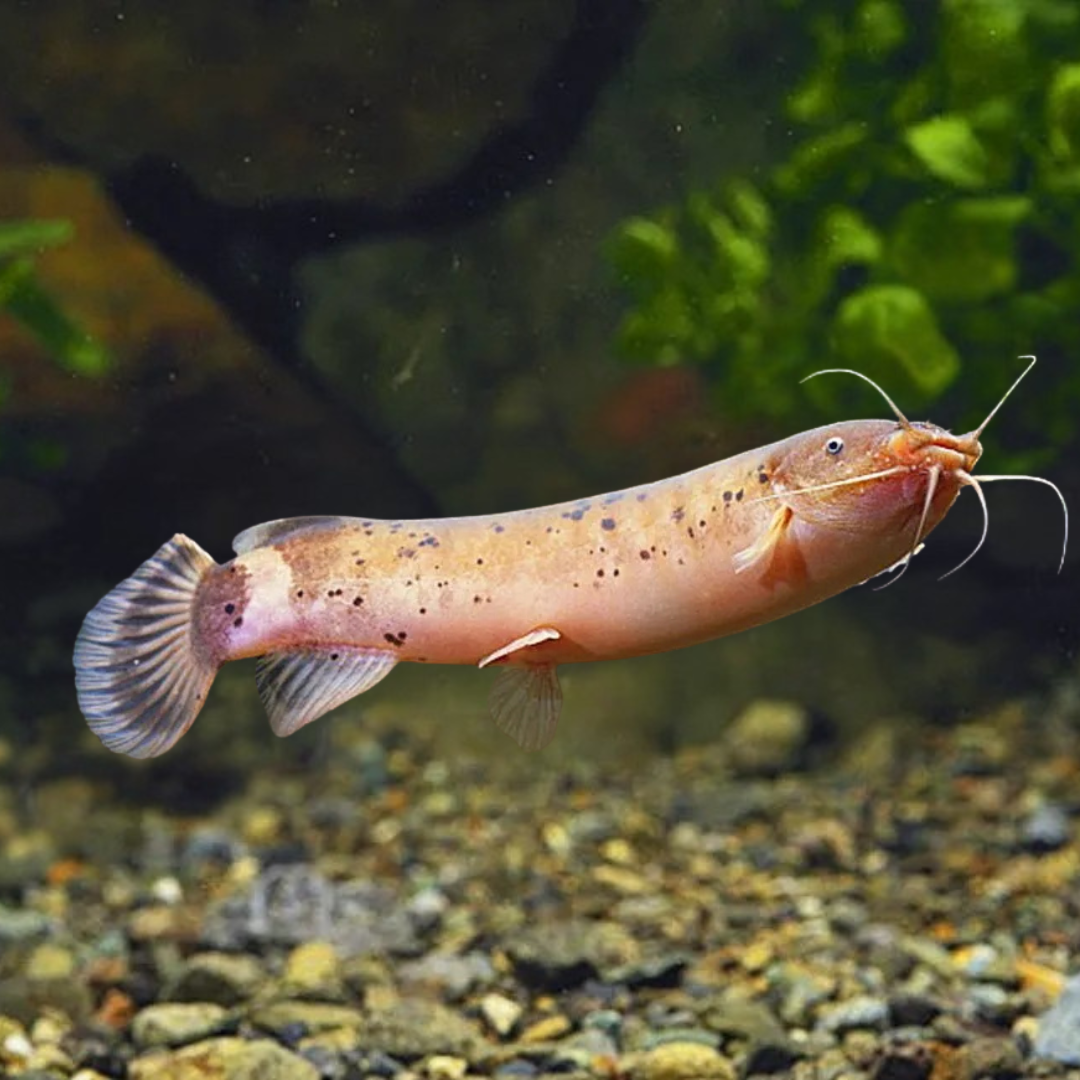
デンキナマズは、アフリカの淡水域に分布するデンキナマズ科の大型ナマズで、観賞魚としては主に Malapterurus electricus として扱われます。皮膚の直下に発電器官を持ち、捕食、防御、周囲の状況把握のために電気を利用することで知られています。丸みのある体つきと愛嬌のある顔立ちから観賞魚として流通することがありますが、家庭で扱う魚としては極めて特殊で、感電事故、火傷、混泳魚への被害、終生飼育に必要な大型設備を十分に理解したうえで迎える必要があります。The electric catfish is a large African catfish belonging to the family Malapteruridae, and in the aquarium trade it is mainly treated as Malapterurus electricus. It is known for using electricity from an electric organ located beneath the skin for predation, defense, and sensing its surroundings. Although its rounded body and charming expression make it attractive to some aquarists, it is an extremely specialized aquarium fish that requires a full understanding of electric shock risks, heater burns, incompatibility with tank mates, and the large facilities needed for lifelong care.
基本情報 / Basic Information
学名 / Scientific Name
Malapterurus electricus
通称 / Common Name
デンキナマズElectric catfish
分類 / Family
ナマズ目 デンキナマズ科Order Siluriformes, family Malapteruridae
英名 / English Name
Electric Catfish
分布 / Distribution
ナイル川水系、コンゴ川、ニジェール川、チャド湖、タンガニーカ湖周辺など、アフリカの熱帯淡水域に分布します。流通個体はアフリカ西部・中部から輸入されるワイルド個体が中心です。Distributed in tropical freshwater habitats of Africa, including the Nile system, Congo River, Niger River, Lake Chad, and areas around Lake Tanganyika. Aquarium specimens are mainly wild-caught fish imported from West and Central Africa.
最大体長 / Max Size
最大で1.2m前後に達する大型ナマズです。観賞魚として流通する個体は幼魚や若魚が多いものの、成長後の大きさを前提に飼育計画を立てる必要があります。A large catfish that may reach around 1.2 m. Aquarium specimens are often sold as juveniles or young fish, but care planning must be based on their adult size.
寿命 / Lifespan
飼育下では10年前後が目安です。大型化する魚であるため、寿命の長さだけでなく、成長後も安全に維持できる設備を考えて迎える必要があります。Around 10 years in captivity is a general guideline. Because it grows large, the long-term ability to maintain it safely is more important than simply considering lifespan.
飼育環境 / Aquarium Environment
水槽サイズ / Tank Size
幼魚期は成長に合わせた水槽で管理できますが、成魚まで見据えるなら最低でも750L以上、目安として180cmクラス以上の大型アクリル水槽が必要です。大型個体が驚いて暴れた際の破損リスクを考えると、ガラス水槽よりも強度のあるアクリル水槽を選ぶと安心です。Juveniles can be kept in tanks appropriate to their size, but keeping adults requires at least around 750 L, roughly a 180 cm class or larger acrylic aquarium. Acrylic is preferable to glass because large individuals may strike the tank when startled.
水温 / Temperature
22〜28℃前後を目安に管理します。急な水温変化は避け、ヒーターを使用する場合は魚が直接触れない構造にすることが重要です。Maintain the water at around 22–28°C. Sudden temperature changes should be avoided, and heaters must be installed so the fish cannot touch them directly.
水質 / Water Quality
強健な魚ですが、肉食性で水を汚しやすいため、強力なろ過と定期的な換水が必要です。極端な水質変化を避け、アンモニアや亜硝酸が蓄積しない清潔で安定した環境を作ることが大切です。Although hardy, it is carnivorous and produces heavy waste, so strong filtration and regular water changes are essential. Avoid extreme water-quality fluctuations and maintain a clean, stable environment with no accumulation of ammonia or nitrite.
レイアウト / Layout
夜行性で物陰を好むため、大型の塩ビパイプ、土管、角のない沈木などを使い、体を落ち着けられる隠れ家を用意します。鋭い石や不安定な流木は、暴れた際の擦り傷や設備破損につながるため避けたほうが安全です。As a nocturnal fish that prefers cover, provide large PVC pipes, caves, or smooth driftwood as secure hiding places. Sharp rocks and unstable driftwood should be avoided because they may cause injuries or damage when the fish moves suddenly.
注意点 / Precautions
最大の注意点は感電とヒーター火傷です。水槽内に手を入れる作業では、魚体に触れていなくても飼育水を通じて電気が伝わる可能性があります。掃除や移動の際は厚手の絶縁性手袋を使い、ヒーターはカバー付きにするか、可能であれば濾過槽内に設置することが必要です。The two major risks are electric shock and heater burns. Even without touching the fish directly, electricity may travel through the aquarium water. Thick insulating gloves are necessary during maintenance, and heaters should be protected with covers or installed in a sump whenever possible.
餌と給餌 / Feeding
餌の種類 / Diet
肉食性で、沈下性の大型肉食魚用人工飼料、冷凍エビ、ワカサギ、キビナゴなどに餌付きます。生き餌に頼りすぎると管理が難しくなるため、早い段階から冷凍飼料や人工飼料に慣らしておくと扱いやすくなります。It is carnivorous and accepts sinking pellets for large predatory fish, frozen shrimp, smelt, and similar foods. Relying too much on live food can complicate management, so conditioning the fish to prepared and frozen foods early is recommended.
給餌のポイント / Feeding Tips
食欲が強く、与えれば食べ続ける傾向があります。肥満や内臓への負担を避けるため、成長段階に合わせて量と頻度を調整し、成魚では毎日大量に与えない管理が重要です。ピンセット給餌を行う場合も、感電リスクを前提に慎重に作業する必要があります。It has a strong appetite and may continue eating if food is offered. To avoid obesity and internal stress, adjust food volume and frequency according to growth stage, and do not overfeed adults daily. Forceps feeding should also be done carefully with electric shock risk in mind.
性格と混泳 / Temperament and Tank Mates
性格 / Temperament
基本的には夜行性で、日中は隠れて過ごすことが多い魚です。一方で縄張り意識が強く、驚いた時や捕食時には強い放電を行います。見た目はおとなしく見えても、扱いは危険魚に近い意識で行う必要があります。It is mainly nocturnal and often hides during the day. However, it is territorial and can produce strong electric discharges when startled or feeding. Even if it appears calm, it should be handled with the caution given to dangerous fish.
混泳の相性 / Compatibility
混泳には向きません。ほかの魚は放電でショックを受ける可能性があり、サイズ差があれば捕食対象にもなります。同種同士でも争いや放電のリスクがあるため、基本的には単独飼育が原則です。It is not suitable for community tanks. Other fish may be harmed by electric discharges and may also be eaten if small enough. Even conspecifics can fight or discharge, so solitary keeping is the basic rule.
病気と対策 / Diseases and Prevention
かかりやすい病気 / Common Diseases
比較的丈夫な魚ですが、皮膚に鱗がないため、擦り傷、細菌感染、ヒーターによる火傷には注意が必要です。輸入直後の個体では、痩せ、擦れ、外部寄生虫、輸送ストレスによる不調が見られることがあります。It is generally hardy, but because it lacks scales, abrasions, bacterial infections, and heater burns require attention. Newly imported specimens may show weight loss, skin damage, external parasites, or stress-related problems.
対策と予防 / Prevention
尖ったレイアウトを避け、水質を安定させ、ヒーターに直接触れない構造を徹底します。薬浴を行う場合はナマズ類として薬に敏感な面を考慮し、濃度や処置時間を慎重に判断する必要があります。日常管理では、魚を驚かせない落ち着いた作業が予防につながります。Avoid sharp decorations, maintain stable water quality, and ensure the fish cannot contact the heater. When medicating, remember that catfish can be sensitive to treatments, so dosage and exposure time must be considered carefully. Calm maintenance that does not startle the fish is also an important preventive measure.
増やし方(繁殖) / Breeding
雌雄の判別 / Sexing
外見による雌雄判別は難しく、観賞魚として流通する個体で性別を確実に見分けることは一般的ではありません。Sexing by external appearance is difficult, and reliably determining sex in aquarium specimens is generally uncommon.
繁殖形態 / Reproduction
野生下では雨季や増水期に繁殖すると考えられ、巣穴を利用して産卵する可能性が報告されています。ただし、自然下での観察例は限られ、繁殖生態には不明な点が多く残されています。In the wild, breeding is thought to occur during the rainy or flood season, and spawning in burrows has been reported. However, direct observations are limited, and many aspects of its reproduction remain unclear.
繁殖のポイント / Breeding Tips
家庭水槽での繁殖は現実的ではありません。大型化、強い縄張り性、放電リスク、巣穴形成に必要な空間などを考えると、一般的な観賞魚のように繁殖を狙う魚ではないと考えるのが自然です。Breeding in a home aquarium is not realistic. Its large size, strong territoriality, electric discharge risk, and need for space for burrow-like nesting make it unsuitable for ordinary aquarium breeding attempts.
雑学と豆知識 / Trivia and Fun Facts
1. 電気をまとうナマズ / 1. A Catfish Wrapped in Electricity
デンキナマズの発電器官は、体表のすぐ下を広く覆うように発達しています。デンキウナギのように尾部に大きな発電器官が集中する魚とは異なり、体全体を包むような構造を持つため、丸みのある体つきそのものが特殊な生存戦略と結びついています。獲物を捕らえるためだけでなく、外敵から身を守るためにも電気を利用している点が、この魚の大きな特徴です。The electric organ of the electric catfish is broadly developed just beneath the skin. Unlike electric eels, in which major electric organs are concentrated toward the tail, electric catfish have a body-enveloping system. Their rounded form is therefore closely tied to a specialized survival strategy, using electricity not only to subdue prey but also to defend themselves.
2. 古代エジプトにも知られていた魚 / 2. A Fish Known Since Ancient Egypt
デンキナマズと人類の関わりは古く、古代エジプトのレリーフや記録にも、デンキナマズと考えられる魚が描かれていたとされています。目に見えない力で人を驚かせる魚は、当時の人々にとって単なる食用魚ではなく、神秘的で畏怖すべき生き物として受け止められていたのでしょう。The relationship between electric catfish and humans is very old, and fish considered to be electric catfish are thought to appear in ancient Egyptian reliefs and records. To people of that era, a fish that could shock humans with an invisible force was likely not just a food fish, but a mysterious and awe-inspiring creature.
3. 観賞魚としての魅力と責任 / 3. Appeal and Responsibility as an Aquarium Fish
デンキナマズは、ずんぐりした体型や表情から、どこか愛嬌のある魚に見えます。しかし、その印象だけで迎えると危険です。感電対策、単独飼育、大型水槽、ヒーター火傷の防止など、一般的な熱帯魚とはまったく異なる管理が求められます。飼育する場合は、珍しさを楽しむだけでなく、最後まで安全に管理する責任を持つことが重要です。With its stout body and expressive face, the electric catfish can appear surprisingly charming. However, it should never be acquired on appearance alone. Electric shock precautions, solitary housing, large tank requirements, and heater burn prevention make its care very different from that of ordinary tropical fish. Keeping it responsibly means managing it safely for its entire life, not merely enjoying its rarity.
まとめ / Conclusion
デンキナマズは、強い発電能力という唯一無二の特徴を持つ、非常に個性的なアフリカ産ナマズです。丈夫で餌付きやすい面はありますが、感電事故や混泳魚への被害を防ぐため、通常の大型魚以上に慎重な設備設計と管理が求められます。The electric catfish is a highly distinctive African catfish with the unique ability to produce strong electric discharges. Although hardy and often easy to feed, it requires more careful equipment planning and management than ordinary large fish to prevent electric shock accidents and harm to other fish.
飼育を検討する場合は、単独飼育を前提に、十分な水槽サイズ、強力なろ過、ヒーター火傷対策、メンテナンス時の絶縁対策を整えてから迎えることが大切です。珍しさだけで選ぶ魚ではなく、終生飼育と安全管理を引き受けられる飼育者向けの魚です。Anyone considering this species should prepare for solitary keeping, a sufficiently large aquarium, strong filtration, heater burn prevention, and insulating precautions during maintenance. This is not a fish to choose for novelty alone; it is best suited to keepers who can accept lifelong care and strict safety management.



 アイのアクアグッズ案内水草の肥料の選び方|底床用・液肥・メネデールの使い分け道具の特徴や使い方、選ぶときのポイントをアイが紹介します。記事はコチラ →
 アイのアクアグッズ案内小型カラシンの群れを楽しむ|餌と水換えから考える飼育用品ガイド小型カラシンの群れを眺める時間を、もっと楽しく。泳ぐ余白、餌の食べ方、続けやすい水換えを軸に、日本で揃えやすい用品の選び方を紹介します。記事はコチラ →




コメント