

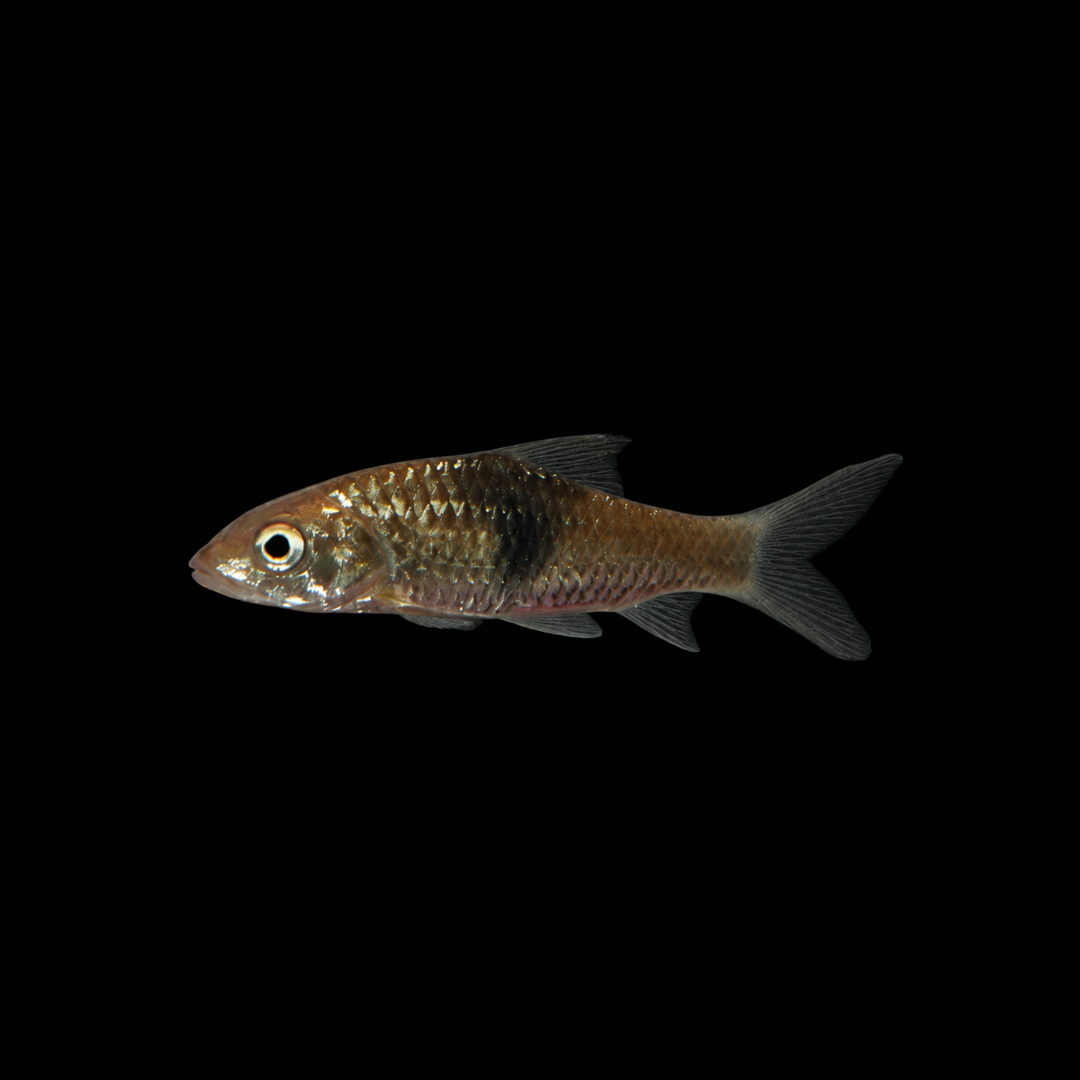
解説 / Description
ハンパラ・サバナは、ボルネオ島北部、主にマレーシア・サバ州の河川に知られるハンパラ属の大型コイ科魚です。背びれ下に入るくさび形の暗色バンド、深く二叉した尾びれ、流れの中を鋭く進む流線型の体つきが特徴で、現地ではセバラウやセラウィの名で呼ばれるハンパラ類の一種として親しまれています。観賞魚としては流通量が多い魚ではなく、広い遊泳空間、強いろ過、水流、十分な酸素を必要とする上級者向けの存在です。適切な環境では、銀色の体をきらめかせながら群れで泳ぎ、給餌時には清流の捕食魚らしい俊敏な反応を見せてくれます。 Hampala sabana is a large cyprinid of the genus Hampala known mainly from rivers in northern Borneo, especially Sabah, Malaysia. It is recognized by the wedge-shaped dark band below the dorsal fin, deeply forked tail, and streamlined body built for fast river swimming. Locally, Hampala fishes are often known by names such as Sebarau or Serawi. In the aquarium trade this species is uncommon and best suited to experienced keepers, as it requires generous swimming space, strong filtration, water movement, and high dissolved oxygen. In a suitable setup, it displays flashing silver movement in a group and a rapid feeding response typical of a river predator.
基本情報 / Basic Information
| 学名 / Scientific Name | Hampala sabana |
|---|---|
| 通称 / Common Name | ハンパラ・サバナ、サバナ・ハンパラ、セバラウ、セラウィSabah Hampala, Sebarau, Serawi |
| 分類 / Family | コイ目 コイ科 スミリオガストル亜科 ハンパラ属Order Cypriniformes, family Cyprinidae, subfamily Smiliogastrinae, genus Hampala |
| 英名 / English Name | Sabah Hampala |
| 分布 / Distribution | 確実な記録としては、ボルネオ島北部のマレーシア・サバ州周辺水系、とくにキナバタンガン川水系に由来する種として扱われます。資料ではダナムバレー、セガマ川下流、クアムト川源流域などからの記録も示されています。日本の観賞魚流通では北カリマンタン産などの産地名で扱われる例がありますが、これは輸出経路、未調査地域、近縁種や地域個体群との混同が関わる可能性があるため、学術的な分布としては慎重に扱うのが安全です。Verified records place it in river systems around Sabah, northern Borneo, Malaysia, especially the Kinabatangan River drainage. Records also include Danum Valley, the lower Segama, and Kuamut headwaters. In the Japanese aquarium trade, locality names such as North Kalimantan may sometimes appear, but these should be treated carefully because export routes, poorly surveyed areas, and possible confusion with related or regional Hampala populations may be involved. |
| 最大体長 / Max Size | 最大で約41cmに達するとされます。これは標準体長で示されることがあるため、尾びれを含めた全長では見た目の迫力がさらに大きく感じられます。幼魚で入手しても、成長後を見据えた水槽計画が必要です。It is reported to reach about 41 cm. This figure may be given as standard length, so the total length including the tail can appear even more imposing. Even when obtained as a juvenile, the adult size must be considered from the beginning. |
| 寿命 / Lifespan | 本種だけを対象にした明確な飼育下寿命の情報は限られます。近縁の大型コイ科魚類と同じく、十分な水量、安定した水質、過密を避けた環境があれば長期飼育を目指せる魚と考えられます。Clear species-specific captive lifespan data are limited. Like many large cyprinids, it should be considered a fish capable of long-term maintenance when provided with ample water volume, stable water quality, and low crowding. |
飼育環境 / Aquarium Environment
| 水槽サイズ / Tank Size | 幼魚の一時育成なら90cm規格水槽でも管理できますが、終生飼育では最低でも150cm×60cm×60cm程度、できれば180cm×60cm×60cm以上の大型水槽が望ましいです。水量では約450L以上をひとつの目安とし、直線的に泳げる長いスペースを確保します。Juveniles can be raised temporarily in a standard 90 cm tank, but long-term care should be planned around at least a 150 × 60 × 60 cm aquarium, preferably 180 × 60 × 60 cm or larger. As a guideline, aim for roughly 450 L or more and preserve a long, open swimming lane. |
|---|---|
| 水温 / Temperature | 24〜27℃を目安にします。高水温では溶存酸素が低下しやすいため、夏場は水温上昇、酸欠、餌の与えすぎによる水質悪化に注意します。 Aim for 24–27°C. At higher temperatures dissolved oxygen drops more easily, so summer heat, oxygen depletion, and water deterioration from heavy feeding require extra care. |
| 水質 / Water Quality | 弱酸性から中性付近、pH6.8〜7.5程度を扱いやすい範囲とします。アンモニアと亜硝酸は0ppmを維持し、硝酸塩は定期的な水換えで低く保ちます。代謝が高く餌の量も多くなりやすいため、大容量の外部式フィルター、上部式フィルターの強化、オーバーフロー式ろ過など、余裕のある生物ろ過が向いています。Slightly acidic to neutral water, around pH 6.8–7.5, is a practical range. Keep ammonia and nitrite at 0 ppm and control nitrate through regular water changes. Because this fish has a high metabolism and is often fed heavily, generous biological filtration such as large canister filters, strengthened overhead filtration, or a sump system is recommended. |
| レイアウト / Layout | 流木や角の取れた石で落ち着ける場所を作りつつ、前面から中央には長い遊泳スペースを残します。繊細な水草レイアウトは、突進や遊泳で崩されやすいため不向きです。水中ポンプやウェーブメーカーで流れを作り、エアレーションを強めにして酸素を十分に供給します。Use driftwood and rounded stones to create calm resting areas while leaving a long open swimming space through the front and center. Delicate planted layouts are not ideal because fast swimming and sudden dashes can disturb them. Add current with pumps or wavemakers and provide strong aeration. |
| 注意点 / Precautions | 驚くと突進して吻を傷めることがあり、飛び出し事故にも注意が必要です。水槽上部は重しをしたガラスフタや固定したポリカーボネート板などで確実に覆ります。導入直後は照明を弱め、人影や物音による急な驚きを減らすと落ち着きやすくなります。When startled, it may dash into the glass and injure its snout, and jumping is also a real risk. The tank top should be securely covered with weighted glass lids or fixed polycarbonate panels. After introduction, subdued lighting and reduced sudden movement around the tank help it settle. |
餌と給餌 / Feeding
| 餌の種類 / Diet | 肉食傾向の強い雑食性で、人工飼料にも慣れやすい魚です。大型肉食魚用の浮上性または沈下性ペレットを主食にし、冷凍赤虫、ミミズ、クリル、冷凍エビ、冷凍ワカサギ、ドジョウなどを補助的に与えます。生き餌を使う場合は、病原体や寄生虫の持ち込みに注意します。It is a strongly carnivorous omnivore and usually adapts well to prepared foods. Use floating or sinking pellets for large predatory fish as a staple, supplemented with frozen bloodworms, earthworms, krill, frozen shrimp, frozen pond smelt, and loaches. If live foods are used, take care to avoid introducing pathogens or parasites. |
|---|---|
| 給餌のポイント / Feeding Tips | 食欲が強く、勢いよく食べるため、与えすぎは水質悪化と肥満につながります。成長期は少量を複数回、成魚は体型と水質を見ながら量を調整します。混泳水槽では本種が餌を独占しやすいため、底ものや動きの遅い魚に餌が回っているか確認します。It feeds vigorously, so overfeeding can quickly lead to water pollution and excess body condition. Juveniles can be fed smaller portions more often, while adults should be fed according to body condition and water quality. In community tanks, check that bottom-dwelling or slower tank mates are not being outcompeted. |
性格と混泳 / Temperament and Tank Mates
| 性格 / Temperament | 極端に攻撃的な魚ではありませんが、捕食性が強く、口に入る魚は餌と見なします。単独では臆病になりやすく、2匹だけでは強弱関係が固定されやすいため、十分な水槽サイズがある場合は3〜5匹以上のグループで飼うと、より自然な群泳を観察しやすくなります。It is not necessarily extremely aggressive, but it is strongly predatory and will treat swallowable fish as food. Single specimens may become shy, while pairs can develop a fixed dominance imbalance. In a large enough aquarium, a group of three to five or more individuals better reveals natural schooling behavior. |
|---|---|
| 混泳の相性 / Compatibility | 混泳相手は、遊泳力があり、体高があって、ハンパラ・サバナの口に入らないサイズの魚が向いています。大型バルブ類、トール属、同程度の大型コイ科魚、大型カラシン類、クラウンローチ、大きめのプレコ類などが候補になります。小型魚、動きの遅い魚、長いヒレを持つ魚は、捕食、給餌競争、ストレスの面で避けた方が安全です。Suitable tank mates should be fast, deep-bodied, and too large to be swallowed. Large barbs, Tor species, similarly sized cyprinids, large characins, clown loaches, and larger plecos may be candidates. Small fish, slow-moving fish, and long-finned species are best avoided because of predation risk, feeding competition, and stress. |
病気と対策 / Diseases and Prevention
| かかりやすい病気 / Common Diseases | 一般的な淡水魚と同じく、白点病、尾ぐされ、外傷からの二次感染、水質悪化による体調不良に注意します。コイ科魚類の国際移動ではコイヘルペスウイルス病やコイ春ウイルス血症などが重要な衛生リスクとして扱われますが、日本の輸入防疫対象は魚種と疾病の組み合わせで定められるため、ハンパラ属が常に同じ扱いになるとは限りません。輸入や販売に関わる場合は、必ず最新の農林水産省および動物検疫所の情報を確認します。As with many freshwater fish, watch for white spot disease, fin rot, secondary infections from injuries, and stress caused by poor water quality. In international movement of cyprinid fishes, koi herpesvirus disease and spring viraemia of carp are important biosecurity concerns, but Japanese import quarantine requirements are defined by specific animal and disease combinations, so Hampala is not automatically treated the same as koi. Anyone involved in import or sale should always check the latest information from Japan’s Ministry of Agriculture, Forestry and Fisheries and Animal Quarantine Service. |
|---|---|
| 対策と予防 / Prevention | 強いろ過、十分な酸素、定期的な水換え、過密を避けることが基本です。導入時は隔離水槽で状態を確認し、外傷、拒食、呼吸の荒さ、体表の白点や充血がないか観察します。生き餌や新規導入魚は病原体の持ち込み源になり得るため、必要に応じてトリートメント期間を設け、本水槽への投入を急がないようにします。Prevention is based on strong filtration, high oxygen, regular water changes, and avoiding overcrowding. New arrivals should be observed in a quarantine tank for injuries, refusal to feed, heavy breathing, white spots, or redness. Live foods and newly introduced fish can carry pathogens, so an observation or treatment period should be used when needed before adding them to the main aquarium. |
増やし方(繁殖) / Breeding
| 雌雄の判別 / Sexing | 明確な外見差についての飼育下情報は少なく、幼魚や若魚での雌雄判別は難しいと考えられます。成熟個体では、繁殖期の体型、腹部の張り、追尾行動などが手がかりになる可能性があります。Reliable external sexing information in captivity is limited, and juveniles or subadults are likely difficult to sex. In mature fish, seasonal body shape, abdominal fullness, and chasing behavior may provide clues. |
|---|---|
| 繁殖形態 / Reproduction | 水槽内での詳細な繁殖例はほとんど知られていません。野生下では河川の季節変化や増水が生活史に関わると考えられ、コイ科魚類らしく卵をばらまく繁殖形態と見るのが自然です。Detailed aquarium breeding records are scarce. In the wild, seasonal river changes and rising water levels are likely important to its life cycle, and it is reasonable to regard it as an egg-scattering cyprinid. |
| 繁殖のポイント / Breeding Tips | 一般家庭の水槽で計画的に繁殖させるのは非常に難しい魚です。挑戦する場合は、成熟した複数個体、非常に大きな水量、季節的な水温変化や大量換水による雨季の再現、産卵後に卵が食べられにくい環境づくりが課題になります。Planned breeding in a home aquarium is very difficult. Any attempt would require multiple mature fish, a very large water volume, seasonal cues such as temperature shifts and large water changes, and a setup that reduces egg predation after spawning. |
雑学と豆知識 / Trivia and Fun Facts
| 1. サバ州の名を背負うハンパラ / 1. A Hampala named after Sabah | ハンパラ・サバナは、1962年に北ボルネオの淡水魚を扱った研究の中で、当初はハンパラ・マクロレピドータの亜種として記載されました。その後、分類学的な扱いが整理され、現在は独立種として扱われています。種小名のsabanaはサバ州に由来するとされ、名前の中にボルネオ北部の河川をめぐる分類学の歴史が刻まれています。Hampala sabana was originally described in 1962 in a study of North Bornean freshwater fishes as a subspecies of Hampala macrolepidota. Its taxonomic treatment was later revised, and it is now regarded as a valid species. The name sabana is associated with Sabah, giving the fish a name that preserves part of the taxonomic history of northern Borneo’s rivers. |
|---|---|
| 2. 模様だけでは語りきれない識別 / 2. Identification is more than a body band | ハンパラ属の魚は、銀色の体、鋭い顔つき、暗色のバンドや斑紋を共有するものが多く、幼魚ではとくに見分けが難しくなります。ハンパラ・サバナは背びれ下のくさび形バンドが目立ちますが、学術的な同定では鱗数などの計数形質や採集地の情報が重要になります。観賞魚として入荷した個体の産地名やインボイス名は手がかりになりますが、それだけで断定せず、近縁種や地域個体群の可能性も含めて見ると、この魚の奥深さがより伝わります。Many Hampala species share a silvery body, sharp profile, and dark bands or blotches, making juveniles especially difficult to identify. Hampala sabana is notable for its wedge-shaped band below the dorsal fin, but scientific identification also depends on characters such as scale counts and collection locality. Locality names and invoice names in the aquarium trade are useful clues, but they should not be treated as absolute proof without considering related species and regional populations. |
| 3. セバラウと呼ばれる川の捕食魚 / 3. A river predator known as Sebarau | 現地でセバラウやセラウィと呼ばれるハンパラ類は、食用魚や遊漁対象としても知られます。大きな口と瞬発力を使い、獲物を吸い込むように捕らえる捕食魚で、小魚や水生昆虫だけでなく、場所によってはカエルのような水辺の生き物を食べることもあります。水槽内で見せる鋭い給餌反応は、野生下で流れを読みながら獲物を追う姿を思わせます。Hampala fishes known locally as Sebarau or Serawi are also known as food fish and sport fish. With a large mouth and sudden acceleration, they capture prey by strong suction, feeding on small fish, aquatic insects, and in some situations frogs or other waterside animals. The sharp feeding response seen in aquaria reflects the behavior of a predator adapted to reading the current and striking quickly. |
| 4. タガル制度と川を守る知恵 / 4. Tagal and river stewardship | サバ州の一部地域では、タガル制度と呼ばれる地域主導の河川管理が行われています。川を保護区、一定期間だけ利用する区域、日常的な利用が許される区域に分け、魚類資源を守りながら地域の暮らしと結びつける仕組みです。ハンパラ・サバナの背景には、珍しい観賞魚という魅力だけでなく、熱帯雨林の川をどう守り、どう利用するかという人と自然の関係も重なっています。In parts of Sabah, community-based river management known as the Tagal system helps protect freshwater resources. Rivers are divided into strict protection zones, periodically used zones, and areas that allow more regular local use, linking fish conservation with community life. The background of Hampala sabana is therefore not only that of a rare aquarium fish, but also of the relationship between people and tropical rainforest rivers. |
| 5. 病害報道から見える防疫の大切さ / 5. Disease reports highlight biosecurity | 2026年にはサバ州のタガル管理区域でコイヘルペスウイルスに関する大きな報道があり、主な被害はペリアンと呼ばれる魚でしたが、キウル地域ではハンパラ属のセラウィにも似た症状の死亡例が1個体報告されました。この情報は、ハンパラ・サバナが必ず同じ病気に弱いと断定するものではありません。しかし、観賞魚を自然水域に放さないこと、導入魚を隔離して観察すること、産地や流通経路を確認することが、飼育者にも販売者にも重要であることを強く示しています。In 2026, Sabah reported a significant koi herpesvirus-related event in Tagal-managed areas. The main losses involved fish known as pelian, while one Hampala sp. Serawi death with similar symptoms was reported in Kiulu. This does not prove that Hampala sabana is necessarily highly susceptible to the same disease. It does, however, underline the importance of never releasing ornamental fish into natural waters, quarantining new arrivals, and checking locality and trade-route information carefully. |
| 6. 保全状況は低懸念でも、油断はできない / 6. Least Concern does not mean no concern | 本種はIUCNで低懸念と評価されていますが、これは絶滅リスクが現時点で高くないという評価であり、生息地の変化や流通上の混同を無視してよいという意味ではありません。限られた地域の河川に結びついた魚であることを考えると、飼育下で大切に扱い、安易な放流や不確かな産地表記を避ける姿勢が、この魚の価値を守ることにつながります。The species is assessed as Least Concern by the IUCN, but this means the current extinction risk is not considered high; it does not mean that habitat change or trade confusion can be ignored. Because the fish is tied to limited river systems, careful captive care, avoiding releases, and treating uncertain locality labels responsibly all help protect its value. |
まとめ / Conclusion
ハンパラ・サバナは、広い水面を一直線に駆ける力、黒いバンドが浮かぶ銀色の体、そして流れの中で獲物を追う捕食魚らしい緊張感をあわせ持つ大型魚です。大型水槽、強いろ過、豊富な酸素、確実なフタという条件がそろうほど、その泳ぎは落ち着き、群れとしてのまとまりも美しく見えるようになります。 Hampala sabana combines the power to drive across open water, a silver body marked by a dark band, and the tension of a river predator built to strike in current. The more fully its needs are met with a large aquarium, strong filtration, abundant oxygen, and a secure lid, the more settled and impressive its schooling movement becomes.
珍しさだけで迎えるよりも、成長後の姿、混泳相手、導入時の隔離、そして原産地の川に負担をかけない飼育姿勢まで見据えたい魚です。環境が整った水槽でハンパラ・サバナが銀鱗をひるがえす姿は、ボルネオ北部の清流を思わせる躍動を静かに伝えてくれます。 This is a fish to keep with more than rarity in mind: adult size, tank mates, quarantine, and responsible care that does not burden its native rivers all matter. In a well-prepared aquarium, the flashing silver movement of Hampala sabana quietly conveys the energy of northern Borneo’s clear rivers.

気になる道具や飼い方を見つけてみませんか?
 アイのアクアグッズ案内水草用ライトの選び方|緑の絨毯と赤い水草を楽しむ照明・植栽用品道具の特徴や使い方、選ぶときのポイントをアイが紹介します。記事はコチラ →
 アイのアクアグッズ案内水草の肥料の選び方|底床用・液肥・メネデールの使い分け道具の特徴や使い方、選ぶときのポイントをアイが紹介します。記事はコチラ →
 アイのアクアグッズ案内プレコ飼育に必要なもの|餌・流木・ろ過・隠れ家・掃除用品道具の特徴や使い方、選ぶときのポイントをアイが紹介します。記事はコチラ →
 アイのアクアグッズ案内バルブの仲間に合わせる飼育用品|チェリーバルブ・スマトラ・中型種の水槽とろ過道具の特徴や使い方、選ぶときのポイントをアイが紹介します。記事はコチラ →
さまざまな飼育テーマをご紹介。リンク先の記事には広告・商品紹介が含まれます。
案内・紹介記事一覧へ →分布マップ
ハンパラ・サバナは、ボルネオ島北部のマレーシア・サバ州周辺水系、とくにキナバタンガン川水系を中心に知られます。下の地図では、分布イメージを示すため、サバ州東部のキナバタンガン川流域付近を概略代表地点として表示しています。
Google Earthで開くこの地点は、記事内の分布情報をもとにした分布イメージ用の概略代表地点です。実際の採集地点や厳密な生息範囲を示すものではありません。
参考文献・参照資料
本リストは、ハンパラ・サバナの記事内に含まれる分類、分布、生息環境、飼育条件、繁殖、病気や注意点を支えるために選定した資料です。店舗・通販サイト、個人ブログ、まとめサイト、流通価格だけを示すページは除外し、学術論文、公的機関、国際機関、専門データベースを中心に整理しています。
1. 分類・命名・タイプ産地
- Fricke, R., Eschmeyer, W. N. & Van der Laan, R. (eds.). Eschmeyer’s Catalog of Fishes: Hampala sabana. California Academy of Sciences. 参照ページ
有効名、原記載、タイプ産地、ホロタイプ情報、同義関係、科・亜科の整理を確認するための基礎資料です。 - Inger, R. F. & Chin, P. K. (1962). The fresh-water fishes of North Borneo. Fieldiana. Zoology. Biodiversity Heritage Library. 参照ページ
北ボルネオ淡水魚相と本種の記載史を支える古典的資料です。 - Kottelat, M. (2013). The fishes of the inland waters of Southeast Asia: a catalogue and core bibliography of the fishes known to occur in freshwaters, mangroves and estuaries. The Raffles Bulletin of Zoology, Supplement 27: 1-663. PDF
東南アジア内陸水域魚類の分類・分布を俯瞰する総覧として参照しています。
2. 分布・最大体長・生息環境・食性
- Froese, R. & Pauly, D. (eds.). FishBase: Hampala sabana Inger & Chin, 1962. 参照ページ
分類、最大体長、淡水性、底層から中層を遊泳する性質、マレーシア分布、IUCN評価の確認に使用しています。 - FishBase. Hampala sabana: Country information, Malaysia. 参照ページ
キナバタンガン川支流付近のタイプ産地、ダナムバレー、下流セガマ、クアムト上流域の記録、深く流れの緩い場所を好む点、捕食性の記述確認に使用しています。 - Martin-Smith, K. M. & Tan, H. H. (1998). Diversity of freshwater fishes from eastern Sabah: annotated checklist for Danum Valley and a consideration of inter- and intra-catchment variability. The Raffles Bulletin of Zoology, 46(2): 573-604. PDF
東サバ州の実地調査に基づき、本種の採集地点、最大標準体長、深く流れの緩い水域での出現、カエルや小魚を捕食する性質を支える資料です。
3. 系統・近縁種・同定上の注意
- Ryan, J. R. J. & Esa, Y. B. (2006). Phylogenetic Analysis of Hampala Fishes (Subfamily Cyprininae) in Malaysia Inferred from Partial Mitochondrial Cytochrome b DNA Sequences. Zoological Science, 23(10): 893-901. DOI: 10.2108/zsj.23.893. PubMed
マレーシア産ハンパラ属のミトコンドリアDNA解析に基づき、サバ州周辺個体群や近縁種との関係を理解するための資料です。 - Tan, H. H. & Grinang, J. (2025). Two new species of Hampala from Borneo (Teleostei: Cyprinidae). The Raffles Bulletin of Zoology, 73: 243-260. DOI: 10.26107/RBZ-2025-0018. PDF
ボルネオ島産ハンパラ属の新種記載を含む最新の分類資料として、近縁種との識別や産地表記の慎重な扱いに利用しています。
4. 飼育条件・繁殖情報の扱い
- Merck Veterinary Manual. Management of Aquarium Fish. 参照ページ
アンモニア、亜硝酸、pH、水温、溶存酸素など、閉鎖水槽での一般的な魚病予防と水質管理の根拠として使用しています。 - Yanong, R. P. E. et al. Fish Health Management Considerations in Recirculating Aquaculture Systems. UF/IFAS Extension. 参照ページ
循環式水槽における水質、ろ過、溶存酸素、アンモニア・亜硝酸管理を、飼育設備面の一般根拠として参照しています。 - FishBase: Hampala sabana. Life cycle and mating behavior. 参照ページ
本種の水槽内繁殖に関する確認済みの情報は限られています。
5. 病気・輸入防疫・注意点
- 農林水産省. 水産輸入防疫制度について. 参照ページ
輸入防疫の対象となる疾病と動物は制度で指定されているため、輸入・販売の際には最新の対象範囲を確認してください。 - 農林水産省. 水産動物の病気を防ぐために(水産動物の衛生及び水産動物の感染症について). 参照ページ
国内防疫・輸入防疫の基本的な枠組みを確認するための公的資料です。 - World Organisation for Animal Health (WOAH). Infection with Koi Herpesvirus. Manual of Diagnostic Tests for Aquatic Animals. PDF
KHV、すなわち Cyprinid herpesvirus 3 に関する国際的な疾病情報として、コイ科魚類を扱う際のバイオセキュリティ意識を支える資料です。
確認日: 2026年6月21日。参考文献は、記事内で実際に支えているファクト要素に合わせて選定し、流通価格や販売実績のみを根拠とする資料は意図的に含めていません。




コメント