

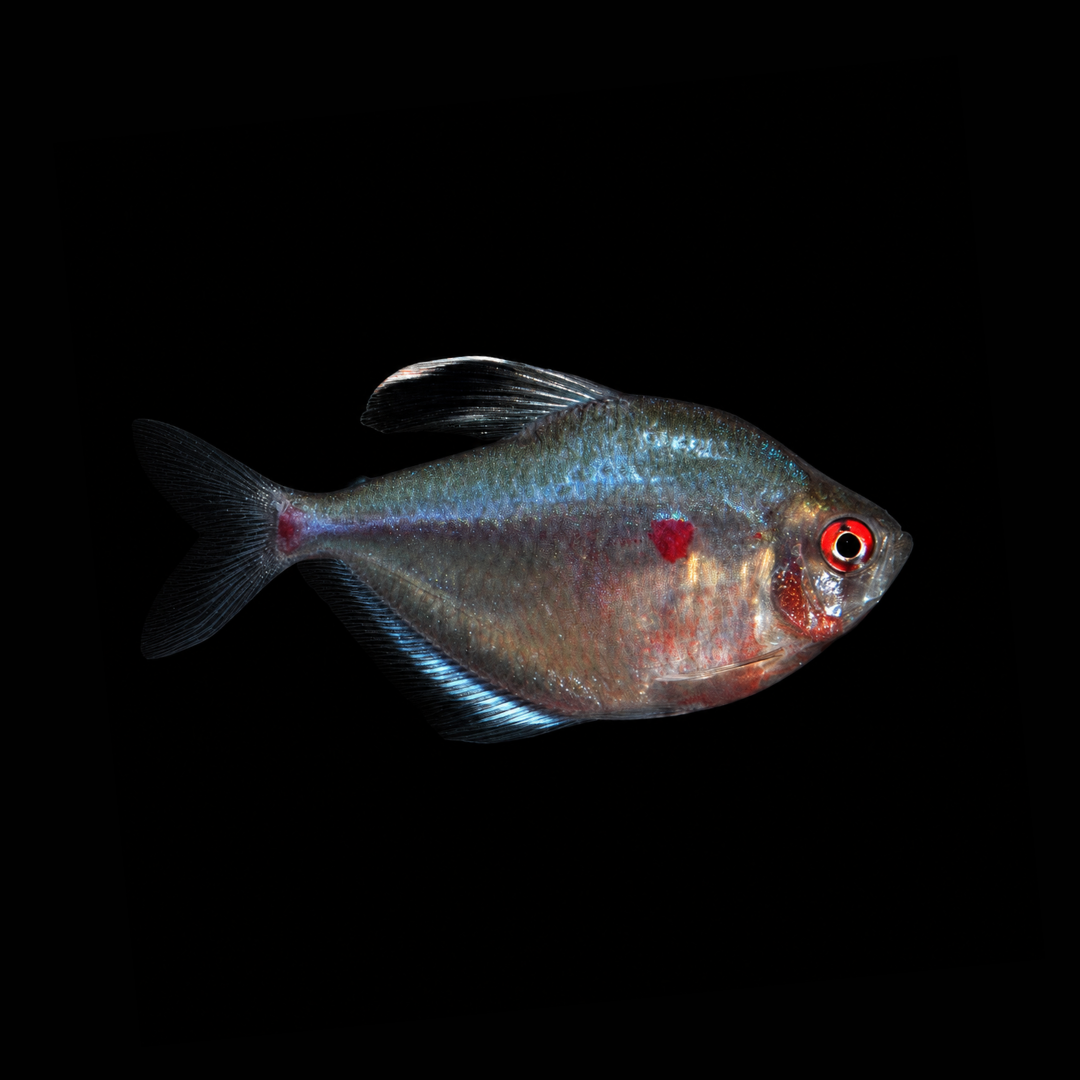
解説 / Description
ソコロフィテトラは、ブラジルのネグロ川水系を中心に知られる小型カラシンです。肩口に入る赤い斑点から、英名では「Lesser bleeding heart tetra」や「Spotfin tetra」と呼ばれます。大型化しやすいブリーディングハート系のテトラに比べると一回り小さく、チョコレートブラウンからスミレ色を帯びる落ち着いた体色、背ビレの黒いスポット、成熟した雄が見せるフィンスプレッディングが魅力です。 The Socolof tetra is a small characin known mainly from the Rio Negro basin in Brazil. Its red shoulder spot gives it English names such as “Lesser bleeding heart tetra” and “Spotfin tetra.” Compared with larger bleeding-heart-type tetras, it remains more compact and is appreciated for its calm chocolate-brown to violet sheen, black dorsal-fin spot, and the fin-spreading displays of mature males.
基本情報 / Basic Information
| 学名 / Scientific Name | Megalamphodus socolofi (旧学名・流通上の表記:Hyphessobrycon socolofi)(older and trade name: Hyphessobrycon socolofi) |
|---|---|
| 通称 / Common Name | ソコロフィテトラ、ソコロフテトラ、小型ブリーディングハートテトラSocolof tetra, Lesser bleeding heart tetra, Spotfin tetra |
| 分類 / Family | カラシン目、Acestrorhamphidae科、Megalamphodinae亜科。旧来の文献やショップ表記では、Characidae科、Hyphessobrycon属として記載されることがあります。Order Characiformes, family Acestrorhamphidae, subfamily Megalamphodinae. Older literature and aquarium trade labels may still list it under Characidae and Hyphessobrycon. |
| 英名 / English Name | Lesser bleeding heart tetra, Spotfin tetra |
| 分布 / Distribution | ブラジル、アマゾン川流域のネグロ川水系。資料によってはニャムンダ川水系も分布として挙げられます。バルセロス周辺を含む流れの緩い支流、森林湖、よどみなどに生息するとされます。Brazil, primarily the Rio Negro system of the Amazon basin. Some sources also list the Rio Nhamundá drainage. It is associated with quiet tributaries, forest lakes, and backwaters, including areas around Barcelos. |
| 最大体長 / Max Size | 標準体長で最大約5.6cm。観賞魚としては全長5〜6cmほどの小型テトラとして扱えます。Up to about 5.6 cm standard length. In aquaria, it is generally treated as a small tetra of about 5–6 cm total length. |
| 寿命 / Lifespan | 本種単独の寿命データは限られますが、適切な飼育下では3〜5年ほどを目安にできます。高水温が続く環境や水質悪化を避け、安定した軟水寄りの環境で管理すると長期飼育しやすくなります。Species-specific lifespan data are limited, but 3–5 years is a reasonable aquarium guideline under good care. Avoid prolonged high temperatures and deteriorating water quality, and maintain stable, soft-leaning water for long-term care. |
飼育環境 / Aquarium Environment
| 水槽サイズ / Tank Size | 最低でも60cm規格水槽、水量約60Lを目安にします。雄同士のディスプレイや群泳をしっかり楽しむなら、90cm規格水槽や90cm×30cm以上の底面積を持つ水槽がより扱いやすいです。群れで落ち着く魚なので、最低6匹、できれば8〜10匹以上で導入すると本来の行動が出やすくなります。A standard 60 cm aquarium of about 60 L is a practical minimum. For male displays and more natural group movement, a 90 cm standard aquarium or a tank with a footprint of at least 90 × 30 cm is easier to manage. Keep at least six individuals, preferably eight to ten or more, to encourage natural schooling behavior. |
|---|---|
| 水温 / Temperature | 23〜27℃前後を基本にし、飼育上の許容範囲としてはおおむね22〜28℃を目安にします。日本の夏場に水温が28℃を長く超える場合は、冷却ファンや水槽用クーラーで過度な高温を避けると安心です。 Aim for about 23–27°C, with roughly 22–28°C as a practical aquarium range. In hot Japanese summers, cooling fans or an aquarium chiller are recommended if the temperature remains above 28°C for extended periods. |
| 水質 / Water Quality | 野生では非常に軟らかい酸性水に生息するとされます。飼育下ではpH5.5〜7.0程度の弱酸性から中性手前の軟水が扱いやすく、状態よく仕上げるならpH6.0前後を意識します。アンモニアと亜硝酸は常に0を維持し、硝酸塩は20mg/L以下を目標に、少なくとも蓄積させすぎない管理を心がけます。In the wild it is associated with very soft, acidic water. In aquaria, soft water around pH 5.5–7.0 is practical, with about pH 6.0 a good target for best condition. Ammonia and nitrite should always be 0, and nitrate should ideally be kept below 20 mg/L or otherwise prevented from accumulating. |
| レイアウト / Layout | 薄暗いブラックウォーター風レイアウトと相性が良い魚です。暗色系の細かい砂、流木、マジックリーフなどの落ち葉、浮き草を組み合わせると、魚が落ち着きやすくなります。自然環境では水草が多い場所ばかりではないとされますが、飼育下ではミクロソリウム、クリプトコリネ、アヌビアス、ウィローモスなどの陰性水草を使うと、視線を遮る場所を作りやすくなります。It suits a dim, blackwater-style layout. Dark fine sand, driftwood, leaf litter such as catappa leaves, and floating plants help the fish settle. Although its natural habitats are not always rich in aquatic plants, low-light plants such as Microsorum, Cryptocoryne, Anubias, and Java moss are useful in aquaria for creating visual cover. |
| 注意点 / Precautions | 立ち上げ直後の未成熟な水槽には導入しないでください。ブラックウォーター系の魚らしく、急な水質変化や有機汚染の蓄積に弱い面があります。ろ過が安定した水槽で、強すぎない水流と十分なろ過能力を両立させることが大切です。少数飼育では臆病になったり、同種間の小競り合いが弱い個体に集中したりすることがあります。Do not introduce it to a newly set-up, biologically immature aquarium. Like many blackwater fishes, it can be sensitive to sudden water-quality changes and accumulated organic pollution. Use an established aquarium with adequate filtration and a current that is not too strong. Very small groups may become shy, and aggression can be focused on weaker individuals. |
餌と給餌 / Feeding
| 餌の種類 / Diet | 飼育下では人工飼料によく慣れます。主食には高品質なフレークフードや小型魚用の顆粒フードを使い、副食として冷凍アカムシ、冷凍ミジンコ、冷凍ブラインシュリンプなどを与えます。野生個体の胃内容物では果実や種子の残骸が多かったという報告もあるため、植物性成分を含む餌も組み合わせるとよいでしょう。In aquaria, it usually accepts prepared foods readily. Use high-quality flakes or small granules as staples, supplemented with frozen bloodworms, daphnia, and brine shrimp. Because wild specimens have been reported with a high proportion of fruit and seed remains in the stomach, foods containing some plant-based ingredients are also useful. |
|---|---|
| 給餌のポイント / Feeding Tips | 1日1〜2回、数分で食べ切れる量を与えます。食欲は比較的旺盛ですが、食べ残しは水質悪化に直結します。色揚げを狙う場合も、動物性の餌だけに偏らせず、人工飼料、冷凍飼料、植物性素材を含む餌をローテーションさせると状態を整えやすくなります。Feed once or twice daily, only as much as the fish can finish within a few minutes. It is usually an eager feeder, but uneaten food quickly degrades water quality. For good color and condition, rotate prepared foods, frozen foods, and foods with plant-based ingredients rather than relying only on animal-rich items. |
性格と混泳 / Temperament and Tank Mates
| 性格 / Temperament | 基本的には温和で、群れで生活するタイプの小型カラシンです。成熟した雄は同種の雄や似たシルエットの魚に対してヒレを広げるディスプレイを見せます。ややヒレをつつくことがあるため、広めの水槽で群れを厚くし、視線を遮るレイアウトを用意すると落ち着きやすくなります。It is generally peaceful and best kept as a schooling small tetra. Mature males display toward other males or similarly shaped fish by spreading their fins. It may occasionally nip, so a larger group, adequate space, and visual cover help reduce problems. |
|---|---|
| 混泳の相性 / Compatibility | 同程度の大きさで温和な魚と相性が良好です。レモンテトラ、ブラックファントムテトラ、ブルーテトラ、ハチェットフィッシュ、コリドラス、オトシンクルス、アピストグラマやラミレジィなどの小型ドワーフシクリッドが候補になります。大型魚、気性の荒い魚、長いヒレを持つ魚との混泳は避けると安心です。It combines well with similarly sized, peaceful species. Suitable candidates include lemon tetras, black phantom tetras, blue tetras, hatchetfish, Corydoras, Otocinclus, and small dwarf cichlids such as Apistogramma or Mikrogeophagus ramirezi. Avoid large fish, aggressive species, and tank mates with very long fins. |
病気と対策 / Diseases and Prevention
| かかりやすい病気 / Common Diseases | 白点病、尾ぐされ病、細菌性の体表トラブルなど、一般的な小型カラシンに見られる病気に注意します。特にワイルド個体は、輸送直後の体力低下、水質差、急なpH変動が不調のきっかけになることがあります。Watch for common small-tetra problems such as ich, fin rot, and bacterial skin issues. Wild-caught individuals may be especially vulnerable just after transport, when weakness, water-parameter differences, and sudden pH changes can trigger problems. |
|---|---|
| 対策と予防 / Prevention | 導入時は水温とpHの差を小さくし、点滴法などで慎重に水合わせを行います。新規導入魚は可能なら隔離飼育し、餌食い、呼吸、体表、ヒレの状態を確認してから本水槽へ移します。日常管理では、過密飼育、強すぎる照明、高水温、硝酸塩の蓄積を避け、少量でも定期的な換水を続けます。Acclimate carefully, minimizing differences in temperature and pH, ideally with a drip method. Quarantine new fish where possible and check feeding response, breathing, body surface, and fins before moving them to the main aquarium. In daily care, avoid overcrowding, overly bright lighting, high temperature, and nitrate accumulation, and keep up regular water changes. |
増やし方(繁殖) / Breeding
| 雌雄の判別 / Sexing | 成熟した雄は雌より大きく見えやすく、背ビレ、腹ビレ、尻ビレがよく伸長します。発情時には体色が濃くなり、赤い肩斑やヒレのコントラストも目立ちます。雌は全体に丸みを帯び、抱卵すると腹部がふくらみます。Mature males tend to look larger and develop more elongated dorsal, pelvic, and anal fins. When in display or breeding condition, their color intensifies and the red shoulder spot and fin contrast become more prominent. Females are rounder-bodied and become fuller when carrying eggs. |
|---|---|
| 繁殖形態 / Reproduction | 水草や産卵床の間で卵をばらまくタイプで、親魚による保護はありません。親は卵を食べるため、産卵後は速やかに親魚を取り出すか、網、ビー玉、産卵モップ、ウィローモスなどで卵が親の口に届かない構造を作ります。It is an egg-scattering species that spawns among plants or spawning media, with no parental care. Adults will eat the eggs, so remove the parents promptly after spawning or use mesh, marbles, spawning mops, or Java moss to let eggs fall out of reach. |
| 繁殖のポイント / Breeding Tips | 20〜30cm規格、水量10〜20Lほどの産卵水槽を用意し、弱酸性の軟水を使います。ピートや落ち葉で色づいたブラックウォーター風の水にし、照明を暗めにすると落ち着きやすくなります。産卵を狙う場合は、よく仕上がった雌雄を夕方に入れ、産卵後は親を戻します。稚魚は非常に小さいため、初期飼料はインフゾリア、その後にワムシ、さらに成長してから孵化したてのブラインシュリンプへ移行します。換水は少量ずつ、点滴法に近い慎重さで行います。Prepare a 20–30 cm breeding tank of about 10–20 L with soft, acidic water. Peat- or leaf-tinted blackwater-style water and dim lighting help the fish settle. To attempt spawning, introduce well-conditioned male and female fish in the evening and remove them after spawning. The fry are extremely small, so begin with infusoria, then rotifers, and later newly hatched brine shrimp. Water changes should be very small and gradual, almost like drip acclimation. |
雑学と豆知識 / Trivia and Fun Facts
| 1. 新しい分類で復活した属名 / 1. A Revived Genus Name | 本種は長く Hyphessobrycon socolofi として親しまれてきましたが、2024年に発表されたカラシン類の大規模な系統解析では、Megalamphodus socolofi として扱われる分類体系が示されました。もっとも、分類体系はデータベースや流通現場への反映に時間差があるため、ショップや古い飼育資料では旧学名に出会うこともあります。どちらの名前にも、この魚がアクアリウムと魚類分類学の両方をまたいで歩んできた歴史が残っています。This species was long familiar as Hyphessobrycon socolofi, but a large phylogenetic study of characins published in 2024 supports treating it as Megalamphodus socolofi. Because taxonomic updates take time to appear in databases and trade labels, the older name is still often encountered. Both names reflect the species’ history across aquarium culture and fish systematics. |
|---|---|
| 2. ロス・ソコロフへの献名 / 2. Named for Ross Socolof | 種小名の socolofi は、アメリカの熱帯魚輸出入業者ロス・ソコロフに由来します。南米奥地の採集ネットワークや航空輸送の発展は、今では当たり前のように感じられる「遠い川の魚が水槽に届く」という文化を支えました。ソコロフィテトラの名前には、アマゾンの小さな魚を世界の愛好家へ届けた時代の熱気が静かに残されています。The species name socolofi honors Ross Socolof, an American tropical fish importer, exporter, breeder, and wholesaler. Collecting networks in South America and the development of air transport helped create the now-familiar culture of distant river fishes reaching home aquaria. The name quietly preserves part of that pioneering era. |
| 3. 小さな果実食者という意外な一面 / 3. A Small Fish with a Fruity Side | 小型テトラというと、ミジンコや水生昆虫を追う姿を想像しがちです。しかし、パダウアリ川の野生個体では、胃内容物の大部分が果実や種子の残骸だったと紹介されています。雨季に森が水に沈むイガポーでは、水面へ落ちる果実が魚たちの大切な食料になります。ソコロフィテトラの小さな体にも、アマゾンの森と川がつながる季節のリズムが刻まれています。Small tetras are often imagined chasing daphnia and aquatic insects. However, wild specimens from the Padauari River have been reported with stomach contents dominated by fruit and seed remains. In the flooded igapó forest of the rainy season, falling fruits become important food for fishes. This small tetra carries the seasonal rhythm connecting Amazonian forest and river. |
| 4. 日本の水草水槽に似合う控えめな主役 / 4. A Subtle Centerpiece for Planted Aquaria | ソコロフィテトラは、強いネオンカラーで目を引く魚ではありません。薄暗い水と緑の水草の中で、スミレ色を帯びた体と肩口の赤い斑点がふっと浮かび上がるような美しさを持っています。水草レイアウト文化が深い日本のアクアリウムでは、強く主張しすぎず、群れ全体の動きで水景に奥行きを加える存在として楽しめます。The Socolof tetra is not a fish that relies on strong neon color. In dim water and among green plants, its violet sheen and red shoulder spot appear with quiet elegance. In the Japanese planted-aquarium tradition, it can add depth through group movement without overwhelming the aquascape. |
まとめ / Conclusion
ソコロフィテトラは、赤い肩斑だけでなく、薄暗い水の中でにじむような体色、群れのまとまり、雄がヒレを広げる一瞬の美しさに魅力がある魚です。弱酸性寄りの清浄な水、落ち着ける陰影、十分な匹数を用意するほど、その繊細な表情は水槽の中で少しずつ引き出されていきます。 The Socolof tetra is appealing not only for its red shoulder spot, but also for its soft body color in dim water, its group movement, and the fleeting beauty of males spreading their fins. Clean, soft-leaning acidic water, shaded cover, and a sufficient group gradually bring out its delicate character in the aquarium.
一般的なテトラより少しだけ丁寧な管理を求めますが、その分、水槽に馴染んだときの存在感には深みがあります。水草の陰から群れが現れ、雄同士が静かに向き合う姿は、小さな水槽の中にネグロ川の穏やかな暗がりを連れてきてくれます。 It asks for slightly more careful care than many common tetras, but once settled it has a depth of presence that rewards the effort. When the school emerges from the shade and the males face one another in quiet display, it brings a calm Rio Negro-like darkness into the aquarium.

気になる道具や飼い方を見つけてみませんか?
 アイのアクアグッズ案内お魚を撮ったのに、ボクが写ってる! スマホで楽しむ水槽撮影と便利な道具道具の特徴や使い方、選ぶときのポイントをアイが紹介します。記事はコチラ →
 アイのアクアグッズ案内そのごはん、泳いでる! 卵から始めるブラインシュリンプの孵化と道具選び道具の特徴や使い方、選ぶときのポイントをアイが紹介します。記事はコチラ →
 アイのアクアグッズ案内おとひめ物語|養殖生まれの餌を、わが家の魚に合う一粒へ道具の特徴や使い方、選ぶときのポイントをアイが紹介します。記事はコチラ →
 アイのアクアグッズ案内ショップで見かけるカラフルなバケツ。いったい何が入ってる?道具の特徴や使い方、選ぶときのポイントをアイが紹介します。記事はコチラ →
さまざまな飼育テーマをご紹介。リンク先の記事には広告・商品紹介が含まれます。
案内・紹介記事一覧へ →分布マップ
ソコロフィテトラは、ブラジルのアマゾン川流域にあるネグロ川水系を中心に知られ、資料によってはニャムンダ川水系も分布として挙げられます。ここでは分布イメージとして、ネグロ川中流域のバルセロス周辺を概略代表地点として示しています。
この地図のプロットは、分布欄の内容をもとにした概略代表地点です。実際の採集地点や厳密な生息範囲を示すものではありません。
参考文献・根拠資料
この記事では、店舗・通販ページ、個人ブログ、一般的なまとめサイトは参考文献から除外し、分類、分布、生息環境、飼育条件、繁殖、病気や注意点を支える資料として、学術論文、生物分類データベース、大学・獣医学系資料、専門誌記事を中心に選定しています。
分類・学名の扱いについて:現在の学名は Megalamphodus socolofi を主表記とし、旧学名・流通上の表記として Hyphessobrycon socolofi を併記するのが妥当です。これは2024年の系統解析とCatalog of Fishesの現行ステータスを優先した判断です。
-
分類・系統
Melo, B. F. et al. 2024. Phylogenomics of Characidae, a hyper-diverse Neotropical freshwater fish lineage, with a phylogenetic classification including four families (Teleostei: Characiformes). Zoological Journal of the Linnean Society, 202(1), zlae101.
記事内のAcestrorhamphidaeへの再編、Megalamphodus 属の再有効化、ロージーテトラ系統の説明を支える主資料です。 -
分類・分布
Fricke, R., Eschmeyer, W. N. & Van der Laan, R. eds. Eschmeyer's Catalog of Fishes: Megalamphodus socolofi. California Academy of Sciences. Online version updated 10 Jun 2026.
現行の有効名、旧学名、原記載情報、タイプ産地、Acestrorhamphidae: Megalamphodinae、ネグロ川流域分布の確認に用いる資料です。 -
原記載・形態
Weitzman, S. H. 1977. Hyphessobrycon socolofi, a new species of characoid fish (Teleostei: Characidae) from the Rio Negro of Brazil. Proceedings of the Biological Society of Washington, 90(2), 326-347.
記載年、記載者、タイプ産地、形態的特徴、近縁種との比較の根拠として参照する一次資料です。 -
分布・水質・繁殖
Froese, R. & Pauly, D. eds. FishBase: Megalamphodus socolofi, Spotfin tetra. FishBase.
淡水性、ネグロ川流域、最大体長、水温目安、軟水・酸性寄りの水質、植物の間でペア産卵するという繁殖情報の確認に用いる資料です。 -
生息環境
Marinho, R. R. et al. 2024. Estimating the Colored Dissolved Organic Matter in the Negro River, Amazon Basin, with In Situ Remote Sensing Data. Remote Sensing, 16(4), 613.
ネグロ川のブラックウォーターが腐植物質に富み、貧栄養で、酸性かつ低導電率であることを支える水環境資料です。リーフリターやタンニンを用いた弱酸性・軟水寄りの飼育環境説明の背景資料として使います。 -
飼育条件・混泳
Clarke, M. 2011. Lesser bleeding heart tetra, Hyphessobrycon socolofi. Practical Fishkeeping.
60cm以上の水槽、6匹以上での飼育、小型冷凍飼料やフレーク、ややヒレをつつくことがあるため群れで落ち着かせるという、実用的な飼育条件の補助資料です。価格や販売情報は参考文献として採用しません。 -
病気・水質管理
Petty, B. D., Francis-Floyd, R. & Yanong, R. P. E. Management of Aquarium Fish. MSD Veterinary Manual. Reviewed/Revised May 2022; modified Sept 2024.
導入直後の水質悪化、新規水槽症候群、アンモニア・亜硝酸、ろ過の立ち上がり、pHショックを避ける換水など、記事内の病気予防・注意点を支える獣医学系資料です。 -
白点病・検疫
Francis-Floyd, R., Yanong, R. P. E. & Pouder, D. B. Ichthyophthirius multifiliis (White Spot) Infections in Fish. University of Florida IFAS Extension, CIR920/FA006.
白点病の原因、生活環、検疫、器具や水草を介した持ち込み、早期対応の重要性を支える大学Extension資料です。
補足:飼育条件は、野生環境の数値をそのまま水槽で再現するのではなく、FishBaseや専門誌の範囲をもとに、家庭水槽で安定維持しやすい弱酸性・軟水寄りの目安として整理しています。





コメント