

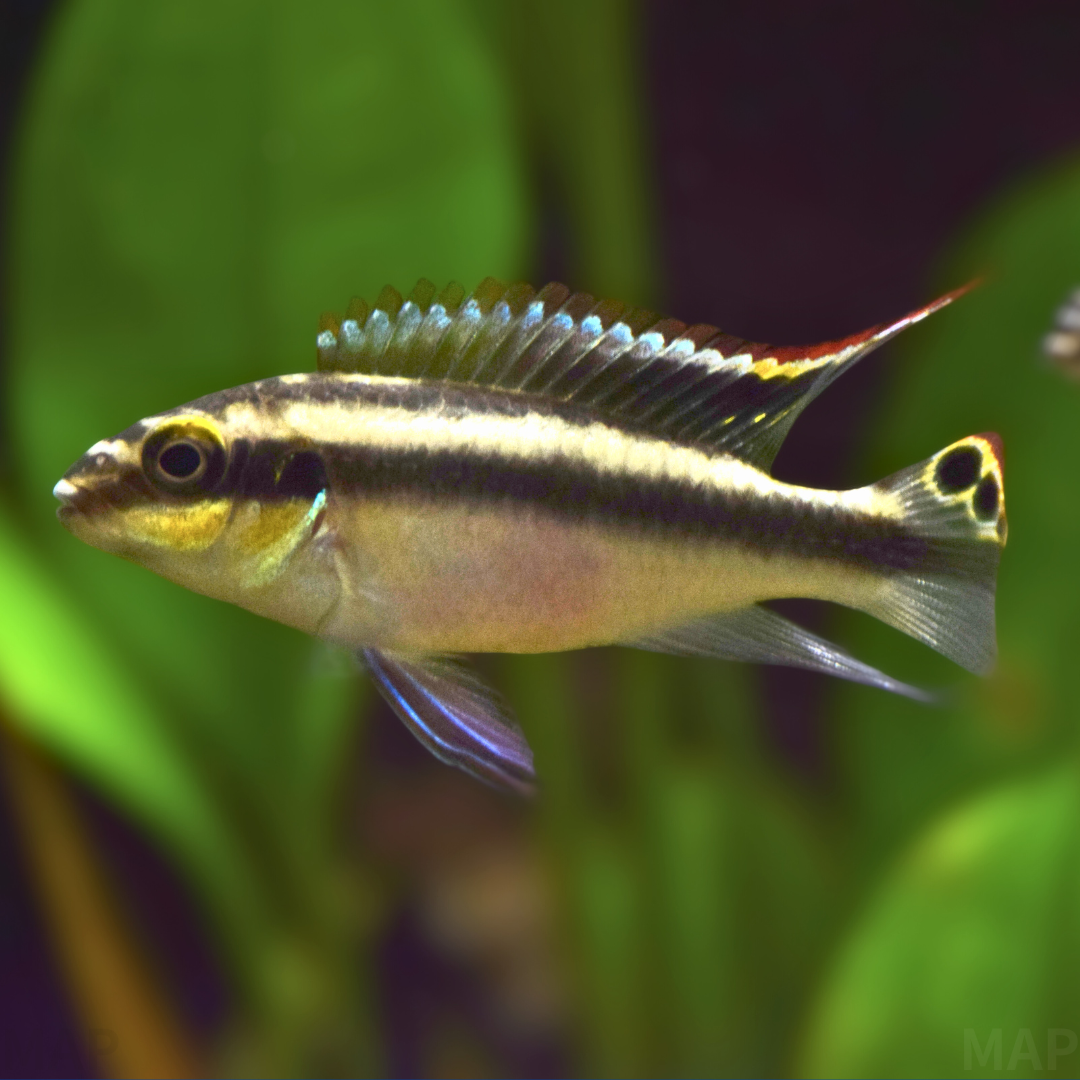
解説 / Description
ペルヴィカクロミス・プルケールは、西アフリカを原産とする小型シクリッドの仲間です。日本では古くからペルマトという愛称で親しまれ、その丈夫さと美しい色彩、そして情愛深い子育ての様子から、熱帯魚飼育の入門種として確固たる地位を築いています。特に繁殖期のメスが見せる鮮やかな赤紫色の腹部は非常に美しく、水槽内でも一際目を引く存在となります。環境適応能力が非常に高く、日本の水道水でも容易に飼育できる点が大きな魅力です。 Pelvicachromis pulcher, a small cichlid native to West Africa, has been cherished in Japan for decades under the nickname Pelmato. Renowned for its hardiness, vibrant colors, and fascinating parental care, it is a staple introductory species for tropical fish enthusiasts. The female’s intense reddish-purple belly during the breeding season is particularly stunning, making it a highlight in any aquarium. Its high adaptability to various water conditions, including standard Japanese tap water, adds to its immense popularity.
基本情報 / Basic Information
| 学名 / Scientific Name | Pelvicachromis pulcher |
|---|---|
| 通称 / Common Name | ペルマト、プルケールPelmato, Pulcher |
| 分類 / Family | シクリッド科(クロミドティラピア族)Cichlidae (Chromidotilapiini) |
| 英名 / English Name | Kribensis, Krib, Rainbow Krib |
| 分布 / Distribution | ベナン東部、ナイジェリア南部、カメルーン西部の低地地帯Lowland regions of Eastern Benin, Southern Nigeria, and Western Cameroon. |
| 最大体長 / Max Size | オス:約12.5cm、メス:約8.1cmMale: approx. 12.5cm, Female: approx. 8.1cm |
| 寿命 / Lifespan | 約3年〜5年Approx. 3 to 5 years. |
飼育環境 / Aquarium Environment
| 水槽サイズ / Tank Size | 60cm規格水槽(約60L)以上を推奨Recommended: 60cm standard tank (approx. 60L) or larger. |
|---|---|
| 水温 / Temperature | 24度〜28度(繁殖時は26度前後が理想) 24 – 28 degrees Celsius (Ideal: 26 degrees for breeding). |
| 水質 / Water Quality | pH 5.5〜7.0(弱酸性から中性の軟水)pH 5.5 – 7.0 (Slightly acidic to neutral soft water). |
| レイアウト / Layout | パウダー状の細かい砂、洞窟状のシェルター、流木、水草を配置Fine powder sand, cave-like shelters, driftwood, and live plants. |
| 注意点 / Precautions | 繁殖期は縄張り意識が強くなるため、混泳相手の選定に注意が必要Aggression increases during breeding, requiring careful selection of tank mates. |
餌と給餌 / Feeding
| 餌の種類 / Diet | 植物質重視の人工飼料、冷凍赤虫、茹でた野菜(ホウレンソウ等)Plant-based pellets, frozen bloodworms, and boiled vegetables like spinach. |
|---|---|
| 給餌のポイント / Feeding Tips | 底砂を食む習性があるため、沈下性のエサを少量ずつ数回に分けて与えるFeed sinking pellets in small portions multiple times to support natural grazing behavior. |
性格と混泳 / Temperament and Tank Mates
| 性格 / Temperament | 基本的には温和だがやや臆病。繁殖期は非常に攻撃的になるGenerally peaceful but shy; becomes highly territorial and aggressive during breeding. |
|---|---|
| 混泳の相性 / Compatibility | 上層を泳ぐ小型テトラ等は安心させる指標魚として最適。底生魚は避けるSurface-dwelling tetras are ideal dither fish. Avoid bottom dwellers like Corydoras. |
病気と対策 / Diseases and Prevention
| かかりやすい病気 / Common Diseases | 消化不良、腹水病、エラ病(水質悪化による)Indigestion, Dropsy, and Gill diseases caused by water quality deterioration. |
|---|---|
| 対策と予防 / Prevention | 植物質のエサを欠かさず、硝酸塩濃度を低く保つための定期的な換水を行うProvide a vegetable-rich diet and perform regular water changes to maintain low nitrate levels. |
増やし方(繁殖) / Breeding
| 雌雄の判別 / Sexing | オスは体が大きくヒレが尖る。メスは丸みを帯び、腹部が鮮やかに発色するMales are larger with pointed fins. Females are rounder with vibrant red-purple bellies. |
|---|---|
| 繁殖形態 / Reproduction | 洞窟産卵型(ケーブスポウナー)。ペアで協力して稚魚を守るCave spawners with biparental care, protecting fry as a pair. |
| 繁殖のポイント / Breeding Tips | 水質のpHにより稚魚の性別が左右される(弱酸性でオス、中性でメスに偏る)Water pH affects fry gender: acidic favors males, while neutral favors females. |
雑学と豆知識 / Trivia and Fun Facts
| 1. ペルマトとクリベンシス:名称の迷宮1. Pelmato vs. Kribensis: A Naming History | 日本で愛されるペルマトという名は、かつての属名ペルマトクロミスに由来します。一方、海外で定着しているクリベンシスという名は、100年以上前の輸入時に近縁種のカメルーン産クリベンシス種と誤同定されたことに起因します。学術的にはすでに整理されていますが、商業の世界では今なお歴史的な誤称が一般名として生き続けているのです。The Japanese name Pelmato comes from the former genus Pelmatochromis. In contrast, the global name Kribensis originates from a century-old misidentification with a related species from Kribi, Cameroon. While taxonomically clarified, the historical misnomer persists as a standard commercial name worldwide. |
|---|---|
| 2. 水質が運命を決める:驚異の環境性決定(ESD)2. Water Quality Decides Fate: Environmental Sex Determination | 本種は、稚魚期の環境水質(pH)によって性別が決まる環境性決定という特殊な性質を持っています。pH 5.5から6.0の酸性環境ではオスが多く産まれ、中性に近づくとメスが圧倒的に多くなります。これはアフリカの乾季と雨季という自然の変動に合わせ、自集団の戦術を最適化するための、数千万年にわたる進化の知恵と言えるでしょう。This species exhibits Environmental Sex Determination (ESD), where the pH of the water during early development dictates gender. Acidic conditions (pH 5.5-6.0) yield more males, while neutral conditions bias results toward females. This allows them to optimize population structure in response to African wet and dry seasons. |
| 3. オスの二面性:性格を分ける鰓蓋の色3. Male Morphs: Personality Linked to Gill Colors | オスには、鰓蓋が赤くなるレッド・モルフと、黄色くなるイエロー・モルフが存在します。レッドは攻撃的で一夫多妻的な傾向があり、イエローは温和で一夫一妻制を好むことが研究で示されています。これらもまた、生まれ育った環境(pH)によって発現比率が変わり、その時々の環境で最も子孫を残しやすい戦略を個体が選択しているのです。Males present two morphs: Red Operculum (aggressive, polygynous) and Yellow Operculum (peaceful, monogamous). The ratio of these morphs is also influenced by pH, enabling the species to adopt the most effective reproductive strategy for their specific environment. |
| 4. 究極の生存戦術:稚魚泥棒(フライナッピング)4. Survival Tactic: Frynapping | 子育て中のペアが他のペアから稚魚を奪い、自分の群れに混ぜる稚魚泥棒という行動が観察されます。これは、自分の実子が外敵に食べられる確率を、他人の稚魚を混ぜて群れの総数を増やすことで相対的に下げる希釈効果を狙ったものです。一見すると残酷ですが、厳しい自然界で自らの遺伝子を確実に残すための、極めて合理的な生存戦略なのです。Breeding pairs sometimes engage in frynapping, stealing fry from other pairs to mix into their own shoal. This increases the total group size, creating a dilution effect that statistically lowers the chance of their own biological offspring being eaten by predators. |
まとめ / Conclusion
ペルヴィカクロミス・プルケールは、単に美しいだけでなく、その背後に深い進化の歴史と精巧な生存戦略を秘めた非常に興味深い魚です。日本の埼玉県を中心とした高度な流通ネットワークにより、現在では非常に手軽に、かつ最良の状態で入手できるようになったことは、私たちアクアリストにとって大きな幸運と言えるでしょう。 Pelvicachromis pulcher is more than just a beautiful fish; it is a fascinating window into evolutionary history and complex survival strategies. Thanks to advanced logistics networks, especially in regions like Saitama, Japan, aquarists can easily access these remarkable creatures in peak condition.
彼らが水槽で見せるU字型の求愛ダンスや、健気に稚魚を守る姿は、飼育者に生命の尊さと、アクアリウムという趣味の真の醍醐味を教えてくれます。水質調整という一歩踏み込んだテクニックを通じて、彼らが内包する自然の神秘にぜひ触れてみてください。 Observing their U-shaped courtship dance and devoted parental care teaches us the value of life and the true essence of the aquarium hobby. By mastering water quality adjustment, you can experience the profound mysteries of nature hidden within your tank.

気になる道具や飼い方を見つけてみませんか?
 アイのアクアグッズ案内マジックリーフ物語|一枚の葉がアクアリウム用品になるまで道具の特徴や使い方、選ぶときのポイントをアイが紹介します。記事はコチラ →
 アイのアクアグッズ案内テトラミンって、こんなにあるの? アイとコタロウのごはん探究旅道具の特徴や使い方、選ぶときのポイントをアイが紹介します。記事はコチラ →
さまざまな飼育テーマをご紹介。リンク先の記事には広告・商品紹介が含まれます。
案内・紹介記事一覧へ →▶ 記事の生体をAMAZONで買う ▶ 記事の生体をYahooで買う
参考文献および学術資料
- Boulenger, G. A. (1901). On the fishes collected by Dr. W. J. Ansorge in the Niger Delta. Proceedings of the Zoological Society of London, 1901(1), 4-10.
- Thys van den Audenaerde, D. F. E. (1968). A preliminary revision of the genus Pelmatochromis Hubrecht sensu lato (Pisces, Cichlidae). Revue de Zoologie et de Botanique Africaines, 77, 349-391.
- Trewavas, E. (1974). The freshwater fishes of Rivers of Western Africa. British Museum (Natural History).
- Lamboj, A., Bartel, D. P., & Dell’Ampio, E. (2014). Revision of the Pelvicachromis taeniatus group (Perciformes: Cichlidae) with descriptions of a new genus and three new species. Zootaxa, 3832(1), 1-13.
- Reddon, A. R., & Hurd, P. L. (2013). Water pH during early development influences sex ratio and male morph in Pelvicachromis pulcher. Journal of Fish Biology, 82(3), 930-940.
- Römer, U., & Beisenherz, W. (1996). Environmental determination of sex in Apistogramma (Cichlidae) and two other genera of South American cichlid fish. Journal of Fish Biology, 48(4), 714-725.
- Baensch, H. A., & Riehl, R. (1991). Aquarium Atlas Vol. 1. Mergus Verlag. (古典的飼育データおよび分類学的記述の参照)
※本図鑑の情報は、上記の学術論文、記載論文、および行動生態学的な最新の知見を基に構成されています。





コメント