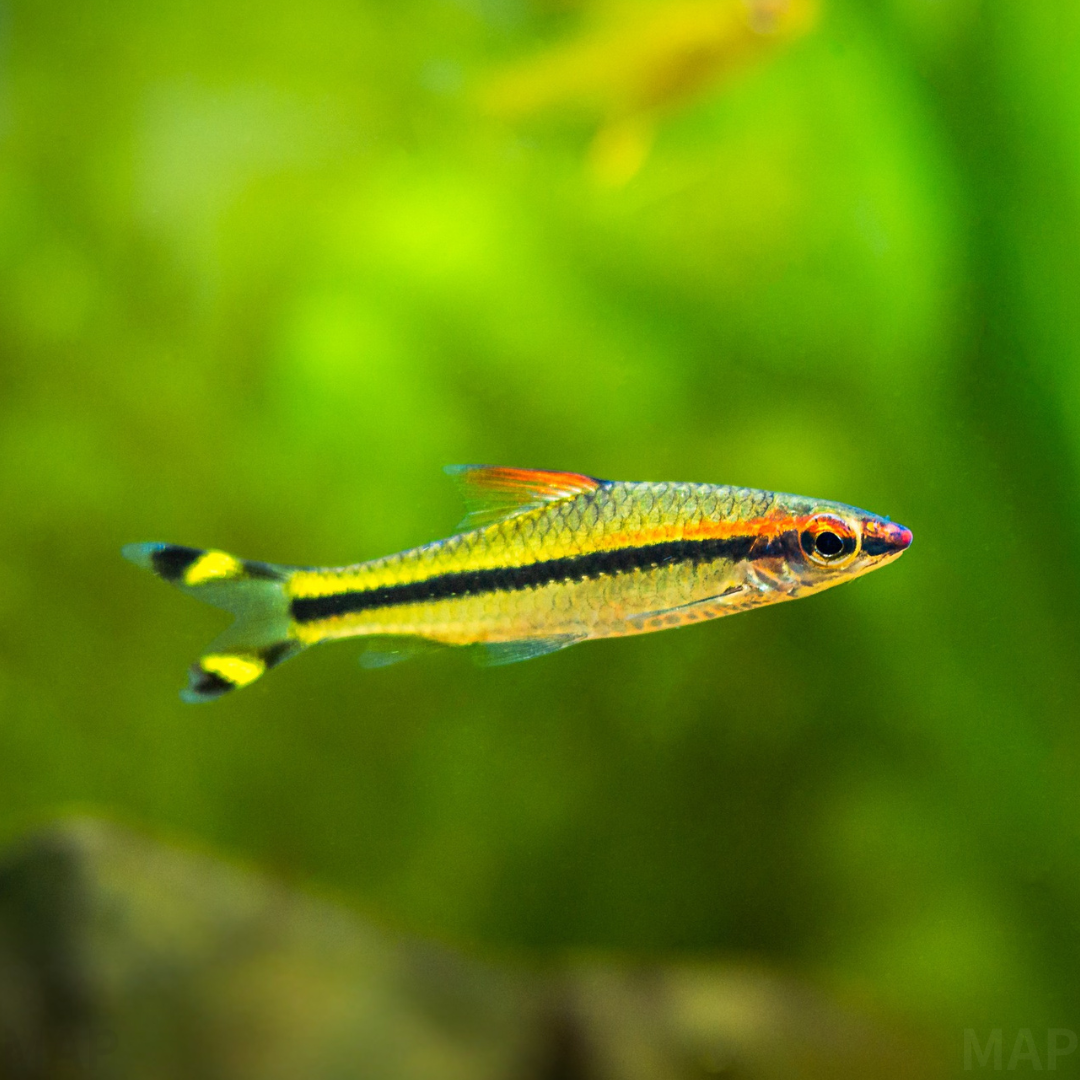
レッドライン・トーピードバルブは、インド西ガーツ山脈の清流にのみ生息する、コイ科の極めて美しい固有種です。その名の通り、魚雷(トーピード)のような見事な流線型の体型を持ち、頭部から体側にかけて走る鮮烈な赤いラインが最大の特徴です。観賞魚としての歴史は、1997年の国際見本市での入賞を機に爆発的な人気を博し、「ミス・ケララ」という愛称で世界中のアクアリストを虜にしました。かつては野生個体の乱獲が問題となりましたが、現在は東南アジアなどでの養殖技術が確立され、持続可能な形で私たちのアクアリウムに届けられています。The Red-line Torpedo Barb is a stunningly beautiful cyprinid endemic to the fast-flowing streams of the Western Ghats in India. As its name suggests, it possesses a magnificent torpedo-shaped body, with a vivid red line running from the snout through the eye, which is its most striking feature. Its history in the aquarium trade took off after winning an award at a 1997 international trade show, earning the nickname Miss Kerala and captivating aquarists worldwide. While over-collection of wild populations was once a major concern, established captive breeding in Southeast Asia now ensures a sustainable supply for the hobby.
インド南西部(西ガーツ山脈の河川上流域)Southwestern India (Upper reaches of rivers in the Western Ghats)
最大体長 / Max Size
12cmから15cm12cm to 15cm (approx. 4.7 to 6 inches)
寿命 / Lifespan
5年から8年5 to 8 years
飼育環境 / Aquarium Environment
水槽サイズ / Tank Size
120cm規格水槽以上(水量200リットル以上を推奨)120cm standard tank or larger (at least 200 liters recommended)
水温 / Temperature
15℃から25℃(至適水温は22℃から24℃)。日本の夏場の高水温には非常に弱いため、水槽用クーラーの設置が強く推奨されます。15°C to 25°C (optimal: 22°C to 24°C). Highly sensitive to high summer temperatures in Japan; use of a chiller is strongly recommended.
水質 / Water Quality
pH 6.5から7.5(中性付近)。清浄で溶存酸素量が多い水を好みます。pH 6.5 to 7.5. Prefers clean, well-oxygenated water.
レイアウト / Layout
丸石や流木を配置し、強めの水流を作ると本来の動きが見られます。水草を植えた環境にも適しています。Provide round stones, driftwood, and moderate to strong water flow. Suitable for planted aquariums.
注意点 / Precautions
驚くと力強く跳ねるため、水槽の蓋は隙間なく閉めてください。高水温による酸欠には特に注意が必要です。Ensure a tight-fitting lid as they are powerful jumpers. Be vigilant about oxygen depletion in high temperatures.
餌と給餌 / Feeding
餌の種類 / Diet
雑食性。沈下性の人工飼料を中心に、冷凍赤虫やブラインシュリンプ、茹でた野菜などをバランスよく与えます。Omnivorous. Provide sinking pellets as a staple, supplemented with frozen bloodworms, brine shrimp, and blanched vegetables.
給餌のポイント / Feeding Tips
赤いラインを鮮やかに保つため、カロテノイドを含む色揚げ用飼料の併用が効果的です。Using color-enhancing foods rich in carotenoids is effective for maintaining the vivid red line.
性格と混泳 / Temperament and Tank Mates
性格 / Temperament
非常に温和で社会性が高い。群れを形成して泳ぐ性質があります。Very peaceful and highly social. Naturally exhibits shoaling behavior.
混泳の相性 / Compatibility
本来の魅力を引き出すため、6匹から10匹以上の群れで飼育してください。同程度のサイズの中型魚(バルブ、テトラ、ドジョウの仲間など)と相性が良いです。Keep in groups of 6 to 10 or more to reduce stress. Compatible with similar-sized medium fish such as barbs, tetras, and loaches.
病気と対策 / Diseases and Prevention
かかりやすい病気 / Common Diseases
白点病、エロモナス感染症、および高水温時の酸欠に伴う体調不良。Ich (White spot disease), Aeromonas infections, and health issues related to hypoxia in high temperatures.
対策と予防 / Prevention
週に一度の定期的な換水と、夏場の水温上昇を防ぐことが最大の予防です。導入時のトリートメントも欠かさないようにしましょう。Regular weekly water changes and preventing summer temperature spikes are the best preventions. Ensure quarantine for new arrivals.
増やし方(繁殖) / Breeding
雌雄の判別 / Sexing
判別は困難ですが、成熟したメスはオスよりも体高があり、ふっくらとした体つきになります。Difficult to distinguish, but mature females tend to be larger, deeper-bodied, and rounder than males.
繁殖形態 / Reproduction
バラ撒き型の産卵形態を持ち、粘着卵を水草などに産み付けます。Egg-scatterers that lay adhesive eggs, often among aquatic plants or moss.
繁殖のポイント / Breeding Tips
一般的な水槽での自然繁殖は極めて稀です。商業的にはホルモン投与による誘発繁殖が行われます。挑戦する場合は、極軟水と低pH環境を用意し、大集団での飼育が鍵となります。Natural breeding in home aquariums is extremely rare. Commercially, induced breeding via hormones is standard. Success requires very soft, acidic water and a large group of fish.
雑学と豆知識 / Trivia and Fun Facts
1. 分類学上の長い旅路1. A Long Taxonomic Journey
1865年に発見されて以来、この魚はラベオ属やプンティウス属など、多くの属を転々としてきました。2013年になりようやく、その特異な進化系統が認められ、独自のサヒヤドリア属(Sahyadria)が設立されました。この名は、生息地である西ガーツ山脈の現地名「サヒヤドリ」にちなんでいます。Since its discovery in 1865, this fish shifted through many genera including Labeo and Puntius. In 2013, it was finally assigned to its own genus, Sahyadria, named after the Sahyadri mountains (the local name for the Western Ghats).
2. デニソン卿と19世紀の博物学2. Sir Denison and 19th Century Natural History
種小名の「denisonii」は、19世紀の英領インド・マドラス州総督ウィリアム・デニソン卿に由来します。彼は軍事エンジニアでありながら自然科学への造詣が深く、インドの自然史研究を強力に支援したパトロンでもありました。この魚の名には、当時の大英帝国における博物学の黄金時代の記憶が刻まれているのです。The species name denisonii honors Sir William Denison, the 19th-century Governor of Madras. Though a military engineer, he was a deep enthusiast of natural science and a patron of Indian natural history research. The name preserves the memory of the golden age of British colonial naturalism.
3. 「ミス・ケララ」の栄光と悲劇3. The Glory and Tragedy of Miss Kerala
1997年の国際見本市で脚光を浴びた際、その圧倒的な美しさから「ミス・ケララ」の愛称が付きました。しかし、その人気ゆえに野生個体が乱獲され、わずか15年ほどで個体数が半減するという悲劇に見舞われました。現在、私たちはこの歴史を教訓に、保護と持続可能な流通を大切にしています。When it gained fame at a 1997 trade show, its overwhelming beauty earned it the nickname Miss Kerala. However, this popularity led to over-collection, resulting in a tragic 50% decline in wild populations within just 15 years. Today, we treat this history as a lesson in the importance of conservation and sustainable trade.
4. 流体力学が生んだ「魚雷」のフォルム4. The Torpedo Form: A Product of Hydrodynamics
彼らの「トーピード(魚雷)」のような体型は、決して偶然の産物ではありません。流れの非常に速い渓流で、水の抵抗を最小限に抑えながらホバリングしたり、瞬時に加速したりするために進化した、究極の流体力学的デザインなのです。Their torpedo-like body shape is no accident. It is an ultimate hydrodynamic design, evolved to minimize drag and allow for hovering or rapid acceleration in the fast-flowing torrents of their native streams.
5. よく似た近縁種との見分け方5. Distinguishing from Look-alike Relatives
近縁種のサヒヤドリア・チャラクディエンシスと混同されることがありますが、本種は背鰭に黒い斑紋がないこと、そして口がやや前方に向いていることで見分けられます。また、性格も本種の方がより温和で混泳向きとされています。It is often confused with its relative S. chalakkudiensis, but the true Red-line Torpedo Barb lacks a black blotch on the dorsal fin and has a more subterminal mouth. It is also known to be more peaceful and suitable for community tanks.
まとめ / Conclusion
レッドライン・トーピードバルブは、その洗練された美しさと活発な群泳行動で、水槽内に躍動感を与えてくれる素晴らしい魚です。かつては希少な存在でしたが、現在は養殖個体が安定して流通しており、適切な環境さえ整えれば、私たちにその鮮やかな赤いラインを見せてくれます。The Red-line Torpedo Barb is a magnificent fish that adds dynamic energy to an aquarium with its refined beauty and active shoaling. Once a rare sight, stable captive breeding now allows us to enjoy their vivid red lines, provided we offer them the appropriate environmental conditions.
特に日本の夏場の水温管理には注意が必要ですが、それさえ克服すれば、あなたの水槽で5年以上にわたって「ミス・ケララ」の輝きを放ち続けてくれるでしょう。このインドの至宝を、ぜひあなたの群泳水槽の主役に迎えてみてはいかがでしょうか。While summer temperature management in Japan requires special care, overcoming this challenge will reward you with the Miss Kerala’s radiance for over five years. Why not make this Indian jewel the centerpiece of your shoaling aquarium?
Day, F. (1865). On the Fishes of Cochin, on the Malabar Coast of India. Part II. Proceedings of the Zoological Society of London, 1865(1), 286-318.
(フランシス・デイによる初記載文献)
Raghavan, R., Philip, S., Ali, A., & Dahanukar, N. (2013). Sahyadria, a new genus of barbs (Teleostei: Cyprinidae) from Western Ghats of India. Journal of Threatened Taxa, 5(15), 4932-4938.
(サヒヤドリア属の設立および分類学的再編に関する研究)
Pethiyagoda, R., Meegaskumbura, M., & Maduwage, K. (2012). A synopsis of the South Asian fishes referred to Puntius (Pisces: Cyprinidae). Ichthyological Exploration of Freshwaters, 23(1), 69-95.
(南アジア産コイ科魚類の系統分類に関する検討)
Mercy, T. V. A., et al. (2015). Breeding and culture of the Redline Torpedo Barb, Sahyadria denisonii. Kerala University of Fisheries and Ocean Studies (KUFOS).
(ケララ州におけるホルモン誘発繁殖および養殖技術の確立)
IUCN Red List of Threatened Species. Sahyadria denisonii (Endangered).
(国際自然保護連合による絶滅危惧種のステータス評価データ)
Bomford, M. (2008). Risk assessment models for establishment of exotic vertebrates in Australia. Bureau of Rural Sciences, Canberra.
(外来種としての定着リスク評価モデル)



 アイのアクアグッズ案内水草トリミングの道具とやり方|ハサミ・ピンセットを水草に合わせて選ぼう伸びすぎた水草は切っていい? 有茎草の差し戻し、前景草の絨毯、流木のモスを整える場面から、水草用ハサミ・ピンセット・ゴミ取りネットの選び方と片付けを紹介します。記事はコチラ →
 アイのアクアグッズ案内ラスボラ・ボララスの群泳を楽しむ飼育用品|水槽・ろ過・ヒーター・餌・水草道具の特徴や使い方、選ぶときのポイントをアイが紹介します。記事はコチラ →




コメント