

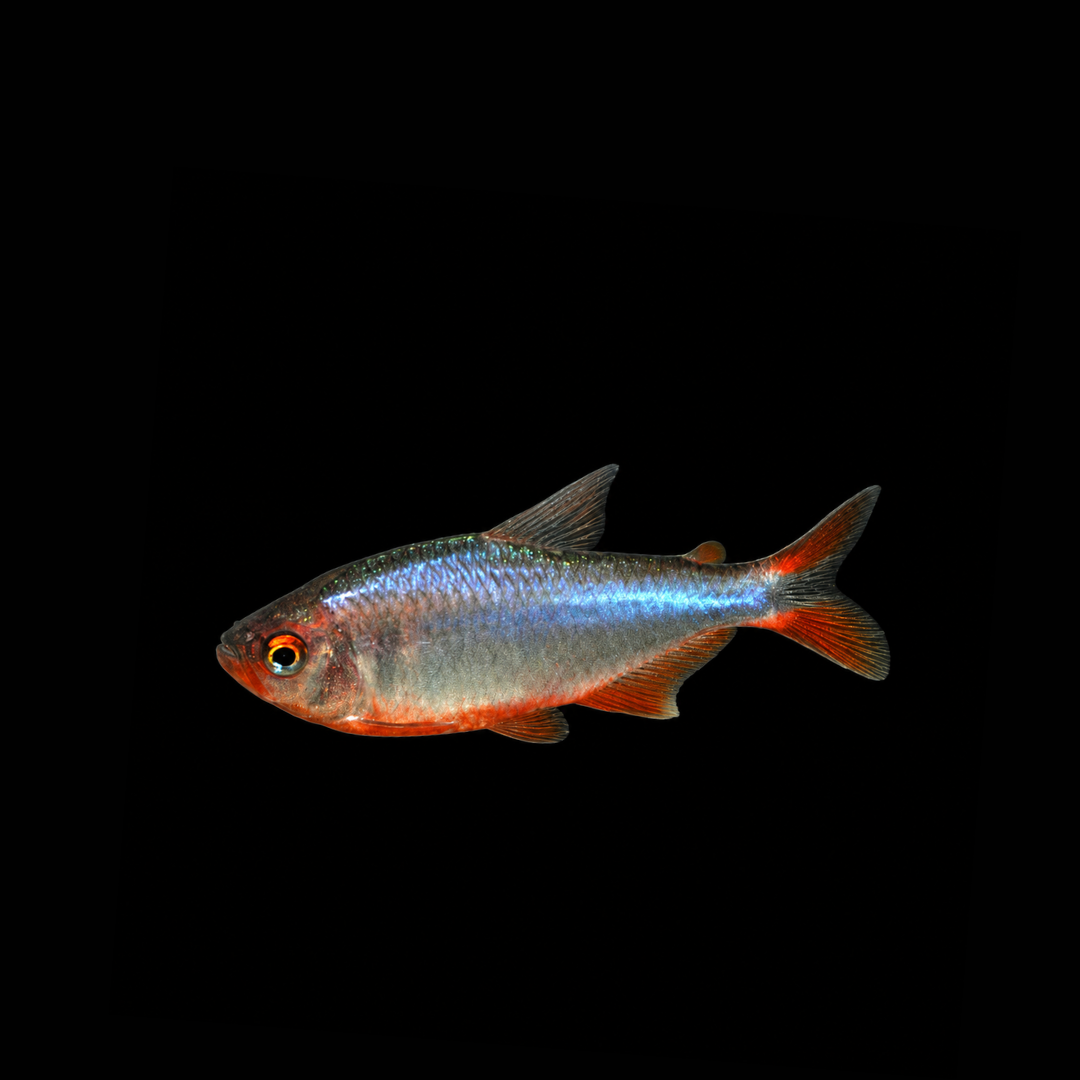
解説 / Description
レッドフィンブルーベリーインパイクティステトラは、青紫から紫紺に見える体色と、赤からオレンジに染まるヒレが魅力の南米産小型カラシンです。流通名には「インパイクティス」と入りますが、正式な学名はHyphessobrycon wadaiで、ハイフェソブリコン属に分類されます。2016年に「ブルーベリーテトラ」として観賞魚流通でも知られていた種が新種記載され、以後は学名を伴って扱いやすくなりました。 The Red-fin Blueberry Inpaichthys Tetra is a small South American characin admired for its blue-violet to deep purple body sheen and red to orange fins. Although its trade name includes “Inpaichthys,” its valid scientific name is Hyphessobrycon wadai, and it belongs to the genus Hyphessobrycon. It was formally described in 2016 after already being known in the aquarium trade as the “blueberry tetra.”
野生ではブラジルのタパジョス川上流域に分布し、砂底を流れる透明度の高い小河川で、適度からやや速い流れのある環境にすむとされています。水槽では清浄な軟水、安定したやや低めの水温、十分な溶存酸素、そして群れで泳げる落ち着いた水草レイアウトを用意すると、本来の深い色合いを引き出しやすくなります。導入直後は控えめに見えても、環境になじむほど表情が変わる、飼い込む楽しみの大きいテトラです。 In the wild, it is known from the upper Tapajós River basin in Brazil and inhabits clear streams with sandy bottoms and moderate to relatively fast current. In aquariums, clean soft water, stable and slightly cooler temperatures, good oxygenation, and a calm planted layout with room for a group will help bring out its best coloration. It may look subdued at first, but its colors deepen as it settles, making it a rewarding species for patient keepers.
基本情報 / Basic Information
| 学名 / Scientific Name | Hyphessobrycon wadai |
|---|---|
| 通称 / Common Name | レッドフィンブルーベリーインパイクティステトラ、ブルーベリーテトラRed-fin Blueberry Inpaichthys Tetra, Blueberry Tetra |
| 分類 / Family | カラシン目、Acestrorhamphidae科、Hyphessobryconinae亜科、ハイフェソブリコン属。記載当時や古い流通情報ではカラシン科として扱われる場合もあります。Order Characiformes, family Acestrorhamphidae, subfamily Hyphessobryconinae, genus Hyphessobrycon. Older literature and trade sources may still place it in Characidae. |
| 英名 / English Name | Blueberry Tetra, Red-fin Blueberry Tetra |
| 分布 / Distribution | ブラジル中西部、マトグロッソ州を含むタパジョス川上流域。タイプ産地はジュルエナ川支流のサングエ川水系に関連します。Central-western Brazil, in the upper Tapajós River basin, including Mato Grosso. The type locality is associated with the Rio do Sangue drainage, a tributary system of the Rio Juruena. |
| 最大体長 / Max Size | 学術記録では最大3.5cm標準体長。飼育下では全長4cm前後の小型テトラとして扱うと分かりやすいです。Scientific records give a maximum of 3.5 cm standard length. In aquariums, it is easiest to regard it as a small tetra of around 4 cm total length. |
| 寿命 / Lifespan | 飼育下の目安はおよそ3〜5年です。清浄な水、安定した水温、痩せさせない給餌が長期飼育の鍵になります。A practical aquarium estimate is about 3–5 years. Clean water, stable temperature, and consistent feeding to prevent thinness are key to long-term maintenance. |
飼育環境 / Aquarium Environment
| 水槽サイズ / Tank Size | 最低でも30cmキューブ水槽程度から飼育できますが、群泳と発色を楽しむなら45cm規格水槽以上、理想的には60cm規格水槽以上がおすすめです。6匹以上、できれば10匹前後で飼うと落ち着きやすく、オス同士のディスプレイも観察しやすくなります。A 30 cm cube aquarium is a practical minimum, but a standard 45 cm tank or larger is recommended for a group, and a standard 60 cm tank or larger is ideal. Keep at least six individuals, preferably around ten, to encourage confidence, schooling behavior, and male displays. |
|---|---|
| 水温 / Temperature | 22〜26℃前後が扱いやすい範囲です。23〜25℃付近を安定して保つと調子を崩しにくく、夏場は30℃を超えないよう冷却ファンや水槽用クーラーを検討してください。 A stable range of about 22–26°C is suitable, with 23–25°C often working especially well. During hot summers, consider a cooling fan or aquarium chiller if the tank risks exceeding 30°C. |
| 水質 / Water Quality | 弱酸性から中性の軟水を目安にします。実用的にはpH5.5〜7.0、GH1〜10程度が扱いやすい範囲です。日本の一般的な水道水にも慣れやすい魚ですが、ソイル、マジックリーフ、ヤシャブシの実などで水をやや弱酸性に寄せると、落ち着きと発色を得やすくなります。Aim for soft water from slightly acidic to neutral. A practical range is around pH 5.5–7.0 and GH 1–10. Captive fish usually adapt to many tap-water conditions, but aquasoil, Indian almond leaves, or alder cones can help create a mildly acidic, comfortable setting that supports good coloration. |
| レイアウト / Layout | 遊泳スペースを残した水草水槽に向きます。流木、陰性水草、後景草を使って視線を切れる場所を作ると、弱い個体が逃げ込みやすくなり、群れ全体も落ち着きます。原産地は典型的なブラックウォーターというより透明度の高い流水環境とされますが、薄いタンニンを含む落ち着いた水景とも相性は良好です。A planted aquarium with open swimming space is ideal. Driftwood, shade-tolerant plants, and background plants help break lines of sight and provide refuge for subordinate fish. Its natural habitat is better understood as clear, flowing water rather than typical blackwater, but a lightly tannin-tinted aquascape can still suit it very well. |
| 注意点 / Precautions | きれいな流水環境に由来する魚なので、酸欠と水質悪化を避けることが大切です。外部式フィルターなどで十分なろ過と溶存酸素を確保しつつ、強すぎる水流が直接当たり続けないようにします。週1回20〜30%程度の換水を基本に、硝酸塩や有機物をためない管理を心がけます。Because this fish comes from clean flowing habitats, avoid oxygen-poor or deteriorating water. Use adequate filtration and maintain good oxygenation, while preventing excessive current from blasting the fish directly. A weekly 20–30% water change is a good basic routine to prevent nitrate and organic waste buildup. |
餌と給餌 / Feeding
| 餌の種類 / Diet | 自然下では糸状藻類、有機デトリタス、水生昆虫の幼虫、陸生昆虫の破片、小型節足動物などを利用する雑食性です。飼育下では小型カラシン用の顆粒飼料やフレークを主食にし、冷凍アカムシ、ブラインシュリンプ、ミジンコなどを副食として与えると状態を上げやすくなります。In the wild it is omnivorous, feeding on filamentous algae, organic debris, aquatic insect larvae, fragments of terrestrial insects, and small arthropods. In aquariums, use fine granules or flakes for small characins as a staple, supplemented with frozen bloodworms, brine shrimp, and daphnia to improve condition. |
|---|---|
| 給餌のポイント / Feeding Tips | 小型で活発に泳ぐため、痩せすぎに注意します。1日1〜2回、2〜3分で食べきれる量を目安に、細かい餌を水面から中層に行き渡らせます。混泳水槽では動きの遅い魚や底ものに餌が届かないことがあるため、沈下性タブレットやスポイト給餌を併用すると安心です。Because it is small and active, avoid letting it become thin. Feed once or twice daily, offering fine foods that can be finished within two to three minutes and spread through the upper to middle water layers. In community tanks, use sinking tablets or targeted feeding so slower fish and bottom dwellers are not outcompeted. |
性格と混泳 / Temperament and Tank Mates
| 性格 / Temperament | 基本的には温和で、群れで生活する小型テトラです。オス同士はメスや小さな縄張りをめぐってフィンスプレッディングを行いますが、多くの場合は儀式的な小競り合いにとどまります。この瞬間にヒレの赤みと体の紫色が強く見えることがあります。It is generally peaceful and social. Males may perform fin-spreading displays over females or small territories, but these interactions are usually ritualized rather than damaging. During such displays, the red fins and violet body sheen can appear especially intense. |
|---|---|
| 混泳の相性 / Compatibility | 同程度の大きさで温和なテトラ類、ラスボラ類、コリドラス、オトシンクルス、小型のドワーフシクリッドなどと相性が良好です。大型魚、攻撃的な魚、ヒレをかじる魚との混泳は避けます。成体のヤマトヌマエビや大きめのミナミヌマエビとは混泳できますが、稚エビは捕食されやすいため、エビの繁殖を主目的にした水槽には向きません。It is compatible with similarly sized peaceful tetras, rasboras, Corydoras, Otocinclus, and small dwarf cichlids. Avoid large, aggressive, or fin-nipping fish. Adult Amano shrimp and larger Neocaridina shrimp are usually safe, but tiny shrimplets may be eaten, so it is not ideal for shrimp-breeding setups. |
病気と対策 / Diseases and Prevention
| かかりやすい病気 / Common Diseases | 比較的丈夫な小型カラシンですが、導入直後のストレス、水温の急変、水質悪化があると白点病、尾腐れ病、口腐れ病、鰓のトラブルなどに注意が必要です。体表の白点、ヒレ先の白濁、呼吸の荒さ、体をこすりつける行動がないか観察します。It is a fairly hardy small characin, but stress after introduction, sudden temperature changes, or poor water quality can lead to ich, fin rot, mouth rot, and gill problems. Watch for white spots, cloudy fin edges, labored breathing, or rubbing against objects. |
|---|---|
| 対策と予防 / Prevention | 予防の基本は、温度を急変させないこと、過密にしないこと、ろ過を十分に効かせること、定期的に換水することです。発症が疑われる場合は早めに隔離し、症状に応じて市販の魚病薬を使います。白点病では水温を急に上げすぎず、魚の様子を見ながら段階的に調整します。Prevention centers on stable temperature, avoiding overcrowding, adequate filtration, and regular water changes. If disease is suspected, isolate affected fish early and use an appropriate aquarium medication according to the symptoms. For ich treatment, raise temperature gradually and monitor the fish closely. |
増やし方(繁殖) / Breeding
| 雌雄の判別 / Sexing | 成熟したオスは体色の紫や群青色が強く、各ヒレも赤からオレンジに濃く染まりやすい傾向があります。メスは全体にやや地味で、オリーブ色や黄褐色を帯びることがあり、抱卵すると腹部が丸くふくらみます。若魚では判別しにくいため、複数匹を育てながら観察すると確実です。Mature males tend to show stronger violet to deep blue body coloration and richer red to orange fins. Females are often more subdued, sometimes olive or yellowish-brown in tone, and become rounder in the belly when carrying eggs. Juveniles can be difficult to sex, so raising a group is the most reliable approach. |
|---|---|
| 繁殖形態 / Reproduction | 水草の茂みや産卵モップに向かって卵をばら撒くタイプの産卵魚です。親魚は卵や稚魚を保護せず、産んだ卵を食べてしまうことがあるため、繁殖を狙う場合は専用の繁殖水槽を用意します。It is an egg-scattering species that releases eggs among fine plants or spawning mops. The parents do not guard eggs or fry and may eat their own eggs, so a dedicated breeding tank is recommended when breeding is the goal. |
| 繁殖のポイント / Breeding Tips | 繁殖水槽はベアタンクにし、ウィローモスや産卵モップを入れ、pH6.0〜6.5程度の弱酸性軟水、水温24〜26℃を目安にします。親魚には事前に冷凍アカムシやミジンコなどを与えてコンディションを上げます。産卵後は親を戻し、卵はおよそ24〜36時間で孵化します。自由遊泳直後の稚魚は非常に小さいため、最初はインフゾリアや極小パウダーフードから始め、成長に合わせて孵化したてのブラインシュリンプへ移行します。Use a bare breeding tank with Java moss or spawning mops, aiming for soft, slightly acidic water around pH 6.0–6.5 and 24–26°C. Condition the adults beforehand with rich foods such as frozen bloodworms and daphnia. Remove the parents after spawning. Eggs hatch in roughly 24–36 hours, and the newly free-swimming fry are very small, so start with infusoria or ultra-fine fry food before gradually moving to newly hatched baby brine shrimp. |
雑学と豆知識 / Trivia and Fun Facts
| 1. 「インパイクティス」と呼ばれた理由 / 1. Why “Inpaichthys” Appears in the Trade Name | 流通名に含まれる「インパイクティス」は、分類学的な属名として正しいという意味ではなく、体型や青紫の印象がインパイクティス・ケリーを連想させたことに由来する商業名です。観賞魚では、正式な学名が整う前に見た目や印象で名前が付けられることがあります。本種の場合、その名前が魅力的だったために広く残りましたが、正式にはハイフェソブリコン属のHyphessobrycon wadaiです。The “Inpaichthys” in its trade name does not indicate its true genus. It is a commercial name likely inspired by the body impression and bluish-violet tone that reminded traders of Inpaichthys kerri. Aquarium fish are often named by appearance before their formal scientific identity is settled. In this case the attractive trade name remained, but the fish is correctly known as Hyphessobrycon wadai. |
|---|---|
| 2. 学名に刻まれたワダ氏の名前 / 2. The Name Wada Preserved in Science | 種小名のwadaiは、ブラジルの観賞魚ブリーダーでありアクアリストでもあるルイス・ワダ氏に献名されたものです。採集者、輸出業者、ブリーダー、研究者は別々の世界に見えることがありますが、美しい魚の正体が明らかになるまでには、多くの人の観察と協力が重なっています。本種の学名は、趣味のアクアリウムと魚類学が交わる場所に生まれた名前といえます。The species name wadai honors Luiz Wada, a Brazilian ornamental fish breeder and aquarist. Collectors, exporters, breeders, and researchers may appear to belong to separate worlds, but the identity of a beautiful aquarium fish is often clarified through their combined observations and cooperation. This name reflects a meeting point between the aquarium hobby and ichthyology. |
| 3. 分類は今も見直され続けている / 3. A Classification Still Being Refined | ハイフェソブリコン属は非常に種数が多く、近年の分子系統研究によって、従来の「カラシン科」としての大きな枠組みや属内のまとまりが見直されています。本種も現在の主要データベースではAcestrorhamphidae科、Hyphessobryconinae亜科として扱われますが、古い文献や販売情報ではカラシン科表記が残ることがあります。名前が複数見えると混乱しがちですが、学名Hyphessobrycon wadaiを軸に確認すると整理しやすくなります。The genus Hyphessobrycon is species-rich, and recent molecular studies have continued to revise the broad framework once treated simply as Characidae as well as relationships within the genus. Current major databases place this species in Acestrorhamphidae and Hyphessobryconinae, while older literature and trade information may still show Characidae. When different names appear, using Hyphessobrycon wadai as the anchor makes the information easier to organize. |
| 4. ブルーベリーか、ブラックベリーか / 4. Blueberry or Blackberry? | 日本や英語圏では「ブルーベリーテトラ」と呼ばれることが多い一方、ヨーロッパの流通情報では「ブラックベリー」を思わせる呼び方が見られることがあります。同じ紫色の魚を見ても、どの果実を連想するかは地域の言葉や文化によって変わります。観賞魚の流通名は、単なるラベルではなく、その魚を初めて見た人の印象や市場での伝わり方を映す小さな物語でもあります。In Japan and many English-speaking contexts, the fish is often called the Blueberry Tetra, while some European trade contexts use names that evoke “blackberry.” The same violet fish can suggest different fruits depending on language and culture. Aquarium trade names are not just labels; they are small stories shaped by first impressions and market appeal. |
| 5. 光で表情が変わるテトラ / 5. A Tetra That Changes with Light | 本種の美しさは、赤い色素だけでなく、体表で光を反射する構造的な輝きにも支えられています。黒い背景、落ち着いた水草の緑、演色性の高いLED照明を組み合わせると、体側の青紫が金属光沢のように浮かびます。反対に明るすぎる環境や隠れ場所の少ない水槽では色が飛んで見えやすいため、魚そのものを派手にするというより、安心して発色できる舞台を整える感覚で飼い込むとよいでしょう。Its beauty comes not only from red pigments but also from structural reflections on the body surface. A dark background, calm green planting, and high color-rendering LED lighting can make the bluish-violet sheen appear almost metallic. In overly bright tanks with few refuges, the fish may look washed out, so the aim is to create a setting where it feels secure enough to show its natural color. |
まとめ / Conclusion
レッドフィンブルーベリーインパイクティステトラは、強い光の下で一瞬だけ派手に見せる魚ではなく、清浄な水と落ち着いた群れの中で、少しずつ紫紺の深みを増していく小型カラシンです。弱酸性から中性の軟水、安定したやや低めの水温、十分なろ過と酸素、そして水草や流木で安心できる空間を整えるほど、赤いヒレと青紫の体色が水景の中で鮮やかに浮かび上がります。 The Red-fin Blueberry Inpaichthys Tetra is not a fish that merely flashes under strong light; it is a small characin whose deep violet tones develop gradually in clean water and a settled group. Soft water from slightly acidic to neutral, stable and slightly cooler temperatures, strong filtration and oxygenation, and a planted layout with driftwood all help its red fins and blue-violet body stand out within the aquascape.
流通名に残る分類の名残、学名に込められた人物への敬意、そして光の角度で変わる繊細な色彩が、この魚に静かな奥行きを与えています。水槽の中央を群れで泳ぐ姿は派手すぎず、それでいて確かな存在感があり、時間をかけて向き合うほど美しさを返してくれる、図鑑に残しておきたい南米テトラの一種です。 Its trade-name history, the dedication preserved in its scientific name, and its subtle color shifts under different lighting give this fish a quiet depth. A group swimming through the middle of a planted aquarium is never overwhelming, yet it has unmistakable presence. The more patiently it is kept, the more beauty it returns, making it a South American tetra well worth remembering.

気になる道具や飼い方を見つけてみませんか?
 アイのアクアグッズ案内カルキ抜き・水質調整剤の選び方|水換えと水槽の種類に合わせて選ぶ道具の特徴や使い方、選ぶときのポイントをアイが紹介します。記事はコチラ →
 アイのアクアグッズ案内水槽の流木の選び方|枝・マングローブ・アク抜きとおすすめ商品水槽に小さな森を作る流木。枝流木やマングローブという名前の違いから、魚の隠れ家、水草の取り付け、浮く・水が茶色くなるときの準備まで、アイとコタロウが商品とともに案内します。記事はコチラ →
 アイのアクアグッズ案内ダニオの仲間に合わせる飼育用品|ゼブラダニオから超小型種まで水槽・ろ過・餌を選ぶ道具の特徴や使い方、選ぶときのポイントをアイが紹介します。記事はコチラ →
 アイのアクアグッズ案内水草用ソイルの選び方|土・砂の違いとおすすめ商品道具の特徴や使い方、選ぶときのポイントをアイが紹介します。記事はコチラ →
さまざまな飼育テーマをご紹介。リンク先の記事には広告・商品紹介が含まれます。
案内・紹介記事一覧へ →分布マップ
レッドフィンブルーベリーインパイクティステトラは、ブラジル中西部のマトグロッソ州を含むタパジョス川上流域に分布するとされ、タイプ産地はジュルエナ川支流のサングエ川水系に関連します。地図では、その分布イメージを示すため、サングエ川・ジュルエナ川水系周辺を概略代表地点として表示しています。
※このマップは分布欄の情報をもとにした概略プロットです。実際の採集地点や厳密な生息範囲を示すものではありません。
参考文献
この記事の分類、分布、生息環境、飼育条件、繁殖、病気や注意点を支える資料として、原記載論文、魚類分類データベース、学術論文、獣医学系資料を中心に選定しました。店舗、通販、個人ブログ、一般的なまとめサイトは除外しています。
-
Marinho, M. M. F., Dagosta, F. C. P., Camelier, P. & Oyakawa, O. T. 2016.
A name for the “blueberry tetra”, an aquarium trade popular species of Hyphessobrycon Durbin (Characiformes: Characidae), with comments on fish species descriptions lacking accurate type locality. Journal of Fish Biology, 89(1): 510–521.
URL: https://doi.org/10.1111/jfb.12991
使用箇所: 学名、2016年の新種記載、種小名の由来、タイプ産地、タパジョス川上流域への分布、青紫の体色と赤いヒレ、単一の肩斑、尾柄斑や明瞭な体側縦帯を欠くことなど、分類と形態の中核情報。
-
Froese, R. & Pauly, D. editors. FishBase. Hyphessobrycon wadai.
FishBase species summary. Accessed 27 June 2026.
URL: https://fishbase.se/summary/Hyphessobrycon-wadai
使用箇所: 現行データベース上の分類、最大体長3.5cm標準体長、ブラジルのタパジョス川上流域、淡水・底中層性、透明な流水と砂底の生息環境、糸状藻類・有機デトリタス・昆虫類を含む食性。
-
Fricke, R., Eschmeyer, W. N. & van der Laan, R. editors. Eschmeyer’s Catalog of Fishes.
Online version, California Academy of Sciences. Species record for Hyphessobrycon wadai. Updated 10 June 2026.
URL: https://researcharchive.calacademy.org/research/ichthyology/catalog/fishcatget.asp?spid=74399
使用箇所: Hyphessobrycon wadaiを有効名として扱うための分類・命名上の確認。古い流通名や旧分類表記と正式な学名を区別するための根拠。
-
Melo, B. F. et al. 2024.
Phylogenomics of Characidae, a hyper-diverse Neotropical freshwater fish lineage, with a phylogenetic classification including four families (Teleostei: Characiformes). Zoological Journal of the Linnean Society, 202(1): zlae101.
URL: https://academic.oup.com/zoolinnean/article/202/1/zlae101/7748269
使用箇所: 従来の広義カラシン科からAcestrorhamphidaeを含む複数科へ再編された近年の高次分類。記事内でAcestrorhamphidae科、Hyphessobryconinae亜科として扱う根拠。
-
Fishipedia. Hyphessobrycon wadai fish sheet.
Species profile and aquarium husbandry database. Accessed 27 June 2026.
URL: https://www.fishi-pedia.com/fishes/hyphessobrycon-wadai
使用箇所: 20〜26℃、pH6.0〜7.5、GH2〜10、群れでの飼育、80L程度以上、水流と高い酸素要求、植物や隠れ家、乾燥餌・生餌・冷凍餌を組み合わせる給餌、卵生で水中に産卵する繁殖形態の補助確認。商品紹介部分は参照対象外。
-
Merck Veterinary Manual. Parasitic Diseases of Fish.
Aquarium fish health reference, section on ciliate parasites and Ichthyophthirius multifiliis.
使用箇所: 白点病の原因生物、淡水魚への感染、白点・ヒレをたたむ・元気消失などの症状、導入個体や器具を介した感染リスク、早期隔離と観察の重要性。
-
Merck Veterinary Manual. Bacterial Diseases in Aquaculture.
Fish bacterial disease reference, section on Flavobacterium columnare and columnaris disease.
使用箇所: カラムナリス病、皮膚・鰓の病変、綿状またはぬめりを伴う外観、早期対応、外傷と有機物負荷を減らす予防管理。尾腐れ、口腐れ、鰓トラブルへの注意喚起を支える資料。
-
Declercq, A. M., Haesebrouck, F., Van den Broeck, W., Bossier, P. & Decostere, A. 2013.
Columnaris disease in fish: a review with emphasis on bacterium-host interactions. Veterinary Research, 44:27.
URL: https://link.springer.com/article/10.1186/1297-9716-44-27
使用箇所: Flavobacterium columnareが淡水魚に皮膚病変、ヒレのびらん、鰓の壊死などを起こすことを確認するための学術レビュー。病気と予防の記述を獣医学資料で補強する目的で参照。
補足:本種の詳しい繁殖手順に関する学術報告は限られています。紹介した方法には、卵をばら撒いて産む小型テトラ類の一般的な飼育知見も含まれ、本種だけで確立された手順ではありません。水温やpHなどの飼育条件は、野生環境の記録と専門飼育データベースの範囲が重なる部分を優先しました。




コメント