

解説 / Description
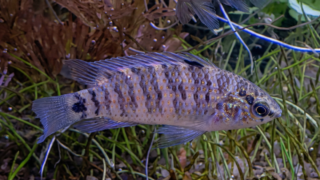
ブロキス・シクリは、ペルー北東部を流れるアマゾン川の支流、ナナイ川の流域に暮らす小型の装甲ナマズです。淡いベージュから白色の体に暗褐色の細かな斑点が散り、目を横切るように黒いマスク模様が入る、上品で繊細な姿が魅力です。口先がほどよく伸びた「セミロングノーズ」と呼ばれる顔つきをしており、丸顔のショートノーズ系コリドラスとはひと味違う、すっきりとした横顔を楽しめます。長くコリドラス・シクリ(Corydoras sychri)の名で親しまれてきましたが、2024年に発表された大規模な分類の見直しによってブロキス属へ移され、現在の学名はBrochis sychriとなっています。国内に流通するのはほとんどがペルーで採集された野生個体で、入荷直後は弱っていることも多いため、やや経験を積んだ方に向く種といえます。それでも環境さえ整えば、群れで寄り添いながら砂をついばむ愛らしい姿を見せてくれ、長く付き合うほどに味わいの深まるコリドラスの仲間です。 Brochis sychri is a small armored catfish native to the basin of the Rio Nanay, a tributary of the Amazon in northeastern Peru. Its pale beige to whitish body is scattered with fine dark brown spots, and a black mask-like band runs across the eye, giving it a refined and delicate appearance. It has a so-called “semi-longnose” profile with a moderately extended snout, offering a sleeker look than round-faced shortnose corydoras. Long known as Corydoras sychri, it was moved to the genus Brochis following a major taxonomic revision published in 2024, and its current scientific name is Brochis sychri. Most fish available in Japan are wild-caught in Peru and are often weak right after arrival, so the species is better suited to keepers with some experience. Once its environment is in order, however, it shows the charming sight of a group sifting through the sand side by side, and it becomes more rewarding the longer you keep it.
基本情報 / Basic Information
| 学名 / Scientific Name | Brochis sychri (Weitzman, 1960) |
|---|---|
| 通称 / Common Name | シクリ、コリドラス・シクリ、ブロキス・シクリ(旧学名:Corydoras sychri。C097の名で流通するタイプも本種と同じ種である可能性が高いと考えられている)Sychri Cory, Long Nosed Fairy Catfish (formerly Corydoras sychri; the form traded as C097 is thought likely to be the same species) |
| 分類 / Family | ナマズ目 カリクティス科 コリドラス亜科 ブロキス属Siluriformes, Callichthyidae, Corydoradinae, genus Brochis |
| 英名 / English Name | Sychr’s Catfish |
| 分布 / Distribution | 南米ペルー北東部(ロレト県)、アマゾン川水系ナナイ川流域。落ち葉の成分で紅茶色に染まったブラックウォーターの、流れの緩やかな細かい砂泥底に生息する。Northeastern Peru (Loreto Region), South America, in the Rio Nanay basin of the Amazon system. It inhabits slow-flowing stretches with fine sandy-muddy bottoms in blackwater stained tea-brown by leaf litter. |
| 最大体長 / Max Size | 飼育下ではオスで約6cm、メスで約6.5cmほどとされ、メスのほうがやや大きくなる。なお、学術的なデータベースに記録されている最大値は標準体長(尾ビレを除いた長さ)で4.3cm。In aquariums, males are said to reach about 6 cm and females about 6.5 cm, with females growing slightly larger. The maximum recorded in scientific databases is 4.3 cm in standard length (excluding the tail fin). |
| 寿命 / Lifespan | 本種に限った詳しい記録は少ないものの、近縁のコリドラス類と同様に5年以上は生きると考えられている。Detailed records for this species alone are scarce, but like related corydoras it is thought to live five years or more. |
飼育環境 / Aquarium Environment
| 水槽サイズ / Tank Size | 5〜10匹程度の群れで飼うなら、60cm規格水槽(約57L)以上がおすすめです。底を生活の場とする魚なので、水槽の高さより底面積の広さが大切です。数を増やす場合や他の魚と混泳させる場合は、60cmワイド水槽や90cm規格水槽(約157L)を選ぶと余裕をもって管理できます。For a group of about five to ten fish, a standard 60 cm aquarium (about 57 L) or larger is recommended. As a bottom dweller, it benefits more from floor area than from tank height. For larger groups or community setups, a 60 cm wide tank or a standard 90 cm aquarium (about 157 L) allows more comfortable management. |
|---|---|
| 水温 / Temperature | 22〜26℃。高水温に弱く、28℃を超える状態が続くと体力が落ち、命に関わることもあります。日本の夏場は、水槽用クーラーや冷却ファンによる水温対策がほぼ欠かせません。 22–26°C. It is sensitive to heat, and if the water stays above 28°C for long its condition declines and it may even die. During Japanese summers, cooling with an aquarium chiller or fan is practically essential. |
| 水質 / Water Quality | pH6.0〜7.2程度の弱酸性〜中性の軟水が適しています。アンモニアや亜硝酸に非常に弱いため、ろ過能力に余裕のある外部式フィルターなどを使い、週に1回、20〜30%程度の換水を続けることが大切です。Soft, slightly acidic to neutral water of about pH 6.0–7.2 is suitable. Because it is very sensitive to ammonia and nitrite, use a filter with ample capacity such as a canister filter and keep up weekly water changes of about 20–30%. |
| レイアウト / Layout | 底床には、田砂のような角の取れたごく細かい砂を薄く敷くのが基本です。角ばった大磯砂や粗い砂利はヒゲを傷める原因になります。砂を掘り返して餌を探すため、底床に植え込む有茎草には向きません。流木や石にアヌビアス・ナナ、ミクロソリウム、ブセファランドラなどの陰性水草を活着させたレイアウトがよく合います。マジックリーフやヤシャブシの実で水をうっすら琥珀色に染めると原産地の雰囲気に近づき、魚が落ち着きやすくなると考えられています。The basic substrate is a thin layer of very fine, smooth sand. Angular gravel or coarse grit can damage the barbels. Because the fish dig through the sand while foraging, stem plants rooted in the substrate are unsuitable. A layout with shade-tolerant plants such as Anubias nana, Microsorum and Bucephalandra attached to driftwood or stones works well. Lightly tinting the water amber with Indian almond leaves or alder cones brings the tank closer to its native habitat and is thought to help the fish settle. |
| 注意点 / Precautions | 時折、水面まで勢いよく泳ぎ上がって空気を吸い込みますが、これは本来の習性で、必ずしも酸欠を意味するものではありません。ただし、その勢いで水槽の外へ飛び出すことがあるため、フタは必ず用意してください。また、コリドラスの仲間は強いストレスを受けると体表から毒性のある粘液を出すことがあるため、狭い容器での移動や急な環境変化はできるだけ避けましょう。輸入直後の個体は弱っていることが多いので、購入後はしばらく別の水槽で様子を見てから本水槽に移すと安心です。It occasionally darts to the surface to gulp air; this is natural behavior and does not necessarily mean oxygen is lacking. However, it can jump out of the tank during these dashes, so always use a lid. Corydoras may also release toxic mucus from their skin under severe stress, so avoid moving them in small containers or exposing them to sudden changes whenever possible. Newly imported fish are often weak, so observing them in a separate tank for a while before moving them into the main tank is a safer approach. |
餌と給餌 / Feeding
| 餌の種類 / Diet | 沈下性のコリドラス用タブレットや顆粒を主食とし、週に数回、冷凍アカムシや冷凍ブラインシュリンプ、ミジンコなどを加えると栄養が偏りにくくなります。自然下では、水底の有機物や水生昆虫、小さな底生生物などを探して食べています。Use sinking corydoras tablets or granules as the staple, adding frozen bloodworms, frozen brine shrimp or daphnia several times a week for a balanced diet. In the wild it forages for organic matter, aquatic insects and small bottom-dwelling animals. |
|---|---|
| 給餌のポイント / Feeding Tips | 臆病で餌探しもあまり器用ではないため、混泳魚に餌を奪われがちです。消灯直前に沈下性の餌を与えるなど、落ち着いて食べられる時間を作ってあげましょう。よく食べる一方で水が汚れると調子を崩しやすいので、食べ残しは早めに取り除いてください。Being timid and not very adept at foraging, it often loses food to tankmates. Give sinking food just before lights-out so it can eat in peace. It eats well but suffers when the water gets dirty, so remove leftovers promptly. |
性格と混泳 / Temperament and Tank Mates
| 性格 / Temperament | とても温和で臆病な性格です。1匹だけでは落ち着かないことが多く、同種を5〜10匹以上の群れで飼うと、本来の自然な行動を見せてくれます。It is very peaceful and shy. A single fish is often restless, and a group of five to ten or more of its own kind will display natural behavior. |
|---|---|
| 混泳の相性 / Compatibility | ネオンテトラなどの小型カラシン、ラスボラ、ペンシルフィッシュ、おとなしいアピストグラマなどのドワーフシクリッドとは相性が良好です。大型シクリッドや、底層を活発に泳ぎ回るドジョウの仲間とは、シクリが怯えて餌を食べられなくなるため混泳を避けましょう。原産地で一緒に暮らすアトロペルソナータスと同居させると、そっくりな模様の魚同士が並ぶ興味深い水景になります。It does well with small characins such as neon tetras, rasboras, pencilfish and peaceful dwarf cichlids such as Apistogramma. Avoid large cichlids and active bottom-dwelling loaches, which frighten it and keep it from feeding. Keeping it with Hoplisoma atropersonatum, which shares its native waters, creates a fascinating scene of look-alike fish side by side. |
病気と対策 / Diseases and Prevention
| かかりやすい病気 / Common Diseases | 特に注意したいのが、輸送中のスレや水質悪化をきっかけに起こるカラムナリス症(尾ぐされ病・口ぐされ病・エラぐされ病)です。ヒレが白く濁って溶ける、ヒゲが欠ける、エラがただれるといった症状が見られます。輸入直後には、白点病や体表・エラに付く寄生虫が見つかることもあります。The main concern is columnaris disease (fin rot, mouth rot and gill rot), often triggered by abrasions during shipping or poor water quality. Symptoms include cloudy, eroding fins, damaged barbels and decaying gills. White spot disease and parasites on the skin or gills may also appear shortly after import. |
|---|---|
| 対策と予防 / Prevention | コリドラスの仲間は薬に敏感で、規定量どおりに使うと薬害を起こすことがあります。カラムナリス症には、グリーンFゴールド顆粒やエルバージュエースを規定量の1/3〜1/2程度に薄め、隔離水槽で薬浴させる方法が一般的に勧められています。寄生虫にはプラジカンテル系の薬が使われますが、本種は高水温に弱いため、治療のために水温を上げるのは最小限にとどめましょう。また、塩水浴はカラムナリス症には効果が期待しにくく、かえって悪化させる場合もあると言われるため、塩水浴だけに頼らず抗菌剤による治療を優先してください。何よりの予防策は、細かい砂の底床、安定した水質、そして夏場の水温管理です。Corydoras are sensitive to medication, and standard doses can cause drug toxicity. For columnaris, a commonly recommended method is a bath in a separate tank using Green F Gold granules or Elbage Ace diluted to about one third to one half of the standard dose. Praziquantel-based medications are used for parasites, but since this species is weak to high temperatures, keep any temperature increase during treatment to a minimum. Salt baths are said to be of little help against columnaris and may even make it worse, so do not rely on salt alone and prioritize antibacterial treatment. The best prevention is a fine sand substrate, stable water quality and careful temperature control in summer. |
増やし方(繁殖) / Breeding
| 雌雄の判別 / Sexing | 成熟したメスはオスより大きく、上から見ると腹部が横に張り出して丸みを帯びています。オスはほっそりとしており、胸ビレの最初のトゲがメスより長く、その後ろ側に細かいギザギザが並ぶのが特徴です。Mature females are larger than males, and their bellies look noticeably broader and rounder when viewed from above. Males are slimmer, with a longer first pectoral-fin spine bearing fine serrations along its rear edge. |
|---|---|
| 繁殖形態 / Reproduction | 卵生です。オスとメスは「Tポジション」と呼ばれるT字型の姿勢をとり、メスは腹ビレの間に抱えた2〜4個の卵を受精させたあと、ガラス面や水草の葉裏などに粘り気のある卵を産み付けます。これを繰り返し、最終的には100個ほどの卵を産むとされています。親は卵を守らず、食べてしまうこともあります。An egg-layer. The pair adopts a T-shaped stance known as the “T-position,” and the female fertilizes two to four eggs held between her pelvic fins before attaching the sticky eggs to the glass or the undersides of plant leaves. This is repeated until about 100 eggs have been laid. The parents do not guard the eggs and may eat them. |
| 繁殖のポイント / Breeding Tips | 国内での繁殖例はまだ多くないとされますが、コリドラスの仲間に共通する方法が有効と考えられています。まず親魚に栄養をしっかり与えて体調を整え、水槽の水を半分ほど抜いてから、普段より2〜3℃低い軟水を注ぎ入れて、原産地の雨季の訪れを再現します。低気圧が近づくタイミングに合わせると、より効果的とも言われています。産み付けられた卵は早めにはがし、エアレーションをした別の容器に移しましょう。ごく薄くメチレンブルーを加えると、卵にカビが生えるのを防ぎやすくなります。卵は3〜5日ほどで孵化し、稚魚がお腹の栄養(ヨークサック)を使い切って泳ぎ出したら、孵化したてのブラインシュリンプや稚魚用の粉末餌を少しずつ与えます。稚魚は水質の悪化に弱いため、こまめな掃除と換水が生存率を高める鍵です。Captive breeding in Japan is said to be still uncommon, but methods common to corydoras are thought to work. First condition the adults with plenty of food, then drain about half the water and refill with soft water 2–3°C cooler than usual to simulate the arrival of the rainy season in their native habitat. Doing this as a low-pressure system approaches is said to be even more effective. Remove the eggs promptly and move them to a separate aerated container; adding a very small amount of methylene blue helps prevent fungus. The eggs hatch in about three to five days, and once the fry have used up their yolk sacs and begin swimming, feed small amounts of newly hatched brine shrimp or powdered fry food. Fry are vulnerable to poor water quality, so frequent cleaning and water changes are the key to survival. |
雑学と豆知識 / Trivia and Fun Facts
| 1. 名前に刻まれた一人のアクアリスト / 1. An Aquarist Immortalized in a Name | シクリが新種として記載されたのは1960年のことで、記載したのはアメリカの魚類学者スタンリー・H・ワイツマン博士です。種小名の「sychri」は、カリフォルニア州ヘイワードに住んでいたアクアリスト、アル・シクル氏にちなんで名付けられました。シクル氏は、新種の記載の拠りどころとなる基準標本(ホロタイプ)を博士に提供した人物です。その標本は野外で採集されたものではなく、水槽で飼われていた魚だったとされています。一人の愛好家が手元で大切に飼っていた魚が新種の発見につながり、その名前が学名として今も受け継がれているのです。This species was formally described in 1960 by the American ichthyologist Dr. Stanley H. Weitzman. Its species name “sychri” honors Al Sychr, an aquarist who lived in Hayward, California. Sychr provided Weitzman with the holotype, the specimen on which the description of a new species is based. That specimen is said to have been an aquarium fish rather than one collected directly in the wild. A fish carefully kept by a single hobbyist led to the recognition of a new species, and his name lives on in its scientific name. |
|---|---|
| 2. コリドラスからブロキスへ / 2. From Corydoras to Brochis | かつてのコリドラス属は非常に多くの種を抱える大きなグループで、見た目だけでは本当の血縁関係がよく分かっていませんでした。転機となったのは2011年です。遺伝子を使った解析によって、コリドラスの仲間は9つの系統(共通の祖先から分かれた家系のようなグループ)に整理されました。シクリはこのうち「系統8」に属し、エメラルドグリーン・コリドラスなどでおなじみの旧ブロキス属の魚たちも、同じ系統8の中に含まれることが分かりました。つまり、別の属として扱われていたブロキスは、実はシクリと同じ家系の一員だったのです。そして2024年、遺伝子と体のつくりの両面から分類が大きく組み直され、系統8の種はすべて復活したブロキス属へまとめられました。こうして「コリドラス・シクリ」は「ブロキス・シクリ」と呼ばれるようになりました。慣れ親しんだ名前が変わって戸惑う方もいるかもしれませんが、これは進化の道のりをより正確に反映した結果と受け止められており、今後さらに細かく属が分けられる可能性も示唆されています。The former genus Corydoras was a very large group, and appearance alone could not reveal the true relationships among its species. The turning point came in 2011, when genetic analyses sorted the corydoras into nine lineages, groups that descend from a common ancestor like branches of a family tree. This species belongs to “Lineage 8,” and the fish of the former genus Brochis, including the familiar emerald green cory, turned out to belong to the same lineage. In other words, Brochis, long treated as a separate genus, was actually part of the same family line as this species. Then in 2024, the classification was extensively rebuilt using both genetic and anatomical data, and all Lineage 8 species were placed in the resurrected genus Brochis. Thus “Corydoras sychri” became “Brochis sychri.” The change of a familiar name may be confusing, but it is regarded as a more accurate reflection of evolutionary history, and further division of the genus has been suggested as a possibility. |
| 3. 他人同士が同じ服を着る理由 / 3. Why Strangers Wear the Same Outfit | ナナイ川には、シクリとよく似た「白地に黒い斑点と、目を横切るマスク模様」を持つコリドラスの仲間がほかにも暮らしています。丸顔のショートノーズであるアトロペルソナータス(現在はホプリソマ属)と、2024年に新種として記載された口先の長いコリドラス・イアプ(愛好家の間ではC53として知られていた種)です。驚くことに、この3種は見た目こそそっくりですが、遺伝的にはそれぞれまったく別の系統に属しています。2011年の研究では、こうした遠い関係の種同士が同じ模様を身につけているのは「擬態」によるものだと示されました。硬い骨板と鋭いトゲを持つ彼らは、捕食者にとって食べにくい獲物です。複数の種が同じ姿をしていれば、捕食者が「この模様の魚は食べにくい」と学ぶまでに襲われる犠牲を、種の間で分け合うことができます。これは「ミュラー擬態」と呼ばれる仕組みで、自然下ではこれらの種が入り混じって群れを作っていると考えられています。The Rio Nanay is home to other corydoras that share this species’ “white body with black spots and an eye mask.” They are the round-faced shortnose Hoplisoma atropersonatum and the long-snouted Corydoras iiap, described as a new species in 2024 and long known to hobbyists as C53. Remarkably, although the three look almost identical, each belongs to an entirely different genetic lineage. A 2011 study showed that such distantly related species share the same pattern through mimicry. With hard bony plates and sharp spines, they are difficult prey for predators. When several species look alike, the losses suffered while predators learn that “fish with this pattern are hard to eat” are shared among them. This is known as Müllerian mimicry, and in the wild these species are thought to form mixed schools. |
| 4. 「混じり」でやって来る魚 / 4. A Fish That Arrives Mixed In | この擬態の関係は、観賞魚の流通の現場にもはっきりと表れます。アトロペルソナータスとして輸入された群れの中に、シクリやコリドラス・イアプが少数混じって届くことが少なくないのです。自然界で一緒に群れているからこそ、同じ網で一緒にすくい上げられるというわけです。そのため、シクリだけがまとまった数で入荷する機会は比較的限られており、ショップの水槽で出会えたら貴重な機会といえるでしょう。なお、C097の名で流通するタイプは、顔つきや斑点の出方にシクリとの違いが見られるものの、現在では同じ種の別の地域集団である可能性が高いと考えられています。This mimicry is plainly visible in the aquarium trade as well. Shipments of H. atropersonatum often arrive with a few B. sychri or C. iiap mixed in. Because they school together in nature, they end up in the same net. As a result, opportunities to obtain this species alone in good numbers are relatively limited, and finding it in a shop tank is a valuable chance. The form traded as C097 differs somewhat in head shape and spotting, but is now thought likely to be another population of the same species. |
| 5. お腹で息をする魚 / 5. A Fish That Breathes Through Its Gut | シクリが時折すばやく水面へ駆け上がるのは、空気を飲み込み、腸で酸素を取り込むためです。腸の後ろの部分には細かな血管が張り巡らされていて、エラだけでなく腸でも呼吸できるようになっています。アマゾンでは乾季に水位が下がり、酸素の少ない水たまりに取り残されることもあります。こうした厳しい環境を生き抜くために身につけた能力と考えられており、水槽の中で見せる小さなダッシュは、野生を生き抜いてきた工夫の名残なのです。When this species occasionally darts to the surface, it is swallowing air to absorb oxygen through its intestine. The rear part of the gut is lined with a network of fine blood vessels, allowing it to breathe not only with its gills but also with its intestine. In the Amazon, falling water levels in the dry season can leave fish stranded in oxygen-poor pools. This ability is thought to have developed for surviving such harsh conditions, and each little dash in the aquarium is a trace of the strategies that carried it through life in the wild. |
| 6. 紅茶色の川と雨季の合図 / 6. A Tea-Colored River and the Signal of the Rains | ナナイ川は、森から流れ込む落ち葉の成分によって紅茶色に染まった、ブラックウォーターの川です。水はとても柔らかく、緩やかな流れの底には細かな砂泥が積もり、その上を落ち葉や沈んだ木々が覆っています。アマゾンの季節は気温よりも水位の変化で区切られ、雨季が訪れると冷たく新しい水が流れ込んで水位が上がっていきます。この変化が、コリドラスの仲間にとって繁殖を始める合図になると考えられています。水槽で冷たい軟水を注いで産卵を促す方法は、まさにこの雨季の訪れを再現したものです。一方で、ナナイ川は大都市イキトスの近くを流れているため漁の影響を受けやすく、魚の数の減少を懸念する研究報告もあります。The Rio Nanay is a blackwater river stained tea-brown by compounds from leaves washed in from the forest. Its water is very soft, fine sand and silt settle on the bed of its gentle current, and fallen leaves and sunken wood cover the bottom. In the Amazon, seasons are marked more by changes in water level than by temperature; when the rainy season arrives, cool fresh water flows in and the river rises. This change is thought to signal corydoras to begin spawning. The technique of adding cool soft water to trigger spawning in the aquarium directly recreates this seasonal arrival. Meanwhile, because the Nanay flows near the large city of Iquitos, it is easily affected by fishing, and some research has raised concerns about declining fish numbers. |
| 7. 野生の恵みと国内繁殖への期待 / 7. Wild Bounty and Hopes for Captive Breeding | 日本で出会えるシクリのほとんどは、ペルーで採集され、空路で長い時間をかけて運ばれてきた野生個体です。長時間の輸送は魚にとって大きな負担であり、入荷直後の丁寧なケアがその後の生存を大きく左右します。原産地での漁獲の影響や輸送に伴うリスクを考えると、国内で繁殖させる技術を確立することは、これからの大切な課題とされています。細やかな水質管理を得意とする日本のアクアリストたちの手で、国内生まれのシクリが当たり前に泳ぐ日が来ることが期待されています。Most B. sychri found in Japan are wild fish collected in Peru and flown over a long journey. Such lengthy transport is a heavy burden on the fish, and careful care right after arrival greatly affects their survival. Considering fishing pressure in the native habitat and the risks of shipping, establishing captive breeding in Japan is seen as an important future goal. It is hoped that, through Japanese aquarists skilled in careful water management, captive-bred specimens will one day become a common sight. |
まとめ / Conclusion
ブロキス・シクリは、白い体に散る細かな斑点と凛としたマスク模様、すっきりとしたセミロングノーズの横顔を持つ、気品ある装甲ナマズです。その姿には、遠い系統の仲間と同じ装いで身を守る擬態の物語や、分類の見直しによって明らかになった進化の道のりが映し出されています。 Brochis sychri is an elegant armored catfish with fine spots scattered across a white body, a striking eye mask and a sleek semi-longnose profile. Its appearance reflects both the story of mimicry, in which it shares the same look as distantly related fish for protection, and the evolutionary path revealed by the revision of its classification.
細かな砂の底床、安定した水質、そして夏の暑さから守られた水温。ひとつひとつを丁寧に整えてあげれば、シクリたちは群れで寄り添い、ヒゲを揺らしながら砂をついばむ穏やかな日常を見せてくれます。手をかけた分だけ応えてくれるその小さな群れは、水槽の底に静かな奥行きと温かな見どころを添えてくれるでしょう。 A fine sand substrate, stable water quality and protection from summer heat: when each is carefully provided, these fish reward you with a peaceful daily life, staying close together and sifting the sand with gently moving barbels. Repaying every bit of care, such a small school brings quiet depth and a warm point of interest to the bottom of the aquarium.
気になる道具や飼い方を見つけてみませんか?
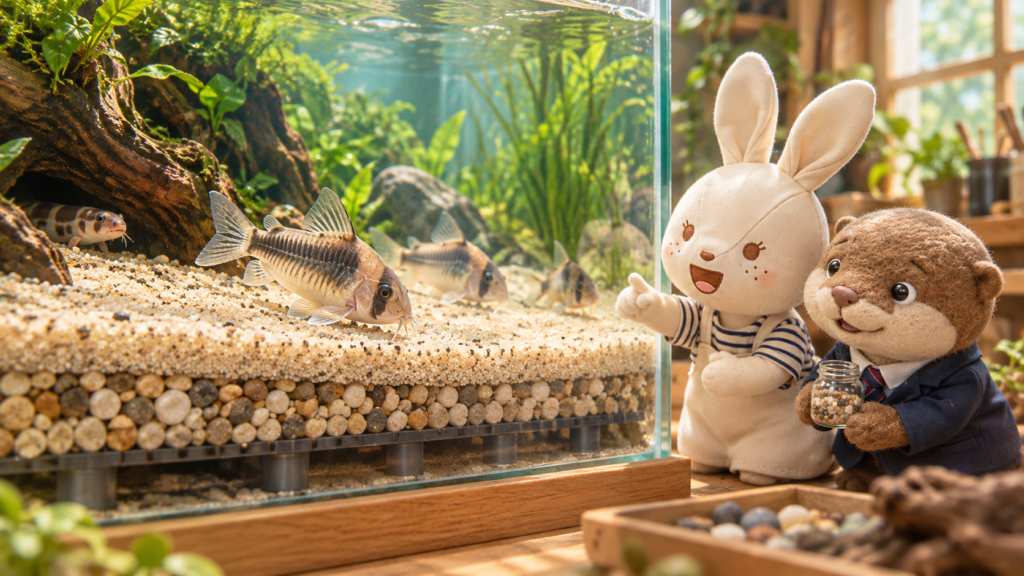 アイのアクアグッズ案内水槽の底砂の選び方|砂・砂利の違いとおすすめ商品道具の特徴や使い方、選ぶときのポイントをアイが紹介します。記事はコチラ →
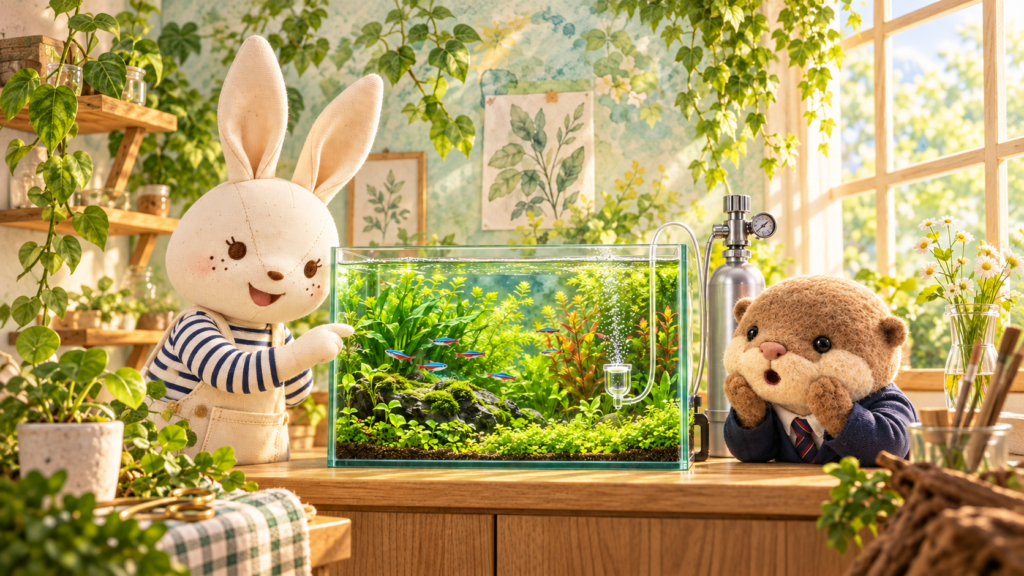 アイのアクアグッズ案内水草水槽のCO₂添加|3つの方式の選び方とおすすめ用品道具の特徴や使い方、選ぶときのポイントをアイが紹介します。記事はコチラ →
さまざまな飼育テーマをご紹介。リンク先の記事には広告・商品紹介が含まれます。
案内・紹介記事一覧へ →分布マップ
ブロキス・シクリ(Brochis sychri)は、南米ペルー北東部のロレト県を流れるアマゾン川の支流、ナナイ川の流域に分布しています。落ち葉の成分で紅茶色に染まったブラックウォーターの、流れの緩やかな細かい砂泥底に暮らしています。
地図はナナイ川流域全体を含む範囲を示した概略表示であり、正確な生息範囲を示すものではありません。マーカーは流域内に便宜的に設定した代表地点で、実際の採集地点ではありません。
参考文献
- Dias, A. C., Tencatt, L. F. C., Roxo, F. F., Silva, G. S. C., Santos, S. A., Britto, M. R., Taylor, M. I. & Oliveira, C. (2024). Phylogenomic analyses in the complex Neotropical subfamily Corydoradinae (Siluriformes: Callichthyidae) with a new classification based on morphological and molecular data. Zoological Journal of the Linnean Society, zlae053. https://doi.org/10.1093/zoolinnean/zlae053
- Alexandrou, M. A., Oliveira, C., Maillard, M., McGill, R. A. R., Newton, J., Creer, S. & Taylor, M. I. (2011). Competition and phylogeny determine community structure in Müllerian co-mimics. Nature, 469, 84–88. https://doi.org/10.1038/nature09660
- Tencatt, L. F. C., Ruiz-Tafur, M. & Chuctaya, J. (2024). A new masked Corydoras (Siluriformes: Callichthyidae) from the Itaya and Nanay river basins, Peruvian Amazon. Neotropical Ichthyology, 22(2), e240016. https://doi.org/10.1590/1982-0224-2024-0016
- Hidalgo del Aguila, M., Velasquez, M. & Chocano, L. (2016). Corydoras sychri. The IUCN Red List of Threatened Species 2016: e.T49830591A53818573. https://doi.org/10.2305/IUCN.UK.2016-1.RLTS.T49830591A53818573.en
- Froese, R. & Pauly, D. (Eds.). FishBase: Brochis sychri (Weitzman, 1960), Sychr’s catfish. https://www.fishbase.se/summary/46245
- Fricke, R., Eschmeyer, W. N. & Van der Laan, R. (Eds.). Eschmeyer’s Catalog of Fishes: Genera, Species, References. California Academy of Sciences. https://researcharchive.calacademy.org/research/ichthyology/catalog/fishcatmain.asp
- PlanetCatfish. Cat-eLog: Brochis sychri Weitzman, 1960. https://www.planetcatfish.com/brochis(sc3)_sychri
- Fuller, I. A. M. & Evers, H.-G. (2005). Identifying Corydoradinae Catfish. Ian Fuller Enterprises.
- Declercq, A. M., Haesebrouck, F., Van den Broeck, W., Bossier, P. & Decostere, A. (2013). Columnaris disease in fish: a review with emphasis on bacterium-host interactions. Veterinary Research, 44, 27. https://doi.org/10.1186/1297-9716-44-27




コメント