
解説 / Description
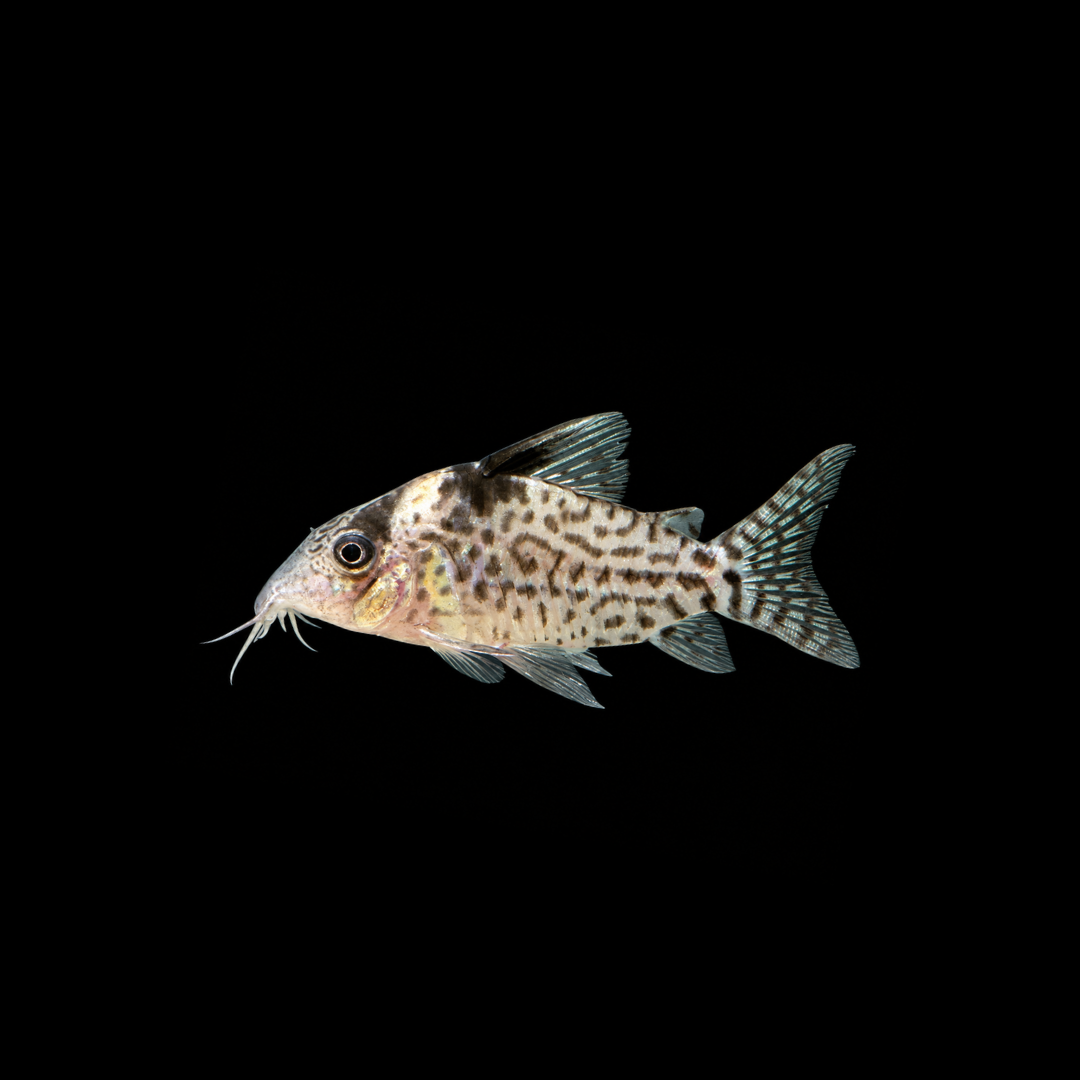
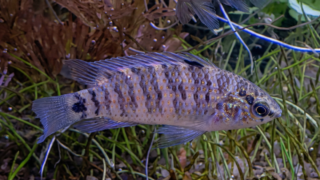
コリドラス・アムビアクスは、南米のアマゾン川上流域に分布する小型のナマズの仲間です。淡い黄褐色の体に褐色から黒色の斑点が散り、背びれの前半から付け根周辺の体表にかけて大きな黒斑が入ります。少し前へ伸びた口先を持つ「セミロングノーズ」と呼ばれる体型で、がっしりとした体つきと、角度によって青く光る頬が魅力です。砂に口先を差し込み、ヒゲを動かしながら餌を探す姿には、底層魚ならではの愛らしさがあります。現在の学名はBrochis ambiacusですが、日本では「コリドラス・アムビアクス」の通称が引き続き使われています。同種の仲間と落ち着いて過ごせる環境を整えると、その穏やかな暮らしぶりをじっくり楽しめます。 The ambiacus cory is a small catfish from the upper Amazon basin in South America. Its pale yellowish-brown body carries brown to black spots, while a prominent dark blotch covers the front of the dorsal fin and extends onto the surrounding back. In the aquarium hobby, its moderately extended snout is described as a semi-long nose. A sturdy body and a blue sheen on the cheeks, visible at certain angles, add to its appeal. Watching it push its snout into the sand and move its barbels as it searches for food is one of the pleasures of keeping this bottom-dwelling fish. Its current scientific name is Brochis ambiacus, although the familiar name Corydoras ambiacus remains in use in the Japanese aquarium trade. A settled aquarium with companions of its own species provides an opportunity to enjoy its generally peaceful behavior.
基本情報 / Basic Information
| 学名 / Scientific Name | Brochis ambiacus (Cope, 1872) 旧学名:Corydoras ambiacus Cope, 1872Former scientific name: Corydoras ambiacus Cope, 1872 |
|---|---|
| 通称 / Common Name | コリドラス・アムビアクス、アムビアクス、ブロキス・アムビアクスAmbiacus cory, spotted cory, Brochis ambiacus |
| 分類 / Family | ナマズ目・カリクティス科・コリドラス亜科・ブロキス属Order Siluriformes; family Callichthyidae; subfamily Corydoradinae; genus Brochis |
| 英名 / English Name | Spotted corydoras, Spotted cory |
| 分布 / Distribution | 南米のアマゾン川上流域。ペルー、コロンビア、エクアドル、ブラジルに分布します。模式産地(学名の基準となる標本の採集地)はペルーのアンピヤク川で、種小名のもとになった川と考えられています。The upper Amazon River basin in Peru, Colombia, Ecuador, and Brazil. The type locality—the place where the specimen establishing the species name was collected—is the Ampiyacu River in Peru. This river is also considered the likely source of the species name. |
| 最大体長 / Max Size | 成魚は約6cmが目安です。成長後の体格に合わせ、底面積に余裕のある水槽を選びます。Adults grow to approximately 6 cm. Choose an aquarium with sufficient floor space for their fully grown size. |
| 寿命 / Lifespan | 本種の飼育下での平均寿命や最長寿命は、明確には分かっていません。数年単位の飼育を見込み、成長後も水質と栄養状態を安定させて、長く付き合える環境を整えます。The average and maximum lifespan of this species in captivity are not clearly established. Plan for care over several years, maintaining stable water quality and adequate nutrition throughout adulthood. |
飼育環境 / Aquarium Environment
| 水槽サイズ / Tank Size | 同種6匹程度の群れを飼う場合、60cm規格水槽(幅60×奥行30×高さ36cm、実水量の目安約50~60L)以上をおすすめします。混泳魚が多い場合や、さらにまとまった数で飼う場合は、90cm規格水槽(幅90×奥行45×高さ45cm、実水量の目安約150~170L)などを検討します。実水量は水位や底砂、レイアウトによって変わります。砂を探し回れる底面積と、全個体に餌が行き渡る余裕を重視してください。For a group of about six, use at least a Japanese standard 60 cm aquarium measuring 60 × 30 × 36 cm, with roughly 50–60 L of actual water. For a larger group or a more heavily stocked community, consider a Japanese standard 90 cm aquarium measuring 90 × 45 × 45 cm, holding approximately 150–170 L in use. Actual volume depends on the water level, substrate, and decorations. Provide sufficient floor space for foraging and enough room for every fish to reach food. |
|---|---|
| 水温 / Temperature | 22~26℃を飼育の目安に、24℃前後で安定させると管理しやすくなります。夏は室温の調整や冷却設備の使用で高水温が続くのを防ぎ、酸素供給にも気を配ります。水換えや導入時には大きな温度差を避けてください。 Use 22–26°C as a practical maintenance range, with a stable temperature around 24°C as a convenient target. During hot weather, control room or aquarium temperature to prevent prolonged overheating and maintain good oxygenation. Avoid large temperature differences during water changes or when introducing fish. |
| 水質 / Water Quality | 水質の目安はpH6.0~7.5(弱酸性~弱アルカリ性)、硬度は低~中程度です。導入前に、その個体が飼育されていた水質も確認し、急激なpHや硬度の変化を避けます。十分に立ち上がったろ過を使用し、アンモニアと亜硝酸が検出されない状態を維持してください。通常の維持管理では、週1回、全水量の4分の1~3分の1程度の換水を目安とし、飼育数や硝酸塩の測定値、汚れ具合に応じて調整します。交換水はカルキを抜き、水温を合わせて使用します。A practical target is pH 6.0–7.5, from mildly acidic to mildly alkaline, with low to moderate hardness. Check the conditions in which new fish have been kept and avoid abrupt changes in pH or hardness. Use a fully established biological filter and keep ammonia and nitrite undetectable. As a general maintenance guideline, change approximately one-quarter to one-third of the water weekly, adjusting the schedule to stocking levels, nitrate readings, and waste accumulation. Dechlorinate replacement water and match its temperature to the aquarium. |
| レイアウト / Layout | 角の丸い細かな砂(田砂など)を1~2cm程度の薄さで敷き、口先を差し込んで餌を探せる砂地を広く残します。流木や水草で日陰と隠れ場所をつくり、前面には観察しやすい開けた空間を設けるとよいでしょう。エキノドルスなどの水草も利用できますが、植え込みすぎて底の移動を妨げないようにします。水流は底付近にも穏やかに届くように調整し、流れを避けて休める場所も確保します。Use a shallow layer, around 1–2 cm, of fine aquarium sand with rounded grains, leaving a broad area where the fish can push their snouts into the substrate. Driftwood and plants provide shade and shelter, while an open foreground makes observation easier. Plants such as Echinodorus can be used, but avoid filling the floor so densely that movement becomes difficult. Arrange gentle circulation near the bottom and retain sheltered places where the fish can rest away from the flow. |
| 注意点 / Precautions | 底砂の表面にたまる残餌やフンは、換水時などにこまめに吸い出します。ヒゲや口先の健康には、砂粒の形状と底床の清潔さの両方が大切です。腸呼吸のために水面へ上がれる通り道を残し、飛び出しを防ぐフタを設けます。胸びれや背びれの棘は網に絡むことがあるため、移動時は透明な容器などで静かに誘導し、素手で握らないようにしてください。導入直後は食欲や体つき、ヒゲの状態をよく観察します。Siphon uneaten food and droppings from the surface of the sand during routine maintenance. Both grain shape and substrate cleanliness matter for the health of the mouth and barbels. Leave a clear route to the surface for air breathing and fit a lid to prevent jumping. Dorsal and pectoral spines may become caught in nets, so gently guide fish into a transparent container when moving them and avoid gripping them with bare hands. Closely observe appetite, body condition, and barbels after introduction. |
餌と給餌 / Feeding
| 餌の種類 / Diet | 動物質を好む雑食性です。栄養バランスの整ったコリドラス用の沈下性タブレットや小粒の沈下性飼料を主食にします。冷凍アカムシ、ブラインシュリンプ、ミジンコなどは、副食として利用できます。アカムシだけに偏らず、人工飼料にも慣らしておくと日常の管理がしやすくなります。生き餌を使う場合は、衛生状態のよいものを選びます。This is an omnivorous fish with a preference for animal foods. A nutritionally balanced sinking cory tablet or small sinking pellet makes a suitable staple. Frozen bloodworms, brine shrimp, and Daphnia can be offered as supplementary foods. Establishing acceptance of prepared food makes routine care easier; avoid relying exclusively on bloodworms. If using live foods, obtain them from a hygienic source. |
|---|---|
| 給餌のポイント / Feeding Tips | 1日1~2回を目安に、体格や食欲に合わせて少量ずつ与えます。混泳水槽では餌が底まで届いているかを確認し、複数の場所に分けて落とすと食べ遅れる個体を減らせます。薄暗い時間帯に活動しやすいため、消灯前後の給餌も役立ちますが、実際に食べていることを確かめてください。腹部がへこんでいないかを日常的に観察し、残餌は長時間放置しません。他魚の食べ残しだけでは必要な栄養を賄えず、コケやフンを取り除く役割も期待できません。Offer small portions once or twice daily, adjusting the amount to body condition and appetite. In a community aquarium, make sure food reaches the bottom; distributing it among several locations helps quieter fish obtain a share. Feeding around lights-out can be useful because the fish tend to become active in dim conditions, but confirm that they actually eat. Check regularly for a sunken abdomen and remove food that remains uneaten. Leftovers alone cannot meet their nutritional needs, and they should not be expected to remove algae or fish waste. |
性格と混泳 / Temperament and Tank Mates
| 性格 / Temperament | おおむね温和で、同種の仲間とまとまって休んだり、周囲を探りながら移動したりします。飼育では6匹程度からの群れを目安にすると、仲間との自然な関わりを観察しやすくなります。導入直後は隠れがちでも、落ち着くと日中に餌を探す姿も見られます。驚かせるような急な動きや、頻繁なレイアウト変更は控え、安心して出入りできる隠れ場所を用意します。Generally peaceful, it may rest alongside companions and move around while investigating its surroundings. A group of around six or more is a useful husbandry target for observing natural social interactions. Newly introduced fish may remain hidden, but settled individuals can also forage during daylight. Avoid startling movements and frequent rearrangement of the aquarium, and provide shelters that they can enter and leave comfortably. |
|---|---|
| 混泳の相性 / Compatibility | 水温や水質が合う小型テトラ、ラスボラ、ペンシルフィッシュなど、温和な中~上層魚と組み合わせやすい魚です。同じ底層を使う魚を多く入れる場合は、餌と休息場所の競合に注意します。大型の肉食魚や攻撃的なシクリッドとの混泳は避けてください。アピストグラマ類も繁殖期には底付近の縄張りを強く守るため、無条件に相性がよいわけではありません。小さな稚エビや魚卵は食べる可能性があり、それらの繁殖を優先する水槽では分けて飼育します。Peaceful small tetras, rasboras, and pencilfish with compatible temperature and water requirements are suitable potential companions. If several bottom-dwelling species are kept together, watch for competition over food and resting places. Avoid large predatory fish and aggressive cichlids. Apistogramma can also defend bottom territories strongly during breeding, so compatibility with them is conditional. Tiny shrimplets and fish eggs may be eaten; keep them separately when their reproduction is the priority. |
病気と対策 / Diseases and Prevention
| かかりやすい病気 / Common Diseases | 注意したいのは、白点病などの寄生虫感染、口先やヒゲの傷に伴う細菌感染、尾ぐされ病などです。野生採集個体では、導入後の食欲不振ややせにも気を配ります。ヒゲが短くなる、体を物にこすりつける、呼吸が速い、腹部がへこむといった変化は、早めに原因を調べる手がかりになります。やせやヒゲの傷みは、給餌不足や底床の汚れなどでも起こるため、症状だけで原因を決めつけないことが大切です。Problems to watch for include ich and other parasitic infections, bacterial infections associated with injuries to the mouth or barbels, and fin rot. Monitor newly acquired wild-caught fish for poor appetite and weight loss. Shortening barbels, rubbing against objects, rapid breathing, or a sunken abdomen warrant investigation. Weight loss and barbel damage can also result from inadequate feeding or poor substrate conditions, so symptoms alone do not establish the cause. |
|---|---|
| 対策と予防 / Prevention | 新しい魚は可能であれば別水槽で数週間観察し、食欲と体表の状態を確認してから合流させます。日常は適切な給餌、底床清掃、定期換水を続け、異常があれば水温、アンモニア、亜硝酸、酸素供給を最初に確認します。治療が必要な場合は、魚病薬の対象魚種と用法・用量を確認し、説明書に従って使用してください。ナマズ類だからと一律に濃度を下げたり、複数の薬を自己判断で混ぜたりしないようにします。白点病の原因となる寄生虫には、魚の体を離れて水槽内で増殖する段階があります。そのため、病魚の隔離や水温上昇だけでは解決しないことがあります。原因が分からない場合や悪化する場合は、魚を診療できる獣医師に相談します。When possible, observe new fish in a separate aquarium for several weeks and check appetite and skin condition before introducing them to an established group. Maintain appropriate feeding, substrate cleaning, and regular water changes. If problems arise, first check temperature, ammonia, nitrite, and oxygenation. When medication is needed, verify that the product is appropriate for the fish and follow its directions. Do not automatically reduce every medication dose simply because the fish is a catfish, or mix treatments without appropriate guidance. Ich parasites have an off-fish stage during which they reproduce in the aquarium, so isolating affected fish or raising the temperature alone may not resolve the infection. Consult a veterinarian who treats fish if the cause remains unclear or the condition worsens. |
増やし方(繁殖) / Breeding
| 雌雄の判別 / Sexing | 成熟した個体では、メスはオスよりふっくらした体つきで、抱卵すると腹部が左右に張り出す傾向があります。上から体の幅を見比べると判断しやすく、オスは比較的細身です。成熟したオスでは腹びれが長く伸びることもあります。ただし、幼魚や痩せた個体では見分けにくく、体型やひれの形だけで確実に判別できるとは限りません。Mature females tend to be fuller-bodied than males, with the abdomen broadening noticeably when carrying eggs. Comparing body width from above is helpful; males are generally slimmer. Mature males may also develop elongated pelvic fins. Juveniles and thin individuals are harder to sex, and body shape or fin length alone does not always provide a reliable answer. |
|---|---|
| 繁殖形態 / Reproduction | 卵生です。コリドラスの仲間では、雌雄が直角に近い姿勢をとる「Tポジション」に続き、メスが腹びれで卵を保持し、水草やガラス面などに付着させる産卵が広く見られます。本種は飼育下での繁殖成功の報告が限られており、産卵を促す条件や卵・稚魚の発育には、まだ不明な点が残っています。This species is an egg layer. Among cory catfishes, spawning commonly involves the T-position, in which the pair align at approximately a right angle, followed by the female holding eggs between her pelvic fins and attaching them to plants, glass, or other surfaces. Reports of successful captive breeding of this species are limited, and its spawning requirements and early development remain incompletely understood. |
| 繁殖のポイント / Breeding Tips | まずは成熟した雌雄を含む群れを落ち着いた環境で飼育し、主食に冷凍餌などを組み合わせて良好な体調を保ちます。十分な栄養は大切ですが、食べきれないほどの多給は水質を悪化させます。近縁種では換水や穏やかな水温変化が産卵のきっかけになることがありますが、本種でも同じ反応が得られるとは限りません。急な冷却や水質の大幅な変更は避けてください。産卵に備えて水草や産卵床を用意し、食卵を防ぐため卵と親魚を分けられるようにしておきます。採卵できた場合は、同じ水温・水質の別容器で穏やかに水を動かし、白く濁って傷んだ卵を取り除きます。孵化後は、腹部に残る卵黄が減って餌を探し始めたら、口に入る大きさの微粒子飼料や孵化直後のブラインシュリンプなどを少量ずつ与え、実際に食べているかを確認します。残餌の除去と少量ずつの換水を続け、稚魚の状態に合わせて管理します。Begin with a group containing mature males and females in a settled environment, maintaining good body condition with a balanced staple supplemented by foods such as frozen invertebrates. Adequate nutrition is important, but excessive feeding degrades water quality. Water changes and mild temperature shifts can trigger spawning in related species, although the same response cannot be assumed for this fish. Avoid abrupt cooling or major changes in water chemistry. Provide plants or spawning material and prepare to separate eggs from adults to reduce egg predation. If eggs are obtained, maintain them in a separate container with matching temperature and water chemistry, gentle circulation, and removal of deteriorating opaque eggs. As the remaining yolk diminishes and the fry begin searching for food, offer small amounts of appropriately sized fine fry food or newly hatched brine shrimp, checking that they actually eat. Remove leftovers and perform small water changes, adjusting care to the condition of the fry. |
雑学と豆知識 / Trivia and Fun Facts
| 1. 名前に残るペルーの川 / 1. A Peruvian River Preserved in a Name | 種小名のambiacusは、模式産地であるペルーのアンピヤク川の旧綴り「Ambyiacu」に由来すると考えられています。この魚の特徴を記し、1872年に学名を与えたのは、動物学者のエドワード・ドリンカー・コープでした。150年以上前の記載にも、頬の青い反射や背びれ周辺の黒斑が特徴として記されています。水槽でふと見える青い輝きは、かつての観察者も目を留めた、この魚らしい表情なのです。The species name ambiacus is thought to derive from Ambyiacu, an older spelling of the Ampiyacu River in Peru, its type locality. Zoologist Edward Drinker Cope described the fish and established its scientific name in 1872. His description, written more than 150 years ago, already noted the blue reflection on the cheeks and the dark marking around the dorsal fin. The brief blue gleam visible in an aquarium today is a feature that also caught the attention of an earlier observer. |
|---|---|
| 2. コリドラスからブロキスへ / 2. From Corydoras to Brochis | 長くCorydoras ambiacusと呼ばれてきた本種は、2024年に公表された研究に基づく分類の見直しで、ブロキス属へ移されました。DNAに残る進化の歴史と骨格などの特徴を合わせて調べることで、外見だけでは捉えきれなかった仲間同士の関係が整理されたのです。現在のBrochis ambiacusという学名は、その理解を反映しています。 ブロキスという属名そのものは新しく作られた言葉ではなく、コープが1871年に設けた名前です。語源はギリシャ語で「輪」を意味する言葉です。命名当時、ブロキス属の魚で注目された、口元のヒゲと下顎をつなぐ輪状の構造にちなみます。古い名前が新しい系統研究の中で再び使われるところにも、分類学の積み重ねが感じられます。流通名の「コリドラス」は今も親しまれているため、通称と現在の学名を一緒に覚えておくと、魚を探すときにも役立ちます。Long known as Corydoras ambiacus, this species was transferred to Brochis through a classification revision based on research first published in 2024. By combining evolutionary evidence preserved in DNA with anatomical features, including skeletal structures, researchers clarified relationships that appearance alone could not fully resolve. Its current name, Brochis ambiacus, reflects that understanding. Brochis itself is an older name, established by Cope in 1871. It comes from a Greek word meaning “loop,” referring to a loop-like connection between the mouth barbels and lower jaw described in the fish originally assigned to Brochis. The reuse of an old name within a new evolutionary framework shows how taxonomy builds on earlier work. Since the familiar name Corydoras remains common in the aquarium trade, knowing both the trade name and current scientific name can make the fish easier to find. |
| 3. 似た模様を見分ける楽しさと難しさ / 3. The Challenge of Recognizing Similar Spotted Species | アムビアクスには、アガシジィやデルファックスなど、斑点模様や伸びた口先がよく似た仲間がいます。見分けるときは、吻(口先)の形、体つき、背びれとその付け根の黒斑、体側や尾びれの模様を組み合わせて観察します。ただし、斑点の大きさや目の周囲の黒い模様だけで、すべての個体を確実に区別できるわけではありません。採集地の情報も助けになりますが、それでもどの種か判断しにくい個体があります。 本種には、かつて別の名前で記載されたCorydoras grafiやCorydoras melanistius longirostrisが、同じ種を指す「同物異名」として扱われてきた歴史もあります。よく似た魚をどう区別するかは、愛好家だけでなく分類学者も向き合ってきた問題です。模様を眺める楽しみに、形や産地を丁寧に見比べる視点が加わると、小さな魚の奥にある多様さが少しずつ見えてきます。The ambiacus cory has several lookalikes, including Agassiz’s cory and Brochis delphax, which share spotted patterns and an extended snout. Identification involves considering snout shape, body proportions, the dark marking on and around the dorsal fin, and markings on the sides and tail. Spot size or the dark pattern around the eyes alone cannot reliably identify every individual. Collection locality may help, but some fish remain difficult to assign confidently. The names Corydoras grafi and Corydoras melanistius longirostris, originally applied to separately described forms, have also been treated as synonyms of this species. Distinguishing similar fish has therefore occupied taxonomists as well as aquarists. Looking carefully at shape and locality alongside the attractive markings reveals another layer of diversity behind these small catfishes. |
| 4. 群れにも朝夕のリズムがある / 4. A Shoal Changes with the Light | 仲間と寄り添っていたアムビアクスが、薄暗くなると少しずつ間隔を広げ、砂の上を動き始めることがあります。飼育下で本種の行動を調べた研究では、明け方や夕暮れの薄明るい時間帯に動きが活発になる一方、群れのまとまりは弱くなることが示されています。この実験では、小型のピグマエウスよりも、アムビアクスの方がまとまりの強い群れを形成しました。群れで暮らす魚でも、いつも同じ間隔や隊列を保つわけではないのです。水槽に明暗と休息場所を用意し、照明がついている時間だけでなく消灯前後にもそっと目を向けると、仲間との距離や泳ぐ場所の変化を楽しめます。A group resting close together may gradually spread out and begin moving over the sand as the light fades. Laboratory observations of this species found increased activity at twilight—the dim light around dawn or dusk—accompanied by reduced shoal cohesion. In the same experiment, ambiacus formed more cohesive groups than the smaller pygmy cory. Living in a shoal does not mean maintaining the same spacing or formation throughout the day. Providing areas of light and shade, along with resting places, and quietly observing around lights-out can reveal changes in where the fish swim and how closely they stay together. |
| 5. 一口の空気で補う腸呼吸 / 5. A Breath of Air through the Intestine | 砂の上からすっと水面へ上がり、空気を取り込むとすぐに底へ戻る。この短い往復は、コリドラスの仲間に特徴的な腸呼吸に関わる行動です。飲み込んだ空気を消化管へ送り、腸の一部で酸素を取り込んで、エラによる呼吸を補います。近縁のアエネウスでは、腸の後方で空気中の酸素を取り込み、空気を肛門から排出することが分かっています。水中の酸素が十分なときにも空気呼吸が観察されており、ときどきの浮上だけで異常と考える必要はありません。 ただし、この能力があっても、水槽の酸素供給は大切です。複数の個体が普段より頻繁に水面へ向かう、エラの動きが速い、落ち着きがなくなるといった変化が重なったら、水温や水質、フィルターとエアレーションの働きを確認しましょう。いつもの行動を知っておくことが、小さな変化に気づく助けになります。A quick dash from the sand to the surface, a gulp of air, and an immediate return to the bottom are characteristic of intestinal air breathing in cory catfishes. Swallowed air enters the digestive tract, where part of the intestine absorbs oxygen to supplement the gills. In the related bronze cory, research has demonstrated oxygen uptake through the posterior intestine and the release of air through the anus. Air breathing has also been observed in well-oxygenated water, so occasional surfacing alone is not necessarily a sign of trouble. This ability does not remove the need for good aquarium oxygenation. If several fish surface much more often than usual, breathe rapidly, or become restless, check temperature, water quality, filtration, and aeration. Familiarity with their normal behavior makes changes easier to recognize. |
| 6. 穏やかな姿を守る鎧と棘 / 6. Armor and Spines behind a Gentle Appearance | アムビアクスのがっしりした印象には、体側を覆う骨板も関わっています。カリクティス科の仲間は、体の左右に並ぶ骨板と、胸びれや背びれの硬い棘を備えています。砂を探る穏やかな暮らしの一方で、こうした構造は外敵への防御に役立つと考えられます。網ですくうときには、硬い棘が網目に引っかかることもあります。網に絡んだときは、無理に引き抜かないようにします。 近縁のアエネウスやステルバイでは、胸びれの付け根付近にある分泌腺や、その分泌物が調べられています。この腺は棘とは別の構造で、アムビアクスについては分泌物の性質や作用が十分に明らかになっていません。移動の際は容器を使って静かに誘導し、長く追い回したり、狭い容器に詰め込んだりしないようにしましょう。体の仕組みを知ることは、この魚に合った優しい扱い方にもつながります。Bony plates contribute to the sturdy appearance of the ambiacus cory. Members of Callichthyidae possess rows of plates along the sides and hardened spines in the dorsal and pectoral fins. These structures are considered part of their defense against predators. The same rigid spines can catch in a net, so a fish that becomes entangled should never be pulled free by force. In related bronze and Sterba’s cory catfishes, researchers have examined glands near the bases of the pectoral fins and the substances they release. These glands are distinct from the spines, and the properties and effects of such secretions remain insufficiently understood specifically for ambiacus. Guide the fish gently into a container when moving it, avoiding prolonged chasing or overcrowding in a small container. Understanding its anatomy also helps make everyday handling more considerate. |
まとめ / Conclusion
コリドラス・アムビアクスは、斑点模様の落ち着いた美しさと、砂を探る生き生きとした仕草を楽しめる魚です。細かな砂、清潔で安定した水、仲間と休める場所を用意し、必要な量の餌を底まで届けることが、落ち着いた暮らしを支えます。 The ambiacus cory combines the quiet beauty of a spotted pattern with lively, absorbing foraging behavior. Fine sand, clean and stable water, places to rest with companions, and appropriate amounts of food reaching the bottom support a settled life in the aquarium.
流木の陰で仲間と並んで休む姿や、薄暗い時間帯に餌を探す様子、ふとした角度で青く光る頬には、じっくり眺める楽しさがあります。日々の行動や体調の変化を見守りながら飼育することで、アムビアクスのさまざまな表情に出会えるでしょう。 There is much to enjoy in companions resting beneath driftwood, fish foraging in dim light, and a cheek flashing blue as an individual turns. Patient observation of daily behavior and condition reveals the many different expressions of the ambiacus cory.
気になる道具や飼い方を見つけてみませんか?
 アイのアクアグッズ案内水草トリミングの道具とやり方|ハサミ・ピンセットを水草に合わせて選ぼう伸びすぎた水草は切っていい? 有茎草の差し戻し、前景草の絨毯、流木のモスを整える場面から、水草用ハサミ・ピンセット・ゴミ取りネットの選び方と片付けを紹介します。記事はコチラ →
 アイのアクアグッズ案内旅行中、お魚のごはんはどうする? 自動給餌器・使える餌・スマート水槽の選び方旅行中の魚の餌やりを助ける自動給餌器を、アイとコタロウが紹介。時間指定、おかわり給餌、対応するフレークや顆粒、設置台、スマホ管理、一体型水槽、留守番フードまで、使いどころと選び方を案内します。記事はコチラ →
さまざまな飼育テーマをご紹介。リンク先の記事には広告・商品紹介が含まれます。
案内・紹介記事一覧へ →分布マップ
コリドラス・アムビアクス(Brochis ambiacus)は、ペルー、コロンビア、エクアドル、ブラジルにまたがるアマゾン川上流域に分布します。
この地図は分布地域の位置を示す概略表示です。表示範囲の全域が生息域であることや、正確な分布境界を示すものではありません。マーカーは地理案内用の代表地点(南緯4度・西経72度)で、実際の採集地点や生息確認地点を示すものではありません。
参考文献
- 分類・学名・分布 Fricke, R., Eschmeyer, W. N. & van der Laan, R. (eds.) (2026). Eschmeyer’s Catalog of Fishes: Genera, Species, References. California Academy of Sciences. 「ambiacus, Corydoras」種レコード。2026年10月21日閲覧。
- 系統解析と属の再分類 Dias, A. C., et al. (2025、2024年オンライン先行公開). Phylogenomic analyses in the complex Neotropical subfamily Corydoradinae (Siluriformes: Callichthyidae) with a new classification based on morphological and molecular data. Zoological Journal of the Linnean Society, 203(3), zlae053.
- 原記載・形態・模式産地 Cope, E. D. (1872). On the fishes of the Ambyiacu River. Proceedings of the Academy of Natural Sciences of Philadelphia, 23, 250–294(本種の記載:280–281頁).
- 分布・生息環境 FishBase. Brochis ambiacus (Cope, 1872), Spotted corydoras. 2026年10月21日閲覧。
- アムビアクスの群れ行動と活動時間 Paxton, C. G. M. (1997). Shoaling and activity levels in Corydoras. Journal of Fish Biology, 51(3), 496–502.
- コリドラス類の飼育・給餌・卵と稚魚の管理 Chiang, A., et al. (2024). Comprehensive Husbandry Protocol for Corydoras Catfish and Many Other Amazonian Species. Journal of the American Association for Laboratory Animal Science, 63(5), 472–479. DOI: 10.30802/AALAS-JAALAS-24-039.
- コリドラス類の繁殖行動 Zarske, A. & Greven, H. (2015). Twenty years “sperm drinking” by female catfishes – and still nothing new? An essay about the different perception of amateurs and professionals. Bulletin of Fish Biology, 15(1/2), 9–31.
- 水質管理・隔離観察・魚病予防 Yanong, R. P. E. (2003、2025年10月改訂). Fish Health Management Considerations in Recirculating Aquaculture Systems—Part 3: General Recommendations and Problem-Solving Approaches. University of Florida, UF/IFAS Extension, Circular 122 / FA101.
- 白点病の生活環・予防・治療の基本 Francis-Floyd, R., Yanong, R. P. E. & Pouder, D. B. (1991、2026年5月改訂). Ichthyophthirius multifiliis (White Spot) Infections in Fish. University of Florida, UF/IFAS Extension, Circular 920 / FA006.
- 腸呼吸と水面への浮上行動(アエネウス) Kramer, D. L. & McClure, M. (1980). Aerial respiration in the catfish, Corydoras aeneus (Callichthyidae). Canadian Journal of Zoology, 58(11), 1984–1991.
- 胸びれ付け根の腺の構造(アエネウス) Greven, H., Flasbeck, T. & Passia, D. (2006). Axillary glands in the armoured catfish Corydoras aeneus (Callichthyidae, Siluriformes). Verhandlungen der Gesellschaft für Ichthyologie, 5, 65–69.
- 輸送時の分泌物と胸びれ付け根の腺(ステルバイ) Kiehl, E., Rieger, C. & Greven, H. (2006). Axillary gland secretions contribute to the stress-induced discharge of a bactericidal substance in Corydoras sterbai (Callichthyidae, Siluriformes). Verhandlungen der Gesellschaft für Ichthyologie, 5, 111–115.




コメント