
解説 / Description
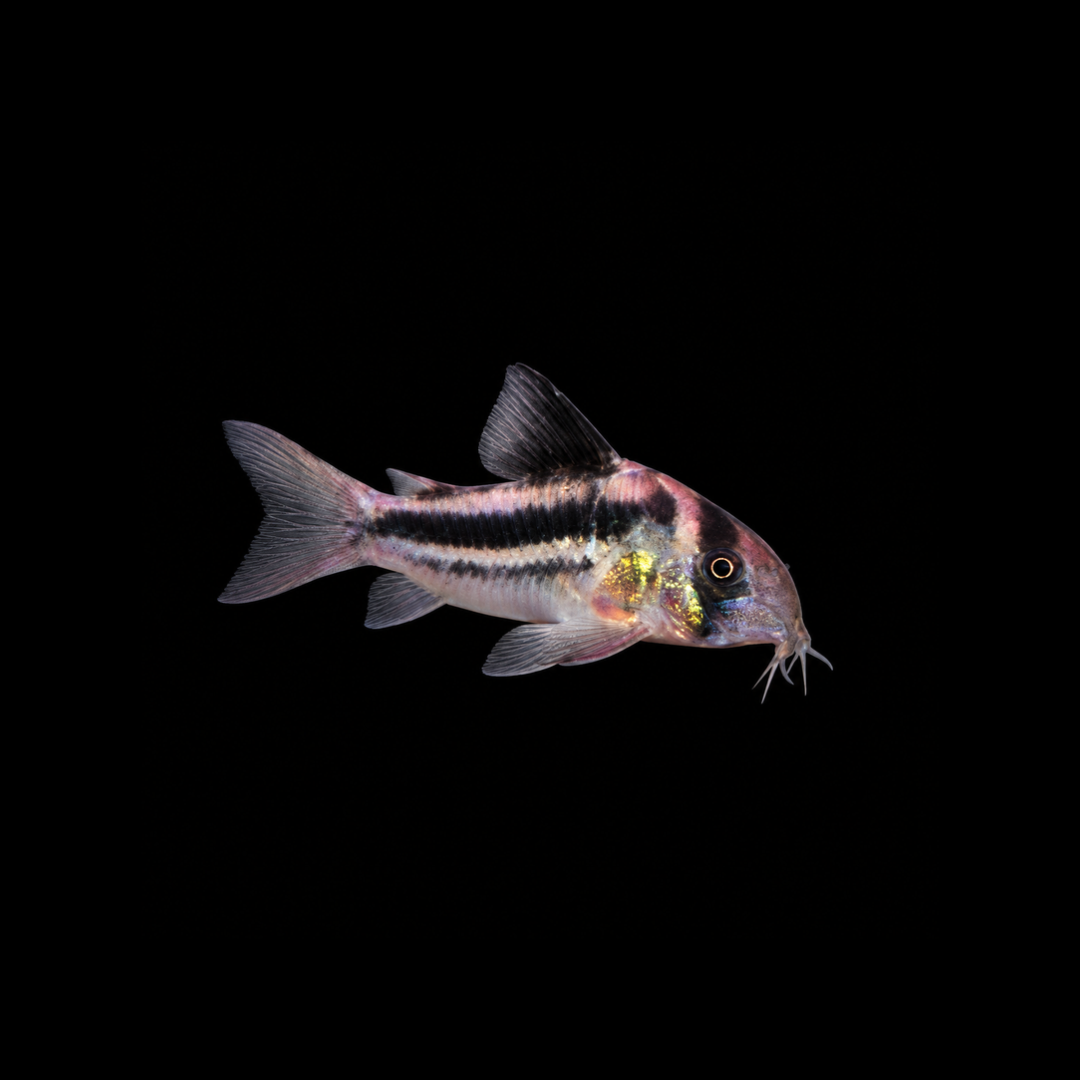
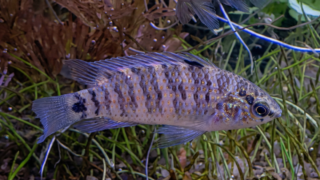
ブロードバンドアクセルロディは、淡い茶褐色の体に幅広い黒帯が走る、コロンビア産の小型の底生魚です。目を通る黒い帯と、体側上部の太い帯が落ち着いた地色を引き締め、短く丸みのある口先と、やや細長く見える体つきも印象的です。国内では「コリドラス・ブロードバンドアクセルロディ」の名で親しまれ、現在はホプリソマ属の一型として、CW169という識別番号で扱われています。通常のアクセルロディに似ていますが、両者の分類上の関係は確定していません。仲間と砂底を探ったり、流木の陰で並んで休んだりする姿には、この仲間ならではの親しみやすさがあります。飼育では、導入直後の餌付きと痩せに気を配り、清潔な底床と、落ち着いて食事ができる環境を整えることが大切です。 The broad-band Axelrodi is a small bottom-dwelling catfish from Colombia, distinguished by a broad black stripe against a pale brown body. A dark band through the eye and a prominent stripe along the upper flank give it a striking yet understated appearance, complemented by a short, rounded snout and a somewhat elongated silhouette. In Japan, it is commonly sold as Corydoras Broad-band Axelrodi. It is currently treated as a form of Hoplisoma under the identification code CW169. Although it resembles the familiar Axelrod’s cory, the taxonomic relationship between them remains unresolved. Its habit of searching the sand with companions and resting beside them beneath driftwood makes it an engaging aquarium resident. Successful care begins with careful attention to feeding and body condition after introduction, together with a clean substrate and a peaceful place to eat.
基本情報 / Basic Information
| 学名 / Scientific Name | Hoplisoma sp. CW169 |
|---|---|
| 通称 / Common Name | コリドラス・ブロードバンドアクセルロディ、ブロードライン・アクセルロディ、CW169。CW169 cory; sold in Japan under trade names meaning Broad-band Axelrodi and Broad-line Axelrodi. |
| 分類 / Family | ナマズ目・カリクティス科・コリドラス亜科・ホプリソマ属。Order Siluriformes; family Callichthyidae; subfamily Corydoradinae; genus Hoplisoma. |
| 英名 / English Name | CW169 Cory |
| 分布 / Distribution | 南米コロンビア。メタ県グラナダ周辺やアリアリ川を産地とする個体が流通します。詳しい採集地点と分布範囲には未確認の部分があります。Colombia, South America. Fish in the trade have been associated with the area around Granada in Meta Department and with the Río Ariari. Precise collecting sites and the full distribution remain incompletely established. |
| 最大体長 / Max Size | 成魚は尾びれを含む全長で約4~5cmが目安です。飼育例ではオス約4~4.5cm、メス約5cmと、メスのほうが大きく育つ傾向があります。厳密な最大サイズは明らかではありません。Adults generally reach about 4–5 cm in total length, including the tail. Aquarium observations suggest approximately 4–4.5 cm for males and about 5 cm for females, with females tending to grow larger. A firmly established maximum size is not available. |
| 寿命 / Lifespan | CW169としての平均寿命や最長寿命は明らかになっていません。野生採集個体では購入時の年齢が分からない場合もあり、購入後の飼育年数がそのまま魚の年齢になるわけではありません。Neither the average nor the maximum lifespan of CW169 has been firmly established. The age of a wild-caught fish at purchase may be unknown, so the number of years it has been kept after purchase does not necessarily indicate its actual age. |
飼育環境 / Aquarium Environment
| 水槽サイズ / Tank Size | 6匹前後の群れなら、60cm規格水槽(幅60×奥行30×高さ36cm、約60Lクラス)以上を一つの目安にします。混泳魚や飼育数を増やす場合は、60cmワイド水槽(幅60×奥行45×高さ45cm、約120Lクラス)などを選び、底面積に余裕を持たせてください。水量だけでなく、全個体が底で休み、餌を探せる広さを重視します。For a group of around six, a standard Japanese 60 cm aquarium measuring 60 × 30 × 36 cm, in the approximately 60 L class, is a practical starting point. With more fish or additional tank mates, consider a 60 cm wide aquarium measuring 60 × 45 × 45 cm, approximately 120 L, or a larger setup. Prioritize usable floor space where every fish can rest and forage, as well as water volume. |
|---|---|
| 水温 / Temperature | 22~26℃を飼育の目安に、日々の変動を小さく保ちます。夏場に高水温が続く場合は、室温の管理や水槽用の冷却器具を使い、酸素供給にも気を配ってください。換水時も新しい水との温度差を小さくします。 A practical maintenance range is 22–26°C, with small day-to-day fluctuations. During prolonged summer heat, manage room temperature or use suitable aquarium cooling equipment, while maintaining adequate oxygenation. Keep the temperature of replacement water close to that of the aquarium. |
| 水質 / Water Quality | 弱酸性~中性の軟水を基本とし、pH6.0~7.2程度を飼育の目安にします。ろ過が十分に機能する水槽で、アンモニアと亜硝酸が検出されない状態を維持してください。週1回、全水量の1/4~1/3程度の換水を基本の目安とし、飼育密度や汚れ方に応じて調整します。新しい水はカルキを抜き、水温や水質を合わせて使います。流木や落ち葉を加える場合も、水の色とは別にpHや硬度を確認しましょう。Use soft, slightly acidic to neutral water, with approximately pH 6.0–7.2 as a maintenance guide. Keep the aquarium biologically mature and maintain undetectable ammonia and nitrite. A weekly water change of about one-quarter to one-third is a useful starting routine, adjusted to stocking and waste accumulation. Dechlorinate replacement water and match its temperature and chemistry. When using driftwood or leaves, check pH and hardness independently of the water’s color. |
| レイアウト / Layout | 田砂など、角のない細かい砂を0.5~1cm程度の薄さで敷くと、砂を探る行動を観察しやすくなります。流木や水草で陰をつくり、その手前には群れで餌を探せる開けた場所を残してください。底付近にも穏やかに水が回るようにしつつ、流れを避けて休める場所も用意します。砂の表面に食べ残しや汚れをためない管理が大切です。A thin layer of smooth, fine sand, approximately 0.5–1 cm deep, encourages natural foraging. Japanese aquarium sand such as Tasuna is one option. Provide shade with driftwood and plants while leaving open feeding areas in front. Arrange gentle circulation near the bottom, together with sheltered resting places away from the current. Keep uneaten food and debris from accumulating on the sand. |
| 注意点 / Precautions | 導入直後は、腹部のへこみ、呼吸の速さ、餌への反応をよく確認します。特に小さな個体や痩せた個体は、落ち着いて食べられる環境で慎重に管理してください。水面へ空気を取りに行ける通り道を確保し、飛び出し防止のフタも用意します。胸びれや背びれの硬い棘は網に絡みやすいため、移動時は、水を入れた容器へ魚をそっと誘導すると扱いやすくなります。素手でつかむことは避けましょう。After introduction, watch for a sunken abdomen, rapid breathing, and poor feeding responses. Small or underweight individuals need particularly careful management in a setting where they can eat undisturbed. Maintain clear access to the surface for air breathing and use a lid to prevent jumping. The firm pectoral and dorsal spines can become entangled in nets, so gently guiding the fish into a water-filled container is often easier. Avoid grasping it with bare hands. |
餌と給餌 / Feeding
| 餌の種類 / Diet | 小粒の沈下性ペレットやコリドラス用タブレットを主食に、冷凍アカムシや冷凍ブラインシュリンプなどを組み合わせます。人工飼料に慣れていない個体には、清潔に管理されたイトメなどを補助的に使い、食べるきっかけをつくる方法もあります。イトメや冷凍アカムシだけに偏らず、栄養の整った人工飼料にも徐々に慣らしていきましょう。Use small sinking pellets or corydoras tablets as the staple, supplemented with foods such as frozen bloodworms and frozen brine shrimp. Carefully sourced and maintained live Tubifex worms can help encourage feeding in individuals unfamiliar with prepared foods. Gradually introduce a nutritionally balanced prepared diet rather than relying only on foods such as Tubifex and frozen bloodworms. |
|---|---|
| 給餌のポイント / Feeding Tips | 1日1~2回、全個体が食べられる量を底まで届け、腹部の張りと食べ残しを見ながら調整します。餌を複数の場所へ分けたり、照明を落とした落ち着ける時間帯に与えたりすると、餌負けを減らせます。底に餌が落ちているだけで安心せず、各個体が実際に口にしているかを確認してください。導入直後の痩せた個体には、食べやすい餌を少量ずつ与え、残りは取り除きます。他魚の食べ残しだけに頼らず、本種のためにも餌を用意しましょう。Feed once or twice daily, ensuring that food reaches every fish, and adjust portions according to body condition and leftovers. Distribute food among several locations or offer it during a quiet period with subdued lighting to reduce competition. Food lying on the bottom does not prove that each fish is eating, so observe individuals directly. Newly introduced, underweight fish benefit from small portions of readily accepted foods, with leftovers removed. Offer food specifically for CW169 rather than relying on other fishes’ leftovers. |
性格と混泳 / Temperament and Tank Mates
| 性格 / Temperament | 温和で、仲間と緩やかにまとまりながら底を探る魚です。導入直後や落ち着ける場所が少ない環境では、物陰にとどまることがあります。同じCW169を複数で飼い、隠れ場所と開けた砂地を用意すると、日常の行動を観察しやすくなります。活発さや警戒心には個体差があります。A peaceful fish that often forages in loose association with companions. It may remain under cover after introduction or when secure resting places are scarce. Keeping several CW169 together and providing both shelter and open sand makes its everyday behavior easier to observe. Activity and wariness vary among individuals. |
|---|---|
| 混泳の相性 / Compatibility | 水温と水質の合う、小型で温和なカラシンやラスボラ類などが候補になります。餌を独占する魚、ひれや口ひげをつつく魚、底層を強く縄張りにする魚との組み合わせには注意してください。アピストグラマなどの小型シクリッドも、繁殖期にはコリドラスを追い払うことがあります。本種を飲み込める大型魚との混泳は避けます。捕食されそうになった際に棘が引っかかり、双方が傷つくおそれがあります。Small, peaceful tetras and rasboras with compatible temperature and water requirements are suitable candidates. Avoid companions that monopolize food, nip fins or barbels, or strongly defend territories on the bottom. Even dwarf cichlids such as Apistogramma may drive corydoras away during breeding. Do not house CW169 with fish large enough to swallow it, as its spines may become lodged during an attempted predation, injuring both fish. |
病気と対策 / Diseases and Prevention
| かかりやすい病気 / Common Diseases | CW169で特に起こりやすい病気は明らかではありませんが、白点病などの寄生虫による病気や、口元・口ひげ・ひれの傷に伴う細菌感染に注意します。白い点、体をこする動作、ひれの傷み、食欲低下、呼吸の変化は早めに気づきたい異変です。痩せが続く場合は、餌不足や混泳による餌負けに加え、寄生虫などが関係することもあります。痩せや白い点だけで原因を決めつけないことが大切です。No disease has been established as particularly common in CW169, but parasitic diseases such as freshwater white spot and bacterial infections associated with injuries to the mouth, barbels, or fins deserve attention. White spots, rubbing against objects, damaged fins, reduced appetite, and altered breathing are signs to notice early. Persistent weight loss may involve inadequate feeding, competition, or parasites. Neither weight loss nor white spots alone identifies the cause with certainty. |
|---|---|
| 対策と予防 / Prevention | 新しく迎える魚は、ろ過が安定した別水槽で30日以上を目安に観察し、本水槽との間で網やホースの共用を避けます。日頃から底床の清掃、適量の給餌、定期的な換水を続けてください。異常時には水温やアンモニア・亜硝酸の値を測定し、エアレーションが正常に働いているかも確認します。必要に応じて病魚を隔離し、魚を診療できる獣医師などへ相談してください。薬剤は対象魚への適否と製品表示の用法・用量を確認し、目分量での添加や自己判断での併用を避けましょう。Observe newly acquired fish for at least about 30 days in a separate aquarium with established filtration, and avoid sharing nets or siphon hoses between it and the main aquarium. Maintain substrate cleanliness, appropriate feeding, and regular water changes. When problems appear, measure temperature, ammonia, and nitrite, and check that aeration is working properly. Isolate affected fish when appropriate and seek advice from a veterinarian experienced with fish. Verify that any medication is suitable for the fish and follow the product’s labeled directions and dosage, without estimating doses by eye or combining treatments without guidance. |
増やし方(繁殖) / Breeding
| 雌雄の判別 / Sexing | 成熟した個体を上から見ると、メスは体が大きく、腹部の幅も広くなりやすい一方、オスは比較的小柄で細身です。メスが卵を持つと、この体型差が分かりやすくなります。オスでは黒帯が明瞭に残り、メスでは成長に伴って輪郭がややにじむ傾向も見られますが、模様だけで確定することはできません。幼魚の判別は難しく、成熟後に体格と腹部の形を合わせて見比べます。Viewed from above, mature females tend to be larger and broader through the abdomen, while males are relatively small and slender. The difference becomes clearer when females carry eggs. Some aquarium observations suggest that males retain sharply defined dark stripes while the outlines become more diffuse in growing females, but pattern alone is not conclusive. Juveniles are difficult to sex; compare overall size and abdominal shape after maturity. |
|---|---|
| 繁殖形態 / Reproduction | 卵生で、ガラス面などに粘着性の卵を産み付けます。国内でも水槽内での産卵と稚魚の育成例があり、卵は目測で直径約2mmとされた例があります。親魚や混泳魚が卵を食べることがあるため、稚魚を育てる場合は卵を別の容器で保護します。An egg layer that attaches adhesive eggs to surfaces such as aquarium glass. Aquarium spawning and fry rearing have been achieved in Japan, with eggs visually estimated at approximately 2 mm in one breeding account. Adults or tank mates may eat the eggs, so protect them in a separate container when attempting to raise fry. |
| 繁殖のポイント / Breeding Tips | 親魚には、CW169の健康な成熟個体を選び、栄養の整った餌と清潔な水で状態を整えます。水温やpHを安定させた部分換水を続け、メスの腹部の張りや追尾行動を観察してください。 卵は押しつぶさないよう慎重に扱い、親水槽と水温・水質を合わせた育成容器で保護します。弱い通水やエアレーションを確保し、白濁して傷んだ卵を取り除きます。孵化後は腹部の卵黄が吸収され、自力で餌を食べ始める段階を見極め、孵化直後のブラインシュリンプなど、口に入る餌を少量ずつ与えます。食べ残しをこまめに除去し、水温と水質の合う水で少量ずつ換水してください。孵化日数や成長速度には幅があるため、日数だけで判断せず、卵と稚魚の状態を見ながら進めます。Select healthy, mature CW169 as broodstock and condition them with a balanced diet and clean water. Continue partial water changes that maintain stable temperature and pH, while watching for a fuller female abdomen and courtship chasing. Handle eggs carefully without compressing them and protect them in a rearing container matched to the parent aquarium’s temperature and water chemistry. Provide gentle circulation or aeration and remove eggs that turn opaque and deteriorate. After hatching, observe the absorption of the yolk and the onset of independent feeding, then offer small portions of appropriately sized foods such as newly hatched brine shrimp. Remove leftovers frequently and make small water changes with closely matched water. Hatching and growth rates can vary, so let the condition of the eggs and fry guide care rather than relying on a fixed timetable. |
雑学と豆知識 / Trivia and Fun Facts
| 1. 分類の見直しで復活したホプリソマ / 1. The Return of Hoplisoma | ホプリソマという名前は、1838年にスウェインソンが提唱した歴史のある属名です。長くコリドラス属の中にまとめられていた魚たちについて、遺伝情報と体の構造を組み合わせた研究が進み、2024年に公表された分類の見直しで、この名前が再び使われるようになりました。通常のアクセルロディもホプリソマ属へ移され、CW169も現在は、種としての位置づけが確定していないホプリソマ属の魚として扱われています。店頭では今も「コリドラス」という呼び方に出会いますが、ホプリソマという名前には、見た目だけではたどりにくい魚たちの血縁を整理してきた研究の歩みが込められています。Hoplisoma is a historical genus name proposed by Swainson in 1838. Research combining genetic information with anatomical features gradually clarified relationships among fishes long grouped within Corydoras, and a classification revision published in 2024 brought the name back into use. The familiar Axelrod’s cory was transferred to Hoplisoma, and CW169 is now treated as a fish within that genus whose species status remains unresolved. Aquarium shops still commonly use “Corydoras,” but the name Hoplisoma reflects the continuing effort to understand relationships that outward appearance alone cannot fully reveal. |
|---|---|
| 2. CW169とアクセルロディという名前 / 2. Understanding CW169 and the Axelrodi Name | CW169は、コリドラス・ワールドで割り当てられた識別番号です。正式な種名が定まっていなくても、愛好家同士が同じタイプの魚について話し合うための目印になります。「sp.」は種が特定されていないことを表し、番号の存在だけで独立した新種と確定したわけではありません。一方、流通名の「アクセルロディ」は、よく似た姿を持つ通常のアクセルロディに由来します。その学名に含まれる「axelrodi」は、標本の収集や博物館への提供に関わった米国のアクアリスト、ハーバート・R・アクセルロッドにちなみます。ひとつの流通名の中に、魚を区別しようとする現代の工夫と、観賞魚の紹介に携わった人の歴史が重なっています。CW169 is an identification code assigned through Corydoras World. It gives aquarists a shared reference for a recognizable form even when a formal species name has not been settled. The abbreviation “sp.” indicates that the species is unspecified; receiving a code does not by itself establish a separate new species. The Axelrodi part of the trade name refers to its resemblance to the familiar Axelrod’s cory. The name axelrodi in that fish’s scientific name honors Herbert R. Axelrod, an American aquarist involved in collecting specimens and supplying them to a museum. The trade name therefore connects a modern identification system with part of aquarium history. |
| 3. 太い黒帯をきっかけに広がる観察 / 3. Looking Beyond the Broad Black Stripe | 「ブロードバンド」は幅広い帯を意味し、本種では体側を前後に走る黒帯がその名の由来になっています。国内では2021年ごろ、通常のアクセルロディとして入荷した魚の中に、帯の太さや体つきの異なる個体がいることが注目されました。ただし、似た模様を持つCW021なども存在し、帯の太さだけで確実に見分けられるとは限りません。頬付近の黒斑、帯の位置、尾びれの付け根付近での模様の終わり方、全体の体型を合わせて観察すると、比較の手掛かりが増えていきます。成長や状態によって模様の見え方も変わるため、迎えたときの姿と育った後の姿を見比べる楽しみもあります。“Broad-band” refers to the unusually wide dark stripe running lengthwise along the flank. Around 2021, Japanese aquarists began drawing attention to fish imported as ordinary Axelrod’s cory that differed in stripe width and body shape. Similar forms such as CW021 also exist, however, so stripe width alone is not a definitive identification feature. Markings near the cheek, the position of the stripe, its termination near the tail base, and overall body shape provide additional clues. Because appearance can change with growth and condition, comparing a newly acquired fish with its later adult appearance adds another rewarding dimension to keeping it. |
| 4. 砂を探る口ひげと食事の時間 / 4. Barbels, Sand, and Feeding | 口元のひげは、底に触れながら餌を探すための大切な感覚器官です。コリドラスの仲間は砂を口に含み、その中から食べられるものを選り分ける行動を見せます。細かく清潔な砂を用意することは、口元への負担を減らすだけでなく、この探索行動を引き出すことにもつながります。底に落ちた餌をついばむ姿から「掃除屋」と呼ばれることもありますが、糞や汚れを主食にできる魚ではありません。一匹ずつ食べる様子を確かめていると、よく動く個体の陰で餌にありつけていない個体にも気づきやすくなります。食事の時間は、健康状態を知る身近な観察の時間でもあります。The barbels around the mouth are important sensory structures used to search for food along the bottom. Corydoras relatives often take sand into the mouth and separate edible particles from it. Clean, fine sand therefore supports exploratory feeding behavior as well as reducing abrasion around the mouth. Their habit of picking up food from the substrate sometimes earns them the label “cleaner fish,” but feces and accumulated dirt cannot serve as their staple diet. Watching each individual feed helps reveal quieter fish that may be missing out while more active companions take the food. Mealtimes are also a useful opportunity to assess health. |
| 5. 水面へのひと泳ぎは補助的な呼吸 / 5. A Quick Trip to the Surface for Air | 底で休んでいた魚が水面へ素早く泳ぎ、空気を取り込んですぐに戻ることがあります。これはコリドラスの仲間に見られる、腸を利用した補助的な空気呼吸に関係する行動です。飲み込んだ空気の酸素を、血管の発達した腸の一部から取り込む仕組みは、水中の酸素が少なくなる環境でも役立ちます。ときどき浮上するだけなら自然な行動ですが、回数が急に増えたり、複数の魚が繰り返し水面へ向かったりする場合は、水温や酸素供給、水質を確かめてください。補助的な呼吸ができても、水槽では十分な酸素供給を保つことが大切です。A fish resting on the bottom may suddenly swim to the surface, take in air, and return almost immediately. In corydoras relatives, this behavior is associated with supplementary intestinal air breathing. Oxygen from swallowed air is absorbed through a highly vascularized region of the intestine, a useful adaptation when dissolved oxygen becomes scarce. Occasional surface visits are normal, but a sudden increase in frequency, especially involving several fish, calls for checks of temperature, oxygenation, and water quality. Even with this supplementary breathing ability, adequate aquarium oxygenation remains important. |
| 6. 温和な魚がまとう小さな鎧 / 6. The Armor of a Peaceful Fish | ホプリソマの属名は、ギリシャ語で「盾・鎧」を表す語と「体」を表す語を組み合わせたものです。その名のとおり、体側には骨質の板が上下2列に並び、小さな体を守っています。胸びれや背びれの硬い棘も、外敵への備えの一つです。穏やかな暮らしぶりを眺めていると目立ちにくい装備ですが、移動の際にはこの棘に気を配る必要があります。網に絡ませずに移動させるためにも、水を入れた容器へ魚をそっと誘導する方法が適しています。The genus name Hoplisoma combines Greek words for “shield” or “armor” and “body.” Fittingly, two rows of bony plates run along each side, protecting the small fish. Firm pectoral and dorsal spines provide additional defense. These structures are easy to overlook when watching its peaceful daily activity, but the spines require care during handling. Gently guiding the fish into a water-filled container helps avoid entangling them in a net. |
| 7. 似た模様がつなぐ進化の物語 / 7. Similar Patterns and an Evolutionary Story | コリドラスの仲間には、別種同士でよく似た模様をまとうものがいます。その背景の一つとして研究されてきたのが、身を守る仕組みを持つ魚たちが共通の警告模様を示す「ミュラー型擬態」です。捕食者がある模様の魚を避けるように学習すると、似た模様を持つほかの魚も襲われにくくなると考えられます。ただし、CW169の黒帯がこの仕組みで進化したのか、似た魚と自然の中でどのような関係を持つのかは、まだ確かめられていません。目の前の一本の黒帯にも、生息地での暮らしや外敵との関わりを考える余地が残されています。Different corydoras species sometimes share remarkably similar color patterns. One explanation investigated in this group is Müllerian mimicry, in which defended animals share a warning appearance. When a predator learns to avoid fish with one such pattern, other fish with a similar appearance may also become less likely to be attacked. Whether CW169’s dark stripe evolved through this mechanism, and how it interacts with similar fishes in nature, remain unconfirmed. Its simple black band offers a starting point for thinking about habitat, predators, and the evolutionary history behind outward appearance. |
| 8. 産卵の不思議と、育つにつれて現れる黒帯 / 8. Spawning Mysteries and a Developing Pattern | コリドラスの仲間の繁殖では、メスがオスの腹部付近へ口を寄せ、二匹がT字に並ぶ「Tポジション」がよく知られています。メスは腹びれで卵を抱え、産み付ける場所へ運びます。国内で育てられたブロードバンドアクセルロディでは、幼魚の成長に伴って特徴的な黒帯が現れる様子も観察されています。親に似た黒帯が少しずつ現れる過程を見守ることも、繁殖の楽しみの一つです。繁殖を続ける際は、親魚の姿や入手時の名称、産地情報を残しておくと、次の飼育者へ魚を引き継ぐ際の手掛かりになります。The T-position is a well-known feature of reproduction in corydoras relatives: the female brings her mouth close to the male’s abdomen, arranging the pair in a T shape. She holds eggs between her pelvic fins and carries them to a spawning site. Japanese rearing observations of broad-band Axelrodi also show the characteristic dark stripe appearing as juveniles grow. Watching the young gradually develop a stripe resembling their parents’ is one of the pleasures of breeding. Keeping photographs of the parents together with their original trade name and locality information provides useful background when passing the fish to another keeper. |
まとめ / Conclusion
ブロードバンドアクセルロディは、太い黒帯と、仲間とともに砂底を探る穏やかな姿が魅力の魚です。清潔な砂底と落ち着ける隠れ場所を用意し、餌が一匹ずつに行き渡るようにすることが、健やかな飼育につながります。導入直後は、食べ方や腹部の状態を丁寧に見守ることが大切です。 The broad-band Axelrodi combines a bold black stripe with the quiet charm of foraging over sand alongside its companions. Clean sand, secure shelter, and food that reaches every individual support healthy aquarium life. Careful observation of feeding and abdominal condition is especially important after introduction.
口ひげを動かして餌を探す姿や、水面へ向かう短いひと泳ぎには、この仲間ならではの暮らしぶりが表れます。成長に伴う体つきや模様の変化も楽しめ、水槽の底に静かな存在感を添えてくれる魚です。 Its searching barbels and brief trips to the surface reveal characteristic aspects of life in this group. Changes in body shape and pattern as it grows add to the pleasure of observation, giving the aquarium floor a quiet and engaging presence.
気になる道具や飼い方を見つけてみませんか?
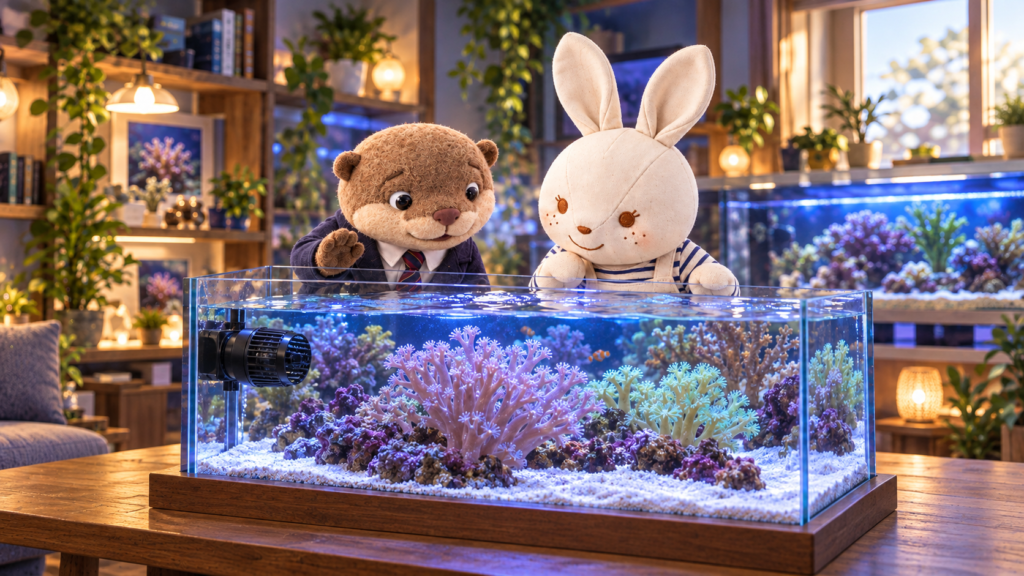 アイのアクアグッズ案内水槽の中に波がある!? コタロウと探る、サンゴがゆらゆら揺れる秘密道具の特徴や使い方、選ぶときのポイントをアイが紹介します。記事はコチラ →
 アイのアクアグッズ案内ベタの一匹飼いを楽しむ|水槽・ヒーター・ふた・フィルターの選び方ベタの一匹飼いに向く水槽容量、ふたと空気層、ヒーターと水温計、弱い水流のフィルターを、コタロウとアイの会話で分かりやすく解説します。記事はコチラ →
さまざまな飼育テーマをご紹介。リンク先の記事には広告・商品紹介が含まれます。
案内・紹介記事一覧へ →分布マップ
ブロードバンドアクセルロディ(CW169)は、南米コロンビアのメタ県グラナダ周辺やアリアリ川を産地とする個体が流通しています。
地図はグラナダ周辺とアリアリ川を含む地域の位置関係を示す概略表示です。マーカーはグラナダ付近に置いた代表地点であり、実際の採集地点ではありません。表示範囲全体に生息することを示すものではなく、詳しい採集地点と分布範囲には未確認の部分があります。
参考文献
-
Dias, A. C. ほか(2025、2024年オンライン公開).
Phylogenomic analyses in the complex Neotropical subfamily Corydoradinae (Siluriformes: Callichthyidae) with a new classification based on morphological and molecular data.
Zoological Journal of the Linnean Society, 203(3), zlae053.コリドラス亜科の分類と、Hoplisoma属を含む属の再編。
-
Alcaldía Municipal de Granada, Meta.
Información del Municipio.
コロンビア・メタ県グラナダ市公式サイト。グラナダの所在地と、アリアリ川周辺の地形。
-
Alcaldía de Puerto Concordia.
Sitios de interés.
コロンビア・メタ県プエルト・コンコルディア市公式サイト。アリアリ川の流路と、グアビアレ川につながる水系の地理。
-
Chiang, A. ほか(2024).
Comprehensive Husbandry Protocol for Corydoras Catfish and Many Other Amazonian Species.
Journal of the American Association for Laboratory Animal Science, 63(5), 472–479.
DOI: 10.30802/AALAS-JAALAS-24-039コリドラス類の一般的な生息環境、群れ飼育、底床、給餌、水質管理、卵と稚魚の管理。
-
Kohda, M., Tanimura, M., Kikue-Nakamura, M. & Yamagishi, S.(1995).
Sperm drinking by female catfishes: a novel mode of insemination.
Environmental Biology of Fishes, 42, 1–6.アエネウスを対象とした、Tポジションと精子の経口取り込みの研究。
-
Francis-Floyd, R. & Petty, B. D.
Disorders and Diseases of Fish.
Merck Veterinary Manual. 2026年4月更新。観賞魚の白点病や細菌感染、水質悪化による障害、検疫、衛生管理、薬剤使用の基本。
-
Pineda, M., Aragao, I., McKenzie, D. J. & Killen, S. S.(2020).
Social dynamics obscure the effect of temperature on air breathing in Corydoras catfish.
Journal of Experimental Biology, 223(21), jeb222133.アエネウスの腸呼吸と、低酸素環境における呼吸行動。
-
Wright, J. J.(2009).
Diversity, phylogenetic distribution, and origins of venomous catfishes.
BMC Evolutionary Biology, 9, 282.カリクティス科を含むナマズ類の、ひれの棘と毒腺の構造・防御機能。




コメント