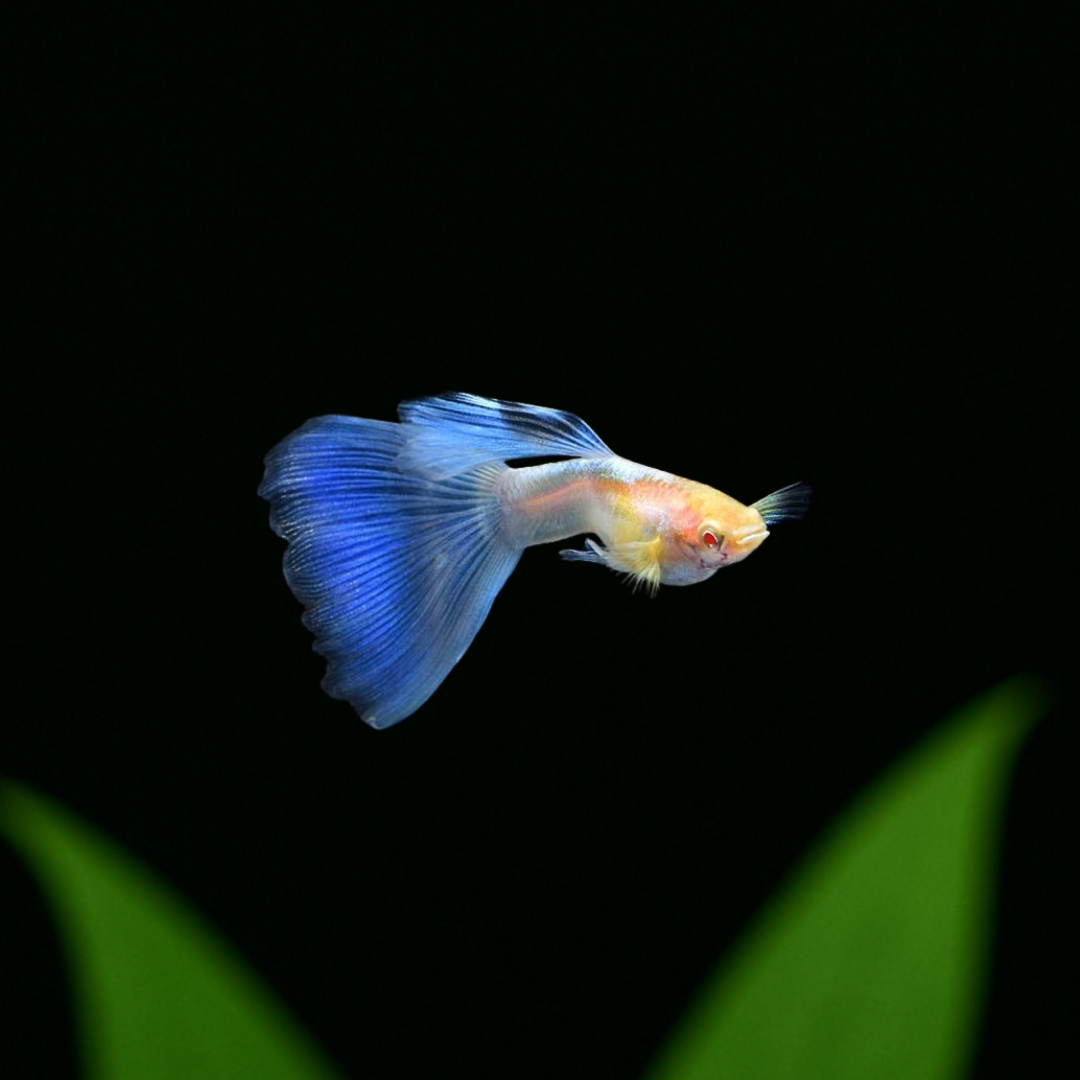
国内産RREAアクアマリンネオンテールグッピーは、グッピーの改良品種の中でも、RREA形質による赤い目と淡い体色、青く澄んだ尾びれの印象が魅力的な系統です。体後半に青みを帯びた光沢が出る個体や、透明感のあるネオンブルーの尾びれを見せる個体が観賞上の大きな見どころになります。一般的なグッピーと同じく小型で繁殖力もありますが、RREA系統は餌の見つけ方や体調変化にやや気を配りたい面があります。安定した水質、落ち着いた混泳環境、餌を確実に食べられる給餌方法を意識することが大切です。The Japanese-bred RREA Aquamarine Neon Tail Guppy is a selectively bred guppy strain known for its real red eyes, pale body coloration, and clear bluish neon tail. Individuals with bluish iridescence on the rear body or a translucent neon-blue caudal fin are especially attractive. Like other guppies, it is small and capable of active breeding, but RREA strains may require extra attention to feeding behavior and subtle changes in condition. Stable water quality, calm tank mates, and feeding methods that allow the fish to eat reliably are especially important.
カダヤシ目カダヤシ科グッピー属Order Cyprinodontiformes, family Poeciliidae, genus Poecilia
英名 / English Name
RREA Aquamarine Neon Tail Guppy
分布 / Distribution
原種のグッピーは南米北部からトリニダード・トバゴ周辺に自然分布します。本品種は観賞魚として作出・維持される改良品種であり、野生分布を持つものではありません。青色系形質には日本国内の野生化グッピー集団との関連も語られますが、それは本品種自体に野生の生息地があるという意味ではありません。Wild guppies are native to northern South America and the Trinidad and Tobago region. This strain is a selectively bred ornamental variety and does not have a natural wild distribution. Links between blue traits and feral guppy populations in Japan are discussed in its breeding history, but this does not mean that the ornamental strain itself has a natural habitat.
最大体長 / Max Size
オス約3〜4cm、メス約4〜6cm。一般的な改良グッピーと同程度です。Males about 3–4 cm, females about 4–6 cm, similar to many selectively bred guppy strains.
寿命 / Lifespan
おおむね1〜2年程度、飼育条件がよければ2年前後楽しめることもあります。水温を高めに維持すると成長や繁殖は早まりやすい一方、代謝も上がるため、落ち着いて長く楽しむなら23〜26℃前後で安定させると扱いやすいです。Typically around 1–2 years, and sometimes around two years under good care. Higher temperatures may promote faster growth and breeding but also increase metabolism, so a stable range of about 23–26°C is often easier for long-term maintenance.
飼育環境 / Aquarium Environment
水槽サイズ / Tank Size
ペアや少数飼育なら30cm規格水槽から可能ですが、水質の安定と繁殖後の余裕を考えると45cm規格水槽以上が安心です。複数ペアで系統維持を考える場合は、60cm規格水槽や複数水槽で親魚・稚魚・選別個体を分ける管理が向いています。A pair or small group can be kept in a standard 30 cm tank, but a standard 45 cm tank or larger is safer for water stability and future fry. For maintaining the strain across generations, a standard 60 cm tank or multiple tanks for breeders, fry, and selected fish is recommended.
水温 / Temperature
23〜26℃前後を中心に、20〜28℃の範囲で飼育可能です。RREA系統は急な低水温や水温変化で調子を崩しやすいため、ヒーターで安定させることが重要です。A range around 23–26°C is ideal, with 20–28°C generally possible. RREA strains can be sensitive to sudden chilling or temperature swings, so stable heater control is important.
水質 / Water Quality
中性〜弱アルカリ性、pH7.0〜7.5前後を目安にします。極端な軟水や、古くなって酸性に傾いた水では調子を崩しやすいため、定期的な換水で清潔さと適度なミネラル分を保つことが大切です。弱酸性を好む魚向けの極端なブラックウォーター管理には寄せすぎないほうが扱いやすいです。Neutral to slightly alkaline water, around pH 7.0–7.5, is a practical target. Extremely soft water or aged acidic water can cause problems, so regular water changes should be used to maintain cleanliness and moderate mineral balance. Avoid pushing the tank too far toward the very soft, acidic blackwater style used for some other fish.
レイアウト / Layout
遊泳スペースを確保しつつ、ウィローモスやマツモ、浮草などを入れると稚魚の隠れ場所になります。尾びれが傷つきやすい品種なので、角の鋭い流木や硬い装飾物は避け、穏やかな水流に整えると安心です。Provide open swimming space while adding plants such as Java moss, hornwort, or floating plants to shelter fry. Because the caudal fin can be delicate, avoid sharp driftwood or hard decorations and keep the current gentle.
注意点 / Precautions
国産系統は、導入元が大きく異なるグッピーとの同居で体調を崩すことがあります。原因を一つに断定することはできませんが、常在菌、輸送ストレス、飼育水質、過去の管理環境の違いが重なると不調につながりやすくなります。導入時は別水槽で検疫し、できれば同じ系統・同じ入手元の個体を中心に飼うほうが安全です。Japanese-bred guppy lines may become stressed or ill when mixed with guppies from very different sources. The cause should not be reduced to a single factor, but differences in resident microbes, shipping stress, water conditions, and previous husbandry can combine to trigger problems. Quarantine new fish and preferably keep fish from the same line or source together.
餌と給餌 / Feeding
餌の種類 / Diet
小粒の人工飼料、冷凍赤虫、ブラインシュリンプベビー、ミジンコなどを与えられます。普段は消化のよい人工飼料を中心にし、繁殖や稚魚育成を重視する場合はブラインシュリンプベビーなどの栄養価の高い餌を組み合わせるとよいです。冷凍赤虫は嗜好性が高い一方で与えすぎると水を汚しやすいため、補助的に使うと管理しやすいです。They can be fed small prepared foods, frozen bloodworms, newly hatched brine shrimp, and daphnia. For daily care, use easily digestible prepared foods, and add nutritious foods such as baby brine shrimp when focusing on breeding or fry growth. Frozen bloodworms are highly attractive but can foul the water if overused, so they are best used as a supplement.
給餌のポイント / Feeding Tips
RREA系統は餌を見つけるのがやや不器用に見えることがあります。沈み方がゆっくりで匂いの出やすい餌を少量ずつ与え、食べ残しが出ない範囲で1日2〜3回に分けると管理しやすいです。活発な魚と混泳させると餌を取られやすいため、食べているかを観察することが重要です。RREA strains may appear less precise when locating food. Offer small amounts of slowly sinking, aromatic food two or three times per day, while avoiding leftovers. If kept with more active fish, watch carefully to make sure they are actually eating.
性格と混泳 / Temperament and Tank Mates
性格 / Temperament
基本的には温和で、同種間でも大きな争いは少ない魚です。ただし、オス同士はメスを追う行動や軽い競い合いを見せるため、過密にせず、隠れ場所と遊泳スペースを両立させると落ち着きます。They are generally peaceful and rarely show serious aggression within the species. Males may chase females or compete lightly with each other, so avoid overcrowding and provide both shelter and swimming space.
混泳の相性 / Compatibility
水質の合う小型で温和な魚とは混泳できますが、品種の維持や病気予防を重視するなら単独種飼育が最も安心です。スマトラのようにヒレをかじりやすい魚、動きが速く餌を奪いやすい魚、強い酸性水を好む魚との混泳は避けてください。コリドラスやオトシンクルスなど底層中心の温和な魚は候補になりますが、オトシンクルスはやや軟水寄りの環境で流通することもあるため、水合わせと検疫を丁寧に行う必要があります。They can be kept with small, peaceful fish that share similar water requirements, but species-only keeping is safest for strain maintenance and disease prevention. Avoid fin-nippers such as tiger barbs, overly fast feeders, and fish that require strongly acidic water. Peaceful bottom-oriented fish such as Corydoras or Otocinclus may be candidates, but Otocinclus are often kept in softer-water setups, so careful acclimation and quarantine are needed.
病気と対策 / Diseases and Prevention
かかりやすい病気 / Common Diseases
白点病、尾ぐされ病、水カビ病、細菌性の体表トラブル、痩せ、拒食などに注意します。長い尾びれを持つ個体では、ヒレの裂けや傷から二次感染につながることがあります。RREA系統は不調のサインが出たときに回復が遅れる場合があるため、早めの観察が大切です。Watch for ich, fin rot, fungal infections, bacterial skin problems, emaciation, and loss of appetite. Individuals with long fins may develop secondary infections from tears or injuries. RREA strains may recover slowly once weakened, so early observation is important.
対策と予防 / Prevention
急な水温変化を避け、週1回を目安に部分換水を行い、底の汚れをためないことが基本です。新しい魚はすぐに本水槽へ入れず、別水槽で様子を見てから合流させます。食欲不振やヒレをたたむ行動が見られる場合は、まず水質と水温を確認し、必要に応じて隔離や0.3〜0.5%前後の塩水浴を検討します。薬剤や塩の使用は、魚の状態と同居生体への影響を見ながら慎重に行う必要があります。Avoid sudden temperature changes, perform partial water changes about once a week, and keep debris from accumulating on the bottom. New fish should be observed in a separate quarantine tank before being added. If appetite loss or clamped fins appear, first check water quality and temperature, then consider isolation or a salt bath of around 0.3–0.5% if needed. Use salt or medication carefully according to the fish’s condition and the sensitivity of any tank mates.
増やし方(繁殖) / Breeding
雌雄の判別 / Sexing
オスは体が小さめで尾びれや体色が華やかになり、尻びれが交接器に変化します。メスは体が大きく腹部に丸みがあり、体色はオスより控えめです。RREA系統では目が赤く見える点も特徴ですが、雌雄判別は体型と尻びれの形を見るのが確実です。Males are smaller, more colorful, and have the anal fin modified into a gonopodium. Females are larger, rounder in the abdomen, and usually less colorful. Although red eyes are characteristic of RREA fish, body shape and anal-fin structure are the most reliable sexing points.
繁殖形態 / Reproduction
卵胎生で、メスの体内で受精卵が発生し、泳げる状態の稚魚を産みます。条件が合えば繁殖は比較的容易ですが、親魚が稚魚を食べることがあるため、産仔前後の隔離や水草による隠れ場所づくりが必要です。They are livebearers. Fertilized eggs develop inside the female, and free-swimming fry are born. Breeding is relatively easy under good conditions, but adults may eat fry, so isolation around birth or dense plant cover is necessary.
繁殖のポイント / Breeding Tips
美しいネオンブルーの尾びれやRREA形質を維持するには、見た目のよい個体を残すだけでなく、体格、ヒレの開き、繁殖力、健康状態も含めて選別します。青い尾びれの表現は赤色系やブラオ系の遺伝形質との組み合わせで分離することがあり、同じ親から赤系、青系、暗い青系の個体が出る場合があります。ただし、実際の分離比は系統の持つ遺伝背景によって変わるため、固定的な数字だけで判断しないほうが安全です。系統維持を目的にするなら、親魚の由来と子の出方を記録し、近親交配が続きすぎないように管理することが重要です。To maintain the attractive neon-blue tail and RREA traits, select not only for appearance but also for body size, fin shape, fertility, and overall health. Blue-tail expression may segregate with red-tail and blau-related traits, so red, blue, and darker blue individuals may appear from related parents. However, actual ratios can vary depending on the genetic background of the line, so it is safer not to rely on fixed numbers alone. For strain maintenance, record parentage and offspring patterns, and avoid excessive inbreeding over many generations.
雑学と豆知識 / Trivia and Fun Facts
1. RREAが生む透明感 / 1. Transparency Created by RREA
RREAは「リアル・レッド・アイ・アルビノ」と呼ばれるアルビノ系の表現で、目が赤く見え、黒色色素が抑えられることで体色も淡く抜けた印象になります。この性質は、単に色が薄いというだけではありません。通常なら黒や暗色が背景になる部分が明るくなり、青い光沢や淡い体色が前面に出やすくなるため、アクアマリンネオンテールらしい透明感を支える大きな要素になっています。ただし、RREAにも系統差があり、すべての個体が同じ抜け方や同じ発色を示すわけではありません。RREA stands for Real Red Eye Albino, an albino expression in which the eyes appear red and black pigment is reduced, giving the body a pale appearance. This is not simply a lack of color. Areas that would normally appear dark become brighter, allowing bluish sheen and pale body tones to stand out more clearly. This is one of the key reasons the aquamarine neon-tail look appears so transparent. However, RREA lines can differ, and not every individual shows the same degree of pigment reduction or coloration.
2. 青色系グッピーと日本の育種文化 / 2. Blue Guppies and Japanese Breeding Culture
青色系グッピーには、日本国内の野生化集団から見出された青色形質や、国内ブリーダーによる選別・交配の歴史が関わっています。実際に、神奈川県の野生化グッピー集団に由来する「ジャパンブルー」は、青みの強い体色を持つ系統として研究や観賞魚育種の文脈で知られています。ただし、現在流通する個々の品種がどの程度その血を引くかは、系統ごとの由来を確認しなければ分かりません。Blue fancy guppies have a breeding history involving blue traits found in feral populations in Japan and selection by Japanese breeders. The Japan Blue guppy, derived from a feral population in Kanagawa Prefecture, is known in both research and ornamental breeding contexts for its strong bluish coloration. However, the ancestry of each modern commercial strain needs to be checked individually; a blue appearance alone does not establish that connection.
3. ネオンテールの青は固定が単純ではない / 3. Neon Tail Blue Is Not Always Simple to Fix
青い尾びれを持つ個体同士を交配しても、次世代がすべて同じ青色になるとは限りません。系統によっては、赤色系、ネオンブルー系、ブラオ系などの異なる発色の子が生まれることがあります。実際にどのような子が生まれるかは、親の遺伝的な背景によって異なります。品種維持では、見た目の美しさだけで親を選ぶのではなく、どのような子が出たかを世代ごとに記録しながら系統を整えることが重要です。Even if two blue-tailed individuals are bred, the next generation may not all show the same blue. Depending on the line, offspring may show red-tail, neon-blue, or blau-like coloration. The actual outcome depends on the genetic background of the parents. For strain maintenance, breeders should not select parents by beauty alone; they should record what offspring appear in each generation.
4. アルビノ系統は餌の与え方で差が出る / 4. Feeding Makes a Difference in Albino Lines
RREA系統は、ノーマル体色のグッピーに比べて餌を見つける動作がゆっくりに見えることがあります。そのため、強い水流の中で餌を流したり、動きの速い魚と一緒にしたりすると、十分に食べられない個体が出ることがあります。匂いの出やすい餌を少量ずつ、魚の近くに届くように与えるだけでも、成長や繁殖の安定感は大きく変わります。RREA guppies may seem slower at locating food than normally pigmented guppies. If food is swept away by strong current or if they are kept with faster feeders, some individuals may not eat enough. Simply offering aromatic foods in small amounts near the fish can make a large difference in growth and breeding stability.
まとめ / Conclusion
国内産RREAアクアマリンネオンテールグッピーは、RREA特有の赤い目と透明感のある体色、青色系ネオンテールの美しさを楽しめる、国産改良グッピーらしい繊細な魅力を持つ品種です。小型で水槽にも導入しやすい一方、アルビノ系統らしい餌の見つけ方の不器用さや体調変化への繊細さが見られることもあるため、安定した水温と水質、落ち着いた混泳環境を整えることが大切です。The Japanese-bred RREA Aquamarine Neon Tail Guppy is a delicate and attractive fancy guppy strain that combines RREA red eyes, transparent body tones, and a beautiful blue neon tail. It is small and easy to introduce to an aquarium, but albino lines may show less precise feeding behavior and greater sensitivity to changes in condition, so stable temperature, stable water quality, and a calm tank environment are important.
繁殖を楽しむ場合は、青い尾びれだけでなく、体格、ヒレの形、繁殖力、健康状態まで含めて親魚を選ぶと、系統を長く維持しやすくなります。観賞魚としての美しさと、遺伝の奥深さの両方を味わえる品種なので、単に飼うだけでなく、世代を追って観察することでより深く楽しめるグッピーです。When breeding this strain, select parent fish not only for the blue tail but also for body strength, fin shape, fertility, and health. This guppy offers both ornamental beauty and the depth of inheritance, making it especially rewarding for aquarists who enjoy observing a line across generations.
Sathyan, R. and Couldridge, V. C. K. (2013). Female preference for blue in Japan blue guppies (Poecilia reticulata). Environmental Biology of Fishes, 96, 953–959.
Chang, Y., Wu, S., Li, J., Bao, H. and Wu, C. (2024). Identification of Candidate Genes for Red-Eyed (Albinism) Domestic Guppies Using Genomic and Transcriptomic Analyses. International Journal of Molecular Sciences, 25(4), 2175.
Shaddock, P. (2009). The See-thru guppy: a transparent fish model. AACL Bioflux, 2(2), 137–145.
https://bioflux.com.ro/docs/2009.2.137-145.pdfグッピーの色素胞、メラノフォア、イリドフォア、アルビノやブラオなど体色表現に関わる基礎的背景の補助確認に使用。



 アイのアクアグッズ案内おとひめ物語|養殖生まれの餌を、わが家の魚に合う一粒へ道具の特徴や使い方、選ぶときのポイントをアイが紹介します。記事はコチラ →
 アイのアクアグッズ案内水草用ソイルの選び方|土・砂の違いとおすすめ商品道具の特徴や使い方、選ぶときのポイントをアイが紹介します。記事はコチラ →
 アイのアクアグッズ案内水槽のろ材の選び方|ウール・リング・活性炭の違いとおすすめ商品フィルターの中の綿や石は何をしている? アイとコタロウが、ウール・スポンジ・セラミック・焼結ガラス・活性炭・ゼオライトを比較。機種との相性、入れ方、洗い方と交換まで商品とともに紹介します。記事はコチラ →
 アイのアクアグッズ案内ショップで見かけるカラフルなバケツ。いったい何が入ってる?道具の特徴や使い方、選ぶときのポイントをアイが紹介します。記事はコチラ →







コメント