

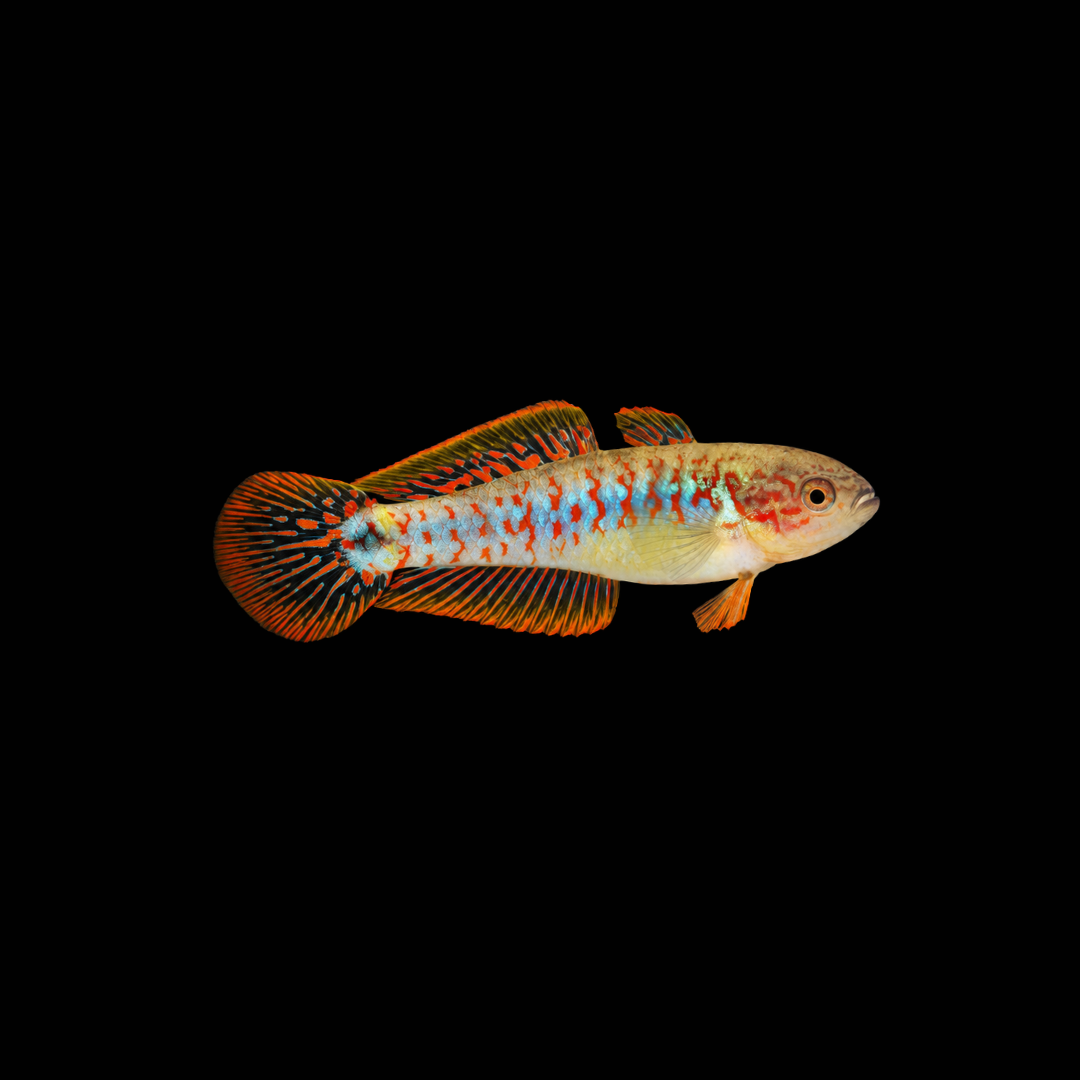
解説 / Description
ピーコックガジョンは、パプアニューギニア東部に固有分布する小型の熱帯性淡水魚です。青みを帯びた銀色の体に赤や桃色の点列が入り、黄色と赤で縁取られた各鰭、尾の付け根にある黒い眼状紋が美しく映えます。一般名にゴビーと付くことがありますが、ハゼ科ではなくカワアナゴ科に属し、左右の腹鰭が吸盤状に癒合していません。そのため底面を這うよりも、水槽の中層から下層で静かにホバリングする姿がよく見られます。温和で小型水槽にもなじみやすく、隠れ家を整えれば繁殖行動まで観察できる、色彩と行動の両方を楽しめる魚です。 The peacock gudgeon is a small tropical freshwater fish endemic to eastern Papua New Guinea. Its bluish-silver body is patterned with red to pink dotted bars, while the fins carry vivid yellow and red edging and the base of the tail bears a dark eyespot. Although it is often called a goby, it belongs to the sleeper-goby family Eleotridae rather than the true goby family. Its pelvic fins remain separate instead of forming a suction disc, and it commonly hovers in the lower to middle levels of the aquarium rather than crawling along the bottom. Peaceful, compact, and capable of breeding in a well-prepared aquarium, it offers both striking color and fascinating behavior.
基本情報 / Basic Information
| 学名 / Scientific Name | Tateurndina ocellicauda |
|---|---|
| 通称 / Common Name | ピーコックガジョン、ピーコックゴビーPeacock gudgeon, Peacock goby |
| 分類 / Family | ハゼ目・ハゼ亜目・カワアナゴ科・タテウルンディナ属。本種だけで一属を構成する一型属です。Order Gobiiformes, suborder Gobioidei, family Eleotridae, genus Tateurndina. The genus is monotypic and contains only this species. |
| 英名 / English Name | Peacock gudgeon |
| 分布 / Distribution | パプアニューギニア東部のサフィア、ポポンデッタ周辺。ムサ川やクワギラ川などの流域にある、流れの緩やかな小川、池沼、湿地帯に局所的に分布します。Locally distributed around Safia and Popondetta in eastern Papua New Guinea, including slow-flowing creeks, ponds, wetlands, and tributaries of river systems such as the Musa and Kwagira. |
| 最大体長 / Max Size | 約7.5cm。メスは約5cm程度にとどまることが多く、オスのほうが大きく体高も出ます。About 7.5 cm. Females often remain around 5 cm, while males grow larger and deeper-bodied. |
| 寿命 / Lifespan | 適切な管理下でおおむね3~5年。良好な環境では、それ以上長く生きた飼育例もあります。Generally 3 to 5 years under proper care, with occasional aquarium records exceeding this range. |
飼育環境 / Aquarium Environment
| 水槽サイズ / Tank Size | 単独または1ペアなら30cmキューブ水槽(約25L)でも飼育できます。複数匹で自然な行動を楽しむ場合は45cm規格水槽(約35~40L)以上、ゆとりを持たせるなら60cm規格水槽(約60L)が適しています。A single fish or pair can be kept in a 30 cm cube aquarium of about 25 L. For a small group and more natural social behavior, use at least a standard 45 cm aquarium of roughly 35 to 40 L; a standard 60 cm aquarium of about 60 L offers greater comfort. |
|---|---|
| 水温 / Temperature | 22~28℃。日常管理では24~26℃が扱いやすく、夏に30℃を超える環境では冷却ファンや水槽用クーラーなどの高温対策が必要です。 22 to 28°C. A daily range of 24 to 26°C is practical. When summer temperatures exceed 30°C, cooling with a fan or aquarium chiller is necessary. |
| 水質 / Water Quality | 弱酸性から中性を中心としたpH6.0~7.5、硬度5~12dGH程度が目安です。日本の一般的な中性付近の軟水に順応しやすく、週1回を目安に3分の1程度を換水して清浄な水質を保ちます。Aim for slightly acidic to neutral water, around pH 6.0 to 7.5, with a hardness of approximately 5 to 12 dGH. Captive-bred fish usually adapt well to typical soft Japanese tap water. Change about one third of the water weekly to maintain cleanliness. |
| レイアウト / Layout | 暗色の細砂やソイルを敷き、流木、石組み、短い塩ビ管、陶器製シェルターなどで洞窟状の隠れ家を多めに作ります。アヌビアス、ミクロソリウム、ウォーターウィステリアなどの丈夫な水草や浮き草を組み合わせ、薄暗く落ち着ける場所を確保すると、かえって前面に出やすくなります。Use dark fine sand or aquasoil and provide numerous cave-like shelters made from driftwood, rockwork, short PVC pipes, or ceramic caves. Hardy plants such as Anubias, Java fern, and water wisteria, together with floating plants, create shaded refuges. When the fish know shelter is always available, they often become more confident and visible. |
| 注意点 / Precautions | 強い水流は避け、スポンジフィルターや流量を抑えたろ過を用います。驚いた際に跳ねることがあるため、水槽には隙間の少ないフタを設置してください。口に入る大きさの稚魚や稚エビは捕食される可能性があります。Avoid strong current and use a sponge filter or a filter with softened outflow. Fit a close-fitting lid because startled fish may jump. Newly hatched fish and very small shrimp can be eaten if they fit into the gudgeon’s mouth. |
餌と給餌 / Feeding
| 餌の種類 / Diet | 肉食傾向の強い雑食性で、冷凍アカムシ、冷凍ブラインシュリンプ、ミジンコなどを好みます。人工飼料では、肉食魚向けの小粒で沈下性の顆粒フードが適しています。An omnivore with a strong carnivorous tendency, it readily accepts frozen bloodworms, frozen brine shrimp, and daphnia. Small sinking granules formulated for carnivorous fish are suitable as prepared food. |
|---|---|
| 給餌のポイント / Feeding Tips | 中層から下層で落ちてくる餌を待って吸い込むため、浮上性の餌だけでは食べ遅れることがあります。導入直後に人工飼料を吐き出す場合は、冷凍飼料と混ぜながら徐々に慣らします。泳ぎの速い魚と混泳する際は、餌がピーコックガジョンのいる層まで届いたことを確認してください。The fish often waits in the middle or lower levels and sucks in food as it falls, so floating food alone may leave it underfed. Newly introduced fish that reject prepared food can be trained gradually by mixing it with frozen foods. When housed with fast feeders, confirm that food reaches the level where the gudgeons are waiting. |
性格と混泳 / Temperament and Tank Mates
| 性格 / Temperament | 基本的には温和で、他種を執拗に追い回すことはほとんどありません。同種のオス同士は鰭を大きく広げる儀式的な威嚇を見せますが、十分な空間と隠れ家があれば深刻な争いに発展しにくい魚です。4~6匹ほどの小群で飼うと、自然なフィンスプレッディングや緩やかな群れ行動を観察しやすくなります。Generally peaceful and unlikely to persistently chase other species. Males may perform ritual displays by spreading their fins, but serious fighting is uncommon when sufficient space and shelters are provided. A loose group of about four to six fish makes social displays and natural hovering behavior easier to observe. |
|---|---|
| 混泳の相性 / Compatibility | シュードムギル・フルカトゥスなどの小型レインボーフィッシュ、ネオンテトラやエンバーテトラ、小型ラスボラ、コリドラス、クーリーローチなどと合わせやすい魚です。スマトラのような鰭をかじる魚、大型シクリッド、縄張り意識の強いベタのオスは避けます。ヤマトヌマエビの成体は候補になりますが、小型エビの稚エビは捕食される可能性があります。Suitable companions include small rainbowfishes such as the forktail blue-eye, neon and ember tetras, small rasboras, Corydoras, and kuhli loaches. Avoid fin-nipping species such as tiger barbs, large cichlids, and strongly territorial male bettas. Adult Amano shrimp may coexist, but baby shrimp of smaller species are at risk of predation. |
病気と対策 / Diseases and Prevention
| かかりやすい病気 / Common Diseases | 水質悪化や輸送ストレスが重なると、エロモナス感染症による赤斑病や穴あき病、白点病、白点状に見えるエピスティリス症などに注意が必要です。体表の充血、鱗の欠損、不規則に盛り上がる白い付着物、呼吸の乱れ、食欲低下を早めに見つけることが大切です。When poor water quality or transport stress weakens the fish, problems may include Aeromonas-related red sores or ulcer disease, ich, and Epistylis infections that can resemble white spots. Watch for reddening, missing scales, irregular raised white growths, labored breathing, and loss of appetite. |
|---|---|
| 対策と予防 / Prevention | 過密を避け、安定した水温、定期換水、十分な酸素、栄養状態の維持を基本とします。異常個体は水草やろ過バクテリアへの影響を避けるため、原則として隔離水槽で観察・治療します。細菌性疾患には日本国内で観パラDやグリーンFゴールド系などが用いられ、白点病にはマラカイトグリーン系薬剤などが選択肢になりますが、製品の説明書を守り、症状を見分けて使用してください。エピスティリスが疑われる場合は、白点病と同じ感覚で安易に高温化せず、水質改善と強めのエアレーションを優先します。Prevention is based on avoiding overcrowding and maintaining stable temperature, regular water changes, strong oxygenation, and good nutrition. Isolate affected fish for observation and treatment whenever possible to protect plants and filter bacteria. In Japan, products such as Kanpara D and Green F Gold formulations are used for bacterial disease, while malachite-green-based medicines are options for ich; always follow the product label and identify the likely disease before treatment. If Epistylis is suspected, do not automatically raise the temperature as for ich; prioritize cleaner water and vigorous aeration. |
増やし方(繁殖) / Breeding
| 雌雄の判別 / Sexing | オスは大きく体高があり、成長すると額が隆起して背鰭や臀鰭が長く伸びます。メスは小柄で吻が滑らかに尖り、成熟すると腹部が丸く鮮やかな黄色を帯びます。メスの臀鰭外縁には明瞭な黒い帯が見られます。Males are larger and deeper-bodied, and mature individuals develop a raised forehead and longer dorsal and anal fins. Females are smaller with a smoother, more pointed snout; mature females develop a rounded, vivid yellow abdomen and a distinct dark band along the outer edge of the anal fin. |
|---|---|
| 繁殖形態 / Reproduction | 純淡水で繁殖する基質産卵型、いわゆる洞窟産卵型です。メスは塩ビ管や陶器製シェルターの天井や壁面に、粘着性のある卵を50~100個ほど産み付けます。産卵後はオスがメスを追い出し、孵化まで卵を守りながら鰭で新鮮な水を送ります。A fully freshwater substrate spawner, commonly described as a cave spawner. The female attaches roughly 50 to 100 adhesive eggs to the ceiling or wall of a PVC pipe or ceramic cave. After spawning, the male drives the female away and guards and fans the eggs until hatching. |
| 繁殖のポイント / Breeding Tips | 内径が魚の体高より少し大きい短いパイプや産卵筒を複数用意し、冷凍アカムシやブラインシュリンプなどで親魚の状態を整えます。卵は約8~10日で孵化します。産卵後は卵の付いたシェルターとオスを静かに隔離し、孵化直前にはオスを親水槽へ戻す方法が使われます。自由遊泳直後はインフゾリアや液体稚魚用フードを与え、成長後に孵化直後のブラインシュリンプやマイクロワームへ移行します。Provide several short pipes or spawning caves with an inner diameter slightly greater than the fish’s body depth, and condition the adults with frozen bloodworms or brine shrimp. The eggs hatch in about 8 to 10 days. A common method is to move the shelter together with the guarding male to a separate tank, then return the male to the main aquarium shortly before hatching. Newly free-swimming fry require infusoria or liquid fry food before progressing to newly hatched brine shrimp or microworms. |
雑学と豆知識 / Trivia and Fun Facts
| 1. 名前にハゼと付いても真性ハゼではない / 1. A “goby” that is not a true goby | ピーコックゴビーという名でも流通しますが、分類上はハゼ科ではなくカワアナゴ科です。真性ハゼでは左右の腹鰭が癒合して吸盤のようになりますが、本種の腹鰭は分かれたままです。この違いは見た目だけでなく暮らし方にも表れ、水底に貼り付くより、中層から下層でふわりと停止するように泳ぎます。水槽の中で見せる独特のホバリングは、分類学的な特徴が行動へつながった姿といえます。The fish is also sold as the peacock goby, yet it belongs to Eleotridae rather than the true goby family. In true gobies the paired pelvic fins are fused into a suction disc, whereas those of the peacock gudgeon remain separate. This anatomical distinction is reflected in its lifestyle: rather than clinging to the substrate, it often pauses and hovers in the lower and middle water layers. Its characteristic aquarium movement is therefore a visible expression of its taxonomic identity. |
|---|---|
| 2. 1950年代の探検から知られるようになった魚 / 2. A fish revealed by a 1950s expedition | 最初の標本は1953年、アーチボルド探検隊に参加していたホバート・M・ヴァン・デューセンによって、クワギラ川水系の小さな水たまりから採集されました。1955年にジョン・T・ニコルズが新属新種として記載しましたが、標本はアルコール保存によって生体の青や赤を失っていました。尾の黒い眼状紋だけが強く残ったため、種小名のocellicaudaには「尾に眼状紋を持つ」という特徴が刻まれました。観賞魚として生きた姿が広く知られたのは1980年代で、記載標本からは想像しにくい鮮やかな色彩が愛好家を驚かせました。The first specimens were collected in 1953 by Hobart M. Van Deusen during an Archbold Expedition, from a small pool in the Kwagira River system. John T. Nichols described the fish as a new genus and species in 1955, but the alcohol-preserved specimens had lost their living blue and red colors. The dark eyespot near the tail remained conspicuous, and the species name ocellicauda records that feature. Live fish became widely known in the aquarium hobby only in the 1980s, when their unexpectedly brilliant coloration drew strong attention. |
| 3. 学名には探検家と尾の眼状紋が残る / 3. Explorers and an eyespot preserved in the name | 属名Tateurndinaは、ニューギニア探検に関わったテイト兄弟への献名と、近縁に見えるモグルンダ属を思わせる要素、小ささを示す語尾を組み合わせた名称とされています。種小名ocellicaudaは、眼状紋を意味するocellusと尾を意味するcaudaから成ります。ひとつの学名の中に、採集史、人への敬意、そして尾の模様という三つの物語が重なっています。The genus name Tateurndina is understood to combine a dedication to the Tate brothers involved in New Guinea exploration, a reference to the similar-looking genus Mogurnda, and a diminutive ending. The species name ocellicauda joins ocellus, referring to an eyespot, with cauda, meaning tail. Its scientific name therefore carries three intertwined stories: exploration history, tribute to people, and the fish’s most conspicuous preserved marking. |
| 4. オスが卵へ水を送り続ける / 4. The male continually fans the eggs | 産卵が終わると、オスはメスを産卵床から追い出し、卵のそばに残ります。約8~10日のあいだ、外敵を警戒するだけでなく、胸鰭や尾鰭を動かして卵へ新鮮な水を送り続けます。このファニングは酸素を届け、水カビの発生を抑えるための重要な育児行動です。しかし自由遊泳が始まると保護行動は終わり、稚魚を捕食する可能性もあるため、繁殖水槽では親子を分けるタイミングが大切になります。After spawning, the male drives the female from the nest and remains with the clutch. For about 8 to 10 days he not only guards the entrance but also moves his pectoral and tail fins to circulate fresh water over the eggs. This fanning behavior supplies oxygen and helps limit fungal growth. Once the fry become free-swimming, however, parental care ends and the male may treat them as prey, making the timing of separation important in breeding setups. |
| 5. 水槽では身近でも、故郷では危機に直面する / 5. Common in aquariums, vulnerable in its homeland | 日本で流通する個体の大半は人工繁殖魚で、家庭でも繁殖を狙えるほど身近な存在です。一方、野生ではパプアニューギニア東部の限られた水系だけに生息し、資料ではIUCNレッドリストの危急種とされています。パーム油農園の拡大、森林伐採、鉱山開発による土砂や汚染物質の流入は、清浄な小川と洞窟状の産卵場所を必要とする本種にとって大きな脅威です。水槽内で安定して世代をつなげられる性質は観賞魚としての魅力であると同時に、原産地の環境へ目を向けるきっかけにもなります。Most fish sold in Japan are captive-bred, and the species is familiar enough that home aquarists can attempt reproduction. In the wild, however, it is restricted to a small part of eastern Papua New Guinea and is described in the supplied material as Vulnerable on the IUCN Red List. Expansion of oil-palm plantations, logging, and mining can introduce sediment and pollutants into the clear streams and cave-like spawning sites the fish depends upon. Its ability to reproduce reliably in aquariums is therefore both a hobby strength and a reminder to consider the condition of its native habitat. |
まとめ / Conclusion
ピーコックガジョンは、メタリックブルーと赤い点列、黄色く縁取られた鰭を持ちながら、性格は穏やかで、45~60cmクラスの水草水槽にも合わせやすい小型魚です。暗めの底床、豊富な隠れ家、緩やかな水流を整えると、低層から中層をゆっくりホバリングし、オス同士のフィンスプレッディングや求愛行動など、色彩だけではない魅力を見せてくれます。 The peacock gudgeon combines metallic blue, red dotted markings, and yellow-edged fins with a calm temperament that suits planted aquariums in the 45 to 60 cm class. With a dark substrate, plentiful shelters, and gentle current, it hovers through the lower and middle water levels and reveals behaviors beyond its color, including male fin displays and courtship.
沈下する餌を確実に届け、清浄で安定した水を保ち、洞窟状のシェルターを用意すれば、オスが卵を守る繁殖まで身近に観察できます。小さな水槽の中でも、分類の不思議、ニューギニアの自然史、親魚の育児行動を感じさせてくれる、長く向き合うほど味わいが深まる存在です。 By delivering sinking foods reliably, maintaining clean and stable water, and providing cave-like shelters, aquarists can even observe the male guarding a clutch of eggs. Within a modest aquarium, this fish evokes unusual taxonomy, the natural history of New Guinea, and attentive parental behavior, becoming more rewarding the longer it is carefully kept.
分布マップ
ピーコックガジョンは、パプアニューギニア東部のサフィア、ポポンデッタ周辺や、ムサ川・クワギラ川などの流域に局所的に分布します。
この地図は、記事に記載された地域から作成した分布イメージです。表示している地点と円は概略的な代表位置・範囲であり、実際の採集地点や厳密な生息範囲を示すものではありません。
参考文献・根拠資料
ピーコックガジョンの分類、分布、生息環境、飼育条件、繁殖、病気と注意点を確認するために使用した資料です。店舗、通信販売、個人ブログ、一般的なまとめサイトは含めていません。閲覧日:2026年7月22日。
-
分類・原記載・タイプ産地
Nichols, J. T. (1955). Results of the Archbold Expeditions. No. 71. Two New Fresh-Water Fishes from New Guinea. American Museum Novitates, 1735, 1–6.
本種と属の原記載です。学名の著者と記載年、形態、採集地点、原記載時の分類学的判断を確認する一次資料として使用します。
-
現在の分類・有効名
Fricke, R., Eschmeyer, W. N. & van der Laan, R. (eds.). Eschmeyer’s Catalog of Fishes. California Academy of Sciences.
魚類の有効名、命名者、記載年、属と科の扱いを確認するための国際的な分類データベースです。分類表記は原記載だけでなく、現行のデータベースでも照合します。
-
分布・自然史
Allen, G. R. (1991). Field Guide to the Freshwater Fishes of New Guinea. Publication No. 9. Christensen Research Institute, Madang, Papua New Guinea. 268 pp.
ニューギニア淡水魚の分布、自然環境、識別情報をまとめた専門書です。東部パプアニューギニアにおける分布と熱帯雨林水系での生息を確認する基礎資料として使用します。
-
分布・生息環境・体長・基礎繁殖情報
Froese, R. & Pauly, D. (eds.). Tateurndina ocellicauda. FishBase.
カワアナゴ科としての分類、東部パプアニューギニアの分布、河川・池・熱帯雨林の小川、最大体長、22~26℃の環境情報、巣の選択とオスによる卵保護などを確認できます。
-
保全状況・分布域の減少
Larson, H. (2021). Tateurndina ocellicauda. The IUCN Red List of Threatened Species 2021: e.T161063638A161063716.
IUCNの危急種評価と評価基準B1ab(iii)を確認する一次的な保全資料です。野生個体群については、流通量から安全性を推測せず、限定された分布域と生息環境の悪化を分けて扱います。
-
繁殖・胚発生・仔魚育成
Fahmi, M. R., Musthofa, S. Z. & Permana, A. (2020). Spawning and larval ontogeny of peacock goby (Tateurndina ocellicauda). Jurnal Riset Akuakultur, 15(4), 205–214.
塩ビ管を用いた産卵、親魚の給餌、平均卵数、26~31℃における5~7日目の孵化、ワムシ類と孵化直後のブラインシュリンプによる仔魚育成を扱った査読研究です。卵数や孵化日数は固定値ではなく、試験条件と併記します。
-
飼育条件の補助資料
Seriously Fish. Tateurndina ocellicauda (Peacock Goby) species profile.
軟水・弱酸性寄りの水質、暗色底床、浮き草、豊富な隠れ家、穏やかな水流、沈下性の動物質飼料など、家庭水槽での実用的な飼育条件を確認する専門編集型データベースです。水槽サイズや混泳は生理学的な限界値ではなく、FishBaseと繁殖研究を照合した補助的な推奨として扱います。
-
細菌性疾患・潰瘍・診断
MSD Veterinary Manual. Bacterial Diseases of Fish.
水質悪化、低酸素、輸送や取り扱いのストレスが細菌性疾患の誘因になること、エロモナス属などによる出血・潰瘍、培養同定と薬剤感受性試験の重要性を確認する獣医学資料です。本種固有の易感染性を示す資料ではありません。
-
白点病・エピスティリス・鑑別
MSD Veterinary Manual. Parasitic Diseases of Fish.
白点病の生活環、皮膚・鰭・鰓の顕微鏡検査、複数回治療が必要になる理由を確認できます。エピスティリスは弱った魚に付着し、水中の細菌や微生物を濾し取る固着性繊毛虫であり、白い点の外観だけでは白点病と断定できないことも示します。
-
水質・有機物・予防管理
MSD Veterinary Manual. Environmental Considerations for Selected Infectious Diseases of Aquatic Animals.
過密、過剰給餌、底床の汚れ、有機物の蓄積を改善しないまま薬剤だけを使用すると再発しやすいこと、エピスティリスなどが不衛生な環境の指標になり得ることを確認する資料です。
本文へ反映する際の基準
分類、分布、最大体長、保全状況は原記載・分類データベース・FishBase・IUCNを優先します。卵数と孵化日数は資料間で差があるため、単一の固定値にせず、研究条件と範囲を示します。水槽サイズ、混泳、レイアウトは一次研究で標準化された数値ではないため、専門飼育資料を補助的に用い、余裕のある安全側の表現にします。病気の記述は淡水観賞魚一般の獣医学資料に基づくもので、本種だけが特定疾病にかかりやすいとは断定しません。




コメント