

解説 / Description
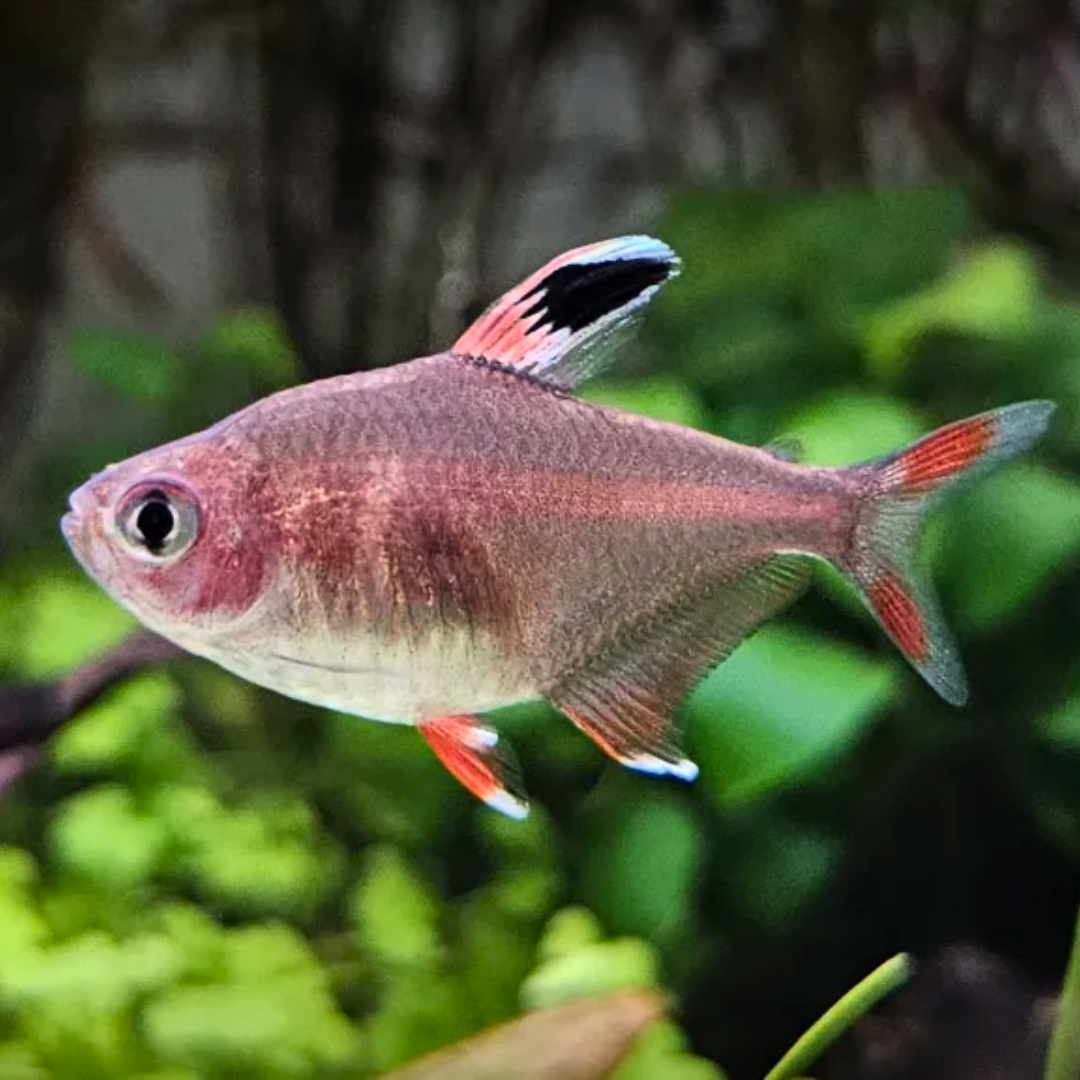
ロージーテトラは、南米北部のガイアナ・スリナム周辺の森林河川にすむ小型カラシンです。淡いピンクから赤みを帯びる体色、成熟したオスが見せる伸びやかな背ビレと尻ビレ、そして群れで泳ぐときの落ち着いた美しさが魅力です。古くから観賞魚として親しまれてきた一方で、近縁種との混同や学名の変遷も多く、分類史そのものにも物語があります。飼育は比較的容易ですが、本来の色彩を引き出すには、軟水寄りで落ち着いた環境、暗めの底床、流木や落ち葉を使った安心できるレイアウトが効果的です。 The Rosy Tetra is a small characin from forest streams around Guyana and Suriname in northern South America. Its appeal lies in its soft pink to reddish body color, the elegant extended fins of mature males, and its calm beauty when kept in a group. Although it has long been popular in the aquarium trade, its taxonomic history is also fascinating, with repeated confusion involving similar relatives and several scientific-name changes. It is generally hardy and manageable, but its best coloration is encouraged by a calm, soft-water environment with dark substrate, driftwood, and leaf-litter-style cover.
基本情報 / Basic Information
| 学名 / Scientific Name | Megalamphodus rosaceus 旧学名として Hyphessobrycon rosaceus が広く使われてきました。The former name Hyphessobrycon rosaceus has been widely used in the aquarium hobby. |
|---|---|
| 通称 / Common Name | ロージーテトラ、ロージー・テトラ、ホワイトフィン・ロージーテトラは改良品種として流通Rosy Tetra; White Fin Rosy Tetra is traded as a selectively bred variety |
| 分類 / Family | 近年の分類体系では、アメリカン・カラシン科 Acestrorhamphidae、メガランフォドゥス亜科 Megalamphodinae に置かれます。古い資料や流通名ではカラシン科 Characidae、ハイフェソブリコン属として扱われることもあります。In recent classifications, it is placed in the family Acestrorhamphidae and subfamily Megalamphodinae. Older references and aquarium-trade usage may still treat it under Characidae and the genus Hyphessobrycon. |
| 英名 / English Name | Rosy Tetra |
| 分布 / Distribution | 南米北部。主にガイアナとスリナムのエセキボ川、コーランティン川、スリナム川水系に分布するとされています。周辺地域を含めた分布範囲には、資料によって違いがあります。Northern South America, mainly the Essequibo, Corantijn/Courantyne, and Suriname river basins in Guyana and Suriname. Sources differ in how broadly they include surrounding areas in the distribution. |
| 最大体長 / Max Size | 約3.5〜4cm。よく育った個体では体高が出て、数字以上に存在感があります。About 3.5 to 4 cm. Well-conditioned adults can appear more substantial because of their relatively deep body shape. |
| 寿命 / Lifespan | おおむね3〜5年。安定した水質と適度な給餌で長期飼育が期待できます。Generally 3 to 5 years. Stable water quality and moderate feeding help support a full lifespan. |
飼育環境 / Aquarium Environment
| 水槽サイズ / Tank Size | 最低でも45cm標準水槽程度、できれば60cm規格水槽、約60L以上がおすすめです。6匹以上、理想的には10匹前後の群れで飼うと落ち着き、オス同士のフィンスプレッディングも観察しやすくなります。A 45 cm standard tank is the practical minimum, while a 60 cm standard tank of about 60 L or larger is recommended. Keeping at least six, ideally around ten, helps them feel secure and encourages fin-spreading displays among males. |
|---|---|
| 水温 / Temperature | 22〜28℃。日常管理では24〜27℃前後が扱いやすく、急激な水温変化を避けることが大切です。冬はヒーター、夏は冷却ファンや水槽用クーラーで安定させます。 22 to 28°C. Around 24 to 27°C is convenient for routine care, and sudden temperature swings should be avoided. Use a heater in winter and a cooling fan or aquarium chiller in summer when necessary. |
| 水質 / Water Quality | 弱酸性〜中性、pH 5.5〜7.5程度、軟水〜中硬水が目安です。原産地のような軟水寄りの環境では発色がよくなりやすく、ソイル、ピートモス、マジックリーフなどを適切に使うと雰囲気も再現できます。Slightly acidic to neutral water, around pH 5.5 to 7.5, with soft to moderately hard water is suitable. Softer water often brings out better coloration, and aquarium soil, peat, or Indian almond leaves can help recreate a more natural atmosphere. |
| レイアウト / Layout | 暗めの底床、流木、枝状の素材、落ち葉を使ったブラックウォーター風レイアウトがよく合います。水草水槽でも飼育しやすく、後景に水草を茂らせ、中央に遊泳スペースを確保すると、緑を背景にバラ色の体色が映えます。A blackwater-style layout with dark substrate, driftwood, root-like branches, and leaf litter suits the species well. It also adapts well to planted aquariums; dense background plants with open swimming space in the center make its rosy color stand out beautifully. |
| 注意点 / Precautions | 強すぎる水流、明るすぎる底砂、隠れ家の少ない環境では落ち着かず、体色が薄くなることがあります。小型魚ですが活発に泳ぐため、過密飼育は避け、週1回を目安に25〜30%程度の換水で硝酸塩や有機物の蓄積を抑えます。Overly strong current, very bright substrate, or a lack of cover can make them nervous and wash out their color. Although small, they are active swimmers, so avoid overcrowding and perform weekly water changes of about 25 to 30% to limit nitrate and organic buildup. |
餌と給餌 / Feeding
| 餌の種類 / Diet | 雑食性です。主食には小型魚用の高品質なフレークフードやマイクロペレットを使い、補助的に冷凍または乾燥のブラインシュリンプ、アカムシ、ミジンコなどを与えるとコンディションと発色の維持に役立ちます。Omnivorous. High-quality flakes or micro pellets for small fish are suitable as the staple diet. Frozen or dried brine shrimp, bloodworms, and daphnia can be offered as supplements to support condition and coloration. |
|---|---|
| 給餌のポイント / Feeding Tips | 1日1〜2回、数分で食べきれる量を与えます。与えすぎは水質悪化と肥満につながるため、食べ残しは早めに取り除きます。赤みを引き出したい場合でも、動物性の餌だけに偏らせず、総合栄養食を中心にすることが大切です。Feed once or twice daily, only as much as they can finish within a few minutes. Overfeeding can degrade water quality and cause obesity, so remove leftovers promptly. Even when aiming for stronger red coloration, keep a balanced prepared food as the dietary foundation. |
性格と混泳 / Temperament and Tank Mates
| 性格 / Temperament | 温和で群れを好む魚です。オス同士はヒレを広げて互いに誇示することがありますが、多くの場合は儀式的な行動で、深刻なけんかには発展しにくいです。単独や少数飼育では臆病になりやすいため、複数匹での飼育が基本です。Peaceful and social. Males may spread their fins and display to one another, but this is usually ritualized and rarely develops into serious fighting. They can become shy when kept singly or in very small numbers, so group keeping is strongly preferred. |
|---|---|
| 混泳の相性 / Compatibility | カージナルテトラ、ブラックファントムテトラ、エンバーテトラ、ペンシルフィッシュ、コリドラス、オトシンクルス、小型ロリカリア、温和なドワーフシクリッドなどと相性がよいです。一方、ベタやグッピーのように長いヒレを持ち動きがゆっくりな魚では、ヒレをつつく可能性があるため慎重に判断します。口に入るほど大きな肉食魚との混泳は避けます。Good companions include Cardinal Tetras, Black Phantom Tetras, Ember Tetras, pencilfish, Corydoras, Otocinclus, small loricariids, and peaceful dwarf cichlids. Fish with long flowing fins and slow movement, such as bettas or fancy guppies, require caution because fin-nipping may occur. Avoid large predatory fish that could swallow them. |
病気と対策 / Diseases and Prevention
| かかりやすい病気 / Common Diseases | 白点病、尾ぐされ病、口腐れ病、細菌性の体表トラブルなど、一般的な熱帯魚の病気にかかることがあります。導入直後、水温が急変したとき、水質が悪化したとき、過密飼育や輸送ストレスが重なったときは特に注意が必要です。They may develop common tropical fish diseases such as ich, fin rot, mouth rot, and bacterial skin problems. Risk increases after introduction, sudden temperature changes, poor water quality, overcrowding, or transport stress. |
|---|---|
| 対策と予防 / Prevention | 予防の中心は、安定した水温、過密を避けた飼育、定期的な換水、導入前のトリートメントです。白点病では水温を急に上げすぎず段階的に調整し、専用薬を使います。尾ぐされ病や口腐れ病では隔離して抗菌系の薬浴を行い、必要に応じて0.3〜0.5%程度の塩水浴を併用します。薬剤は必ず製品の説明に従い、水草やエビ類への影響にも注意します。Prevention depends on stable temperature, avoiding overcrowding, regular water changes, and quarantine or conditioning before introduction. For ich, adjust temperature gradually rather than abruptly and use an appropriate medication. For fin rot or mouth rot, isolate the affected fish and use antibacterial treatment, with 0.3 to 0.5% salt baths when appropriate. Always follow product instructions and consider effects on plants and shrimp. |
増やし方(繁殖) / Breeding
| 雌雄の判別 / Sexing | 成熟したオスは背ビレと尻ビレが伸びやすく、体色も濃く出る傾向があります。特にオスの背ビレは黒みを帯び、状態がよいとたいへん見応えがあります。メスはヒレの伸長が控えめで、抱卵すると腹部がふっくらします。Mature males tend to develop longer dorsal and anal fins and stronger body coloration. The male dorsal fin often shows dark pigmentation and can be very impressive in good condition. Females have less fin extension and become rounder in the abdomen when carrying eggs. |
|---|---|
| 繁殖形態 / Reproduction | 卵を水草やモップの間にばらまく卵散布型です。親魚は卵を守らず、むしろ食べてしまうことがあるため、繁殖を狙う場合は専用の繁殖水槽を用意します。An egg-scattering species that releases eggs among plants or spawning mops. The parents do not guard the eggs and may eat them, so a separate breeding tank is recommended when breeding is intended. |
| 繁殖のポイント / Breeding Tips | 繁殖水槽は20L前後から用意でき、45cm水槽程度が扱いやすいです。水温26〜28℃、pH 5.5〜6.5、低硬度の軟水を目安にし、ウィローモスや産卵モップ、卵だけが落ちるメッシュを使います。産卵後は親魚を速やかに戻し、卵と稚魚は強い光を避けて管理します。孵化後の稚魚は非常に小さく、最初はインフゾリアやゾウリムシなどの微小餌料が重要で、成長後にブラインシュリンプ幼生へ移行します。A breeding tank of around 20 L can work, and a 45 cm tank is convenient. Aim for 26 to 28°C, pH 5.5 to 6.5, and very soft water, using Java moss, spawning mops, or mesh that lets eggs fall out of the parents’ reach. Remove the adults immediately after spawning and keep eggs and fry away from strong light. Newly free-swimming fry are extremely small, so infusoria or paramecia are important at first, followed later by newly hatched brine shrimp. |
雑学と豆知識 / Trivia and Fun Facts
| 1. バラ色の名前に刻まれた印象 / 1. A Rose-Colored Name | 種小名の rosaceus は、ラテン語でバラ色、あるいはバラに由来するものを連想させる言葉です。ロージーテトラの魅力は、派手な原色ではなく、光の角度や体調によってふわりと深まる赤みです。落ち着いた水槽で飼い込むほど、名前の意味が実感できるような、柔らかいバラ色へと仕上がっていきます。The species name rosaceus evokes the idea of something rose-colored or rose-like in Latin. The beauty of this fish is not a loud primary color, but a gentle redness that deepens with light angle and condition. In a calm, well-maintained aquarium, the meaning of its name becomes increasingly clear. |
|---|---|
| 2. 分類史に揺れた小さな名魚 / 2. A Small Fish with a Complex Taxonomic Story | ロージーテトラは、長いあいだ Hyphessobrycon rosaceus の名で親しまれ、古い文献や流通名では H. ornatus などの名で扱われた時期もありました。さらにベントステトラとの混同も重なり、アクアリウムの世界では似た魚をどう見分けるかが話題になってきました。近年の分子系統解析を反映したカタログでは Megalamphodus rosaceus として扱われており、これは単なる名前の変更ではなく、小型カラシンの進化の道筋を読み直す動きの一部といえます。ただし、観賞魚の流通現場では旧学名が併用されることも多く、購入時には両方の名前を知っておくと便利です。The Rosy Tetra was long known as Hyphessobrycon rosaceus, and older literature or trade usage sometimes treated it under names such as H. ornatus. Confusion with the closely related Bentosi Tetra also made identification a recurring topic among aquarists. Catalogs reflecting recent molecular phylogenetic work treat it as Megalamphodus rosaceus, a shift that reflects a broader rethinking of small characin evolution rather than a mere name change. In the aquarium trade, however, the older name is still often used, so knowing both names is useful when buying or researching the fish. |
| 3. ベントステトラとの見分け方 / 3. How to Tell It Apart from the Bentosi Tetra | ロージーテトラとベントステトラは、体型も色合いもよく似ています。実用的な見分け方としてよく使われるのが、エラ蓋の後方にある暗色斑の有無です。ベントステトラでは体側前方に黒っぽい斑点が見られるのに対し、ロージーテトラではこの斑点を欠くとされます。ショップで似たテトラを見比べるとき、この小さな一点が同定の大きな手がかりになります。The Rosy Tetra and Bentosi Tetra are very similar in shape and color. A practical identification point is the presence or absence of a dark humeral spot behind the gill cover. The Bentosi Tetra shows a dark spot on the front side of the body, while the Rosy Tetra is regarded as lacking it. This small detail can be a major clue when comparing similar tetras in shops. |
| 4. 自然界では水草より落ち葉が主役 / 4. Leaf Litter Matters More Than Plants in Nature | ロージーテトラの故郷である森林河川は、私たちが思い描く水草水槽とは少し違います。薄暗い水、沈んだ枝、厚く積もった落ち葉、タンニンで紅茶色に染まった水が、彼らの日常の舞台です。強い光を浴びた水草の森ではなく、木々の下に広がる静かな水の通路こそが本来の住まいであり、その雰囲気を少し取り入れるだけでも魚は落ち着きやすくなります。The forest streams where Rosy Tetras live differ from the lush planted aquariums many aquarists imagine. Their world is built from dim water, submerged branches, thick leaf litter, and tea-colored tannin-rich water. Rather than a brightly lit underwater garden, their natural home is a quiet passage beneath the forest, and even a modest touch of that atmosphere can help them feel secure. |
| 5. ホワイトフィン・ロージーテトラという改良品種 / 5. The White Fin Rosy Tetra Variety | 日本でよく見かけるホワイトフィン・ロージーテトラは、野生の別種としてではなく、ロージーテトラの改良品種として流通するタイプです。ヒレ先の白さが強調されるため、原種タイプが見せる赤と黒の落ち着いた印象とはまた違い、淡いピンクの体に白いヒレ先が映える軽やかな美しさがあります。水草水槽でも遠目に輪郭が分かりやすく、群れで泳がせたときの視覚効果が高いのも人気の理由です。The White Fin Rosy Tetra commonly seen in Japan is traded not as a separate wild species, but as a selectively bred variety of the Rosy Tetra. Because its white fin tips are emphasized, it has a different impression from the red-and-black elegance of the wild-type form, offering a lighter beauty of pale pink body color and bright fin edges. It is easy to see even from a distance in planted aquariums, and its visual effect is especially attractive when kept in a group. |
まとめ / Conclusion
ロージーテトラは、丈夫で飼いやすい小型カラシンでありながら、飼い込むほどに発色や行動の奥深さが見えてくる魚です。60cm規格水槽前後で群れを作り、暗めの底床、流木、落ち葉、穏やかな水流を意識すれば、原産地の森林河川を思わせる落ち着いた雰囲気の中で、本来のバラ色の美しさを楽しめます。 The Rosy Tetra is a hardy and manageable small characin, yet it reveals increasing depth in coloration and behavior the longer it is kept well. In a group within a tank around the 60 cm standard size, with dark substrate, driftwood, leaf litter, and gentle flow, it can show its natural rose-colored beauty in an atmosphere reminiscent of its forest-stream origins.
温和な混泳魚としても優秀で、水草水槽にもブラックウォーター風水槽にもよく似合います。近縁種との分類史やホワイトフィン品種の背景まで知ると、単なるきれいなテトラではなく、観賞魚文化と魚類学の交差点にいる魅力的な一種として、より深く楽しめるでしょう。 It is also an excellent peaceful community fish and suits both planted aquariums and blackwater-style setups. When its taxonomic history and the background of the White Fin variety are understood, it becomes more than just a pretty tetra; it can be appreciated as a fascinating species standing at the crossroads of aquarium culture and ichthyology.

気になる道具や飼い方を見つけてみませんか?
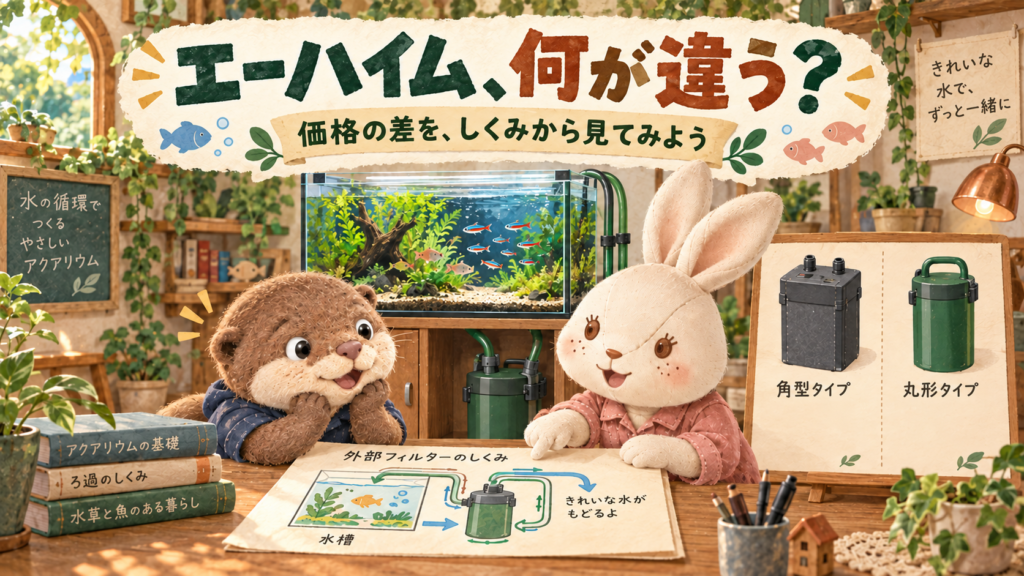 アイのアクアグッズ案内エーハイム、安いのと高いのは何が違う? コタロウと見比べる外部フィルター道具の特徴や使い方、選ぶときのポイントをアイが紹介します。記事はコチラ →
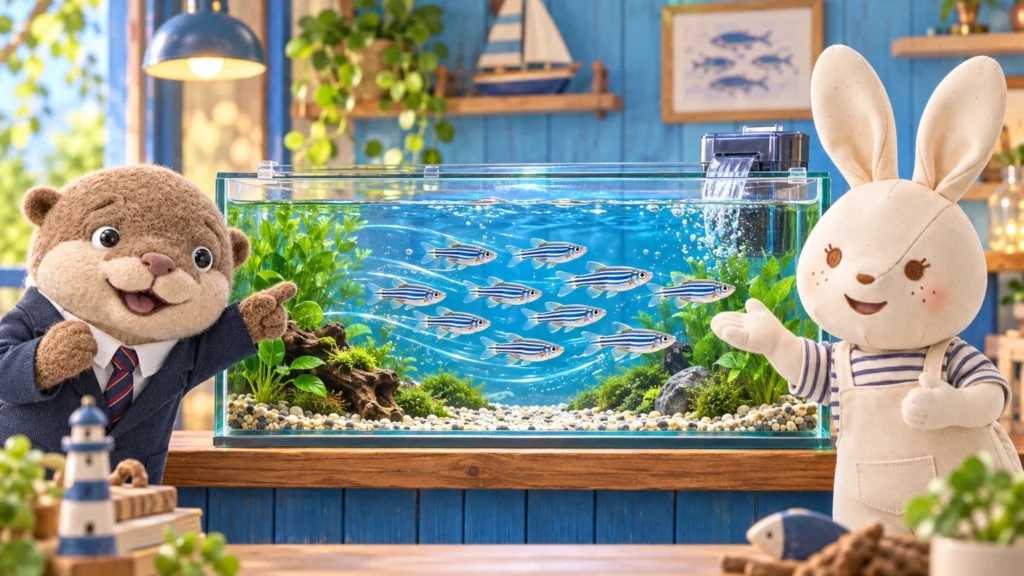 アイのアクアグッズ案内ダニオの仲間に合わせる飼育用品|ゼブラダニオから超小型種まで水槽・ろ過・餌を選ぶ道具の特徴や使い方、選ぶときのポイントをアイが紹介します。記事はコチラ →
さまざまな飼育テーマをご紹介。リンク先の記事には広告・商品紹介が含まれます。
案内・紹介記事一覧へ →この記事では、ロージーテトラの分類、分布、形態、飼育条件、繁殖、魚病対策を確認するため、店舗・通販サイトを除き、学術系データベース、論文、魚類名データベース、専門的な飼育資料を中心に参照しました。
- Fricke, R., Eschmeyer, W. N. & Van der Laan, R. Eschmeyer’s Catalog of Fishes. California Academy of Sciences 現在有効名、著者名、シノニム、分類上の扱いを確認するための基礎資料。
- Froese, R. & Pauly, D. editors. Megalamphodus rosaceus, Rosy tetra. FishBase 最大体長、分布、繁殖形式、分類情報、一般的な生物学的情報の確認に使用。
- Melo, B. F. et al. 2024. Phylogenomics of Characidae, a hyper-diverse Neotropical freshwater fish lineage, with a phylogenetic classification including four families (Teleostei: Characiformes). Zoological Journal of the Linnean Society アメリカン・カラシン科 Acestrorhamphidae や Megalamphodus の再評価など、近年の分類体系を確認するための主要論文。
- Weitzman, S. H. & Palmer, L. 1997. A new species of Hyphessobrycon from the Neblina region of Venezuela and Brazil, with comments on the putative rosy tetra clade. Ichthyological Exploration of Freshwaters, 7: 209-242. ロージーテトラ・クレード、近縁種との関係、ファントムテトラ類を含む周辺分類群の理解に関わる重要文献。
- Scharpf, C. The ETYFish Project: Family Acestrorhamphidae Eigenmann 1907, American Tetras. The ETYFish Project 学名や属名、種小名の語源解説を確認するための参照資料。
- Seriously Fish. Hyphessobrycon rosaceus, Rosy Tetra. Seriously Fish 水槽サイズ、水温、水質、群泳、混泳、繁殖など、飼育実務に近い情報の照合に使用。
- Merck Veterinary Manual. Parasitic Diseases of Fish. Merck Veterinary Manual 白点病など寄生虫性疾患の治療原理、生活環、複数回処置の必要性を確認するための獣医学系資料。
- MSD Veterinary Manual. Bacterial Diseases of Fish. MSD Veterinary Manual カラムナリス病など細菌性疾患の原因菌、発症条件、診断の考え方を確認するための獣医学系資料。
- Declercq, A. M. et al. 2013. Columnaris disease in fish: a review with emphasis on bacterium-host interactions. Veterinary Research Flavobacterium columnare によるカラムナリス病の病理と宿主側要因を補強するレビュー論文。
閲覧日:2026年5月30日





コメント