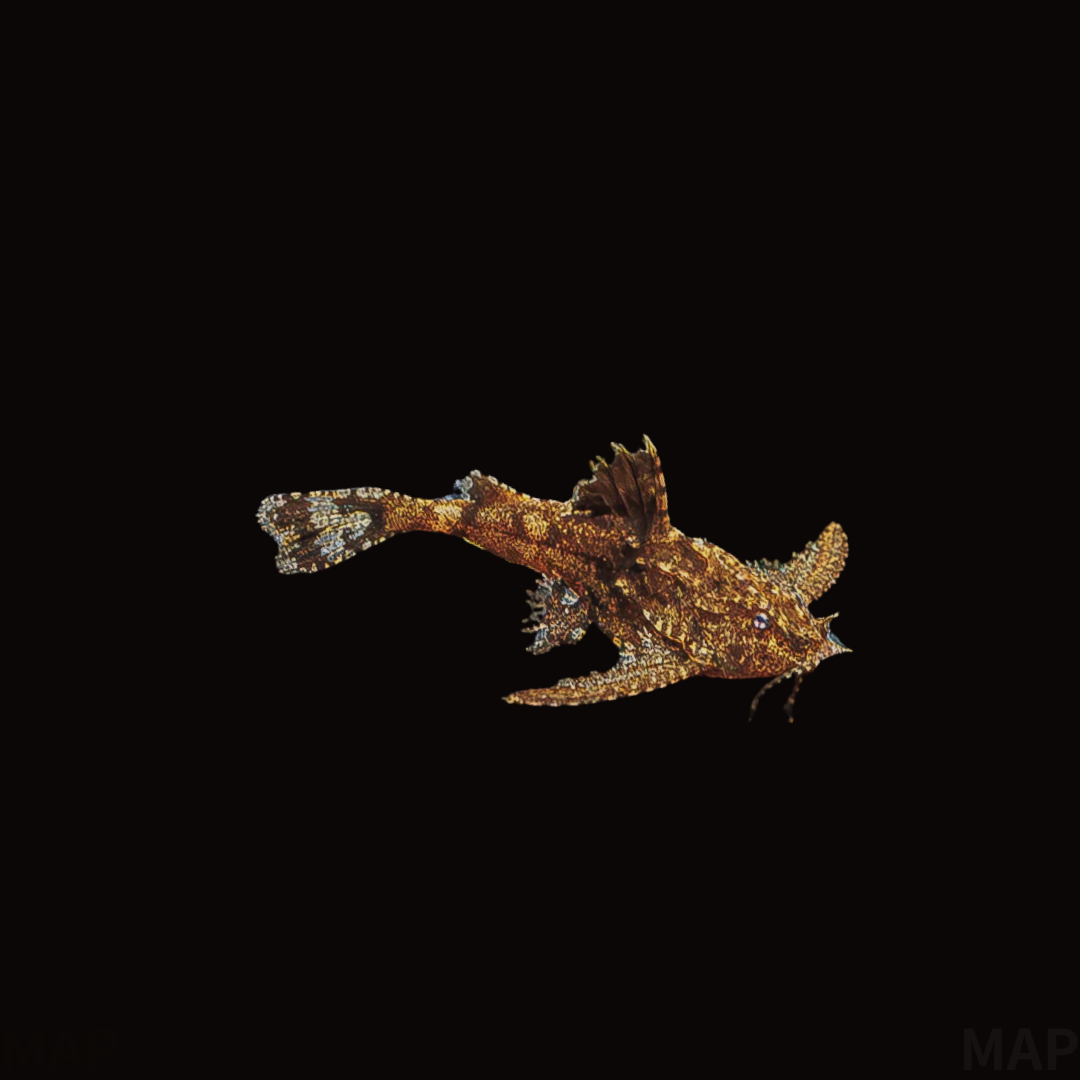
ハラ・ジェルドニーは、南アジアのインドやバングラデシュに生息する、ナマズ目の中でも極小の部類に入る愛らしい魚です。最大でも3センチメートルから4センチメートルほどにしかならないその体は、砂礫や落ち葉に完全に溶け込む褐色をしており、上から見るとその大きく発達した胸鰭が船の「錨(いかり)」や、羽を広げた「蛾」のように見えることから、アンカー・キャットやモス・キャットといった愛称で親しまれています。日中は水草の茂みや流木の陰に隠れてじっとしている忍者のような生態を持ち、夜になると活動を開始する夜行性の強い魚です。その風変わりな姿と、小型水槽でも飼育できるサイズ感から、底棲魚を愛するアクアリストの間で根強い人気を誇っています。Hara jerdoni is an adorable fish found in India and Bangladesh, belonging to the smallest members of the Siluriformes (catfish). Reaching a maximum size of only 3 to 4 cm, its body has a brownish coloration that blends perfectly with sand and fallen leaves. When viewed from above, its well-developed pectoral fins resemble a ship’s “anchor” or a spreading “moth,” earning it nicknames like Anchor Catfish or Moth Catfish. It lives like a ninja, hiding among aquatic plants or behind driftwood during the day and becoming active at night. Due to its peculiar appearance and suitability for nano aquariums, it remains highly popular among bottom-dwelling fish enthusiasts.
基本情報 / Basic Information
学名 / Scientific Name
Hara jerdoni
通称 / Common Name
ハラ・ジェルドニー、アジアン・ストーン・キャットHara jerdoni, Asian Stone Catfish
分類 / Family
エレティステス科(シソール科に含める説もあり)Erethistidae (sometimes included in Sisoridae)
英名 / English Name
Asian Stone Catfish, Anchor Catfish, Moth Catfish
分布 / Distribution
インド(アッサム州、西ベンガル州)、バングラデシュ、ミャンマーNortheastern India, Bangladesh, and Myanmar
最大体長 / Max Size
約3~4cmApprox. 3-4 cm (1.2-1.6 inches)
寿命 / Lifespan
3~5年3-5 years
飼育環境 / Aquarium Environment
水槽サイズ / Tank Size
30cm規格水槽(約12リットル)以上。小型魚のため、10〜20リットル程度の小型水槽でも飼育可能です。30cm standard tank (approx. 12L) or larger. Due to its size, it can be kept in nano aquariums of 10-20 liters.
水温 / Temperature
18~24度。高水温には極めて脆弱なため、日本の夏場は冷却ファンや水槽用クーラーが必須となります。18-24°C (64-75°F). Extremely sensitive to high temperatures; cooling fans or chillers are essential during Japanese summers.
水質 / Water Quality
pH 5.5~7.6(弱酸性から中性)。水質悪化、特にアンモニアや亜硝酸塩の蓄積に敏感です。pH 5.5-7.6 (slightly acidic to neutral). Sensitive to poor water quality, especially ammonia and nitrite.
レイアウト / Layout
角の取れた細かい砂を底床に使用し、流木や陰性水草(ウィローモス、アヌビアス等)で隠れ家を多く作ります。Use fine, smooth sand as substrate. Provide plenty of hiding spots with driftwood and shade-loving plants like Java Moss or Anubias.
注意点 / Precautions
急激な水質変化に弱いため、導入時は時間をかけて水合わせを行います。また、溶存酸素量が多い環境を好みます。Sensitive to rapid water changes; acclimate slowly when introducing. Prefers environments with high dissolved oxygen levels.
餌と給餌 / Feeding
餌の種類 / Diet
冷凍アカムシ、イトメ、ミジンコ、ブラインシュリンプ等の生餌や冷凍餌。人工飼料には餌付きにくい傾向があります。Live or frozen foods such as bloodworms, tubifex, daphnia, and brine shrimp. They are often difficult to train on artificial pellets.
給餌のポイント / Feeding Tips
夜行性のため、消灯直前または消灯後に給餌するのが効果的です。非常に嗅覚が鋭いため、餌の匂いには敏感に反応します。As they are nocturnal, it is best to feed them just before or after the lights go out. They have a keen sense of smell and respond well to the scent of food.
性格と混泳 / Temperament and Tank Mates
性格 / Temperament
極めて温和で臆病です。自分から他の魚を攻撃することはまずありません。Extremely peaceful and timid. They almost never attack other fish.
混泳の相性 / Compatibility
同種での群泳が最適です。他種と混泳させる場合は、スカーレットジェム等の温和な小型魚に限ります。活発な魚との混泳は餌負けの原因になります。Ideal for species-only groups. If mixing with others, choose peaceful nano fish like Dario dario. Avoid active fish that might outcompete them for food.
病気と対策 / Diseases and Prevention
かかりやすい病気 / Common Diseases
白点病、水カビ病。特に導入直後のストレスからくる病気に注意が必要です。Ich (White Spot Disease) and fungal infections. Pay close attention to stress-related diseases immediately after introduction.
対策と予防 / Prevention
清浄な水質と安定した水温を維持することが最大の予防です。底砂を清潔に保ち、定期的な換水を行います。Maintaining clean water and stable temperatures is the best prevention. Keep the substrate clean and perform regular water changes.
増やし方(繁殖) / Breeding
雌雄の判別 / Sexing
オスは胸鰭の棘がより長く発達します。メスは抱卵すると腹部が顕著にふっくらと丸みを帯びます。Males have longer pectoral spines. Females become noticeably rounder and fuller in the abdominal area when carrying eggs.
繁殖形態 / Reproduction
卵生。水草や産卵モップなどにバラまくように産卵します。Egg-layer. They scatter eggs among aquatic plants or spawning mops.
繁殖のポイント / Breeding Tips
難易度は高いですが、低温かつ豊富な酸素を供給することで誘発可能です。稚魚は極小のため、インフゾリアなどの微小生物が必要です。High difficulty, but can be triggered by low temperatures and high oxygen levels. Fry are tiny and require infusoria or other microorganisms as starter food.
雑学と豆知識 / Trivia and Fun Facts
1. 学名の由来と博物学者ジェルドン / 1. Origin of Scientific Name and Naturalist Jerdon
本種の種小名である「jerdoni」は、19世紀のイギリス人博物学者トーマス・クラバーヒル・ジェルドンへの献名です。彼は医師でありながら、インドの鳥類や爬虫類の調査に生涯を捧げた偉大な探検家でした。ハラ・ジェルドニーの小さな体には、かつて南アジアの広大な大自然に挑んだ博物学者たちの敬意と歴史が刻まれているのです。The species name “jerdoni” is dedicated to Thomas Claverhill Jerdon, a 19th-century British naturalist. Despite being a physician, he devoted his life to surveying the birds and reptiles of India. This tiny fish carries the legacy and respect of naturalists who explored the vast wilderness of South Asia.
2. 分類学上の「烏口骨」を巡る論争 / 2. Taxonomic Dispute Over the Coracoid Process
本種の分類は長年シソール科とされてきましたが、近年の研究では「エレティステス科」という独立した科に分ける説が有力です。その決め手は、胸鰭の付け根にある「烏口骨突起」という骨の長さ。この突起が非常に長く、皮膚越しに触れるほど発達しているのが本グループの特徴です。今でも「ハラ属(Hara)」と「エレティステス属(Erethistes)」の名称が入り混じって使われることがあり、分類学者を悩ませるミステリアスな存在です。For a long time, this species was grouped under Sisoridae, but recent studies favor placing it in a separate family, Erethistidae. The defining feature is the length of the “coracoid process” at the base of the pectoral fins, which is exceptionally long and palpable through the skin. Even today, the names Hara and Erethistes are used interchangeably, making it a mysterious entity for taxonomists.
3. 音を奏でる防御メカニズム / 3. Acoustic Defense Mechanism
ハラ・ジェルドニーは音を出す能力を持っています。一つは浮袋を震わせる「クリック音」、もう一つは胸鰭の棘を関節と擦り合わせて生じさせる「摩擦音」です。捕食者に襲われそうになると、胸鰭を大きく広げて固定し、鋭い音を出すことで相手を驚かせ、混乱させます。小さな体で過酷な川底を生き抜くために進化した、驚くべき生存戦略と言えるでしょう。Hara jerdoni has the ability to produce sound. One is a “clicking sound” made by vibrating its swim bladder, and the other is a “stridulation” produced by rubbing its pectoral spines against its joints. When threatened, they flare and lock their pectoral fins, emitting sharp sounds to startle and confuse predators—a remarkable survival strategy for such a tiny fish.
4. アドリアン・テイラーの教訓 / 4. The Lesson of Adrian Taylor
かつて、高名なキャットフィッシュ研究家のアドリアン・テイラーがハラ・ジェルドニーの繁殖成功を報告しましたが、後にそれは近縁種の「ハラ・ハラ」であったことが判明しました。このエピソードは、本種がいかに見分けの難しい「隠蔽種」を含んでいるかを物語っています。ショップで売られている個体の中にも、実はまだ誰も知らない未知の新種が紛れ込んでいるかもしれません。Famous catfish researcher Adrian Taylor once reported the successful breeding of Hara jerdoni, but it was later discovered the fish was actually a closely related species, Hara hara. This story highlights how difficult it is to identify these “cryptic species.” It’s possible that unknown new species are hidden among those sold in pet shops today.
まとめ / Conclusion
ハラ・ジェルドニーは、その独特のフォルムと忍者のような振る舞いで、アクアリウムの中に静かな驚きをもたらしてくれる魚です。30cm程度の小型水槽でも十分にその魅力を楽しむことができますが、夏の高水温や水質の悪化には非常にデリケートなため、細やかな配慮が求められます。彼らが安心して過ごせるよう、細かい砂とたっぷりの水草を用意してあげてください。With its unique form and ninja-like behavior, Hara jerdoni brings a quiet sense of wonder to any aquarium. While they can be enjoyed in tanks as small as 30cm, they are delicate regarding summer heat and water quality, requiring careful attention. To keep them comfortable, provide fine sand and plenty of aquatic plants for them to hide in.
夜、部屋の明かりを消した後にそっと水槽を覗いてみてください。昼間はじっとしていた「錨」のような魚たちが、暗闇の中で活発に動き回り、独自のコミュニティを築いている姿を観察できるはずです。この小さなナマズの育成は、アクアリストとしての観察眼を養い、自然の奥深さを再発見させてくれる素晴らしい体験となるでしょう。Try peeking into the tank at night after turning off the room lights. You’ll likely see these “anchor-like” fish, so still during the day, moving actively in the dark and forming their own community. Raising this small catfish is a wonderful experience that sharpens your observational skills and allows you to rediscover the depths of nature.
Day, F. (1870). On the freshwater fishes of Burma. Part I. Proceedings of the Zoological Society of London. (ハラ・ジェルドニーの原記載論文)
Thomson, A. W., and Page, L. M. (2006). Genera of the Asian catfish families Sisoridae and Erethistidae (Teleostei: Siluriformes). Zootaxa. (分類学的再編に関する研究)
Ng, H. H., and Kottelat, M. (2007). A review of the catfish genus Hara, with the description of four new species. Revue Suisse de Zoologie. (ハラ属の独立性に関する議論)
Kaatz, I. M., et al. (2010). Pectoral spine morphology and stridulation in catfishes. (胸鰭棘による摩擦音と防御行動の研究)
IUCN Red List of Threatened Species (2015). Hara jerdoni. (保全状況評価データ)
神畑養魚株式会社 カミハタ・ビジネスオンライン (KBO) 生体カタログおよび流通記録
Catfish Study Group (CSG). “Cat Chat” Magazine (Vol. 4, No. 3). (アドリアン・テイラーによる繁殖記録と種同定の修正報告)



 アイのアクアグッズ案内水槽ライトの選び方|魚の見え方・水草・海水で選ぶおすすめ照明道具の特徴や使い方、選ぶときのポイントをアイが紹介します。記事はコチラ →
 アイのアクアグッズ案内海水魚初心者の必需品|水槽・人工海水・比重計・水質検査道具の特徴や使い方、選ぶときのポイントをアイが紹介します。記事はコチラ →
 アイのアクアグッズ案内水換え・底砂掃除の道具の選び方|砂利・砂・ソイルに合うクリーナーとポンプ道具の特徴や使い方、選ぶときのポイントをアイが紹介します。記事はコチラ →
 アイのアクアグッズ案内水槽用ヒーターの選び方|固定式・温度調節式と、水量に合うW数の考え方水槽の魚は冬に寒くない? アイとコタロウが水温計から固定式・温度調節式・分離式ヒーターまで比較。水量と室温に合うW数、設置場所、水換えや交換の注意点を、国内メーカーの商品とともに紹介します。記事はコチラ →



コメント